

Firefighter Shift Work and Health: Sleep, Nutrition, and Long-Term Wellness on 24/48 and 48/96
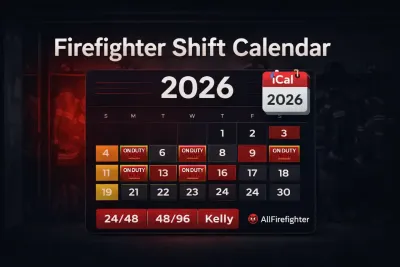
Firefighter shift work is one of the most physiologically demanding schedules in any profession. The 24/48, 48/96, and Kelly schedules disrupt circadian rhythms, suppress sleep quality, and create patterns of chronic sleep deprivation that accumulate over a career. Sleep disorders, cardiovascular disease, metabolic syndrome, and early cognitive decline are significantly more prevalent in shift workers than in day workers — and firefighters are among the most exposed shift workers in any occupation. This guide covers the science of shift work physiology and the evidence-based practices that protect long-term health.
Jump to:How shift work disrupts your body · Sleep strategies for firefighters · Nutrition on shift · Exercise and fitness on shift work · Cardiovascular risk · Off-day recovery · Long-term health monitoring · FAQ
How Shift Work Disrupts Your Body
The human body runs on a circadian clock — a 24-hour biological cycle that regulates nearly every physiological process: sleep and wakefulness, hormone secretion, body temperature, immune function, digestion, and cardiovascular function. This clock is set primarily by light exposure and synchronized to the natural day/night cycle.
Shift work disrupts this clock in two specific ways:
- Circadian misalignment: Working through the night and sleeping during the day places the body's activities in opposition to what its internal clock expects. Hormones, body temperature, and organ function that are optimized for daytime wakefulness are running during sleep, and vice versa. This mismatch is chronic and physiologically costly.
- Sleep deprivation accumulation: Firefighters working 24-hour shifts routinely experience interrupted sleep (response during the night), compressed sleep windows (day sleep is shorter and of lower quality than night sleep), and irregular sleep timing that prevents full circadian recovery. Chronic sleep debt accumulates across a career.
What chronic sleep disruption actually does
| System | Effect of chronic sleep disruption | Fire service implication |
|---|---|---|
| Cardiovascular | Elevated blood pressure, increased coronary artery disease risk, arrhythmia susceptibility | Cardiac events are the #1 LODD cause; shift work amplifies this risk significantly |
| Metabolic | Insulin resistance, impaired glucose regulation, weight gain, increased type 2 diabetes risk | Metabolic syndrome is prevalent in career firefighters; diet timing compounds the effect |
| Immune | Reduced immune surveillance, increased infection susceptibility, impaired cancer surveillance | Compounds occupational carcinogen exposure risk |
| Cognitive | Impaired decision-making, reduced reaction time, working memory deficits, increased error rate | Fatigued firefighters make worse tactical decisions; cognitive impairment is invisible to the person experiencing it |
| Mental health | Increased depression risk, anxiety, irritability, social withdrawal | Compounds PTSD vulnerability and stress response |
| Gastrointestinal | Increased risk of GERD, peptic ulcer, irritable bowel syndrome | Night eating patterns during shift work disrupts GI circadian rhythm |
Sleep Strategies for Firefighters
You cannot fully override the circadian clock, but you can significantly mitigate its impact through sleep hygiene practices adapted to shift work.
Before a 24-hour shift
- Bank sleep the night before. Sleep at least 8 hours the night before a 24-hour shift. Going into a shift already sleep-deprived means every hour of the shift degrades your cognition and cardiovascular response faster.
- Avoid alcohol the night before. Alcohol suppresses REM sleep and reduces sleep quality even when it helps with sleep onset. An alcohol-disrupted sleep before a shift starts the shift in deficit.
- Moderate caffeine timing. Caffeine's half-life is 5–7 hours. If you drink coffee at 8 PM, half the caffeine is still circulating at 1–3 AM, reducing sleep quality if the shift is quiet enough to allow sleep.
Sleeping at the station
- Strategic napping works. A 20-minute nap (before entering deep sleep) reduces cognitive impairment from fatigue without the grogginess of a longer nap. If the shift allows, a 20-minute nap in the early overnight hours (10 PM–midnight) significantly improves alertness through the 2–5 AM period when circadian sleepiness peaks.
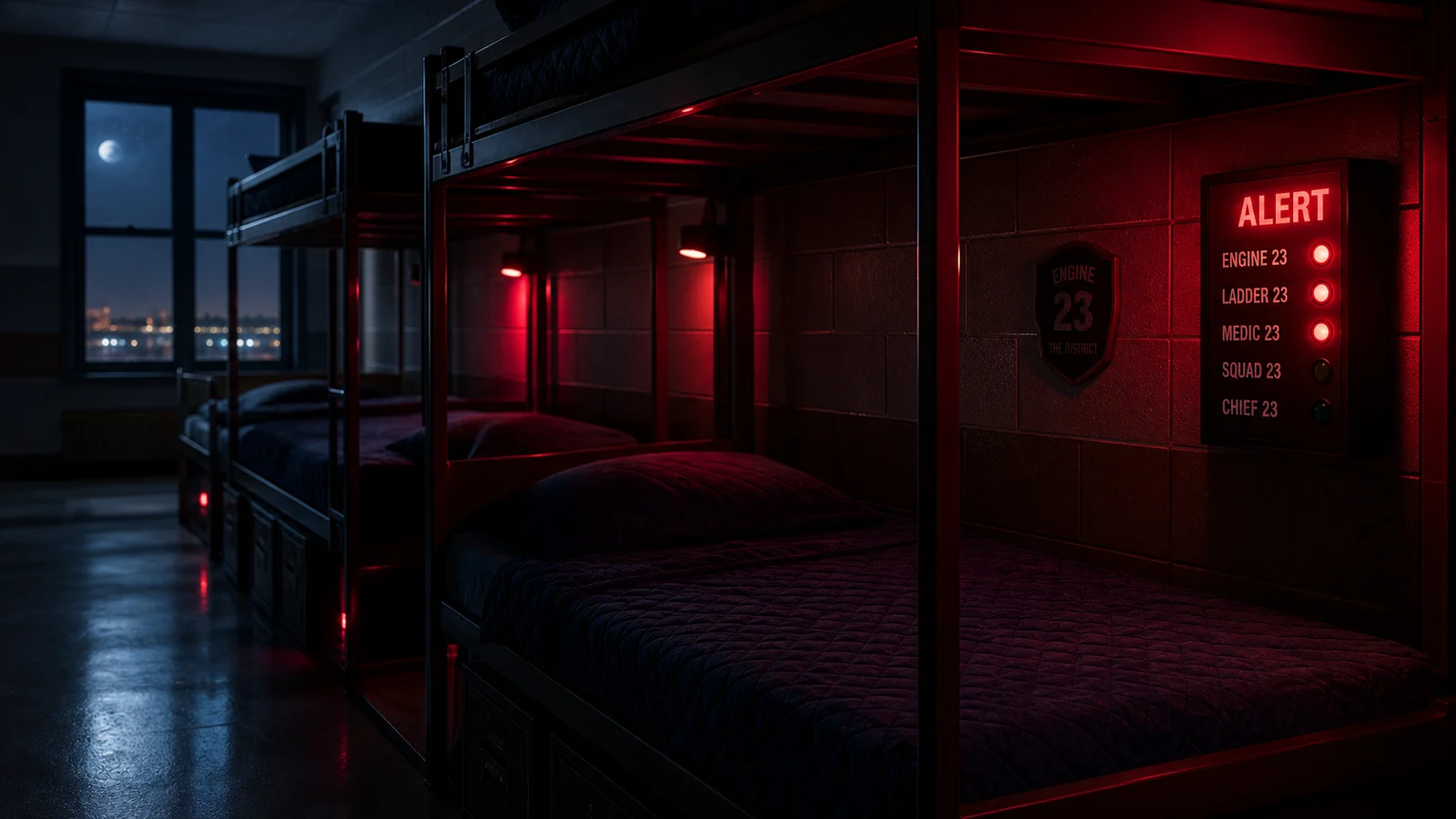
- Protect the sleep environment. Darkness, temperature control, and noise reduction in the bunk room are not comfort preferences — they are physiological requirements for sleep quality. Even partial darkness significantly improves melatonin secretion and sleep depth.
- Pre-alarm arousal planning. Some stations use gradual light exposure or alarm tones calibrated to reduce the cardiovascular spike of sudden awakening. Sudden loud alarm awakening from deep sleep produces significant cortisol and catecholamine surges that, over years, contribute to cardiovascular burden.
Day sleeping after a 24-hour shift
- Prioritize a full sleep before social commitments. Post-shift day sleep is physiologically inferior to night sleep regardless of duration, but it is what your body needs. Consistently shortchanging post-shift sleep to do other things accelerates cumulative sleep debt.
- Use blackout curtains and white noise. Daytime noise (traffic, children, sunlight) is one of the primary barriers to post-shift sleep quality. Address the environment first.
- Melatonin timing for day sleep. Taking 0.5–3 mg melatonin 30 minutes before day sleep attempts can improve sleep onset and depth by signaling nighttime to the circadian clock. Low-dose melatonin (<3 mg) is more effective than high-dose for most adults and does not suppress endogenous melatonin production.
Nutrition on Shift: What to Eat and When
Nutrition during shift work requires different thinking than standard dietary guidance, because the timing of food intake interacts directly with circadian rhythms and metabolic function.
The night-eating problem
Eating large meals during overnight hours (10 PM–6 AM) is metabolically disruptive. The digestive system, insulin response, and lipid processing are calibrated to daytime function. Large overnight meals are associated with increased weight gain, worse glycemic response, and elevated cardiovascular risk compared to equivalent meals eaten during daytime hours.
Practical rule: If you eat during overnight hours, eat small and protein/fat-dominant. Save carbohydrate intake for daytime hours when insulin sensitivity is higher.
Shift meal structure
- Pre-shift meal (morning of 24-hour shift): Full, balanced meal. This is your primary nutritional anchor for the shift. Prioritize protein and complex carbohydrates to support sustained energy without blood sugar volatility.
- On-shift dinner (6–8 PM): Normal meal. The last substantial meal of the day before overnight.
- Overnight (10 PM–6 AM): If hungry, small protein-dominant snacks only. Nuts, cheese, hard-boiled eggs, Greek yogurt. Avoid large carbohydrate loads that spike blood glucose at a time when insulin response is impaired.
- Post-shift meal: Eat before sleeping, not after waking. A moderate post-shift meal stabilizes blood sugar before the long day sleep. Avoid large meals immediately before lying down (GERD risk).
Hydration on shift
Dehydration amplifies cognitive impairment from fatigue — even mild dehydration (1–2% of body weight) measurably impairs reaction time and decision-making. During fire operations, sweat loss can exceed 2 liters per hour in protective gear. Drink water consistently through the shift, not just in response to thirst. Thirst is a lagging indicator of dehydration status.
Caffeine strategy: Caffeine effectively counters shift work fatigue but must be timed strategically. Stop caffeine intake 6 hours before any intended sleep window. During a 24-hour shift with potential night sleep, this means your last coffee should be around 4–5 PM. During busy overnight shifts with no sleep opportunity, moderate caffeine through the overnight hours is appropriate with awareness of the post-shift crash.
Exercise and Fitness on Shift Work
Regular physical activity is the most robust countermeasure to virtually every negative health effect of shift work. Exercise improves sleep quality, cardiovascular health, metabolic function, mood, and cognitive performance — all of which shift work degrades.
Training timing considerations
- Morning or midday exercise on shift is optimal. Vigorous exercise within 2–3 hours of intended sleep can delay sleep onset. If the shift allows for station exercise, morning or early afternoon is preferable to late evening.
- Maintain off-day training consistency. Many firefighters train hard on off days but are sedentary on shift days. Consistent movement on shift days (even moderate-intensity station PT) is more protective than intense off-day training with complete shift-day inactivity.
- Adjust intensity when fatigued. Training at high intensity when sleep-deprived significantly increases injury risk and has diminishing returns on adaptation. On post-night shift days, moderate-intensity training (walking, cycling, swimming) over high-intensity work maintains the training stimulus with lower injury and recovery cost.
Physical fitness and cardiac risk
Physical fitness is the strongest modifiable protective factor against cardiac events during fire suppression. Research consistently shows that firefighters with higher aerobic fitness have significantly lower rates of cardiac LODD compared to those with lower fitness. The physical demands of fire suppression — sudden intense exertion, heat stress, and adrenaline — impose acute cardiovascular demands that unfit individuals cannot tolerate safely. Maintaining aerobic fitness throughout your career is not optional — it is a safety requirement.
Cardiovascular Risk and Shift Work
Cardiac events account for approximately 45% of firefighter LODDs annually. The intersection of shift work physiology and fireground physical demands creates a specific cardiovascular risk profile:
- Shift work independently increases cardiovascular disease risk by 40–50% compared to day work
- Sudden transition from rest to maximal exertion (alarm response) triggers acute catecholamine release that can precipitate arrhythmia or MI in susceptible individuals
- Sleep-deprived individuals have impaired recovery from these catecholamine surges, compounding the acute risk
- The circadian nadir (3–5 AM, when cardiac events are most common in the general population) coincides with the period when many firefighters are awakened by alarms
Annual cardiovascular screening matters. NFPA 1582 provides guidance on firefighter medical evaluations including cardiovascular screening. Annual EKG, periodic stress testing, and lipid panels allow detection of developing cardiovascular disease before a fatal event. Many departments do not consistently follow NFPA 1582 — know what your department requires and advocate for full compliance.
Off-Day Recovery: Making the Most of Your Time Away
The 48–96 hours between 24-hour shifts or the 96-hour break in a 48/96 schedule represent your biological recovery window. How you use this time determines whether your body partially resets or continues accumulating physiological debt.
- Consistent wake time. Even on off days, maintaining a consistent wake time (within 1 hour of your normal schedule) helps stabilize the circadian clock. Sleeping until noon on off days after working overnight creates a perpetual circadian shift similar to weekly transatlantic jet lag.
- Light exposure in the morning. Morning bright light exposure is the strongest circadian reset signal available. 20–30 minutes of outdoor morning light or a bright light therapy lamp helps recalibrate the circadian clock toward a daytime-dominant pattern on off days.
- Social recovery. Shift work isolates firefighters from family and social events. Deliberate investment in relationships on off days is not just quality of life — social connection is a significant protective factor against the mental health consequences of shift work.
- Limit alcohol. Alcohol is the most commonly used sleep aid among firefighters and one of the most counterproductive. Even moderate alcohol disrupts REM sleep and reduces overall sleep quality, extending rather than shortening recovery time.
Long-Term Health Monitoring
Because the health consequences of shift work and firefighting accumulate gradually, annual monitoring is essential to catch developing problems before they become crises:
- Annual NFPA 1582 medical evaluation including cardiovascular screening appropriate for your age and risk factors
- Sleep study if indicated: Obstructive sleep apnea is significantly more prevalent in firefighters than the general population and dramatically worsens all shift work health consequences when untreated. If you snore loudly, wake repeatedly, or are chronically fatigued despite adequate sleep time, request a sleep study.
- Metabolic panels: Fasting glucose, HbA1c, lipid panel annually. Shift work accelerates metabolic syndrome development and these markers can detect it years before clinical diabetes or cardiovascular disease appears.
- Cancer screening per the schedule discussed in the Firefighter Cancer Risk guide
- Mental health check-ins: Annual mental health assessment, particularly after years of cumulative trauma exposure and shift work stress
Frequently Asked Questions
Does shift work cause long-term health problems for firefighters?
Yes. Chronic shift work is independently associated with elevated risk of cardiovascular disease, metabolic syndrome, type 2 diabetes, certain cancers, sleep disorders, and mental health conditions. Firefighters face these risks on top of occupational hazards (carcinogen exposure, physical trauma, PTSD) that compound each other. Active mitigation through sleep hygiene, nutrition timing, and regular screening is essential.
How do firefighters deal with sleep deprivation?
The most effective approaches: banking sleep before a 24-hour shift, strategic 20-minute naps during the overnight hours when the shift allows, maintaining consistent wake times on off days, optimizing the sleep environment (darkness, temperature, noise control), and limiting alcohol which disrupts sleep quality even when it helps with onset.
Is it bad to eat during a night shift?
Large meals during overnight hours (10 PM–6 AM) are metabolically disruptive because insulin sensitivity and digestive function are calibrated to daytime. If you must eat overnight, stick to small, protein and fat-dominant snacks. Save significant carbohydrate intake for daytime hours when your body processes them more efficiently.
What is the healthiest firefighter shift schedule?
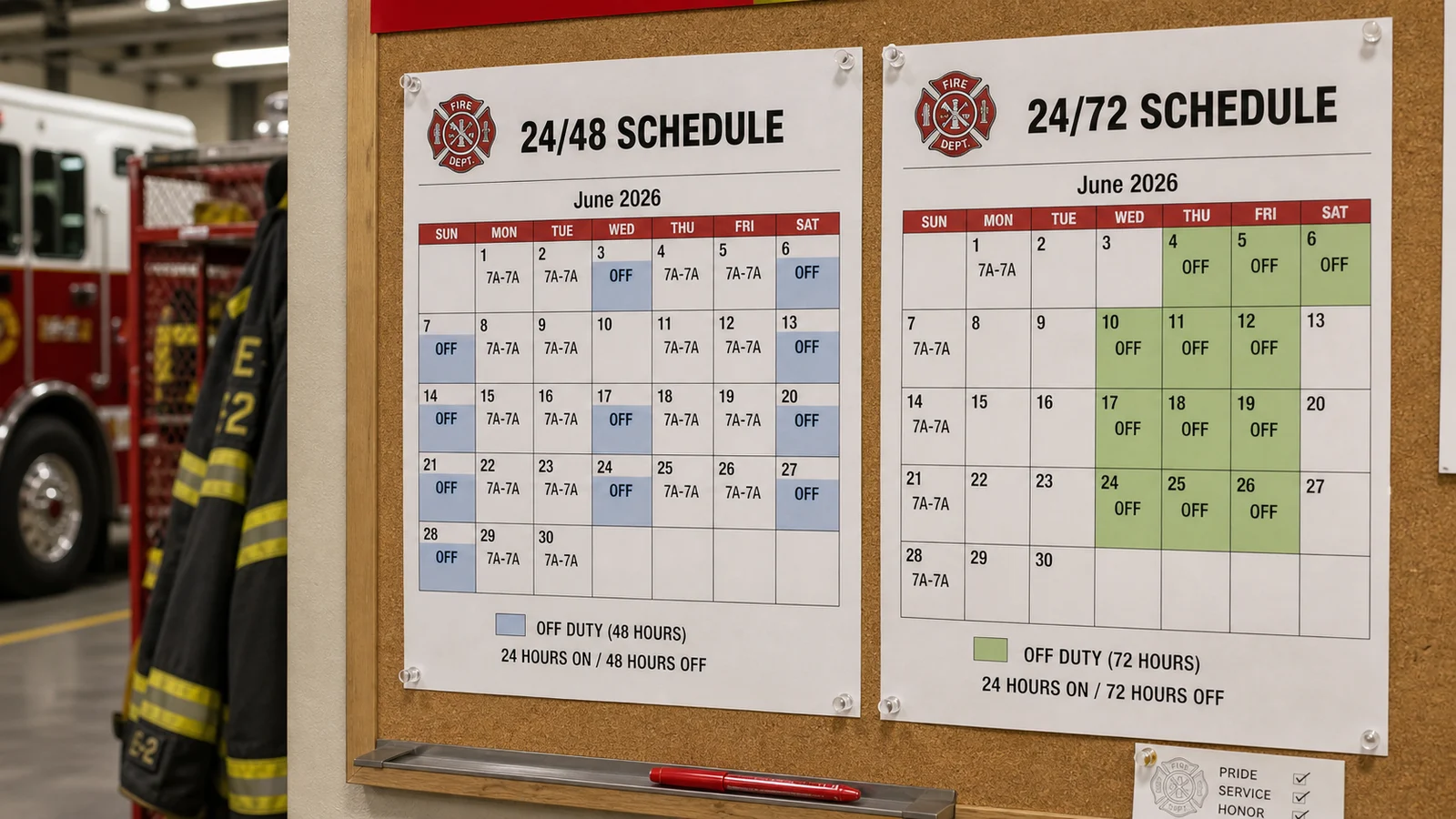
No shift schedule fully avoids circadian disruption, but schedules that minimize consecutive overnight duty (Kelly-type schedules with more frequent days) may be less physiologically disruptive than 48/96. The 48/96 schedule has the advantage of more continuous off-day recovery time but imposes 48 consecutive hours of potential circadian disruption. Individual variation is significant — some firefighters adapt better to certain schedules based on their chronotype (whether they are naturally morning or evening people).


Comments 0
No comments yet. Be the first to share your thoughts!
Leave a Comment