
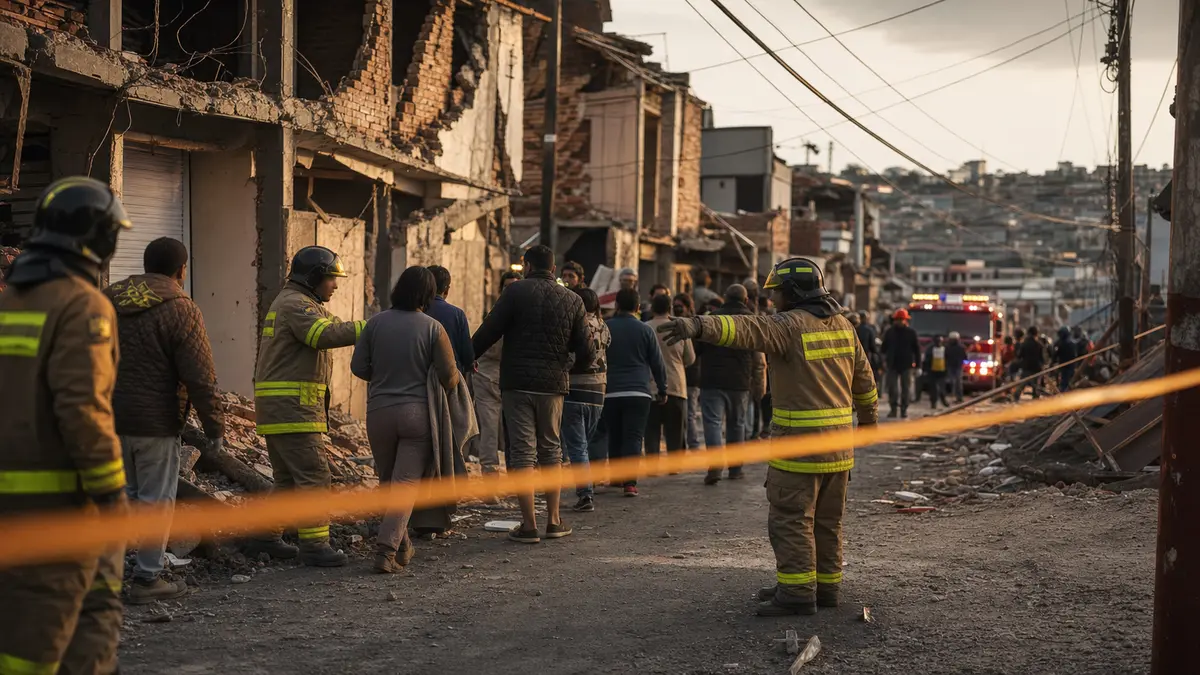
This New York Post video gives a fast visual look at the Venezuela earthquake aftermath: damaged buildings, street-level disruption and the kind of uncertainty that makes earthquake response difficult in the first hours. It is useful as a visual starting point, not as a complete incident report or a full operational assessment.
Why this clip is worth watching
Earthquake footage often becomes compelling because it shows ordinary streets suddenly turning into unstable environments. For firefighters, rescue teams and emergency managers, the value is not only the dramatic damage. It is the small details around the damage: where people are moving, how close bystanders stand to compromised walls, how narrow streets affect access, and how quickly a scene can shift from public curiosity to a controlled rescue problem.
What to notice without over-reading the footage
A short YouTube clip cannot confirm building construction, casualty numbers, command decisions or the full condition of the affected area. Magnitude labels can also vary while seismic agencies and newsrooms update early information. Still, visible damage can help viewers think through the first questions responders face: Is there a collapse hazard? Are utilities compromised? Can apparatus reach the block? Are crowds blocking escape routes? Is there enough open space for triage, staging and patient movement?
How it connects to firefighter planning
The main takeaway is scene awareness. Earthquakes rarely create one neat incident. They create overlapping problems: unstable structures, injured civilians, gas and electrical hazards, traffic disruption, overloaded communications and repeated aftershock risk. That is why the first visual impression should lead to disciplined size-up rather than instant conclusions.
For a deeper operational breakdown of this event, read our related article: Major Venezuela Earthquake: Firefighter and USAR Response Lessons.
Training takeaway
Use this video as a conversation starter for station training: what would your crew secure first, where would you stage, how would you manage civilians near damaged structures, and what information would you request before committing crews inside the hazard area? The clip is short, but the questions behind it are exactly the ones that make earthquake response challenging.



Comments 0
No comments yet. Be the first to share your thoughts on this video!
Leave a Comment