
Structural Collapse Rescue Basics: Void Spaces, Search Priorities, and USAR Operations
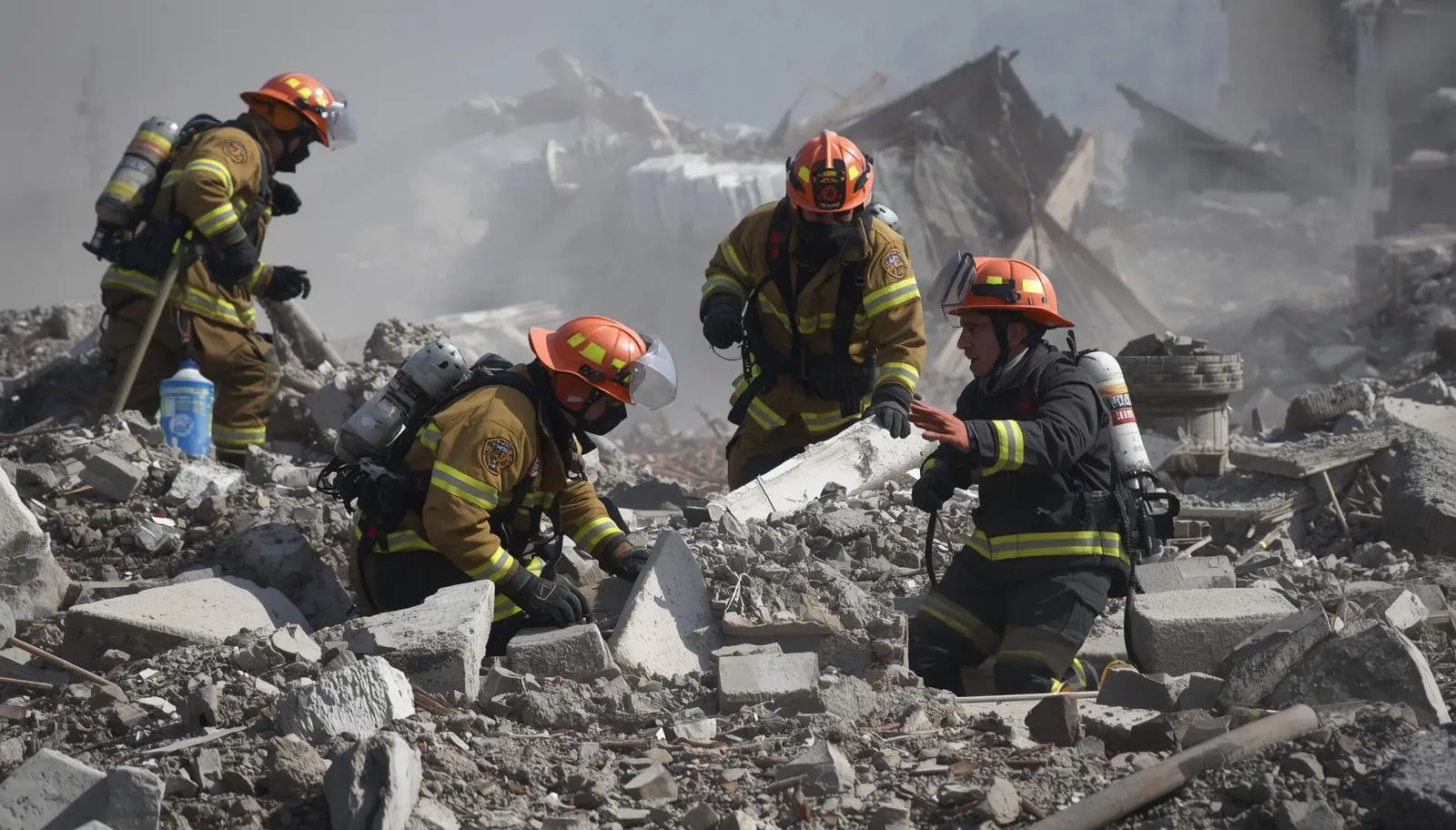
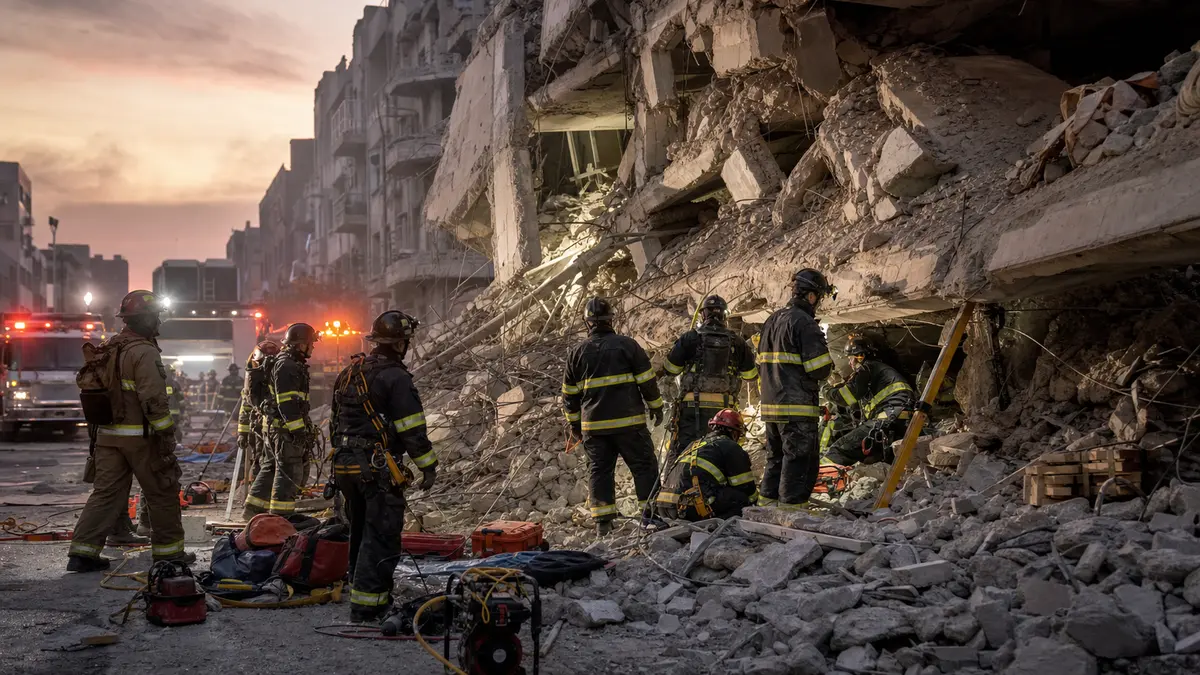
Structural collapse is among the most technically complex and physically dangerous rescue environments in the fire service. Whether triggered by fire-induced structural failure, explosion, natural disaster, or construction accident, collapse creates three-dimensional hazards that are not present in any other rescue scenario. This guide covers the Operations-level competencies for collapse rescue: collapse types, void space identification, victim location priorities, search and rescue sequencing, and the basic shoring and stabilization concepts that protect rescue workers in a collapse environment.
Jump to:Collapse types · Void spaces · Survivor profile and search priorities · Search phases · Technical search methods · Secondary collapse hazards · Basic shoring concepts · Operations-level vs USAR · FAQ
Technical rescue requires specialized training. Structural collapse rescue beyond the Operations level (NFPA 1006) requires Technician-level certification. First-arriving companies establish scene control, begin surface victim removal, and request USAR resources. Do not enter the collapse zone without collapse rescue training and proper PPE.
Collapse Types: What the Debris Tells You
The pattern of collapse determines where victims are most likely to be located and the relative stability of the debris field. Six primary collapse patterns:
| Collapse type | Pattern | Likely void space | Stability |
|---|---|---|---|
| Pancake | Floors stack horizontally on top of each other; walls may remain standing | Very small voids between floors; debris highly compacted | Relatively stable but difficult to penetrate |
| V-shape | Floor collapses in the center, with each end resting on the walls; forms a V | Survivable void spaces at both ends of the V under the sloped floor | Moderate; ends may continue to shift |
| Lean-to | One end of the floor/ceiling collapses while the other end remains supported; floor slopes | Large void space under the raised end | Moderate; supported end provides anchor; free end unstable |
| A-frame (tent) | Roof or upper floor collapses at the peak, forming an inverted V; walls lean outward | Large survivable void along the peak line | Unstable; walls can continue to lean and fall |
| Individual element collapse | A single wall, column, or floor section collapses without progressive failure | Variable; depends on what fell and where it landed | Variable; rest of structure may be sound or at risk |
| Progressive collapse | Failure of one element triggers sequential failure of adjacent elements | Chaotic; multiple void types throughout debris field | Low — collapse is ongoing or may resume |
Void Spaces: Where Survivors Are Found
A void space is any area within or adjacent to the collapse debris where a person could survive. Identifying void space probability is the foundation of collapse search prioritization. Common void space locations:
Next to large structural elements
Heavy structural members (beams, columns, large concrete slabs) tend to fall and create protected spaces on their lee side. A collapsed concrete beam often creates a triangular void between itself, the floor below, and the debris it pushed aside. Search adjacent to all large structural elements.
Corner of rooms
Wall corners maintain integrity longer than wall midspans and stairwell corners have three-way structural support. Victims who sought refuge in corners or stairwells are more likely to be in survivable conditions than victims caught in open floor areas during a pancake collapse.
Under stairwells
Stairwell structures are among the most robust elements of multi-story buildings. The space beneath a stairwell, and the stairwell itself, is one of the most searched areas in collapse rescue because it consistently produces survivors.
Furniture-protected spaces
Heavy furniture (desks, heavy tables, sofas) can support structural debris and create survivable spaces immediately adjacent to or under them. In residential collapses, victims near heavy furniture or appliances are more likely to be in survivable conditions.
Exterior periphery of the collapse
The perimeter of the collapse zone often has less debris compaction than the center. Victims near exterior walls, windows, or doors that they were approaching during evacuation may be in partially protected positions.
Survivor Profile and Search Priorities
Time is the defining variable in collapse rescue. Survival rates drop with each passing hour, though some survivors have been extracted days after collapse. The typical survivor profile and priority order:
Surface victims (Priority 1 — immediate)
Victims on the surface of the debris or trapped but fully accessible without removing debris. These victims are accessible immediately and represent the fastest life safety intervention. Lightly trapped surface victims are removed first by whatever means are available, even with limited equipment.
Void space victims (Priority 2 — urgent)
Victims in identifiable void spaces that can be accessed through limited debris removal or tunneling. These are the primary target of technical search operations. Victim status must be confirmed (living vs. deceased) before committing significant resources to access.
Deeply buried victims (Priority 3 — technical)
Victims buried under heavy debris requiring heavy equipment, shoring, and extended extraction operations. This is USAR Technician-level work.
Do not move debris randomly. Removing debris without understanding the load distribution in a collapse can cause secondary collapse that kills both the victim and the rescuers. Debris removal in collapse is deliberate, structured, and monitored. Every piece removed changes the load on adjacent debris.
Search Phases in Collapse Rescue
Collapse rescue uses a phased search approach that progresses from least technical to most technical as resources arrive:
Phase 1: Size-up and scene assessment
Before any rescue attempt, the collapse must be assessed:
- What type of collapse? Where are likely void spaces?
- Is the collapse complete or is secondary collapse risk present?
- What is the occupant load? Who is missing?
- Are there hazmat, gas, or electrical hazards in the collapse zone?
- What resources are needed? When will USAR arrive?
Phase 2: Surface search and rescue
A rapid systematic search of all surface and immediately accessible areas:
- Call out to victims: "Fire department, can anyone hear me?"
- Listen for responses after each call — maintain silence for 15–20 seconds
- Remove all accessible surface victims immediately
- Mark areas searched with a systematic marking system (spray paint or flagging)
Phase 3: Void space search
Systematic search of identifiable void spaces using technical search methods and victim location equipment. This phase begins when surface victims are cleared and USAR resources are on scene or en route.
Phase 4: Selected debris removal
Deliberate, engineered removal of debris to access confirmed or probable victim locations. Requires shoring, heavy equipment coordination, and technical rescue team leadership.
Phase 5: General debris removal
Systematic removal of all debris from the collapse zone when no additional living victims are expected. Typically uses heavy equipment under rescue team supervision.
Technical Search Methods
Voice and sound search
The simplest and most effective initial search method. Rescuers call out at regular intervals and maintain complete silence for 15–20 seconds to listen for responses. Voice calls should be simple and repeated: "Fire department — call out if you can hear me!" This is done systematically across the entire debris field, not randomly.
Search dogs (canine search)
Trained search and rescue (SAR) dogs can detect human scent through debris that no other method can penetrate. Canine search is most effective early in the operation before contaminating scents from rescue personnel accumulate in the debris field. Keep unnecessary personnel out of the search area when dogs are working.
Electronic listening devices
Acoustic listening devices amplify and analyze sounds within the debris field. Victims tapping, breathing, or calling can be detected through several feet of concrete and debris. These devices are sensitive to surface noise — all heavy equipment and unnecessary personnel movement must stop during electronic search.
Search cameras
Fiber-optic or miniature cameras inserted through small breach holes or cracks can visually confirm victim presence in void spaces too small for rescuer access. Combined with victim location via acoustic devices, cameras confirm position and guide the access approach.
Secondary Collapse and Other Hazards
Secondary collapse is the primary cause of rescuer death in collapse operations. The initial collapse weakens every remaining structural element. Aftershocks (in seismic events), continued structural degradation, water accumulation (from fire suppression or weather), and debris removal itself can all trigger secondary collapse.
- Establish and enforce a collapse zone. No personnel within the collapse zone except those actively conducting rescue. The collapse zone extends outward from the debris field by a distance equal to the height of the remaining standing walls (or 1.5× the height in unstable conditions).
- Monitor standing walls continuously. Assign a lookout to watch for movement, cracking, or settling in remaining walls. Establish a signal for immediate evacuation if collapse is imminent (air horn, siren).
- Gas and electrical hazards. Gas leaks in collapse zones are extremely dangerous — the debris field can concentrate gas and any ignition source (radio spark, tool contact) can trigger explosion. Shut off gas at the main before any rescue operation if accessible. Treat all electrical as live.
- Dust and air quality. Collapse debris produces silica dust and potentially asbestos, lead, and other contaminants. Respiratory protection is required in the collapse zone.
Basic Shoring Concepts
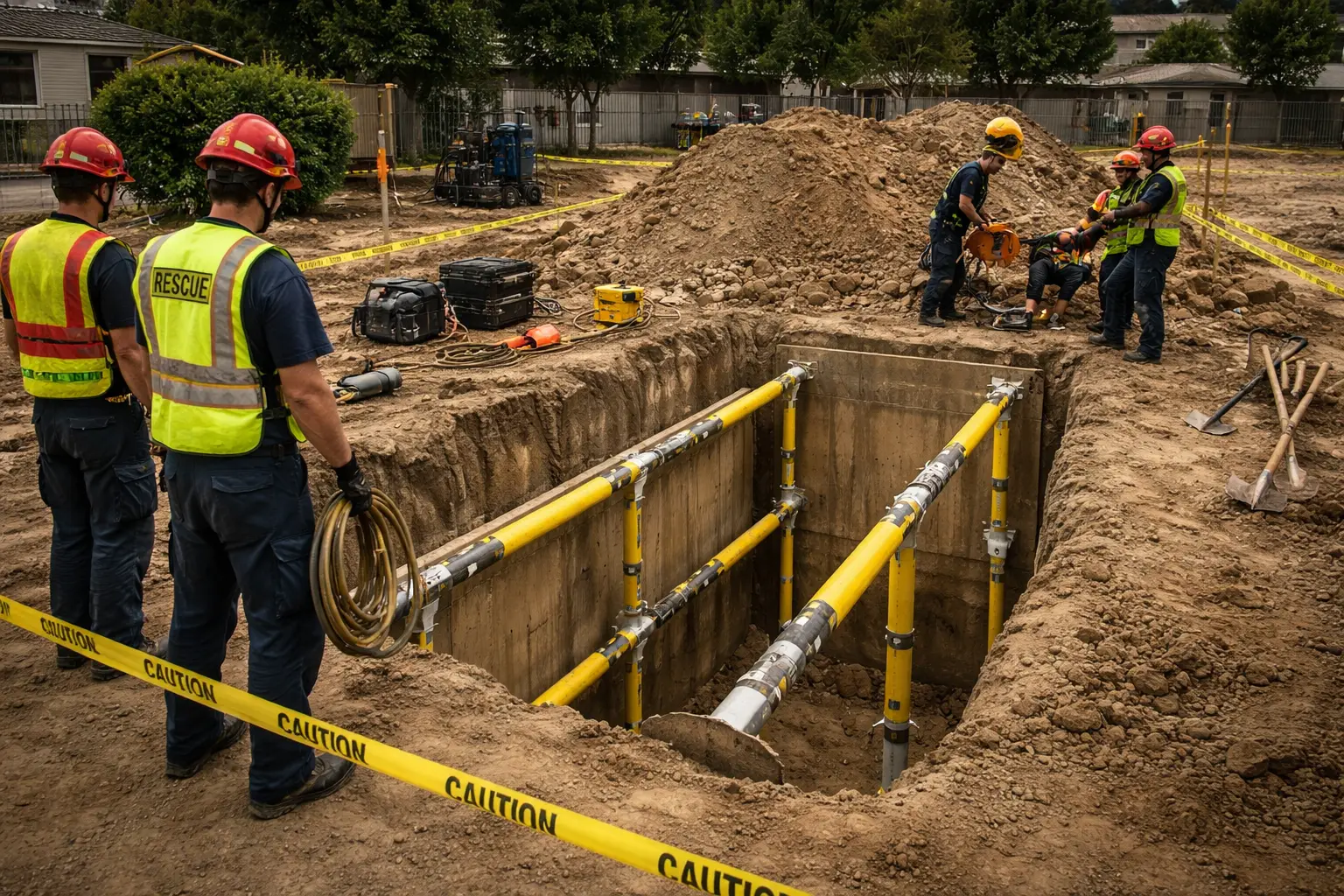
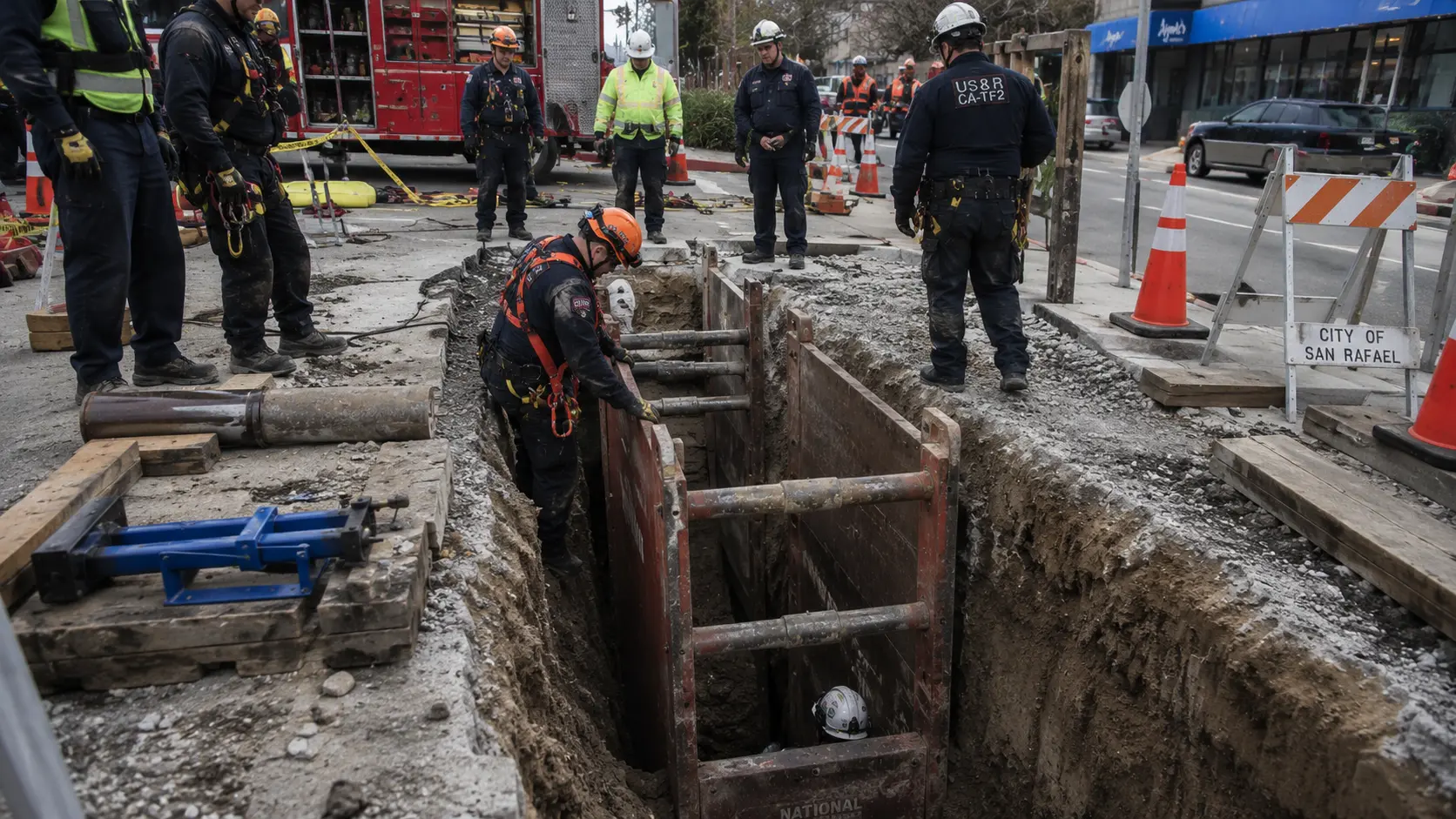
Shoring stabilizes the collapse debris to prevent secondary collapse during victim access and extraction. Operations-level firefighters are not expected to design or build shoring systems, but understanding the concepts helps you work safely in a shored environment:
- Shoring transfers load from unstable elements to stable ground. A properly installed shore prevents the element above it from moving downward by transferring its load to the floor or stable debris below.
- Common shoring materials: 4×4, 4×6, and 6×6 dimensional lumber; adjustable steel struts; hydraulic shores; cribbing. The choice depends on the void size, load, and available time.
- Shoring must be installed by trained personnel. Improperly installed shoring can fail under load and cause collapse. In a collapse rescue, shoring is designed and supervised by Technician-level rescuers.
- Never remove shoring during active rescue operations. Once installed, shoring remains in place until the rescue is complete and the area is cleared. Removing a shore prematurely collapses the void it was protecting.
Operations Level vs USAR: What You Can and Cannot Do
| Task | Operations level | USAR Technician |
|---|---|---|
| Scene size-up and hazard assessment | ✓ | ✓ |
| Surface victim removal | ✓ (lightly trapped) | ✓ |
| Establish collapse zone and perimeter | ✓ | ✓ |
| Voice and sound search | ✓ | ✓ |
| Canine search support | Support role | ✓ (directs) |
| Electronic search devices | Support role | ✓ |
| Void space entry and victim access | Limited (simple voids) | ✓ |
| Shoring design and installation | ✗ | ✓ |
| Debris removal (structured) | ✗ | ✓ |
| Heavy equipment coordination | ✗ | ✓ |
Frequently Asked Questions
What are the different types of building collapse?
The six primary patterns are: pancake (floors stacked horizontally), V-shape (center collapses, ends remain), lean-to (one end collapses while the other is supported), A-frame or tent (roof collapses at the peak), individual element collapse, and progressive collapse (sequential failure of connected elements). Each pattern creates different void space locations and rescue approaches.
Where are survivors most likely to be found in a building collapse?
Adjacent to large structural elements that created protected spaces, in room corners and stairwells, under stairwell structures, near heavy furniture that supported debris, and at the perimeter of the collapse zone near exit routes. Surface victims are removed first; void space search follows in the most probable locations.
What is secondary collapse and why is it dangerous?
Secondary collapse is the collapse of remaining structural elements after the initial failure. It is the primary cause of rescuer death in collapse operations. Every rescue operation must establish a collapse zone, monitor remaining walls continuously, and have an established evacuation signal. No personnel enter the collapse zone without a safety officer monitoring conditions.
What is USAR in firefighting?
Urban Search and Rescue (USAR) is a specialized discipline for rescuing victims trapped in collapsed structures. USAR teams have Technician-level training in structural collapse mechanics, shoring, victim access, search technology, and debris removal. NFPA 1006 defines the competency requirements. Operations-level firefighters support USAR operations; they do not lead them.

Comments 0
No comments yet. Be the first to share your thoughts!
Leave a Comment