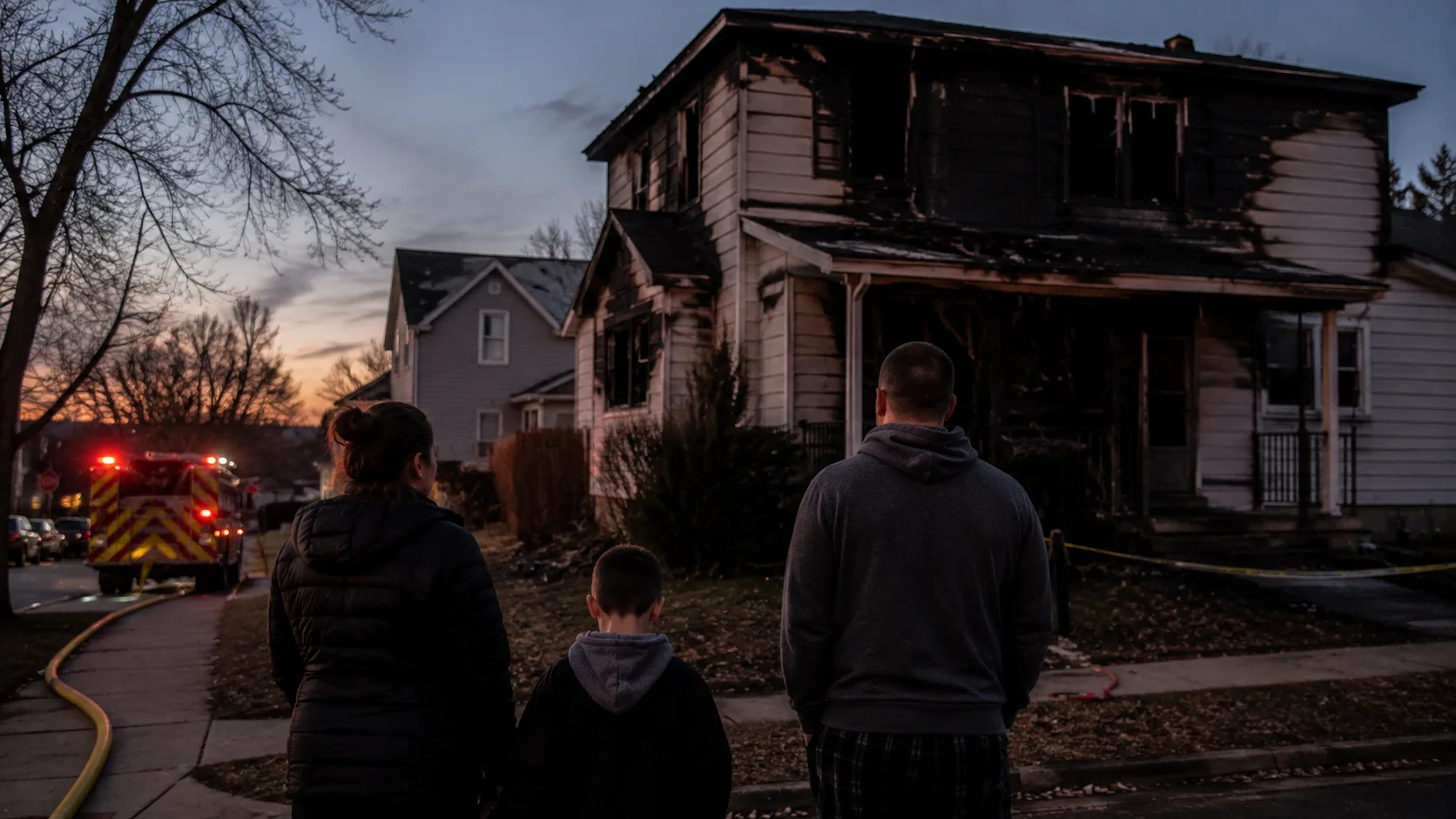

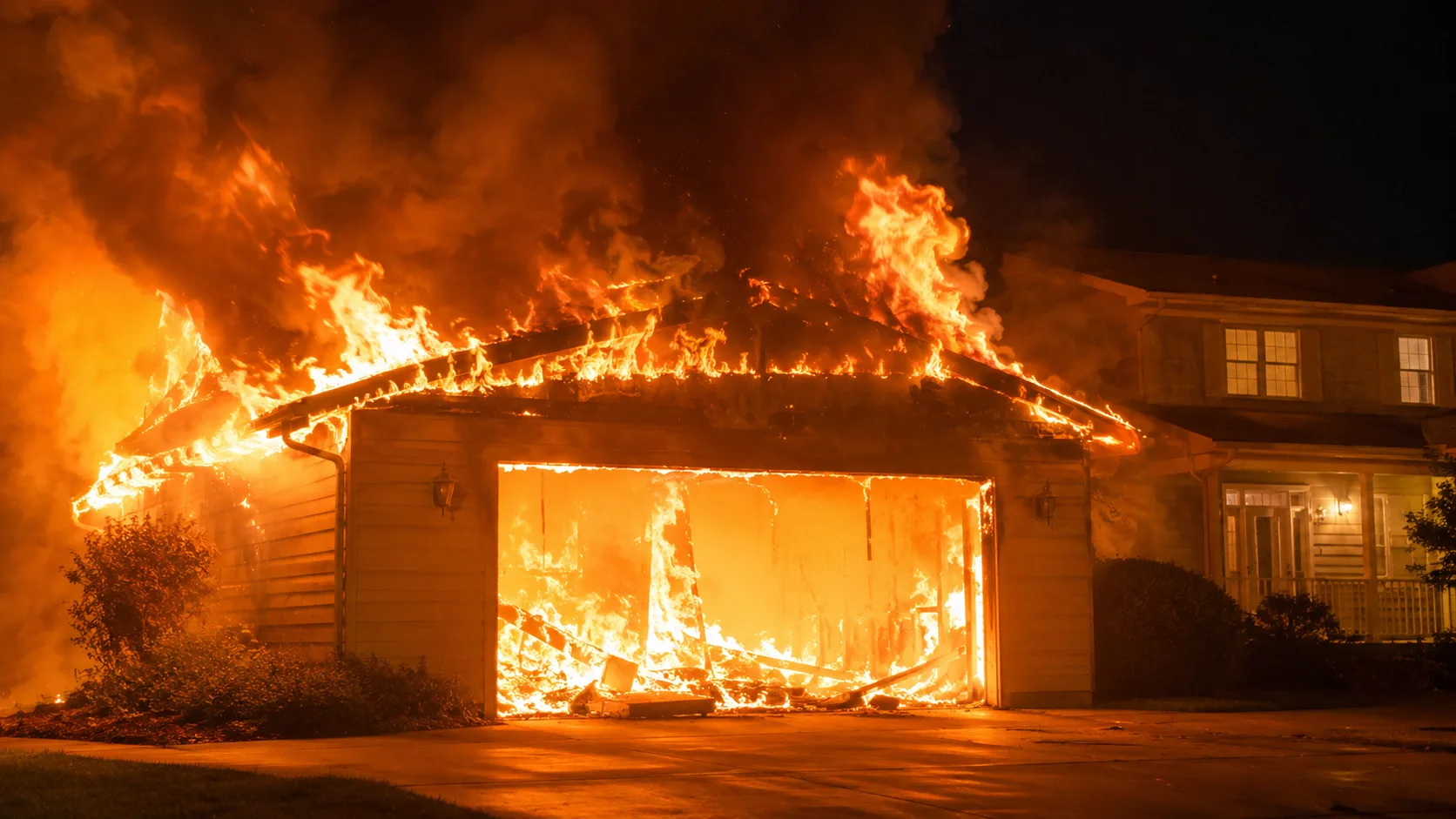
The fire is out. Everyone is alive. The firefighters are still on scene and you are standing in the street or in a neighbor's driveway looking at your house. Some of it is still standing. Some of it is not. The smell is reaching you from 50 feet away. You have your phone, maybe your wallet, whatever you grabbed when you left.
The next 48 hours will be the most logistically dense two days of your life, and they will happen while you are in shock. Decisions made in this window — what to touch, what to photograph, who to call first, what not to sign — have consequences that play out over months. Most people have no framework for any of it because most people have never been through it. This is what you need to know, in the order you need to know it.
In this article:
- While you are still at the scene
- Calling your insurance company: what to say and what not to
- Documentation: what to photograph before anything is moved
- Emergency housing: your options in the first 24 hours
- Re-entry: when you are allowed back in and what you can take
- What is actually salvageable after a fire
- The contractor fraud problem
- Week one and month one: what happens when
While You Are Still at the Scene
Before the fire department leaves, do three things:
Get the incident report number. Ask the incident commander or the officer in charge before they drive away. This number is what your insurance company will use to pull the official fire report. You will need it. Write it down or type it into your phone — do not trust yourself to remember it.
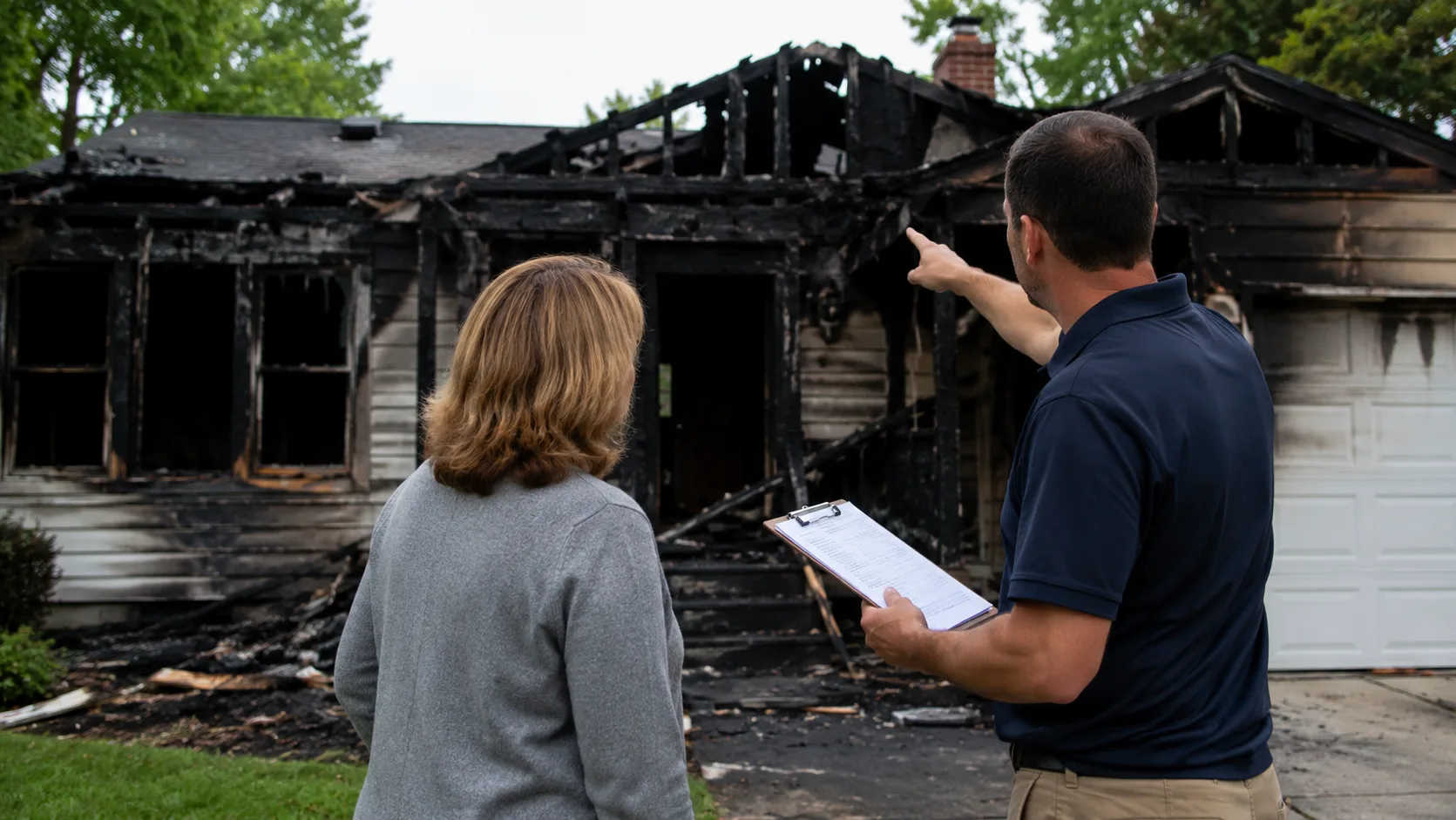
Ask whether the structure is safe to re-enter. Directly. The fire department will post a placard on the door indicating occupancy status — green (occupiable), yellow (limited entry), or red (do not enter). If it is yellow or red, do not go inside without authorization from the fire marshal or the authority having jurisdiction. Not to get belongings. Not to assess damage. Smoke-damaged structures have compromised structural elements that are not always visible, and fire-weakened floors have failed under people who were certain they were safe.
Take photographs from the exterior before anything changes. The exterior of the structure, the approach, the condition of the doors and windows. Your phone is sufficient. This establishes baseline documentation before any cleanup or salvage changes the scene.
Calling Your Insurance Company: What to Say and What Not To
Call your insurance company the same day — not the next morning, not after you have found somewhere to sleep. Most policies have 24-hour claims lines precisely because fires do not happen during business hours. The first call opens your claim and starts the clock on your policy's provisions for additional living expenses — the coverage that pays for your hotel and meals while your home is uninhabitable.
What to say: Give them the address, the date, the incident report number, a brief factual description of what happened, and ask what your immediate next steps are under the policy. Ask specifically about additional living expenses coverage and when it activates.
What not to say: Do not speculate about cause. Do not estimate damage amounts. Do not agree to any settlement figures in the first call — the adjuster who calls you back in the first 24 hours may make a preliminary offer; that offer is almost never the final or maximum figure available under your policy. You are not legally required to accept it. Say you want to see the full damage assessment first.
What not to sign: Do not sign anything a contractor hands you at the scene or at your hotel in the first 24 hours. Specifically, do not sign an Assignment of Benefits form — a document that signs over your insurance claim rights to a contractor. This is legal in many states, aggressively used by post-fire contractors, and frequently results in the contractor receiving the insurance payout while you have ongoing disputes about the quality of work with no leverage.
Documentation: What to Photograph Before Anything Is Moved
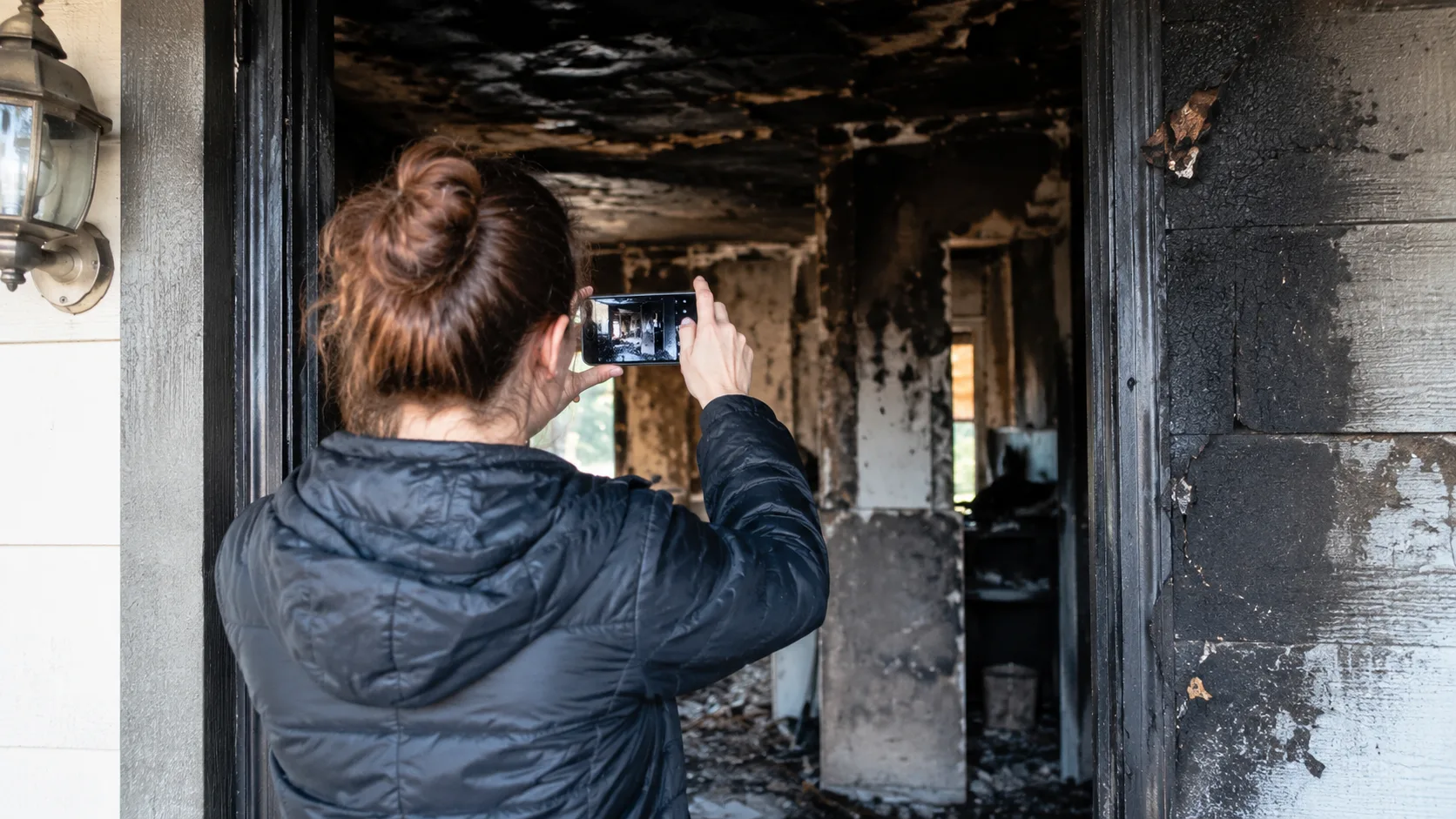
Once you have clearance to enter the structure, document everything before moving or removing a single item. The sequence:
- Photograph every room from the doorway before entering — a wide establishing shot showing the overall condition.
- Move through each room and photograph individual items — furniture, appliances, electronics, clothing, collections, tools. Open drawers and photograph contents. Open closets.
- Photograph serial numbers on appliances and electronics where visible.
- Photograph structural damage: floors, walls, ceilings, roof where visible from the interior.
- Photograph the HVAC system, water heater, and electrical panel.
- If you have any pre-fire photographs from your phone's camera roll — family photos, holiday photos, anything that shows the interior and contents of the home — preserve them. They are evidence of the home's condition before the fire.
Insurance adjusters work from documentation. An item photographed in place in the burned structure is easier to claim and value than an item described from memory six weeks later after the debris has been cleared. The more thorough your visual record before cleanup begins, the stronger your claim position at every stage of the process.
If your phone was lost in the fire, borrow one. Documentation in the first access window is not replaceable. The cleanup company that arrives in two days will move and discard things before you have time to process what was there.
Emergency Housing: Your Options in the First 24 Hours
Your homeowner's or renter's insurance policy almost certainly includes Additional Living Expenses (ALE) coverage — sometimes called Loss of Use. This pays for reasonable temporary housing and increased living costs (meals, laundry, storage) while your home is uninhabitable, up to a policy limit and time period. The coverage begins when you call to open the claim. Ask about it explicitly in your first call, because some insurers do not volunteer the information proactively.
The American Red Cross provides emergency assistance to fire survivors regardless of insurance status — emergency hotel vouchers for the first night or two, basic supplies (clothing, toiletries), and in some areas, immediate financial assistance. Call 1-800-RED-CROSS or have a neighbor call on your behalf if you do not have a phone. Red Cross chapters in most urban areas have on-call disaster response teams and respond to residential fires directly.
FEMA assistance is available if your fire is part of a declared disaster — a wildfire affecting multiple properties, for example. For a single-property residential fire, FEMA does not typically apply. Local nonprofits, churches, and community organizations fill some of the gap for people without insurance or with inadequate coverage.
Keep every receipt for temporary housing, meals, and emergency purchases. ALE reimbursement requires documentation of what you spent. A hotel receipt, a restaurant receipt, a receipt for replacement clothing — all of it is reimbursable up to your policy limit. Losing receipts means losing money you are entitled to.
Re-Entry: When You Are Allowed Back In and What You Can Take
A structure posted as yellow or red by the fire marshal cannot be entered without permission. The authority having jurisdiction — the fire marshal or building department — controls re-entry until the structure is assessed as safe or demolished. Violating this is both legally problematic and physically dangerous.
When supervised re-entry is permitted — often within 24 to 72 hours for partial-damage structures — you can typically retrieve essential documents (passports, birth certificates, financial records), medications, irreplaceable personal items (photographs, jewelry), and necessary clothing. Bring containers, bags, and boxes because you will not be making multiple trips initially.
What you cannot do: remove major appliances, conduct your own demolition or cleanup, or make structural alterations without building department permits. Your insurance adjuster needs to see the damage as-is before any restoration work begins — cleaning up before the adjuster visits can reduce your documented claim. Confirm the adjuster's visit date before authorizing any significant cleanup work.
What Is Actually Salvageable After a Fire
| Category | Typically salvageable | Typically not salvageable |
|---|---|---|
| Clothing | Items not directly burned — professional fire/smoke cleaning restores many garments | Items with direct char or flame contact; synthetic fabrics near high heat |
| Furniture | Solid wood pieces with smoke but no structural damage — ozone treatment and refinishing | Upholstered pieces — foam and fabric absorb smoke toxins and cannot be fully cleaned |
| Electronics | Some devices survive smoke with professional cleaning — document all for insurance regardless | Anything with heat exposure above ~150°F; water-damaged circuit boards |
| Food | Commercially sealed cans if not deformed by heat | All open food, refrigerated food, anything with smoke contact — discard without exception |
| Medications | Factory-sealed, heat-stable medications in original packaging | Any medication exposed to heat, smoke, or firefighting water — consult pharmacist |
| Documents | Some paper documents survive with careful handling — do not try to unfold wet documents yourself | Documents with direct flame contact; anything completely charred |
| Photographs | Many can be restored professionally even from significant water and smoke damage | Direct flame contact; high heat exposure |
The smoke damage category is worth addressing specifically. Items that were not in the fire room but were in the same structure have been exposed to smoke containing carbon monoxide, hydrogen cyanide, and particulate matter from the combustion of whatever was burning. Clothing, bedding, and soft furnishings from smoke-exposed rooms are not simply dirty — they carry toxic residue that requires professional cleaning to remove safely. Do not launder smoke-exposed clothing in a home washer and dryer without professional assessment first; the residue can contaminate the machine and transfer to other laundry.
The Contractor Fraud Problem
Post-fire contractor fraud is one of the most well-documented forms of disaster fraud in the country. The pattern is consistent: within hours of a residential fire, contractors appear at the scene or at the displaced family's hotel. They are professional, they have business cards, they seem to know exactly what needs to be done, and they want you to sign something.
The contracts offered at the scene frequently contain provisions that are not in your interest: Assignment of Benefits clauses that transfer your insurance rights to the contractor; price structures that exceed what your policy will cover, leaving you liable for the difference; and work authorization language that allows them to begin demolition before your adjuster has assessed the damage — which can destroy your claim documentation and reduce your insurance payout.
The correct approach: get three written estimates before signing anything. Verify that any contractor is licensed and insured in your state. Check their reviews with a specific focus on post-disaster work. Contact your insurance company before authorizing any contractor — your policy may require you to use approved vendors, or may have a list of preferred restoration companies. Never sign an Assignment of Benefits form.
Your state insurance commissioner's office handles post-disaster contractor fraud complaints and typically has resources specifically for fire survivors. If a contractor you have already signed with is not performing as contracted, contact your insurer and your state insurance commissioner rather than simply paying the invoice.
Week One and Month One: What Happens When
| Timeframe | Priority actions |
|---|---|
| Day 1 | Get incident report number · Open insurance claim · Arrange emergency housing · Call Red Cross if needed · Document exterior before leaving scene |
| Days 2–3 | Document interior before cleanup · Meet insurance adjuster (schedule this immediately) · Retrieve essential documents and medications · Notify employer, children's school, medical providers of temporary address |
| Days 4–7 | Get three contractor estimates · Do not sign anything until adjuster visit is complete · Set up mail forwarding · File claims for any vehicles damaged · Contact utility companies |
| Week 2–3 | Insurance adjuster completes assessment · Initial claim settlement offered · Review with a public adjuster if settlement seems low · Begin selecting contractors for restoration |
| Month 1 | Restoration work begins · Temporary housing continues under ALE · Replacement of essential personal property · Mental health support — not optional, not weakness |
The emotional aftermath of a house fire is real and follows no schedule. People who handled the first 48 hours with remarkable composure often find themselves struggling at week three when the adrenaline is gone, the hotel room is wearing thin, and the insurance process is moving slower than expected. Mental health support from a counselor, a peer support program, or a crisis line is not a last resort. It is appropriate at any point in this process, and it does not interfere with any of the practical steps above.
Comments 0
No comments yet. Be the first to share your thoughts!
Leave a Comment