Peer Support Programs in the Fire Service: Building the Culture That Saves Lives
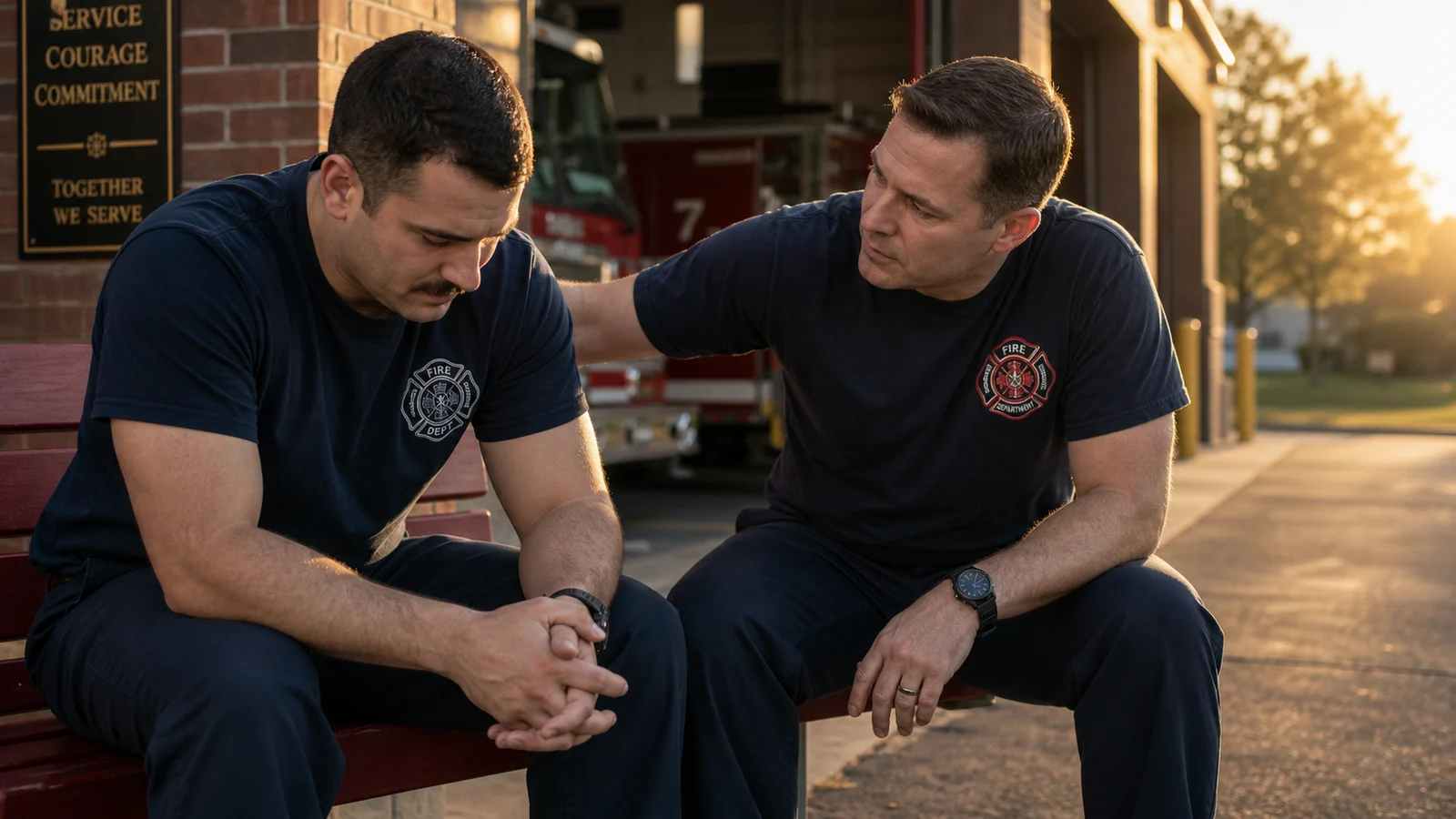
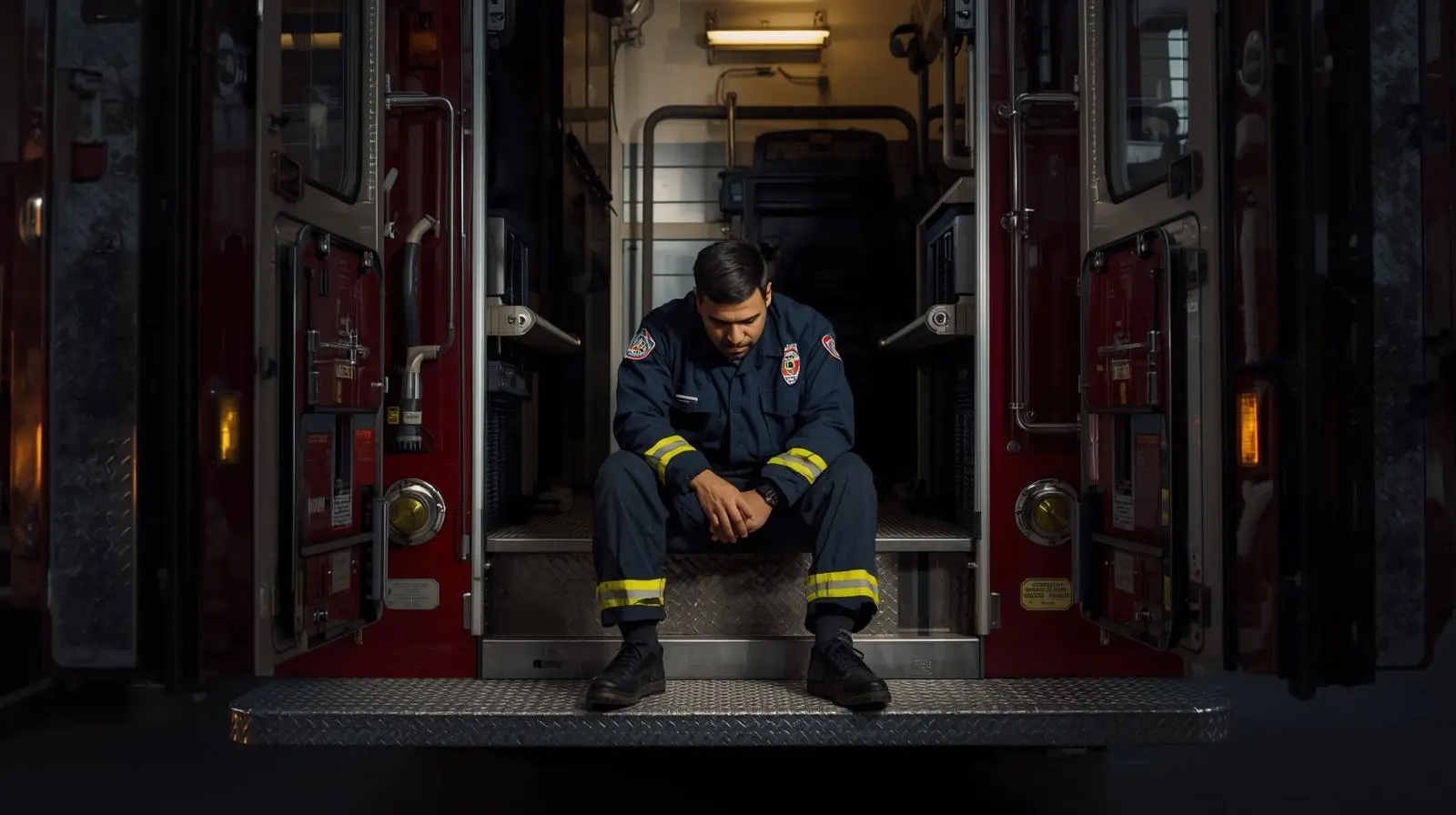
The fire service talks about brotherhood and sisterhood constantly. It talks about having each other's backs, about not leaving anyone behind, about the bond forged in smoke and stress and shared sacrifice. And yet, when a firefighter is struggling with PTSD, depression, substance use, or thoughts of suicide, that brotherhood has historically remained remarkably silent. The culture that celebrates physical courage has often punished the admission of psychological pain.
Peer support programs are the fire service's most direct response to this gap. They are not therapy. They are not mandatory counseling or administrative wellness boxes checked on paper. Done right, they are firefighters helping firefighters — a trained, trusted colleague who can recognize when someone is struggling, have a conversation that a dispatcher or HR person cannot, and connect them to the right resource before a crisis becomes a tragedy.
The evidence for peer support in first responder populations is compelling. Departments with robust peer support programs report higher rates of help-seeking behavior, lower rates of substance abuse, and — in some studies — measurable reductions in early retirement and long-term disability rates. The cost of a well-run peer support program is trivial compared to the cost of a single firefighter suicide, a line-of-duty death from a preventable cardiovascular event driven by unaddressed stress, or a workers' compensation claim for PTSD that went unaddressed for a decade.
Jump to:What peer support is and is not · Why the fire service needs it · Components of an effective program · The peer support team · Training requirements · Cultural barriers and how to overcome them · Critical incident stress debriefing · How to start a program · FAQ
What Peer Support Is — and Is Not
Peer support is a structured program in which trained members of the fire department provide initial emotional support, active listening, and resource connection to their colleagues who are experiencing stress, trauma, or behavioral health challenges. Peer supporters are not therapists. They are not licensed mental health clinicians. They are not investigators, evaluators, or reporters. They are trained listeners who can bridge the gap between a firefighter in distress and the professional help that firefighter may need.
What peer support is:
- Confidential colleague-to-colleague support conversations
- Active listening and empathetic engagement
- Resource navigation — connecting the member to the right clinical, financial, or practical support
- Check-ins after critical incidents
- Proactive wellness outreach to members known to be struggling
- Destigmatizing mental health help-seeking through visible, normalized participation
What peer support is not:
- Clinical therapy or mental health treatment
- Mandatory psychological debriefing after every incident
- A replacement for professional mental health services
- A reporting mechanism for fitness-for-duty concerns (this distinction is critical — confidentiality is foundational)
- A cost-cutting substitute for comprehensive behavioral health benefits
Confidentiality is the foundation. Peer support programs only work if firefighters trust that conversations with peer supporters will remain private. Any actual or perceived breach of that confidentiality — a peer supporter sharing information with command, a member being monitored after disclosing to a peer — will destroy the program's credibility and prevent members from using it. The only exceptions to confidentiality should be clearly defined: imminent risk of harm to self or others, and nothing else.
Why the Fire Service Specifically Needs Peer Support
The mental health burden in the fire service is well-documented and significantly elevated compared to the general population. Firefighters experience:
- Repeated exposure to traumatic events — death, injury, child victims, mass casualty incidents, events involving colleagues or community members they know personally
- Occupational moral injury — situations where they could not save someone, where the outcome was bad despite their best efforts
- Chronic physiological stress from sleep deprivation, circadian disruption, and the sustained physiological arousal of emergency response work
- High rates of PTSD (estimated 7–37% prevalence depending on the study and population)
- Suicide rates that exceed line-of-duty traumatic deaths — more firefighters die by suicide than in structural fires in many recent years
- Elevated rates of alcohol use disorder and substance abuse
- Strong cultural prohibition against help-seeking, rooted in a professional identity built around toughness and self-sufficiency
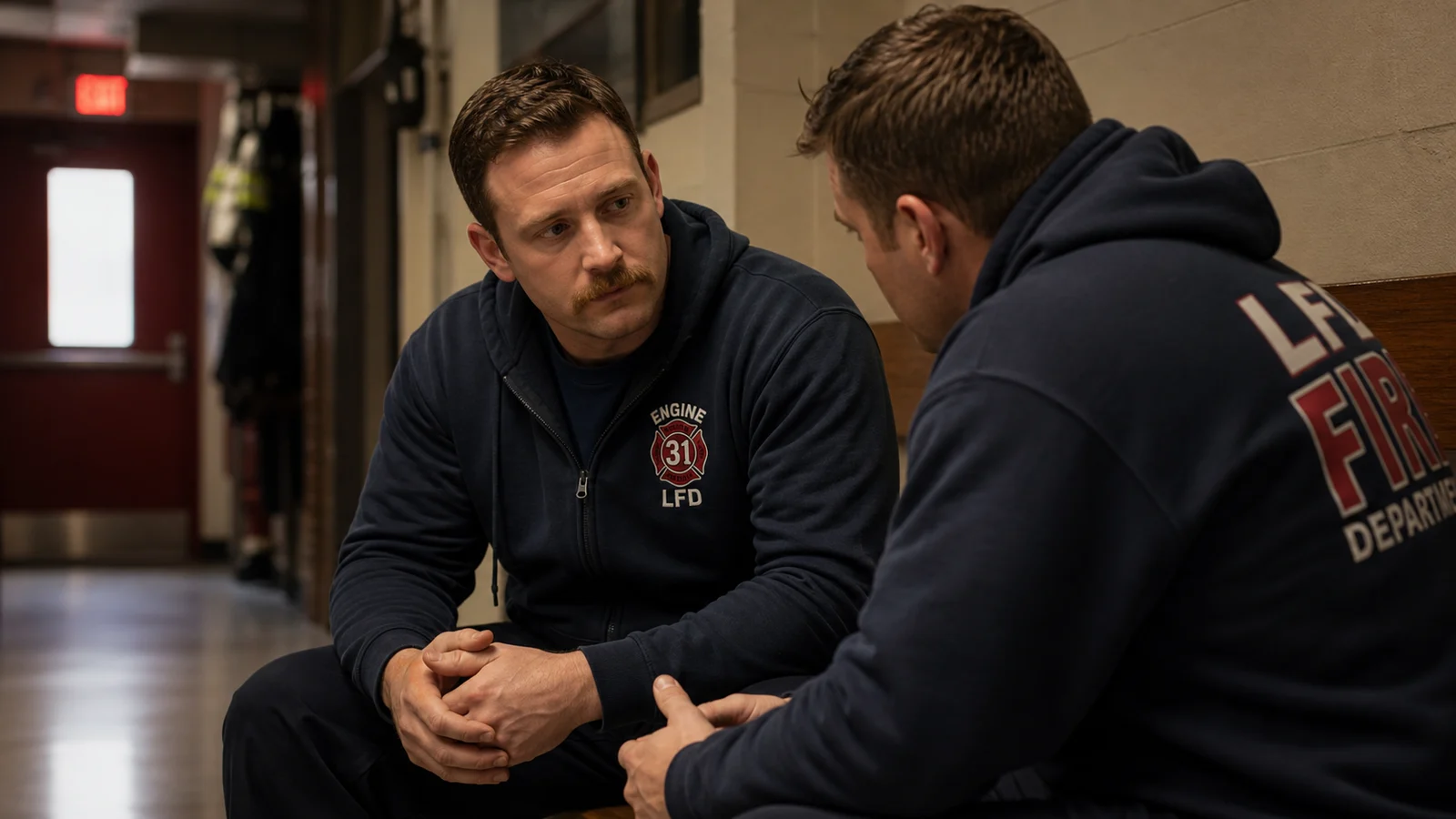
The last factor — cultural prohibition against help-seeking — is precisely why clinical resources alone are insufficient. A firefighter in crisis who would never call an EAP hotline or schedule a therapy appointment may talk to a trusted colleague. That conversation, if handled by a trained peer supporter who knows how to listen and when to refer, can be the intervention that saves a life.
Components of an Effective Peer Support Program
Effective fire service peer support programs share several common structural elements regardless of department size:
1. Administrative authorization and funding
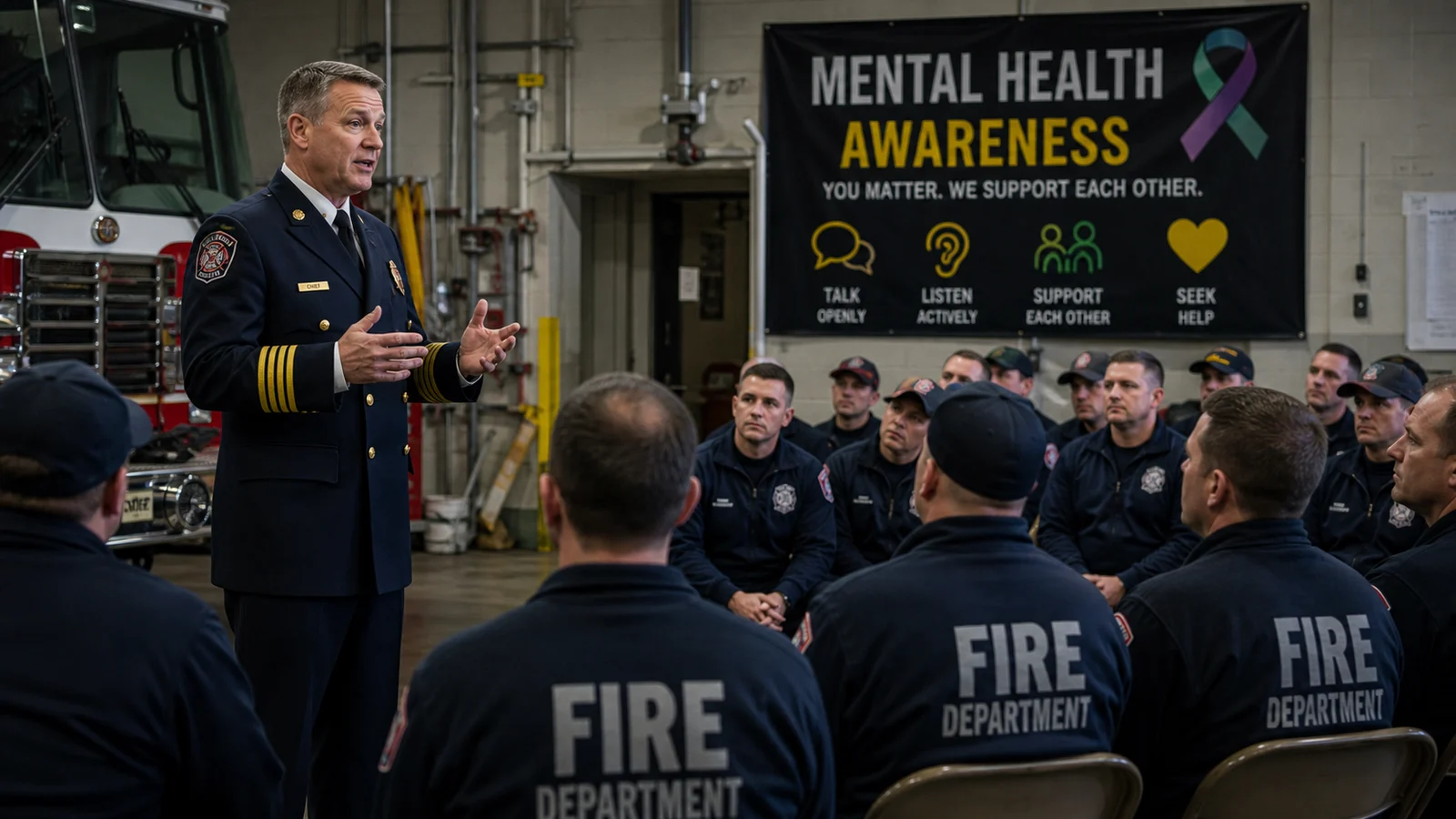
The program must have explicit support from department leadership — not passive tolerance, but active endorsement. Chiefs who publicly acknowledge mental health challenges, who talk openly about peer support, and who remove stigma from help-seeking create the cultural permission that makes the program actually get used. Funding for peer team training, continuing education, and program coordination is not optional — it is the department's investment in member survival.
2. A trained peer support team
The team should represent the department's diversity — different ranks, different shifts, different years of service, different company types, and ideally different demographic groups. Members should volunteer for the role, not be assigned. The peer supporter's credibility comes from being trusted and respected within the culture, not from having been appointed by command.
3. Formal training
See the training section below. Peer supporters need structured training, not just good intentions.
4. A clinical supervisor/partner
The peer support program should have a relationship with a licensed mental health provider — ideally one with first responder-specific experience — who provides consultation to the peer team, supervision for complex situations, and a direct referral pathway for members who need clinical support. The clinical partner is not on-call for every conversation, but is available when the peer supporter needs guidance.
5. A referral network
Peer supporters need to know what resources exist and how to access them: EAP services, first responder-specific therapists, addiction treatment programs with law enforcement/fire service experience, financial counseling, chaplaincy services, and crisis resources. Having this network mapped and current before a crisis occurs is essential.
6. A response protocol for critical incidents
When a major incident occurs — a pediatric fatality, a mass casualty event, a line-of-duty death, a firefighter suicide — the peer support team should have a pre-established protocol for reaching out to affected members. This is proactive, not reactive. Waiting for members to ask for help after a major incident means most of the members who need support will not receive it.
Building the Peer Support Team
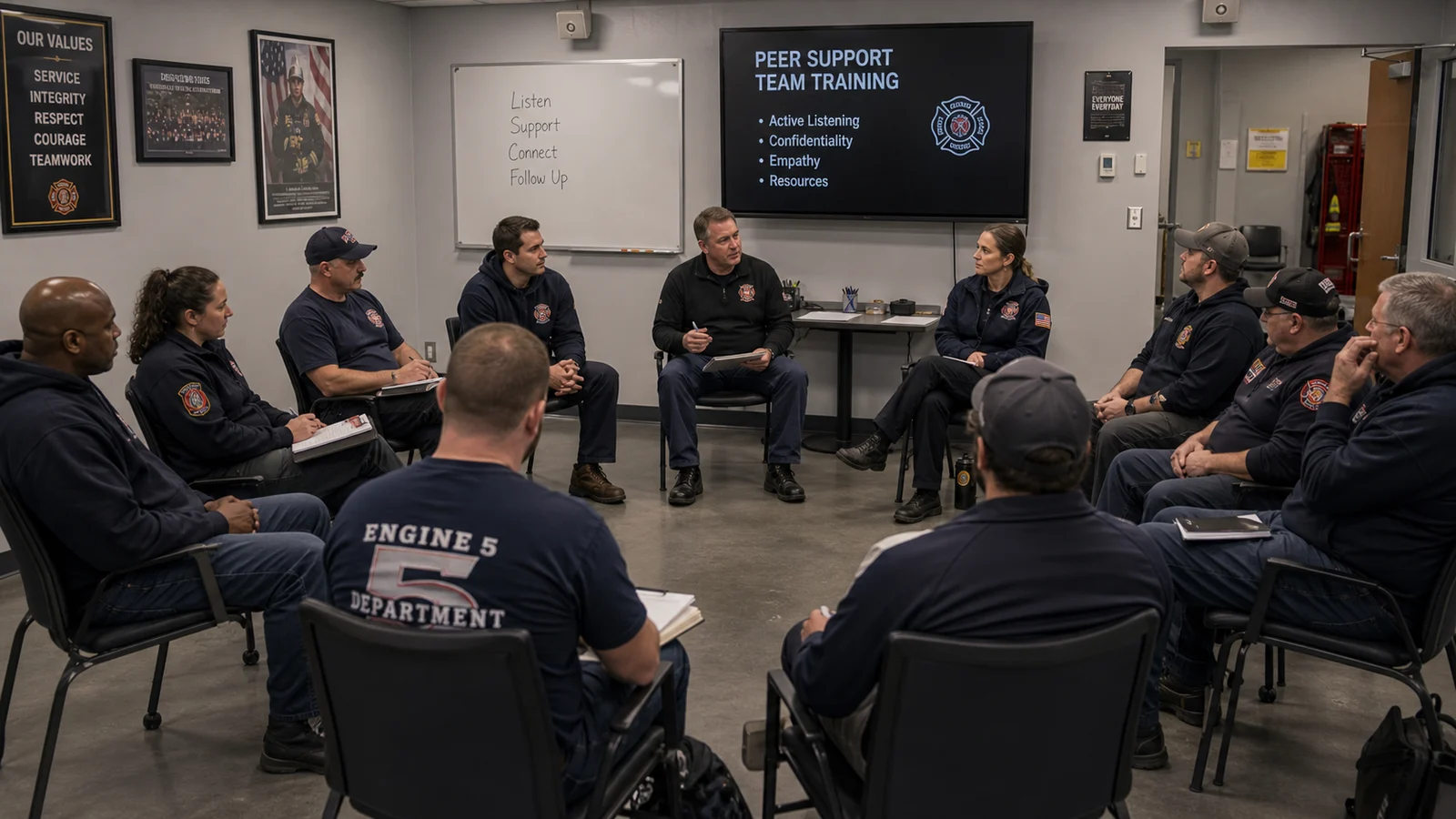
Who should be on the peer support team? The answer is more about qualities than rank or credentials. Effective peer supporters tend to share certain characteristics: they are trusted by their colleagues, they are known for discretion, they are approachable and non-judgmental, they have good listening skills, and they have credibility within the fire service culture — meaning they are respected as firefighters, not just as nice people.
Team composition considerations:
- Rank diversity: Include members from probie to captain. A firefighter is not going to reach out to a peer supporter who outranks them if rank dynamics create discomfort. Peer supporters at the same rank level are often the most accessible.
- Shift coverage: Members on every shift should have at least one peer supporter available. A member in crisis at 3 a.m. cannot wait until business hours.
- Personal experience: Members who have personally sought help for mental health, addiction, or trauma — and who are willing to share that experience appropriately — are often the most powerful peer supporters because they demonstrate that help-seeking is survivable and not career-ending.
- Spouse/family peer supporters: Some departments extend peer support to firefighter families, recognizing that occupational stress reverberates through households. Family peer supporters, often spouses of firefighters, can reach a population that direct peer contact sometimes cannot.
Training Requirements for Peer Supporters
Peer support training for fire service programs typically covers:
- Active listening skills: How to listen in a way that conveys genuine presence and does not project solutions, minimize feelings, or redirect to personal experience
- Mental health literacy: Basic understanding of PTSD, depression, anxiety, and substance use disorder — enough to recognize indicators without diagnosing
- Suicide risk assessment: Safe messaging guidelines, risk factor recognition, asking directly about suicidal ideation, and connection to crisis resources
- Motivational interviewing basics: Non-confrontational communication that helps ambivalent members move toward help-seeking
- Confidentiality and boundaries: Clear understanding of what is and is not confidential, and how to handle boundary-straining situations
- Referral skills: How to introduce the idea of professional support without shame, and how to connect someone to specific resources
- Self-care for peer supporters: Peer support work is emotionally demanding. Peer supporters need their own support structure and regular supervision from the clinical partner
Formalized training programs specifically designed for public safety peer support include the IAFF Peer Support Training Program, the Safe Call Now peer support model, the CONTIGO program, and several university-based first responder programs. Initial training is typically 2–3 days; annual continuing education is essential for maintaining skills and addressing burnout in the peer team itself.
Cultural Barriers and How to Overcome Them
The fire service culture's relationship with mental health help-seeking is the primary implementation challenge for any peer support program. The barriers are real and must be named honestly:
"I don't want command to know." The confidentiality concern is the most common barrier. It must be addressed explicitly, repeatedly, and with concrete statements about what confidentiality means and does not mean in your specific program. Put it in writing. Have command officers say it publicly and often.
"Asking for help means I can't do the job." This conflation of mental health help-seeking with operational incapacity is the most deeply embedded cultural barrier. It is addressed most effectively not by telling people they are wrong to think this, but by counter-examples — chiefs who talk openly about their own therapy, peer supporters who share their personal help-seeking experience, and consistent messaging that mental health care is the same as physical health care.
"The peer supporter will judge me." This is about trust in the specific individual, not the program abstractly. It is why peer team selection matters so much. If the peer team includes people who gossip, who are associated with discipline, or who do not have genuine respect across the department, the program will not be used.
"Real firefighters deal with it themselves." This is the one that requires the most patience and the most consistent counter-cultural messaging from leadership. Every senior firefighter who has successfully sought help and remained operationally excellent — and who is willing to say so — is the most powerful argument against this belief.
Frequently Asked Questions
Is peer support confidential in the fire service?
In well-designed programs, yes — with clearly defined exceptions for imminent risk of harm. Conversations with trained peer supporters should not be shared with command, HR, or anyone outside the peer support team without the member's explicit consent. This confidentiality must be documented in the program policy, communicated clearly to all members, and honored without exception if the program is to be trusted and used.
Can peer support replace professional mental health treatment?
No, and it should not try to. Peer support addresses the access gap — it reaches firefighters who would not seek professional help on their own, normalizes help-seeking, and connects members to clinical resources. For serious conditions like PTSD, major depression, or substance use disorder, professional clinical treatment is necessary. Peer support is the bridge, not the destination.
How do you start a peer support program in a small department?
Small departments can participate in regional peer support networks rather than building standalone programs. Many state fire associations and regional EMS systems have established peer support networks that small departments can access. Starting with two or three trained peer supporters, a clinical supervisor relationship, and a clear referral network is sufficient to begin. The IAFF Peer Support Training Program and NFFF resources provide accessible starting frameworks for departments of any size.
What happens after a mass casualty or line-of-duty death — does peer support get deployed?
Yes — proactive post-incident outreach is a core function of well-run peer support programs. After a major incident, peer supporters reach out to affected crews within 24–72 hours — not to conduct formal debriefing, but to check in, normalize stress reactions, and offer support. This is separate from Critical Incident Stress Debriefing (CISD), which is a more structured group intervention that has its own evidence base and protocols when used appropriately.



Comments 0
No comments yet. Be the first to share your thoughts!
Leave a Comment