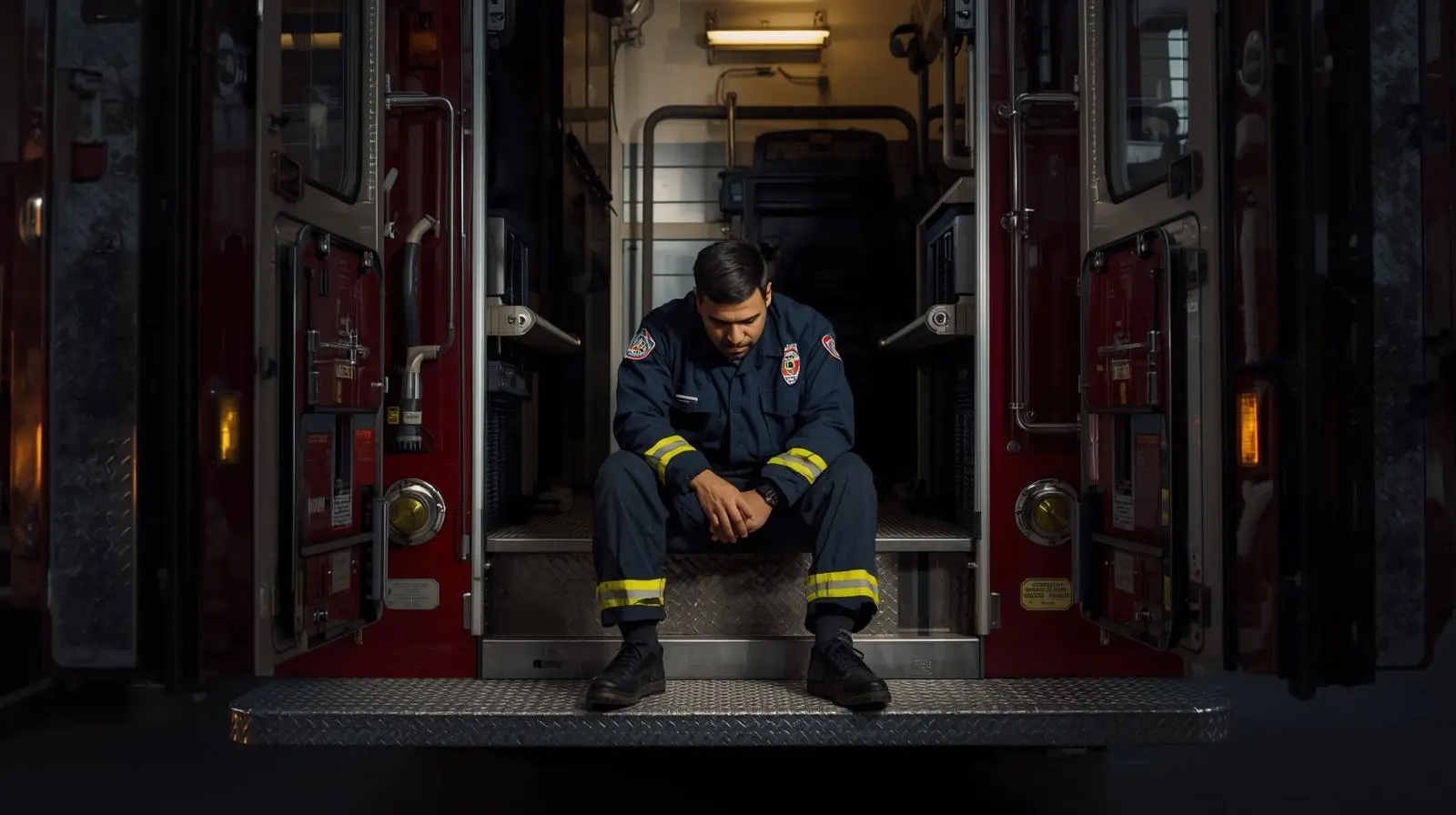

Firefighter Mental Health: PTSD, Stress, and How to Actually Get Help
The fire service has a mental health problem it is only beginning to address honestly. Firefighter suicides outnumber line-of-duty deaths from fire and trauma. PTSD, depression, alcohol use, and sleep disorders are significantly more prevalent in fire service personnel than in the general population. And the culture that built the fire service — toughness, stoicism, self-reliance — is the same culture that makes asking for help feel like a career risk. This guide covers what mental health challenges actually look like in firefighters, how to recognize them in yourself and your crew, and how to get real help.
Jump to:The data on firefighter mental health · PTSD in firefighters · Cumulative stress · Warning signs · The culture problem · CISD and peer support · How to actually get help · For officers and crew members · FAQ
If you are in crisis right now: Call or text 988 (Suicide & Crisis Lifeline). The Firefighter Behavioral Health Alliance helpline: 1-888-731-3473. You do not have to be in immediate danger to call.
The Data on Firefighter Mental Health
The fire service does not always track mental health data as rigorously as it tracks other LODDs, but the available data is unambiguous:
- Firefighter suicides consistently outnumber line-of-duty deaths from fire, trauma, and cardiac events in multiple years of reporting
- Firefighters have PTSD prevalence rates estimated at 20–22%, compared to approximately 8% in the general U.S. population
- Depression affects an estimated 30% of firefighters at some point in their career
- Alcohol use disorder is significantly more prevalent in the fire service than in the general population — a pattern often linked to self-medication of trauma and sleep disruption
- Sleep disorders (particularly from shift work and chronic stress) affect a majority of career firefighters
- Firefighters experience 3–5× the number of traumatic events in a year compared to most other professions
These are not personal failures. These rates reflect the cumulative occupational burden of the job — not character weakness. A firefighter who develops PTSD after years of trauma exposure is responding normally to an abnormal cumulative experience.
PTSD in Firefighters: What It Actually Looks Like
Post-traumatic stress disorder in firefighters does not always look like the dramatic presentations shown in movies. It is often subtle, particularly in the early stages, and often explained away as "just part of the job."
PTSD symptoms in firefighters
| Symptom cluster | How it appears in firefighters |
|---|---|
| Intrusion | Recurring mental images of specific calls (a child who didn't make it, a close-call interior attack). Nightmares about calls. Physical reactions (racing heart, sweating) when reminded of the event. |
| Avoidance | Avoiding conversations about specific incidents. Refusing to drive past a location where a traumatic call occurred. Emotional numbness on calls that used to affect you. Pulling back from family and friends. |
| Negative cognitions/mood | "I should have done more." Persistent guilt. Feeling detached from the crew. Loss of interest in activities that used to matter. Feeling like nothing is going to get better. |
| Hyperarousal | Difficulty sleeping even when exhausted. Constant hypervigilance (scanning exits in restaurants, sitting with back to wall). Exaggerated startle response. Irritability and anger that seem disproportionate. Difficulty concentrating. |
What distinguishes normal stress response from PTSD
Having a strong emotional response after a difficult call is normal and expected. The distinction is duration, intensity, and functional impact. Normal acute stress reactions typically resolve within days to weeks. PTSD is diagnosed when symptoms persist for more than a month, are severe enough to interfere with daily function, and are not better explained by another condition. The transition from acute stress to PTSD is not a personal failure — it reflects the cumulative load of trauma exposure over time.
Cumulative Stress: The Slow Burn Nobody Talks About
Most discussion about firefighter mental health focuses on critical incidents — the calls that clearly traumatize. But cumulative stress is equally important and less visible. Cumulative stress is the accumulation of:
- Chronic sleep deprivation from shift work
- Repeated exposure to death, suffering, and failed resuscitations
- Administrative and organizational stress (staffing conflicts, discipline, internal disputes)
- Shift work disruption to family relationships
- Physical injury and chronic pain
- The cumulative weight of calls that never get talked about because none of them were individually "bad enough" to warrant a debrief
Cumulative stress builds invisibly. Firefighters often reach a breaking point that seems disproportionate to whatever triggered it — because the trigger was the final addition to years of unprocessed load. This is why mental health maintenance, not just crisis response, matters in the fire service.
Warning Signs to Watch For in Yourself and Your Crew
The fire service culture of toughness means that firefighters who are struggling rarely ask for help directly. Warning signs are behavioral changes:
- Increasing alcohol consumption — particularly drinking to fall asleep or drinking alone
- Social withdrawal — pulling away from the crew, skipping social activities, isolating at home
- Significant mood changes — irritability and anger that seem disproportionate, or a flat affect where there used to be engagement
- Changes in work performance — difficulty concentrating, making uncharacteristic errors, apparent disengagement on calls
- Physical health changes — significant weight change, neglecting physical fitness that was previously important, somatic complaints
- Statements about hopelessness or burden — "I don't know why I bother," "everyone would be better off without me." These are not dramatic warning signs — they are often said quietly and dismissed
- Giving away possessions or settling affairs unexpectedly — these are acute crisis warning signs requiring immediate response
Trust behavioral change over statements. A firefighter in crisis almost never says "I am struggling and thinking about suicide." They say "I'm fine" and show behavioral changes that indicate they are not. Watch the behavior, not the words.
The Culture Problem and Why It Matters
The fire service culture was built around self-reliance, stoicism, and the norm that showing distress is weakness. This culture has survival value on the fireground. It is lethal when applied to mental health.
The specific ways culture blocks help-seeking in the fire service:
- "Weak" stigma: Admitting emotional struggle is culturally coded as weakness incompatible with being a firefighter. This is changing, but slowly and unevenly.
- Career fear: Firefighters genuinely worry that seeking mental health treatment will result in losing their job, badge, or firearms certification. In some departments this fear has been historically warranted, which has compounded the problem.
- EAP distrust: Employee Assistance Programs are often not trusted to be genuinely confidential. Many firefighters believe (sometimes correctly) that EAP records can be accessed by the department.
- Normalization: "That's just the job" normalizes mental health burden in a way that prevents recognition of when normal occupational stress has crossed into clinical territory.
Changing this culture requires leadership to model help-seeking behavior and departments to create structural protections that make help-seeking genuinely safe.
CISD and Peer Support Programs
Critical Incident Stress Debriefing (CISD) is a structured group intervention conducted after a traumatic incident. Research on CISD effectiveness is mixed — it is not a mental health treatment and should not be treated as one. What CISD does well:
- Normalizes the stress response after a difficult call
- Creates a structured opportunity for crews to process together
- Identifies individuals who may need follow-up support
- Demonstrates organizational acknowledgment that the call was significant
What CISD does NOT do: treat PTSD, prevent PTSD, or substitute for professional mental health treatment. It is a peer support intervention, not therapy.
Peer support programs
Peer support programs train firefighters to recognize mental health distress in colleagues and make referrals to professional resources. A peer supporter is not a therapist — they are a trusted colleague who has the training to recognize warning signs and the connection to help someone access professional help. Peer support is consistently cited as the most effective first-contact intervention in fire service mental health because it removes the barrier of talking to someone outside the culture.
How to Actually Get Help
If you are struggling — with sleep, with intrusive thoughts, with relationships, with alcohol, with feelings of hopelessness — here is how to access support:
Confidential options first
- 988 Suicide & Crisis Lifeline: Call or text 988. Available 24/7. Confidential. Trained counselors, including a dedicated firefighter/first responder option.
- Firefighter Behavioral Health Alliance (FBHA): 1-888-731-3473. Connects fire service personnel to behavioral health resources. Confidential.
- Safe Call Now: 1-206-459-3020. Confidential hotline for first responders, operated by first responders.
- Fire/EMS Helpline (NVFC): 1-888-731-FIRE (3473). National Volunteer Fire Council helpline for fire and EMS personnel.
Private therapy outside the department system
Seeking mental health treatment through a private therapist — not through your EAP, not through department-referred providers — is typically the most confidential option. Pay out of pocket or use private insurance billed to a home address. Look specifically for therapists with first responder or military trauma experience. EMDR (Eye Movement Desensitization and Reprocessing) and CPT (Cognitive Processing Therapy) have the strongest evidence base for first responder PTSD.
If you are concerned about career impact
In most states, seeking voluntary mental health treatment does not trigger automatic reporting requirements. Involuntary hospitalization and certain weapons-related legal proceedings do. If you have specific concerns about your jurisdiction, consult with an attorney who specializes in public safety employment before engaging with department-connected resources. You have a right to know what is and is not confidential before you disclose.
Asking for help is not weakness. Every study on fire service resilience shows that firefighters who access support earlier have better outcomes, longer careers, and better quality of life than those who manage alone. The strongest thing you can do for yourself and your crew is acknowledge when you need support.
For Officers and Crew Members: How to Help Someone Who Is Struggling
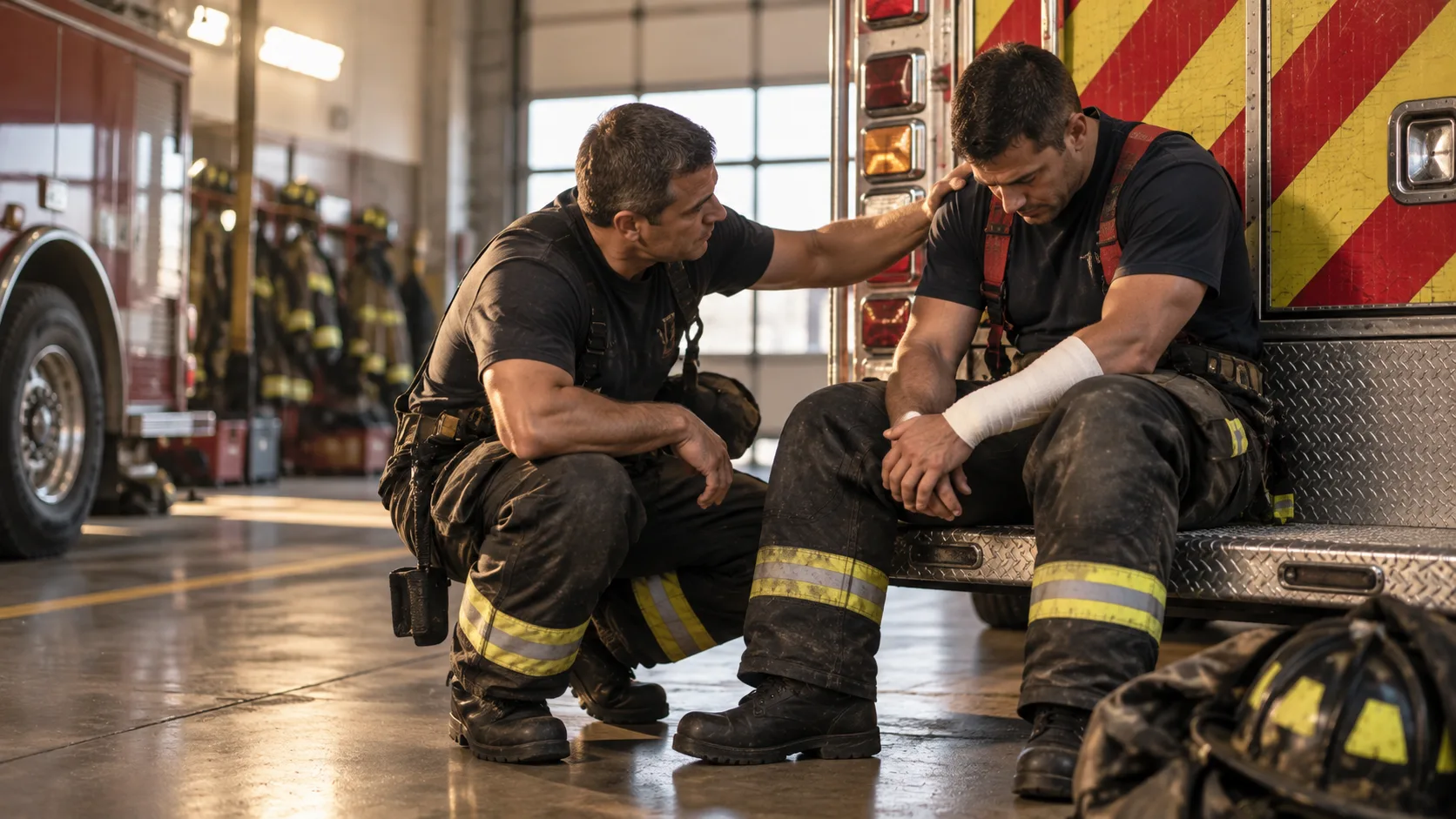
If you are concerned about a colleague, here is how to approach it:
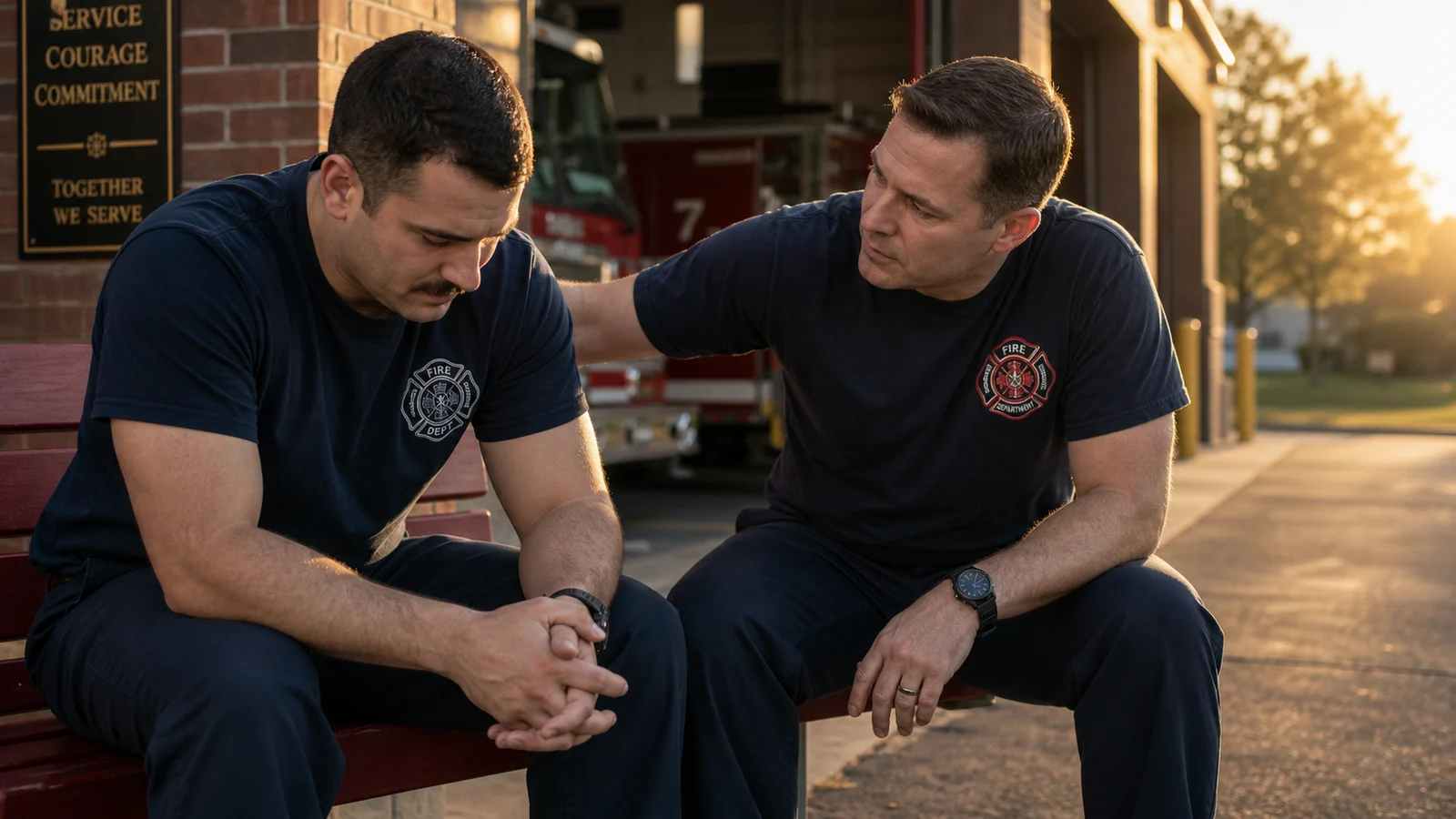
- Ask directly. "Are you thinking about hurting yourself?" Asking does not plant the idea. Research consistently shows that direct, compassionate questioning reduces suicide risk by opening a conversation that was previously closed.
- Listen without problem-solving. The instinct in the fire service is to fix things. For someone struggling emotionally, the most powerful thing you can offer is genuine listening without judgment or advice.
- Don't promise to keep secrets. If someone tells you they are in danger, you may need to act. Don't commit to confidentiality you cannot keep.
- Connect, don't push. Offer to drive someone to a call to a hotline. Sit with them while they make the call. Offer to help find a therapist. Reduce the friction of help-seeking.
- Follow up. One conversation is not enough. Check back in. People in crisis often show brief improvement followed by return to danger. Sustained attention matters.
Frequently Asked Questions
Do firefighters have high rates of PTSD?
Yes. Firefighters experience PTSD at rates estimated at 20–22%, compared to approximately 8% in the general U.S. population. This reflects the cumulative occupational burden of repeated trauma exposure over a career, combined with cultural barriers to help-seeking that delay treatment and worsen outcomes.
Will seeking mental health treatment affect my job as a firefighter?
Voluntary, private mental health treatment typically does not trigger automatic reporting or employment consequences in most jurisdictions. Involuntary hospitalization and certain legal proceedings carry different implications. If you have specific concerns, consult with a public safety employment attorney before engaging department-connected resources. Most firefighters who seek private treatment do so without any career impact.
What is the difference between CISD and therapy?
CISD (Critical Incident Stress Debriefing) is a group intervention conducted after a traumatic event to normalize stress responses and identify people who may need further support. It is a peer intervention, not therapy. Professional therapy (particularly EMDR or CPT for PTSD) is provided by a licensed mental health professional, is individualized, and treats clinical conditions. CISD is not a substitute for therapy in firefighters with clinical PTSD.
How do I find a therapist who understands first responder trauma?
Search for therapists with "first responder," "law enforcement," or "military trauma" specialization. Organizations like the IAFF Center of Excellence, First Responder Support Network, and Responder Alliance maintain directories of clinically trained providers with fire service experience. Ask potential therapists directly whether they have worked with first responders before committing to treatment.
What should I do if I think a colleague is suicidal?
Ask them directly ("Are you thinking about hurting yourself?"), listen without judgment, and connect them to immediate resources. If you believe they are in immediate danger, do not leave them alone. Call 988 together, offer to drive them to an emergency mental health evaluation, or contact dispatch for a welfare check if you cannot reach them. Direct action is always better than uncertainty.

Comments 0
No comments yet. Be the first to share your thoughts!
Leave a Comment