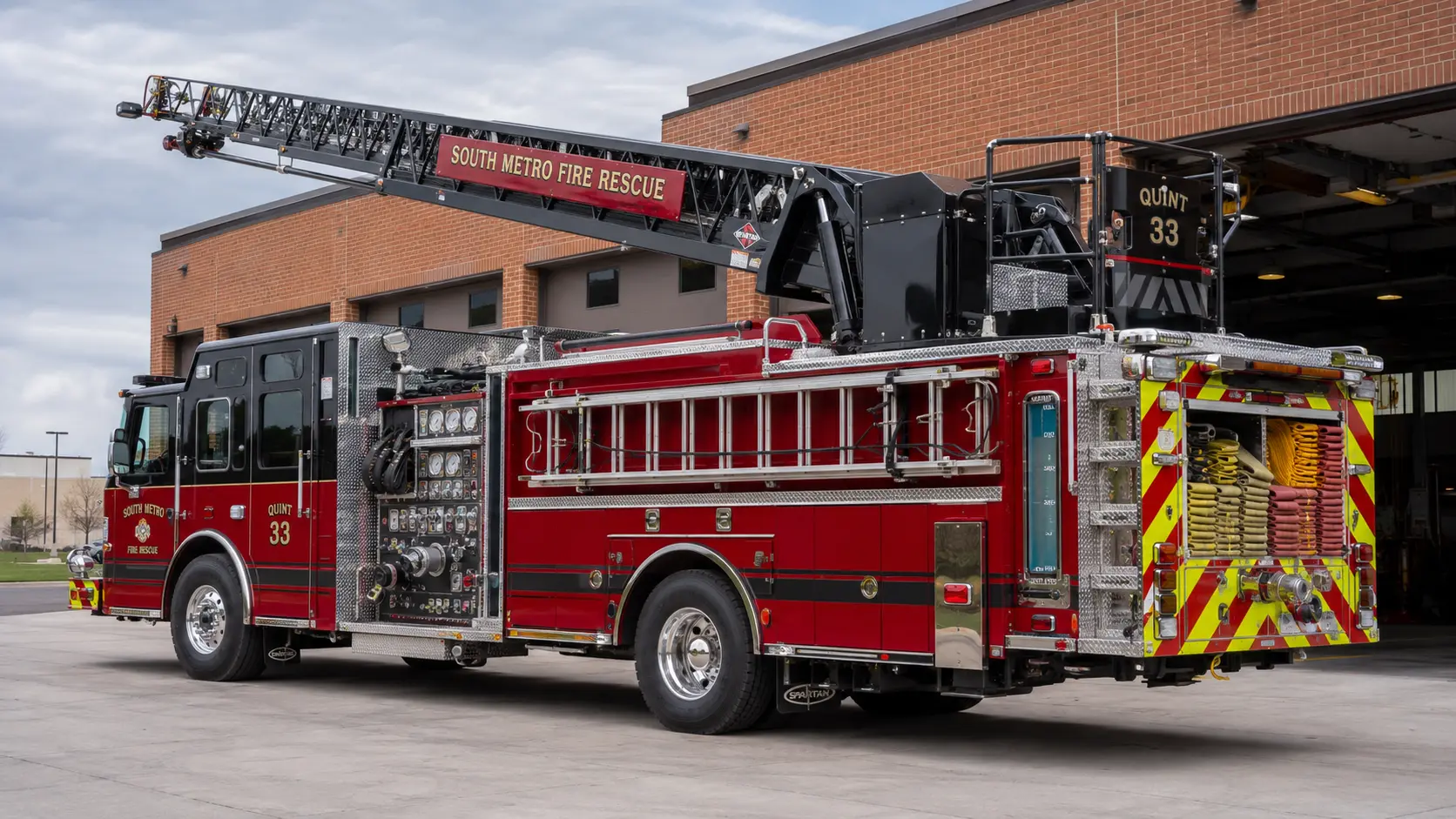

The quint is appealing on paper. Instead of budgeting for and maintaining two separate apparatus types — an engine and a ladder truck — a department buys one apparatus that does both. Instead of staffing two companies, the quint company handles both missions. The capital cost is lower, the facility requirements are simpler, and the apparatus fleet is smaller. For departments with the right call volume and response profile, this calculation works. For departments with the wrong profile, it trades cost savings for operational compromises that become visible during working structure fires.
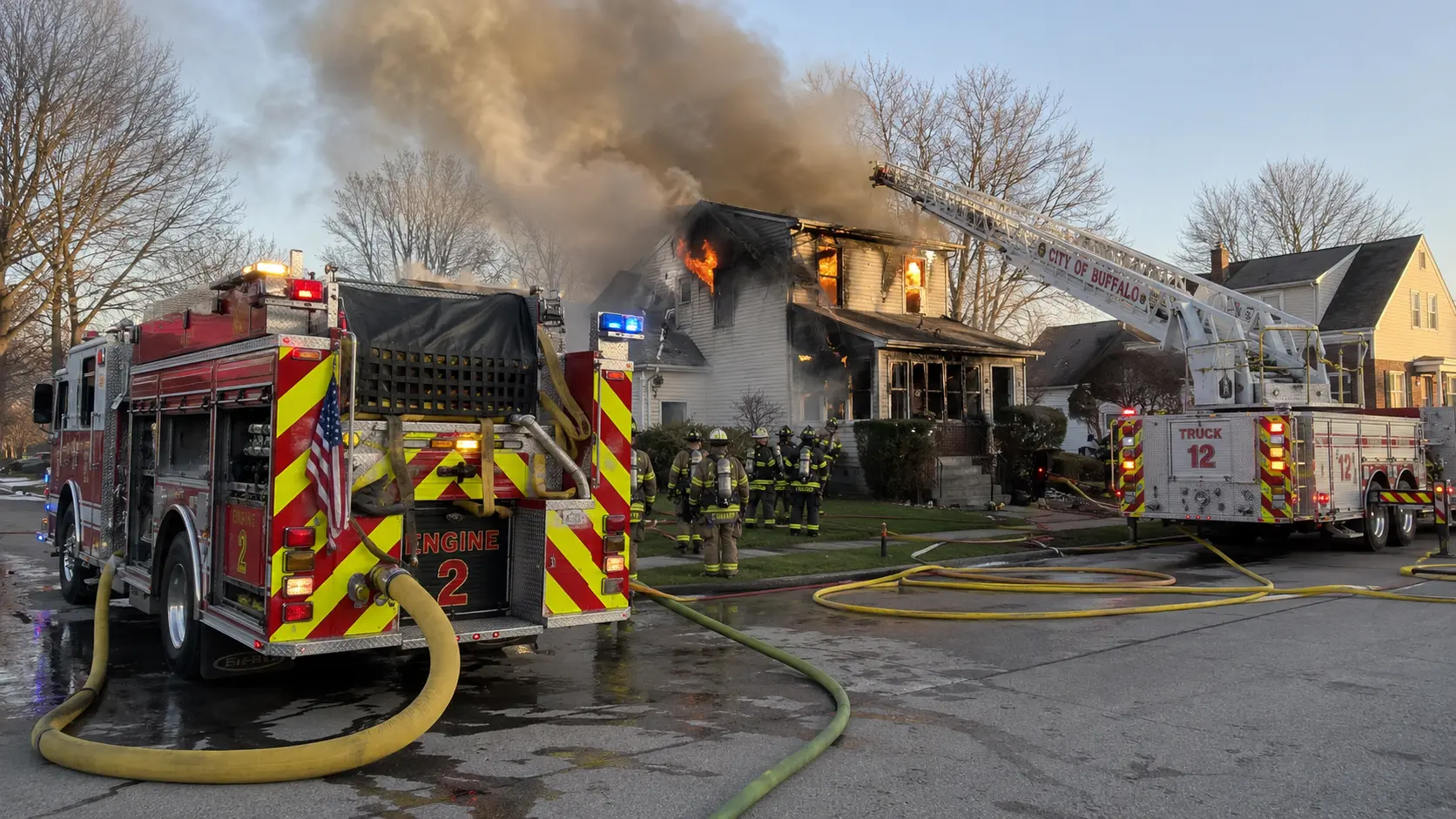
The problem the quint creates is the same problem any combination apparatus creates: the work that required two companies simultaneously now requires two companies sequentially. At a working structure fire requiring simultaneous engine and ladder operations, the quint company must choose which function to perform first. The other function waits, or does not happen.
In this article:
The Five-Capability Definition
NFPA 1901 defines a quint as apparatus that carries all five of the following:
- A fire pump with a rated capacity of at least 1,000 GPM
- A water tank of at least 300 gallons
- Fire hose — a minimum complement of supply and attack hose
- Ground ladders — a complement that meets or approaches the ladder company ground ladder requirement
- An aerial device — a ladder, platform, or telescoping device with a minimum height of 50 feet
The name derives from the Latin "quintus" (fifth) — the fifth element (the aerial device) added to the engine's four traditional capabilities. Apparatus that carries four of the five is not a quint — it is a pumper with an aerial, or a ladder with a pump, or a combination apparatus that does not meet the NFPA 1901 quint definition.
Quint Design: Aerial and Pump in One Apparatus
Building both a working pump system and a functional aerial device into one apparatus presents engineering challenges. The pump requires a large, accessible pump panel with numerous outlets and gauges. The aerial requires a turntable, outriggers, and sufficient counterweight to operate the aerial safely. Both systems require substantial chassis capacity.
Quints are typically built on commercial truck chassis in the heavy-duty range — similar to aerial ladder apparatus — with the aerial device (most commonly 75 to 105 feet) mounted at the rear turntable, and the pump and hose beds integrated into the body between the cab and the turntable. The result is a longer, heavier apparatus than a standard engine, with an aerial device that may not be as large as a dedicated ladder truck of the same overall length.
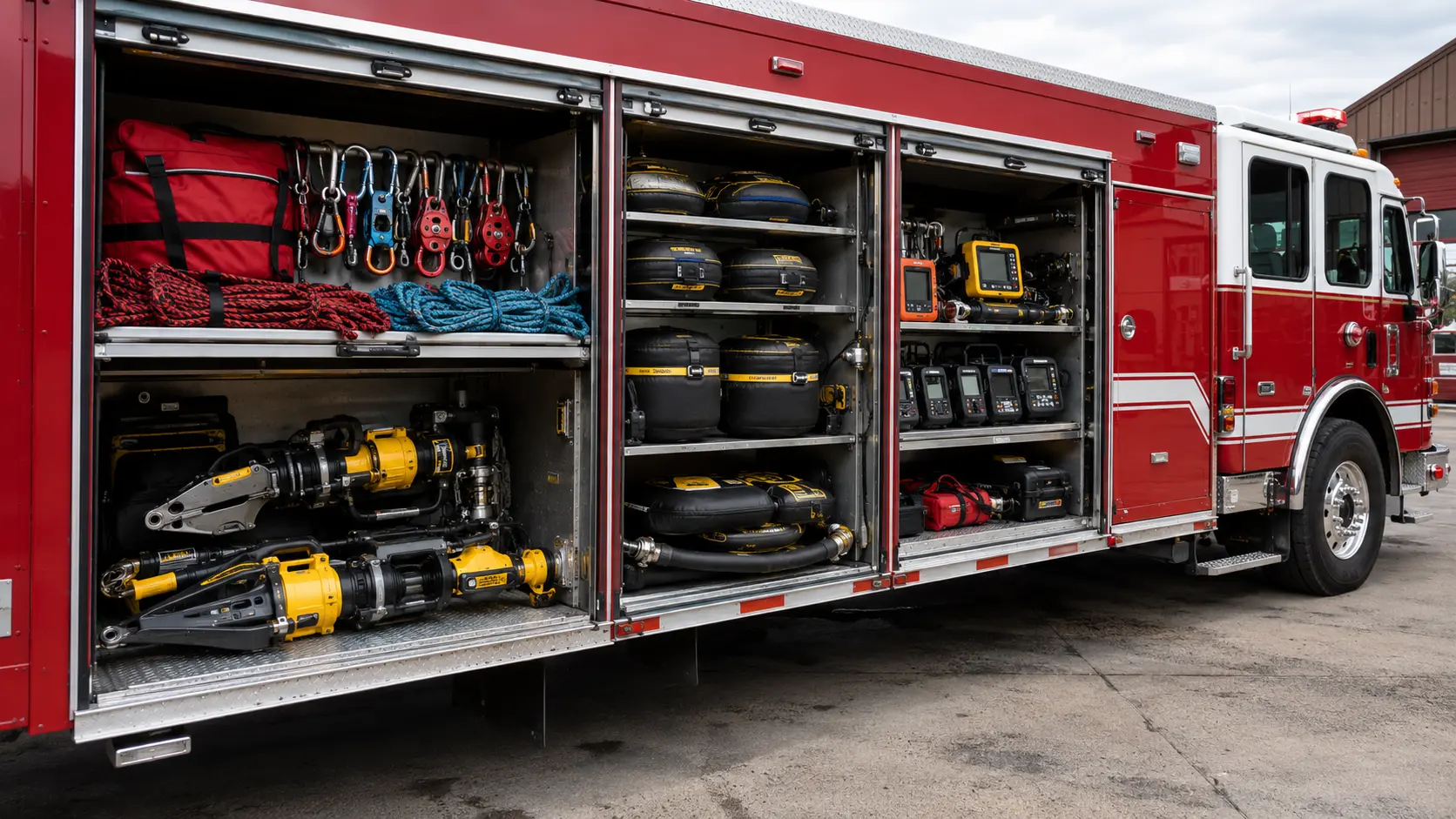
Ground ladder complement on a quint is typically smaller than on a dedicated ladder truck — the body space occupied by the pump panel, tank, and hose beds reduces the available ground ladder storage. This trade-off is acceptable when the aerial device covers most elevation needs, but in situations requiring multiple simultaneous ground ladder placements, the quint's smaller ground ladder complement may be limiting.
The Staffing Mathematics
The operational limitation of the quint is not the apparatus — it is the crew. A quint company with four firefighters cannot simultaneously advance a charged hoseline as an attack crew and perform ladder company functions (forcible entry, search, ventilation). The crew must do one or the other first.
In a department where the quint is the only first-due apparatus, this creates the same operational constraint as a single under-staffed company: the crew must prioritize. Typical priority: life safety first, which drives the search and forcible entry function. Fire attack comes after. The engine attack function that ideally happens simultaneously with search is delayed until either the crew completes initial search tasks and redirects to the hose, or until a mutual aid company arrives.
The quint works best when it is part of a multi-company response — when a second company handles one function while the quint handles the other. If a quint responds first to a working structure fire, and the second-due unit is a standard engine with no ladder capability, the quint may need to handle aerial and ground ladder functions that the second unit cannot, while the second engine handles fire attack. The combination of quint plus engine can replicate the full engine-ladder functional coverage, but it requires the right pairing of responding apparatus.
When the Quint Works Operationally
Quints are most effective in departments with the following characteristics:
- Low to moderate call volume: The simultaneous incident problem — two working fires requiring both engine and ladder functions at the same time — is uncommon enough that the quint's inability to split into two simultaneous operations is not regularly tested.
- Single-company response areas: Rural or suburban departments where the quint is the only first-due apparatus for a significant geographic area, and where mutual aid from a second company takes long enough that the quint must handle all initial functions before help arrives.
- Building stock that doesn't require frequent concurrent ladder operations: Communities with predominantly single-story or two-story residential structures where the aerial device is rarely needed simultaneously with active hoseline operations.
- Budget and staffing constraints: The economic reality of many departments — inability to staff two companies simultaneously from available personnel — means the quint's combination capability is the only way to provide any aerial device capability at all.
When It Doesn't — and What Gets Left Out
The quint's limitations become operationally visible in specific scenarios:
Multi-story residential fires requiring simultaneous attack and search: The crew must prioritize. At a three-story apartment fire with a reported victim, the crew performs search — leaving the hoseline uncharged until search is complete or until a second company arrives. The fire grows during this period.
High-rise and commercial fires requiring standpipe operations and aerial simultaneously: The pump operator at the panel and the aerial operator at the turntable are different positions — in an undersized crew, these functions compete for personnel.
Large incidents requiring multiple simultaneous ladder deployments: One aerial device and a smaller ground ladder complement limits how many access points can be established simultaneously compared to a fully equipped dedicated ladder truck.
ISO and Insurance Rating Implications
The Insurance Services Office evaluates fire department apparatus and assigns ratings that affect homeowner insurance premiums in the coverage area. The ISO evaluation credits quint apparatus for both engine and ladder capabilities when the apparatus meets specific requirements — but this credit is applied differently than for dedicated apparatus.
A quint may receive partial engine credit and partial ladder credit rather than full credit for both. The specific credit depends on staffing levels, response times, and the apparatus's operational capability as documented. Departments considering quints for ISO rating purposes should evaluate the specific credit they will receive before assuming that one quint replaces both an engine and a ladder in the ISO calculation.
Why High-Volume Urban Departments Don't Use Them
FDNY, LAFD, Chicago Fire, and other large urban departments with high call volume and frequent simultaneous incidents do not generally operate quints as their standard apparatus type. The reason is the simultaneous operations problem — in a department that runs multiple working fires per day, having apparatus that cannot split its functions between two simultaneous operations is an operational disadvantage that outweighs the cost savings.
Urban departments also have staffing levels and response staffing that make dedicated engine and ladder companies practical — they have enough personnel to staff both simultaneously. The cost savings from quints are most meaningful when staffing is the binding constraint. When staffing can support separate companies, the operational performance of dedicated apparatus is preferred.
The Departmental Debate
The quint debate in the fire service is genuine and ongoing. Proponents argue that for the call profile of most American fire departments — predominantly EMS with occasional structure fires in lower-density areas — the quint provides adequate capability at lower cost, and the simultaneous operations problem is theoretical rather than regularly encountered. Opponents argue that the fire service should plan for the worst-case call type (the working structure fire requiring all functions simultaneously), not the average call type, and that the quint's limitation appears precisely when it matters most.
Both positions reflect genuine operational experience. Departments that have operated quints successfully for decades in low-to-moderate volume environments have data to support their choice. Departments that have experienced the simultaneous operations gap during working fires have different data. The decision is context-dependent, and the context is call volume, building stock, staffing availability, and mutual aid response time — all of which vary significantly between departments.
Comments 0
No comments yet. Be the first to share your thoughts!
Leave a Comment