

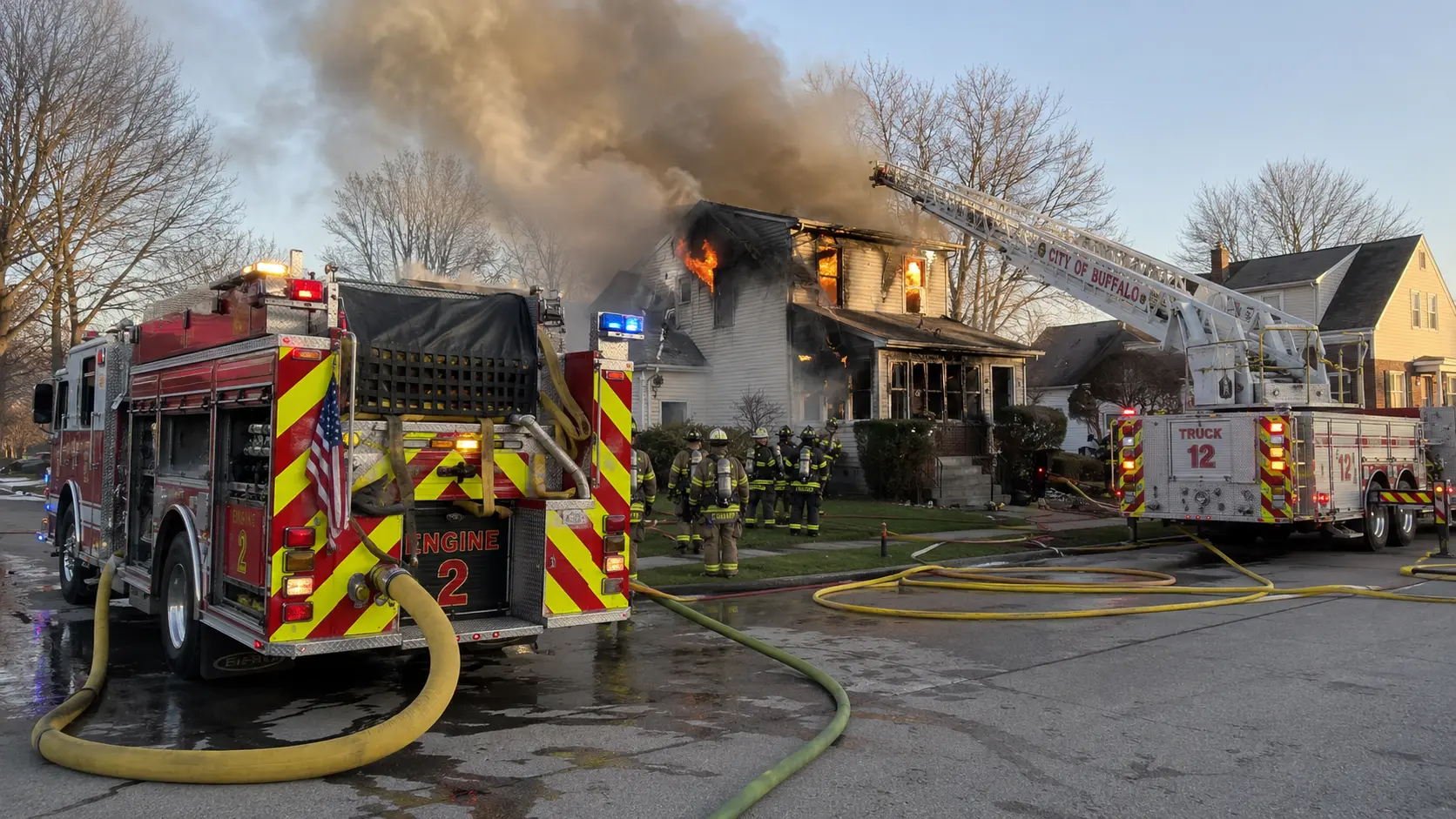
A fire apparatus that arrives at a working structure fire is not a truck with tools thrown in the back. It is a system engineered around specific operational sequences — who needs what, when they need it, and from what position relative to the fire. The officer's side versus the driver's side organization reflects which crew member performs which function on arrival. The pre-connected attack lines in the rear bed reflect the most common deployment sequence. The SCBA storage position reflects how many spare cylinders a crew needs and how fast they need to access them. Nothing is random, and understanding the logic makes it possible to understand why modern pumpers are built the way they are.
In this article:
The Overall Layout Logic
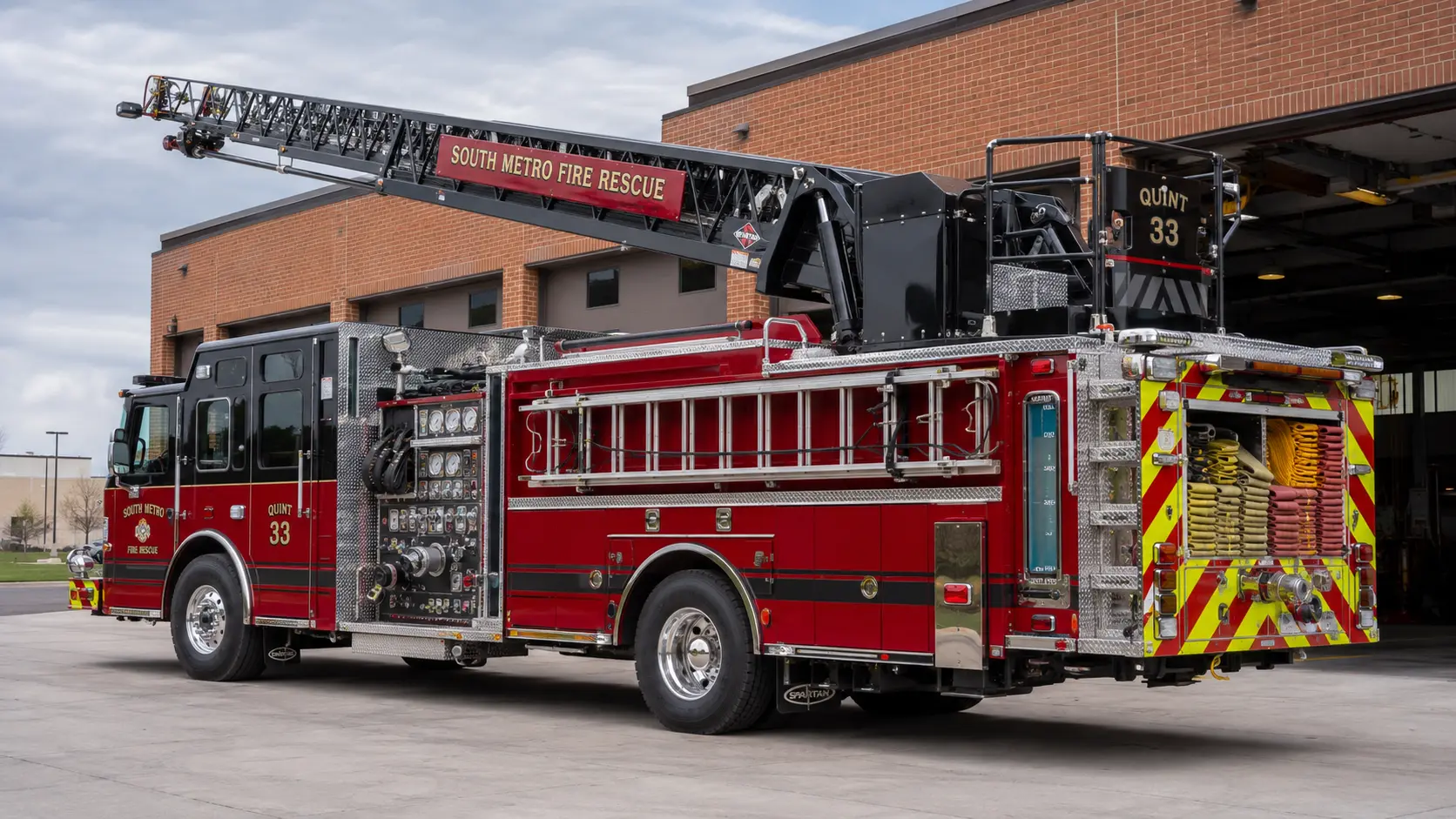
A pumper's layout divides into three organizational zones: the cab area (seating for the crew in transport), the body (compartments on both sides and at the rear), and the pump panel (the operational interface on the driver's side). The crew position in the cab determines what each member does on arrival: the officer in the right front, the driver at the pump panel, and the crew members in the rear seats who pull the attack lines and advance toward the fire.
The officer's side and the driver's side carry different equipment based on who accesses each compartment and when. The driver's side compartments are accessed by the pump operator — who stays at the apparatus during operations — and carry equipment that the pump operator manages: additional hose, tool complements, equipment that other arriving companies may need. The officer's side compartments are accessed by the attack crew — the people advancing toward the fire — and carry the equipment those crew members need first: forcible entry tools, ground ladders, equipment that comes off before the hoseline is charged.
Hose Beds: Attack Lines and Supply Hose
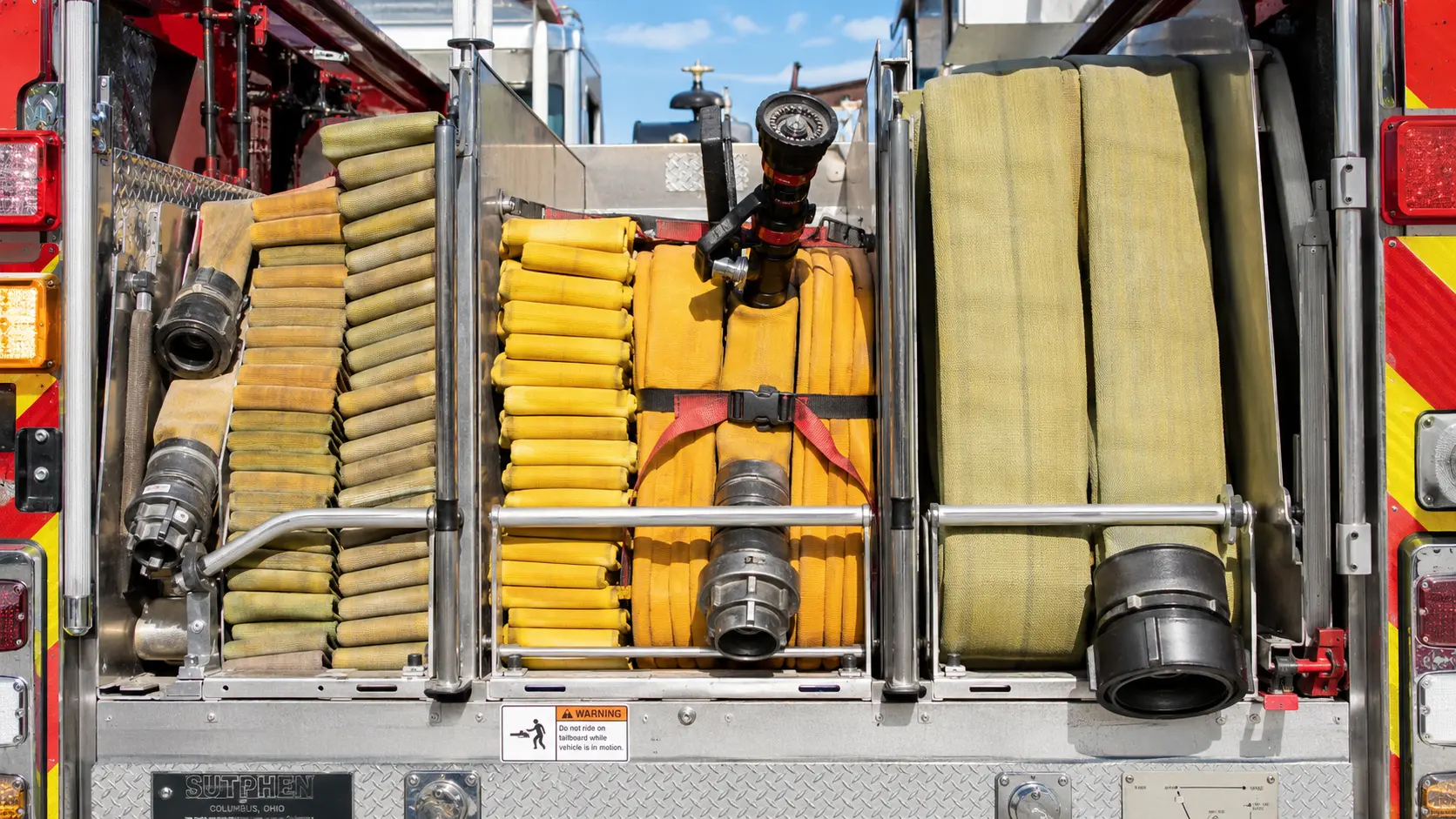
The rear of a pumper carries the hose — typically in multiple separate beds that serve different functions. The standard rear hose configuration:
- Pre-connected attack lines: Two 1¾-inch attack lines, each 150 to 200 feet long, pre-connected to specific discharge outlets and loaded in a minuteman or accordion configuration for immediate deployment. These are the lines the attack crew grabs when they exit the apparatus — they do not need to make any connections, only open the pre-established connection and the valve.
- Large-diameter supply hose bed: 200 to 400 feet of 4-inch or 5-inch LDH loaded for either forward lay or reverse lay. This hose connects the engine to the hydrant — the pump operator deploys it by connecting to the hydrant and driving toward the fire (forward lay) or connecting at the fire and driving to the hydrant (reverse lay).
- Additional attack hose: An additional 1¾-inch or 2½-inch bed with hose for the second attack line or for specific use cases (2½-inch for high-flow situations, additional 1¾-inch for extended operation).
- Specialty hose: Varying by department — wildland forestry hose, high-pressure booster hose, or specialized attack hose for specific occupancy hazards in the response area.
The Pump Panel
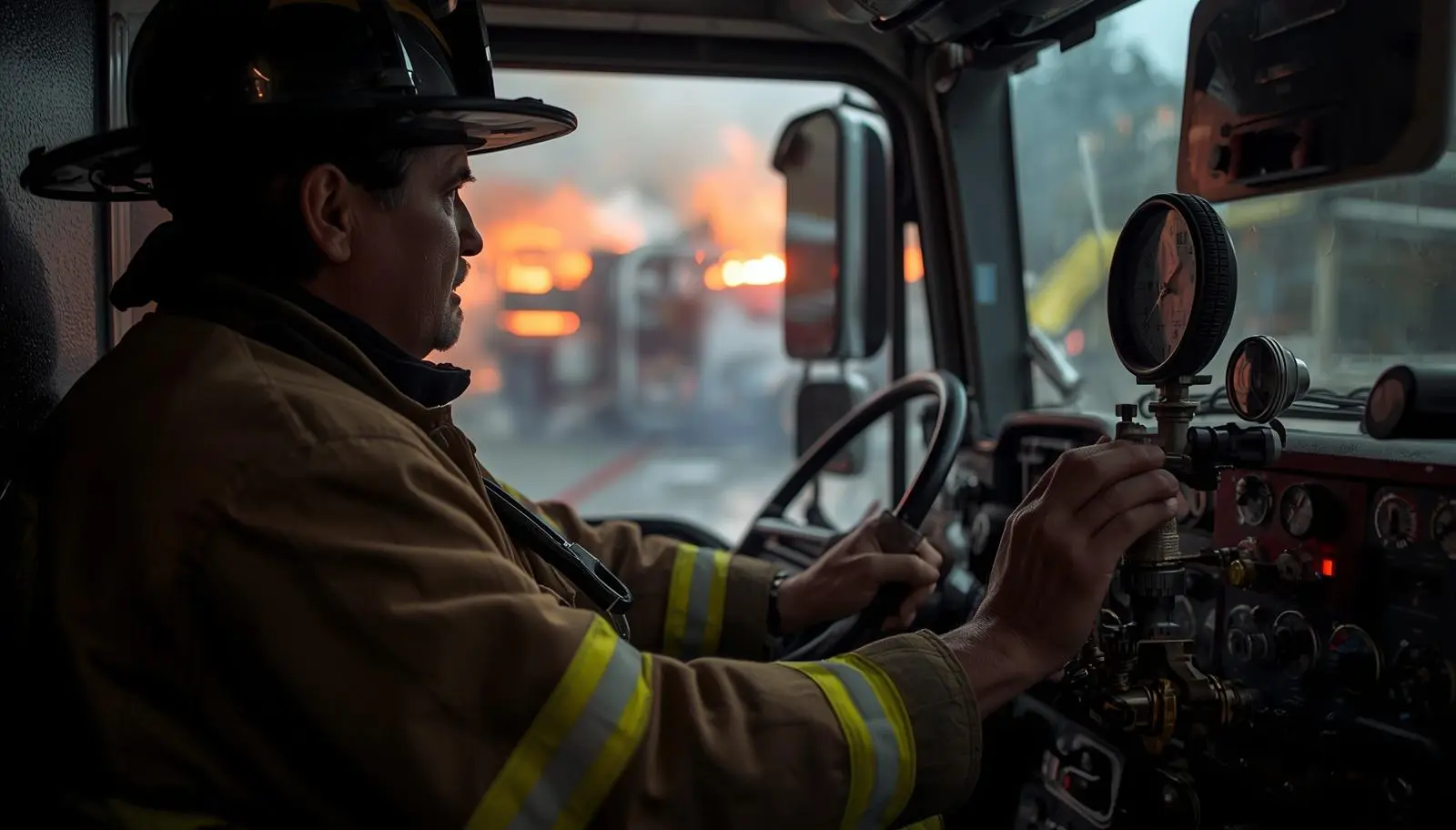
The pump panel — mounted on the driver's side of the apparatus between the cab and the rear body — is the operational interface for the pump operator. It contains the discharge outlets (connections to which all hose lines are connected), the intake connections (from the hydrant or suction source), the pressure gauges for each discharge and the overall pump pressure, the throttle control for the engine that powers the pump, the tank-to-pump valve (which connects the on-board water tank to the pump suction), and the various gate valves and butterfly valves that control flow to each discharge line.
Modern pump panels also carry foam system controls, electronic flow meters on some apparatus, and a master drain valve that allows the pump to be drained for cold weather operation or at the end of an incident. The pump panel is where the pump operator spends the entire incident — watching gauges, managing pressures, adjusting as lines are opened and closed, and communicating with interior crews about water supply status.
The Booster Reel
The booster reel — a small-diameter (¾-inch or 1-inch) hose on a spring-loaded reel, typically mounted above the rear step of the apparatus — provides a fast-deploy small-flow water source for minor fires, exposure cooling, and car fires. It is connected directly to the tank, not through the pump panel, and the reel allows the hose to be pulled out and retracted easily. A crew member can deploy the booster reel in under 30 seconds without any connection work, providing immediate small-volume water while the main attack lines are being deployed.
The booster's limitation is its flow rate — 15 to 30 GPM, which is adequate for a trash can fire or a small vehicle fire and completely inadequate for a working structure fire. Departments sometimes extend booster use longer than the situation warrants when the crew is reluctant to commit to pulling a full attack line, which delays the time to effective suppression flow on fires that have grown past what the booster can address.
Tool Compartments
The compartments on both sides of the apparatus body carry hand tools, forcible entry equipment, utilities equipment, and specialty tools organized for specific crew members and specific functions:
- Forcible entry tools: Halligan bar, flathead axe, maul, K-12 rotary saw, bolt cutters, and hydraulic door opener are typically in a readily accessible officer's side compartment or crosslay area accessible to the crew member who will perform forcible entry.
- Hand tools: Pike poles and hooks for overhaul, shovels, axes, and utility tools are in compartments accessible during overhaul operations.
- Utility control: Gas shutoff key, meter prybars, and electrical shutoff equipment for field utility control on arrival.
- Rope bag: A utility rope for access control, equipment lowering, and basic rope applications — not rated for life safety rescue.
- Thermal imaging camera: Mounted in an accessible location on the officer's side for the officer or first crew member to grab on entry.
- Lighting: Scene lights, portable hand lights, and mounting hardware for temporary scene illumination during overhaul and night operations.
SCBA Storage
Modern pumpers carry four to six spare SCBA units in addition to the SCBAs assigned to each seat in the cab. The cab-mounted SCBAs are positioned so that each crew member can don their SCBA while seated in the apparatus during response — arriving with a ready-to-use SCBA already on rather than having to retrieve it from a compartment after arriving.
The spare SCBAs in body compartments serve two purposes: replacement of depleted cylinders during extended operations (the spare units are pre-charged cylinders that can exchange with depleted ones), and provision of SCBA for additional arriving crew members or mutual aid personnel who may not have compatible equipment. SCBA compartments are typically equipped with positive locking mechanisms that secure the units during apparatus movement and allow rapid removal for deployment.
EMS Compartment
Every modern structural pumper carries a minimum complement of EMS equipment, reflecting the fact that engine companies frequently arrive first at medical emergencies and serve as first responders before the ambulance arrives. The typical EMS compartment contains:
- AED (Automated External Defibrillator) with pads
- Oxygen kit with masks and delivery equipment
- Trauma kit with bleeding control supplies
- Bag-valve mask for assisted ventilation
- Spinal immobilization equipment
- CPR board for compressions during transport if needed
- Basic assessment equipment (stethoscope, blood pressure cuff, pulse oximeter)
Some departments equip engine companies with ALS supplies — IV equipment, medications, cardiac monitoring — particularly in systems where the engine company may be the only ALS resource in a given area. The equipment load varies significantly by department protocol and scope of practice.
Foam Systems
Most modern structural pumpers carry a foam system for Class A foam (which improves water penetration and reduces surface tension for better structural fire suppression) or Class B foam (for flammable liquid fires). The foam system consists of a foam concentrate tank (typically 20 to 30 gallons), a proportioning system that mixes concentrate with water at the correct ratio, and connections that route the foam-water mixture to specific discharge outlets or to a foam application attachment on a nozzle.
Some departments have transitioned to CAFS — Compressed Air Foam Systems — which inject compressed air into the foam-water mixture to produce an expanded foam with significantly better adherence to vertical surfaces and fuel coverage. CAFS apparatus are heavier and more mechanically complex than standard foam systems but produce significantly better Class A foam performance for the same volume of concentrate and water.
Ground Ladders
Pumpers carry a complement of ground ladders — typically two to four ladders of different lengths — in side-mounted racks or in the hose bed area. The specific complement varies by department and by the building stock in the response area:
- A folding attic ladder (10 feet) for interior attic access
- A straight roof ladder (14 to 20 feet) with roof hooks for roofline work
- An extension ladder (24 to 35 feet) for second and third floor access
Pumpers that serve areas with structures above two stories typically carry a 35-foot extension ladder as their longest ground ladder — providing access to third-floor windows and rooflines of two-story structures. Areas with predominantly single-story construction may carry shorter ladders without the 35-foot unit.
Modern Electronics
Modern pumpers include electronic systems that were not present on apparatus built 20 years ago: a Mobile Data Terminal (MDT) in the cab that receives dispatch information, building data, hydrant location, and routing information; a GPS navigation system integrated with the MDT; a dashboard camera that records responses for review; and in some departments, a wireless internet connection that downloads pre-incident plans for the response address during the response.
The MDT gives the crew access to the building's pre-incident plan, FDNY's hazardous building database notation (if any), the location of the closest hydrants, and the history of prior incidents at the address — all before the apparatus arrives. A crew that arrives with this information has a more complete picture of what they are responding to than one that relies only on the dispatcher's initial report.


Comments 0
No comments yet. Be the first to share your thoughts!
Leave a Comment