📅 2025 ladder training guide. Ground ladder operations must always follow department SOPs, manufacturer instructions, instructor direction, staffing, PPE requirements, weather conditions, overhead hazard checks, and incident command strategy. This guide is educational and does not replace supervised hands-on firefighter training.
Firefighter Ladder Training Techniques 2025: Raises, Carries & Rescue Skills
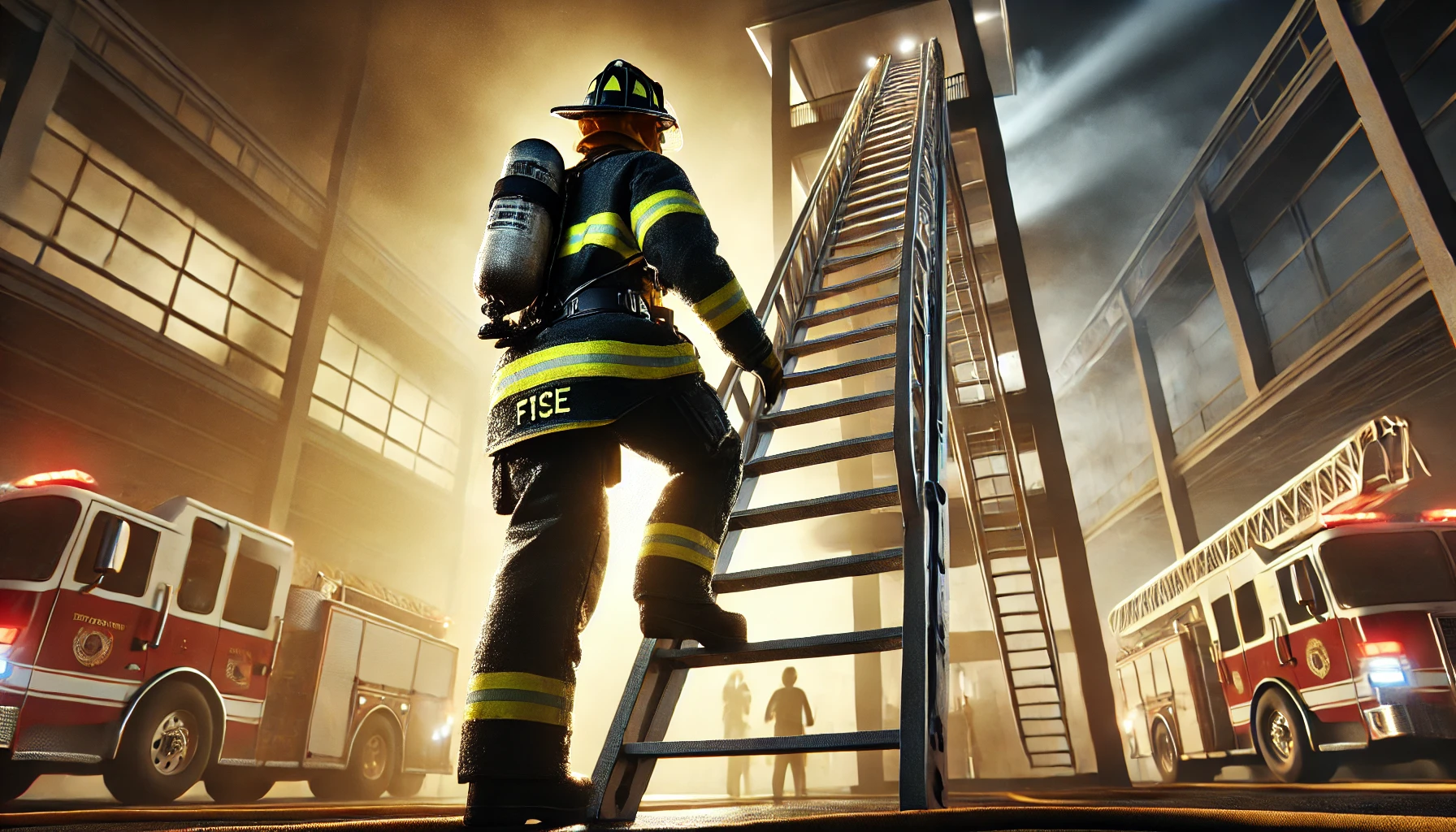
Ground ladders remain one of the most important tools on the fireground. They provide rescue access, firefighter egress, roof access, ventilation support, upper-floor entry, VEIS support, and a backup escape path when interior conditions change. A ladder that is placed correctly can save minutes. A ladder that is carried, raised, or spotted poorly can injure firefighters, delay rescue, or create a fall hazard.
This 2025 guide covers practical firefighter ladder training: ladder types, parts, carries, single-firefighter raises, two-firefighter beam and flat raises, extension ladder placement, climbing angle, heeling and footing, roof ladder operations, VEIS support, rescue positioning, inspection, and academy drill planning.
Jump to:Ladder fundamentals · Ladder types · Ladder carries · Single-firefighter raises · Two-firefighter raises · Placement and angle · Roof ladders · VEIS support · Rescue positioning · Safety checks · Training drills · FAQ
Why Ladder Training Matters
Ladder work is a high-consequence firefighter skill. A ground ladder may be used for a victim rescue from a bedroom window, a firefighter emergency escape, roof access for ventilation, access to upper floors, or VEIS operations. Ladder placement must be fast, but it cannot be careless. Recruits must learn how to carry, raise, extend, spot, climb, and work from ladders without creating additional risk.
Good ladder crews communicate clearly. They check overhead hazards, choose the right ladder, carry it safely, place the butt correctly, raise under control, set the climbing angle, secure or heel when needed, and climb with discipline. Ladder training should build smooth, repeatable movements before speed is added.
| Ladder task | Why it matters | Training focus |
|---|---|---|
| Carry | Gets the ladder from apparatus to objective safely | Balance, communication, terrain awareness |
| Raise | Positions ladder for access, rescue, or ventilation | Control, commands, overhead hazard check |
| Placement | Determines climbing safety and objective access | Angle, tip location, butt position, stability |
| Climb | Moves firefighter or victim between levels | Controlled movement, tool handling, contact points |
| Rescue support | Provides access and egress for occupants and firefighters | Window placement, victim movement, crew coordination |
Core principle: Ladder operations are not just about strength. They require communication, balance, hazard recognition, body mechanics, and exact placement for the intended objective.
Common Fire Service Ground Ladders
Firefighters must know ladder types and their appropriate uses. The right ladder depends on the objective: window rescue, roof access, ventilation support, attic access, upper-floor entry, or firefighter egress. Selecting the wrong ladder can create reach problems, unstable placement, or wasted time.
| Ladder type | Common use | Training notes |
|---|---|---|
| Roof ladder | Work on pitched roofs and distribute weight | Deploy hooks correctly and confirm engagement before loading |
| Extension ladder | Upper-floor access, rescue, roof access | Requires halyard control, correct fly orientation, and placement angle |
| Straight ladder | Short access, single-story work, quick deployment | Simple, fast, but limited reach |
| Attic ladder | Interior access to attic or scuttle spaces | Often used inside; limited load and reach considerations apply |
| Folding ladder | Tight interior access, closets, narrow spaces | Useful in confined layouts when other ladders cannot fit |
Basic ladder parts to know
- Beams: Main side rails of the ladder.
- Rungs: Steps firefighters climb on.
- Butt or heel: Bottom end of the ladder.
- Tip: Top end of the ladder.
- Fly section: Movable section of an extension ladder.
- Bed section: Base section of an extension ladder.
- Halyard: Rope used to extend the fly section.
- Pawls or dogs: Locking devices that secure the fly section.
- Roof hooks: Hooks used to secure a roof ladder over the ridge or roof surface.
Firefighter Ladder Carries
Effective ladder work begins before the raise. A poor carry can fatigue the crew, damage the ladder, injure a firefighter, or delay placement. Carries should be selected based on ladder size, distance, terrain, staffing, and objective. Crews should train on pavement, grass, uneven ground, curbs, driveways, tight alleys, and apparatus-side deployment.
Common ladder carry methods
- Shoulder carry: Common for many ground ladder moves; keeps weight supported and allows controlled travel.
- Low-shoulder carry: Useful in some tight or obstructed areas, depending on ladder and SOP.
- Suitcase carry: Useful for shorter ladders or tight spaces where shoulder carry is not practical.
- Flat carry: Useful with multiple firefighters, especially on longer ladders or when moving around obstacles.
- Beam carry: Common during team operations and transitions into beam raises.
| Carry | Best use | Common error |
|---|---|---|
| Shoulder carry | Moving a ladder a moderate distance with control | Not checking clearance around people, vehicles, or obstacles |
| Suitcase carry | Shorter ladders and tight spaces | Letting the ladder swing into legs or objects |
| Flat carry | Team movement of longer ladders | Uneven lifting and poor commands |
| Beam carry | Setup for beam raise or narrow approach | Unbalanced load and poor footwork |
Training tip: Practice carries slowly first. Add speed only after the crew can move with clear commands, balanced weight, and safe clearance.
Single-Firefighter Ladder Raises
Single-firefighter raises are useful when staffing is limited or when a short ladder must be deployed quickly. They require strength, balance, and control, but technique matters more than brute force. Firefighters should train progressively, starting with shorter ladders and moving up only when movement is safe and repeatable.
Single-firefighter raise concepts
- Choose the right ladder. Do not attempt a ladder size beyond training, staffing, or SOP limits.
- Check overhead hazards. Look for power lines, tree limbs, signs, wires, and building projections.
- Set the butt. Place the base where it can be controlled and will not slide unexpectedly.
- Raise hand-over-hand. Maintain control as the ladder moves from horizontal to vertical.
- Walk the ladder in. Move the base carefully to establish the correct climbing angle.
- Confirm stability. Check angle, tip position, footing, and objective before climbing.
Safety warning: Single-firefighter raises should be practiced only with qualified supervision and within department limits. Wind, uneven ground, power lines, ladder length, and fatigue can make a raise unsafe.
Two-Firefighter Beam and Flat Raises
Two-firefighter raises provide more control for longer ladders and are common in academy and company training. The two main concepts are beam raises and flat raises. The best method depends on ladder size, building position, available space, terrain, and department SOP.
Beam raise
In a beam raise, the ladder is raised on its beam, which can be useful in narrow spaces or when working parallel to a building. It requires clear commands and coordinated movement so the ladder does not twist, tip, or drift.
Flat raise
In a flat raise, the ladder is raised from a flat position. It can be efficient in open areas with enough room. Crews must control both the butt and the tip, especially with extension ladders and wind exposure.
| Raise type | Best use | Training emphasis |
|---|---|---|
| Beam raise | Narrow approaches, tight building sides, controlled vertical movement | Balance, beam control, clear commands |
| Flat raise | Open areas with space for ladder movement | Butt control, tip control, smooth lifting |
| Extension raise | Upper-floor or roof access | Halyard control, pawl engagement, final placement |
Team communication commands
- Prepare to lift.
- Lift.
- Move.
- Stop.
- Raise.
- Extend.
- Lower.
- Set.
Command words should be consistent within the department. Conflicting commands during ladder movement can create dangerous hesitation or unexpected movement.
Ladder Placement, Angle and Heeling
Correct placement depends on the objective. A ladder placed for roof access is not placed the same way as a ladder placed for window rescue or VEIS. Tip position, climbing angle, stability, and ground conditions all matter. Recruits should learn placement by objective rather than treating every ladder as a generic setup.
Placement by objective
| Objective | Tip placement | Reason |
|---|---|---|
| Roof access | Extend above roof edge according to department practice | Provides handhold and safer transition onto/off roof |
| Window rescue | At or slightly below sill depending on rescue method and SOP | Supports victim movement and firefighter access |
| VEIS | Placed to support safe entry and exit at the target window | Allows controlled room access and emergency egress |
| Ventilation access | Based on roof edge, work area, and tool movement | Supports roof team access while avoiding fire-weakened areas |
Angle and stability checks
- Check that the base is stable and not on ice, mud, loose gravel, or debris.
- Use department-approved angle methods and instructor guidance.
- Confirm both beams are evenly loaded unless intentionally placed otherwise by SOP.
- Heel or secure the ladder when needed.
- Recheck placement after extension, loading, or movement.
Placement rule: Do not climb just because the ladder is raised. Climb only after angle, footing, tip placement, overhead hazards, and stability are confirmed.
Roof Ladder Operations
Roof ladders are used to distribute weight and improve footing on pitched roofs. They are especially important when roof surfaces are steep, slippery, damaged, or weakened by fire. Roof ladder training must emphasize hook deployment, placement, weight distribution, and roof condition assessment.
Roof ladder training points
- Confirm hooks deploy correctly. Hooks must be fully opened and ready before placement.
- Place over the ridge or approved anchor point. Follow department practice and roof design.
- Sound and read the roof. Understand that a ladder does not make an unsafe roof safe.
- Keep weight distributed. Avoid unnecessary bouncing or concentrated loading.
- Maintain egress awareness. Know your ladder, exit route, and roof conditions at all times.
Roof safety: Roof work is high risk. Fire-damaged roofs, lightweight construction, hidden fire, solar panels, ice, rain, smoke, and poor visibility can all create collapse or fall hazards. Train under qualified supervision only.
Ladder Tips for VEIS Support
VEIS stands for Vent-Enter-Isolate-Search. Ladder placement for VEIS must support controlled entry, fast isolation of the room, victim search, and rapid exit if conditions worsen. The ladder is not just an access tool; it is the firefighter's way back out.
VEIS ladder priorities
- Choose the correct window based on assignment, size-up, and command direction.
- Place the ladder for safe entry and exit, not just speed.
- Control glass, sash, blinds, curtains, and window hazards according to training.
- Enter only when conditions and SOP support the tactic.
- Isolate the room by closing the door as soon as practical.
- Maintain ladder awareness for emergency exit.
For related search concepts, see the firefighter search and rescue training guide.
Ladder Rescue Positioning
Ground ladders are often used for occupant rescue and firefighter rescue. Rescue ladder placement requires calm communication, stable footing, and correct tip position. A ladder that is ideal for roof access may be poor for removing a victim from a window. Recruits should train on rescue objectives separately from access objectives.
Rescue considerations
- Victim condition: Conscious, unconscious, panicked, injured, adult, child, or mobility-impaired.
- Window height and size: Affects tip placement and firefighter positioning.
- Staffing: Some rescues require multiple firefighters to control victim movement.
- Smoke and heat: Conditions may force rapid removal or alternate tactics.
- Ground conditions: Soft soil, slopes, ice, or debris can affect stability.
| Scenario | Ladder concern | Training focus |
|---|---|---|
| Conscious victim at window | Panic, balance, communication | Clear commands and controlled descent |
| Unconscious victim | Weight transfer and firefighter positioning | Multiple-firefighter rescue techniques |
| Firefighter emergency egress | Fast location and stable ladder placement | Secondary ladders and window coverage |
| VEIS exit | Maintaining ladder as known exit | Room isolation, orientation, and exit discipline |
Ladder Safety and Inspection Checks
Ladder safety begins before the call. Firefighters should inspect ladders regularly for damage, contamination, worn halyards, cracked rungs, heat damage, bent beams, damaged pawls, and missing labels. A damaged ladder can fail under load. Firefighters should also inspect the work area before placing a ladder.
Before raising
- Check overhead for power lines, wires, signs, tree limbs, and building projections.
- Check ground conditions for slope, ice, mud, debris, holes, and instability.
- Confirm ladder length and objective.
- Communicate who controls the butt, tip, halyard, and movement.
- Keep bystanders and unnecessary personnel clear of the raise area.
Before climbing
- Confirm ladder angle and base stability.
- Confirm tip placement matches the objective.
- Check pawls/dogs are engaged on extension ladders.
- Heel or secure the ladder where required.
- Carry tools according to department training, not improvisation.
Electrical hazard warning: Never raise or place ladders near energized power lines. Maintain department-required clearance and follow utility hazard procedures.
Fire Academy Ladder Training Drills
Ladder skills should be developed in layers. Begin with terminology and carries. Add raises. Add placement objectives. Add climbing. Add tools. Add rescue scenarios. Add speed only after safe control is repeatable. Ladder training that starts with speed before control creates bad habits.
| Drill | Setup | Goal |
|---|---|---|
| Ladder parts drill | Ladder on ground, recruits identify parts | Build terminology and inspection awareness |
| Carry rotation drill | Short course with cones and obstacles | Practice shoulder, suitcase, flat, and beam carries |
| Single raise drill | Short ladder, supervised open area | Control, butt placement, and overhead checks |
| Two-firefighter raise drill | Extension ladder with clear commands | Team communication and smooth raise/lower |
| Objective placement drill | Multiple windows or roof edge targets | Place ladder differently for rescue, roof access, and VEIS |
| Roof ladder drill | Training roof prop under supervision | Hook deployment, placement, and movement discipline |
| Rescue positioning drill | Window prop and rescue mannequin | Practice victim access, communication, and ladder stability |
Company-level ladder drill checklist
- Objective and safety rules explained before starting.
- Overhead hazard check performed before every raise.
- Roles assigned: butt, tip, halyard, officer/instructor.
- Commands standardized and repeated by the crew.
- Ladder inspected before use.
- Ground conditions checked before placement.
- Instructor stops unsafe movement immediately.
- Debrief includes placement, communication, speed, and safety.
Ladder work connects directly to academy fitness, search, and fire attack. For related preparation, see the fire academy training guide, search and rescue training guide, and firefighter fitness guide.
Common Ladder Training Mistakes
- Skipping overhead hazard checks: Power lines and wires are a life-threatening ladder hazard.
- Raising too fast: Speed without control can cause loss of balance or ladder drift.
- Poor commands: Mixed commands create confusion during lifting, raising, extending, and lowering.
- Wrong tip placement: Roof access, VEIS, and rescue objectives require different placement.
- Weak footing: Soft ground, ice, slope, or debris can shift the base unexpectedly.
- Ignoring ladder inspection: Damaged rungs, beams, pawls, or halyards can create failure risk.
- Training only in perfect conditions: Crews also need supervised practice with obstacles, terrain, and realistic objectives.
Frequently Asked Questions
What are the basic firefighter ladder skills?
Basic firefighter ladder skills include ladder identification, inspection, carries, single-firefighter raises, two-firefighter raises, extension, placement, climbing, heeling, roof ladder deployment, and rescue positioning.
What is the difference between a beam raise and a flat raise?
A beam raise lifts the ladder on its beam and is useful in tighter spaces or when working parallel to a building. A flat raise lifts the ladder from a flat position and is often used in open areas with enough room for controlled movement.
How should a ladder be placed for VEIS?
For VEIS, the ladder should be placed to support safe entry and rapid exit at the target window. Placement must follow department SOPs, building conditions, staffing, and command direction. The room should be isolated as soon as practical after entry.
Why are roof ladders used?
Roof ladders help distribute firefighter weight and improve footing on pitched roofs. They are used for roof access and work positioning, but they do not make an unsafe or fire-weakened roof safe.
What is the most common ladder training mistake?
One of the most serious mistakes is failing to check overhead hazards before raising a ladder. Other common mistakes include poor commands, incorrect angle, unstable footing, wrong tip placement, and rushing before the crew has control.
Comments 0
No comments yet. Be the first to share your thoughts!
Leave a Comment