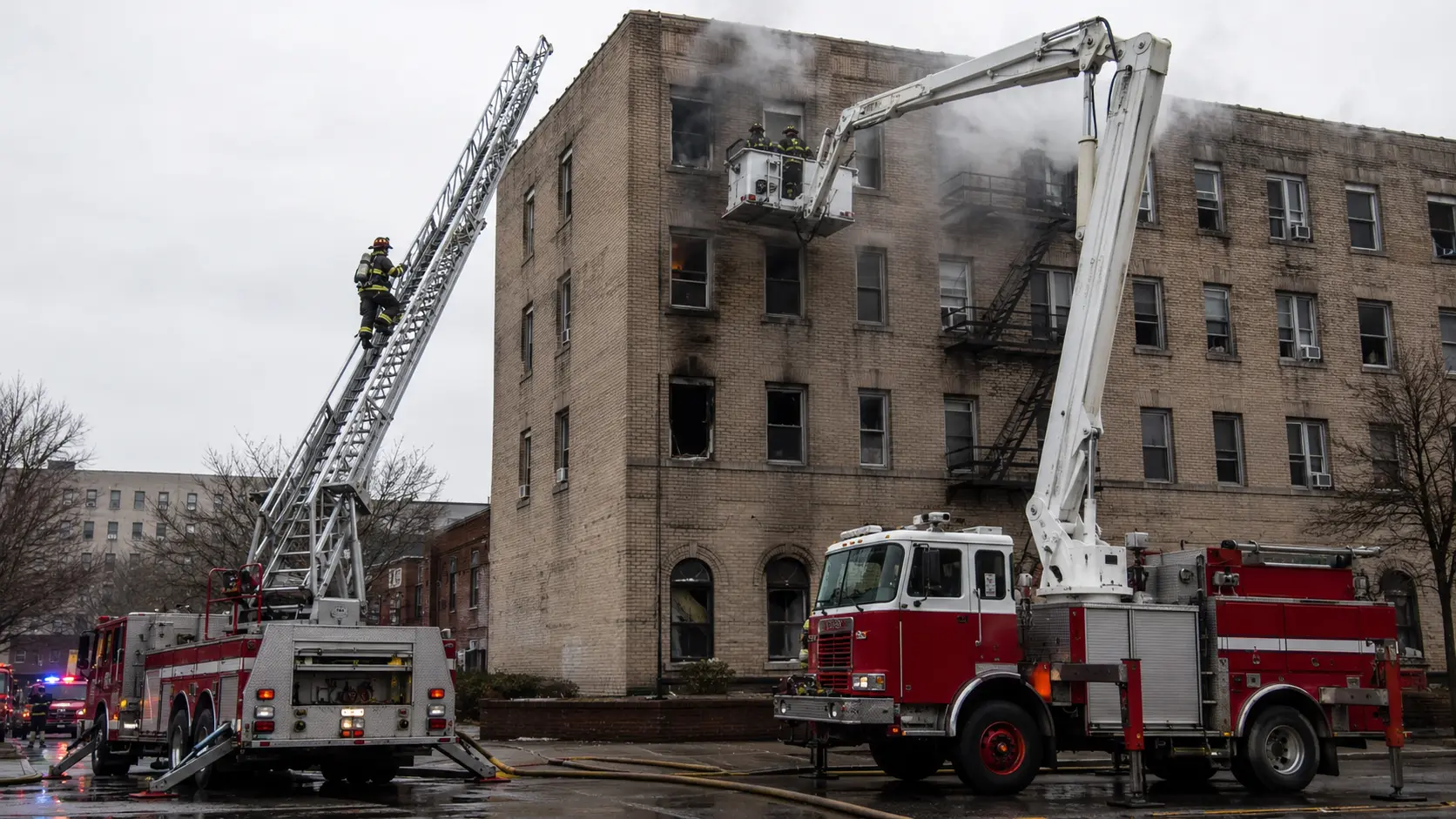

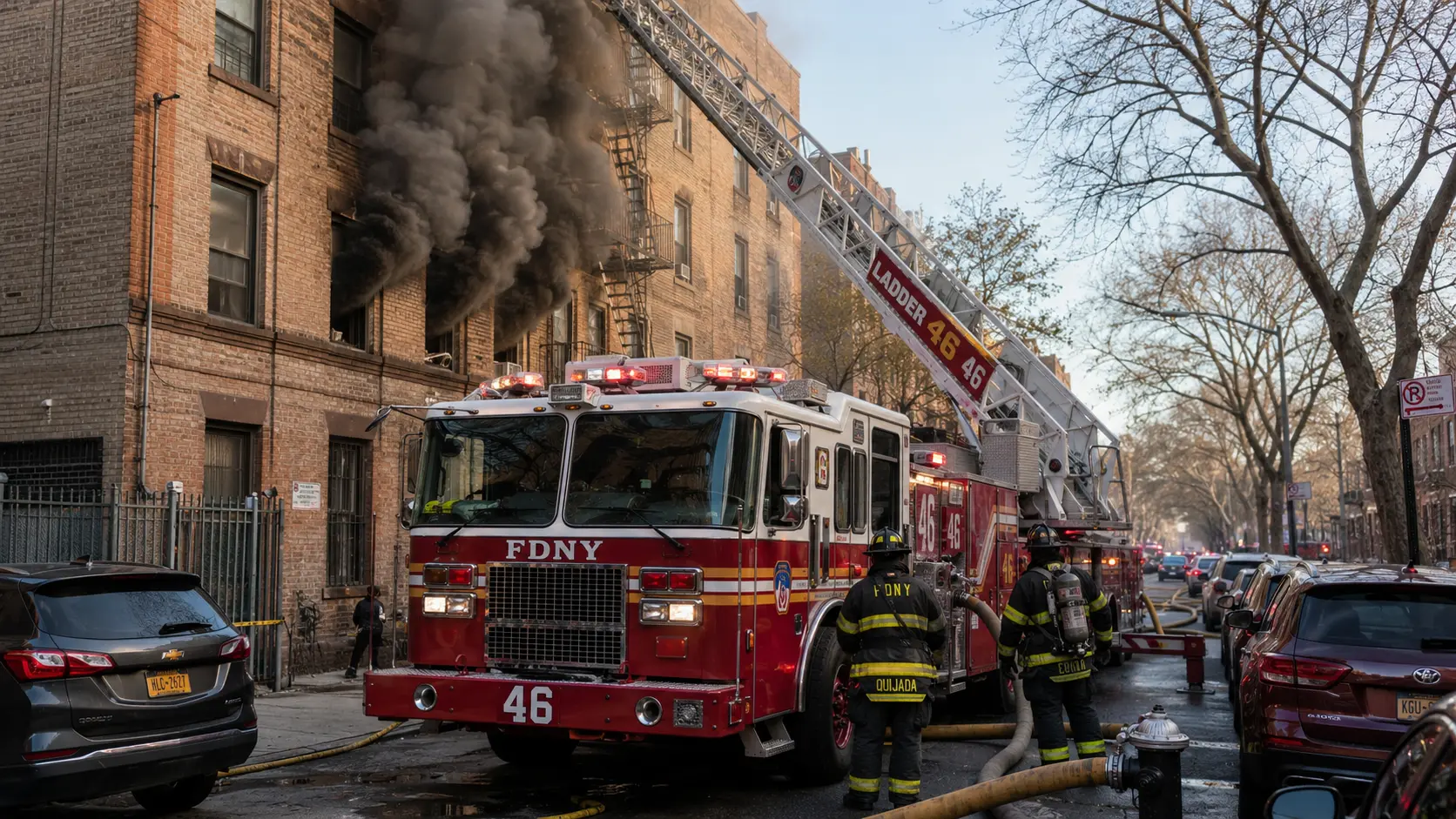
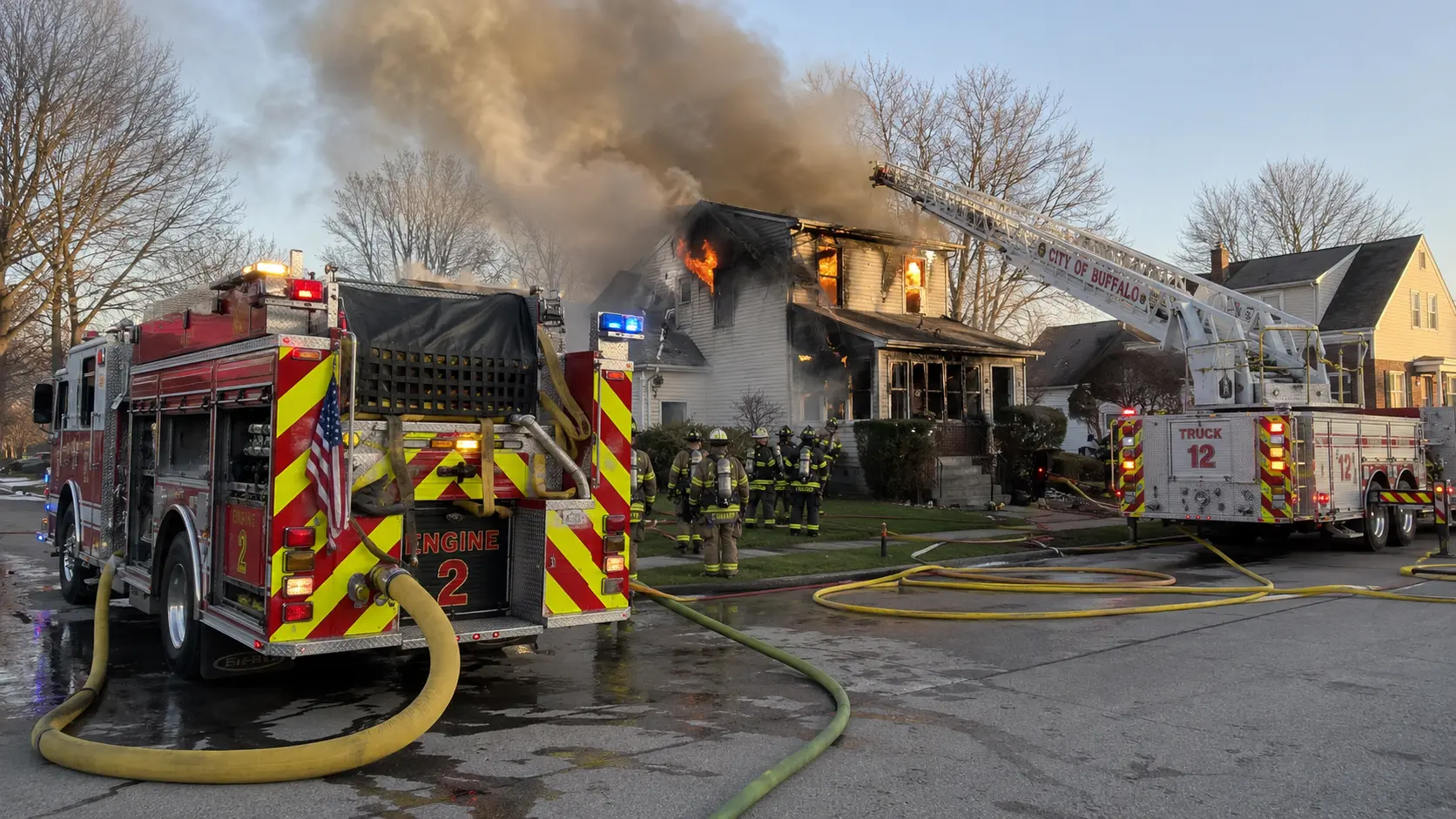
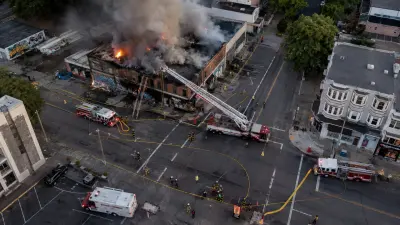
Both pieces of apparatus have a long boom that extends toward the upper floors of a burning building. Both are called aerial apparatus. Departments that run one type alongside the other know exactly why they are different, but from the street they look interchangeable to most people — and they are not. What the firefighter does when they reach the top of the structure is completely different depending on whether they climbed a ladder or rode in a basket, and those different capabilities determine which apparatus belongs at which type of incident.
In this article:
- Straight aerial ladders: construction, capability, and limitations
- Tower ladders and aerial platforms: the basket advantage
- Articulating platforms: reaching over and around obstacles
- Elevated master stream operations
- Positioning: why angle and distance determine what you can do
- Tiller vs. single-unit: why the rear axle matters in cities
- How departments choose between them
Straight Aerial Ladders: Construction, Capability, and Limitations
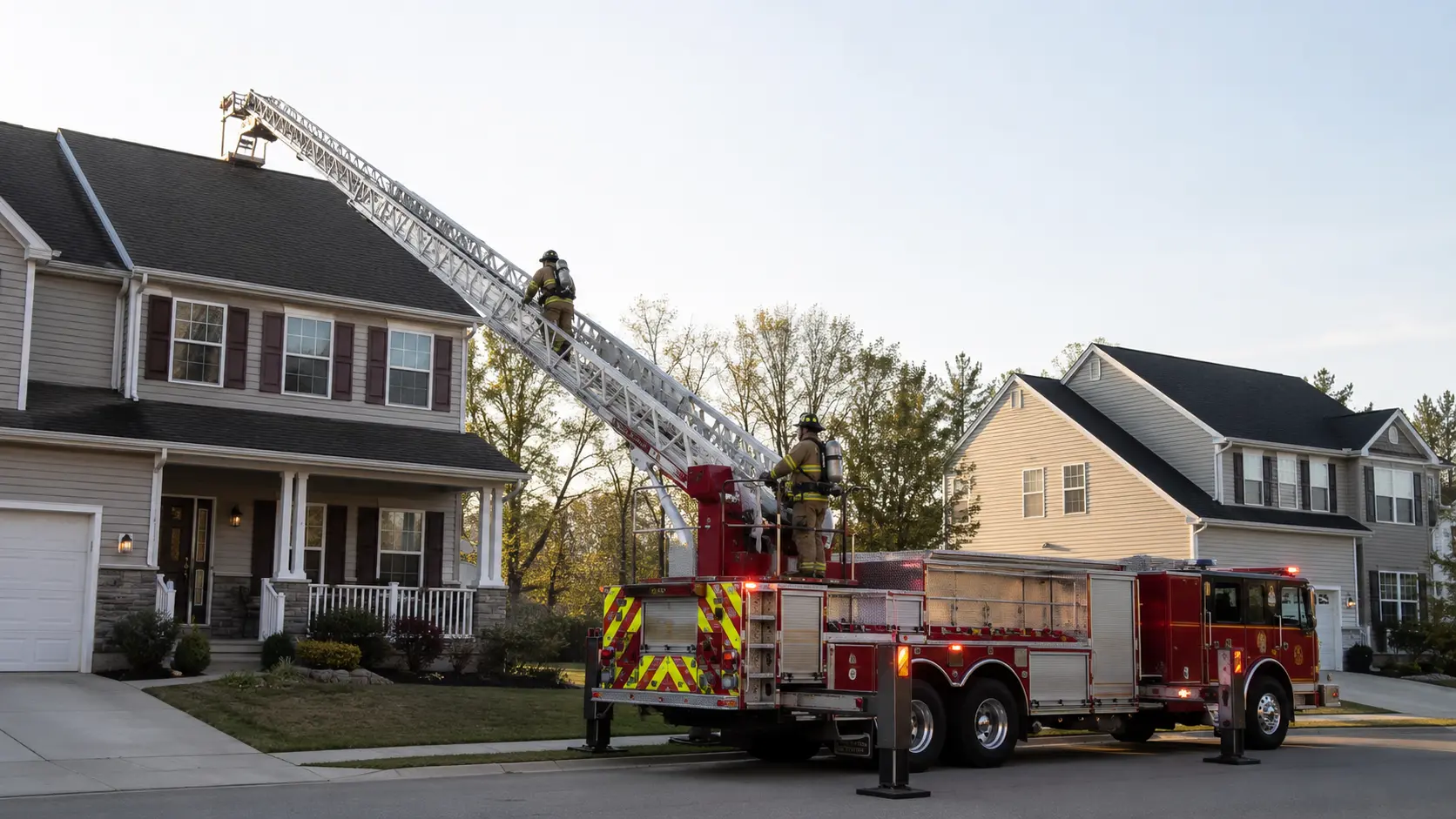
A straight aerial ladder is exactly what the name says: a telescoping ladder mounted on a turntable, extended by hydraulics, and used as a climbing path to upper floors or the roof. The ladder assembly consists of a base section, one or more fly sections, and a tip at the top end — nothing more. A firefighter who rides the aerial to the top arrives at a ladder tip, not a platform. They are standing on rungs, holding the rails, with whatever equipment they brought hanging off their body or being passed up from below.
The advantage of the straight aerial is structural efficiency. Without the weight of a platform basket, a straight aerial of the same overall length can be built lighter, mounted on a shorter and lighter truck, and operated with a smaller crew. Tiller aerials — the tractor-drawn units with a rear axle controlled by a second driver — are almost exclusively straight aerials, because the tiller design is built around the need to maneuver long apparatus into tight urban streets where a platform truck of the same length would be impractical.
The limitation is exactly what the advantage costs: no stable working platform at the tip. Roof operations require the firefighter to transition from the ladder to the roof surface — manageable for a firefighter with full use of both hands and wearing manageable gear, difficult with heavy equipment or a victim. Rescue of an incapacitated victim from an upper floor using a straight aerial requires lowering the victim along the ladder rails, which is a specific technique that requires multiple firefighters and significantly more time than loading a victim into a platform basket.
Tower Ladders and Aerial Platforms: The Basket Advantage
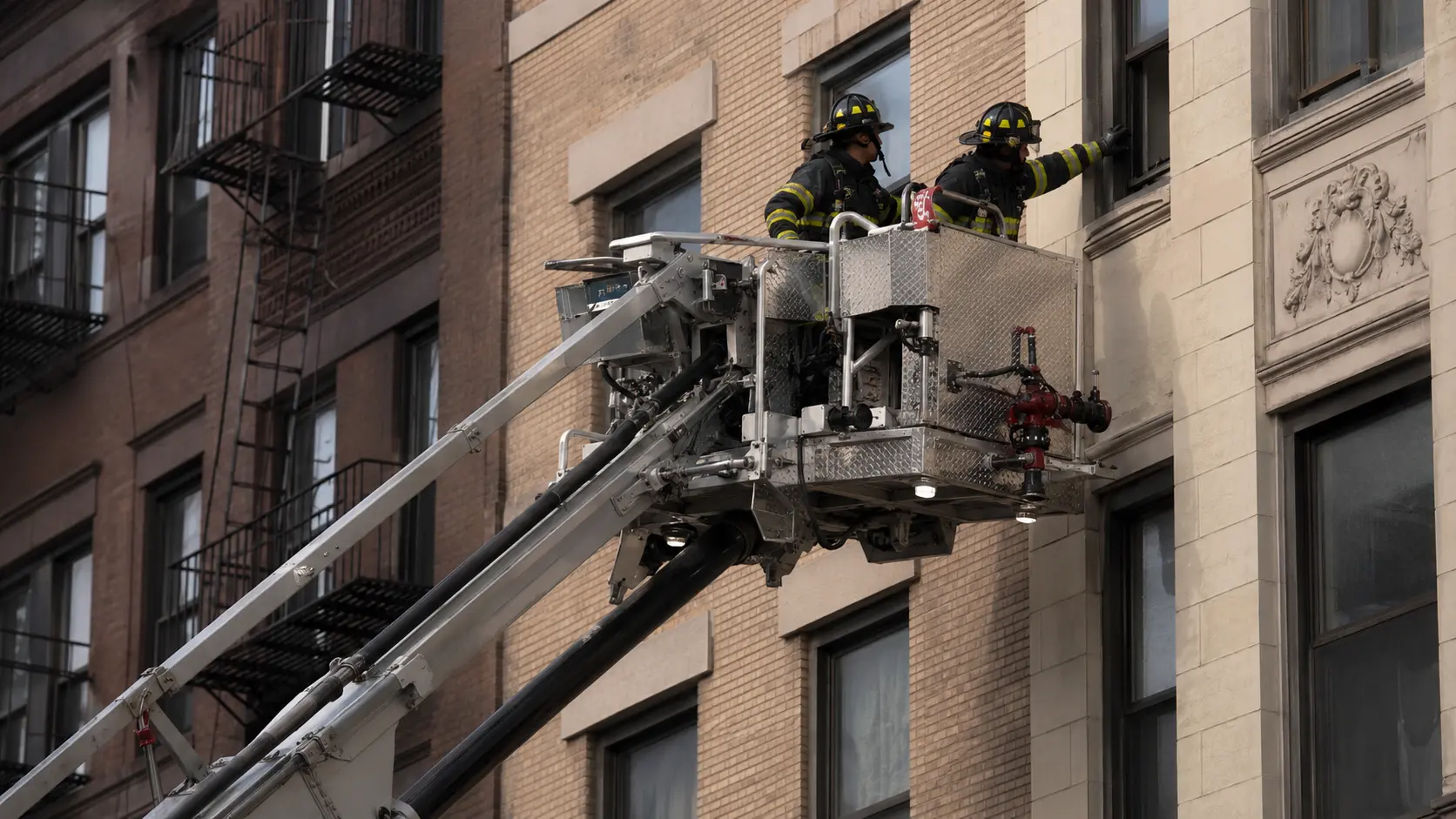
A tower ladder — also called an aerial platform or bucket truck — places a enclosed, railed platform at the tip of the aerial boom. The basket typically measures 3 by 7 feet or larger on full-size apparatus, and is rated for load capacities of 750 to 1,000 pounds or more. That capacity allows two to three firefighters, a backboard, additional equipment, and a victim to occupy the basket simultaneously.
For rescue of an immobile victim — an unconscious person, someone with mobility limitations, a large victim who cannot climb out a window — the platform basket changes the physics of the operation entirely. Instead of threading a victim along a ladder while maintaining their airway and preventing a fall, the rescue team moves them to the window opening, transfers them to the basket, and the basket descends with everyone inside. At a mass casualty incident in a multi-story building, a platform can cycle multiple rescue trips in the time it takes to perform a single victim removal from a straight aerial.
The platform also provides a stable working environment at height for operations that require extended time — forcing a window, managing a victim who is not yet ready to move, communicating with trapped occupants while the interior crew works toward them. A firefighter on a straight aerial tip is in an inherently unstable position that limits both the work they can do and how long they can maintain it.
Articulating Platforms: Reaching Over and Around Obstacles
A straight aerial — ladder or platform — extends in a single line from the turntable to the tip. This design reaches straight up and out but cannot reach around obstacles: a setback building, an overhanging structure, a courtyard that puts the building facade beyond reach from the street. An articulating platform uses a jointed boom with at least one elbow, allowing the aerial to fold around obstacles and position the basket at angles that a straight boom cannot achieve.
The trade-off is reduced maximum reach for the same overall boom length. An articulating platform of the same total boom length as a straight aerial will have a shorter horizontal and vertical reach because the joint introduces a geometric limitation. Where articulating aerials excel is in situations where flexibility of positioning matters more than maximum reach — urban environments with set-back buildings, indoor atrium spaces accessible through large openings, or industrial facilities where the target is around a corner from the street.
Elevated Master Stream Operations
Most platform baskets carry a pre-piped waterway — a permanent water supply connection running up the boom to a monitor nozzle mounted at the front of the basket. This elevated master stream can deliver 1,000 to 2,000 gallons per minute from an elevation of 50 to 100 feet, directed by the operator in the basket or remotely from the turntable. For large commercial building fires, warehouse fires, or high-rise fires where ground-level streams are ineffective, an elevated master stream changes the hydraulic geometry of the suppression operation fundamentally.
Straight aerials can carry a waterway to the tip as well, but delivering water from a straight aerial tip without a platform basket requires a firefighter to hold or manage a handline from a position on the ladder rails — physically demanding and limiting in terms of stream direction control. The platform basket's stable working environment makes large-volume elevated stream operations practical in a way that the straight aerial tip does not.
Positioning: Why Angle and Distance Determine What You Can Do
Aerial apparatus performance is sensitive to positioning in a way that is often underappreciated until you run out of reach. The maximum working height of an aerial ladder is achieved at approximately 70 to 75 degrees of elevation. At shallower angles — extending more horizontally to reach a setback building — the maximum vertical reach drops significantly. A 100-foot aerial positioned at 45 degrees reaches approximately 70 feet vertically, not 100. Positioning the apparatus too close to the building reduces the elevation angle below optimal. Too far and the horizontal reach may not span the distance.
The chauffeur's positioning decision has to account for the building's setback, the presence of overhead obstructions (power lines, tree branches, overhangs), the surface stability under the outrigger pads, and the anticipated rescue point or ventilation target. Getting this wrong — discovering after the aerial is up that the tip cannot reach the intended floor — requires lowering, repositioning, and redeploying, which takes time that may not be available at a rescue incident.
Tiller vs. Single-Unit: Why the Rear Axle Matters in Cities
A tractor-drawn aerial — the tiller truck — is a two-unit vehicle: a tractor (front cab with engine) pulling a trailer (the aerial ladder assembly) with a second driver controlling a separate rear steering axle. The arrangement allows a 50-plus-foot aerial ladder to navigate turns that a single-unit vehicle of the same length could not make. In dense urban environments with narrow streets, small turning radii at intersections, and parked vehicles reducing effective road width, the tiller's maneuverability is often the deciding factor between getting the apparatus to the correct position and parking a block away and hand-carrying equipment.
The trade-off is operational complexity. The tiller requires two drivers operating in coordination, training specific to the tiller technique, and a second qualified operator on every response. Departments in urban environments with many tiller-demanding streets accept this complexity for the positioning flexibility. Departments in suburban or rural environments with wider roads and larger lots typically find single-unit straight aerials and platform trucks adequate without the tiller overhead.
How Departments Choose Between Them
The decision between aerial ladders and platform trucks reflects the specific rescue and fire conditions a department faces most often.
Departments serving older, dense urban residential areas — multi-story tenements, row houses, apartment buildings with upper-floor occupancy — tend to favor straight aerials with tiller design for maneuverability in narrow streets, prioritizing the ability to reach the roof and upper floors for ventilation and search over the platform's rescue capability advantage.
Departments serving mid-rise commercial occupancies, hospitals, schools, or any occupancy type where mass rescue of immobile or assisted occupants from upper floors is a realistic scenario tend to favor platforms, because the basket's load capacity and stable working environment make those rescues significantly more effective.
Many departments run both types, assigning them to districts based on the occupancy profile: platforms to districts with significant commercial occupancy and rescue probability, straight aerials to districts dominated by residential and light commercial structures where ventilation and roof access are the primary aerial functions. The combination covers more scenarios than either type alone at the cost of maintaining both apparatus types in the fleet.
Comments 0
No comments yet. Be the first to share your thoughts!
Leave a Comment