📅 2025 firefighter fitness guide. Fitness expectations vary by department, academy, medical clearance requirements, and testing vendor. Use this guide for preparation, not as medical advice. If you have an injury, heart condition, respiratory issue, or are returning after a long break, consult a qualified medical professional before starting intense training.
Firefighter Fitness Training 2025: Strength, Endurance & Conditioning Guide
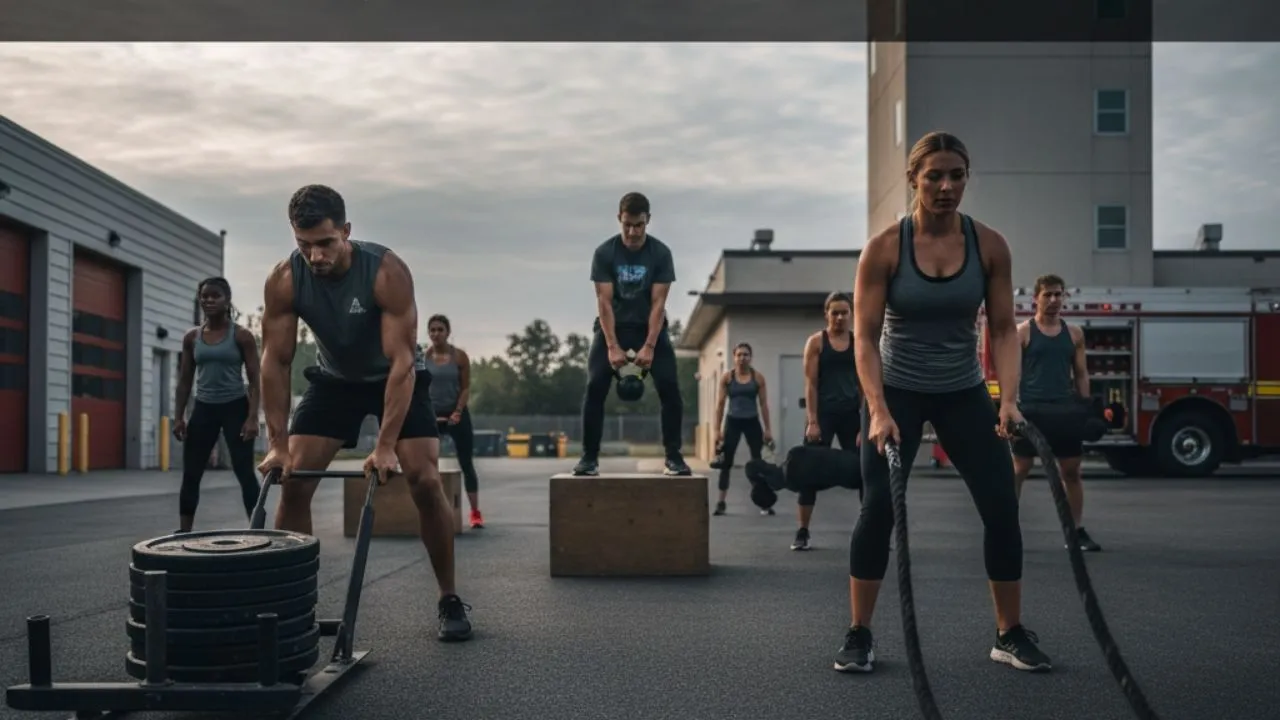
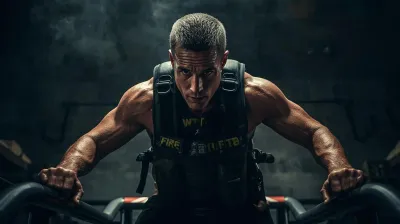
Firefighter fitness is not bodybuilding, powerlifting, marathon running, or random high-intensity circuits. It is occupational readiness: the ability to move heavy loads, climb stairs, drag hose, force doors, crawl, carry tools, control breathing under SCBA, recover between evolutions, and keep working safely when fatigue rises. A firefighter needs strength, aerobic capacity, anaerobic power, mobility, grip endurance, heat tolerance, and disciplined recovery.
This guide breaks firefighter fitness into practical training blocks: strength, endurance, stair climbing, loaded carries, sled drags, SCBA-style conditioning, VO2 max work, mobility, injury prevention, and an 8-week training plan. It is designed for firefighter candidates, academy recruits, volunteers preparing for testing, and active firefighters who want a structured baseline program.
Jump to:Fireground fitness demands · Strength training · Endurance and conditioning · SCBA air management · 8-week plan · Mobility and injury prevention · CPAT and academy prep · Common mistakes · Readiness checklist · FAQ
What Firefighter Fitness Actually Requires
Most fireground tasks combine strength and conditioning at the same time. You may climb multiple flights in turnout gear, carry tools, stretch hose, operate overhead, drag a victim, or perform overhaul after the main fire is knocked down. These tasks require the body to produce force while the heart rate is high and breathing is restricted by equipment, heat, stress, and posture.
| Fireground task | Main physical demand | Best training match |
|---|---|---|
| Stair climb in gear | Leg endurance, aerobic base, breathing control | Weighted stair intervals, step-ups, incline walking |
| Hose advancement | Leg drive, grip, core stability, repeated pulling | Sled drags, bear crawls, rows, loaded crawls |
| Ladder work | Shoulder strength, overhead endurance, coordination | Overhead press, carries, controlled ladder simulations |
| Victim drag | Posterior chain strength, grip, anaerobic power | Sled drag, dummy drag, deadlift variations |
| Forcible entry | Rotational power, grip, repeated striking | Sledgehammer tire hits, medicine ball slams, carries |
| SCBA work | Breathing control, calm under load, movement efficiency | Controlled circuits, nasal breathing drills, low-profile movement |
Training principle: Build a base first, then add intensity. A firefighter who only does brutal circuits may feel tough, but without strength, aerobic capacity, mobility, and recovery, performance collapses during long incidents.
Strength Training for Firefighters
Strength is the foundation of firefighter performance. Stronger firefighters generally use a lower percentage of their maximum capacity during tasks, which helps conserve energy. Strength also protects the back, knees, shoulders, and hips during awkward movements. The goal is not to become the biggest person in the station. The goal is useful strength that transfers to tools, ladders, hose, stairs, and rescue work.
Primary strength movements
- Deadlift or trap-bar deadlift: Builds posterior chain strength for lifting patients, tools, hose bundles, and rescue loads.
- Squat or split squat: Builds leg strength for stairs, kneeling, crawling, climbing, and lifting from low positions.
- Farmer carry: Directly trains grip, trunk stiffness, posture, and loaded movement.
- Rows and pull-ups: Improve pulling strength for hose advancement, victim movement, and tool control.
- Overhead press: Supports ladder control, pike pole work, ceiling pulls, and overhead tool use.
- Core anti-rotation work: Helps resist twisting forces while pulling hose or moving tools.
| Movement | Beginner target | Intermediate target | Fireground carryover |
|---|---|---|---|
| Trap-bar deadlift | 3 x 5 light-moderate | 4 x 4 moderate-heavy | Victim drag, equipment lift, patient movement |
| Goblet squat / front squat | 3 x 8 | 4 x 6 | Stair climb, kneeling, climbing, hose movement |
| Farmer carry | 4 x 30 m | 6 x 40 m heavy | Tool carry, hose packs, rescue gear |
| Row variation | 3 x 10 | 4 x 8 heavy | Hose pull, overhaul, victim movement |
| Overhead press | 3 x 8 | 5 x 5 | Ladders, pike pole, ceiling breach and pull |
Programming tip: Two strength sessions per week are enough for most candidates when combined with conditioning. If you lift heavy every day and ignore recovery, your academy performance may get worse, not better.
Endurance, VO2 Max and Fireground Conditioning
Firefighters need both aerobic endurance and high-intensity work capacity. The aerobic system helps you recover between evolutions and maintain output over long incidents. Anaerobic conditioning helps during short, intense tasks such as hose drags, stair climbs, forcible entry, victim movement, and repeated tool work. A complete firefighter fitness plan trains both.
Conditioning methods that transfer well
- Weighted stair climbs: Excellent for CPAT, high-rise operations, and loaded lower-body endurance.
- Sled drags: One of the best substitutes for hose drag and victim drag training.
- Rower intervals: Builds pulling endurance and high-output cardio with low joint impact.
- Assault bike or air bike intervals: Useful for anaerobic conditioning and heat-tolerance style efforts.
- Zone 2 cardio: Easy runs, incline walks, cycling, or rowing to build recovery capacity.
- Loaded carries: Blends strength, posture, breathing, and grip endurance.
| Workout type | Example | Purpose |
|---|---|---|
| Zone 2 base | 30-45 min easy run, bike, row, or incline walk | Improves recovery, endurance, and heart-rate control |
| VO2 max intervals | 4 x 4 min hard / 3 min easy | Improves high-end aerobic capacity |
| CPAT circuit | Stairs, carry, sled drag, crawl, overhead pull | Builds test-specific work capacity |
| Loaded work circuit | Farmer carry, step-ups, rows, bear crawl | Develops gear-like fatigue resistance |
| Recovery session | Mobility + 20-30 min easy walk | Reduces soreness and supports consistency |
If you are preparing for CPAT-style testing, use the CPAT pacing calculator to structure time goals and identify weak stations. For body composition and general planning, see the firefighter BMI calculator. These tools are planning references and should not replace medical or coaching advice.
SCBA Air Management and Breathing Control
SCBA conditioning is not just about wearing a pack. It is about controlling your pace, breathing efficiently, staying calm under fatigue, and moving with purpose. A recruit who panics, rushes, or wastes motion can burn through air quickly. A calm firefighter uses fewer unnecessary movements, communicates clearly, and manages workload better.
Safe SCBA-style conditioning concepts
- Controlled breathing intervals: Practice nasal breathing or paced breathing during moderate circuits.
- Low-profile movement: Crawl, bear crawl, and move around cones while keeping breathing steady.
- Work-rest awareness: Learn how quickly your breathing rate changes after stairs, carries, and drags.
- Calm transitions: Move from one station to another without sprinting or wasting motion.
- Posture control: Keep the ribs and trunk stable during loaded carries to avoid shallow panic breathing.
Safety warning: Do not perform SCBA drills, mask blackout drills, confined-space movement, live fire training, or heat-stress training without qualified supervision and department-approved equipment. Pre-academy candidates should build general conditioning and breathing control, not create dangerous self-training scenarios.
8-Week Firefighter Fitness Training Plan
This plan is built for candidates with a basic fitness foundation. Scale load, volume, and intensity based on your current ability. If you are preparing for an academy start date, avoid maximal training in the final week. Arrive healthy, not destroyed.
| Week | Strength focus | Conditioning focus | Fireground skill emphasis |
|---|---|---|---|
| 1 | Movement quality, light compound lifts | Zone 2 cardio, easy stairs | Baseline mobility and gear terminology |
| 2 | Squat, hinge, row, carry | Stair intervals and rower intervals | Grip endurance and loaded posture |
| 3 | Moderate deadlift, split squat, press | Sled drags and farmer carries | Hose-drag movement pattern |
| 4 | Strength progression, core stability | VO2 max intervals | Overhead endurance for ladder and pike pole work |
| 5 | Heavy but controlled full-body lifts | CPAT-style circuits | Station transitions and breathing control |
| 6 | Loaded carries, posterior chain strength | Stairs + sled drag combinations | Victim drag and tool carry simulation |
| 7 | Moderate strength, no max attempts | Full test-style practice circuit | Pacing, calm transitions, recovery |
| 8 | Taper and mobility | Short moderate intervals only | Readiness check and weak-point review |
Sample weekly schedule
| Day | Session | Example work |
|---|---|---|
| Monday | Strength + stairs | Trap-bar deadlift, goblet squat, farmer carry, weighted stair intervals |
| Tuesday | Conditioning + mobility | Rower intervals, bear crawls, hip and thoracic mobility |
| Wednesday | Aerobic base | 30-45 min easy run, bike, row, or incline walk |
| Thursday | Strength + overhead | Split squat, rows, overhead press, core anti-rotation work |
| Friday | Fireground circuit | Sled drag, loaded carry, step-ups, crawl, overhead pull, recovery breathing |
| Saturday | Recovery | Walk, stretching, hydration, sleep focus |
| Sunday | Rest | No hard training; prepare for next week |
Progression rule: Increase only one variable at a time: load, distance, speed, or total rounds. Adding all four at once is how candidates get shin splints, back strains, knee pain, or shoulder irritation before the academy starts.
Mobility and Injury Prevention
Firefighters work in awkward positions: kneeling, crawling, twisting, reaching overhead, climbing, stepping over hose, and lifting from the floor. Mobility does not mean extreme flexibility. It means having enough usable range of motion to perform job tasks without compensating through the lower back, knees, shoulders, or neck.
Daily 10-minute mobility routine
- Hip flexor stretch: 60 seconds per side to support stair climbing and kneeling.
- 90/90 hip switches: 8-10 controlled reps for hip rotation.
- Thoracic rotations: 8 reps per side for better overhead and crawling mechanics.
- Ankle rocks: 10 reps per side for squats, stairs, and ladder movement.
- Band pull-aparts or wall slides: 15 reps for shoulder health.
- Breathing reset: 2 minutes of slow nasal breathing to downshift after training.
Common injury risks
- Low back strain: Often caused by poor hinge mechanics, rushing loaded lifts, or fatigue.
- Knee irritation: Often linked to sudden stair volume, poor footwear, or weak hips.
- Shoulder pain: Often caused by overhead work without upper-back strength and mobility.
- Shin splints: Common when candidates suddenly add running, boots, stairs, and weighted work at the same time.
- Heat stress: More likely when hydration, sleep, pacing, and acclimatization are ignored.
CPAT and Fire Academy Prep
If your goal is to pass CPAT, do not train randomly. Practice the movement qualities CPAT demands: loaded stair climbing, hose-drag power, equipment carry grip, ladder raise coordination, forcible entry effort, crawling, victim drag strength, and overhead endurance. If your goal is to survive a fire academy, go beyond CPAT and build durability for repeated training days.
| Goal | Training priority | Do not ignore |
|---|---|---|
| Pass CPAT | Station-specific circuits and pacing | Transitions, grip, breathing, leg endurance |
| Prepare for academy | Strength + conditioning + study habits | Recovery, mobility, sleep, hydration |
| Improve active-duty fitness | Long-term durability and balanced programming | Joint health, aerobic base, back and shoulder resilience |
For a broader candidate roadmap, see the Fire Academy Prep Guide. Fitness is only one part of academy readiness; recruits also need study habits, interview preparation, gear organization, and technical skill familiarity.
Common Firefighter Fitness Mistakes
- Only running: Running helps, but it does not fully prepare you for loaded stairs, hose, tools, or victim drags.
- Only lifting heavy: Strength matters, but poor conditioning can still fail you during repeated evolutions.
- Too much high intensity: Daily max-effort circuits increase injury risk and reduce recovery.
- No mobility work: Tight hips, weak shoulders, and poor ankle mobility show up fast in academy drills.
- Training through pain: Soreness is normal; sharp pain, joint pain, or worsening symptoms need attention.
- Ignoring sleep and hydration: Recovery habits directly affect performance, heat tolerance, and learning.
- Testing every day: Training should build capacity. Constantly trying to prove yourself can stall progress.
Firefighter Fitness Readiness Checklist
| Area | Ready when... |
|---|---|
| Strength | You can hinge, squat, press, row, and carry moderate loads with clean technique. |
| Stairs | You can complete repeated stair intervals while controlling breathing and posture. |
| Grip | You can perform loaded carries and sled drags without losing hand position early. |
| Conditioning | You recover between hard efforts and can sustain longer aerobic sessions. |
| Mobility | You can squat, kneel, crawl, reach overhead, and rotate without major restriction. |
| Recovery | You sleep consistently, hydrate, manage soreness, and avoid last-minute overtraining. |
Firefighter fitness is built through consistency, not one heroic workout. Train the movements that matter, progress gradually, recover seriously, and arrive at the academy healthy. A strong recruit is not the one who can win one workout; it is the one who can perform safely day after day while learning, communicating, and supporting the crew.
Frequently Asked Questions
What is the best workout for firefighter fitness?
The best firefighter workout combines strength training, stair climbing, loaded carries, sled drags, grip work, aerobic conditioning, mobility, and recovery. A balanced plan is better than only running or only lifting weights.
How many days per week should firefighters train?
Most candidates do well with 4 to 5 training days per week: two strength sessions, two conditioning sessions, and one easy aerobic or mobility-focused day. Active firefighters should adjust around shift fatigue, call volume, and recovery.
Is VO2 max important for firefighters?
Yes. A higher aerobic capacity helps firefighters tolerate hard work, recover between tasks, and manage longer incidents. VO2 max intervals can help, but they should be supported by an aerobic base and strength training.
How do I train for SCBA air management?
Build general conditioning, practice controlled breathing during moderate circuits, improve movement efficiency, and avoid rushing transitions. Actual SCBA drills should be performed only with qualified supervision and approved equipment.
Should firefighter candidates train in turnout gear?
Only if it is approved and supervised by the department or academy. Candidates can prepare safely with weighted vests, step-ups, carries, sled drags, and mobility work instead of unsupervised PPE training.


Comments 0
No comments yet. Be the first to share your thoughts!
Leave a Comment