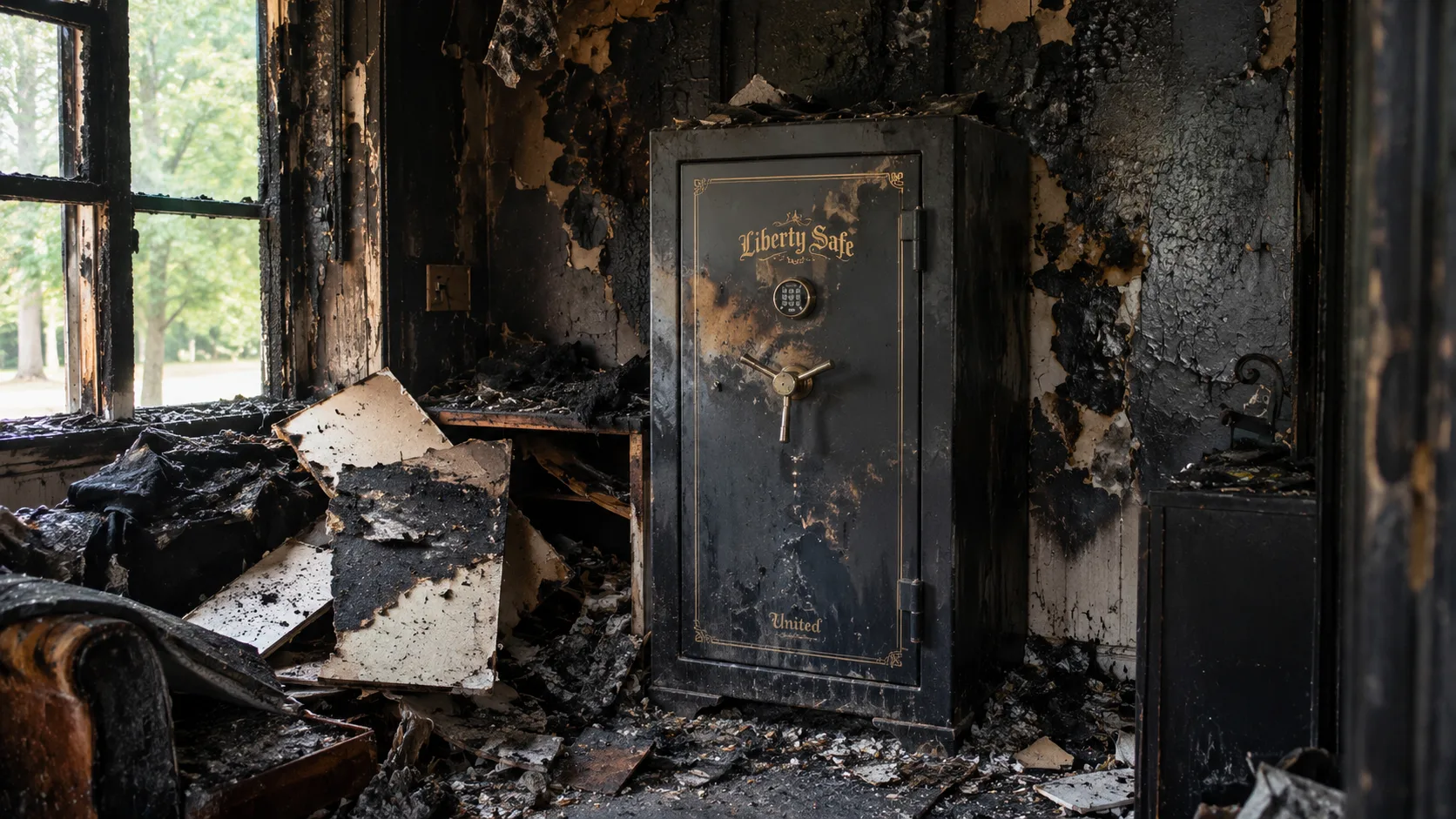

The word "fireproof" on a safe is a marketing term, not a technical specification. Nothing rated for residential fire protection is truly fireproof — the correct term is fire resistant, and the distinction is not semantic. Every safe rated for fire protection will eventually fail if exposed to enough heat for enough time. What varies is how much heat and how much time it can withstand before the interior reaches the temperature at which your documents, media, or hard drives are destroyed.
The problem most buyers run into is that a safe labeled "fire resistant" may protect paper documents just fine — but destroy a USB drive, a hard drive, or a DVD collection stored inside it, because those media fail at far lower temperatures than paper. Buying based on the label and the lock misses the most important specification on the box.
In this article:
- The UL 72 rating: what the numbers mean
- Paper vs. media vs. digital: different contents need different ratings
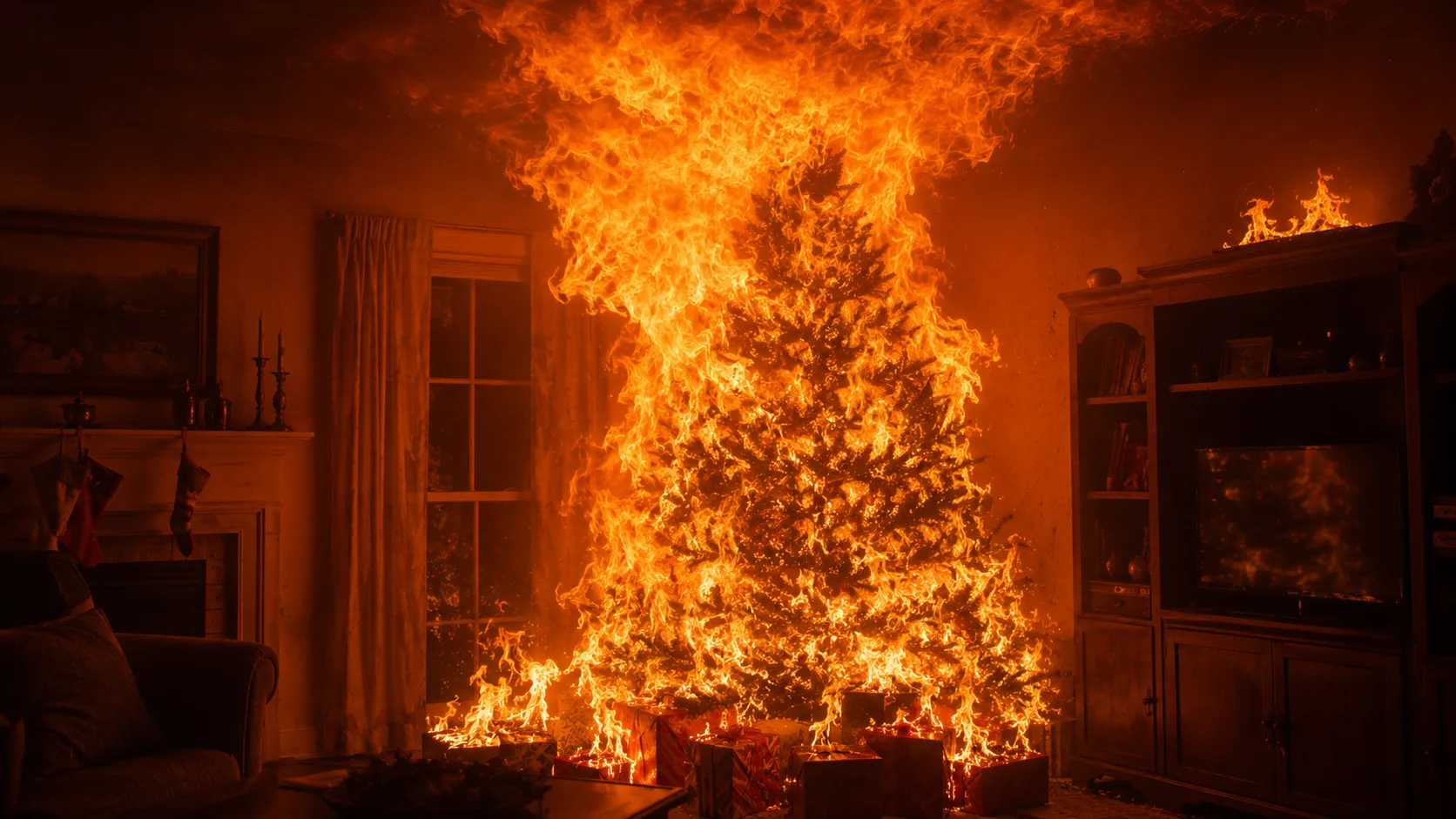
- What actually happens inside a safe during a house fire
- The impact rating: structural collapse and what survives a fall
- Water resistance: the firefighting hazard nobody mentions
- Price and protection: where the real breakpoints are
- What to store in a safe vs. what to store elsewhere
- Where to put the safe in your home
The UL 72 Rating: What the Numbers Mean
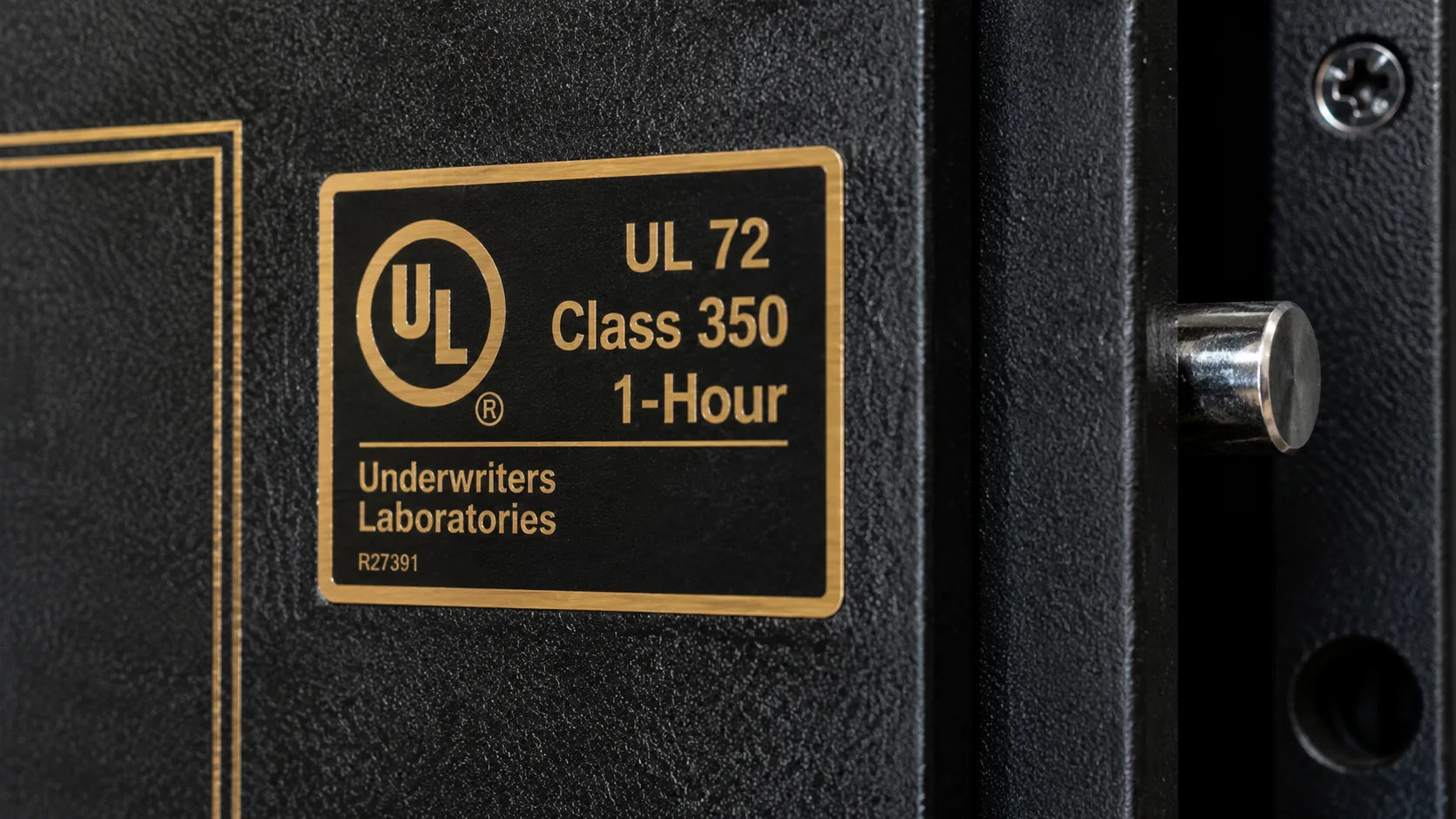
Underwriters Laboratories tests fire-resistant safes under its UL 72 standard. The test exposes the safe to a specific temperature profile — external temperatures reaching 1,550°F — for the rated duration, then measures the internal temperature. The rating has two components:
The class number is the maximum internal temperature in degrees Fahrenheit that the safe's interior reaches during the test. Three classes are commonly available: Class 350 (interior stays below 350°F), Class 150 (interior stays below 150°F), and Class 125 (interior stays below 125°F).
The time rating is how long the safe maintains that internal temperature under the standardized fire conditions. Available ratings are 30 minutes, 1 hour, 2 hours, and 4 hours. A safe rated UL 72 Class 350 1-Hour will keep its interior below 350°F for at least one hour when exposed to the test fire conditions.
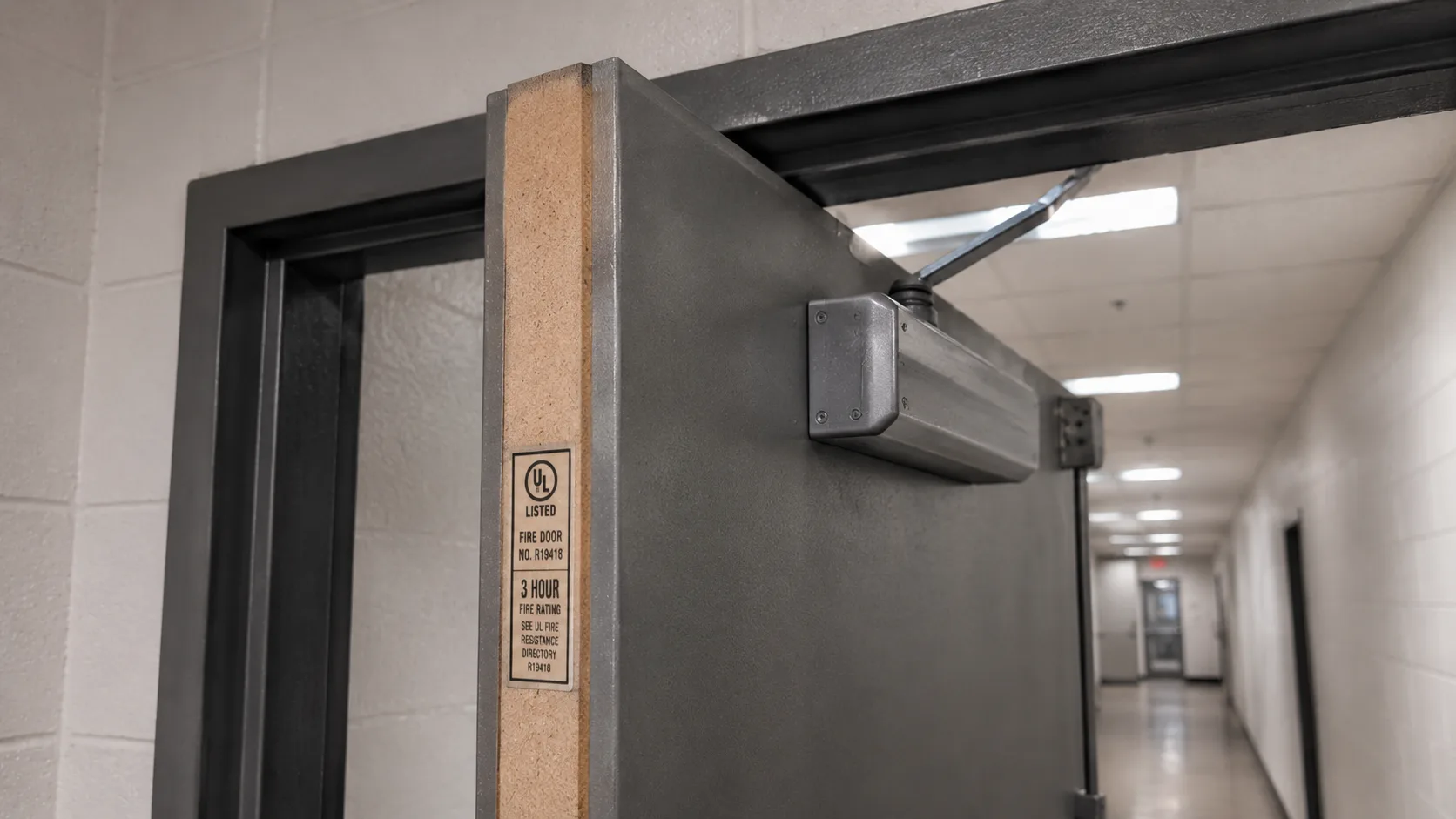
A safe without a UL 72 certification label has no verified fire protection whatsoever. The manufacturer may claim it is fire resistant based on nothing more than the insulating material in the door — a claim that has not been verified by any third party. If the safe does not have a UL label, it is a storage box with a lock, not a fire-resistant safe.
Paper vs. Media vs. Digital: Different Contents Need Different Ratings
This is where most safe purchases go wrong. A Class 350 safe — the most common type sold in big-box stores — is tested to keep its interior below 350°F. Paper ignites at approximately 451°F. A Class 350 safe protects paper documents. That is all it reliably protects.
| Content type | Failure temperature | Required UL 72 class |
|---|---|---|
| Paper documents | ~451°F (ignition point) | Class 350 — standard safes work |
| Photographs (film) | ~300°F (warping and melting) | Class 150 minimum |
| DVDs, CDs, Blu-ray | ~250°F (data loss begins) | Class 150 minimum |
| USB flash drives | ~150°F (controller failure) | Class 125 required |
| Hard drives (HDD) | ~125°F (platter and bearing damage) | Class 125 required |
| SSD drives | ~150–175°F (NAND failure) | Class 125 required |
| Magnetic tape backup | ~125°F | Class 125 required |
The implication of this table is significant for anyone who stores digital backups or external hard drives in a standard fire safe. The Class 350 safe they bought to protect their documents is actively destroying their digital media in any fire hot enough to actually test the safe. The interior temperature that is acceptable for paper — say, 340°F — is more than double the failure temperature of a hard drive. The media is gone long before the safe fails.
Class 125 safes cost more — typically $300 to $800 for a quality residential unit compared to $60 to $150 for a Class 350 box — because the insulation required to keep internal temperatures that low is more substantial. They are also heavier and bulkier per cubic foot of storage space. But if digital media or photographs are what you are trying to protect, Class 350 is not the right product regardless of its price or its brand name.
What Actually Happens Inside a Safe During a House Fire
The mechanism behind fire-resistant safe protection is thermal mass and insulation — not magic. The safe's door and walls contain insulating material, typically a gypsum-based compound similar to drywall, that absorbs heat slowly and delays temperature transfer to the interior. The safe does not keep heat out forever. It buys time by slowing the rate at which external heat reaches the interior.
As the fire burns and the safe heats up, the insulating material also releases moisture — typically as steam. This is intentional design. The steam keeps the interior temperature near 212°F (the boiling point of water) as long as there is moisture to release, which helps hold the interior below damaging temperatures. Once the moisture is exhausted, interior temperatures rise more rapidly.
This is why the time rating matters so much: the safe's protection is not indefinite, and once the moisture is exhausted, the internal temperature climbs. A 30-minute rated safe in a fire that burns for 45 minutes before suppression may have already exceeded its protection window. The fire timeline for a typical residential fire — from ignition to fire department suppression — averages 15 to 30 minutes in most urban and suburban areas, but this varies significantly by response time, building size, and fire severity.
The moisture release mechanism also means that safe contents may emerge damp. Documents stored in a fire-resistant safe may be wet from condensation after a fire even if they survived thermally intact. Store paper documents in sealed plastic bags inside the safe, and allow contents to dry carefully before attempting to handle them. Wet documents that are forced open while wet will tear.
The Impact Rating: Structural Collapse and What Survives a Fall
A fire-resistant safe sitting on the second floor of a house that burns through its floor joists will fall to the basement. The impact of that fall can pop the door, damage the locking mechanism, and expose the contents to direct fire and heat for the remainder of the incident. UL tests safes for impact resistance under its UL 72 Explosion Hazard and Impact tests — specifically, dropping the heated safe from a height to simulate a floor collapse, then continuing the fire test to see if the contents survive.
A safe with an impact rating (look for "UL Residential Security Container" or specific impact test designations on the label) has been tested for this scenario. A safe without an impact rating has been tested only for fire resistance in a stationary position — which may not reflect what happens in an actual house fire where floor failure is a common event.
The practical implication for placement: a safe on the ground floor of a single-story home, or in a basement, faces less fall risk than one on an upper floor. Heavy gun safes and larger fire safes are frequently installed on ground-level concrete slabs precisely because the weight makes upper-floor placement structurally problematic — and a concrete slab location eliminates the fall risk entirely.
Water Resistance: The Firefighting Hazard Nobody Mentions
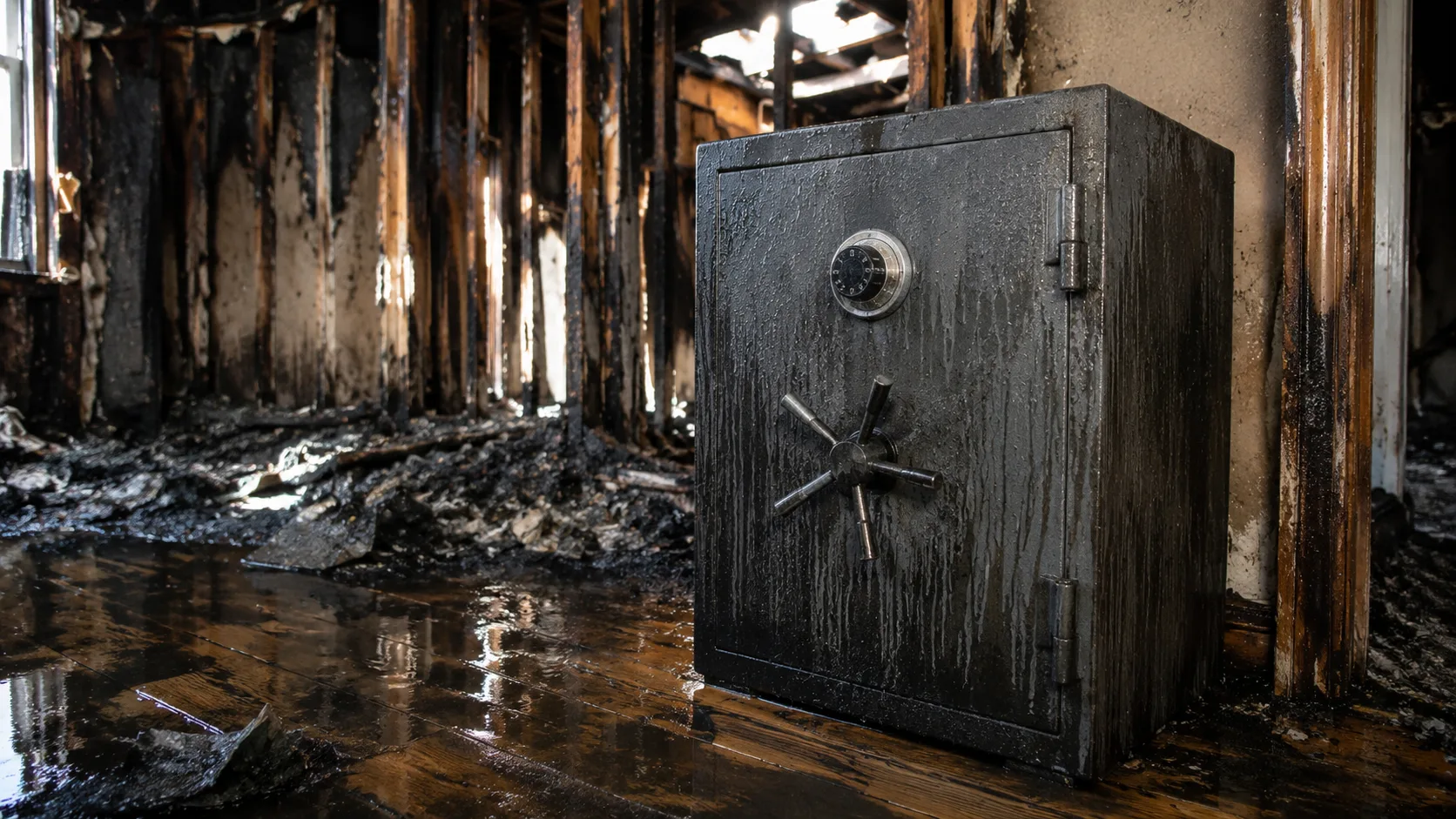
A typical residential structure fire gets 150 to 300 gallons of water per minute from a single hose line, and larger fires get significantly more. That water goes everywhere — it pools on floors, seeps through ceilings, and gets directly on every surface including safes. The UL 72 fire rating does not test for water infiltration. A safe with a UL 72 fire rating that has no water resistance rating may protect your documents from fire and destroy them with water.
Water-resistant safes carry a separate rating — typically an IP (Ingress Protection) rating. IP67 indicates the safe can withstand immersion in up to 1 meter of water for 30 minutes. IP57 indicates water resistance under less severe conditions. Look for a separate water resistance rating on any safe intended for document or media protection, particularly if it will be stored in a location that might have significant water exposure during a fire — any upper floor, or any room adjacent to the kitchen or bathrooms.
As an alternative to relying on a single safe for all protection, storing documents in sealed waterproof bags inside a fire-rated safe adds a layer of water protection at minimal cost. Ziploc freezer bags are effective for documents that are not critically sensitive. More critical documents benefit from purpose-made waterproof document pouches.
Price and Protection: Where the Real Breakpoints Are
| Price range | What you typically get | Best for |
|---|---|---|
| Under $80 | Class 350, 30-minute rating, no UL label on many, thin walls, light weight — easily carried off by a burglar | Basic paper documents only, low-risk environments |
| $80–$200 | Class 350, 1-hour UL-verified rating, basic locking, 20–40 lbs | Paper documents, passports, basic valuables |
| $200–$500 | Class 150 or 125, 1-hour rating, better water resistance, heavier construction | Media, photographs, hard drives, important documents |
| $500–$1,200 | Class 125, 2-hour rating, impact rated, water rated, solid construction, burglary resistance | Comprehensive document and media protection, significant valuables |
| Above $1,200 | Gun safe-grade construction with fire rating, UL-listed burglary rating, 2–4 hour fire rating | Firearms, large valuables, long-duration fire protection |
The under-$80 category deserves specific mention. The small black boxes sold at discount retailers for $40 to $60 are marketed as fire safes. Most do not carry a verified UL fire rating. The ones that do are typically rated for 30 minutes at Class 350 — the minimum bar for any fire protection claim. They are also light enough to be picked up and carried away by anyone who walks into your home, defeating any security purpose. They are suitable for organizing documents. They are not meaningful fire protection.
What to Store in a Safe vs. What to Store Elsewhere
- ✓In the fire safe: passports, birth certificates, Social Security cards, property deeds, vehicle titles, insurance policies, wills, marriage/divorce certificates, tax returns (last 3–7 years).
- ✓In a Class 125 media safe: external hard drives with backups, USB drives with critical files, DVDs with home videos or photos, irreplaceable digital media.
- ✓Off-site backup (cloud or safety deposit box): anything truly irreplaceable — scanned copies of all key documents, photo backups. A house fire destroys whatever is in the house, including the safe's contents if the fire exceeds the rating.
- ✗Do not store USB drives or hard drives in a Class 350 paper safe — they will not survive.
- ✗Do not store cash long-term in a fire safe without a burglary rating — fire protection does not mean theft protection.
- ✗Do not rely solely on the safe — maintain off-site copies of anything critical.
Where to Put the Safe in Your Home
The common advice to put a safe in the master bedroom closet has fire safety logic behind it: bedroom closets are typically on exterior walls, away from the kitchen where most fires start, and the wall construction may provide some additional thermal protection. It also has a burglary-logic problem: master bedroom closets are the first place burglars check.
For fire protection specifically, the basement on a concrete slab is the best location — no fall risk, concrete provides thermal mass, and the lowest point in the structure is typically the last to reach critical temperatures in a structural fire. A first-floor interior location is second best. Upper floors carry fall risk from floor joist failure. If burglary protection is also a priority, bolting the safe to the floor or wall at any location dramatically increases theft resistance for any safe under about 200 pounds.
Comments 0
No comments yet. Be the first to share your thoughts!
Leave a Comment