The International Association of Fire Fighters declared cancer the leading cause of firefighter line-of-duty deaths in 2002. The research supporting that position has grown substantially since then. A NIOSH study of nearly 30,000 career firefighters found elevated rates of several specific cancers compared to the general population — mesothelioma at more than twice the expected rate, bladder cancer elevated, kidney cancer elevated, thyroid cancer elevated, and a pattern across multiple cancer types that is not consistent with random variation.
The mechanism is not mysterious. Firefighters are occupationally exposed to a documented list of carcinogens — products of combustion that include polycyclic aromatic hydrocarbons, benzene, formaldehyde, arsenic, asbestos in older buildings, and a mix of gases and particulates that varies with what is burning. That exposure happens through two routes: respiratory, when SCBA is not worn or is removed too early, and dermal, when carcinogens on contaminated skin, gear, and surfaces are absorbed through the skin over time. Gross decontamination — washing carcinogens off gear and skin as soon as possible after exposure — is the primary intervention that addresses the dermal route.
In this article:
- What the research actually shows
- The exposure mechanism: respiratory vs. dermal
- Gross decontamination: what it is and when it happens
- Gear contamination and NFPA 1851
- The culture shift: from badge of honor to contamination protocol
- Station contamination: diesel exhaust and gear in living quarters
- What individual firefighters should be doing
- Presumptive cancer laws
What the Research Actually Shows
The NIOSH firefighter cancer study published in 2013, covering 29,993 career firefighters from San Francisco, Philadelphia, and Chicago, is the largest and most comprehensive study of the question to date. Its findings were significant: cancer incidence was elevated across many types, with statistically significant elevations in digestive, oral, respiratory, and urinary cancers. Mesothelioma — a cancer almost exclusively associated with asbestos exposure — was elevated at more than double the expected rate, consistent with firefighters' historical exposure in older buildings.
Subsequent research has added to this picture. Studies from multiple countries with different healthcare and occupational exposure systems have found similar patterns, suggesting the elevation is not an artifact of a specific cohort but reflects an actual occupational exposure effect. The dose-response relationship — more fires worked correlated with higher cancer rates — further supports causation rather than coincidence.
The specific cancers with consistently elevated rates across multiple studies include bladder cancer, kidney cancer, mesothelioma, non-Hodgkin's lymphoma, testicular cancer, and thyroid cancer. Some studies show elevations in breast cancer among female firefighters and prostate cancer among male firefighters, though these findings are less consistent across the literature.
The Exposure Mechanism: Respiratory vs. Dermal
Firefighters have always understood that smoke inhalation carries acute health risks — the immediate effects of carbon monoxide, hydrogen cyanide, and particulate inhalation are well-documented and taken seriously. The cancer risk from carcinogen exposure is different: it is chronic, cumulative, and operates through mechanisms that are not immediately felt.
Respiratory exposure
SCBA protects against respiratory exposure during active firefighting. The problem is exposure that occurs outside SCBA use: overhaul operations conducted without SCBA when smoke has cleared enough to seem manageable, removal of SCBA immediately after exiting without waiting for air quality assessment, and exposure during training burns where SCBA use is sometimes inconsistent. Research has measured carcinogen levels in firefighters' urine and blood at elevated levels after fire responses, including after responses where SCBA was worn throughout active firefighting — indicating that overhaul and post-fire activities are significant exposure events.
Dermal exposure
Carcinogen-laden soot and combustion byproducts deposit on skin, particularly on areas not covered by gear: the face, neck, and hands. The neck is specifically identified in research as a high-absorption zone due to skin thickness and proximity to major blood vessels. Polycyclic aromatic hydrocarbons — a class of carcinogen produced in combustion of organic material — are lipophilic, meaning they readily cross the skin barrier and enter circulation.
The dermal route is insidious because it is not felt. A firefighter with soot on their neck after a fire has no sensation of carcinogen absorption occurring. The contamination sits on the skin, absorbs over time, and the accumulation of exposure events over a career is what produces the elevated cancer rates. This is why gross decontamination — washing the skin immediately after exposure — is the targeted intervention. The goal is to reduce the time carcinogens are in contact with skin before they absorb.
Gross Decontamination: What It Is and When It Happens
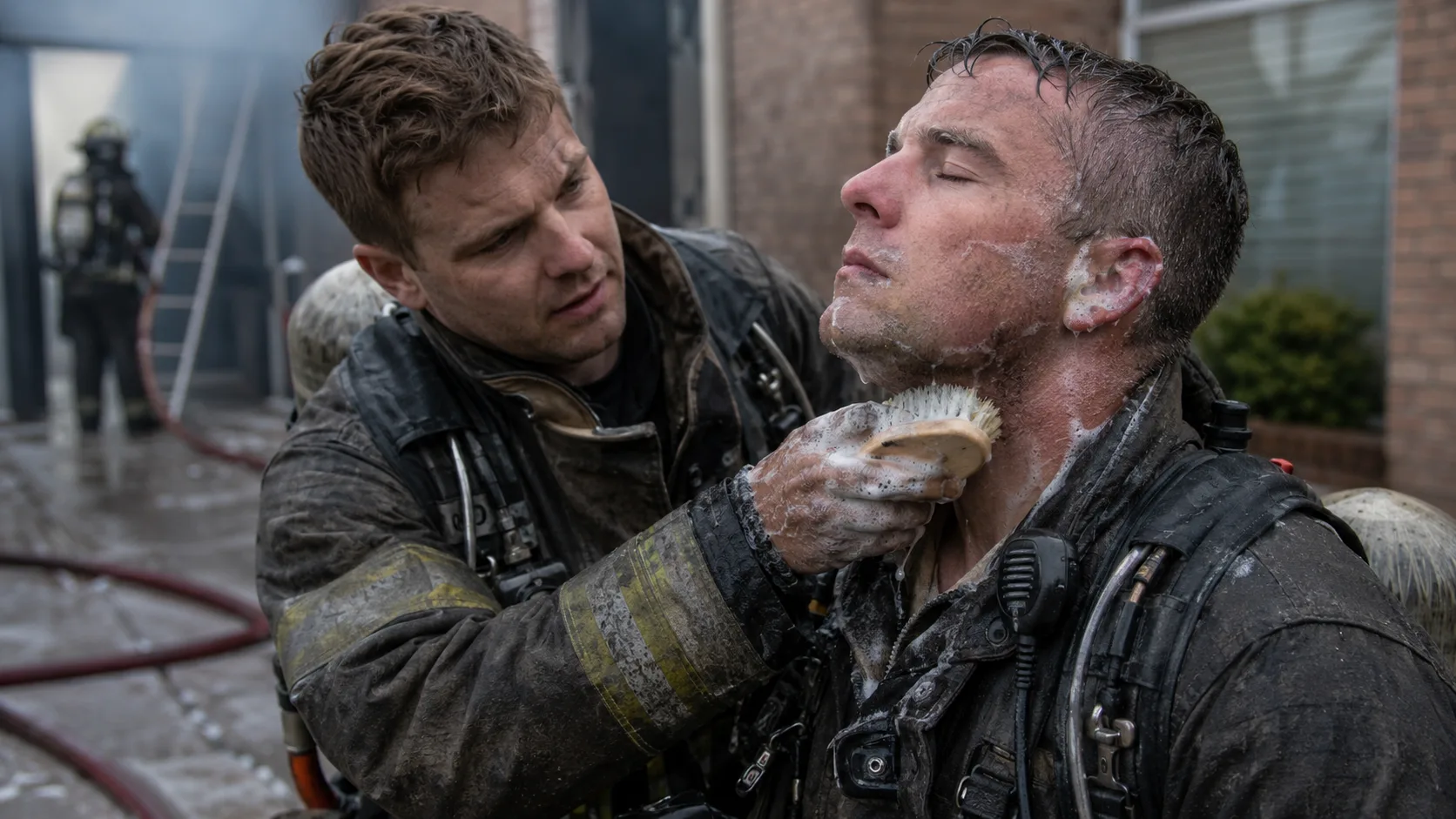
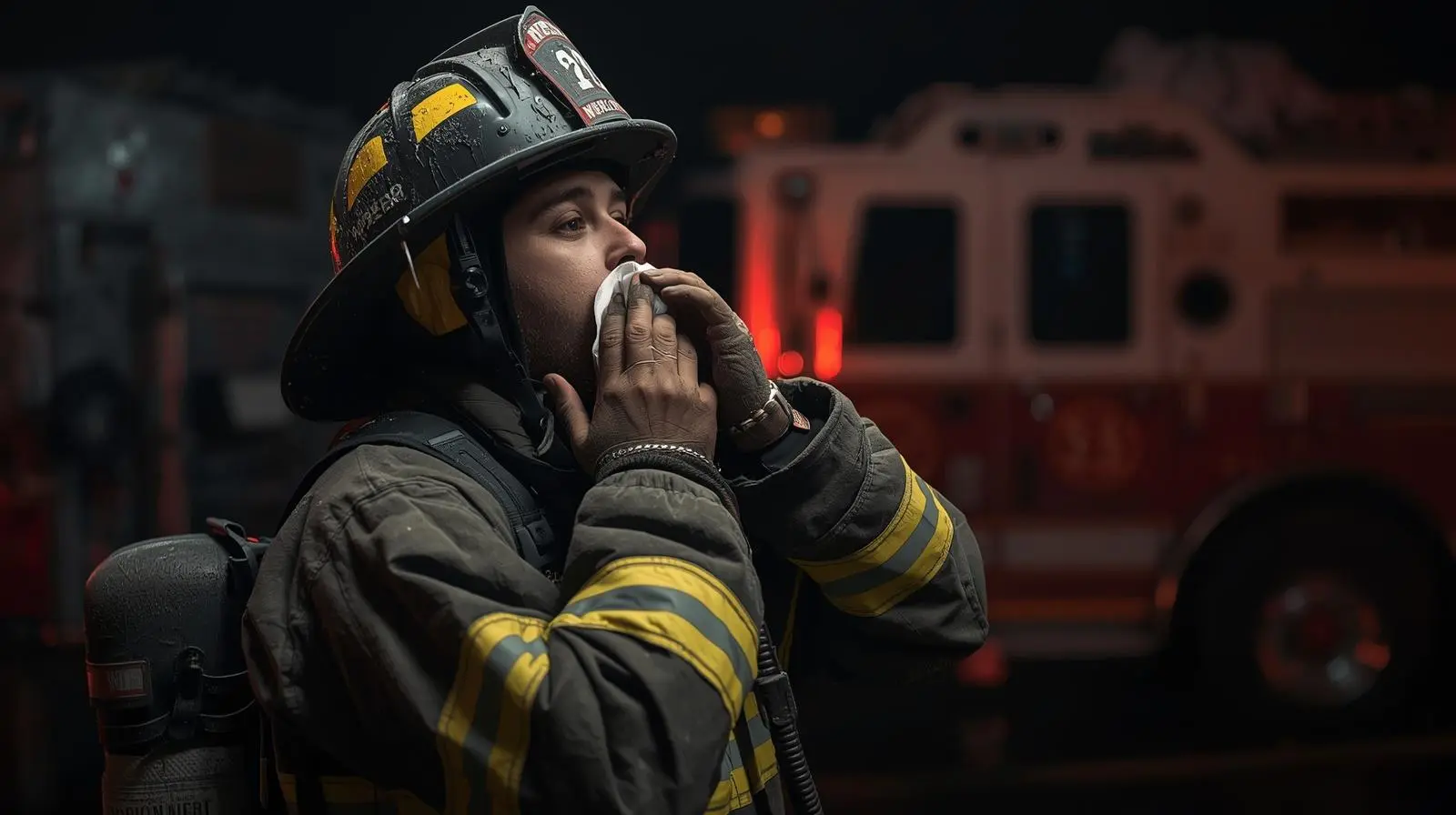
Gross decontamination is the initial, immediate washing of exposed skin — face, neck, and hands — at the fire scene before removing SCBA and before any other post-fire activity. It is called "gross" in the sense of "large-scale" rather than "thorough" — the goal is not a complete decontamination but a rapid reduction of surface carcinogen concentration before it absorbs.
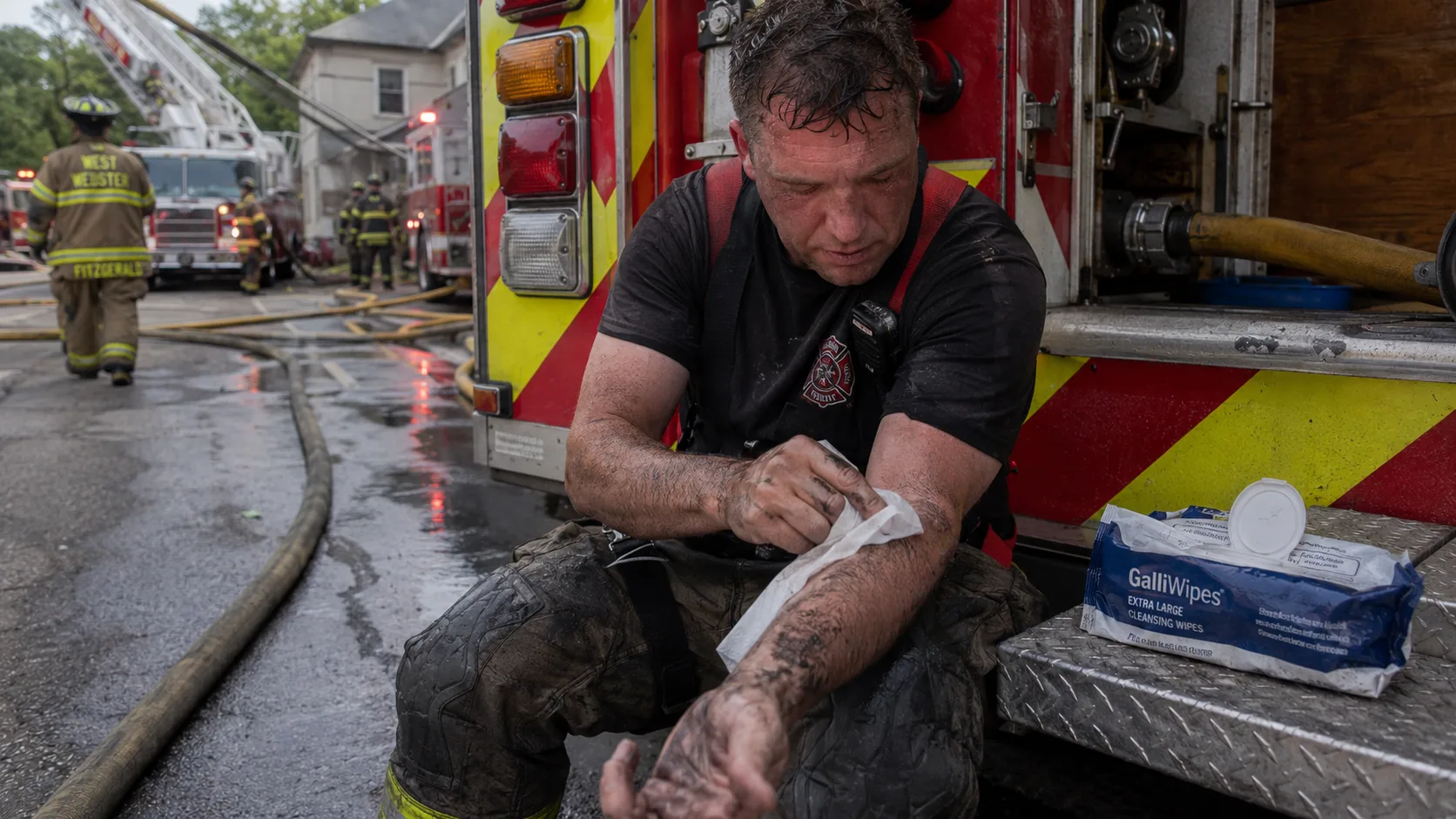
The protocol in departments that have adopted it: at the conclusion of active interior operations, before removing SCBA or turnout gear, the firefighter's face, neck, and hands are scrubbed with soap and water — baby wipes or wet wipes as a minimum if soap and water are not immediately available. The face and neck in particular are addressed because they are the highest-absorption zones that are unprotected by gear during most interior operations.
The sequence matters. A firefighter who removes their SCBA, then removes their hood, then drives back to the station before washing has spent 20 to 30 minutes with contaminated skin before decontamination. A firefighter who washes at the scene immediately after interior operations has reduced that exposure window to a few minutes. The difference in cumulative carcinogen absorption over a career of fire responses is significant.
Wet wipes specifically formulated for firefighter decontamination are now manufactured and available through fire supply vendors. Studies have measured their effectiveness in reducing surface PAH concentration compared to no-wipe and water-only conditions. They are a practical tool for decontamination when running water is not immediately available at the scene.
Gear Contamination and NFPA 1851
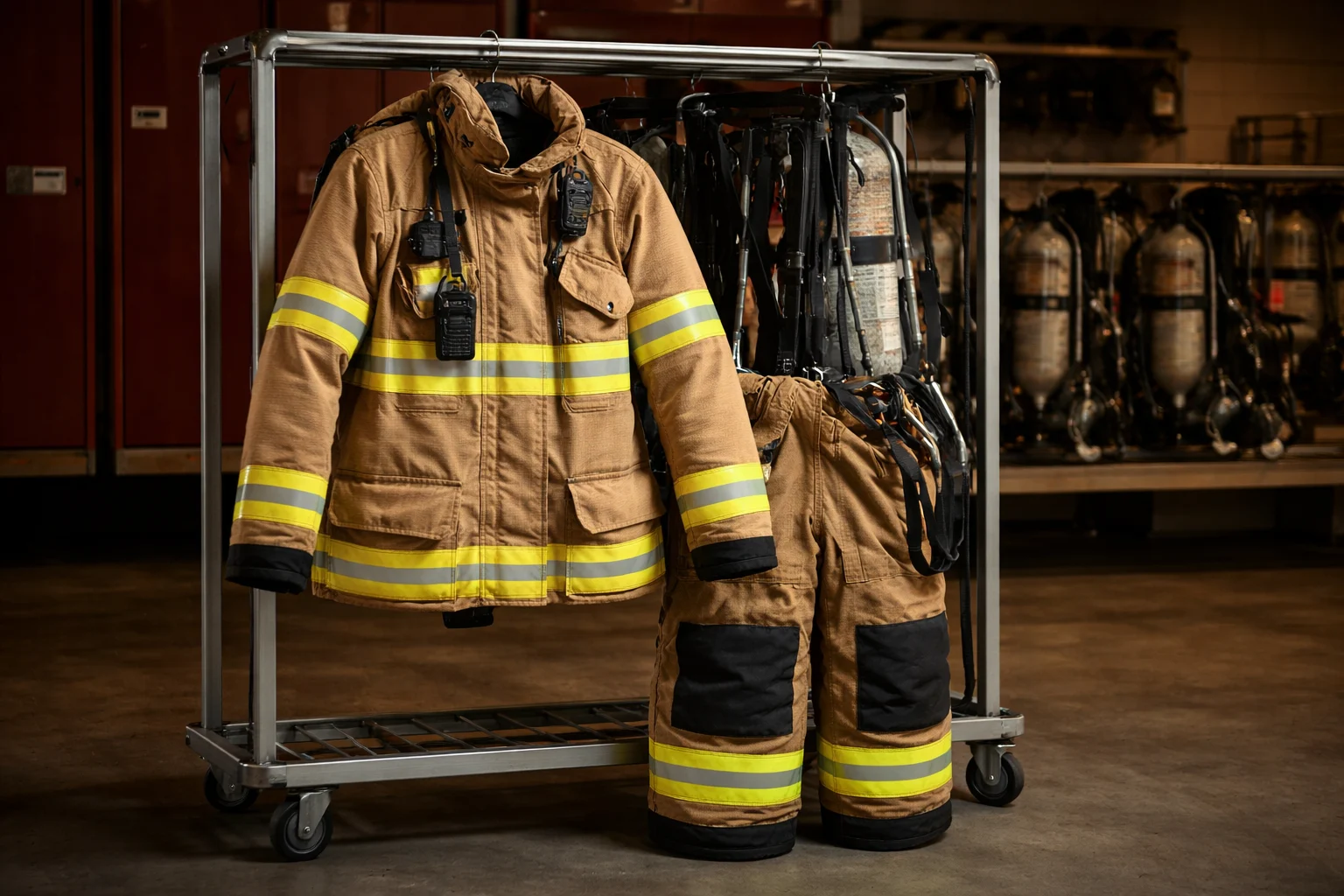
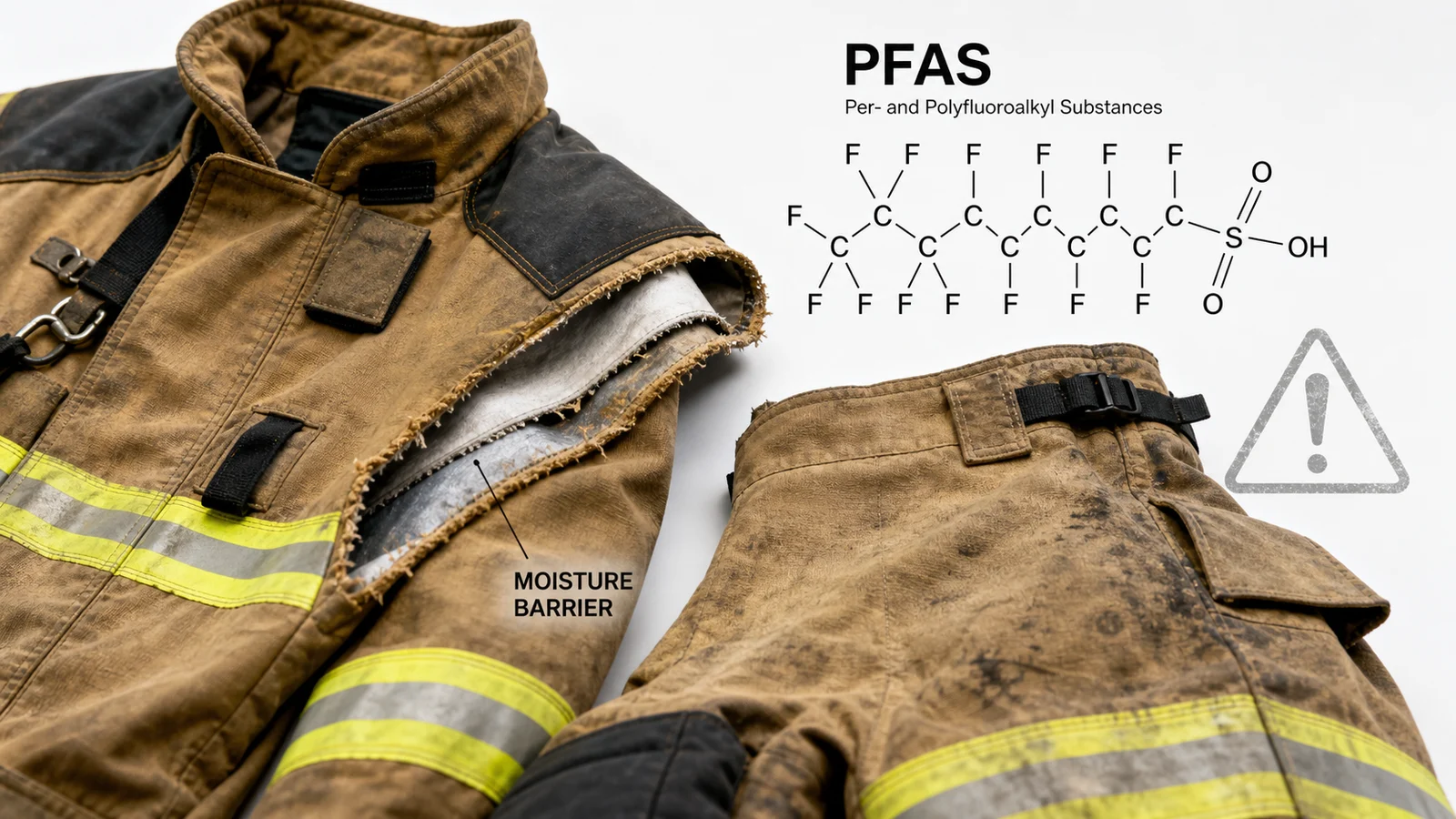
Turnout gear — the coat and pants — absorbs carcinogens during a fire response and retains them after the fire is out. A set of gear that is not cleaned after each fire response carries the contamination from that fire into every subsequent fire, every station meal, and every ride in the apparatus. NFPA 1851 is the standard for the selection, care, and maintenance of structural fire fighting protective ensembles. It requires inspection after each use and cleaning when contamination is present — which, in practice, means after every fire response.
The standard distinguishes between routine cleaning (the firefighter washes their own gear) and advanced cleaning (a qualified program or manufacturer-certified process). Advanced cleaning is required at least annually and after any known exposure to hazardous materials. The point of the distinction is that routine cleaning at the station removes surface contamination, while advanced cleaning addresses contamination that has penetrated the outer shell fabric and the moisture barrier beneath it.
A set of gear that has never been advanced-cleaned and is used at multiple fire responses per year is not clean gear — it is a contaminated garment that a firefighter wears against their skin for hours at a time. The NFPA standard exists precisely because the industry recognized this accumulation problem.
The Culture Shift: From Badge of Honor to Contamination Protocol
For much of the history of the American fire service, dirty gear was a mark of experience. Darkened, smoke-stained turnout gear signaled that the firefighter wearing it had been in working fires — had done real work. Clean gear was for rookies. This culture actively discouraged the behaviors that reduce carcinogen exposure: washing gear, showering after a fire, keeping gear out of the station living areas.
That culture has shifted substantially over the past 15 years, driven by the accumulating cancer research and by the visible toll of cancer on firefighters who spent decades in the job. Departments that once tolerated dirty gear in sleeping quarters now prohibit gear from living areas entirely — recognizing that bringing contaminated gear into the kitchen and sleeping areas of the station spreads carcinogens to surfaces that firefighters contact without any protective equipment at all.
The shift is not complete. Older departments, smaller departments, and departments without strong union contracts or administrative emphasis on cancer prevention may still operate with practices that the research now clearly identifies as hazardous. Individual firefighters in these departments sometimes implement their own decontamination protocols against departmental culture — washing at the scene when department practice does not require it, showering before eating regardless of what others do, getting their gear cleaned more frequently than required.
Station Contamination: Diesel Exhaust and Gear in Living Quarters
Two station-specific contamination sources deserve specific attention: apparatus exhaust and the proximity of contaminated gear to living areas.
Diesel exhaust from fire apparatus is a documented carcinogen — classified as Group 1 (known human carcinogen) by the International Agency for Research on Cancer. Fire stations with apparatus bays adjacent to or opening directly into living areas — kitchens, day rooms, sleeping quarters — have measurable diesel exhaust contamination in those living areas whenever apparatus runs. Exhaust capture systems, which route apparatus exhaust directly to the exterior rather than allowing it to fill the bay, are the engineering solution. Many older stations lack them. Retrofitting is expensive but the carcinogen exposure reduction is documented.
Contaminated turnout gear stored in or near living areas is the second source. Gear that comes in from a fire response and is hung in the sleeping quarters, draped over a chair in the kitchen, or stored in a locker adjacent to the living area transfers surface carcinogens to the air and surfaces of those spaces. Modern station design places gear storage outside the living area — in a dedicated gear room that does not connect directly to sleeping and eating spaces. Departments operating in older stations have to work within what they have, but the principle of separating contaminated gear from living areas is achievable even without a new building.
What Individual Firefighters Should Be Doing
- ✓Wear SCBA through overhaul — not just during active firefighting. Overhaul produces significant carcinogen exposure as smoldering material is disturbed.
- ✓Gross decontaminate at the scene — face, neck, and hands with soap and water or decontamination wipes before removing SCBA or gear.
- ✓Shower at the station before eating or sleeping — not after the meal. Carcinogen absorption continues until the skin is washed.
- ✓Bag contaminated gear separately for transport; do not bring it into the living area.
- ✓Wash gear after every fire response — routine cleaning at minimum; advanced cleaning annually or after significant exposures.
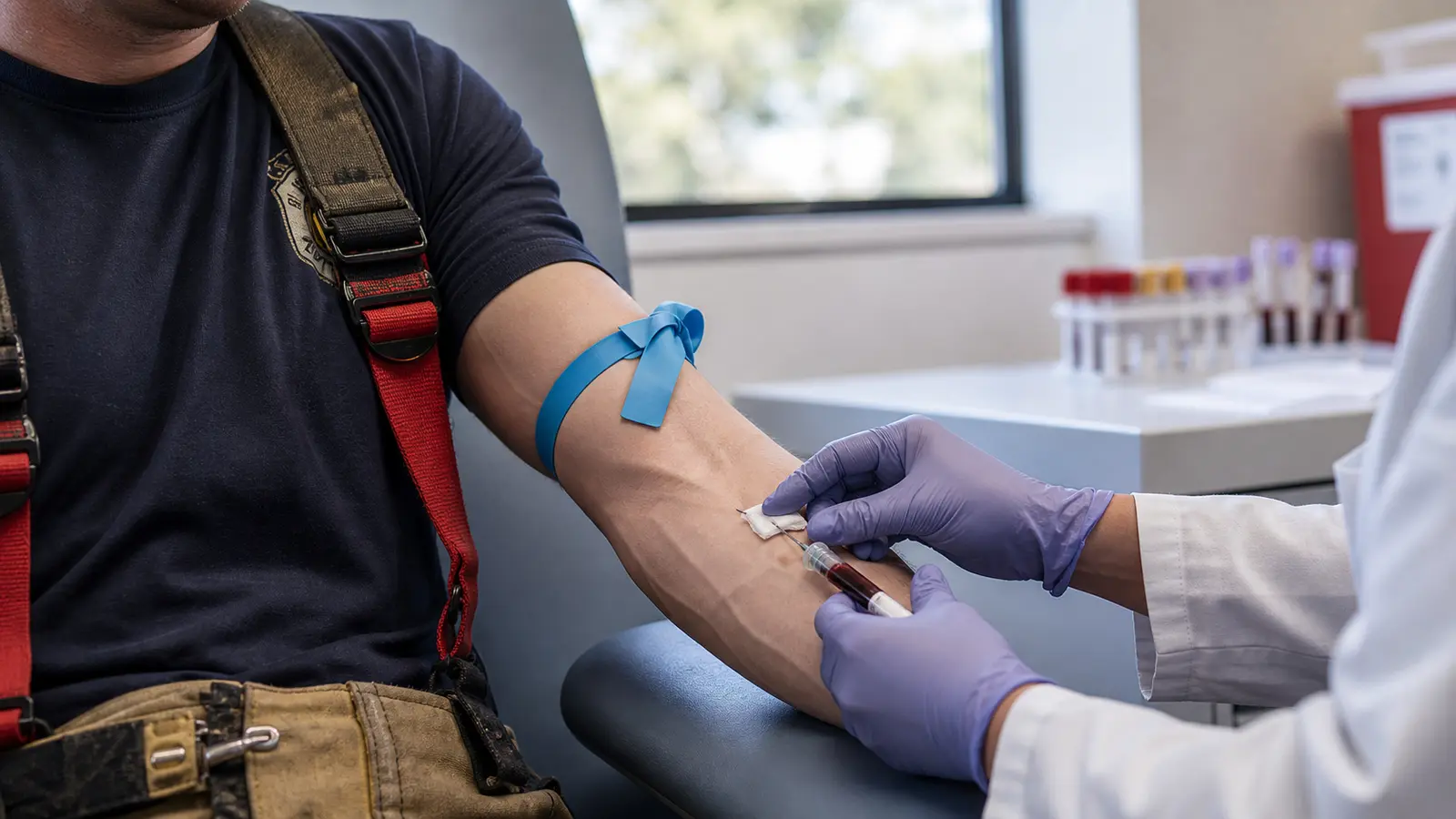
- ✓Participate in medical surveillance programs — many states with presumptive cancer laws require baseline health screenings for covered firefighters. Catch cancers early.
- ✗Do not normalize dirty gear as a status symbol — the research on what that contamination does over a career is unambiguous.
- ✗Do not remove SCBA in a structure until air quality has been confirmed — "it doesn't smell that bad" is not an air quality assessment.
Presumptive Cancer Laws
Presumptive cancer legislation — laws that presume that a firefighter's cancer was caused by their occupational exposure unless proven otherwise — has been adopted in the majority of U.S. states and by the federal government for federal firefighters. Before presumptive laws, a firefighter with cancer had to prove that their cancer was caused by their fire service exposure — a nearly impossible evidentiary burden for a disease with multiple potential causes and a long latency period.
Presumptive laws shift the burden: the employer or insurer must prove the cancer was not occupationally caused, rather than the firefighter proving it was. In practice, this has significantly increased workers' compensation coverage for firefighters with cancer, providing treatment funding and disability benefits that were previously unavailable to many.
The specific cancers covered and the qualifying conditions (years of service, type of fire service, etc.) vary by state. Firefighters should know what their state's presumptive law covers, document their fire response history throughout their career, and consult with a union representative or attorney if a cancer diagnosis occurs and workers' compensation is a question.
Comments 0
No comments yet. Be the first to share your thoughts!
Leave a Comment