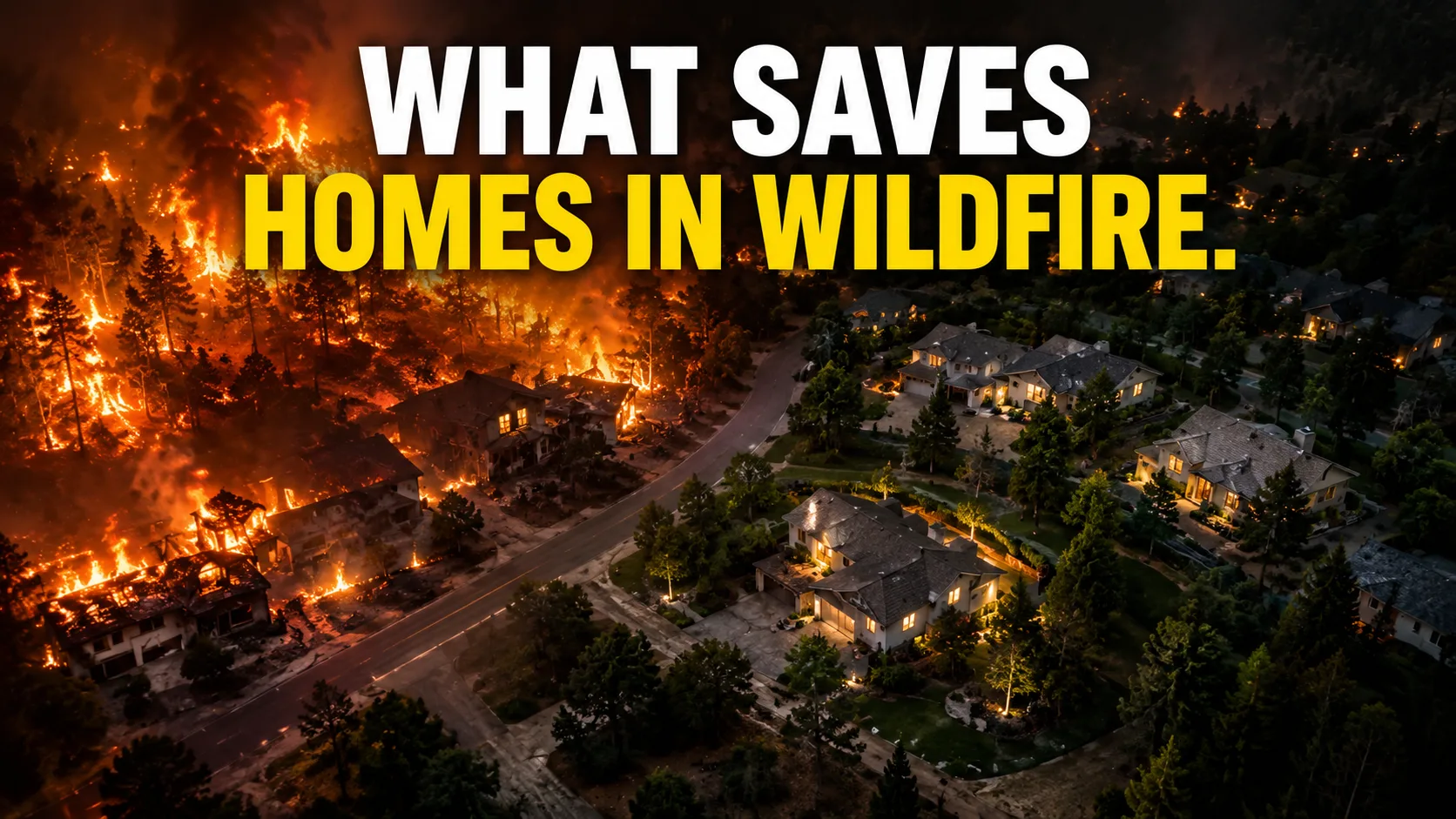

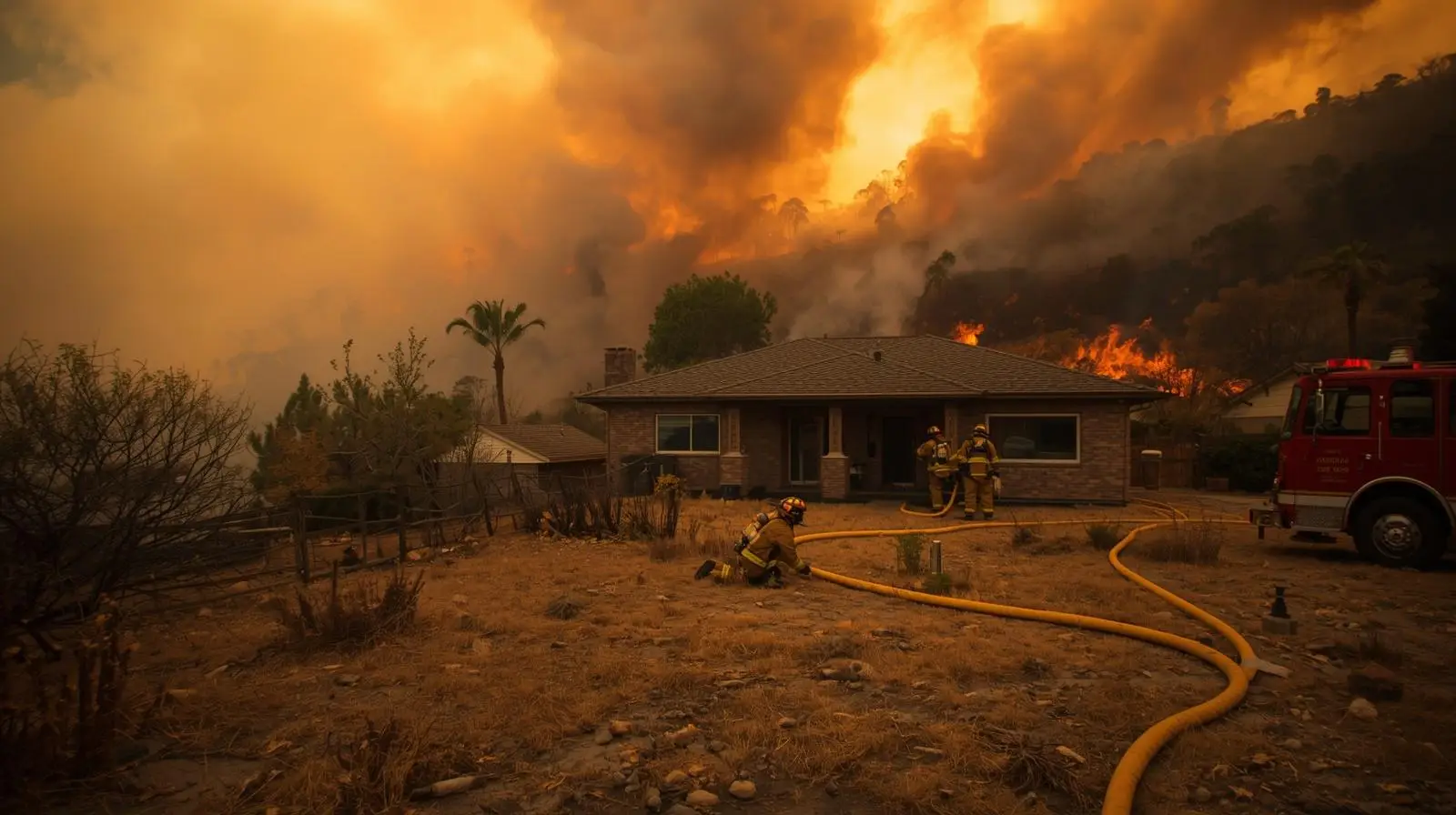
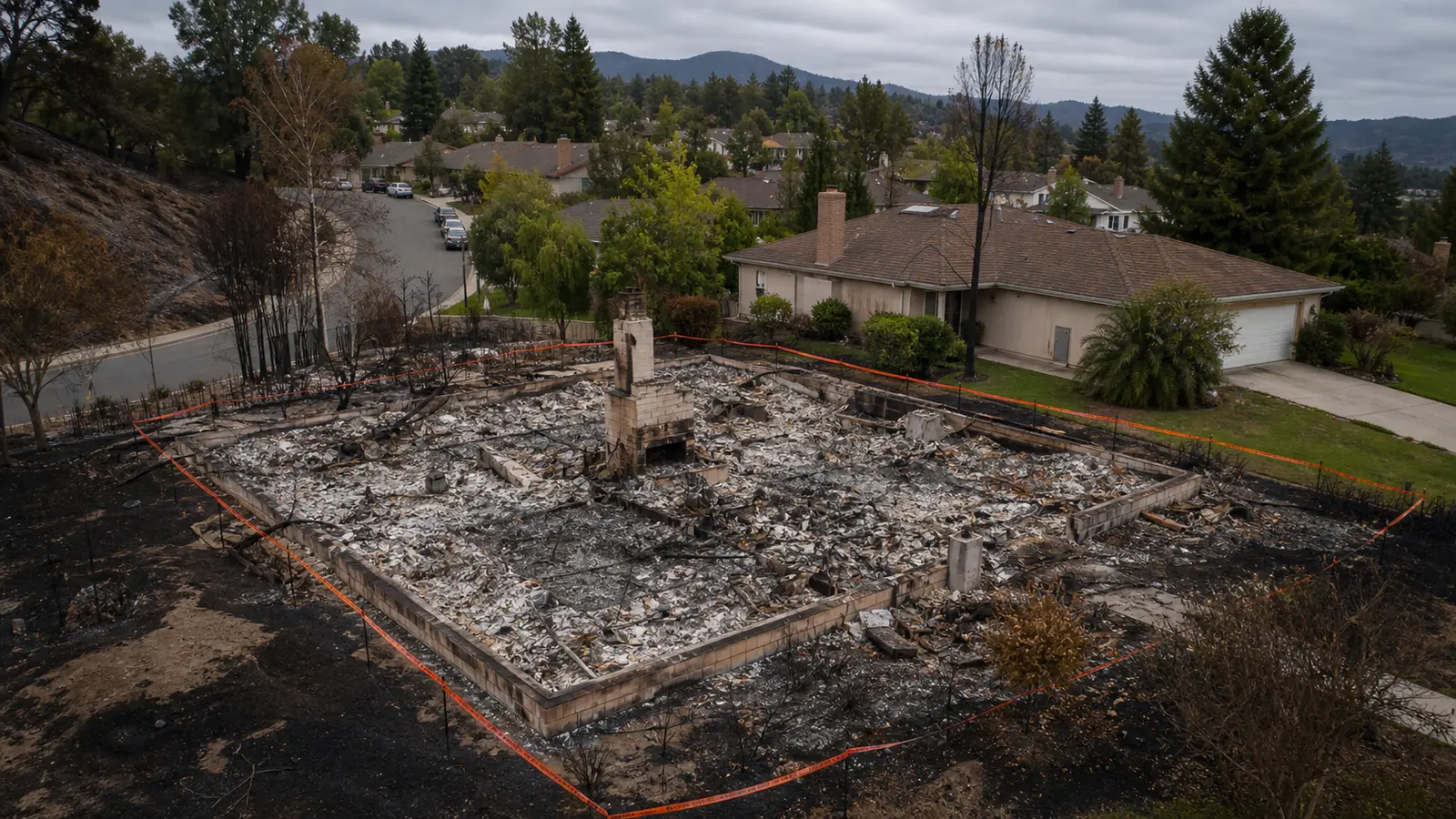
After major wildfires, fire investigators walk through neighborhoods where some houses burned completely and adjacent houses survived untouched. The flame front passed through both properties. The difference between the house that survived and the house that did not is almost never luck. It is almost always something specific about the surviving structure — a vent that was sealed, a gutter that was clear, a wood deck that was replaced, vegetation that was managed. Post-fire investigations have documented these patterns across thousands of homes in the last 30 years. The science of what saves houses in wildfires is not theoretical anymore.
The most important thing to understand before any of the specific guidance: most homes are not destroyed by direct flame contact with the fire front. They are destroyed by embers — firebrands that travel ahead of the fire on the wind, sometimes for miles, landing on and around the structure. Ember ignition on the roof, in the gutters, through unscreened vents, and in accumulated debris under decks starts the house fire long before the flame front arrives. Preparing for wildfire means preparing for ember exposure.
In this article:
- How ember ignition actually works
- Defensible space zones: what each one does
- Structure hardening: the highest-value changes
- Vents: the most overlooked vulnerability
- Roof and gutters
- Decks and attached structures
- Windows and doors
- Fire-resistant landscaping
- Last-minute prep when a fire is approaching
- Annual preparation checklist
How Ember Ignition Actually Works
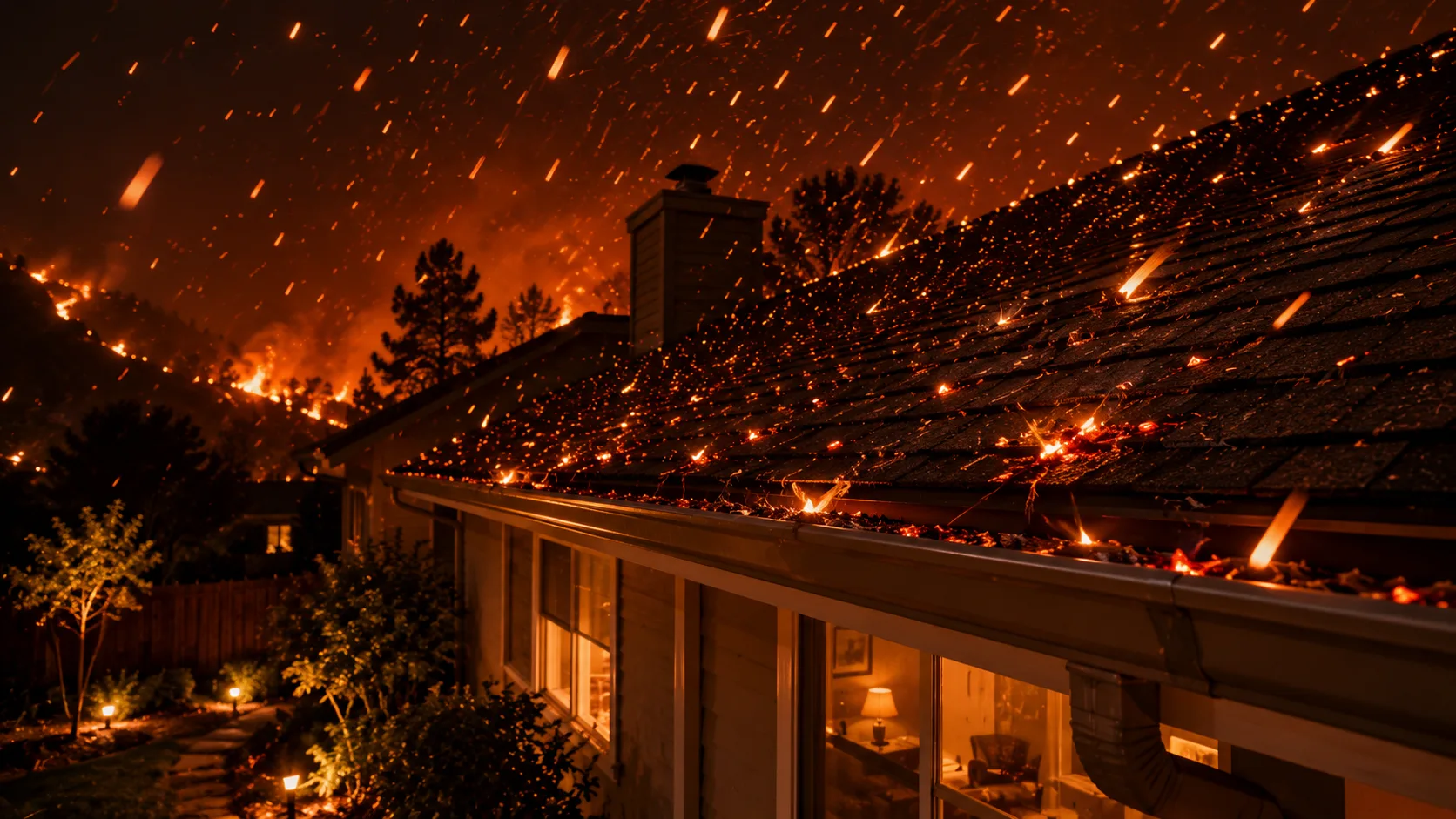
A wildfire generates enormous convective columns of hot air that loft burning material — pine cones, bark strips, burning fence sections, even burning structural members from houses already destroyed — high into the atmosphere. Wind carries these firebrands ahead of the fire front at speeds that can land burning material on homes a mile or more from the active fire.
When a firebrand lands on a vulnerable surface, ignition requires only that the surface is dry enough and combustible enough to catch from a small glowing ember. The places where embers most reliably start home ignitions:
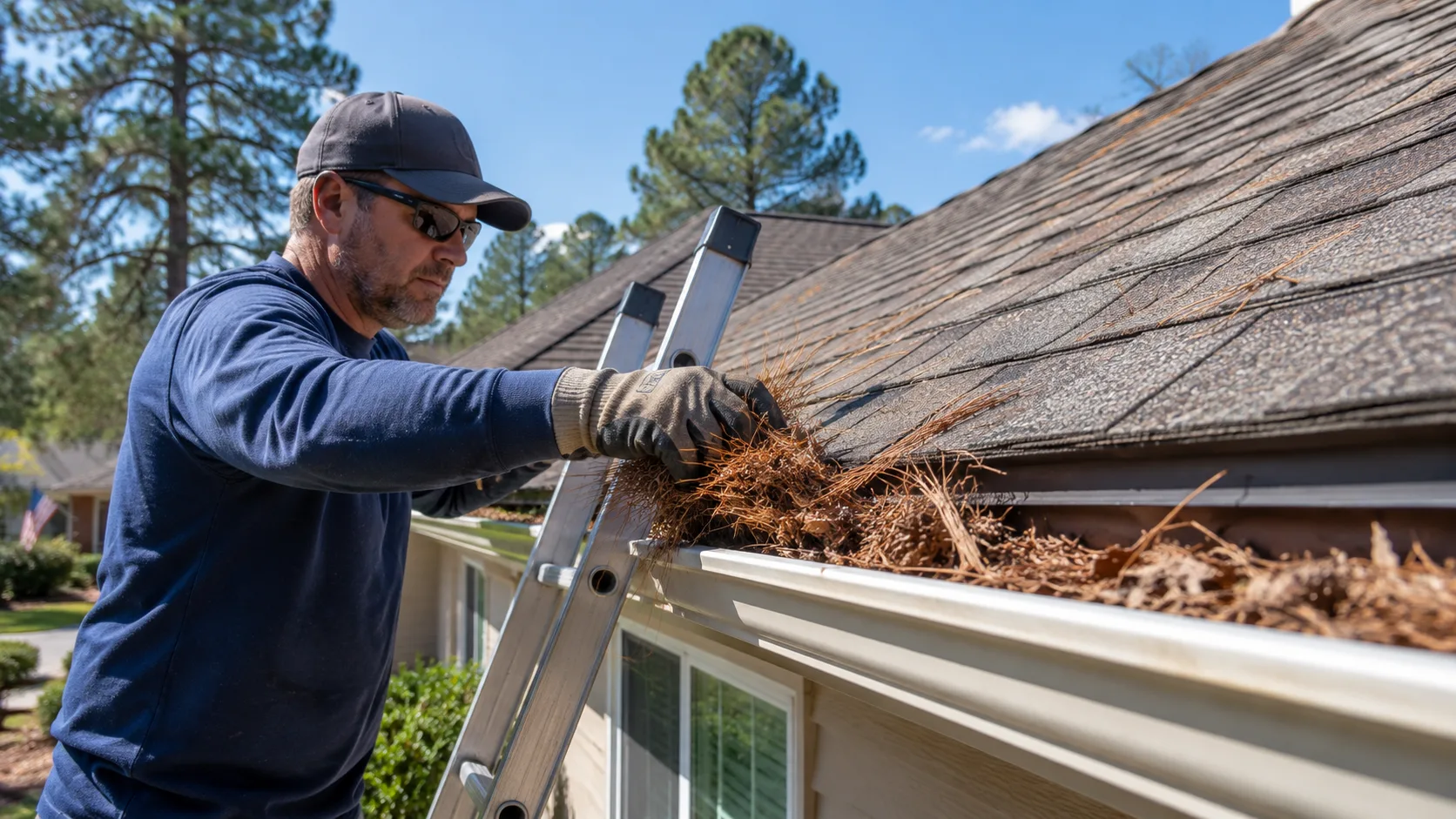
- Gutters with accumulated leaf litter and debris — dry debris in gutters catches easily and burns at the roofline, spreading to the eave structure above
- Unscreened foundation vents and attic vents — embers enter the void space and ignite the interior structure without any external fire involvement
- Wood decks and their undersides — embers land on deck surfaces and smolder; or the area under the deck accumulates combustible debris and embers land there
- The zone immediately adjacent to the structure — combustible mulch, wood furniture, propane tanks, and stored materials within a few feet of the house allow fire to reach the structure itself
- Open eave overhangs — embers entering open eave spaces reach the interior of the roof structure
The critical implication: a home can ignite and burn completely from wildfire embers while the flame front is still far away and while a firefighter might theoretically be able to defend it — if it had not already caught from ember ignition in three different locations simultaneously before anyone arrived.
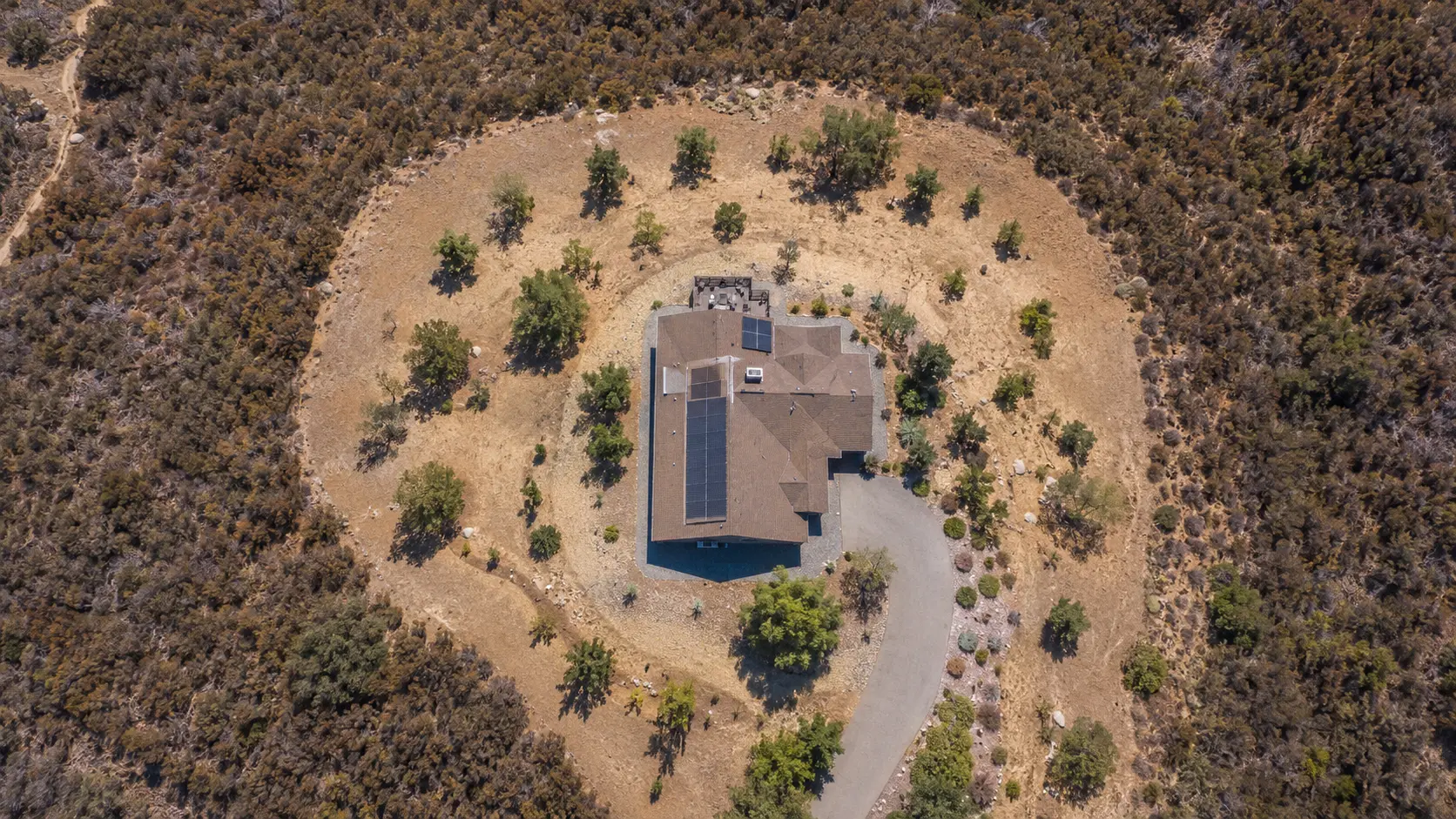
Defensible Space Zones
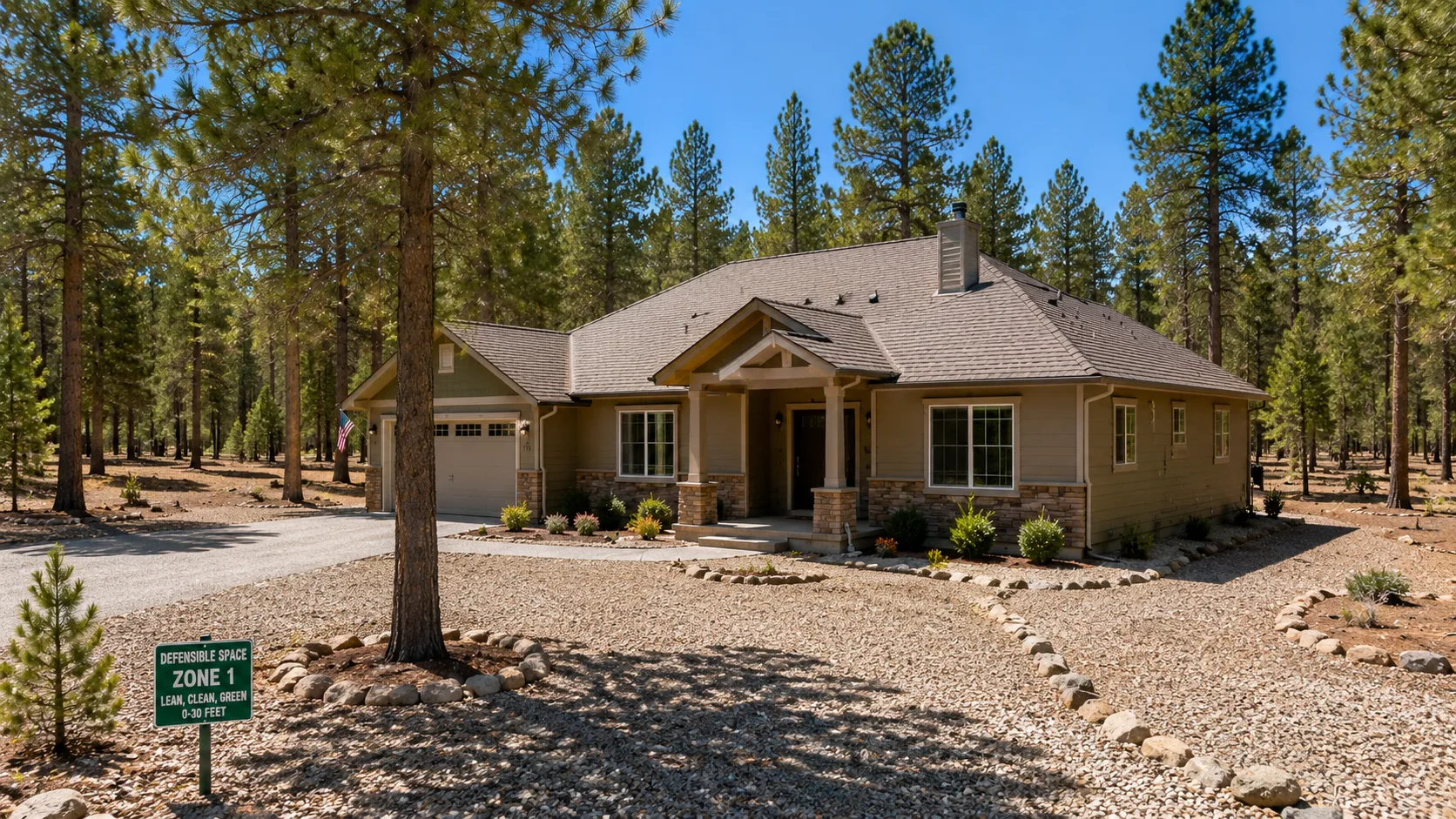
Immediate zone around the home. No combustible vegetation touching or immediately adjacent to the structure. Irrigated, maintained, non-combustible. This is where most ember ignitions must be prevented.
Vegetation managed to reduce fire intensity and rate of spread. Trees spaced, ground cover reduced, ladder fuels eliminated. Fire approaching through this zone arrives at the structure with significantly lower intensity.
Where property extends further, additional fuel reduction reduces ember production near the home. Not always achievable on typical residential lots but important for larger parcels.
Zone 1 (0–30 feet): the non-negotiable zone
This is the zone where ember ignitions start and where most of the mitigation value lives. Within 30 feet of the structure:
- No combustible mulch (bark mulch, wood chips) directly against the foundation. Use rock, gravel, or decomposed granite in the immediate 5-foot zone adjacent to the structure.
- No wood piles, lumber stacks, or combustible material stored against or within 10 feet of the structure
- No combustible patio furniture left out when a fire is threatening — move it into the garage or away from the structure
- Vegetation watered and green — not dead, dry, or dormant
- Tree branches pruned up from the ground to at least 6–10 feet to eliminate ladder fuels (ground fire climbing into tree canopy)
- No trees with branches overhanging the roof within this zone
Zone 2 (30–100 feet): fuel reduction
In Zone 2, the goal is to reduce the intensity and spread rate of fire approaching the structure, and to reduce the volume of burning material that can produce embers landing on the structure.
- Native trees spaced so canopy does not touch adjacent canopy — 10 to 30 feet between trees depending on slope (closer spacing is more dangerous on slopes)
- Shrubs reduced and cleared from under trees to eliminate ladder fuels
- Grass mowed and managed — dry grass spreads fire rapidly and is a major ember source
- Dead vegetation, fallen branches, and accumulated debris removed
Structure Hardening: The Changes That Matter Most
Defensible space reduces the amount of fire energy reaching the structure and reduces ember production near the structure. Structure hardening addresses the vulnerabilities of the structure itself — the specific entry points and combustible surfaces that allow embers to ignite the building. Post-fire investigations consistently find that structure hardening has more survival impact than vegetation management alone.
Vents: The Most Overlooked Vulnerability
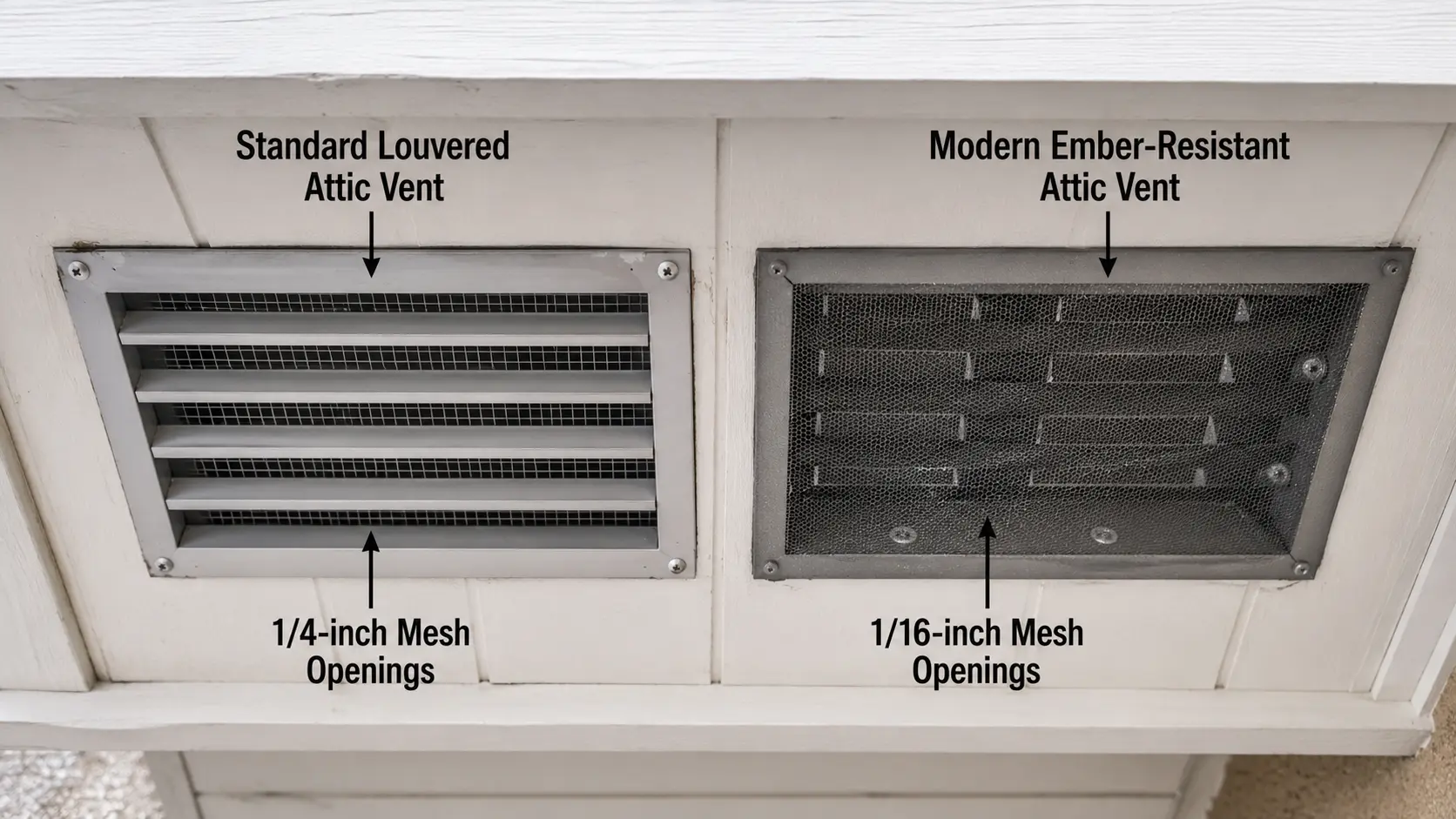
Foundation vents, attic vents, soffit vents, and crawl space vents are the primary point of ember entry into the concealed structure of most homes. A standard wire mesh vent screen has openings of ¼ inch or larger — large enough for embers to pass through. Once inside the attic or crawl space, a single ember landing on the wood structure can initiate a fire that burns from the inside out, invisible from outside the home until it has been burning for 10–20 minutes.
What to do about vents
- Replace vent screens with 1/16-inch or 1/8-inch mesh stainless steel or galvanized hardware cloth. This is the single most cost-effective structure hardening measure available. Hardware cloth is available at any hardware store and cuts to size with tin snips. The cost per vent is $2–10 in materials. This is the change that post-fire investigators most consistently identify in surviving homes.
- Install ember-resistant vent covers. Commercial ember-resistant vent products (FIRESAFE vents, Vulcan Vents, and similar) are specifically designed to block ember entry while maintaining required ventilation. They are the upgrade from DIY hardware cloth and cost $15–80 per vent.
- Seal gable-end vents that are in direct line of prevailing wind — these are highest-priority for ember intrusion during a wind-driven fire event.
Replacing vent screens with fine-mesh hardware cloth is the highest ROI structure hardening measure available. A full-home vent screening project on a typical house costs under $200 in materials and an afternoon of work. Post-fire investigations in Paradise, Tubbs, Camp Fire, and other major WUI (Wildland-Urban Interface) fires consistently identified unprotected vents as the ignition pathway in homes that burned while adjacent homes survived.
Roof and Gutters
Roofing material
The roof is the largest surface area of the structure and the primary landing zone for airborne embers. Roofing material fire resistance is rated Class A, B, or C — Class A provides the highest resistance. Metal roofing (steel, aluminum, copper) and Class A-rated asphalt shingles and tiles are the highest-performing materials for wildfire exposure. Wood shingles and shakes — even treated ones — are the worst performers. If your home has a wood shake roof in a wildfire-prone area, replacing it is the highest-value roof modification available.
The roof shape also matters. Complex roofs with multiple valleys, dormers, and intersections create debris accumulation points where embers collect and organic material builds up. Simpler roof geometry produces fewer debris accumulation areas.
Gutters
Clean gutters twice per year minimum in wildfire-prone areas — before fire season begins and again mid-season after additional debris accumulation. Install gutter covers or guards if manual cleaning is difficult. Metal gutter covers are preferable to plastic ones. Some ember-resistant gutter covers are rated specifically for WUI applications.
Eaves and soffits
Open eave overhangs allow embers to enter the interior of the roof structure. Enclosed soffits with no gaps significantly reduce this vulnerability. If your home has open eave construction, adding soffit material (non-combustible — fiber cement or metal is preferred over wood) and sealing all gaps reduces a significant ember entry point.
Decks and Attached Structures
Wood decks are one of the most reliable points of failure in WUI fire investigations. An attached wood deck that catches fire from ember ignition can transfer that fire to the main structure even if every other mitigation measure has been applied correctly. The deck becomes a bridge between the wildfire-affected yard and the protected structure.
Deck surface material
Composite decking (Trex and similar products) performs significantly better than wood in ember exposure testing. Composite decking does not eliminate the risk — some composite products will still ignite given sufficient ember exposure — but it substantially raises the ignition threshold compared to untreated or even treated wood. If replacing a wood deck, composite is the appropriate material for WUI locations.
The space under the deck
The area beneath an elevated deck accumulates debris — leaves, bark, branches — that is inaccessible for cleaning and creates ideal conditions for ember ignition underneath the deck structure. Ember-resistant skirting around the deck perimeter (non-combustible material blocking the under-deck area) is one of the more effective deck modifications available. It prevents debris accumulation and blocks ember entry to the under-deck void.
Windows and Doors
Single-pane windows can fail from radiant heat exposure when a fire is burning in the immediate vicinity — even before the fire contacts the window. When glass fails, the opening allows flame, embers, and hot gases into the structure. Double-pane windows have higher radiant heat resistance. Tempered glass has higher impact resistance from firebrands striking the glass.
Multi-pane tempered glass windows are the highest-performing standard residential window for wildfire exposure. They are not a standard upgrade in most residential construction but are available as a specific option when replacing windows in WUI locations.
Doors with large glass panels — sliding glass doors and French doors — are the most vulnerable door type in wildfire exposure. The glass area is large and the failure of the glass exposes the interior. Exterior shutters (metal or solid non-combustible material) that can be closed when a fire is threatening provide meaningful protection to vulnerable window and door areas.
Fire-Resistant Landscaping
No plant is fireproof. All vegetation burns when dry and hot enough. Fire-resistant landscaping means choosing and maintaining plants that:
- Have high moisture content and do not dry out completely in summer drought conditions
- Do not accumulate significant dead material (dropped leaves, dead branches) that stays attached and dries in place
- Do not contain highly volatile oils or resins that make them ignite explosively (avoid: rosemary, juniper, cypress, arborvitae, ornamental grasses in dry climates)
- Stay low to the ground or can be maintained with low-level branching — reducing the ladder fuel risk to adjacent trees
California, Oregon, Colorado, and most other western state forestry agencies publish specific plant lists for their climate zones. These are the most useful reference for regional landscaping decisions. Generic national lists are less useful than state-specific resources that account for the actual plants that grow in your climate and their fire behavior in local conditions.
Last-Minute Prep When a Fire Is Approaching
If you have time before evacuation — and evacuation is always the priority — a 30-minute prep routine can significantly increase your home's chance of survival:
- ✓Close all windows and doors — do not leave any open for ventilation
- ✓Move combustible patio furniture, cushions, and planters inside the garage or away from the structure
- ✓Remove doormats and combustible items from porches and entryways
- ✓Connect garden hoses to all exterior hose bibs — lay them out for use by firefighters if they arrive
- ✓Shut off propane tanks at the tank valve
- ✓Leave your address clearly visible from the street — remove any decorations or plants blocking the address numbers
- ✓Leave the garage door closed but unlocked if possible — fire department may need access
- ✓Leave interior lights on — helps firefighters see the structure in smoke conditions
- ✗Do not use sprinklers on the roof — they use water pressure that firefighters may need and provide minimal protection against ember ignition in a ventilated roof structure
Do not stay to defend your home if ordered to evacuate. The prep list above is for situations where you have time and an order has not yet been issued. Once evacuation is ordered, go. A home can be rebuilt. The preparations above increase the probability your home survives without you there — which is exactly the goal. Your presence does not protect the house better than the preparation does, and it creates a rescue problem for the firefighters who are managing the incident.
Annual Wildfire Preparation Checklist
- ✓Gutters cleaned — twice per year minimum; before fire season and mid-season
- ✓Roof debris cleared — pine needles, leaves, and organic debris removed from roof valleys and intersections
- ✓Vents inspected — all foundation, attic, and soffit vents screened with 1/16 or 1/8-inch hardware cloth or ember-resistant vent covers
- ✓Zone 1 cleared — no combustible material within 5 feet of foundation; non-combustible ground cover immediately adjacent to structure
- ✓Ladder fuels removed — tree branches pruned to 6–10 feet from ground level within Zone 1
- ✓Zone 2 managed — vegetation thinned, grass mowed, dead material removed within 30–100 feet
- ✓Under-deck cleared — no accumulated debris under elevated deck areas
- ✓Combustible items identified — patio furniture, wood storage, propane noted for pre-evacuation removal
- ✓Garden hoses staged — long enough to reach all sides of the structure from hose bibs
- ✓Evacuation plan current — route established, go-bag maintained, family knows the plan
- ✗Do not plant or maintain highly resinous plants (juniper, rosemary, ornamental grasses) in Zone 1
- ✗Do not store wood piles, equipment, or combustible materials against or within 10 feet of the structure
Wildfire home preparation is not a one-time project. It is an annual maintenance cycle that keeps the ember ignition pathways cleared and the zone management current. The homes that survive major wildfires — the ones investigators photograph and document as examples — are almost always the homes where someone did this work consistently, year after year, before the fire arrived. The fire does not give credit for preparations that almost happened.



Comments 0
No comments yet. Be the first to share your thoughts!
Leave a Comment