

Pre-Incident Planning Guide: How to Build a Fire Pre-Plan That Actually Works
Pre-incident planning is the difference between arriving at a working fire and knowing what you are walking into, versus arriving and figuring it out as you go. A good pre-plan gives the first-arriving officer the information they need in the first 90 seconds: building construction, occupancy load, water supply, sprinkler and standpipe systems, hazardous materials storage, access and egress, and the specific tactical challenges unique to that building. This guide covers how to build, document, and use pre-incident plans that are actually useful on the fireground.
Jump to:Why pre-plans matter · What to document · Building information · Life safety information · Water supply · Special hazards · Tactical considerations · Pre-plan format · Using pre-plans on scene · FAQ
Why Pre-Plans Matter: What You Gain
The information a pre-plan provides cannot be gathered during a working fire. You cannot read construction type through smoke. You cannot find the FDC while managing a MAYDAY. You cannot locate the gas shutoff while tracking crew accountability. The officer who has a pre-plan makes better decisions faster — and the one who does not is spending cognitive resources on information gathering that should have been done on a Tuesday afternoon when no one's life was at stake.
Pre-incident planning is also a training exercise. The act of walking through a building systematically, asking the right questions, and thinking tactically about what would happen in a fire produces better officers and better crews regardless of whether that specific building ever burns.
What to Document: The Information Framework
A complete pre-plan covers six information categories. The depth of documentation for each depends on the building's risk profile — a residential apartment building needs different detail than a chemical storage facility or a high-rise hospital.
| Category | Key information |
|---|---|
| Building information | Construction type, year built, number of floors, total area, occupancy classification |
| Life safety | Occupant load by time of day, mobility-impaired occupants, occupant locations, alarm systems |
| Water supply | Hydrant locations and capacities, FDC location and system served, static sources |
| Fire protection systems | Sprinkler type and coverage, standpipe class and locations, suppression systems |
| Special hazards | Hazmat storage, fuel loads, electrical hazards, solar panels, EV charging |
| Tactical considerations | Access, egress, apparatus positioning, known challenges, contact information |
Building Information
Construction type (NFPA 220)
Document the construction type (I–V) from your visual inspection and any available building department records. Note any mixed construction or renovation indicators. Specific concerns to document:
- Age of building and any known renovation history (lightweight components may have been added)
- Truss construction in roof or floor assemblies
- Presence of lightweight or engineered lumber vs. dimensional solid lumber
- Parapet walls, canopies, or overhangs that create collapse zones
- Party walls shared with adjacent structures
See the Building Construction Types guide for a complete breakdown of what each type means tactically.
Floor plan and layout
Sketch or photograph the floor plan, noting:
- Entry and egress points on all sides (label A/B/C/D)
- Stairwell locations and whether they are enclosed or open
- Elevator locations and control panel location
- Basement/sub-grade areas and access
- Large open areas (atrium, warehouse floor, loading dock)
- Roof access points
Life Safety Information
Life safety information helps you prioritize search assignments and estimate the scope of evacuation. Document:
- Occupant load: Maximum and typical occupancy by time of day. A restaurant that seats 400 at dinner has a very different life safety profile at 2 PM vs 8 PM.
- Mobility-impaired occupants: Any building with known mobility-impaired occupants (hospitals, nursing homes, schools with special needs students) needs documentation of where those occupants are located and how evacuation is managed. "Areas of rescue assistance" required by code in multi-story buildings must be identified.
- After-hours occupancy: Many commercial buildings have overnight security, maintenance, or cleaning staff who are not reflected in normal occupancy figures.
- Alarm system type: Ionization, photoelectric, heat, or combination. Does the system have automatic FD notification? Central station monitoring? Zoned or single-zone?
- Emergency contact: Building owner, property manager, or facilities contact who can provide access and system information. This person's phone number on the pre-plan has saved responses that would otherwise be delayed waiting for access.
Water Supply
Water supply documentation on the pre-plan answers the hydraulic questions before you need to ask them at a fire:
- Hydrant locations and flow data: Nearest hydrants on all four sides of the building, with available flow (GPM) from hydrant flow tests if available. The Hydrant Finder maps hydrant locations in your area; supplement with your department's hydrant flow test records.
- FDC location and system served: Which side of the building? What system does it supply (sprinkler, standpipe, or both)? What inlet size? Note any known valve or connection issues.
- Supplemental water sources: Pool, pond, cistern, or other static source on or adjacent to the property.
- Hydrant distance and hose lay: For rural or peri-urban buildings, document the distance from the nearest hydrant and whether a long lay will require relay pumping. Use the Friction Loss Calculator to pre-calculate required pressures for your standard lay distance.
Special Hazards
Special hazards documentation prevents surprises that change the tactical picture mid-operation:
Hazardous materials
Any storage of hazardous materials in reportable quantities should be documented with the material name, UN number, quantity, and storage location. Tier II reports (submitted annually by facilities storing above threshold quantities of hazardous chemicals) are available from your state emergency management agency and provide a comprehensive hazmat inventory for commercial facilities.
Electrical hazards
- Solar panels: Document their location on the roof. Solar panels remain energized as long as sunlight hits them, even after utility power is cut. They cannot be de-energized from the ground without specialized equipment. This affects roof operations and ventilation tactics.
- EV charging: Document the location of electric vehicle charging stations and any EV fleet parking. Lithium battery fires require massive water application and have caused extended incidents.
- Large electrical equipment: Transformers, switching gear, and substations on or adjacent to the property.
Building-specific hazards
- Fuel storage (tanks, drums, cylinders)
- Flammable liquid storage rooms
- Areas with high fuel load (paper storage, textile manufacturing, lumber yards)
- Processes that produce heat, sparks, or combustible dust
- Cold storage areas where firefighter respiratory equipment may behave differently
Tactical Considerations
The tactical considerations section is where you translate building knowledge into fireground decisions:
- Apparatus positioning recommendations: Where can the engine spot to reach the primary entry while leaving room for the aerial? Which side has the best hydrant access?
- Entry point priorities: Which doors are most likely to provide direct access to occupied areas vs. mechanical or storage areas?
- Known structural concerns: Trusses, lightweight construction, large unsupported spans, heavy rooftop equipment loads.
- Alarm and suppression system controls: Where is the fire alarm annunciator panel? Where are the sprinkler control valves? Where is the standpipe valve room?
- Utility shutoffs: Gas meter location and type. Main electrical panel location. HVAC controls that affect smoke movement.
- Communications: Known radio dead spots in the building. Whether the building has a distributed antenna system (DAS) for fire service radio coverage.
Pre-Plan Format: What Works on the Fireground
A pre-plan that cannot be read in 30 seconds at 3 AM in a parking lot is not a useful pre-plan. The format requirements:
- One page per building floor or zone, maximum. Firefighters need to find information instantly, not scroll through a document.
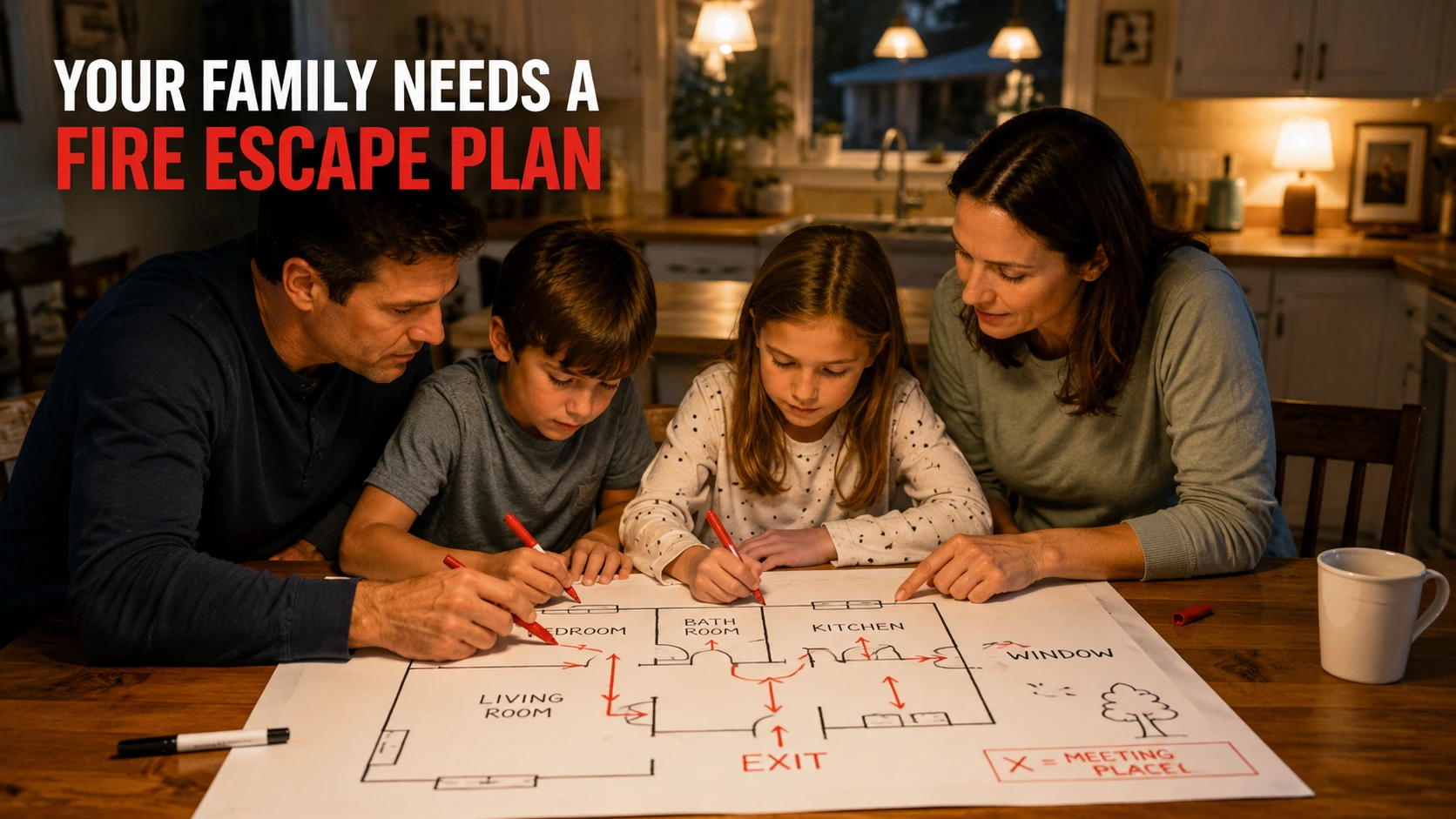
- Diagram on one side, key facts on the other. The diagram shows the floor plan with labeled access points, hazard locations, and system locations. The fact sheet provides the structured data points.
- Large, clear text. Pre-plans are read in moving apparatus, in low light, and by people under stress. Font size matters.
- Color coding for hazard categories. Red for fire hazards, yellow for special hazards, blue for water supply, green for egress and life safety.
- Accessible digitally on mobile devices. Paper pre-plans kept in a binder are better than nothing. Digital pre-plans accessible on the MDT or department app are better still — they are always current, always with the crew.
Use the Fire Pre-Plan Tool to create structured, printable pre-plan forms for your target hazards. The tool formats information in the standardized layout that works on the fireground.
Using the Pre-Plan on Scene
A pre-plan is only useful if it is accessed and used. The discipline of actually using pre-plan information during size-up is a habit that must be built deliberately:
- Pull the pre-plan during response, not after arrival. The officer reviews key facts en route so they arrive knowing the building, not discovering it.
- Reference the pre-plan during the initial radio report. "Confirmed fire in a Type III ordinary construction 3-story commercial, pre-plan shows sprinkler system FDC on the B side, standpipe outlets on each floor stairwell."
- Update the pre-plan after incidents. Every working fire reveals something the pre-plan did not capture or got wrong. The post-incident update takes 10 minutes and makes the next response better.
- Conduct annual pre-plan reviews. Buildings change. A building that was vacant last year may be a restaurant this year. A restaurant may have added outdoor propane heaters. Annual re-inspection keeps the pre-plan current.
Frequently Asked Questions
What is a fire pre-incident plan?
A pre-incident plan (pre-plan) is a document created in advance of an emergency that captures critical information about a specific building: construction type, occupancy, life safety hazards, water supply, fire protection systems, special hazards, and tactical considerations. It is used by arriving companies to make faster, better-informed decisions during an incident.
Which buildings should be pre-planned?
Target hazards (buildings with high risk due to occupancy, construction, or hazardous materials) are the priority: schools, hospitals, nursing homes, high-rises, industrial facilities, hazmat occupancies, and large commercial buildings. Beyond target hazards, any building that presents unusual tactical challenges or that houses vulnerable populations warrants a pre-plan.
How often should fire pre-plans be updated?
At minimum annually, and after any significant building change (occupancy change, renovation, addition of hazardous materials storage, change in sprinkler or alarm systems). Post-incident updates should be done whenever a working fire reveals information that was missing or incorrect in the pre-plan.
What does the A/B/C/D side designation mean in pre-planning?
The A side is the front of the building (street address side). Moving clockwise: B side is the left side when facing the A side, C side is the rear, and D side is the right. This geographic designation system ensures that all crews are referring to the same building faces regardless of which direction they approach from.


Comments 0
No comments yet. Be the first to share your thoughts!
Leave a Comment