Last updated:
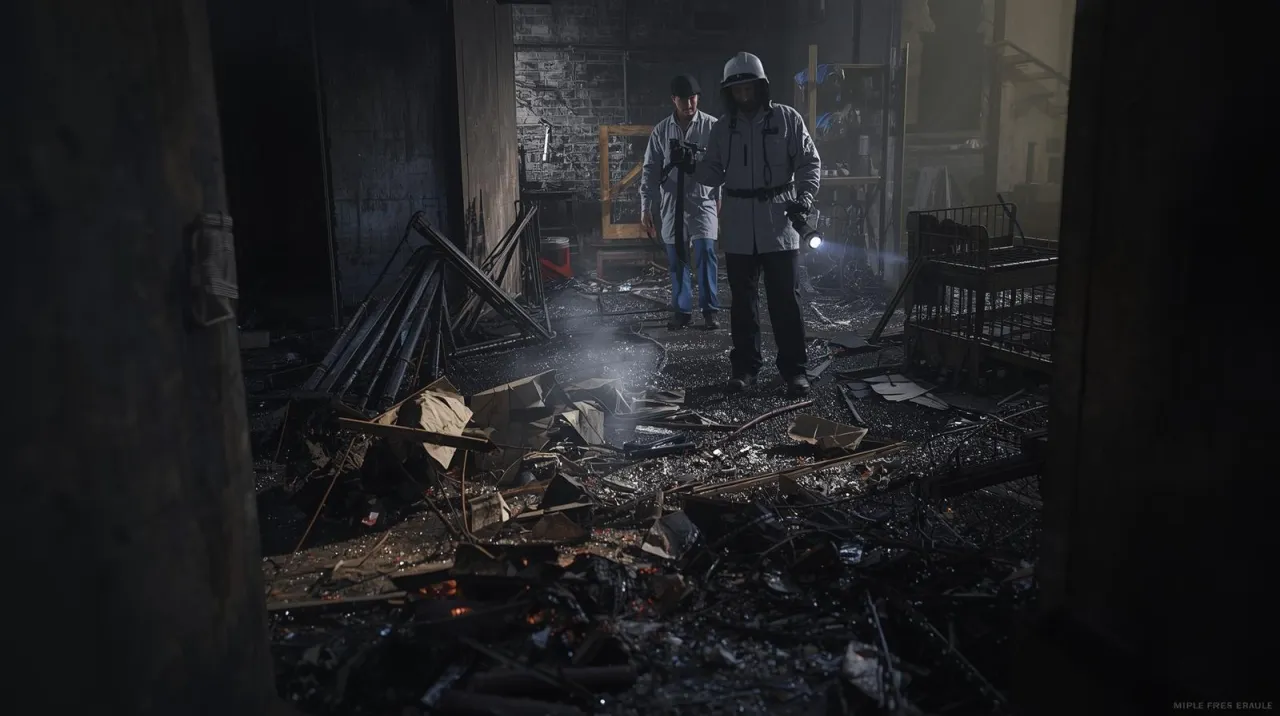
A fire scene changes fast. Firefighters force doors, pull ceilings, move contents, ventilate, shut utilities, drag hose, overhaul hot spots, and sometimes cut away exactly the material an investigator would later want to study. None of that is wrong when life safety and extinguishment are still the mission. The problem starts when nobody records what the scene looked like before those necessary actions changed it.
That is why fire scene documentation matters. It gives the investigator a way to slow the scene down after the smoke clears. Photos, notes, diagrams, evidence logs, witness information, and chain-of-custody records become the memory of the incident. Without them, even an honest and skilled investigator may be left saying, "I think," when the report needs to explain, "I observed."
The NIJ fire and arson scene evidence guide frames documentation and evidence preservation as core public-safety responsibilities at fire and arson scenes. NFPA 921 is the reference many U.S. investigators, attorneys, and expert witnesses expect to see in serious origin-and-cause work. The daily habit is simpler than the standards sound: record first, move second, and explain every important change.
Origin and Cause BasicsFire Investigation Guide
Field rule: if something might matter later, document it before it is moved, cleaned, covered, shut off, opened, or thrown away. If it had to be changed for safety, write down who changed it, why, and when.
Why Documentation Can Make Or Break A Fire Investigation
Fire investigations are not just technical exercises. They can affect criminal cases, civil lawsuits, insurance claims, product-liability questions, code enforcement, firefighter training, and family answers after a fatal fire. A weak documentation package does not automatically mean the conclusion is wrong, but it makes the conclusion harder to defend.
Good documentation protects the investigator from memory drift. It also protects the scene from later arguments that the conclusion was built after the fact. A photo taken before overhaul, a diagram showing where an appliance was found, or a note explaining which window was forced by Engine 2 can keep a report grounded in observed facts.
Poor documentation creates holes. A burn pattern is mentioned but not photographed. A breaker position is described but no one knows whether it was changed by crews. A fuel container is collected but the evidence log does not show who handled it next. Those gaps may not feel dramatic at 3 a.m., but they can become the center of the case months later.
Photography And Video: Capture The Scene Before It Changes
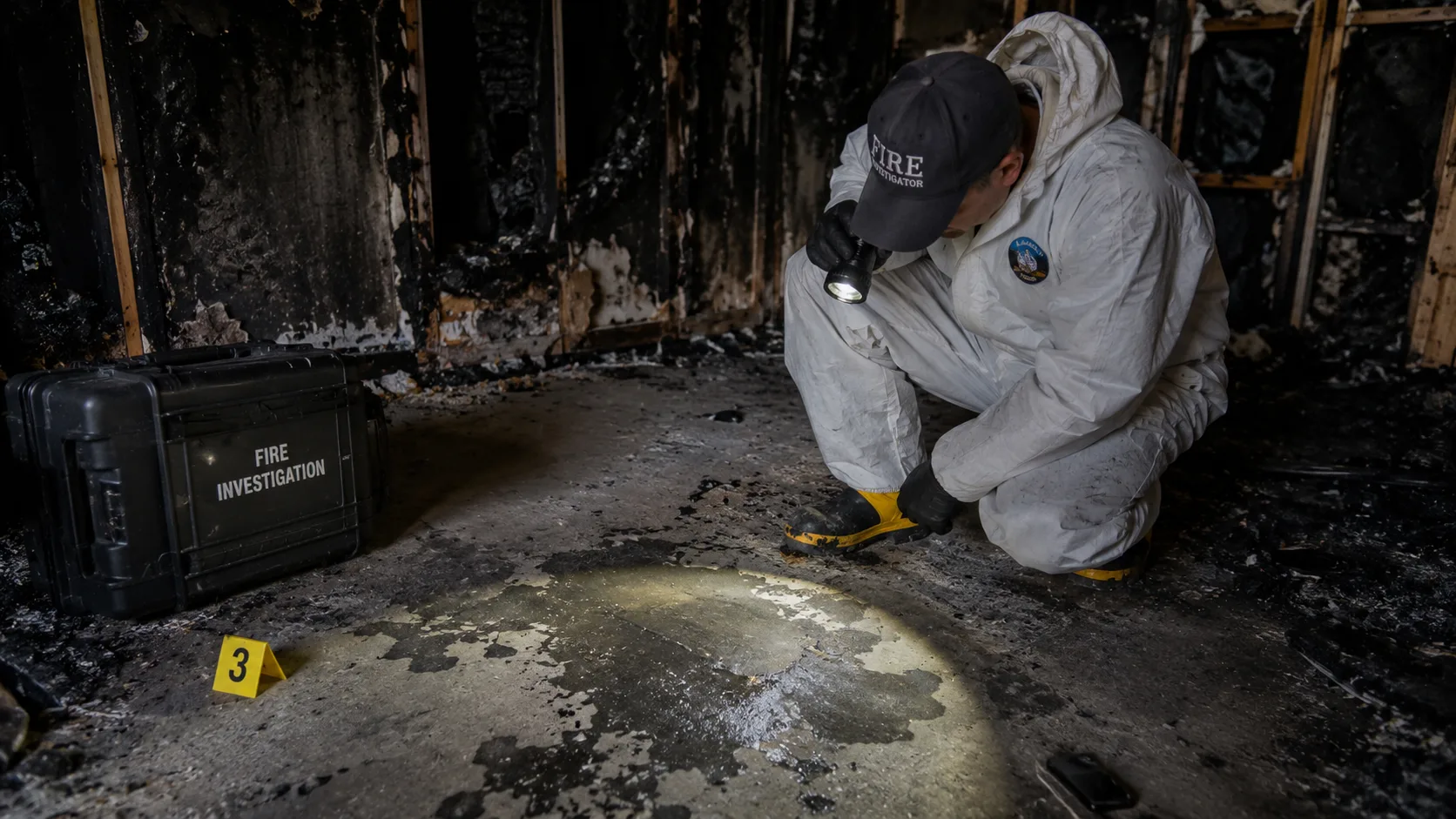
Photos are usually the backbone of the record because they show the scene in a way notes alone cannot. The best photo set moves from broad to narrow. Start with overall exterior views, then all sides of the structure, address numbers, utilities, exposures, access points, doors, windows, roof conditions, and visible suppression changes. Then move inside and work from room-level views down to specific items.
For evidence, the pattern should be simple: overall view, mid-range view, close-up view. The overall shot shows where the item sits in the scene. The mid-range shot shows its relationship to walls, furniture, openings, or damage. The close-up shot records detail. When size matters, add a scale. When orientation matters, include a second photo that shows where that close-up belongs in the room.
Video, 360-degree capture, drones, and thermal images can help when policy allows and the operator knows what the image can and cannot prove. They should support the record, not replace basic still photos and written notes. A beautiful video walkthrough is less useful if no one can later identify the exact room, time, camera operator, or item being discussed.
Written Notes: The Investigator's Memory On Paper
Written notes do the work photos cannot. A photo may show a door standing open; the note explains that firefighters forced it at 02:14 while making entry. A photo may show a gas meter; the note records whether the utility company shut it off and who confirmed it. A photo may show debris in a hallway; the note explains whether crews moved it during search or overhaul.
Useful fire scene notes are plain, chronological, and factual. They do not need fancy language. They need time, location, observations, actions, names, and changes. The investigator should record weather, lighting, security, who entered the scene, witness leads, suppression actions, ventilation points, alarm or sprinkler status, utility positions, and anything that was disturbed before the investigator arrived.
Good notes also separate observation from interpretation. "Heavy char on the lower east wall" is an observation. "Fire started at the receptacle" is a conclusion. Both may belong in the file eventually, but they should not be blended too early. The cleanest reports show the path from observed facts to the final opinion.
Sketches And Diagrams: Give The Photos A Map
A diagram does not have to be artistic to be useful. It needs to orient the reader. Room layout, doors, windows, stairs, utility locations, fire-damage areas, evidence markers, and key measurements can make a photo set much easier to understand.
At small residential fires, a hand sketch may be enough. At commercial fires, fatal fires, explosions, or complex multi-room scenes, digital diagrams, laser measurement tools, or 3D scans may be appropriate if the agency has them. The tool matters less than the discipline: label directions, keep measurements consistent, show evidence locations, and make sure the diagram agrees with the photos and notes.
| Record type | Best use | Common mistake |
|---|---|---|
| Photos | Show condition, relationship, damage, and evidence location. | Taking only close-ups with no context. |
| Notes | Record time, actions, observations, witness leads, and scene changes. | Writing conclusions before facts are fully collected. |
| Diagrams | Explain layout, orientation, measurements, and evidence placement. | Leaving out direction, scale, or room labels. |
| Evidence log | Track collection, packaging, transfers, storage, and testing. | Letting multiple people handle evidence without clear signatures. |
What Suppression Crews Should Document
Firefighters are not always the formal investigators, but they often see the scene at its most honest stage. The first-due company may see smoke location, fire showing, doors open or locked, windows intact or broken, vehicles in the driveway, occupants outside, alarms sounding, utilities active, or unusual odors before the scene is changed by operations.
Crews should pass that information to the investigator instead of assuming it is obvious. Useful details include where fire was first visible, where crews entered, what was forced, what was ventilated, what was moved during search, which utilities were controlled, what overhaul changed, and whether any bystanders or occupants made notable statements.
This does not mean crews should slow emergency work to preserve a perfect scene. Life safety, rescue, fire control, and firefighter survival come first. It means that once the emergency phase allows it, unnecessary movement should stop and the investigator should be told what already changed.
Evidence Logs And Chain Of Custody
Evidence handling is where a good scene exam can quietly fall apart. If an item may go to a lab or become part of a criminal, civil, or insurance matter, the record has to show what the item is, where it was found, who collected it, how it was packaged, where it was stored, and every person who handled it after collection.
That record is the chain of custody. It does not make the evidence true. It helps show the evidence is the same item, in substantially the same condition, from scene to storage to examination. For fire scenes, this is especially important with containers, electrical components, appliances, ignitable-liquid debris samples, smoke alarms, batteries, heating equipment, and any item suspected as an ignition source.
Packaging matters too. Wet debris, sharp components, containers with residue, and electrical items may need different handling under agency policy. The safe answer is not improvising in the driveway. Follow department, lab, and jurisdictional procedures, label clearly, seal correctly, and document every transfer.
Common Documentation Failures
- Only photographing the suspected origin. The rest of the structure may explain ventilation, fire spread, suppression changes, or alternative hypotheses.
- No before-and-after record. If overhaul or utility control changes the scene, document both conditions when possible.
- Unclear photo sequence. A pile of unlabeled images is weaker than a photo log with time, subject, direction, and photographer.
- Missing witness timing. Who saw what, and when, can be as important as physical damage.
- Evidence collected without context. A close-up of an item is not enough if no one can show where it came from.
A Practical Scene Documentation Checklist
Every jurisdiction has its own forms and policies, but the working rhythm is usually consistent:
- Confirm scene safety and access control.
- Record who is present and who enters the controlled area.
- Photograph exterior, sides, access points, utilities, and exposures.
- Photograph interior paths before moving items when conditions allow.
- Note suppression actions that changed doors, windows, ceilings, contents, utilities, or debris.
- Sketch or diagram layout, evidence locations, ventilation points, and major damage areas.
- Identify, photograph, collect, package, seal, and log evidence under policy.
- Record witness leads and statements separately from physical observations.
- Review the file before leaving: photos, notes, diagram, evidence log, and unanswered questions.
The best documentation does not try to sound impressive. It tries to be useful six months later, when nobody remembers the smell of the room, the position of the door, or which company pulled the ceiling. If the file can bring the scene back clearly, it has done its job.
Frequently Asked Questions
Why is fire scene documentation so important?
Documentation preserves the condition of the scene before overhaul, weather, cleanup, or evidence movement changes it. Good records help investigators explain what they saw and support their origin-and-cause opinions.
What should be photographed at a fire scene?
Investigators usually capture overall views, exterior sides, entry points, utilities, fire damage, ventilation openings, rooms, burn patterns, potential ignition sources, evidence locations, and close-ups with scale when needed.
Do firefighters need to avoid moving evidence?
Life safety and extinguishment come first. After the emergency is controlled, crews should limit unnecessary movement, protect the area, and tell the investigator what was moved, opened, shut off, forced, or overhauled.
What belongs in a fire investigator note log?
A useful note log includes time, weather, scene conditions, access points, witness information, suppression actions, utilities, alarms, evidence locations, photo references, and decisions made during the scene exam.
What is chain of custody in a fire investigation?
Chain of custody is the record showing who collected, packaged, transferred, stored, and received evidence. It helps prove that the item tested later is the same item removed from the scene.
Comments 0
No comments yet. Be the first to share your thoughts!
Leave a Comment