Reading Smoke on the Fireground: Color, Volume, Velocity & Location Explained
Smoke is data. Every characteristic of the smoke coming from a burning structure — its color, volume, velocity, location, and how it moves — tells you something about the fire inside. Reading smoke correctly changes your size-up, your entry decisions, your tactical priorities, and in some cases, whether you live or die. This guide covers the CVVL framework (Color, Volume, Velocity, Location) for reading smoke and what each indicator means for your fireground decisions.
Jump to:Why smoke tells you more than flames · The CVVL framework · Color · Volume · Velocity · Location · Reading real scenarios · Flashover vs backdraft smoke · FAQ
Why Smoke Tells You More Than Flames
By the time you see flames from the exterior, the fire is already well into its growth stage. Smoke, however, is present from the very beginning of ignition and continues to communicate fire conditions throughout the event. Experienced officers read smoke the same way a mechanic reads an engine — as diagnostic data, not just a byproduct.
Smoke is composed of unburned pyrolysis products: carbon particles, carbon monoxide, unburned hydrocarbons, water vapor, and other products of incomplete combustion. The composition of smoke changes as fire conditions change, and that change is visible if you know what to look for.
The most important reason to read smoke: smoke is combustible. The unburned products in smoke can ignite if conditions change — specifically if temperature rises or oxygen is introduced. This is what causes flashover and backdraft.
The CVVL Framework: Four Things to Read Simultaneously
The CVVL framework, developed and popularized in the modern fire service largely by Battalion Chief Dave Dodson, gives you four specific characteristics to observe:
- Color — what the smoke pigmentation tells you about combustion completeness
- Volume — how much smoke is being produced and what that means for fire load
- Velocity — how fast smoke is moving and what pressure is driving it
- Location — where smoke is coming from and what it tells you about fire location and travel
No single characteristic tells the full story. Reading all four together gives you a picture of what the fire is doing and what it is likely to do next.
Color: What Smoke Pigmentation Tells You
Smoke color reflects the completeness of combustion and the materials burning. No single color means the same thing in every situation, but the patterns below hold across most structural fire scenarios:
⚫ Black smoke
What it indicates: Incomplete combustion. High concentration of carbon particles. Typically oxygen-limited or fuel-rich fire. Hot gas layer is developing.
Tactical implication: Fire is active and growing. Conditions may be moving toward flashover or are already producing pre-flashover hot gas layer. Assess volume and velocity alongside color.
🟩 Gray/white smoke (light)
What it indicates: Early fire, high moisture content in materials burning (wood, insulation), or steam from suppression. More complete combustion. Less carbon.
Tactical implication: Could indicate early fire stage (good) or post-suppression steam (fire knocked down). Context matters. Do not confuse steam from water application with smoke from active fire.
⚪ Heavy dark gray / yellow-brown smoke
What it indicates: Hot gas layer with unburned products. Associated with flashover precursor conditions. Yellowing in particular indicates carbon monoxide and unburned hydrocarbons accumulating.
Tactical implication: Pre-flashover warning. If you also see rollover (flame in the upper gas layer), flashover may be imminent. Assess egress immediately.
🟩 Light, wispy, almost clear smoke
What it indicates: Very early-stage fire, smoldering, or fire that has nearly consumed available oxygen (going toward decay stage).
Tactical implication: Early fire — good opportunity for aggressive attack. OR oxygen-depleted fire approaching backdraft conditions — correlate with velocity and temperature of structure.
Color alone is not enough. Black smoke from a vehicle fire outside a structure tells you nothing about conditions inside. Yellow-brown smoke pulsing from around a door frame means something very different from yellow smoke drifting from a chimney. Always correlate color with volume, velocity, and location before drawing tactical conclusions.
Volume: How Much Smoke and What It Means
Volume tells you about fire size and load. More smoke volume generally indicates more fire, but the relationship is not always linear. What matters most about volume:
High volume
Large amounts of smoke suggest a large fire or significant involvement of multiple areas. High volume combined with black color and high velocity indicates an established, well-developed fire with significant pre-flashover or post-flashover potential. High volume from gaps and cracks (rather than open windows) suggests the building is pressurized from the inside — a potentially serious condition.
Low volume from a structure known to be involved
This is a warning sign, not reassurance. If a building has been on fire for several minutes and you are seeing very little smoke at arrival, one of two things is happening: the fire has gone to decay (oxygen-limited), or the smoke is traveling elsewhere (into wall cavities, through concealed spaces to another area). Either condition requires careful assessment before entry.
Volume changes during your operation
Smoke volume increasing rapidly after you have opened a door indicates air tracking to the fire — you have increased the oxygen supply. This can accelerate fire development quickly. Smoke volume decreasing while fire is still active may indicate improving conditions from suppression, or fire moving to a new area.
Velocity: Speed and Pressure Are Your Best Indicators
Velocity is the most immediately actionable of the four CVVL characteristics because it directly reflects the pressure differential driving the smoke and the energy behind the fire. Chief Dodson describes velocity as the most important indicator for tactical decision-making.
Laminar (smooth, slow, drifting) flow
Smoke moving slowly and smoothly, rising gently. Indicates low pressure, early fire stage, or fire in decay. The building is not significantly pressurized. Entry conditions are more favorable.
Turbulent (churning, fast-moving) flow
Smoke churning, boiling, or moving rapidly. Indicates higher pressure, more developed fire, more energy. High velocity turbulent smoke from a structure means the fire has significant heat release rate. This is a warning to move quickly on water and attack decisions.
Pulsing smoke
Smoke being pushed out during exhalation and drawn back in during inhalation — the building "breathing." This is one of the clearest indicators of backdraft potential. The fire is oxygen-limited and seeking air. Do not open doors or windows until vertical ventilation is established above the fire.
High velocity + high volume + black color = urgent. This combination indicates a well-developed, high-energy fire in oxygen-rich conditions with significant pre-flashover or immediate flashover potential. Rapid water application is critical. See the Backdraft vs Flashover guide for survival tactics.
Location: Where the Smoke Comes From Changes Everything
Where smoke exits a building tells you where the fire is — and where it is going.
Smoke from eaves and roofline
Indicates fire has already reached the attic or is in the attic. Attic involvement changes the tactical picture significantly in Type V construction: the roof is now potentially compromised. Vertical ventilation may no longer be safe. Assess for signs of lightweight truss construction before committing anyone to the roof.
Smoke from multiple floors simultaneously
Fire has spread vertically. Either the structure has open vertical pathways (balloon frame wall cavities, open stairwells, utility chases), or the fire has been burning long enough to involve multiple floors. Multi-floor smoke at arrival in a residential structure is a serious indicator of advanced fire conditions.
Smoke from around door and window frames (not from openings)
Smoke under pressure finding any gap. The building interior is pressurized. This is a key backdraft indicator when combined with pulsing velocity and high temperature at door surfaces. Also indicates the fire is not easily finding its own ventilation pathway.
Smoke on the C or D side with fire reported on the A side
Fire has traveled through the structure to the opposite side. Indicates either void space travel, open floor plan with significant involvement, or fire that has been burning longer than initially reported. Your attack plan may need to change — the fire is not where the caller said it was.
Smoke from foundation/basement openings
Basement fire. One of the most dangerous configurations in residential firefighting — fire below the floor you are walking on, with vertical exposure to the first floor above. Any smoke from foundation vents at arrival requires immediate assessment of the floor integrity before interior operations.
Reading Real Scenarios: CVVL Applied
| What you see | CVVL reading | Tactical implication |
|---|---|---|
| Heavy black smoke, high volume, turbulent velocity from first-floor windows | C: Black (incomplete combustion, hot) V: High (significant fire load) V: Turbulent (high pressure/energy) L: First floor (fire location identified) | Established working fire, pre-flashover conditions. Aggressive attack needed. Get water on the fire fast. Check for upstairs occupants. |
| Light gray smoke, low volume, slow laminar drift from eaves | C: Light (early/smoldering) V: Low (small fire or early stage) V: Slow (low pressure) L: Attic (fire in attic space) | Possible attic smolder. Check for lightweight trusses before any roof operations. May be less urgent than it appears but can develop rapidly. |
| Dark, oily-looking smoke pulsing rhythmically at door gaps, no visible flames inside | C: Dark/oily (carbon-rich, O2-depleted) V: Moderate V: Pulsing (fire breathing — O2 seeking) L: Around door frame (pressurized interior) | Backdraft indicators. Do not open door. Establish vertical ventilation above fire first. Stand aside if door must be opened. |
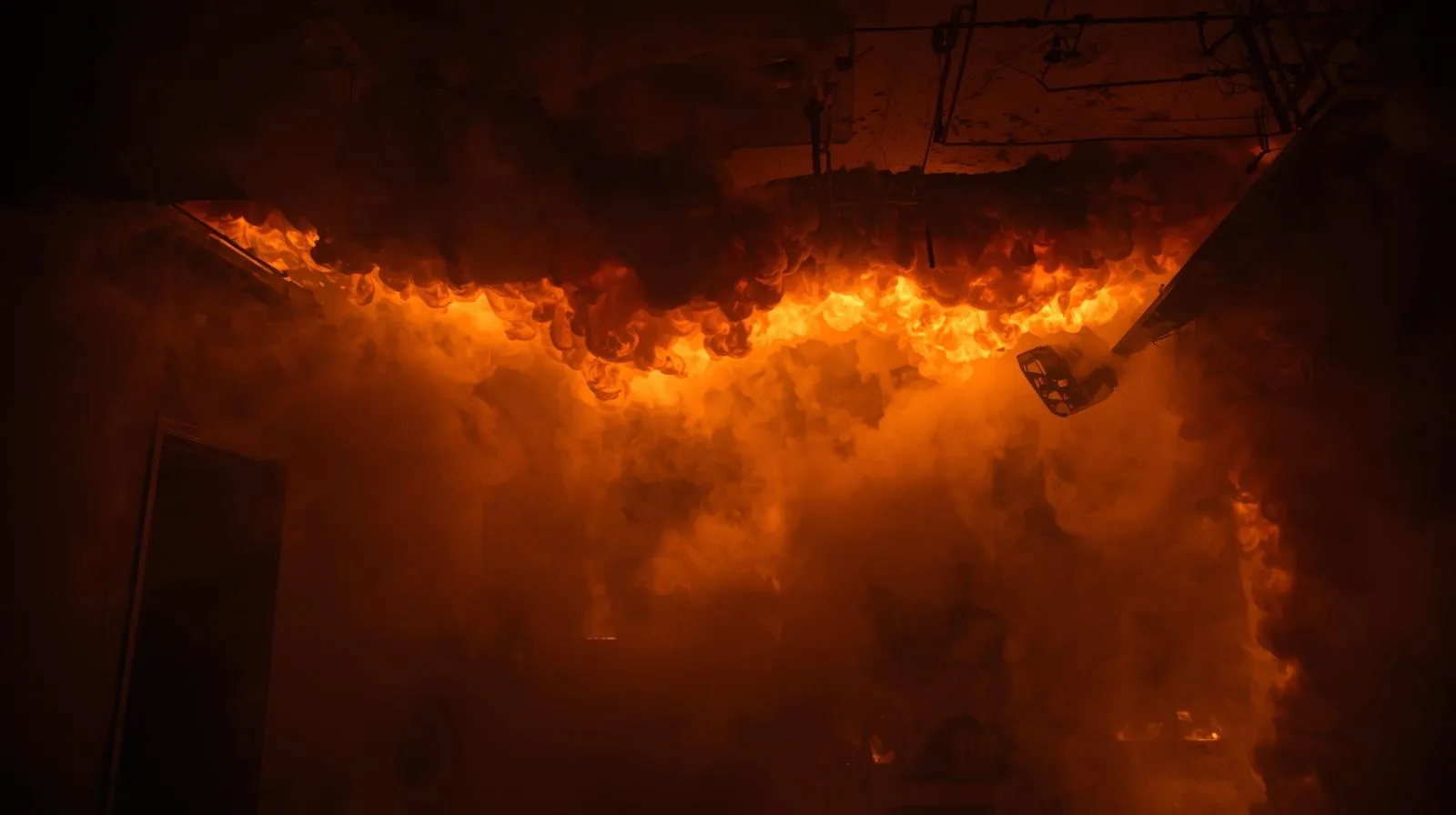
| Light smoke suddenly turns black and turbulent, orange glow appears at ceiling | C: Changing rapidly V: Increasing V: Velocity surging L: Ceiling level (hot gas layer rollover) | Flashover approaching. Cooling the ceiling with short water bursts may buy seconds. Primary focus: find exit and move now. Transmit MAYDAY if caught. |
Smoke Reading for Flashover vs Backdraft
The most critical application of smoke reading is distinguishing pre-flashover conditions from pre-backdraft conditions. See the full Backdraft vs Flashover guide for complete survival tactics, but here is the smoke-reading summary:
| Pre-flashover smoke | Pre-backdraft smoke | |
|---|---|---|
| Color | Darkening, yellowing, orange at ceiling | Dark, dense, oily, carbon-stained |
| Volume | High and increasing | May appear moderate — interior has filled |
| Velocity | Turbulent, pushing out rapidly | Pulsing: out then drawn back in rhythmically |
| Visible fire | Active flames visible, rollover in hot gas layer | Little or no visible fire — fire has self-smothered |
| What drives it | Heat (excess energy) | Fuel-rich/O2-depleted atmosphere seeking oxygen |
Frequently Asked Questions
What does black smoke mean in a fire?
Black smoke indicates incomplete combustion — the fire is producing significant unburned carbon particles because it is not burning efficiently. This typically means either an oxygen-limited fire (building sealed, O2 being consumed) or a hot, well-developed fire with significant fuel load. Black smoke is not simply "a lot of fire" — it is a specific indicator about combustion chemistry.
What is the CVVL smoke reading method?
CVVL stands for Color, Volume, Velocity, and Location — four characteristics of smoke that provide diagnostic information about fire conditions inside a structure. Reading all four simultaneously gives a more complete picture than any single indicator alone. The framework was developed and popularized by Battalion Chief Dave Dodson.
What does pulsing smoke mean?
Pulsing or rhythmic smoke movement — smoke being pushed out and then drawn back in at door and window gaps — is a strong indicator of a backdraft-prone environment. The fire is oxygen-limited and the building is essentially "breathing" as pressure equalizes. Do not open doors or windows without first establishing vertical ventilation above the fire.
Is white smoke less dangerous than black smoke?
Not necessarily. White or gray smoke can indicate early fire stage (relatively safer) or post-suppression steam (safe). But it can also indicate smoldering materials building toward a more dangerous condition, or fire in its decay stage approaching oxygen-limited backdraft conditions. Always correlate color with velocity and location before making tactical decisions.
Where should I look first when reading smoke on arrival?
Start at the lowest point you can observe smoke exiting — foundation vents, door gaps, and window sills tell you about basement and first-floor fire conditions. Then move up: first-floor windows, second-floor windows, eaves, roof. The location where smoke first exits tells you where the fire is and how far it has traveled vertically.

Comments 0
No comments yet. Be the first to share your thoughts!
Leave a Comment