Backdraft vs Flashover: What Every Firefighter Needs to Know
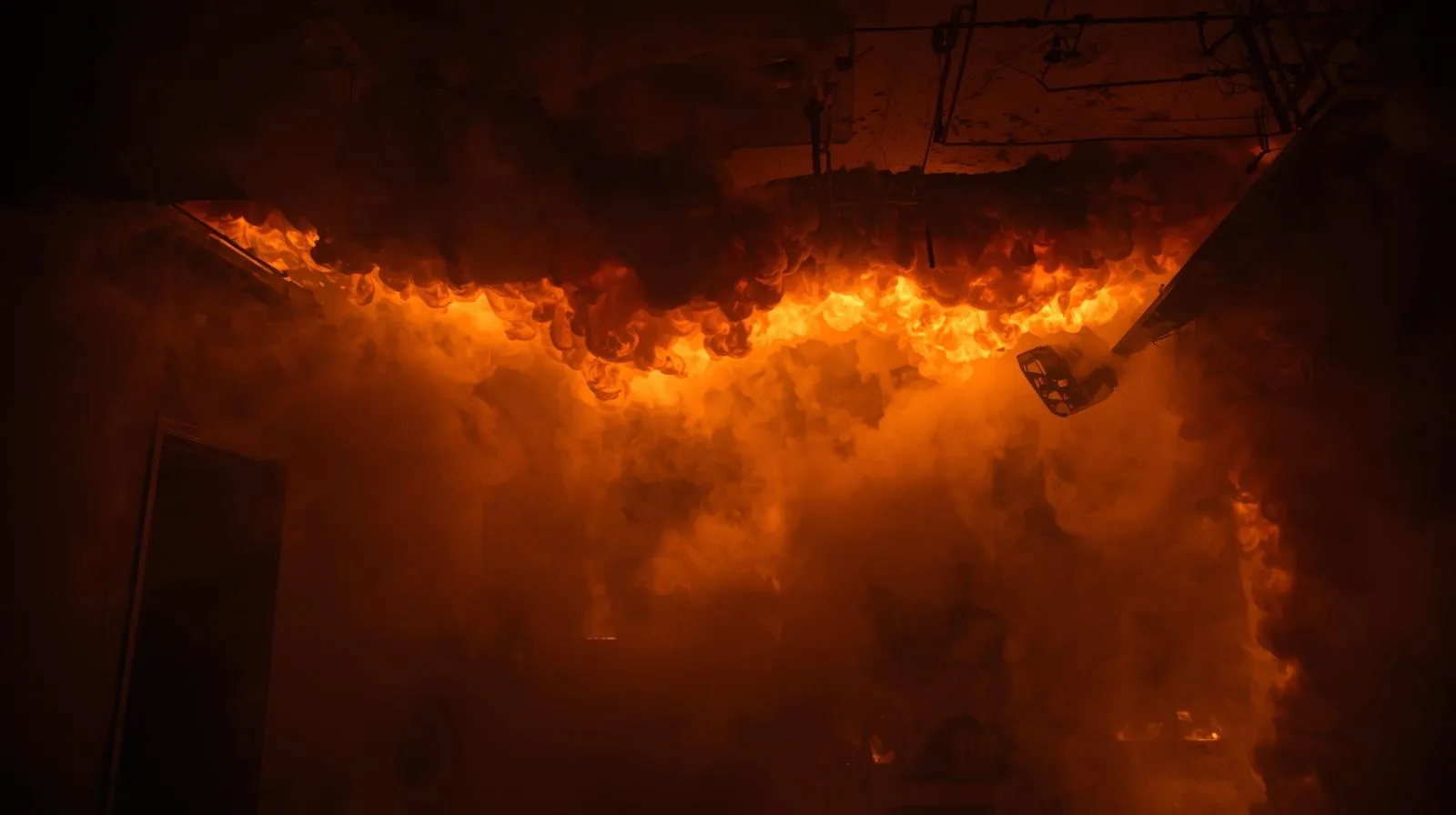
Backdraft and flashover are two of the most dangerous events a firefighter can encounter — and two of the most commonly confused. Both can kill in seconds. But they have entirely different causes, warning signs, and the wrong response to each can make the other worse. This guide breaks down the science, the signals, and the survival tactics for both.
Jump to:Fire stages review · Flashover · Backdraft · Side-by-side comparison · Warning signs · Survival tactics · Rollover vs flashover · FAQ
Fire Behavior Review: The Four Stages
To understand both events, you need the fire development model as context:
- Incipient (ignition): Fire starts, oxygen-rich, limited fuel involvement, low heat release rate
- Growth: Flames spread, HRR increases, hot gas layer descends, thermal layering develops
- Fully developed (post-flashover): All available fuel surfaces burning, room is untenable
- Decay: Fuel limited (burning out) or oxygen limited (ventilation limited)
Flashover occurs at the transition from growth to fully developed. Backdraft occurs in the decay stage when oxygen is reintroduced to a hot, fuel-rich, oxygen-depleted environment.
Flashover: What It Is and What Causes It
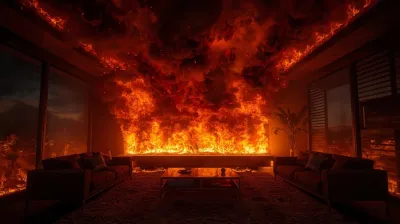
Flashover is the near-simultaneous ignition of all combustible surfaces in a compartment. It is not a single event — it is a transition. The moment every exposed fuel surface in the room reaches its ignition temperature simultaneously, the room transitions from a developing fire to a post-flashover environment where nothing survives.
The physics
As a room fire grows, hot gases accumulate at the ceiling and radiate heat downward. This radiation preheats all combustible surfaces in the room. When the upper hot gas layer reaches approximately 600°C (1,100°F) and radiates enough energy to bring all fuel surfaces to their ignition temperatures simultaneously, flashover occurs. In a typical residential room, this can happen in 3–5 minutes from ignition.
Conditions that accelerate flashover
- Synthetic furnishings and building materials (polyurethane foam, engineered wood) release far more heat per unit mass than natural materials and burn significantly faster
- Open floor plans allow larger gas volumes to accumulate
- Low ceilings trap hot gases more quickly
- Early ventilation failure (windows intact) allows heat buildup
Time to flashover has decreased dramatically. In the 1970s, a furnished room might take 15–20 minutes to reach flashover. Modern furnishings mean a comparable room can flash in under 5 minutes from ignition. This has fundamentally changed attack decisions.
Survivability after flashover
There is none without full PPE and SCBA, and even with them, post-flashover conditions (1,000+°C, total flame involvement) exceed the thermal protection of structural firefighting gear within seconds. Firefighters caught in a flashover without being in a protected position have seconds to exit or get low.
Backdraft: What It Is and What Causes It
Backdraft is a combustion explosion that occurs when oxygen is suddenly introduced to a hot, oxygen-depleted, fuel-rich environment. Unlike flashover (which is driven by excess heat), backdraft is driven by excess unburned fuel gases that ignite explosively when air reaches them.
The conditions required for backdraft
Three conditions must exist simultaneously:
- A hot compartment — fire has been burning long enough to heat the structure
- Oxygen depletion — the fire has consumed most available oxygen; the combustion process has slowed or stopped due to lack of O⊂2;
- Fuel-rich gases — unburned pyrolysis products (carbon monoxide, unburned hydrocarbons) have accumulated because the fire cannot fully combust them without oxygen
When oxygen enters — through a door being opened, a window breaking, or a ventilation hole cut — it mixes with the fuel-rich gas layer. If the temperature is above the ignition temperature of that mixture, the result is a rapid deflagration: an explosion that can blow out walls, collapse ceilings, and project flames and debris at explosive velocities.
Why backdraft is particularly dangerous for firefighters
The explosion is directional — it follows the path of the incoming oxygen. If a firefighter opens a door to a backdraft-prone compartment, the explosion comes directly back at them. The initial fire may appear to be low or out from the exterior, giving a false impression of a manageable fire.
Backdraft vs Flashover: Side-by-Side Comparison
| Flashover | Backdraft | |
|---|---|---|
| Fire stage | Growth → Fully developed | Decay (oxygen-limited) |
| Primary driver | Heat (thermal radiation from hot gas layer) | Oxygen introduction to fuel-rich environment |
| Oxygen level | Adequate for combustion | Severely depleted |
| Visible fire | Active, growing flames | Diminished, smoldering, or none visible |
| Hot gas layer | Thick, descending, flames in layer (rollover) | Heavy, dark, pressurized smoke pulsing |
| Smoke appearance | Lighter, turbulent, yellowing | Dense, dark, greasy; may pulse in and out of gaps |
| Door/window temp | Hot but not necessarily extreme | Extremely hot throughout structure; glass may be dark-stained |
| Trigger | Happens automatically when conditions met | Triggered by ventilation (opening door, breaking glass) |
| Result | Instantaneous full-room fire involvement | Explosive deflagration, fireball, structural damage |
| Survival window | Seconds to exit or get below hot gas layer | Near zero if you opened the door |
| Prevention | Early aggressive attack before hot gas layer develops; door control | Read the signs before opening; positive pressure from above before entry |
Warning Signs in the Field
🔥 Flashover Warning Signs
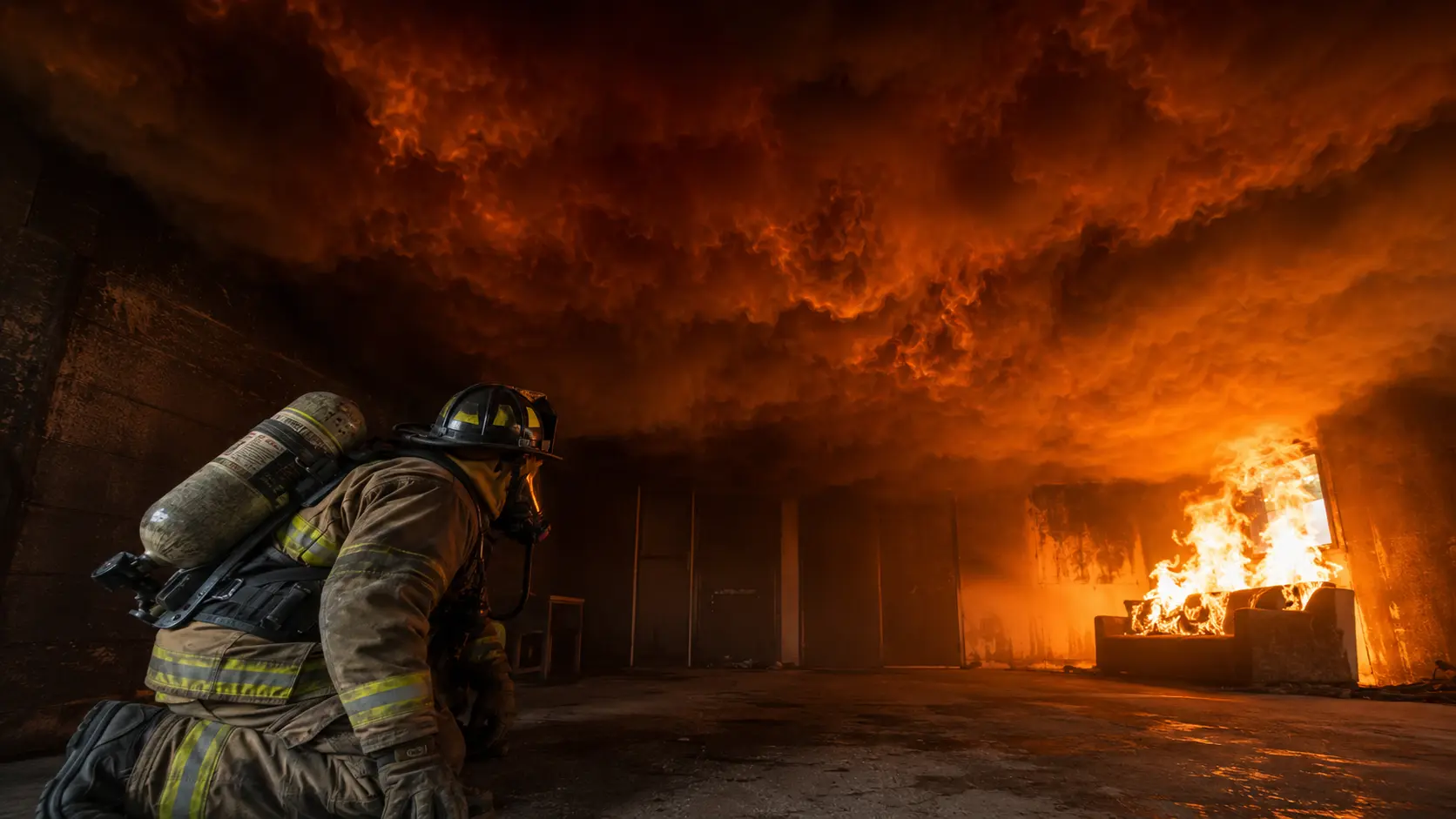
- Heavy, turbulent smoke banking down from ceiling
- Rapid darkening of smoke (from gray to yellow-brown)
- Rollover — flames visible in the upper hot gas layer overhead
- Radiant heat you can feel through gear increasing rapidly
- Floor becoming hot beneath you
- Visibility deteriorating rapidly even as you advance
- Multiple items in the room beginning to smoke simultaneously
🔥 Backdraft Warning Signs
- Heavy, dark, oily smoke pulsing rhythmically at door and window gaps (the fire "breathing")
- Stained, discolored window glass (carbon deposit on interior)
- Extremely hot door surface when you back-of-hand test it
- Little or no visible fire from exterior despite reports of heavy fire inside
- Smoke being drawn back inward when door is slightly opened
- Smoke yellowing at openings (indicates CO and unburned gases)
- Unusual silence from inside (fire has self-extinguished due to O⊂2; depletion)
Survival Tactics
Flashover survival
- Stay low. The hot gas layer is at the ceiling. The floor is survivable seconds longer. In a developing fire, you should always be below the hot gas layer.
- Maintain awareness of your egress. Know where the door is at all times. When rollover begins, you may have 20–30 seconds to exit before flashover.
- Cool the ceiling gas layer. Short bursts of water fog directed at the ceiling can absorb heat and delay flashover. This is a standard survival technique — not a substitute for egress but a tool to extend your window.
- Door control during entry. Controlling the door (limiting the air supply) slows heat buildup and delays flashover. Never leave a door fully open behind you in a working fire without a specific tactical reason.
- Call it early. If you observe rollover and feel rapid heat increase, your MAYDAY is better transmitted before flashover than after. See the MAYDAY LUNAR Generator for drill practice.
Backdraft survival
- Read the signs before you open anything. The warning signs above are your only protection. Once you open the door to a backdraft condition, it is too late.
- Back-of-hand the door and door frame. Extreme heat throughout indicates a potential backdraft condition. Do not enter.
- Ventilate from above before entry. Vertical ventilation near the roof peak allows fuel-rich gases to escape upward without being mixed with incoming oxygen at firefighter level. This is the standard tactic for suspected backdraft conditions.
- Do not stand in front of a suspected backdraft opening. If you must open a door in backdraft conditions after vertical vent, stand to the side and open slowly from a protected position.
- Horizontal ventilation before entry carries risk. Opening doors or windows on the fire floor in a backdraft condition creates the explosive mixing you are trying to avoid.
What About Rollover?
Rollover (also called flameover) is often confused with flashover but is a separate — and earlier — phenomenon. Rollover is when flames appear in the upper hot gas layer near the ceiling as unburned gases ignite at the boundary of the hot layer. It is a flashover precursor, not flashover itself.
The practical importance: rollover is visible warning that flashover may be imminent. If you see flame traveling across the ceiling toward you, your flashover window is closing. Immediately assess your egress and consider cooling the ceiling gas layer.
Frequently Asked Questions
Can you survive a flashover?
Survival depends on position and reaction time. Firefighters who are low to the floor, near an exit, and react within the first few seconds of rollover have survived flashovers. Firefighters caught standing in a room at the moment of full flashover almost never survive. The survival window is measured in seconds and depends entirely on how fast you recognize the warning signs and move.
Can you survive a backdraft?
If you are the person who opened the door that triggered it: almost never. The explosion is directional and the firefighter creating the ventilation opening is directly in the path. Survival stories exist but they are statistical outliers. The correct approach is to never put yourself in that position by reading the signs beforehand.
What is the temperature at flashover?
Flashover typically occurs when the upper hot gas layer reaches approximately 600°C (1,100°F) and floor-level radiant heat exceeds 20 kW/m². At that point, exposed combustibles at floor level also ignite. Post-flashover room temperatures commonly exceed 1,000°C (1,832°F).
Is a backdraft the same as a gas explosion?
No. A backdraft is a deflagration of carbon monoxide and unburned pyrolysis products from a fire that has become oxygen-limited. A gas explosion involves natural gas or propane leaking into a space and igniting. The two have different fuel sources, different warning signs, and different tactical responses, though both can be structurally catastrophic.
How do modern buildings affect flashover timing?
Significantly. Modern synthetic furnishings (polyurethane foam, engineered wood products) have higher heat release rates than natural materials used in older construction. A room that might have taken 15–20 minutes to flash over in the 1970s can now flash in under 5 minutes. This is one of the most operationally significant changes in residential firefighting over the past 30 years.


Comments 0
No comments yet. Be the first to share your thoughts!
Leave a Comment