Last updated:
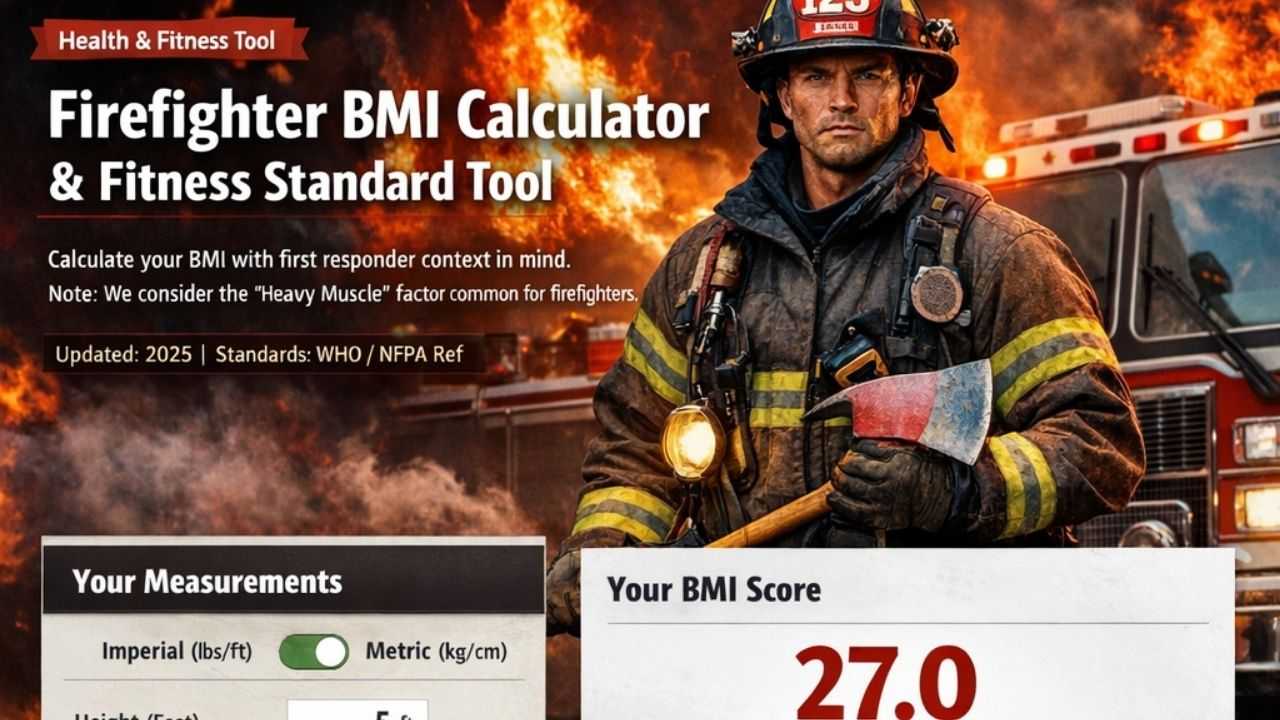
BMI is one of those numbers that can make a firefighter applicant nervous before it has earned that much power. You type in height and weight, the calculator returns a category, and suddenly the number feels like a judgment on your whole body. That is not how it should be used.
The right way to read BMI is much more boring, and much more useful: it is a quick screening number based on weight and height. It can start a conversation. It can point out a trend. It can help a medical provider decide what else to look at. It cannot tell whether you can climb stairs in a vest, drag a victim dummy, work in turnout gear, recover between calls, or keep training without getting hurt.
If you are using the Firefighter BMI Calculator, treat the result as a dashboard light, not a final diagnosis. A light on the dashboard means, "look closer." It does not tell the whole story by itself.
Open BMI CalculatorCPAT Pacing GuideCareer/Fitness Tools
Plain-English rule: BMI can be useful, but it is incomplete. For individual health decisions, use it with medical history, blood pressure, lab work when appropriate, physical exam findings, body composition context, and job-performance testing.
What BMI Actually Measures
BMI stands for body mass index. It compares body weight to height using a simple formula: weight in kilograms divided by height in meters squared. The reason it became common is not because it is perfect. It became common because it is fast, cheap, and easy to repeat across large groups of people.
The CDC describes BMI as a screening measure. That word matters. Screening means it can help flag a possible issue or trend. It does not mean BMI can diagnose a person, measure their conditioning, or explain why their weight is where it is.
| BMI range | Adult category | How a firefighter should read it |
|---|---|---|
| Below 18.5 | Underweight | Look at fueling, recovery, strength, injury history, and whether training volume is outpacing nutrition. |
| 18.5 to less than 25 | Healthy weight | A useful green light, but still not proof of job readiness. Conditioning and strength still matter. |
| 25 to less than 30 | Overweight | Common gray area for muscular applicants. Pair it with waist, performance, blood pressure, and medical context. |
| 30 or higher | Obesity category | Worth a closer look with a clinician, especially for blood pressure, sleep, heat stress, joints, and work capacity. |
Those categories are useful for broad public-health tracking. For one firefighter, they are a starting point. A 5-foot-10 recruit who weighs 205 pounds because he carries extra fat and avoids conditioning is not in the same place as a 5-foot-10 recruit who weighs 205 pounds, lifts consistently, runs stairs well, and has normal medical markers. BMI may put both people in the same category. The job will not.
Why Firefighters Need More Context
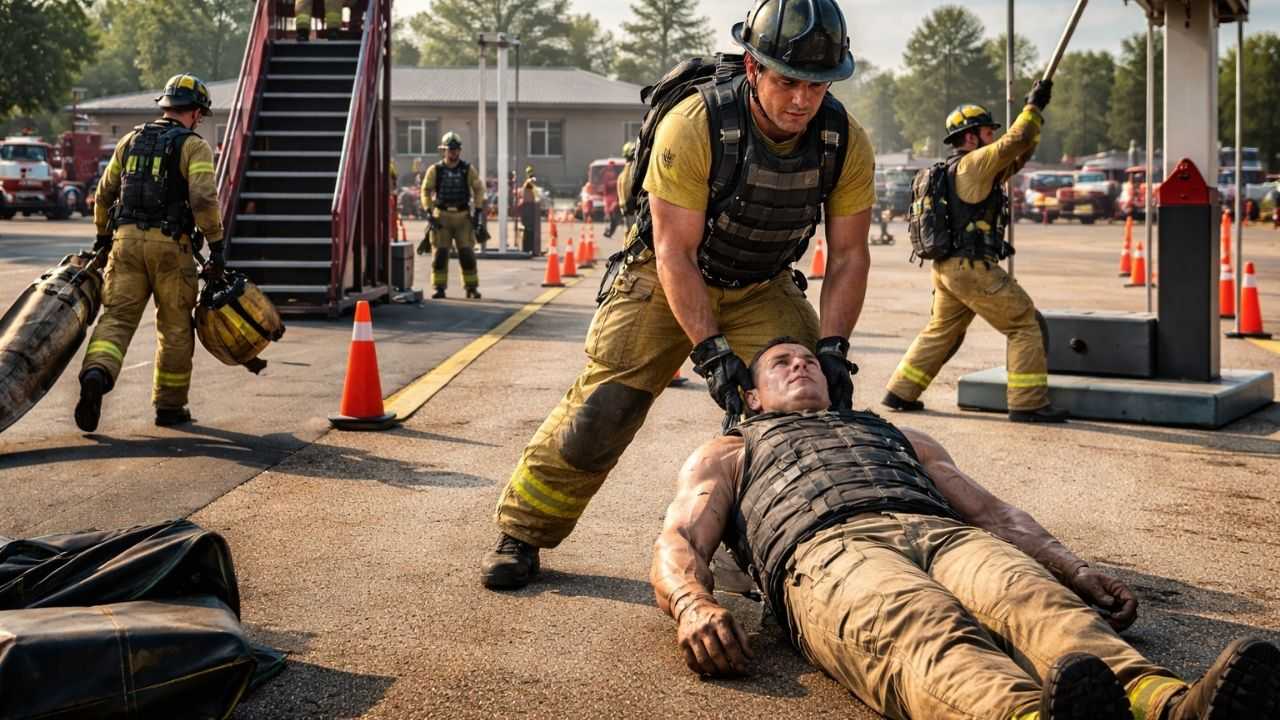
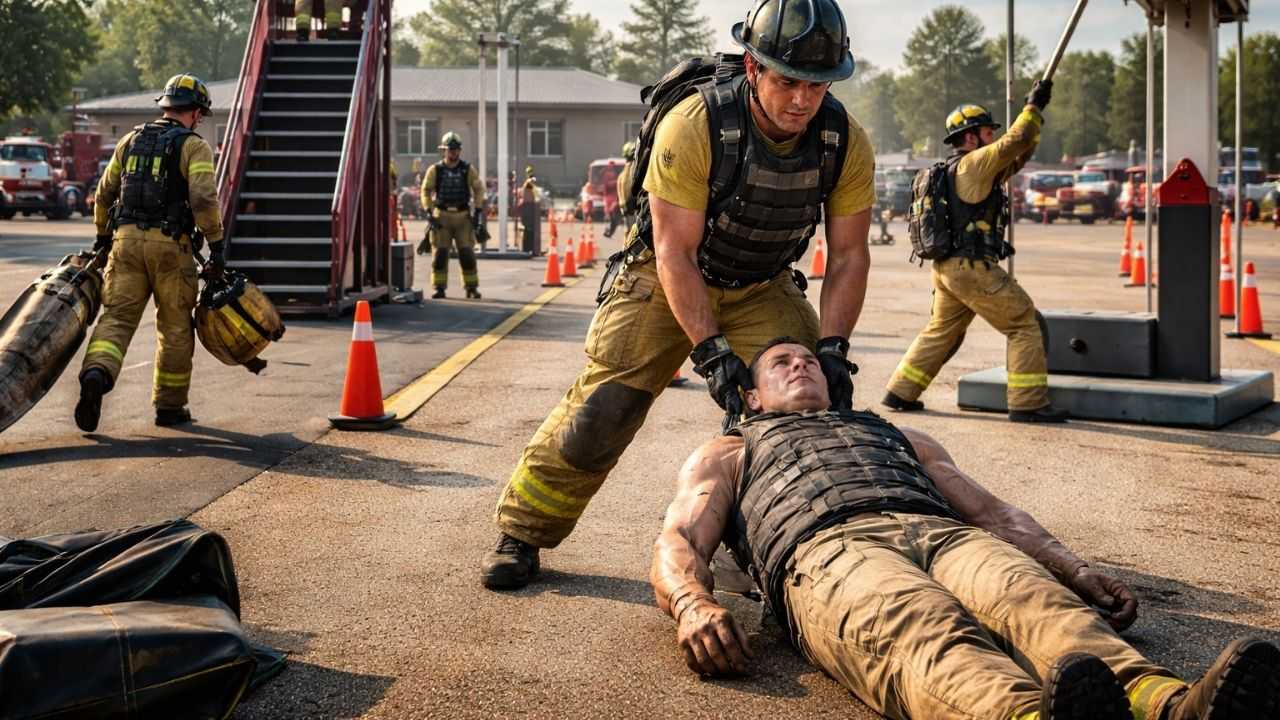
Firefighting is not a scale-weight contest. It is repeated hard work under load: stairs, hose, ladders, carries, awkward positions, heat, poor sleep, and sudden spikes in heart rate. A useful readiness picture has to respect that.
BMI can miss three things that matter a lot in this job. First, it does not separate muscle from fat. A firefighter who built a strong lower body and back for carries, drags, stairs, and lifting may weigh more than a sedentary person at the same height. Second, BMI does not show where weight is carried. Waist measurement and body composition can give better context than scale weight alone. Third, BMI says nothing about work capacity. The fireground cares whether you can move, breathe, think, and recover.
This is why a high BMI should not trigger panic by itself, and a normal BMI should not create false confidence. A lean applicant can still fail the CPAT if pacing, leg endurance, grip, and recovery are poor. A bigger applicant can still be very capable if the weight is supported by conditioning and healthy medical markers. The number only earns meaning when you put it next to the rest of the picture.
How To Use Your BMI Result Without Overreacting
Start by writing the number down without turning it into a story. Then ask better questions.
- Is the number stable, rising, or dropping? A trend over months usually matters more than a single reading after a salty meal, a hard week, or a poor sleep stretch.
- Does your waist measurement match the story? If BMI is high and waist is also climbing, the number may be pointing at a real body-composition issue.
- What does performance say? Look at CPAT splits, stair work, carries, drags, loaded walks, grip endurance, and how quickly you recover between rounds.
- What does medical context say? Blood pressure, cholesterol, glucose, sleep quality, medication history, injuries, and family history can change how the number should be interpreted.
- Are you trying to make a hiring standard or improve long-term health? Those goals can overlap, but the timeline and tactics should not be reckless.
If your department packet or medical form mentions BMI, read the exact language. Some processes use height-and-weight charts. Some use BMI as an initial screen. Some allow additional review, body composition measurements, or a physician's evaluation. Do not guess from internet comments. The packet and the occupational health provider are the controlling sources.
Better Readiness Checks To Pair With BMI
A firefighter BMI result becomes far more useful when it sits next to practical checks. You do not need a lab for all of them. You do need honesty.
- CPAT or stair-climb pacing: Can you move at a controlled pace without blowing up early? The CPAT pacing guide is a good place to start.
- Loaded carries: Farmer carries, sandbag carries, and equipment carries show grip, trunk strength, and breathing under load.
- Lower-body endurance: Step-ups, sled work, hills, and stairs expose weaknesses that a normal BMI can hide.
- Mobility: Hips, ankles, shoulders, and thoracic spine matter when you climb, crawl, mask up, throw ladders, and work low.
- Recovery: Sleep, resting soreness, hydration, and consistency decide whether your training actually compounds.
- Clinician-checked markers: Blood pressure and lab work, when ordered, help turn a rough number into a safer health picture.
This is also where applicants sometimes make the wrong trade. They chase a lower scale weight so aggressively that they lose strength, sleep badly, train flat, and show up weaker. If a weight change is needed, the better path is usually slower: consistent conditioning, enough protein, vegetables and fiber, fewer liquid calories, fewer late-night extras, and a training plan you can repeat for months.
Training Context For Recruits
If you are six to twelve weeks from a CPAT, academy, or medical exam, do not let BMI become your only goal. Your body has to be lighter enough to move well, strong enough to handle load, and recovered enough to adapt. That means the plan should protect performance while improving body composition.
A practical week might include two or three conditioning days, two strength days, and one longer easy effort. Stair work belongs in the plan, but it should not be a daily punishment. Loaded carries belong in the plan, but not so much that your elbows, back, or knees start complaining every morning. You want repeatable work, not heroic workouts that leave you limping into the next session.
Use the scale, but do not worship it. Check waist measurement every couple of weeks. Track your stair pace. Track how long it takes your breathing to settle after hard intervals. Track whether you can train again two days later without feeling wrecked. Those are the signs that your body is becoming more useful for the job.
When To Talk With A Medical Professional
If your BMI is in a higher category and you also have high blood pressure, chest pain, unusual shortness of breath, fainting, sleep apnea symptoms, diabetes concerns, or a history of heart problems, do not try to solve the whole thing with a harder workout plan. Get medical guidance. Firefighting places real stress on the cardiovascular system, and guessing is a poor strategy.
The same applies if you are underweight, losing weight unexpectedly, constantly injured, or unable to recover from normal training. Readiness is not just being smaller. It is being durable, fueled, and medically safe enough to do hard work.
For applicants, the cleanest approach is simple: train seriously, keep records, answer medical forms honestly, and let the official medical process do its job. For working firefighters, use BMI as one yearly check among many, not as a private shame score. The job is hard enough without giving one rough number more authority than it deserves.
Frequently Asked Questions
Is BMI a good measure of firefighter fitness?
BMI is useful as a quick height-and-weight screening measure, but it does not measure CPAT performance, strength endurance, heat tolerance, mobility, or job skill. Firefighters should treat it as one data point, not a full fitness verdict.
Why can a muscular firefighter have a high BMI?
BMI uses weight and height only. It does not separate muscle, fat, and bone mass, so a strong applicant or firefighter can land in a higher BMI category even with solid conditioning.
What should I track besides BMI?
Useful context includes CPAT or stair-climb pacing, waist measurement, blood pressure, basic lab work when ordered by a clinician, mobility, recovery, and how you perform under gear or pack weight.
Can BMI keep someone from being hired as a firefighter?
Hiring standards vary by department and medical evaluator. Read the exact packet, ask how the number is used, and discuss medical questions with the occupational health provider involved in the process.
Should I cut weight fast before a firefighter medical exam?
Crash dieting can hurt training, sleep, hydration, and performance. A steadier plan built around conditioning, protein, vegetables, sleep, and medical guidance is usually the smarter path.



Comments 0
No comments yet. Be the first to share your thoughts!
Leave a Comment