
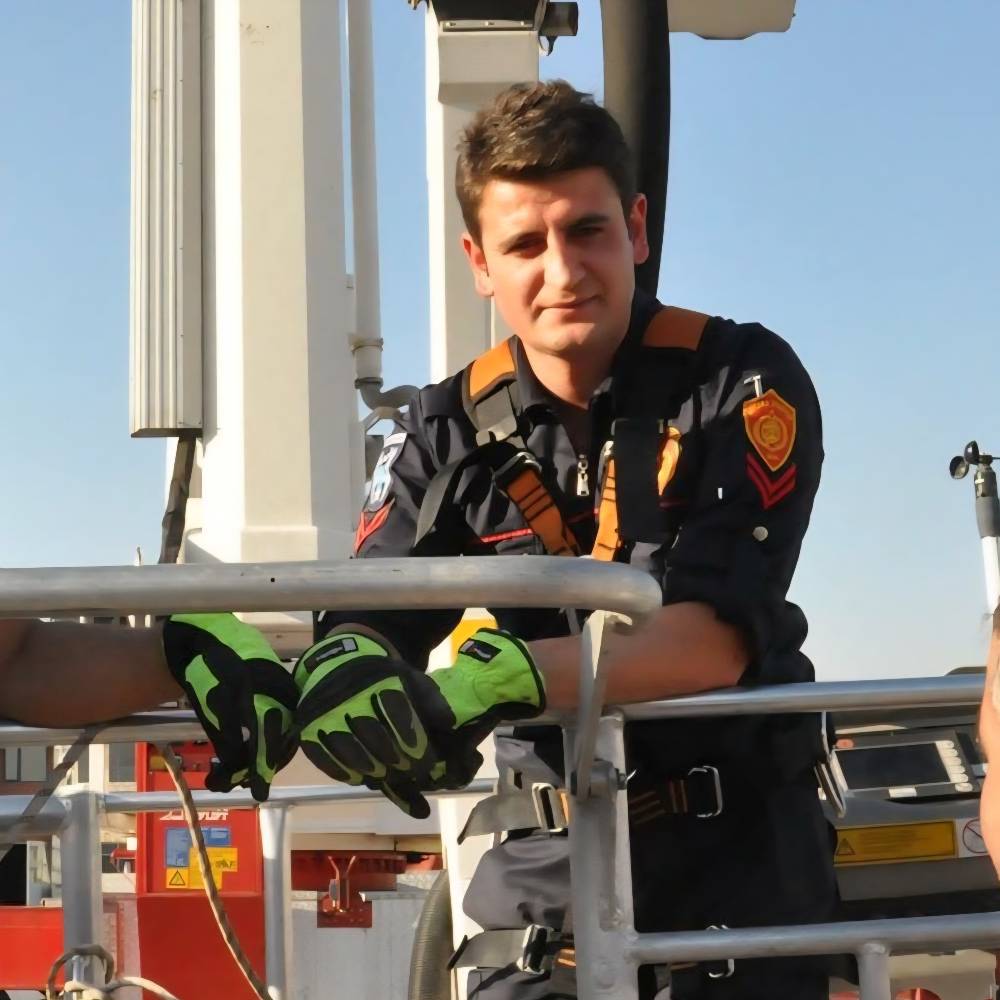
FDNY is known for its fire response. Its EMS operation is larger. By call volume, FDNY EMS dwarfs the fire suppression side of the department — medical emergencies and EMS calls represent roughly 75 to 80 percent of FDNY's total annual response volume. The 343 firefighters lost on September 11 receive more public attention than the fact that FDNY EMS responds to over four thousand emergencies on an average day, every day, year-round, across all five boroughs of a city of 8.3 million people.
FDNY EMS became part of FDNY in 1996, when Mayor Giuliani transferred the Emergency Medical Service from the Health and Hospitals Corporation to the Fire Department. The merger created the largest combined fire-EMS department in the United States. It also created an organization that operates two fundamentally different service delivery systems — fire suppression and emergency medical services — under a single command structure, with different training pipelines, different performance metrics, different union structures, and different public interfaces.
In this article:
The Two-Tier System: BLS and ALS
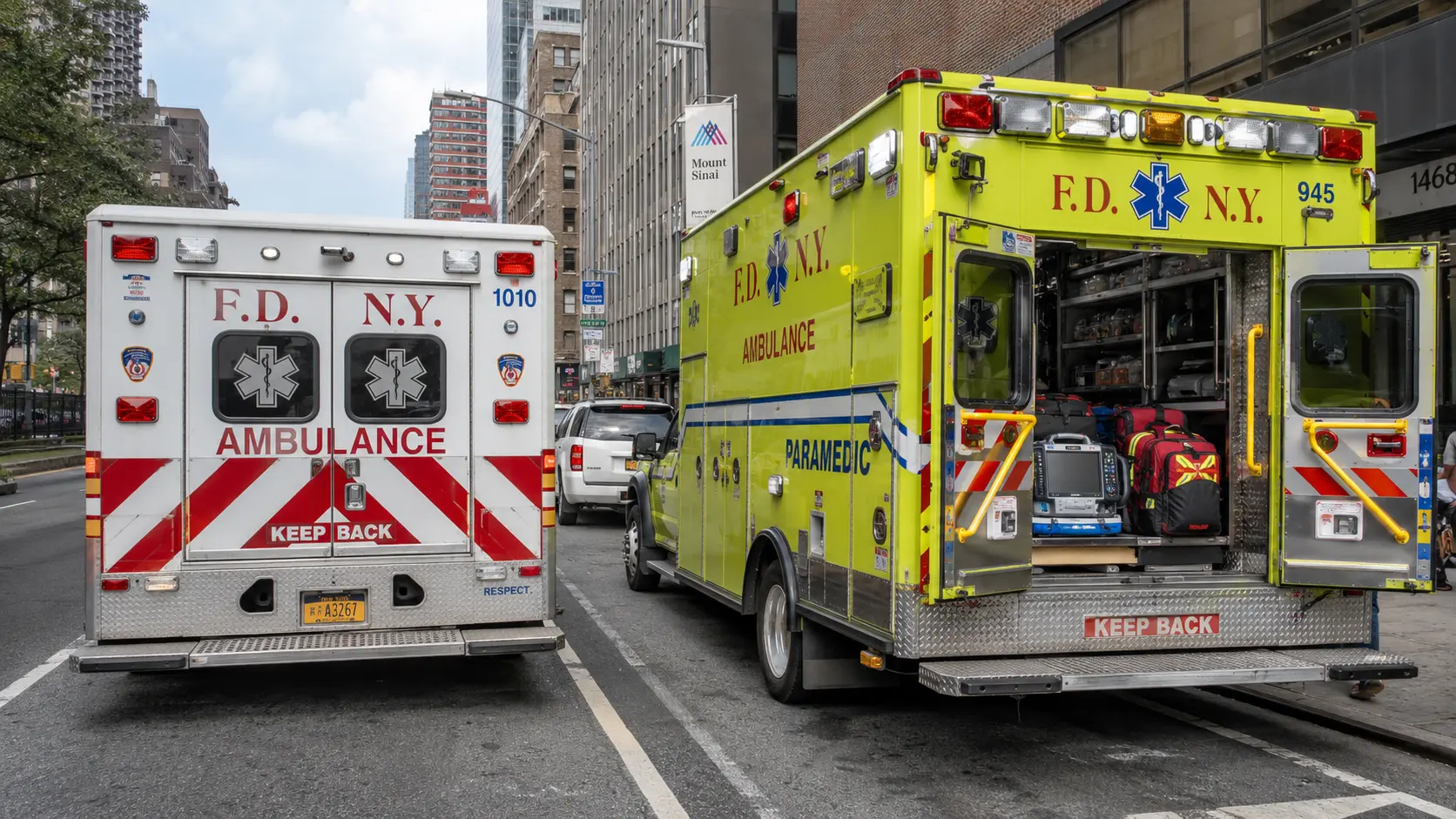
FDNY EMS uses a two-tier response model that separates basic emergency care (BLS) from advanced life support (ALS) into different unit types with different staffing and different scope of practice.
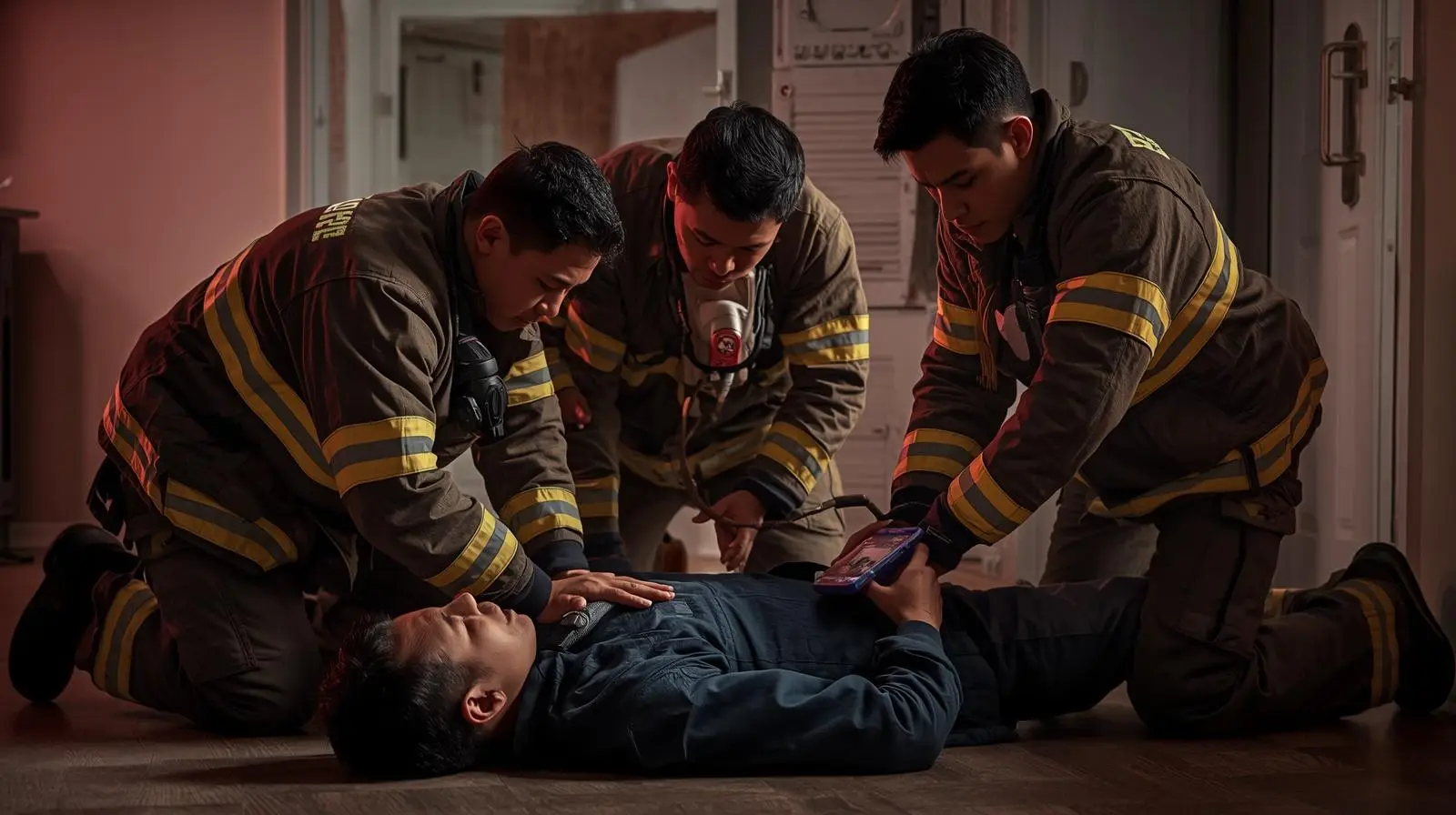
BLS units are staffed by two EMTs — Emergency Medical Technicians — who are trained to the EMT-Basic level. Their scope of practice includes patient assessment, oxygen administration, cardiac defibrillation with an AED, basic airway management, hemorrhage control, fracture stabilization, and patient packaging and transport. EMT-Basics cannot administer medications (other than patient-prescribed nitroglycerin and aspirin under specific protocols), cannot establish IV access, and cannot perform advanced airway procedures. BLS units respond to the majority of FDNY EMS calls — the calls that are categorized at dispatch as not requiring immediate ALS intervention.
ALS units (termed "Advanced Life Support" or in FDNY terminology, "Paramedic units") are staffed by two paramedics — Emergency Medical Technician-Paramedics. Paramedics have a significantly expanded scope of practice: IV and IO access, medication administration from an extensive formulary, advanced airway management (endotracheal intubation, surgical airway), cardiac monitoring and 12-lead EKG interpretation, electrical therapy (cardioversion, defibrillation, pacing), and advanced assessment and treatment for the full range of medical and trauma emergencies.
The dispatch decision — which tier to send — is made based on the caller's reported complaint using FDNY's emergency medical dispatch protocols. High-acuity complaints (unconscious, not breathing, chest pain, major trauma) automatically generate ALS response, sometimes with BLS co-response. Lower-acuity complaints generate BLS primary response with ALS available if the BLS crew assesses a higher acuity condition on scene.
EMS Dispatch and Prioritization
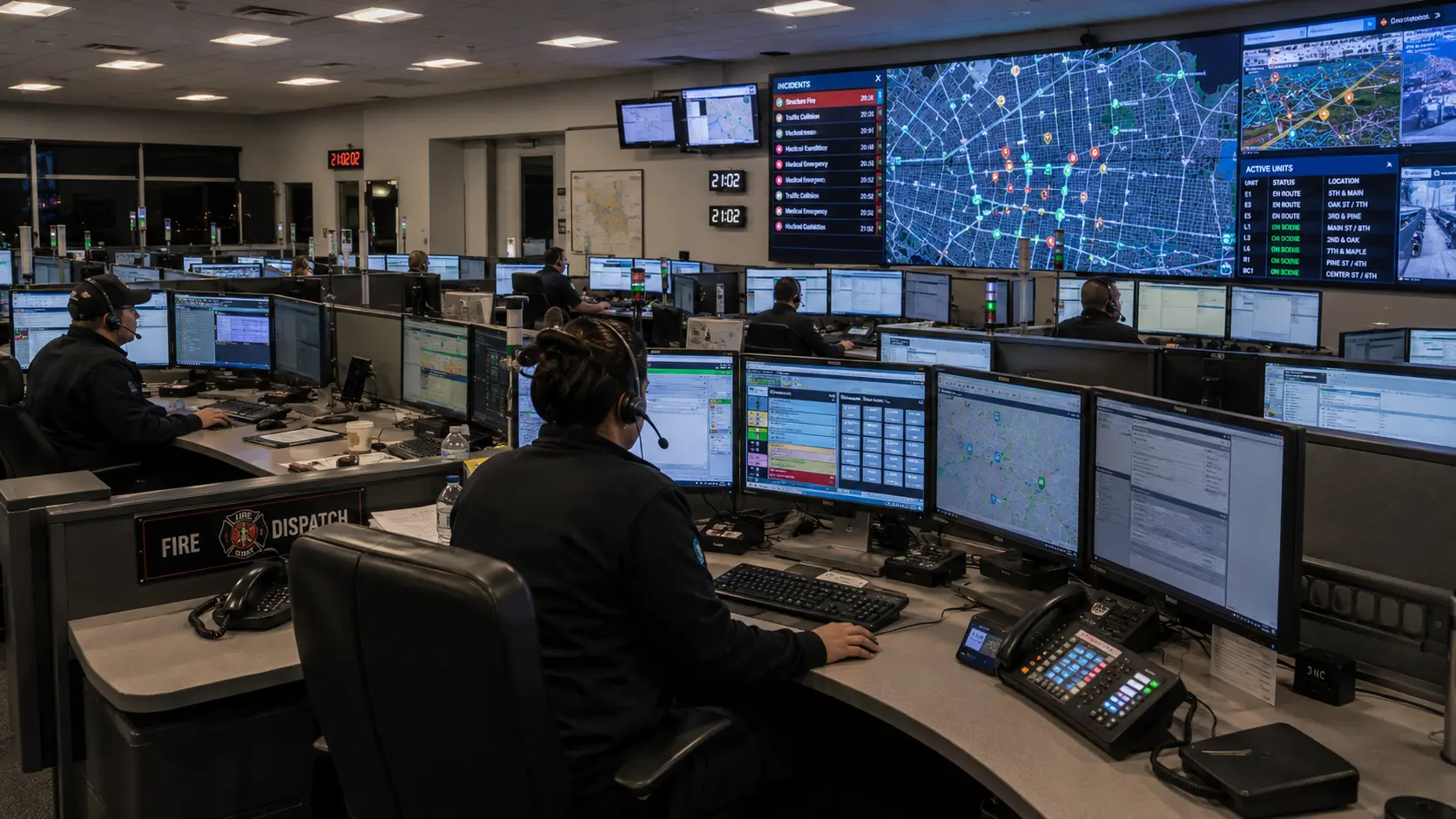
FDNY EMS calls are received and dispatched by FDNY Communications in MetroTech, Brooklyn — the same center that dispatches fire units. EMS calls receive a priority classification based on the Emergency Medical Dispatch (EMD) protocol, which is a standardized set of questions and decision rules that the dispatcher applies during the call to determine the severity of the reported emergency and the appropriate response level.
The FDNY EMD system assigns calls to one of several priority levels — from Priority 1 (immediately life-threatening, immediate lights-and-sirens response) through lower priorities for less acute complaints. The priority assignment drives both unit selection (ALS vs. BLS) and response mode (emergency vs. non-emergency). FDNY handles a significant volume of calls that do not require a lights-and-sirens response — medical escorts, non-emergency transports, and calls where the EMD protocol determines that the situation does not require immediate response. This volume management is essential to maintaining response capability for true emergencies.
Response Time Standards and Performance
FDNY EMS measures response time from call entry in the dispatch system to the first unit arriving on scene. Response time standards differ by call priority. Priority 1 (immediately life-threatening) calls have a target of under 6 minutes for ALS unit arrival in most of the city — a standard that reflects both the cardiac arrest resuscitation window and the general principle that life-threatening emergencies require the fastest possible response.
Achieving sub-6-minute ALS response across all five boroughs of New York City — including areas of Staten Island, the Bronx, and Queens with lower call density and longer travel times — requires a deployment system that positions units geographically based on historical call volume patterns rather than uniformly spacing them across the city. Units in high-volume areas are closer together; units in lower-volume areas cover larger geographic territory. System Status Management (SSM) — a computer-assisted deployment system that dynamically repositions units based on current coverage gaps — is used to optimize coverage as units become committed to calls.
Voluntary Hospital Paramedic Units
Eleven hospital-based paramedic units — operated by voluntary hospitals in New York City, including Bellevue Hospital Center, Maimonides Medical Center, and others — supplement FDNY EMS with ALS capability. These units are staffed by hospital-employed paramedics, operate under the same NYC medical protocols as FDNY paramedics, and are dispatched by FDNY Communications as part of the system-wide ALS response. From a patient's perspective, a voluntary hospital paramedic unit and an FDNY paramedic unit provide the same level of care under the same protocols.
The voluntary units supplement FDNY ALS capacity in high-demand areas, particularly in Manhattan and Brooklyn, and provide additional coverage during peak periods when FDNY ALS units are fully committed. The collaboration between FDNY EMS and the voluntary hospital systems is a structural feature of New York City's EMS that is not replicated in most other large American cities, where EMS is operated either by a single municipal department or by a single contracted provider.
Cardiac Arrest Outcomes
FDNY EMS publishes cardiac arrest outcome data in its annual reports, providing one of the most comprehensive publicly available datasets on urban cardiac arrest resuscitation outcomes. The key metrics tracked include ROSC rate (return of spontaneous circulation at the scene), survival-to-discharge from hospital, and survival with good neurological function at discharge.
Cardiac arrest outcomes in New York City reflect several factors specific to the urban environment: bystander CPR rates that are higher in some neighborhoods than others, response times that vary by borough and density, and the availability of public AEDs in high-traffic locations including Penn Station, Grand Central Terminal, and major commercial buildings. The cardiac arrest outcome data also reflects the variability by time of day and day of week — witnessed arrests with bystander CPR initiated within the first two minutes show significantly better outcomes than unwitnessed arrests where CPR begins with the first EMS unit arrival.
Specialty Units
Beyond the standard BLS and ALS ambulance fleet, FDNY EMS operates several specialized resources:
- Aviation Unit (EMS helicopters): FDNY operates helicopters that transport critically ill or injured patients between facilities when ground transport would take too long or is contraindicated. The aviation unit also supports rescue operations and provides air medical transport from remote or congested locations within the city.
- Bike Medics: Paramedics on bicycles who can navigate pedestrian areas, parks, and congested urban locations where ambulances cannot quickly reach. Bike medics carry a full ALS kit and can initiate ALS care before an ambulance arrives. They are particularly useful in Central Park and at large public events.
- Mass Casualty Unit (MCU): Large vehicles pre-stocked with supplies for mass casualty events — extra equipment, medications, and personnel resources that can be deployed rapidly when a single incident produces more patients than the local EMS resources can manage.
- Hazmat EMS: EMTs and paramedics trained in decontamination procedures who can provide medical care to patients who require decon before they can be treated in a standard ambulance. These units coordinate with FDNY hazmat operations.
- Critical Care Paramedics: A select tier of FDNY paramedics with additional training in critical care interventions, used for interfacility transports of unstable patients and for complex pre-hospital scenarios.
Hospital Coordination
FDNY EMS coordinates hospital destination decisions through the NYC BHLS (Bureau of Health System Liaison Services) and through direct communication with hospital emergency departments during transport. Specific patient conditions trigger specific hospital destination protocols — a stroke patient goes to a certified stroke center, a STEMI (heart attack) patient goes to a PCI-capable hospital, a major trauma patient goes to a trauma center rather than the nearest emergency department.
The hospital diversion system — which allows hospitals to signal that they cannot accept additional patients in specific categories — is monitored by FDNY EMS dispatch. A hospital on diversion is bypassed for the condition it is diverting; paramedics receive real-time hospital status information through their MDTs (mobile data terminals) during transport to confirm the destination is accepting their patient category before arrival.
The Training Pipeline
FDNY EMS operates its own training academy for EMTs and paramedics, distinct from the fire academy that trains firefighters. The EMT course — approximately 120 hours of didactic and clinical training — is the entry point for the BLS tier. FDNY hires EMTs from this course and also accepts state-certified EMTs from external programs.
The paramedic program — approximately 1,200 to 1,500 hours of didactic, simulation, and clinical training — is offered through affiliate hospital programs in partnership with FDNY. Paramedic training in New York is among the most rigorous in the country by volume and clinical hour requirements, reflecting the complexity and acuity of the urban medical emergencies that FDNY paramedics encounter daily.
FDNY EMS personnel who complete additional requirements can apply for the Fire Science track — the pathway for cross-trained EMS-firefighter positions. These dual-role members can function as either an EMT/paramedic or a firefighter depending on their assignment, providing FDNY with operational flexibility in combining roles for specific units or locations.
Comments 0
No comments yet. Be the first to share your thoughts!
Leave a Comment