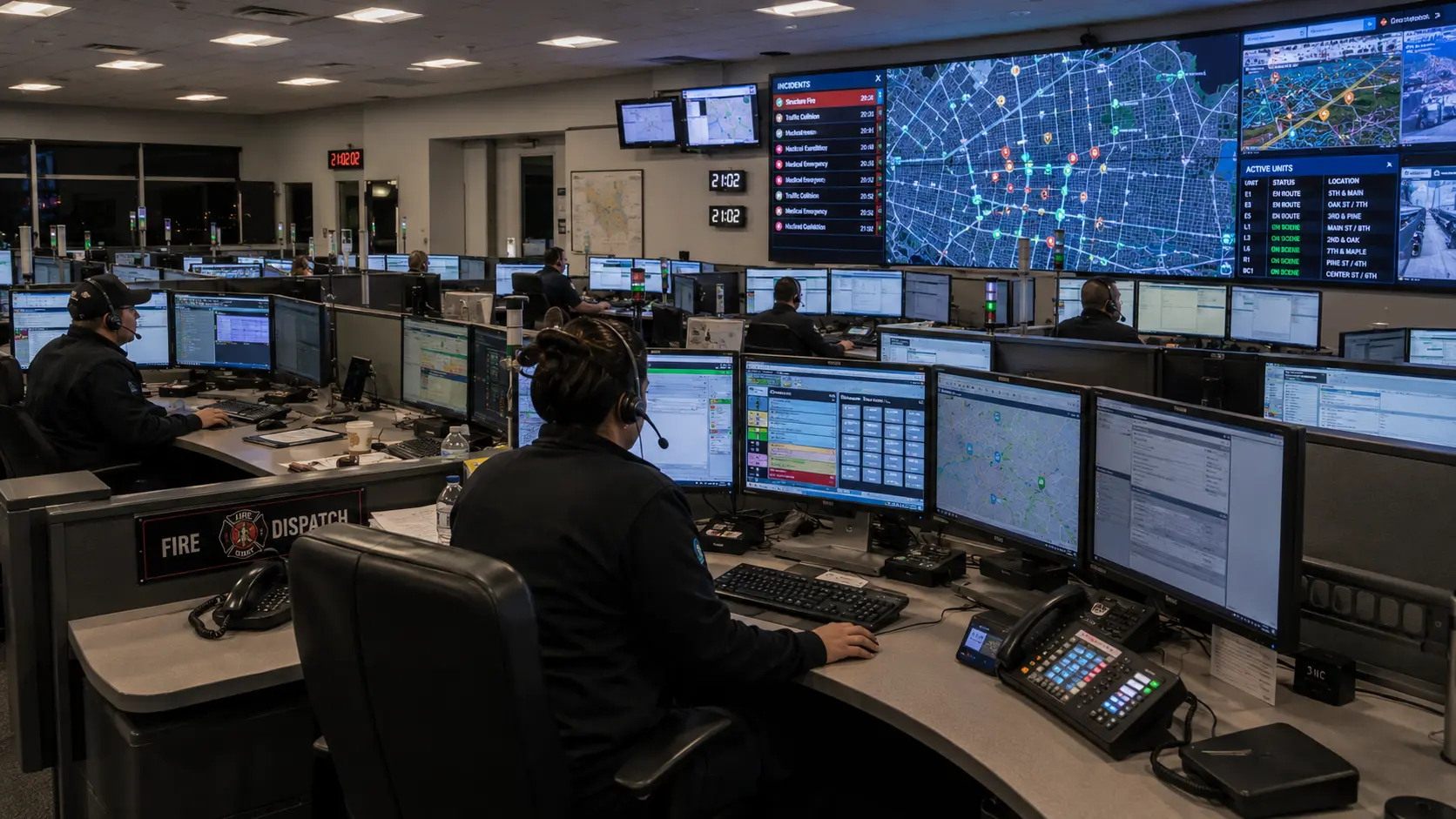
At any given moment, FDNY has somewhere between 200 and 400 units deployed across New York City's five boroughs. Those units are moving, available, unavailable, committed to scenes, on their way back to quarters, or staged at an active incident. The Communications division at MetroTech Center in Brooklyn tracks every one of them in real time, simultaneously receiving calls from a city of 8.3 million people and routing the right units to the right location within the time standards that NFPA 1710 defines. It is a logistics operation of a scale that most fire departments in the country never approach, and it runs continuously every hour of every day.
The mechanisms that make it work — the box alarm geographic assignment system, the computer-aided dispatch platform, the tiered response signal codes, and the role of the citywide dispatcher — are worth understanding both as a case study in how large-scale emergency dispatch operates and because FDNY's system has influenced dispatch practices in departments across the country.
In this article:
- The box alarm system: geographic dispatch areas
- Standard box assignments: what gets sent to what call
- FDNY radio signals and what they mean
- The 10-75: how a working fire assignment is built
- Computer-aided dispatch: tracking every unit in real time
- The citywide dispatcher's role
- Managing simultaneous major incidents
- Special units and their dispatch triggers
The Box Alarm System: Geographic Dispatch Areas
New York City is divided into thousands of geographic "boxes" — numbered areas that define both the address location of an incident and the predetermined unit assignment for that location. The box alarm system dates to the era of physical fire alarm pull boxes mounted on street corners, which transmitted a coded number to the fire department telegraph system identifying their location. The pull boxes are largely gone but the geographic numbering system remains, now implemented digitally.
Each box number corresponds to a specific location and a specific predetermined assignment — a list of which engine companies, ladder companies, and battalions respond when a call comes in from that box. The assignment is pre-built based on which units are closest to that location under normal conditions, taking into account the density of the surrounding area, the typical building types, and historical call volume. A box in Midtown Manhattan has a different assignment than a box in Staten Island, reflecting the different building stock and response requirements.
When a call comes in, the dispatcher enters or confirms the box number, and the CAD system immediately generates the assignment — which units respond, in what order. The dispatcher does not have to manually look up which companies cover a given address on every call. The box system encodes that answer and updates it when unit availability changes.
Standard Box Assignments: What Gets Sent to What Call
A standard structural fire box in most New York City boroughs initially dispatches two engines, two ladders, and a battalion chief — a 2-2-1 response. This is the first alarm assignment. The specific companies dispatched depend on availability at the time of dispatch; the CAD system automatically substitutes the next-closest available company if the primary-assigned unit is already committed.
Different call types generate different initial assignments. An outside rubbish fire generates a smaller initial response than a structural box. A report of fire in a high-rise generates an enhanced initial response. A water emergency, a person trapped, a hazmat incident, and a building collapse each have predetermined assignment types that the dispatcher applies based on the caller's report, not based on the dispatcher's judgment in the moment — the assignment types are standardized precisely to remove variability from the initial response.
FDNY Radio Signals and What They Mean
| Signal | Meaning | What it triggers |
|---|---|---|
| 10-75 | Working fire — fire confirmed by arriving units | Additional companies dispatched; 2nd alarm resources staged |
| 10-77 | High-rise fire operations | Enhanced response; additional ladder companies; EMS upgrade |
| 10-76 | High-rise fire signal (specific building types) | Modified from 10-77 for certain occupancy types |
| 10-30 | Structural collapse | Collapse units, additional rescue companies, EMS |
| 10-44 | False alarm (malicious or accidental) | Units released; documentation for repeated addresses |
| 10-45 | Dead on arrival (DOA) — EMS | Medical examiner notification |
| Signal 7-5 | Firefighter fatality | Department-wide notification; command staff response |
| Signal 10-13 | Firefighter emergency — officer or firefighter needs assistance | All units in vicinity respond; MAYDAY protocol activates |
The signal system allows officers to transmit critical incident status to dispatch in a single transmission rather than a detailed verbal report on a busy radio channel. A company officer arriving at an address and transmitting "10-75, Box 1472" tells dispatch everything they need to know to build the working fire assignment: there is confirmed fire at that location, the standard working fire additional resources should be dispatched, and the incident is transitioning from initial box response to a working fire operation.
The 10-75: How a Working Fire Assignment Is Built
When the 10-75 signal is transmitted, the dispatcher builds the additional assignment — typically two more engines, one more ladder, and additional battalion coverage — from units available in the surrounding area. The CAD system presents the dispatcher with the closest available units, but the dispatcher applies knowledge of current conditions: if two of the suggested units are already responding to a second active incident nearby, the dispatcher substitutes units from further away to avoid stripping a geographic area of coverage.
Simultaneously, the dispatcher notifies the citywide dispatcher that a working fire assignment is underway in that borough. The citywide dispatcher begins monitoring borough-wide unit availability. If additional companies are requested (second alarm, third alarm), the citywide dispatcher has the authority to move companies from other boroughs to cover depleted areas — a process called "covering" — ensuring that no neighborhood is left without any fire protection while multiple incidents are running simultaneously.
A second alarm typically adds three more engines, one more ladder, and a deputy chief to the response. A third alarm adds more of the same and brings the incident commander to a senior deputy chief level. Each alarm escalation requires the incident commander's request, transmitted to dispatch, and the dispatcher builds each additional assignment from available units in real time.
Computer-Aided Dispatch: Tracking Every Unit in Real Time
FDNY's computer-aided dispatch system maintains the real-time status of every unit in the department: in quarters (available), responding to a call, on scene, committed (working at an incident), out of service for maintenance, and various other status codes. Unit officers update their status by radio or via MDT (mobile data terminal) in the apparatus. The CAD system registers each update and adjusts available unit lists accordingly.
When a call comes in, the CAD presents the dispatcher with the box assignment and the current availability status of the assigned companies. If a primary company is unavailable, the system automatically substitutes the next-closest available company with similar capability. The dispatcher confirms or modifies the assignment and transmits the dispatch — the entire process from call entry to unit notification running in 30 to 60 seconds for a routine call.
The CAD also provides the dispatcher with prior incident history at an address — previous calls, building type, known hazards, presence of hazardous materials, and any special dispatcher notes. A building with a history of false alarms appears differently in the system than a first-time call. A building flagged for known hazards — a facility that stores regulated chemicals, a building with structural concerns on file — generates an alert that appears at dispatch and informs the response level decision.
The Citywide Dispatcher's Role
Each of New York City's five boroughs has its own borough dispatcher managing the units and incidents within that borough. Above them is the citywide dispatcher — a senior dispatcher with oversight of all borough operations and the authority to move resources across borough lines when local availability is strained.
The citywide dispatcher's job becomes most consequential during periods of high demand: major weather events, multiple simultaneous working fires, mass casualty incidents, or the rare city-wide emergency that stresses every borough simultaneously. During a major snowstorm that drives call volume to three times its normal level, the citywide dispatcher is managing unit coverage across the entire city, preventing any borough from running out of available units, and coordinating mutual aid from surrounding jurisdictions if FDNY resources are exhausted.
The citywide position also serves as the point of contact for special resources: the Marine units, the HAZMAT battalion, the Rescue companies, the collapse units, and the Special Operations Command. When an incident requires one of these specialized resources, the borough dispatcher requests them through the citywide, who assigns from the available roster and tracks their deployment across borough lines.
Managing Simultaneous Major Incidents
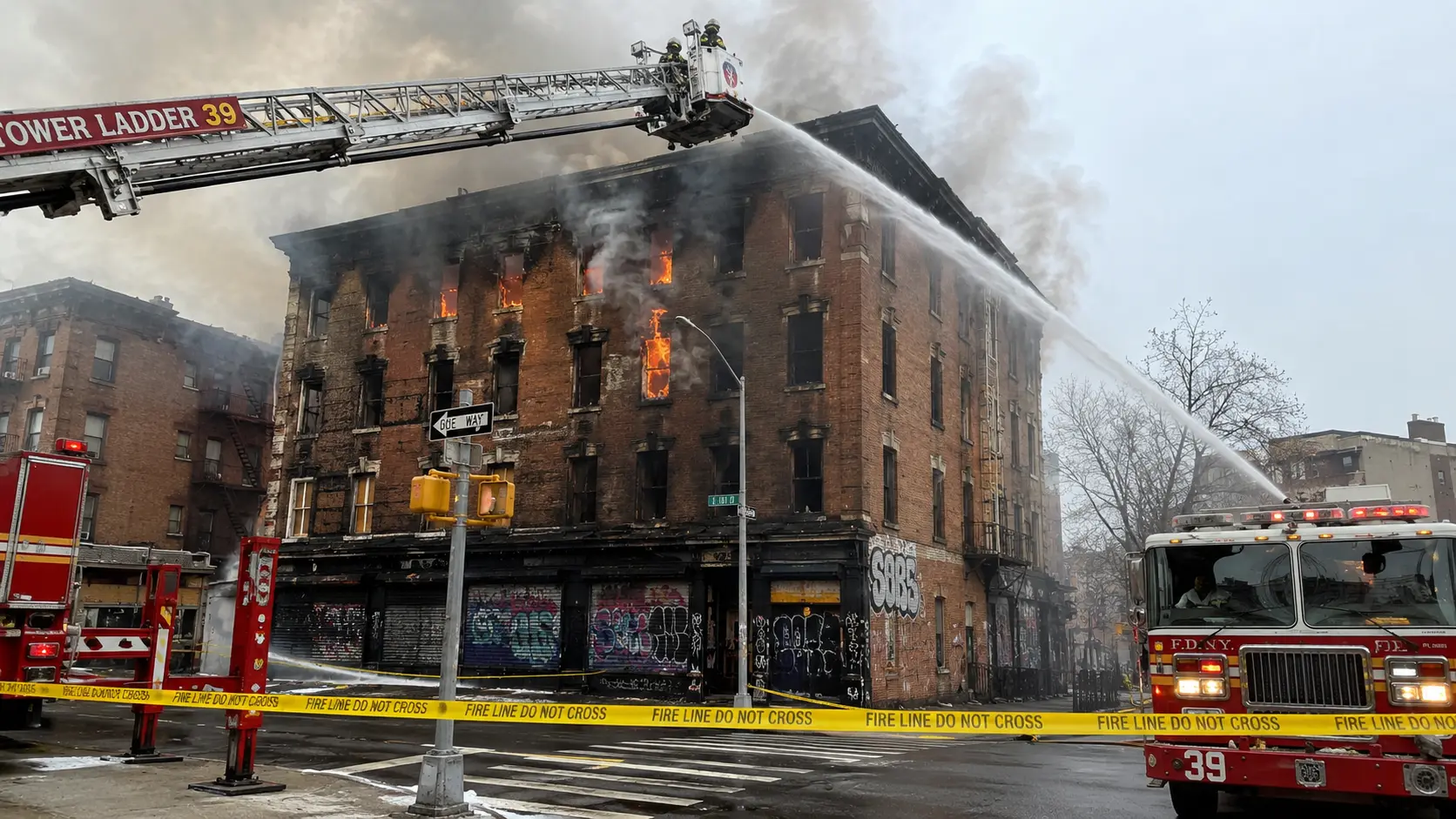
New York City averages roughly a dozen working structural fires per day across the five boroughs. On any given day, two or three of them may be running simultaneously in the same borough. The dispatch system manages simultaneous incidents through the covering system — the process of moving units from quieter areas to fill gaps created by multiple deployments in the same area.
A borough dispatcher managing three simultaneous working fires in Brooklyn is tracking 30 to 40 committed units, monitoring which geographic areas have reduced coverage, moving covering units from Queens or Staten Island to fill critical gaps, and continuing to process new calls that come in during the active incidents. The CAD system displays all of this on a single screen, but the decisions — which units to move, which gaps are critical, when to request mutual aid — require dispatcher judgment that the system informs but cannot replace.
Special Units and Their Dispatch Triggers
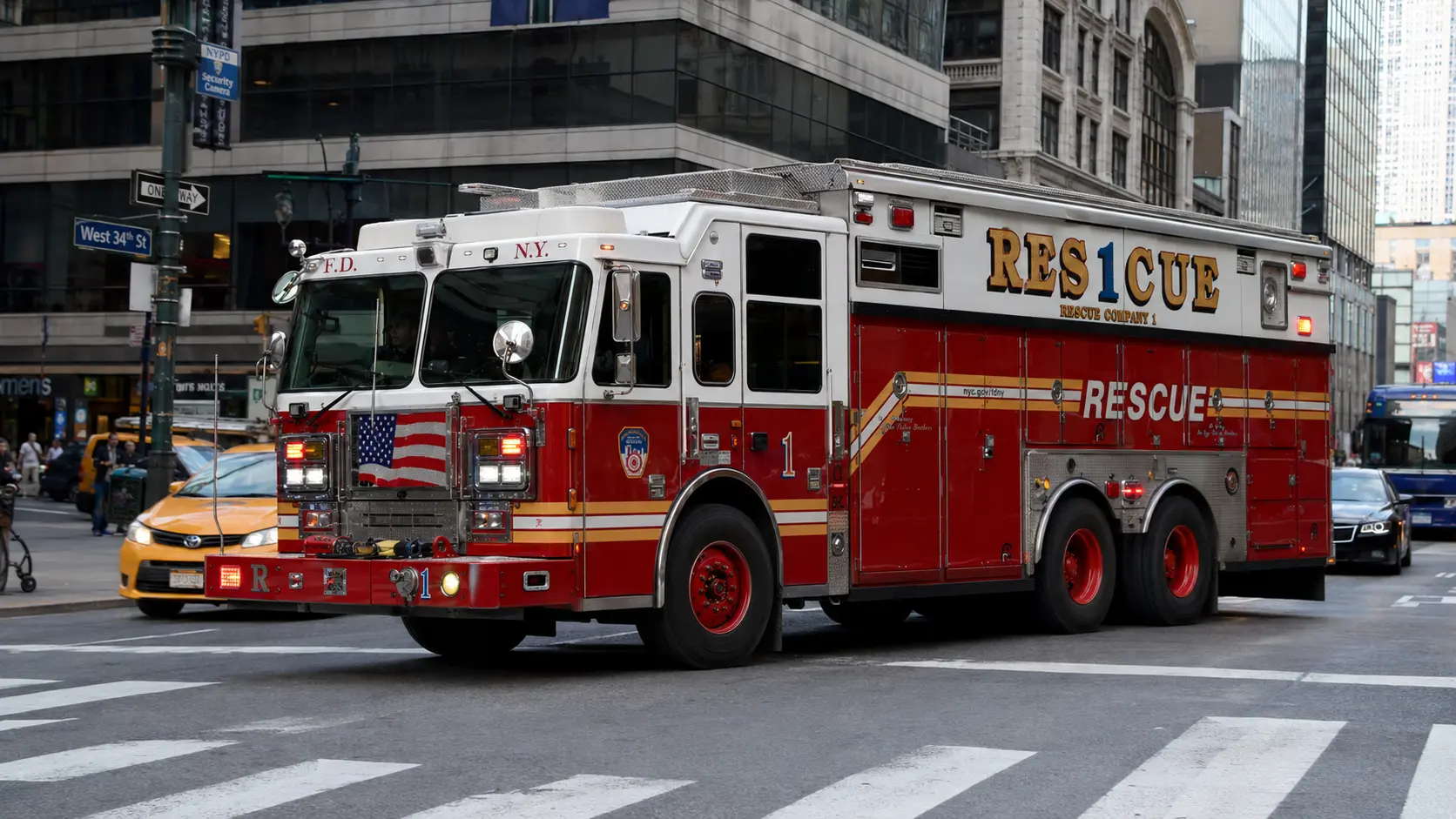
FDNY maintains specialized units that are dispatched based on incident type rather than geographic assignment:
- Rescue Companies (1–5): One per borough, these heavy rescue units carry extensive technical rescue equipment and respond to structural collapse, confined space, trench rescue, water rescue, and any incident requiring capabilities beyond standard engine/ladder complement. Dispatched automatically on building collapse, confirmed confined space incidents, and other technical rescue triggers.
- Squad Companies: Similar to rescue companies with additional hazmat capability. Respond to hazardous materials incidents and work alongside the HAZMAT battalion.
- HAZMAT Battalion and Tactical Support Unit: Dispatched on confirmed or probable hazardous materials incidents. The Tactical Support Unit carries decontamination and advanced monitoring equipment.
- Marine Units: Seven fireboats and support vessels covering New York Harbor, the East River, the Hudson River, and surrounding waterways. Dispatched on water rescues, vessel fires, and waterfront structural fires requiring water supply from the marine side.
- Special Operations Command (SOC): Coordinates the deployment of all specialized units and responds to major incidents requiring multi-unit technical operations.

Comments 0
No comments yet. Be the first to share your thoughts!
Leave a Comment