Drowning is the third leading cause of unintentional injury death worldwide. In the United States, fire departments respond to the majority of water emergencies — not lifeguards, not the coast guard, not law enforcement, but fire departments, because they have the training, the equipment, and the response time that water rescue requires. A crew that pulled someone from a burning building on Tuesday may be pulling someone from a lake on Wednesday. Water emergency response is part of the job in nearly every department in the country.
What happens when a fire crew arrives at a drowning scene is not what most people picture. It is not a heroic leap into the water. It is a systematic approach that balances the victim's need for immediate rescue with the reality that a rescuer who becomes a second victim doubles the problem and removes the resource capable of solving the first one. The sequence, the decisions, and the medical care that follow are what this piece covers.
In this article:
- Why fire departments respond to drownings
- The reach-throw-row-go sequence
- Scene size-up at a water emergency
- Cold water drowning: the physiology that changes everything
- Resuscitation for drowning victims: what is different
- Secondary drowning: the delayed presentation
- Ice rescue: a specific and dangerous subset
- What bystanders should do
Why Fire Departments Respond to Drownings
The assignment of water emergency response to fire departments is historical in origin but practically sound. Fire departments have structured response systems with reliable availability, trained personnel who work in teams, and apparatus that carries rescue equipment. They respond 24 hours a day and can be at most urban and suburban water emergency scenes faster than any other organized rescue resource.
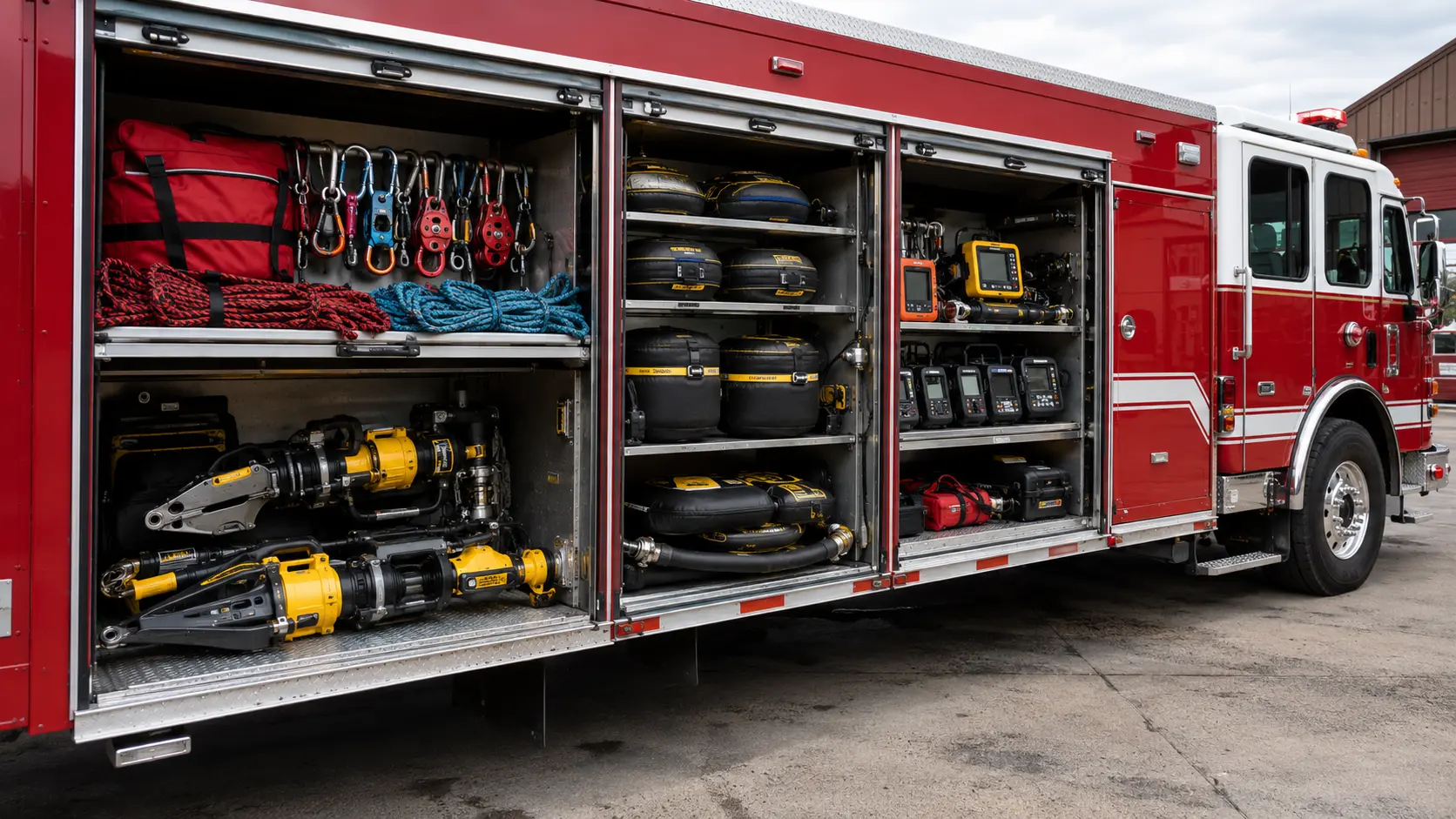
Most fire departments include water rescue training as part of basic firefighter certification and maintain equipment for surface water rescue — throw ropes, ring buoys, rescue boards, personal flotation devices, and in many departments, swift water rescue suits and specialized rescue boats. Departments in areas with significant water features (rivers, lakes, coastal zones) typically have dedicated swift water rescue teams with advanced training and specialized equipment beyond what is carried on a standard engine or ladder company.
The call that comes in as a drowning covers a spectrum of scenarios: a swimmer in distress who is still at the surface, a submersion victim who has gone under and has not surfaced, an ice rescue where a person has fallen through frozen water, a swift water incident where someone is caught in a current, and the post-event call where someone has been pulled from the water by bystanders and needs medical care. Each requires different immediate actions, different equipment, and different medical management.
The Reach-Throw-Row-Go Sequence

The foundational principle of water rescue — and the one most frequently violated by untrained bystanders who die trying to help — is that the rescuer who becomes a victim doubles the problem. A panicking drowning person will climb on any object within reach, including a rescuer, and push them underwater. Untrained water entry rescue has killed rescuers repeatedly. The reach-throw-row-go sequence exists to exhaust options that keep the rescuer out of the water before committing to water entry:
- Reach: If the victim is close to shore or to the dock edge, extend something for them to grab — a pole, a paddle, a towel, a belt, an arm with the rescuer lying prone on the edge. Do not enter the water. If the victim can grab and hold something, they can be pulled out without the rescuer getting wet.
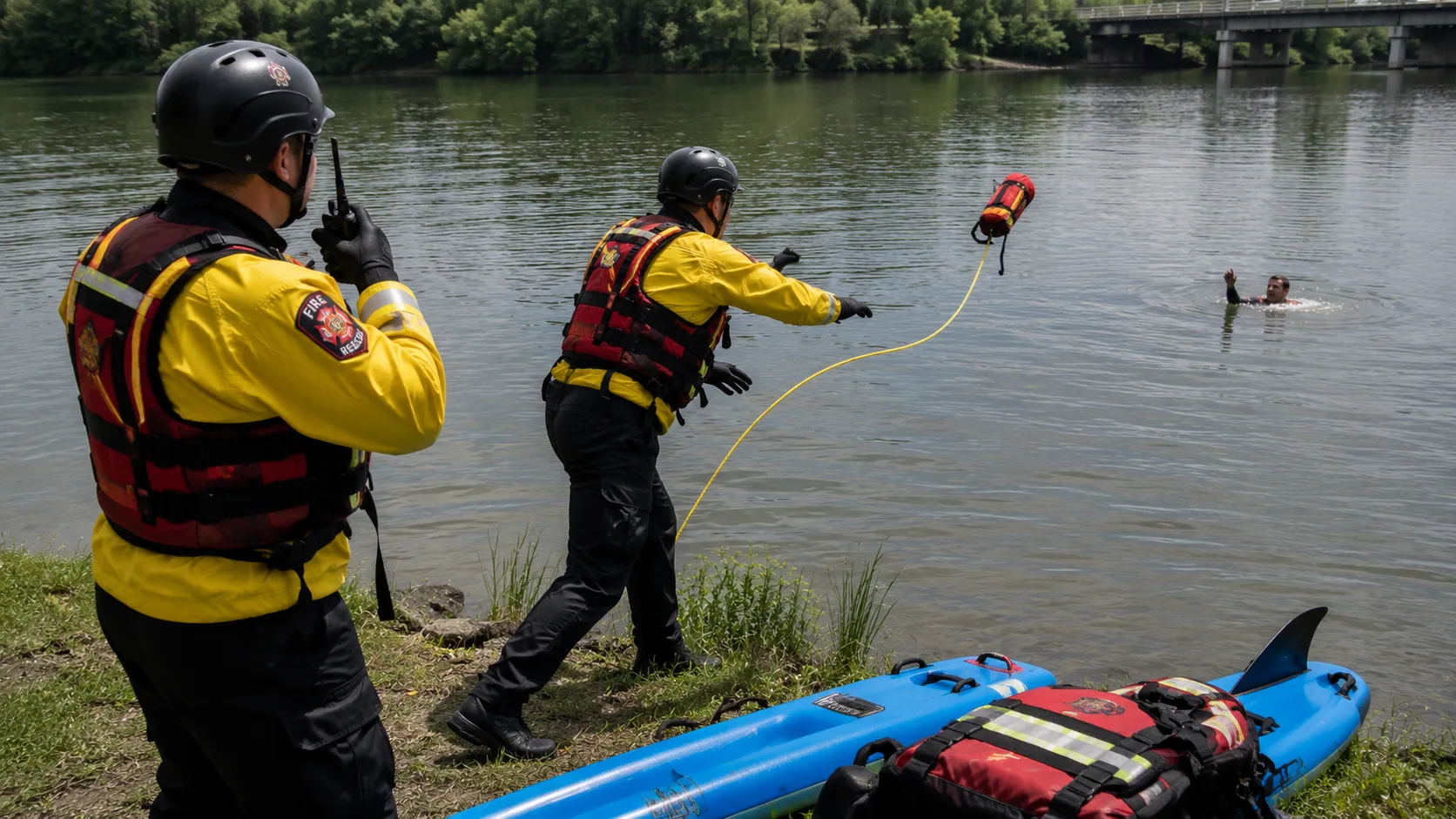
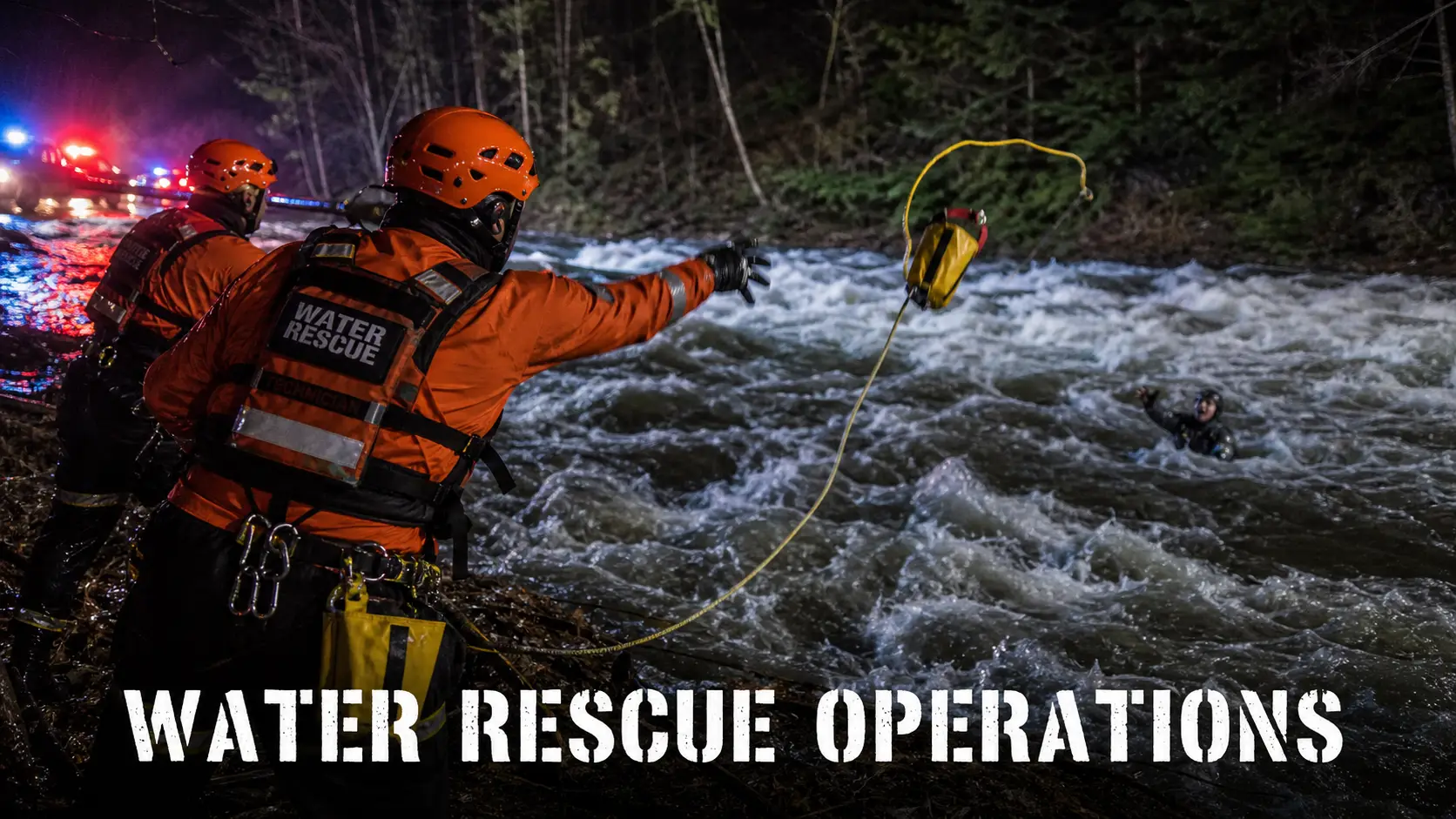
- Throw: If the victim is beyond reach, throw a floating object — a throw bag with rope, a ring buoy, a life jacket, a cooler, anything that floats. A throw bag with 50 to 75 feet of rope can reach a victim at significant distance. The victim grabs the rope and is pulled in.
- Row: If the victim cannot be reached or thrown to, use a watercraft if one is available — a rowboat, a kayak, a canoe, a rescue board. The rescuer is in the watercraft, not in the water.
- Go: Water entry is the last resort — for trained rescuers with flotation equipment. A trained rescuer entering the water uses a defensive approach: a flotation device between themselves and the victim, approaching from behind if possible, and using techniques that keep the victim from climbing on top of them. Untrained water entry without flotation in a drowning rescue scenario is dangerous regardless of swimming ability.
Fire departments at a water emergency scene will apply this sequence with their equipment — throw bag first if the victim is surface-visible, then rescue board or boat if available, then trained water entry as a last resort. The sequence is not hesitation. It is risk management that keeps the rescuers functional.
Scene Size-Up at a Water Emergency
The information a fire crew needs at a water emergency is different from a structure fire size-up but equally systematic. The first arriving officer is gathering several pieces of information simultaneously:
- Where is the victim? Surface-visible, submerged at known depth and location, submerged at unknown location, or swept downstream/along shore.
- Last known point: Where was the victim last seen on the surface? For a submerged victim, this is the starting point for the search pattern. Witnesses are the primary source — a bystander who watched someone go under and saw the exact location is invaluable information.
- Submersion time: How long has the victim been underwater? This is relevant to resuscitation decision-making and to the urgency of the search. Every second of submersion time the crew knows about is seconds they cannot recover; every second still passing during the response is seconds they might.
- Water conditions: Current, temperature, depth at the last known point, visibility. All affect rescue approach and equipment selection.
- Hazards: For swift water, the downstream hazards — strainers (objects that water flows through but a person cannot), hydraulics, dam faces. For ice rescue, ice thickness and the distance to the victim. For open water, boat traffic.
Witnesses at the water's edge are the first contact. They are often panicked, sometimes in the water themselves, and always a potential source of critical information. Getting a coherent answer from a distressed witness about exactly where the victim went under — while simultaneously deploying rescue equipment — is a standard simultaneous task for the arriving officer.
Cold Water Drowning: The Physiology That Changes Everything
Cold water — generally defined as below 60°F (15°C) for the purpose of drowning physiology — produces a set of physiological responses that change the resuscitation calculus significantly. The mammalian diving reflex, triggered by sudden cold water immersion particularly in children, can produce a protective bradycardia (slowing of the heart rate) and shunting of blood away from the extremities toward the core organs, including the brain. This reflex, combined with the slowing of cellular metabolism in cold tissue, can preserve brain function during submersions that would be fatal in warm water.
The documented cases of neurologically intact survival after cold water submersion exceeding 20 to 30 minutes — primarily in children — are what generated the principle that is now standard in water rescue medicine: do not stop resuscitation of a cold water drowning victim based on submersion time alone. The phrase "not dead until warm and dead" — variously attributed to different emergency medicine sources — means that a cold water victim in cardiac arrest should be resuscitated until either a return of spontaneous circulation is achieved, or the body has been rewarmed to near-normal core temperature and resuscitation is still not successful. A victim who appears dead after 20 minutes of cold water submersion may still have viable brain tissue.
The practical implication for fire crews: a cold water submersion victim who has been under longer than would typically indicate survival in warm water is still treated aggressively. CPR continues. Advanced life support is applied. Transport to a hospital with extracorporeal membrane oxygenation (ECMO) capability — which can rewarm the body from the inside while supporting cardiac output — is requested if available, because ECMO has produced neurologically intact survivors from cold water cardiac arrest that otherwise appeared hopeless.
Resuscitation for Drowning Victims: What Is Different
Drowning cardiac arrest is a hypoxic cardiac arrest — the heart has stopped because of oxygen deprivation, not because of a primary cardiac event. This is a critical distinction from cardiac arrest in a dry setting, which is more often ventricular fibrillation caused by a primary electrical problem with the heart.
In hypoxic cardiac arrest, restoring oxygenation is the most important intervention — even more important than defibrillation in many cases. A drowning victim in cardiac arrest needs ventilation first. The standard cardiac arrest sequence of compressions-first (the "hands-only CPR" approach recommended for bystanders witnessing cardiac arrest in adults) is modified for drowning victims: rescue breaths are included from the start, because the primary problem is oxygen deficit, not a heart rhythm that compressions can support while defibrillation is prepared.
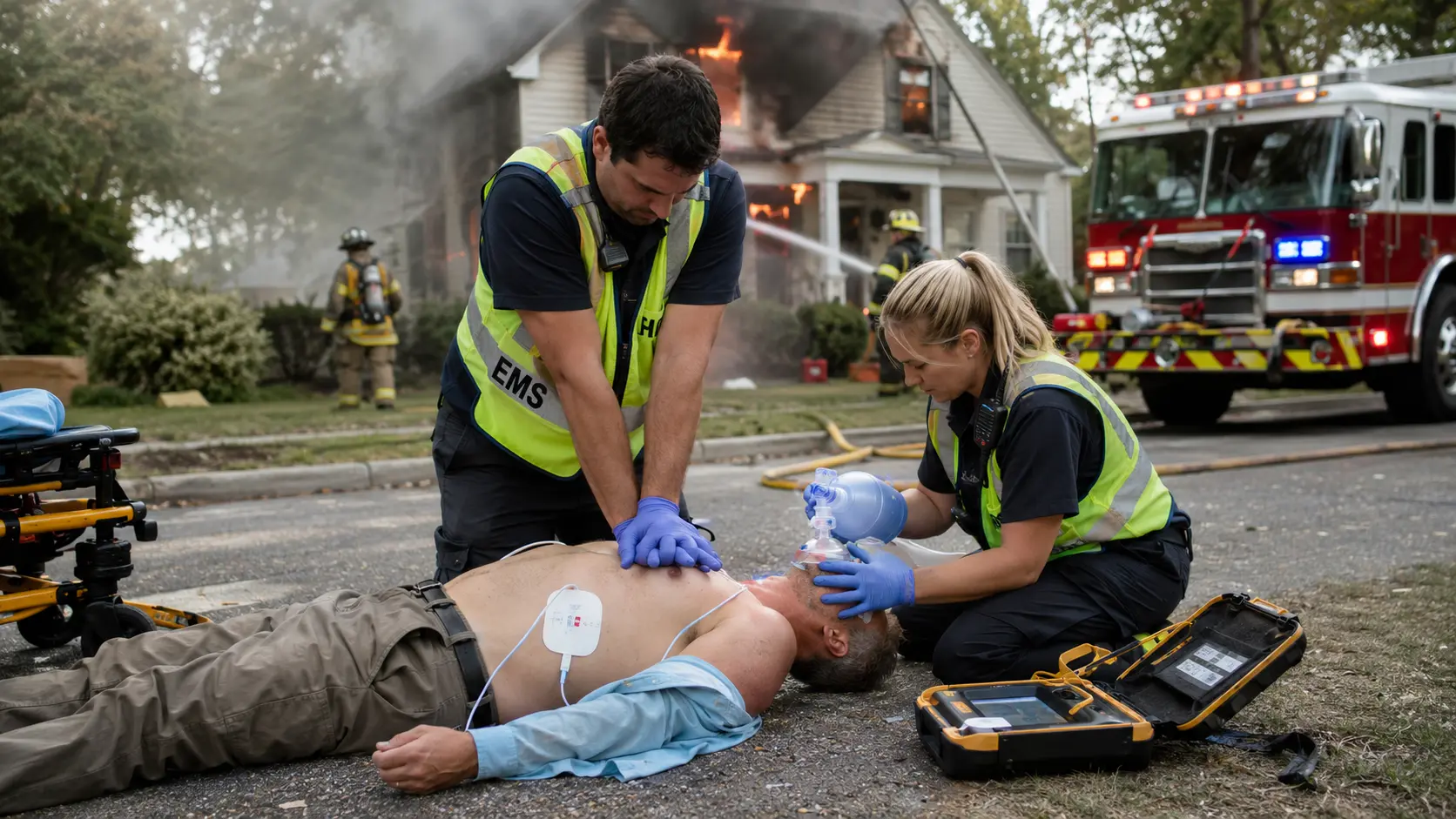
For fire crews arriving with airway management capability: bag-valve-mask ventilation with high-flow oxygen is applied immediately. If the victim is in cardiac arrest, CPR with ventilation is initiated. Water in the airway does not prevent effective resuscitation — rescuers do not need to waste time on "water removal" maneuvers that do not exist in any effective form. The Heimlich maneuver is not appropriate for drowning victims — it does not remove water from the lungs and may cause aspiration of stomach contents. Airway positioning, rescue breaths, and chest compressions are what work.
Hypothermia in cold water victims complicates cardiac rhythm interpretation. A heart in extreme hypothermia may be in a rhythm that appears like fine ventricular fibrillation or is so slow and irregular as to appear asystolic. Defibrillation in a severely hypothermic patient has limited effectiveness until the core temperature rises — the cold heart may not respond to the shock. This is another reason cold water victims are transported to hospitals with rewarming capability rather than being managed to a field endpoint.
Secondary Drowning: The Delayed Presentation
Secondary drowning — more accurately called delayed pulmonary edema or post-immersion syndrome — is a condition in which a person who appeared to recover from a near-drowning event develops respiratory failure hours later. It occurs when aspirated water triggers an inflammatory response in the lung tissue that produces pulmonary edema — fluid accumulation in the lungs — that is not present immediately after the event but develops over the following 4 to 24 hours.
The clinical picture: a child or adult who was pulled from the water, seemed to be recovering, was alert and breathing, and was sent home or to the hotel — and then developed progressive shortness of breath, coughing, and fatigue hours later. In severe cases, the pulmonary edema progresses to respiratory failure.
The recommendation from emergency medicine: any person who required rescue from water immersion, who aspirated water (evidenced by coughing, choking, or difficulty breathing at the scene), should be evaluated at an emergency department and observed for a minimum of 4 to 6 hours even if they appear well at the scene. This is the standard of care because the delayed presentation cannot be predicted at the time of the event, and the progression from mild pulmonary edema to respiratory failure can be rapid. "He seemed fine" is the consistent description of secondary drowning victims in the hours before they deteriorated.
If a child was submerged and required rescue, do not let them go home because they seem fine. Secondary drowning is preventable with observation and early intervention. A child who seems recovered after a near-drowning event but develops fatigue, coughing, or irritability in the following hours needs emergency evaluation immediately — not a "wait and see" response at home.
Ice Rescue: A Specific and Dangerous Subset

Ice rescue combines the drowning scenario with the additional hazard of an unstable surface that can fail under the rescuer's weight. The person who has fallen through ice is at the ice hole; the ice around them may or may not support a standing rescuer approaching from the shore. Standard ice rescue technique addresses this:
Rescuers approaching a through-the-ice victim distribute their weight by lying flat — approaching on their belly — to spread the load across more ice surface and reduce the pressure per square foot. A standing person concentrates their full body weight on two feet; lying flat spreads it across the torso and limbs. This does not guarantee the ice will hold, which is why the approaching rescuer is tethered to a safety rope held by crew members who remain on solid ice or shore.
Dry suits — sealed waterproof suits with thermal insulation — are required equipment for ice rescue operations. A rescuer who breaks through the ice without a dry suit is immediately hypothermic, incapacitated within minutes in water at or near freezing, and is now a second victim. With a dry suit and a safety tether, a rescuer who goes through the ice can be pulled back to shore without becoming a casualty. No firefighter enters ice rescue conditions without both.
The victim at the ice hole is typically not fully submerged — they have gone through but are at the surface, clinging to the ice edge. The goal is to extend something for them to grab — a rescue pole, a throw rope, a ladder slid across the ice — and pull them to shore without the rescuer going to them. Physical contact rescue (the rescuer reaching the victim's location) is the last resort for the same reason as all water rescue: the victim's panicked response can make both the victim and the rescuer casualties.
What Bystanders Should Do
- ✓Call 911 immediately — even if you are going to attempt rescue, the call gets professionals en route while you act.
- ✓Note and remember the exact last-seen location — stand at or mark the point on shore that corresponds to where the victim was last seen on the surface. This is the most valuable information you can give arriving crews.
- ✓Attempt reach-or-throw rescue — anything that floats, any rope or strap within reach. Get it to the victim without entering the water.
- ✓If you pull someone from the water — begin CPR immediately if they are unresponsive and not breathing. Do not wait for the fire department. Ventilation is critical in hypoxic cardiac arrest. Start rescue breaths if you are trained.
- ✓Keep the victim warm — get them out of wet clothing, wrap them in anything available, get them off cold ground. Hypothermia management begins at the scene.
- ✗Do not enter the water without training and a flotation device — untrained water entry in a drowning rescue has killed rescuers.
- ✗Do not let a near-drowning victim go home without medical evaluation — secondary drowning is real, delayed, and preventable with observation.
- ✗Do not perform the Heimlich maneuver on a drowning victim — it does not remove water from the lungs and delays effective CPR.

Comments 0
No comments yet. Be the first to share your thoughts!
Leave a Comment