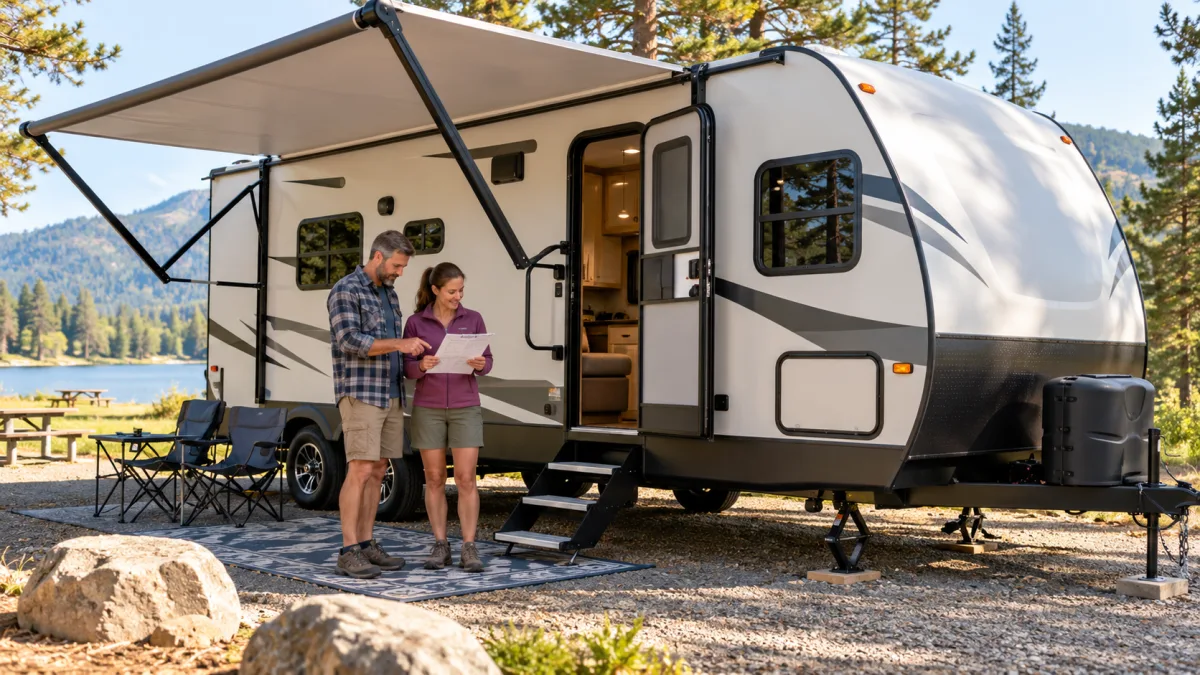
A trailer can look ready for the road while its emergency window is blocked by luggage and its propane detector has been disconnected to stop a nuisance sound. A travel checklist that covers only tires and towing misses the part of the vehicle where people cook and sleep.
RV fire safety is a combination of escape planning, working alarms, sound fuel and electrical equipment, and decisions made before a campsite becomes crowded. The priorities below apply to motorhomes and towable campers, but equipment-specific instructions must come from the manual for your unit.
Check the exits with the beds in use
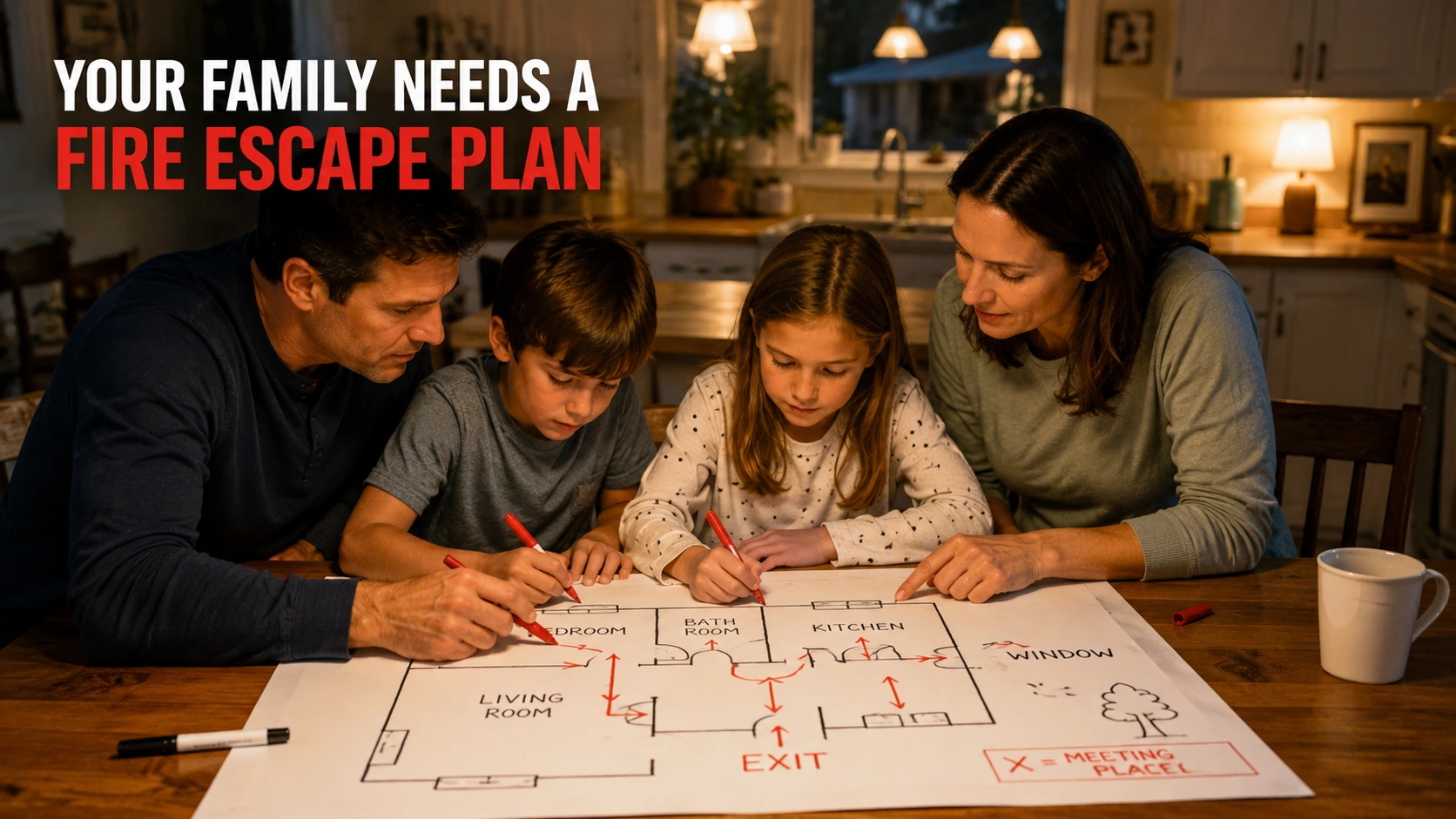
Walk through the camper as it will actually be occupied. Convert the dinette, unfold the sofa and put the travel bags where they usually end up. Then check the route from each sleeping position to the main door and the designated emergency exit.
The U.S. Fire Administration's RV guidance emphasizes clear, operable exits, supervised cooking, sound propane equipment and avoiding electrical overload. Translate those priorities into checks for your own layout. A clear aisle in the brochure is not evidence of a clear aisle after four people unpack.
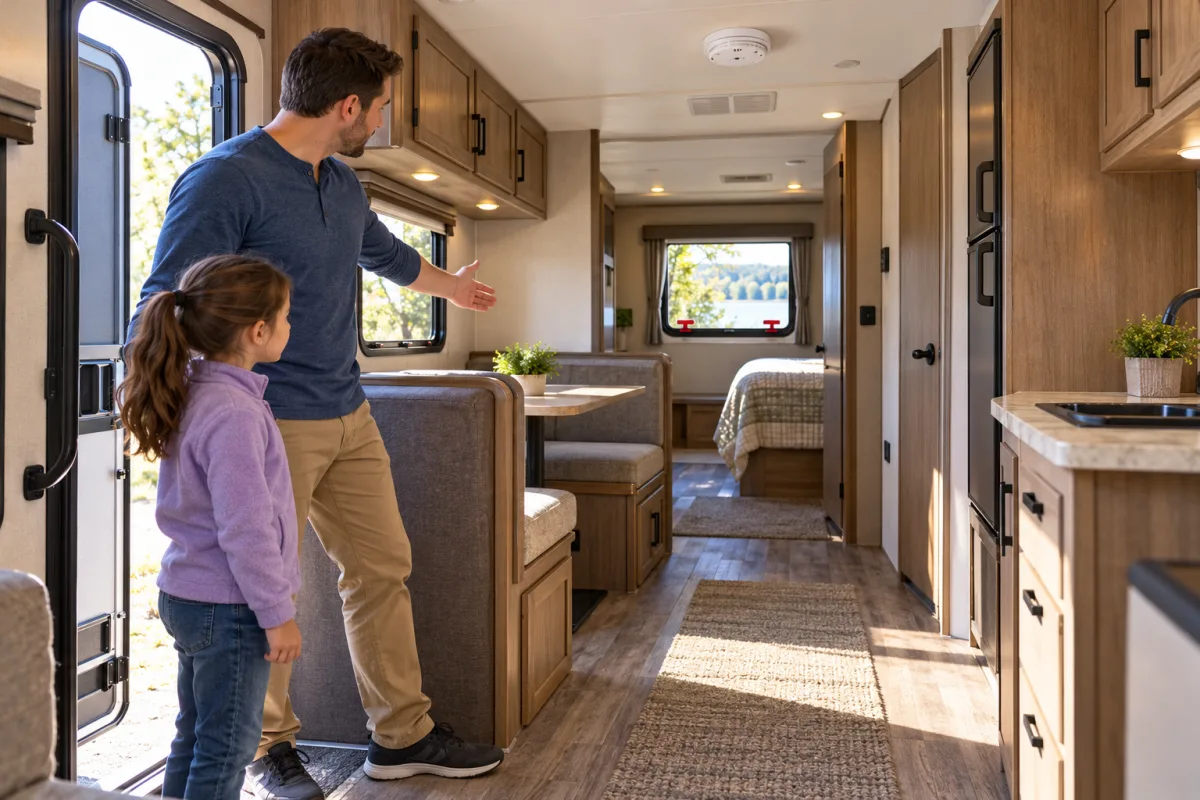
Find the manufacturer's procedure for the emergency window before the trip. Some mechanisms and screens work differently, and access can be affected by the height above the ground. Familiarize everyone with the designated exit without improvising a hazardous climbing exercise. Discuss children, limited mobility and pets specifically; do not assume an able adult's plan fits every passenger.
Know what each detector is for
Smoke, carbon monoxide and propane detection are different functions. Do not assume that one installed device covers all three. Combination units exist, so identify the actual model and the hazards listed on its label.
Use the installation and testing instructions supplied for that detector and RV. Placement should not be guessed from a simplified statement about gases being lighter or heavier than air. Air movement, approved mounting positions and equipment design matter. Record replacement information when you can read the label comfortably, rather than waiting until the unit starts sounding during a trip.
| Check | Record before departure | If the answer is unknown |
|---|---|---|
| Smoke detection | Device model, test procedure and replacement date | Find the manual or have the equipment checked. |
| CO detection | Which unit detects CO and how it is powered | Do not treat a smoke-only alarm as a substitute. |
| LP/propane detection | Device location and required operating instructions | Ask the RV service provider to identify it. |
| Emergency window | Operating instructions and an unobstructed approach | Resolve the uncertainty before using that sleeping space. |
Winnebago's operator-manual library is one example of why model-specific information matters. Owners of other makes should use their manufacturer's equivalent resource. Instructions from another model year or floor plan may not describe your equipment.
Propane: inspect without experimenting
Before departure, look for obvious hose damage and confirm that scheduled inspection or service has not been missed. Have fuel-system concerns evaluated by a qualified RV technician. Never test for a leak with a flame.
If you smell gas, hear suspected leakage or receive a propane alarm, get everyone out and away. Avoid ignition sources and switches, and make the emergency call from a safe location. Follow the vehicle's emergency instructions; do not stay inside trying to find the leak. Turning an investigation into a repair project beside a stove is a poor substitute for a planned response.
An unfamiliar smell that disappears after a few minutes is not a repair record. Write down what occurred, under what operating conditions, and what the technician checked. Keep the service outcome with the vehicle documents so the next person using the camper knows whether the issue was resolved.
Electricity and cooking share a small space
At each stop, check that power cords and connections appear sound and suitable for the intended use. Do not improvise connections to compensate for a damaged receptacle or recurring tripping. A service pedestal, adapter or plug that shows damage needs attention from the campground operator or a qualified technician.
Inside, keep the cooking space clear of towels, packaging and loose gear. Assign the cook a simple rule: if they leave the cooking area, the burner is turned off. In a camper, a quick conversation outside can become a longer absence while a pan remains unattended. Our grease-fire guide addresses the separate question of what to do when cooking oil ignites.
Generator exhaust is a campsite problem, too
Consider the whole pitch, including neighboring campers. Exhaust should not be directed toward occupied spaces or air openings. An arrangement that was acceptable in an empty field can change when another RV parks alongside.
A portable generator must be operated outdoors with the separation required by its safety guidance; it does not belong under the RV, inside a storage compartment or in an improvised enclosure. Installed generator systems have their own exhaust, maintenance and operating requirements. Do not transfer assumptions from a portable unit to a built-in installation. The CPSC CO safety guidance explains the danger of generator exhaust entering occupied buildings.
A five-minute campsite arrival check
This is an original routine to adapt to the RV manual and campsite rules:
- Stand outside: choose a meeting point that everyone can identify and reach.
- Look at the pitch: note neighboring exhaust, cooking equipment and obstacles around the exit.
- Clear the inside route: move shoes, bags and folding furniture away from the aisle.
- Review the sleeping setup: check access to the designated emergency exit after beds are deployed.
- Confirm the plan: who assists a child, who handles an immediately accessible pet, and who makes the emergency call once outside?
Do not turn an extinguisher into an obligation to stay. Keep one accessible and learn its intended use, but evacuation takes priority when conditions are unsafe, the exit is threatened or there is uncertainty. No bag, travel document or campsite hookup justifies going back into a burning RV.




Comments 0
No comments yet. Be the first to share your thoughts!
Leave a Comment