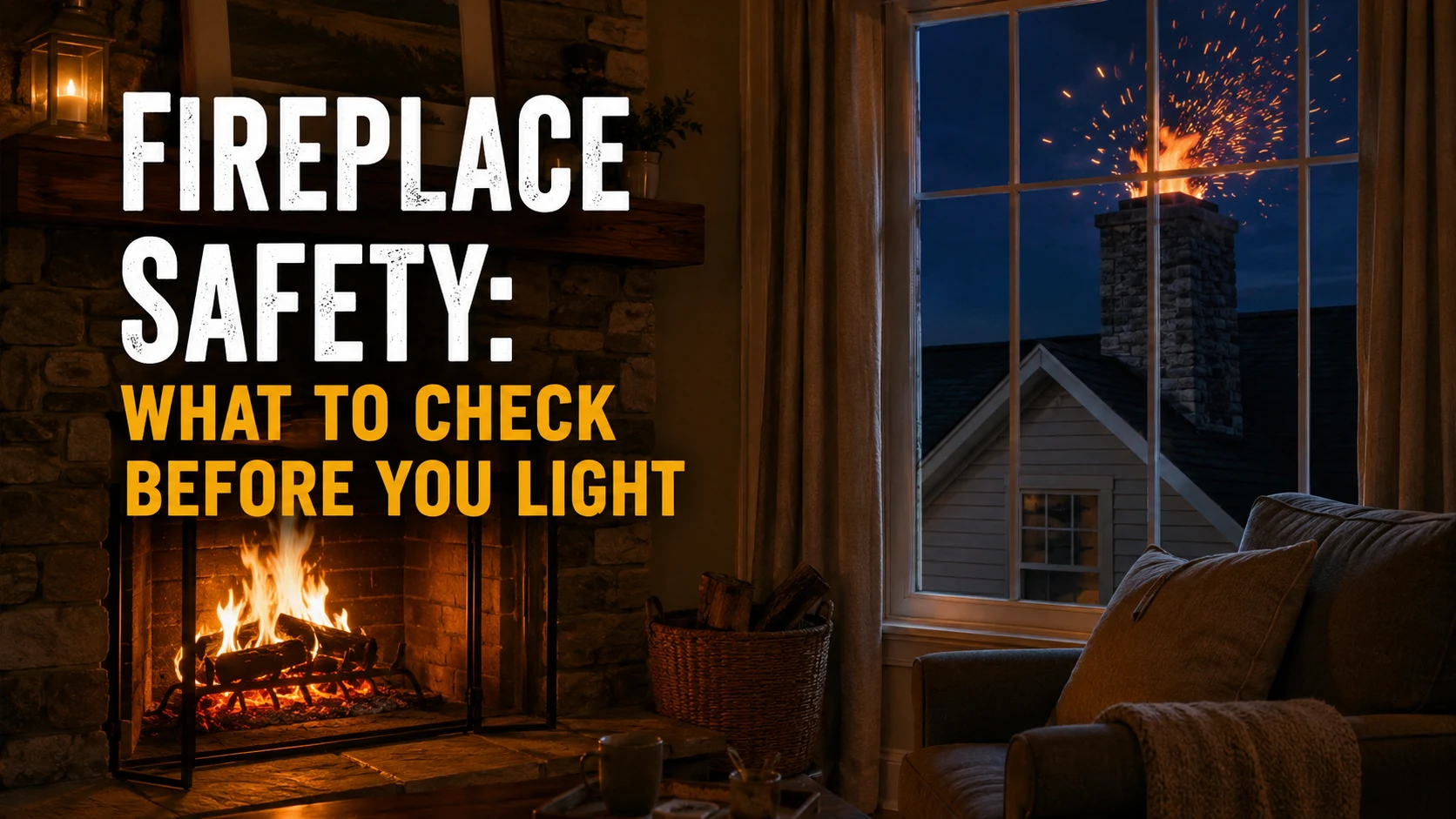
Every fall, the same pattern repeats: a family lights their first fire of the season in a fireplace that sat unused for eight months, and something goes wrong. A chimney fire from accumulated creosote. Carbon monoxide from a blocked flue. A spark on the carpet because the damper wasn't adjusted correctly. These are not freak accidents. They are the predictable result of skipping the inspection that should happen before the first burn of any season.
A fireplace used correctly is one of the safer things in a home. Used without maintenance, it is an open combustion device connected to an unmonitored flue system running through the interior structure of the building. The difference between those two descriptions is about 90 minutes of inspection and preparation, done once per year.
In this article:
- Before you light: the pre-season inspection
- Creosote: what it is and why it causes fires
- The damper: the one thing most people get wrong
- How to burn correctly to reduce risk
- If you have a chimney fire
- Gas fireplaces: different risks, same vigilance needed
- Signs to stop using your fireplace immediately
- Season checklist
Before You Light: The Pre-Season Inspection
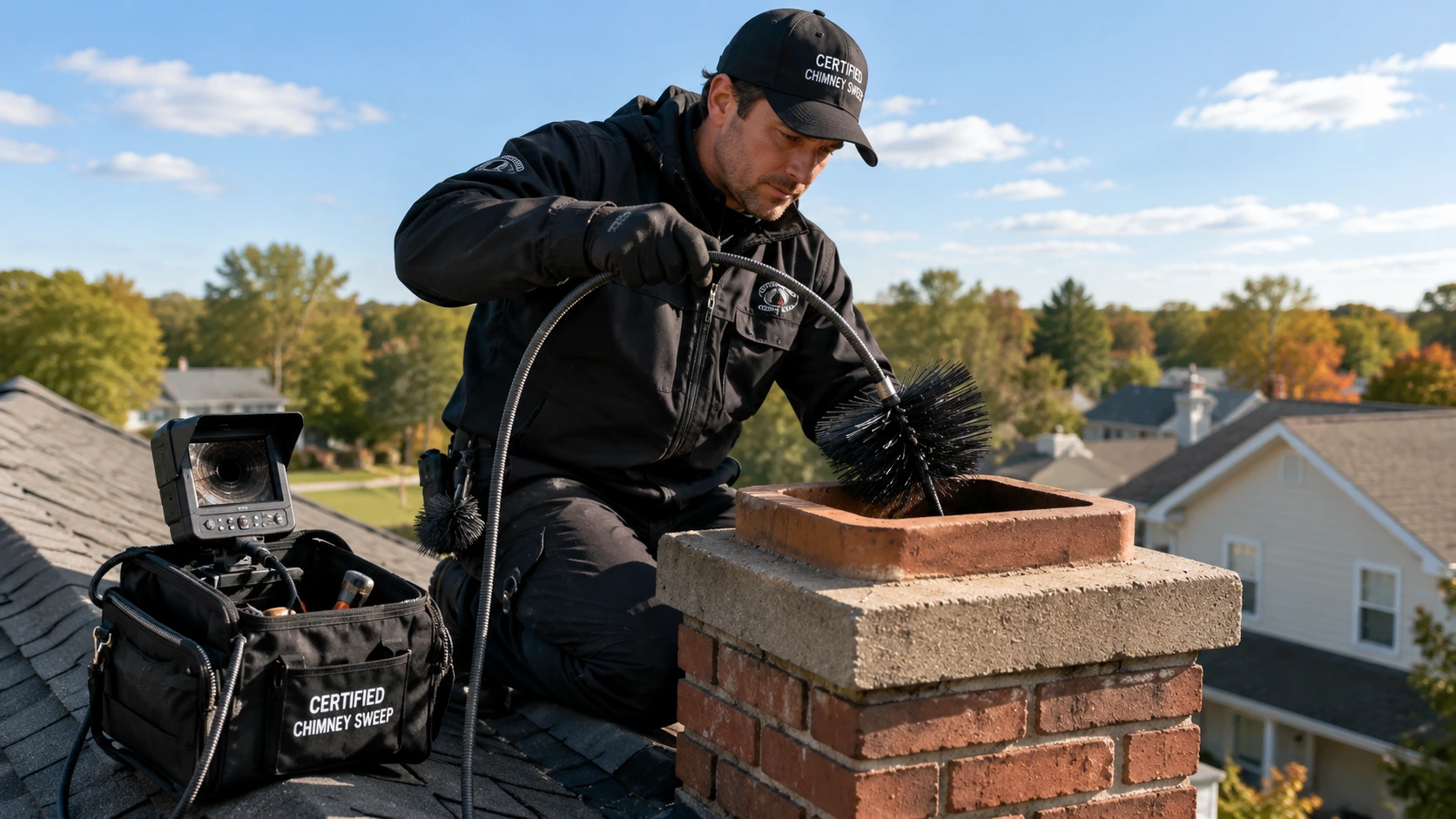
Before you use a fireplace that has not been used since last spring, these are the things that need to be checked — either by you or by a certified chimney professional:
The chimney cap and top
Animals build nests in chimneys over summer. Birds, squirrels, and raccoons find the protected top of an unused chimney to be excellent shelter. A nest blocking the flue prevents combustion gases from exhausting and sends carbon monoxide into the home. From outside or from a safe vantage point, verify the chimney cap is in place and undamaged. A missing or bent chimney cap is an open invitation for animals and debris. If you cannot see the top of the chimney clearly, a professional inspection is warranted.
The flue — from inside
Open the damper (more on the damper shortly) and use a flashlight to look up into the flue from inside the firebox. You are looking for: visible daylight at the top (good — means the flue is open), significant dark buildup on the flue walls (that is creosote — needs evaluation), any debris visible, and the general condition of the flue liner. You cannot see the full flue from the firebox, but you can identify obvious problems. If you see heavy black buildup, animal material, or debris that you cannot explain, do not use the fireplace until a professional has inspected it.
The damper
Open and close it. It should move freely and close completely. A damper that is stuck partially open wastes heat. A damper that will not close completely allows conditioned air to escape year-round. A damper that will not open fully restricts draft and causes smoke to enter the room. If the damper is difficult to move or does not seat properly when closed, have it serviced before use.
The firebox itself
Look at the interior walls of the firebox. Cracks in the refractory panels (the heat-resistant panels lining the firebox) allow heat to contact the surrounding structure. Hairline cracks are sometimes acceptable — significant cracks that go through the panel entirely are not. The firebox floor should be free of ash accumulation from last season beyond a thin layer (a small ash bed actually improves fire starting, but deep accumulated ash should be removed).
The hearth and surround
The hearth extension — the non-combustible floor area in front of the fireplace opening — must be clear of rugs, furniture, and combustibles. Check that the area within 36 inches in front of the fireplace opening is non-combustible. This is code requirement and operational necessity — embers and sparks land in this zone routinely.
Creosote: What It Is and Why It Starts Fires
Creosote is the residue that accumulates in chimneys from wood combustion. When wood burns, it produces smoke that contains water vapor, unburned wood particles, gases, and tar compounds. As this smoke rises through the flue and cools, some of it condenses on the flue walls — and the condensed residue is creosote. It accumulates with every fire.
Creosote comes in three stages of development, and they are not equally dangerous:
| Stage | Appearance | Risk Level | What To Do |
|---|---|---|---|
| Stage 1 | Flaky, sooty deposits — brushes off easily | Lower — standard annual cleaning handles this | Annual chimney sweep removes it routinely |
| Stage 2 | Tar-like, shiny, crunchy when dry — harder to remove | Higher — specialized chemical treatment needed | Professional chimney sweep with Stage 2 removal products |
| Stage 3 | Thick, hardened glaze — looks like black tar cement on the flue walls | Severe — highly ignitable, extremely difficult to remove | Professional evaluation; may require flue relining before safe use |
A chimney fire is usually a creosote fire — the accumulated creosote on the flue walls ignites and burns inside the chimney. When this happens, flue temperatures can exceed 2,000°F. Chimneys are not designed to contain a creosote fire. The intense heat can crack the flue liner, transfer through to adjacent combustible structure, and ignite the home from the inside. Many chimney fires go undetected while they are occurring — more on that below.
What produces more creosote
Slow, smoldering fires produce far more creosote than hot, clean-burning fires. Wet or unseasoned wood burns cooler and smokier than properly seasoned wood. Fires that are damped down too much to restrict airflow smolder and produce excessive creosote. The practice of letting a fire smolder overnight to retain some heat is one of the most effective ways to build up Stage 2 and 3 creosote quickly. A hot fire with dry, seasoned wood and adequate airflow is both safer and more efficient.
The Damper: The One Thing Most People Get Wrong
The damper is the adjustable plate inside the chimney throat that controls airflow. It should be fully open before lighting any fire and for the entire duration of burning. It should be fully closed after the fire is completely out and the ash is cold.
The most dangerous damper mistake is closing it too soon — while embers are still glowing or while the fire is not fully extinguished. A closed damper over glowing embers traps carbon monoxide that would otherwise exhaust up the flue. Carbon monoxide accumulates in the room. People go to sleep thinking the fire is out. CO poisoning during sleep is one of the documented causes of fireplace-related deaths.
The test before closing the damper: no visible glow anywhere in the ash bed, the ash feels cool when you hold your hand a few inches above it (do not touch it), and it has been at least 12 hours since the last piece of wood was added. When in doubt, leave the damper open until morning.
The other damper mistake is forgetting to open it before lighting. Smoke begins entering the room almost immediately. People sometimes try to troubleshoot this while the fire is growing instead of extinguishing it immediately and opening the damper. If your room fills with smoke: close the glass doors if you have them, do not try to smother the fire with water (thermal shock to the firebox), and open the damper first — if this does not resolve the problem, close the glass doors and address the fire from outside or call for help.
Never close the damper until the fire is completely out and the ash is cold. Close it too soon over glowing embers and you are directing carbon monoxide into your living space instead of up the chimney. The damper stays open until you are certain — not until it looks like it is out.
How to Burn Correctly to Reduce Risk
Use only seasoned firewood
Seasoned wood has been dried for at least six months to a year after cutting, reducing its moisture content from 50%+ green to 20% or below. Dry wood burns hotter, cleaner, and produces dramatically less creosote than wet wood. It also lights more easily and produces less smoke. If you knock two pieces together, seasoned wood sounds hollow. Green wood sounds like a thud. If in doubt, a wood moisture meter costs $15 at any hardware store.
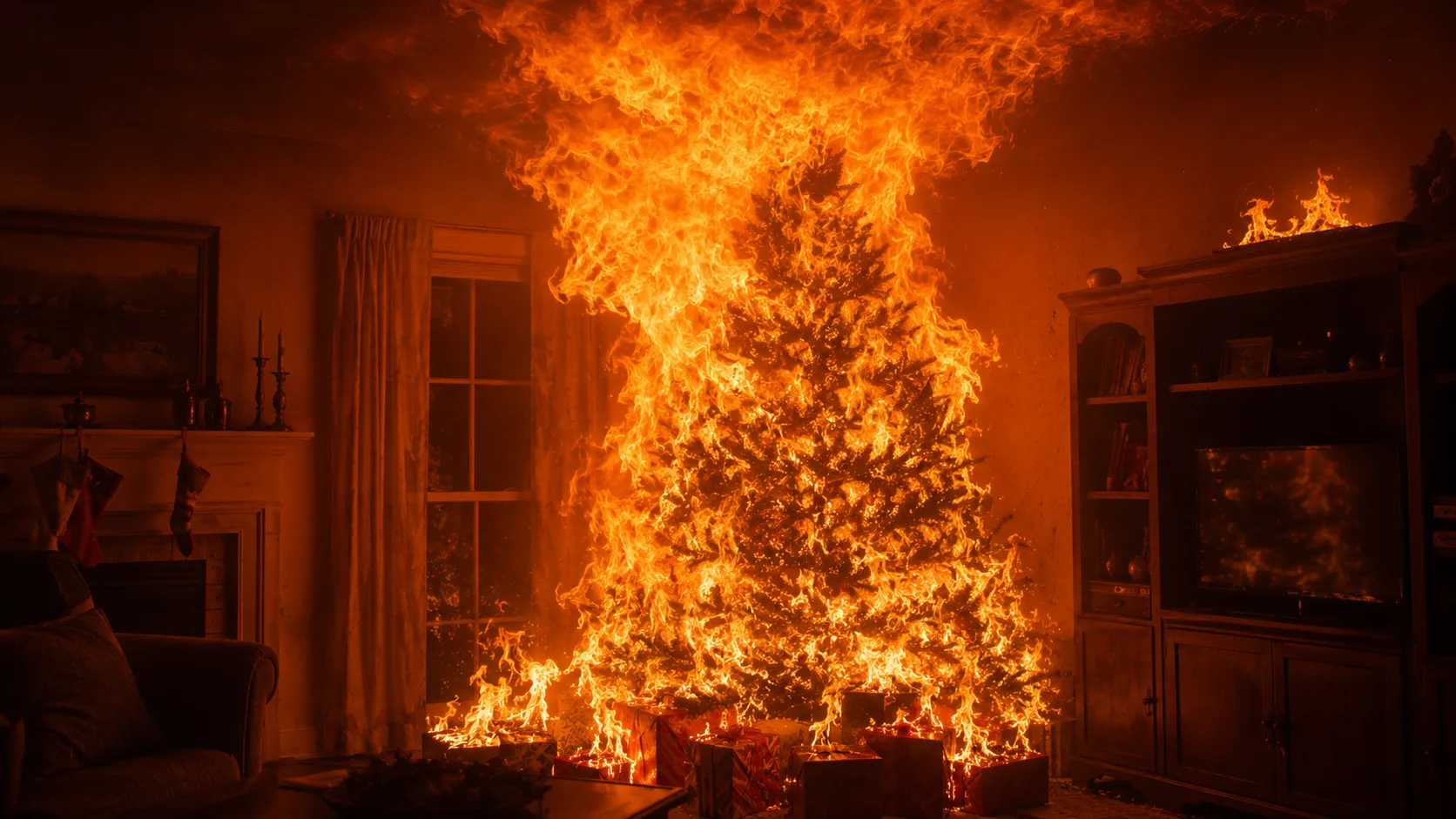
Never burn: treated lumber, painted wood, plywood or particleboard (adhesive binders produce toxic fumes), trash or cardboard (uncontrolled burn temperature), driftwood (salt content corrodes the flue), or Christmas trees (extremely resinous, produces sparks and intense creosote).
Build hot fires, not slow smoldering ones
A fire that burns hot with adequate air produces cleaner combustion and less creosote than one that smolders. Use the top-down fire building method: large logs on the bottom, medium logs across them, kindling on top, firestarter at the very top. The fire burns downward into progressively larger fuel, producing a hotter, cleaner burn than the traditional bottom-up method.
Use a fireplace screen or glass doors — not both open simultaneously
A wire mesh screen or glass doors prevent sparks and embers from reaching the room. Glass doors should be open during an active fire to allow adequate draft — they are closed after the fire is going and have established airflow, or they can be left cracked. A wire mesh screen works with or without glass doors and provides the critical spark protection during active burning. Never leave an active fire without a screen or closed glass doors between the fire and the room.
If You Have a Chimney Fire
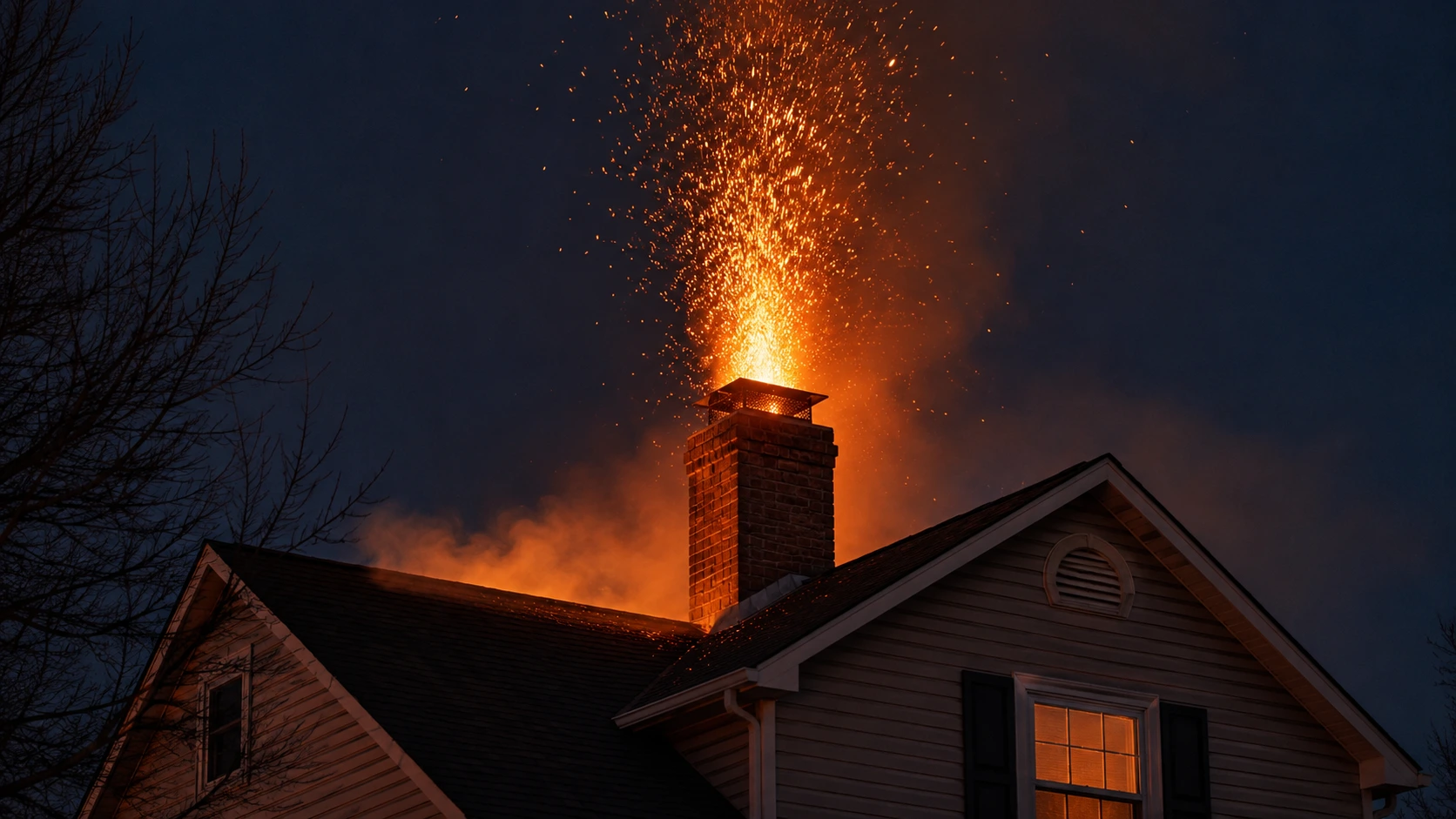
Chimney fires can be dramatic — you hear a roar, the chimney sounds like a jet engine, sparks shoot from the chimney top — or they can be almost silent, detectable only by a slight roaring or crackling in the flue and an unusual glow visible when you look up through the damper.
If you suspect a chimney fire:
- Get everyone out of the house immediately. Call 911 from outside.
- Close the glass doors or screen if you can do so safely from a distance — reducing air to the firebox may reduce the fuel supply to the chimney fire above.
- Close the damper if it is accessible and you can reach it without putting your face near the firebox. This also restricts air to the chimney fire. Do not reach into a firebox with an active chimney fire above it.
- Do not use water in the firebox — thermal shock can crack the firebox structure and the cold water steam can force smoke and gases into the room.
- Even if the chimney fire appears to self-extinguish, the chimney must be inspected by a professional before the fireplace is used again. A chimney fire that appears to go out may have cracked the liner and transferred heat to adjacent structure.
Gas Fireplaces: Different Risks, Same Vigilance
Gas fireplaces — both vented and ventless — are generally considered lower maintenance than wood-burning fireplaces, and they are. But they are not maintenance-free, and they have specific risks that wood-burning fireplaces do not.
Vented gas fireplaces
Vented gas fireplaces exhaust combustion gases through a dedicated vent to the exterior, similar to a wood fireplace. The flue still needs annual inspection — not for creosote, but for blockages, animal nesting, and vent seal integrity. A blocked vent on a gas fireplace sends carbon monoxide into the home just as reliably as a blocked chimney does on a wood fireplace. Annual inspection is not optional.
Ventless (vent-free) gas fireplaces
Ventless gas fireplaces exhaust combustion gases directly into the room, relying on oxygen sensors to shut off if CO or oxygen levels reach unsafe thresholds. This design works when the fireplace is properly maintained and the room has adequate volume and ventilation. It fails — gradually — when the oxygen sensor degrades, when the room is very small or tightly sealed, or when the fireplace is used for extended periods. Ventless fireplaces are banned in some states and restricted in others for exactly this reason. If you have a ventless gas fireplace, have it serviced annually, run a CO detector in the room where it operates, and limit continuous burn time per the manufacturer's rating.
Signs to Stop Using Your Fireplace Immediately
- Smoke enters the room when the fire is established and the damper is fully open. This indicates a blocked flue, a reversed draft, or a flue that does not create adequate draw for the fireplace opening size. Have it inspected before using it again.
- You see cracks in the firebox liner panels that go completely through the panel. Through-cracks allow heat to contact adjacent structure. Do not use until repaired.
- You smell something burning outside the firebox area when the fire is going. Heat transferring into wall structure has a distinctive smell. Stop the fire and have the fireplace and adjacent structure inspected.
- Smoke alarm activates repeatedly when the fireplace is in use with a properly open damper. Something is wrong with the draft or flue. Investigate before using again.
- CO alarm activates when the fireplace is in use. Immediate evacuation and 911. Do not reset the alarm and continue using.
- Any roaring, rumbling, or unusual noise from the chimney. May indicate a chimney fire or severely restricted flue. Stop the fire if safely possible and call 911.
Season Checklist
- ✓Annual chimney inspection and sweep — before first use of the season. Certified chimney professional (CSIA certified in the U.S.).
- ✓Chimney cap inspected — in place, undamaged, no animal evidence.
- ✓Damper tested — opens and closes fully and freely.
- ✓Firebox liner panels inspected — no through-cracks.
- ✓Hearth clear — 36 inches of non-combustible space in front of the opening.
- ✓Screen or glass doors in place and functional.
- ✓Seasoned firewood only — moisture content 20% or below.
- ✓CO detector in the room — working, battery current.
- ✓Never close the damper until ash is completely cold — minimum 12 hours after last fuel added.
- ✓Never leave an active fire unattended — screen or glass doors close when you leave the room.
- ✗Never burn treated wood, painted wood, trash, cardboard, or Christmas trees.
- ✗Never close the damper over glowing embers.
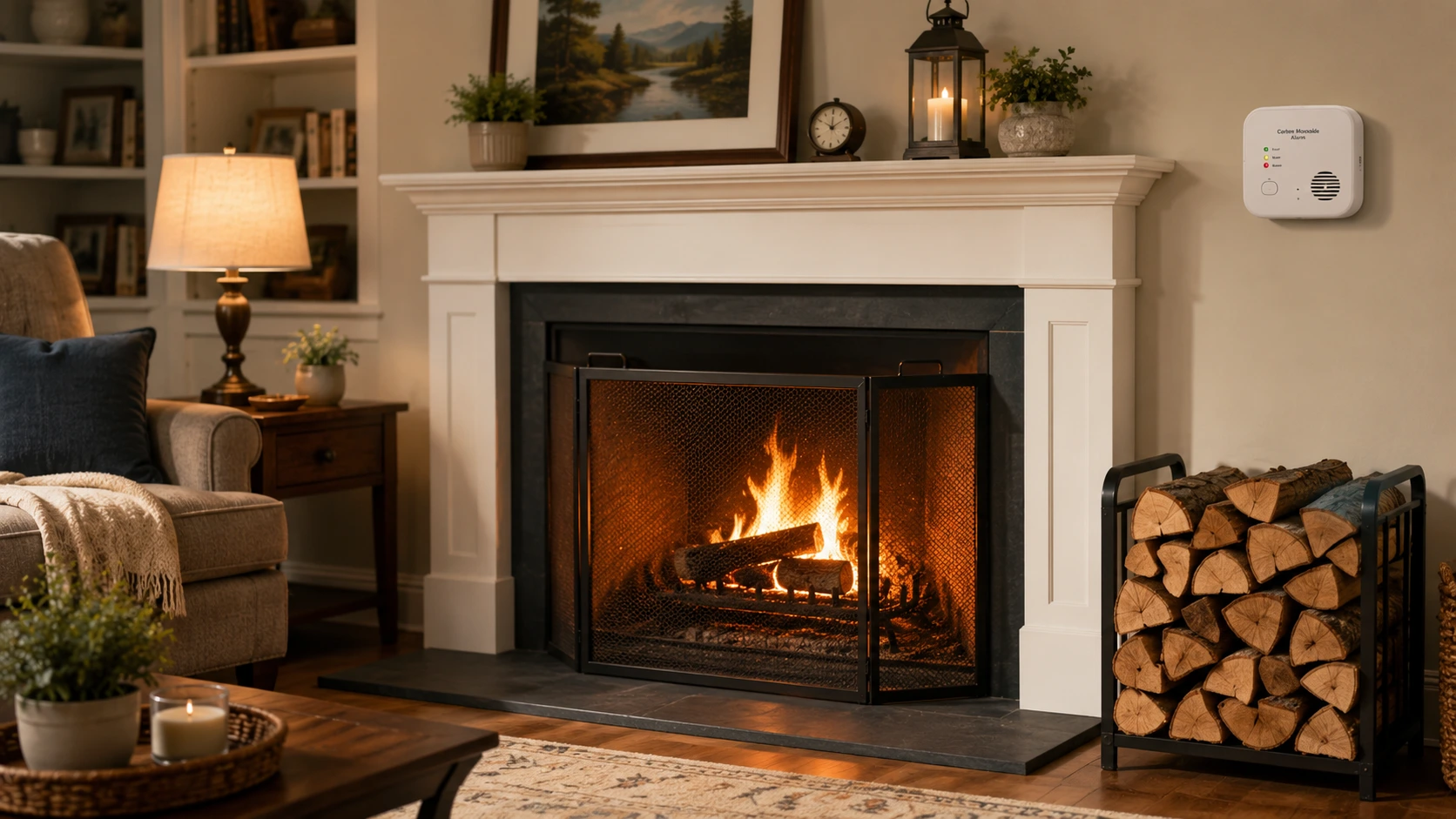
A fireplace used correctly provides warmth, ambiance, and a real comfort that is worth having. The inspections and habits that keep it safe are not onerous — they are an hour of work before the season and a few habits during use. Skip the inspection one year and the worst case is a chimney fire in October with the season's first fire. Do it annually and you are using one of the older technologies in home heating the way it was meant to be used.
Comments 0
No comments yet. Be the first to share your thoughts!
Leave a Comment