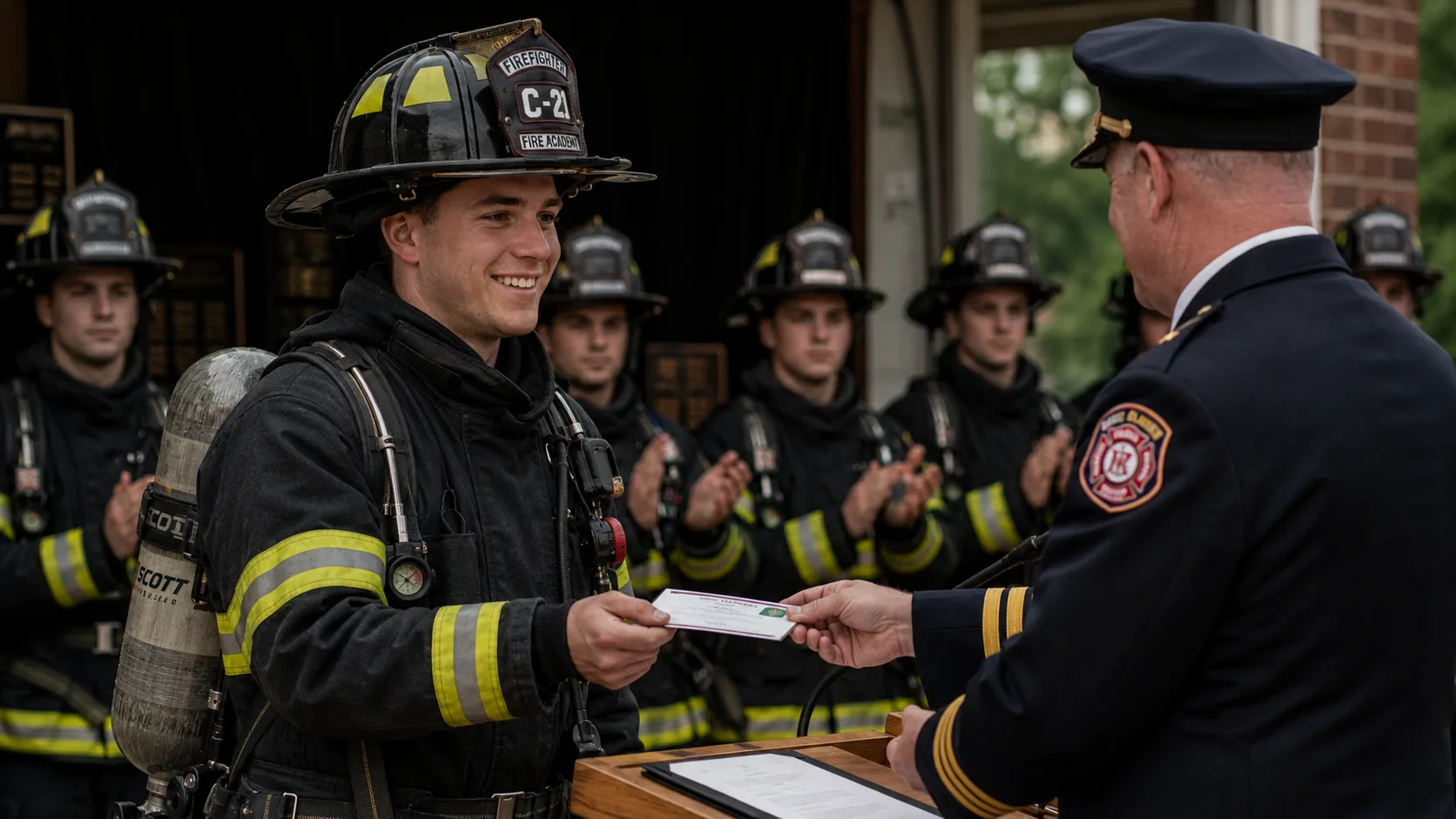
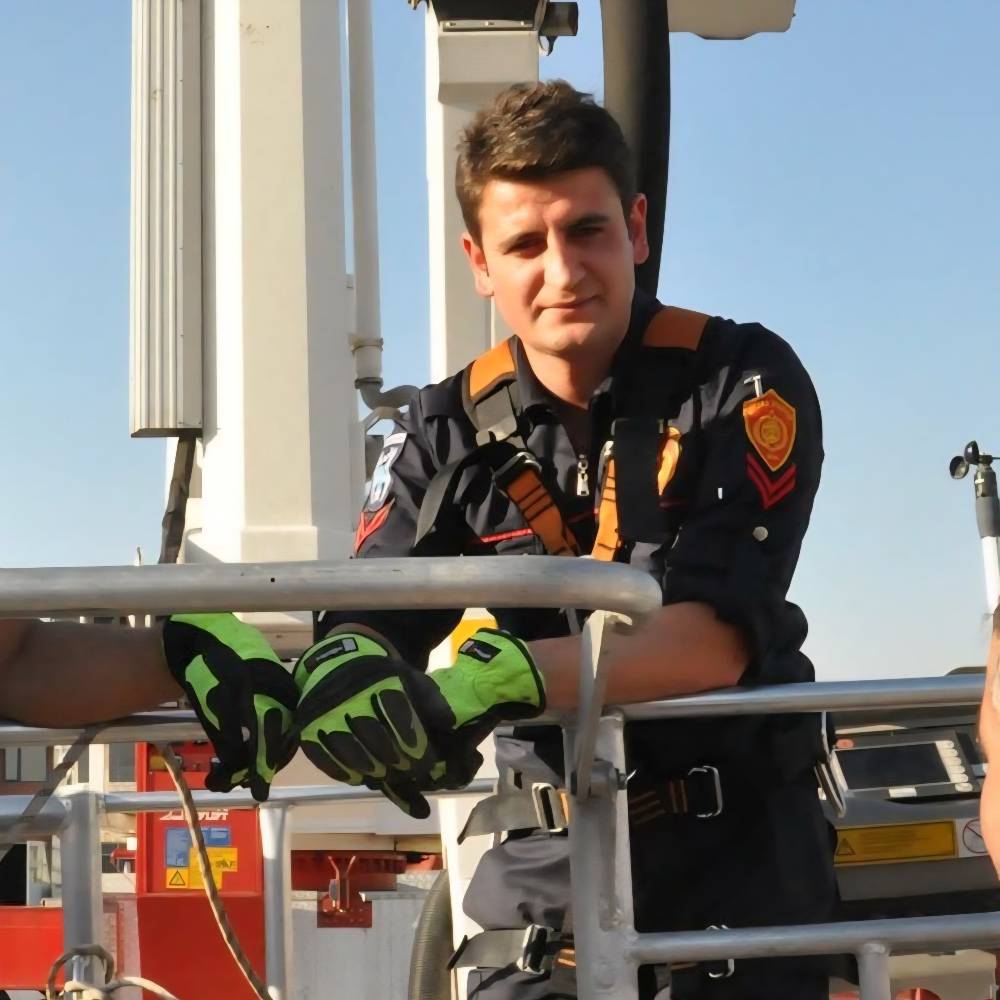
A lot of people who want to become firefighters spend months preparing for the wrong thing. They train for a physical test that is not what their target department uses, study a certification exam that does not apply in their state, or apply to departments before they have the prerequisites those departments require. The firefighter certification landscape in the U.S. is genuinely fragmented — what is required in Texas differs from what is required in California, and what a career department requires differs from what a volunteer company requires.
This is the actual breakdown of what firefighter certification involves, what NFPA 1001 is and what it is not, how the CPAT physical test works, and what the path from zero to hired looks like for most applicants.
In this article:
- What NFPA 1001 actually is
- Firefighter I vs. Firefighter II: what each level covers
- The CPAT: what the physical test involves
- Fire academy: length, structure, and what to expect
- The EMT requirement most departments don't advertise upfront
- How state requirements differ
- Volunteer vs. career certification paths
- Certification vs. hiring: these are two separate processes
- How to actually get started
What NFPA 1001 Actually Is
NFPA 1001 is not a test. It is a standard — a document published by the National Fire Protection Association that defines the minimum job performance requirements for firefighters at two levels. The standard specifies what a firefighter must be able to do: the skills, the knowledge, the tasks. It does not administer a test, issue a certification, or have any direct contact with individual firefighters.
What states and certification bodies do is build their firefighter certification exams and skills evaluations around NFPA 1001. When a department says they require "NFPA 1001 Firefighter I and II certification," they mean they require a state-issued certification that was developed to meet the standards laid out in NFPA 1001. The certification comes from the state fire marshal's office or an equivalent certifying body — not from NFPA directly.
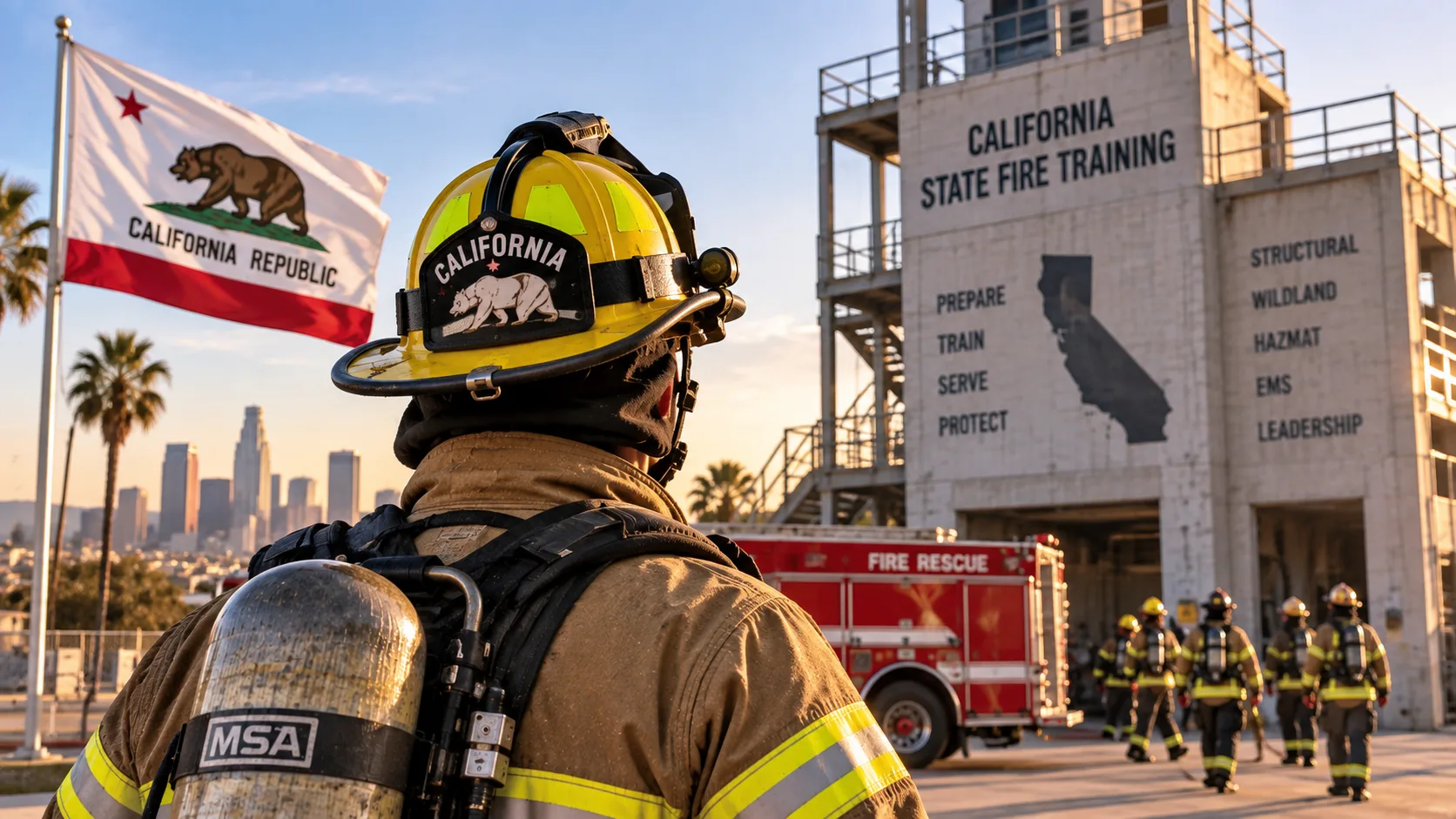
This distinction matters because it explains why certifications do not automatically transfer between states. California's firefighter certification is based on California's implementation of NFPA 1001 standards. Texas has its own. If you hold a Texas Firefighter certification and move to California, you may need to complete California-specific requirements before your certification is recognized — even if the underlying skill sets are essentially the same.
Firefighter I vs. Firefighter II: What Each Level Covers
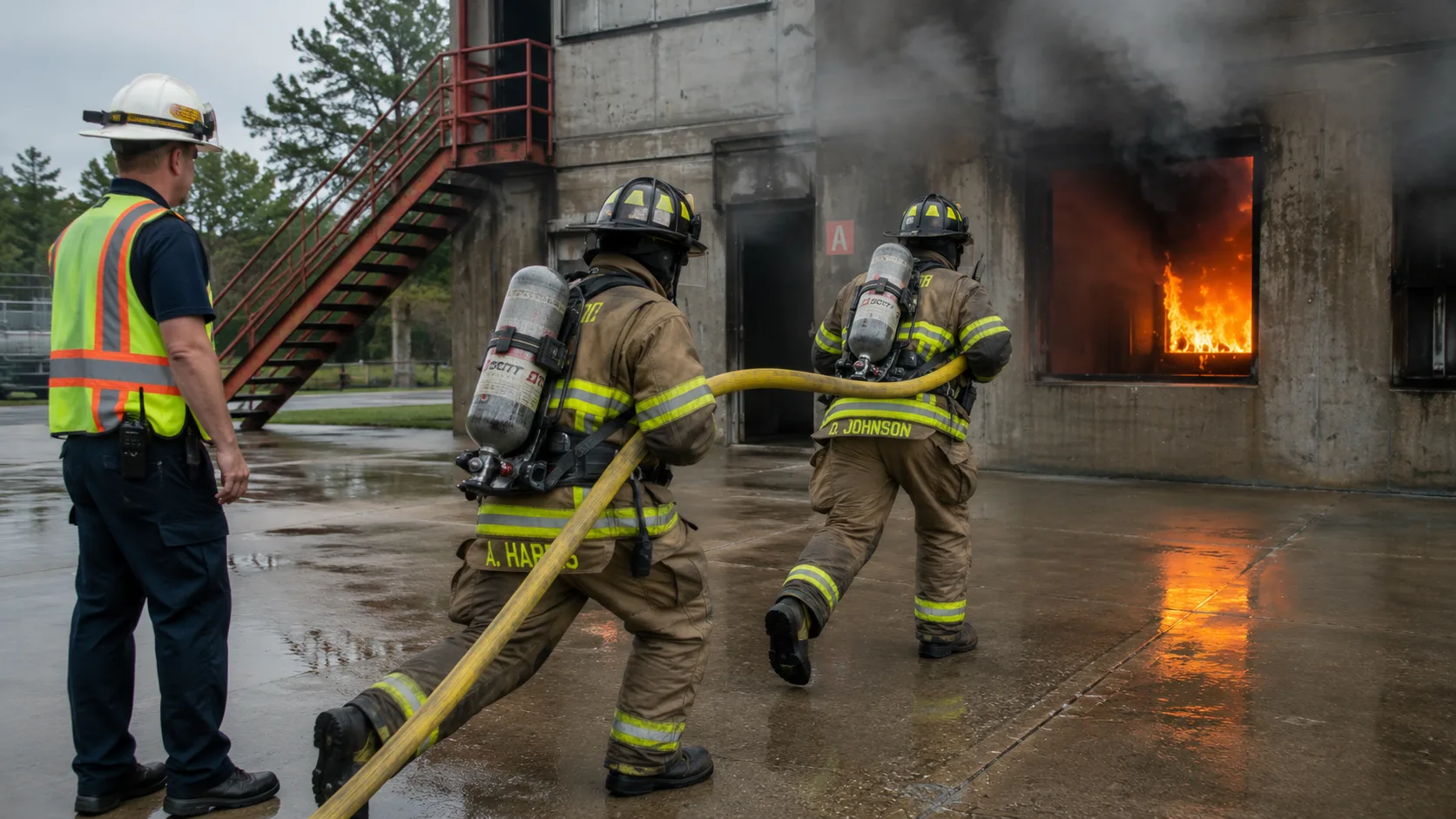
NFPA 1001 is divided into two levels, each building on the previous. Most career departments require both. Many volunteer departments start with Firefighter I alone.
Firefighter I
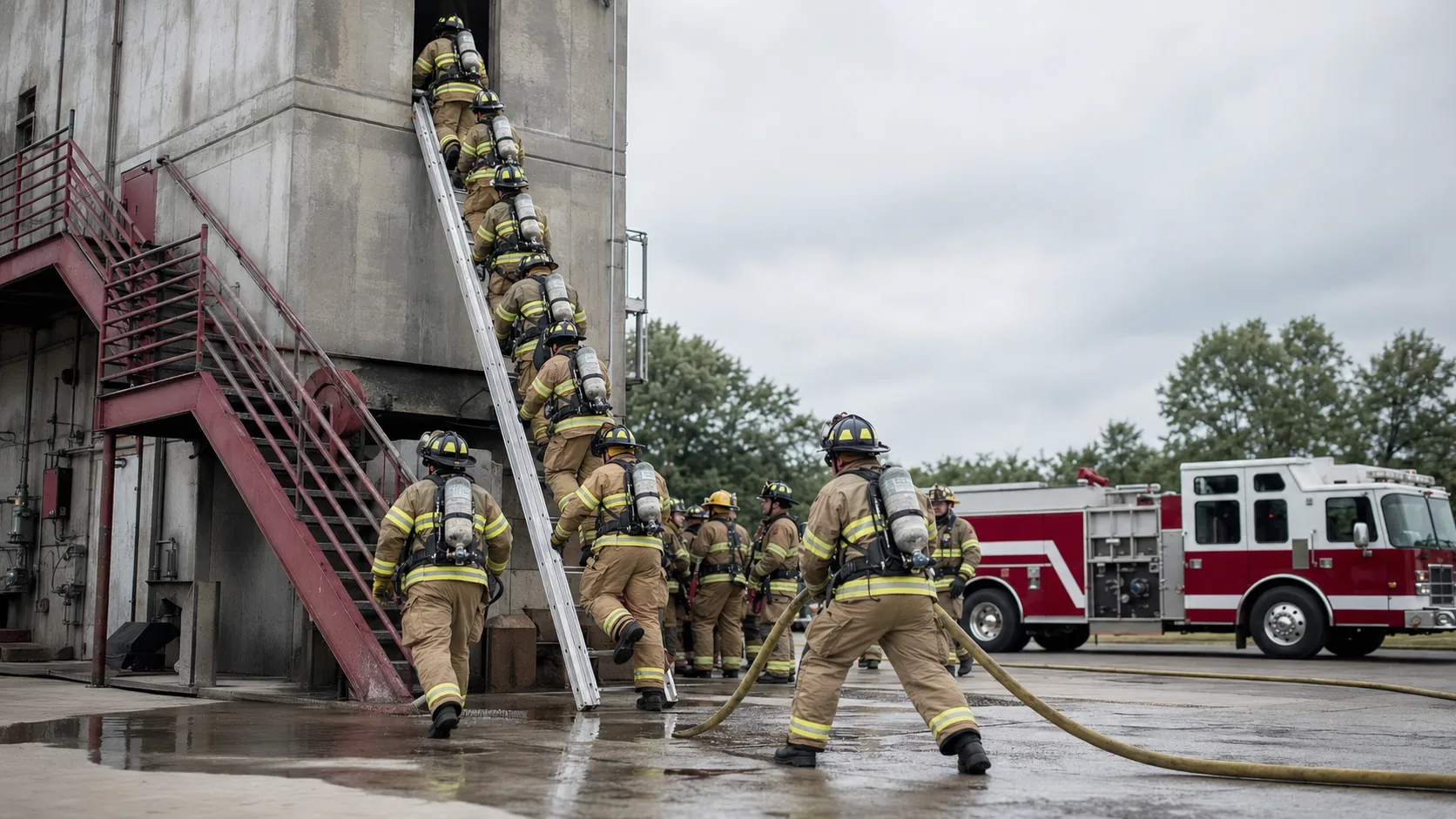
The entry level. Firefighter I covers the fundamental operational skills: SCBA donning and operation, hose advancement and nozzle technique, search and rescue in a structure, ladder operations, basic ventilation, forcible entry, and emergency egress. The written component covers fire behavior, building construction as it relates to fire spread and collapse, fire department communications, and incident command basics. A Firefighter I certification qualifies someone to operate under direct supervision as part of a crew on a fireground — they are not operating independently, they are working as a member of a team under an officer.
Firefighter II
The second level adds skills that require more independent judgment and broader operational understanding. Firefighter II covers incident command responsibilities at a basic level, pre-fire planning, public fire education, inspection fundamentals, and advanced rescue techniques. The written exam goes deeper into hazardous materials response, fire investigation basics, and department administration. A Firefighter II can serve as a crew leader for basic operations and is the standard entry-level certification for most career departments in the U.S.
The CPAT: What the Physical Test Involves
The Candidate Physical Ability Test is the standardized physical fitness assessment used by a large number of career fire departments across the U.S. It was developed through a joint labor-management effort between the International Association of Fire Fighters and the International Association of Fire Chiefs, and it is designed to simulate the physical demands of fireground work rather than measure general athletic ability.
The CPAT consists of eight events performed continuously with a 20-minute time limit, wearing a 50-pound weighted vest throughout:
- Stair climb: 3 minutes on a StepMill machine at a set pace, wearing an additional 25-pound simulated hose pack. This is the event that eliminates the most unprepared candidates.
- Hose drag: Drag an uncharged 1¾-inch hose line 75 feet, make a 90-degree turn around a drum, then pull the hose an additional 40 feet while dropping to one knee.
- Equipment carry: Remove two saws from a cabinet at shoulder height, carry them 75 feet and return.
- Ladder raise and extension: Raise a 24-foot ladder from the ground and heel it against the wall; extend a separate ladder to full height.
- Forcible entry: Strike a measuring device with a sledgehammer until it reaches a target mark — simulating door or wall breach.
- Search: Crawl through a dark, winding tunnel with obstacles, including a reduced-clearance section requiring a 90-degree turn.
- Rescue drag: Drag a 165-pound mannequin 35 feet, make a 180-degree turn, and drag it back 35 feet.
- Ceiling breach and pull: Use a pike pole to push a 60-pound hinged door overhead three times, then hook and pull the door down three times — repeated five times.
The CPAT is pass/fail with a single time limit. There are no points for finishing faster — you either complete all events within 10:20 (the original time standard used by most departments) or you do not pass. Preparation requires at minimum 8 to 12 weeks of specific training targeting the stair climb, the rescue drag, and the ceiling pull — the events most candidates underestimate.
Not every department uses the CPAT. Some run their own physical ability tests with different events and standards. Before training specifically for the CPAT, confirm which test your target department administers. Preparing for the wrong test is a common and avoidable mistake.
Fire Academy: Length, Structure, and What to Expect
Fire academies vary in structure depending on whether they are department-run recruit academies (you are already hired and attending as an employee) or regional training center academies (you attend before being hired, at your own expense, to obtain certification). The distinction matters because the experience and cost are completely different.
Pre-employment academies
These are run by community colleges, regional fire training centers, and some vocational programs. You attend before applying to a department, pay tuition (typically $2,000 to $8,000 depending on the program and state), and leave with a Firefighter I and II certification. The program typically runs 12 to 20 weeks of part-time or full-time instruction covering roughly 300 to 600 hours of curriculum. You are not paid during attendance. The certification you receive makes you competitive for hiring — it does not guarantee a job.
Recruit academies
These are run by departments after you are hired. You are an employee, you are paid, and the department covers the cost of training. Recruit academies are typically full-time, 12 to 24 weeks in length, and significantly more intensive than pre-employment programs. Physical standards, attendance requirements, and performance standards are strict — recruits are typically on probation during the academy and can be released for failing to meet any standard. The academy covers everything in NFPA 1001 plus department-specific policies, equipment, and procedures.
The EMT Requirement Most Departments Don't Advertise Upfront
The majority of career fire departments in the U.S. now require Emergency Medical Technician certification at the time of hire — or require it to be obtained within a specified period after hire. This requirement is often buried in the fine print of job announcements that lead with firefighter certification requirements. Many applicants find out late in the process that they need EMT certification, adding six months to their timeline.
An EMT-Basic certification requires approximately 120 to 150 hours of classroom and clinical training, culminating in a state written exam and a practical skills evaluation. The course covers patient assessment, airway management, CPR, bleeding control, shock management, and emergency childbirth among other topics. Community colleges and vocational programs offer EMT courses, typically over one semester.
Some departments require Paramedic certification — a significantly longer commitment of 1,200 to 1,800 hours of training beyond EMT — for certain positions or for promotion. Most entry-level positions require EMT-Basic, not Paramedic, but confirming the requirement for each specific department before applying saves significant time.
How State Requirements Differ
| State approach | What it means for you |
|---|---|
| State certification required (majority of states) | You must hold a state-issued firefighter certification to be hired by any career department in the state. Certifications from other states may or may not be reciprocated — check with the state fire marshal's office. |
| NFPA 1001 equivalency accepted | Some states accept proof of completing an NFPA 1001-compliant program from any accredited provider, without requiring a state-specific exam. Easier for candidates with out-of-state training. |
| Department-administered certification | A small number of states allow larger departments to certify their own recruits. Certification may not transfer to other departments in the state without additional testing. |
| No state-level certification requirement | Rare. Individual departments set their own minimum standards. May accept NFPA 1001 certification from any accredited provider or run their own assessment. |
The practical implication: research your specific target state and, ideally, your specific target department before investing in any certification program. Call the department's recruitment office. Ask what certifications they accept, whether they reciprocate out-of-state certifications, and whether they run their own recruit academy or require pre-hire certification. Twenty minutes on the phone saves months of wasted preparation.
Volunteer vs. Career Certification Paths
Volunteer fire departments have widely varying certification requirements. Some require full NFPA 1001 Firefighter I and II certification before a volunteer can participate in interior structural firefighting. Others allow new members to begin training immediately and obtain certification over a period of months or years while serving. Some rural volunteer departments operate with minimal formal certification due to workforce constraints.
For someone who wants a career in the fire service but is starting from zero, volunteering is the most valuable thing they can do while working toward certification. The practical experience — riding apparatus, working alongside career firefighters, understanding how fireground operations work in real time — is not replicable in a classroom. Many career firefighters hired by major departments had years of volunteer experience that distinguished their applications from candidates with equivalent certifications but no real-world exposure.
The path for most career-track candidates: get your EMT certification first (it is a prerequisite for many fire academy programs and a hiring requirement anyway), then complete Firefighter I and II certification through a pre-employment academy, volunteer with a local department during or after certification, then begin applying to career departments with both certifications and documented field experience.
Certification vs. Hiring: These Are Two Separate Processes
This is the part that surprises most people approaching the fire service for the first time. Certification — holding a valid Firefighter I and II certificate — does not result in employment. Certification makes you eligible to apply. The hiring process is separate, competitive, and frequently slow.
Career departments hire when there are openings, which may be once every few years in smaller departments. The hiring process typically includes a written exam (separate from the certification exam), physical ability testing, oral interview panels, background investigation, polygraph examination in some departments, psychological evaluation, and a medical examination. The process can take six months to a year from application to offer letter, and many departments maintain eligibility lists from which they hire for multiple years.
The average time from starting the certification process to receiving a first career offer — for candidates who are actively pursuing it — is two to five years. This is not a discouragement. It is information that should shape how candidates plan their path: maintain employment in a related field (EMS, hospital work, fire prevention), keep certifications current, continue volunteering, and apply broadly rather than targeting a single department.
How to Actually Get Started
- ✓Contact two or three target departments directly — ask what certifications they require for entry-level hiring and whether they use the CPAT or their own physical test.
- ✓Check your state fire marshal's website — most publish the specific certification requirements and a list of approved training providers.
- ✓Enroll in EMT-Basic — community college programs run every semester, cost $800 to $1,500, and are the most commonly overlooked prerequisite.
- ✓Find a pre-employment fire academy — look for programs accredited by your state certifying body, not just any course advertising firefighter training.
- ✓Begin CPAT-specific physical training now — 8 to 12 weeks minimum, focused specifically on the stair climb and weighted vest events.
- ✓Contact a local volunteer department — apply before you have any certification. Most will accept you as a probationary member and train you while you complete formal certification.
- ✗Do not pay for an NFPA 1001 certification course that is not approved by your state certifying body — it may not be accepted.
- ✗Do not assume CPAT training is just "getting in shape" — the specific events require specific preparation.

Comments 0
No comments yet. Be the first to share your thoughts!
Leave a Comment