
Firefighter EMT vs. Paramedic Certification: Which Do You Need and When to Get It
Most career fire departments now require EMS certification for hire or within the first 12–18 months on the job. The question is whether you need EMT-Basic or Paramedic — and when getting the higher certification pays off versus when it is not worth the investment before you have a job offer. This guide explains both certifications, what fire departments actually require, and how to make the call for your situation.
Jump to:EMT vs paramedic overview · What departments require · EMT-Basic path · Paramedic path · Impact on pay · When to upgrade to paramedic · NREMT certification · FAQ
EMT-Basic vs. Paramedic: Core Differences
| EMT-Basic (EMT-B) | Advanced EMT (AEMT) | Paramedic (EMT-P) | |
|---|---|---|---|
| Training hours | 120–150 hours | 200–300 hours | 1,200–1,800+ hours |
| Duration | 3–5 months part-time | 6–12 months | 12–24 months |
| IV access | No | Yes (peripheral) | Yes (multiple types) |
| Medications | Limited (epinephrine, aspirin, oxygen, naloxone in most states) | Expanded (IV fluids, limited IV meds) | Full ALS formulary (30–50+ medications) |
| Intubation | No (BVM only) | No (BVM + supraglottic) | Yes (endotracheal) |
| 12-lead EKG | No | No | Yes (acquire, interpret, transmit) |
| Chest decompression | No | No | Yes |
| Scope of practice | BLS only | Intermediate ALS | Full ALS |
What Fire Departments Actually Require in 2026
Requirements vary more than most people expect. Here is how the majority of career departments in the U.S. break down:
| Requirement tier | What it means | Approximate share of career depts. |
|---|---|---|
| EMT-B required at hire | You must hold current EMT-Basic certification before your application is accepted | ~50% |
| EMT-B required within 18 months | Hired as a probationary firefighter, must obtain EMT within the first year or 18 months | ~25% |
| Paramedic required or strongly preferred at hire | Department runs ALS fire-based EMS; EMT alone may not qualify you for the position | ~15% |
| No EMS requirement | Department uses third-party EMS transport; fire companies are not medic units | ~10% |
Always verify with the specific department's job posting. Requirements change as departments transition to fire-based ALS models. A department that required only EMT-B three years ago may now require paramedic for new hires in 2026.
The EMT-Basic Path: Right for Most Entry-Level Candidates
For most candidates applying for the first time, EMT-Basic is the right call because:
- It meets requirements at the majority of career departments
- 120–150 hours of training fits alongside CPAT prep and written exam study
- Cost is $600–$1,500 at most community colleges vs. $10,000–$20,000+ for paramedic programs
- You can upgrade to paramedic on your department's dime once you are hired (many departments offer sponsored paramedic programs)
Find an EMT-Basic program at your local community college or fire academy. After completing the didactic and clinical hours, pass the NREMT Cognitive Exam and the NREMT Skills Evaluation to earn National Registry certification.
Strategic note:Getting your EMT-B before applying gives you preference points at most departments. Getting your paramedic before you are hired is only worth the investment if the specific department you are targeting requires it at hire — or if you want to skip the queue for departments that preferentially hire medics.
The Paramedic Path: When It Makes Sense Before Hire
Getting your paramedic before being hired makes sense in specific situations:
- Target department requires paramedic at hire. Check their specific job announcement. Some large urban departments (Los Angeles, Houston, Dallas, Phoenix) require or strongly prefer paramedics for all new hires because they run fire-based ALS transport.
- You want to significantly reduce competition. In large metro markets with thousands of applicants, paramedic certification gives you a substantial edge. The number of candidates with paramedic certification is much smaller than EMT-B holders.
- You are already working as an EMT or AEMT and paramedic is the logical next step in your EMS career while you are in the fire hiring queue.
- The department offers a significant paramedic incentive pay. See pay impact section below.
Paramedic programs run 1,200–1,800+ hours and typically require 12–24 months to complete. They include substantial clinical rotations in emergency departments, ICUs, and on ALS ambulances. Prerequisites typically include current EMT-B certification and often 6–12 months of active EMS field experience.
Impact of EMS Certification on Firefighter Pay
EMS certification affects firefighter pay in two ways: preference points at hiring, and ongoing specialty pay after hire.
| Incentive type | EMT-B | Paramedic |
|---|---|---|
| Hiring preference points | Common (1–5% added to final score) | Higher (3–10% at departments that prefer medics) |
| Ongoing specialty stipend | $0–$2,000/year at some departments | $3,000–$12,000+/year at ALS departments |
| Assignment eligibility | BLS engine or medic unit (BLS role) | Medic unit ALS certification; higher-demand assignments |
| Promotion advantage | Neutral at most departments | Helpful at ALS-heavy departments for Captain and above |
At departments with active fire-based ALS programs, paramedic certification can add $5,000–$12,000/year in specialty pay on top of base salary. See the Salary Comparison Tool for state-by-state context.
When to Upgrade from EMT to Paramedic
Most firefighters who start with EMT-B upgrade to paramedic at one of three points:
- Sponsored by the department — many departments pay for paramedic training and time off for clinical rotations after 1–3 years of service. This is the best scenario: zero cost, paid during training, and immediate assignment upgrade upon completion.
- During probation — if the department requires paramedic within a defined timeframe after hire, you complete it on your own during the early years. Some departments offer scheduling accommodations.
- Voluntarily before applying to a higher-tier department — if you are working at a smaller department and want to move to a large ALS-heavy department, getting your paramedic during your first 2–3 years positions you competitively for lateral transfers.
NREMT Certification: National vs. State
The National Registry of EMTs (NREMT) administers national certification for all four EMS levels. National Registry certification is the portable standard:
- Most states accept NREMT certification directly or use it as the pathway to state licensure
- NREMT certification must be renewed every 2 years (25 continuing education hours for EMT-B; 30+ for paramedic)
- Some states (California, Texas, New York, others) have their own state licensure systems that may differ from NREMT in some respects. Check your target state's EMS licensing requirements.
- When you move states, having NREMT certification simplifies reciprocity — most states license NREMT holders faster than out-of-state license holders
Frequently Asked Questions
Should I get my EMT or paramedic before applying to fire departments?
Get your EMT-Basic before applying in most situations. It meets requirements at the majority of career departments, takes 3–5 months, and is significantly cheaper than paramedic training. Get your paramedic first only if the specific department you are targeting requires it at hire, or if you want the competitive edge at a large ALS-heavy metro department.
Will departments pay for paramedic training?
Many do. Departments with active ALS programs routinely sponsor paramedic training for firefighters after 1–3 years of service, including paid time off for clinical rotations. This is one of the best reasons to start with EMT-B and upgrade after hire rather than before.
How long does EMT certification take?
EMT-Basic programs typically run 3–5 months part-time (120–150 hours). Accelerated programs can be completed in 8–10 weeks. After completing the course, you must pass the NREMT Cognitive Exam and Skills Evaluation to receive national certification.
How long does paramedic training take?
Paramedic programs typically run 12–24 months (1,200–1,800+ hours) including didactic coursework, lab skills, and clinical rotations. Most programs require you to have current EMT-B certification and some programs require 6–12 months of active field EMS experience as a prerequisite.
Is paramedic certification the same in every state?
Scope of practice varies by state. NREMT certification is portable and is the national standard, but your actual scope of practice on the job is determined by state law and your medical director's protocols, not your NREMT certification level alone.
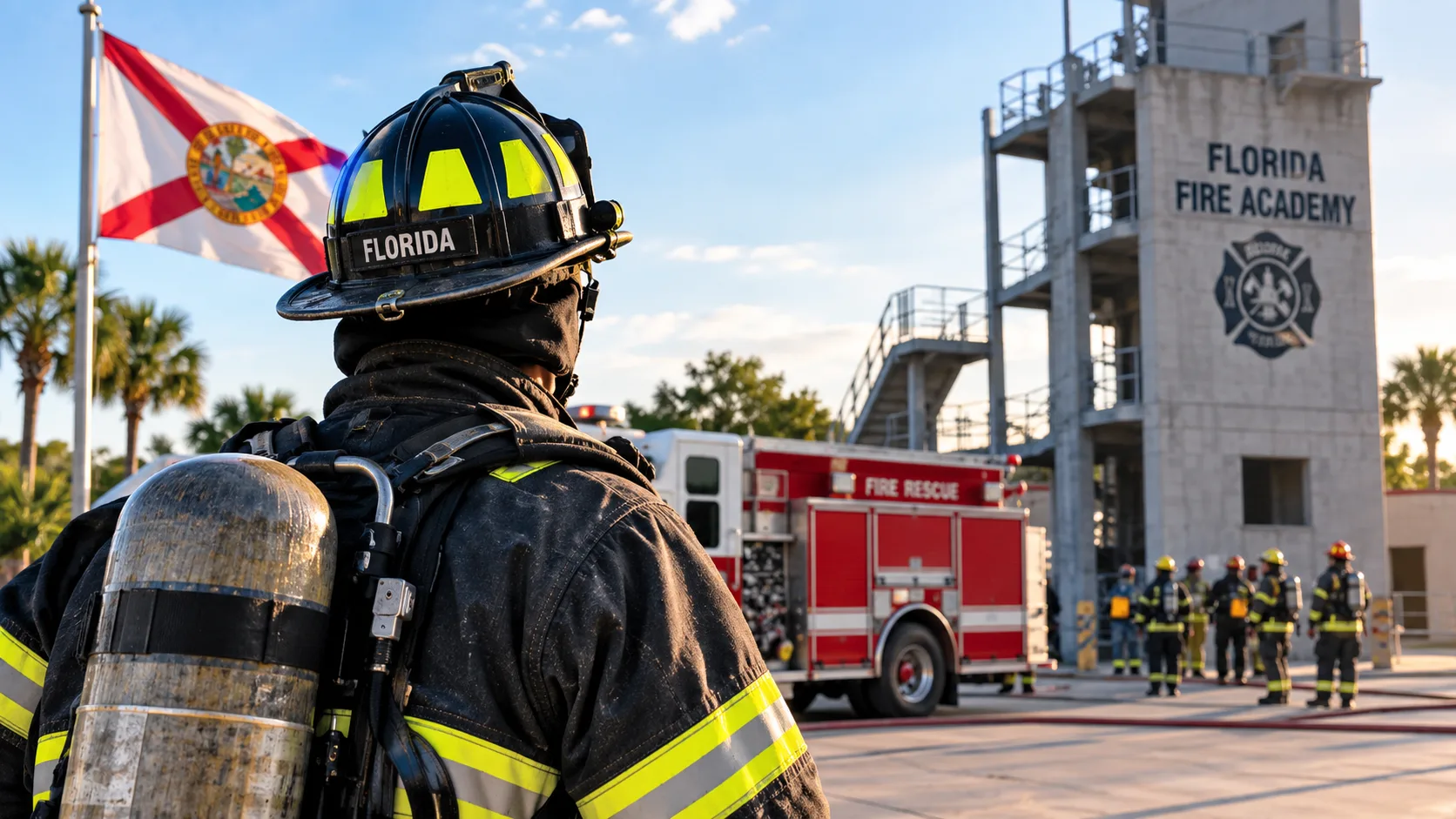
Applying in Florida? EMS certification and firefighter certification are separate, while departments such as Jacksonville, Tampa and Orlando apply them differently in hiring. See the Florida firefighter requirements guide.
Applying in California? EMT certification is central to many California firefighter hiring processes, but timing and local EMS certification rules matter. See the California firefighter requirements guide.



Comments 0
No comments yet. Be the first to share your thoughts!
Leave a Comment