
Smoke alarms beep for several different reasons, and the beeping pattern tells you exactly what the problem is — if you know how to read it. The issue is that most people do not know the difference between a low battery chirp and an end-of-life signal, or between a real fire alarm and a malfunction alert. So they either pull the battery out entirely (dangerous) or ignore it (also dangerous). This covers every beeping and chirping pattern you will encounter, what each one means, and what to do about it.
I will also address the most dangerous thing people do with smoke alarms — the thing that has contributed to fire deaths in homes that had working alarms installed. But first, the patterns.
Jump to what you need:
- Every beeping pattern and what it means
- Beeping every 30 seconds (the most common question)
- New battery in but still chirping
- Goes off every time you cook
- Goes off randomly in the middle of the night
- Carbon monoxide alarm beeping — different rules
- End-of-life chirping — when to replace the whole unit
- The mistake that gets people killed
- How and how often to test
Every Beeping Pattern and What It Means
Smoke alarm manufacturers use different specific patterns, so always check your manual. But these are the patterns used by the vast majority of residential alarms sold in the U.S.:
Beeping Every 30 Seconds: The Most Common Question
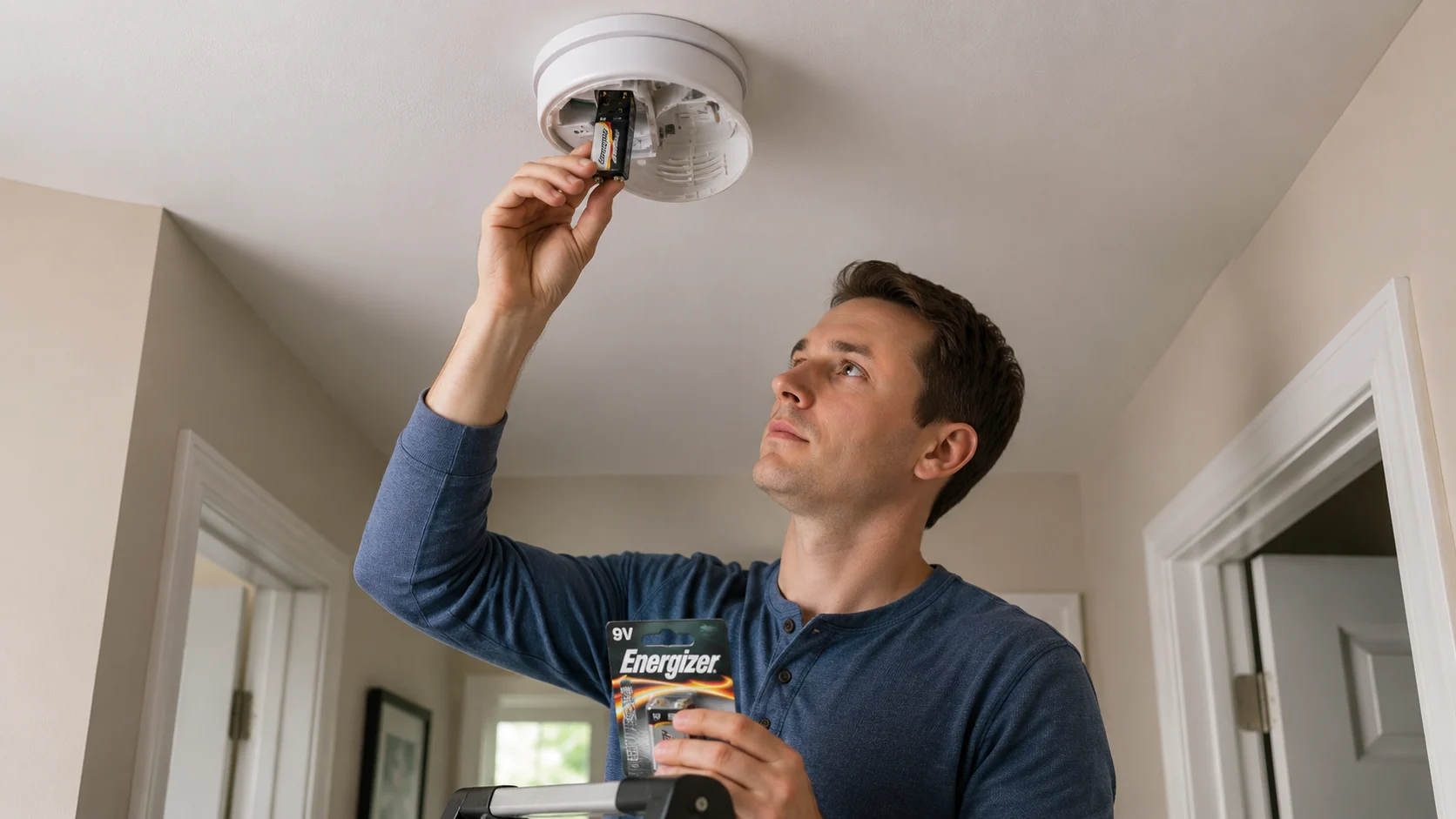
This is the question I see most often, because this is what wakes people up at 3am. One beep. Silence. Thirty seconds. One beep. Silence. Repeat until someone loses their mind or pulls the battery out.
In almost every case, this is the low battery signal. Here is what to do, in order:
- Replace the battery with a brand new one. Not one that has been sitting in the back of a drawer for two years. A new battery from a sealed package. The type of battery depends on your alarm — 9V, AA, or some newer units use 10-year sealed lithium batteries that are not replaceable.
- After replacing, press and hold the test button for 5–10 seconds. This clears the low battery fault from the alarm's memory. If you just swap the battery without doing this, many alarms will chirp again within minutes because the fault flag is still set.
- Wait and listen. If the chirping stops, you are done. If it resumes within 10–15 minutes, the unit is either rejecting the new battery (try another one from a different package) or it is at end of life.
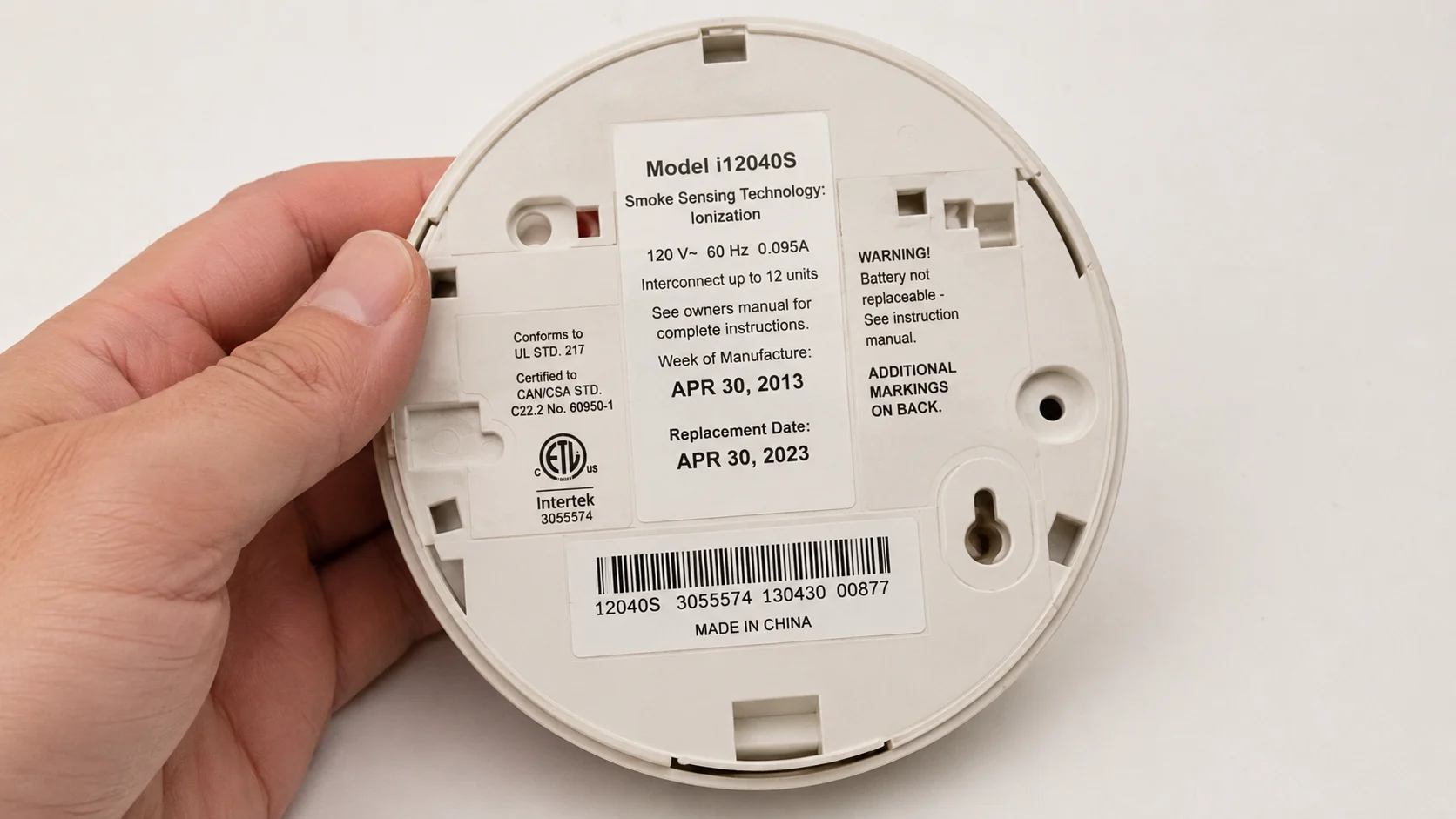
- Check the manufacture date on the back of the unit. Every smoke alarm has a manufacture date stamp on the back or inside the battery compartment. If it is more than 8–10 years old, the chirping is the end-of-life signal, not a low battery signal. Replace the entire unit.
New Battery In — Still Chirping. Why?
This is the follow-up question that comes after the above. You put in a fresh battery. It still chirps. Here are the actual reasons this happens, in order of likelihood:
You did not press the test/reset button after installing the battery
Most people do not know this step exists. When the battery goes low, the alarm sets an internal fault flag. Swapping the battery does not clear the flag — the alarm keeps signaling until you tell it the problem is resolved. Press and hold the test button for 5–10 seconds after installing the new battery. On some alarms, you may need to hold it until you hear a chirp or a short alarm burst, then release. That clears the fault.
The unit is at end of life
Smoke alarms manufactured in the last several years have a built-in end-of-life timer. When the sensor reaches the end of its reliable service life (typically 8–10 years), the alarm begins signaling with a chirp that no battery change will stop. The only fix is replacing the unit. Check the manufacture date — it is almost always printed on the back of the unit inside a small label. If the year is more than 8–10 years ago, buy a new alarm today.
The battery is not making proper contact
Battery terminals corrode, especially in humid environments. If the alarm accepts the battery but the contact is not solid, the alarm reads it as low battery immediately. Remove the battery, clean the terminals with a dry cloth or fine sandpaper, and reinstall firmly. Make sure the battery is oriented correctly — even experienced adults install 9V batteries backwards occasionally.
The alarm was disconnected from power for too long (hardwired units)
Hardwired smoke alarms (the kind connected to the house wiring with a backup battery) sometimes chirp after a power outage or after being disconnected. The backup battery was drained during the outage. Replace it and restore power — the alarm should stop chirping once both power sources are confirmed.
A note on hardwired alarms: If your smoke alarms are hardwired (connected to the ceiling with wires, not just sitting in a bracket with only a battery), they are almost certainly interconnected — when one sounds, they all sound. This is a good thing during a fire. It also means that one chirping alarm can sometimes trigger intermittent sounds in other alarms on the circuit. Find the one that is actually chirping (usually the one with the yellow or red LED blinking) and address that one.
Goes Off Every Time You Cook
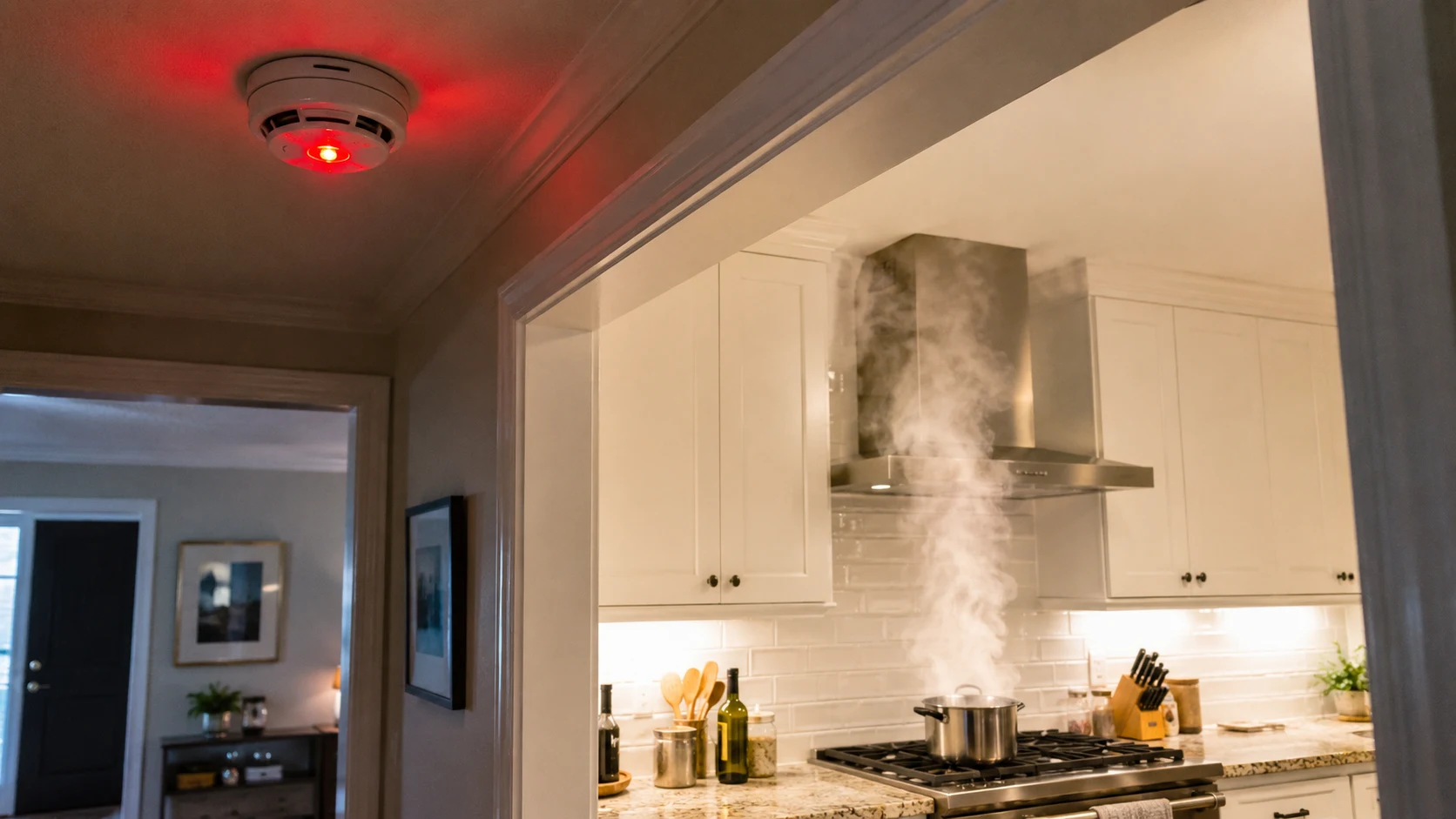
An alarm that goes off every time you make toast or fry something is not broken. It is doing exactly what it is designed to do — sensing particles in the air. The problem is location or alarm type.
Location is almost always the cause
NFPA 72 (the National Fire Alarm Code) specifically recommends against placing smoke alarms inside the kitchen. The cooking area produces steam, smoke, and aerosols during normal cooking that will trigger a properly functioning photoelectric or ionization alarm. The correct placement is just outside the kitchen — in the hallway or adjacent room, close enough to detect a real kitchen fire quickly but far enough to avoid routine cooking triggers.
If your smoke alarm is mounted directly over the stove or on the kitchen ceiling, relocate it. This is a 10-minute job with a screwdriver. Mount it on the ceiling or wall just outside the kitchen entrance, at least 10 feet from any cooking appliance.
Ionization alarms are more sensitive to cooking smoke
There are two main types of smoke alarm sensors: ionization and photoelectric. Ionization alarms are faster at detecting fast-flaming fires and more sensitive to small particles — including the invisible combustion particles from cooking. Photoelectric alarms are faster at detecting slow, smoldering fires and less prone to cooking-related false alarms. If your alarm is in the correct location and still triggers constantly from cooking, replacing it with a photoelectric alarm in the same location often solves the problem without compromising protection. Dual-sensor alarms contain both types and are the most comprehensive option.
What not to do
Do not cover the alarm with a plastic bag or towel when cooking. Do not remove the battery when you cook and put it back after. I have been on fires where people did exactly this as a routine habit, forgot to replace the battery after dinner, went to sleep, and the alarm did not sound when it mattered. It happens more than you would expect. If your alarm goes off when you cook, fix the location or the alarm type — do not disable it.
Goes Off Randomly in the Middle of the Night
A smoke alarm that triggers between midnight and 6am with no apparent cause is one of the most common complaints — and one of the most important patterns to understand, because night-time false alarms cause people to disable their alarms, which then fails them when there is a real fire.
Here is why alarms false-alarm at night more than during the day:
Temperature drops
In homes without consistent heating, interior temperatures drop at night — particularly in rooms near exterior walls and in older homes with less insulation. Cold air is denser and can cause condensation inside the alarm's sensor chamber. Some ionization alarms interpret this condensation as smoke particles and trigger. If this is the pattern — cold nights, certain rooms, certain seasons — the alarm may need to be moved away from exterior walls or drafts, or replaced with a photoelectric unit.
Insects inside the unit
Small insects — particularly spiders — entering the sensor chamber of a smoke alarm are a documented cause of false alarms. The insect interrupts the sensor beam (in photoelectric alarms) or disrupts the ionization field. This typically causes a brief alarm that stops on its own. If you have repeated brief false alarms with no other cause, vacuum around the alarm and the sensor openings. Do not spray insecticide near the alarm — chemical aerosols can contaminate the sensor.
Steam or humidity migration
If a bathroom with a shower is near the alarm, nighttime showering can send steam down a hallway that reaches the alarm. Similarly, humidifiers operating at night in a room with poor circulation can trigger humidity-sensitive alarms. Check whether the false alarms correlate with shower times or humidifier operation.
The alarm is near end of life
Failing sensors produce false alarms more frequently as they age. If the unit is more than 8 years old and is triggering false alarms at night without a clear environmental cause, it is end of life. Replace it.
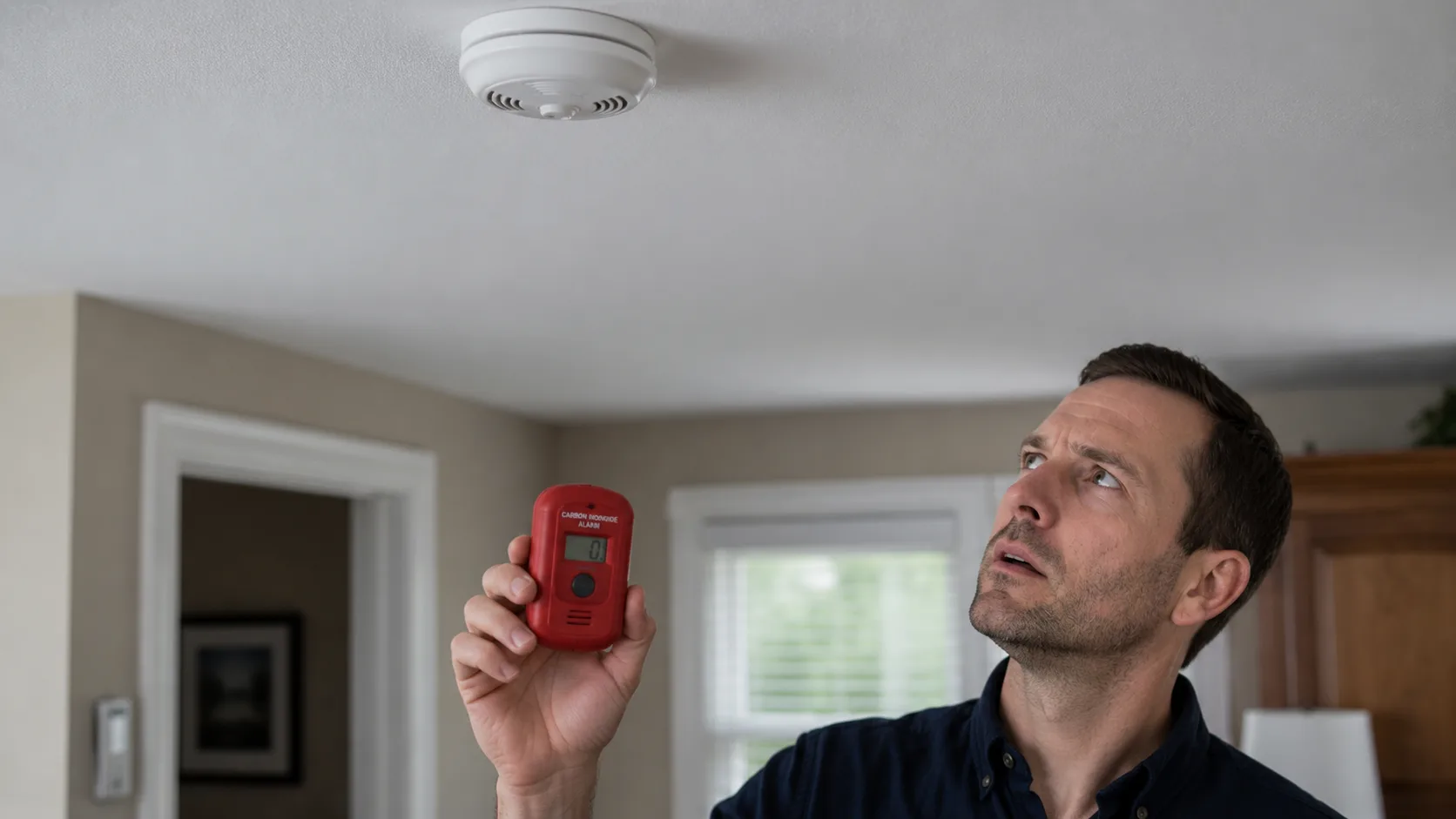
Carbon Monoxide Alarm Beeping — Different Rules
Carbon monoxide alarms are often in the same unit as smoke alarms, and the distinction between patterns matters because the response to a CO alarm is different from a smoke alarm.
| Pattern | Meaning | What To Do |
|---|---|---|
| Continuous alarm (4 beeps, pause, 4 beeps — or check your manual) | CO detected — emergency | Get everyone out immediately. Call 911 from outside. Do not go back in until cleared by emergency responders. CO is invisible and odorless — do not assume you would feel it before it incapacitates you. |
| One chirp every 30–60 seconds | Low battery (same as smoke alarm) | Replace battery, press reset. Same procedure as smoke alarm low battery. |
| 5 beeps every minute | End of life (CO sensors typically last 5–7 years, shorter than smoke sensors) | Replace the unit. A CO alarm past its sensor life provides no protection. |
| Three beeps, pause (non-alarm pattern) | Sensor malfunction or fault | Replace the unit. A malfunctioning CO alarm is not providing CO protection. |
One important point about CO alarms: they have a shorter service life than smoke alarms. Most CO sensors are rated for 5–7 years, not 8–10 years. If you have a combination smoke/CO alarm, the CO sensor may reach end of life before the smoke sensor does. Check the manufacture date and the manufacturer's rated CO sensor life — they are sometimes different from the unit's overall rated life.
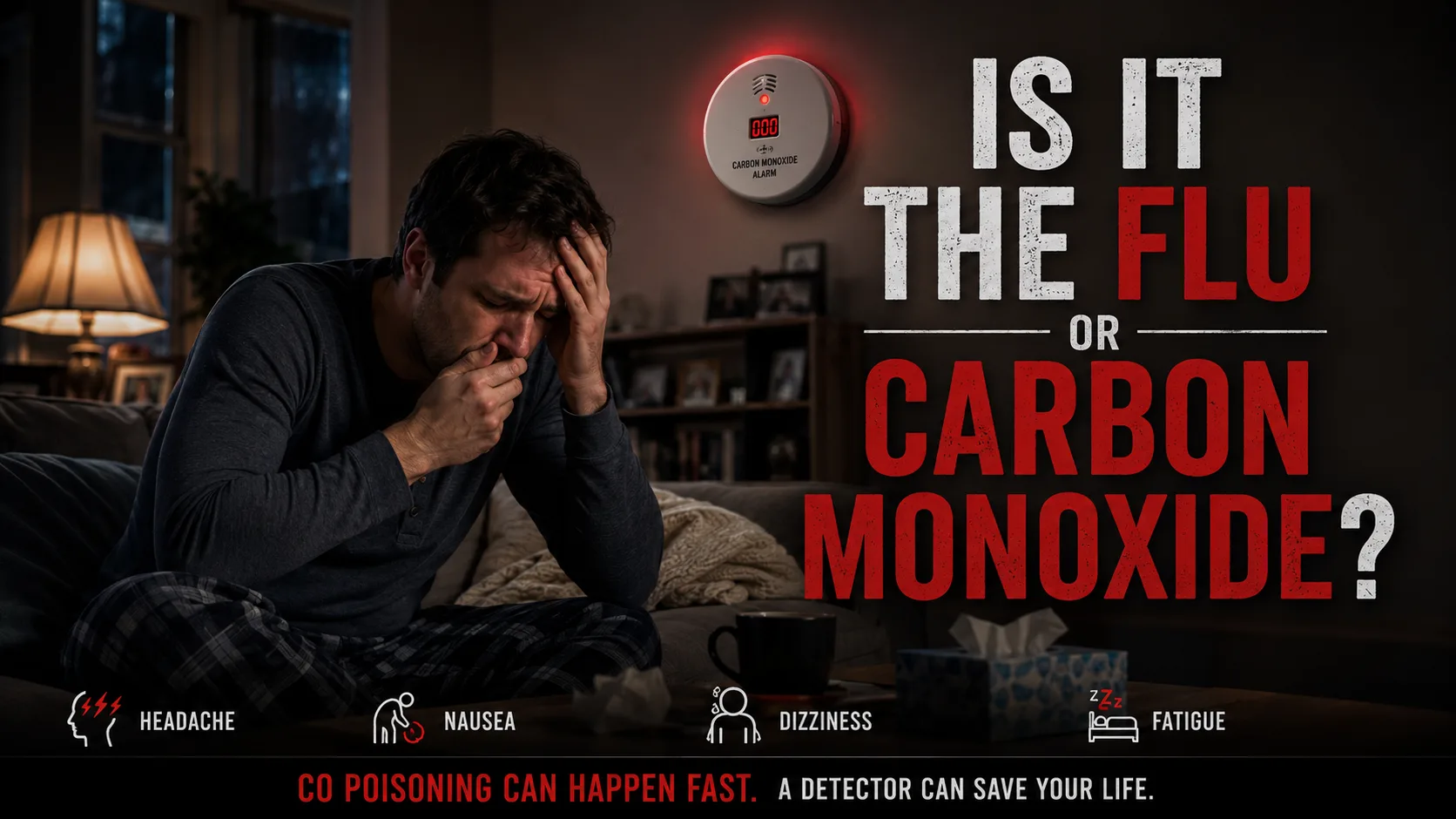
CO alarm chirping is not a minor annoyance. Carbon monoxide kills hundreds of people in the United States every year, almost all of them in their homes, most of them while sleeping. A CO alarm that is chirping its end-of-life pattern is a CO alarm that is not reliably protecting you. Replace it the same day you notice the chirp, not next weekend.
End of Life: When to Replace the Whole Unit
Smoke alarms do not last forever. The electrochemical sensors inside them degrade over time, and past a certain point the alarm may still sound when you press the test button — because the test button bypasses the sensor — while the actual sensor has lost enough sensitivity that it would not reliably detect real smoke. This is a quiet failure mode that people do not expect.
The NFPA recommends replacing smoke alarms every 10 years from the manufacture date. Some manufacturers rate their alarms for 8 years. Use whichever is shorter for your specific unit. The manufacture date is almost always on the back of the unit.
Signs your smoke alarm needs to be replaced entirely:
- Manufacture date is more than 8–10 years ago
- Chirping continues after a confirmed-fresh battery replacement and pressing the reset button
- Five-beep end-of-life pattern
- Yellow LED flashing rapidly (on units with color-coded LED indicators)
- Unit does not respond when you press the test button
- Unit has been painted over (paint clogs the sensor openings — replace it)
- Unit has been submerged in water or exposed to flooding
Replacing a smoke alarm costs $10–30 for a basic unit. A dual-sensor (ionization + photoelectric) or combination smoke/CO unit runs $25–60. These are among the most cost-effective safety investments in a home.
The Mistake That Gets People Killed
I want to be direct about this because it matters.
The most dangerous thing people do with smoke alarms is disable them because they are annoying. Pull the battery out. Leave it out. Or remove the alarm entirely and not replace it. This happens most often after repeated false alarms from cooking or after an alarm that kept chirping through the night. People get frustrated, the alarm feels like a problem rather than protection, and they remove it.
I have been on fire calls where this was the story. A family whose alarm went off too often when they cooked, so they pulled the battery. A house fire starts at 2am. No alarm sounds. People wake up to smoke they can already barely breathe through.
Every false alarm problem has a real fix that does not involve disabling the alarm:
- Goes off when cooking → move it outside the kitchen or switch to photoelectric
- Chirps at night → low battery or end of life → replace battery or unit
- Triggers from shower steam → relocate it away from the bathroom
- Random brief alarms → insects or failing sensor → clean it or replace it
None of these problems require disabling the alarm. They require fixing the actual cause. If the alarm is doing something you cannot figure out — look up your model's manual, or buy a new $15 alarm and replace it. Do not leave your home without a working smoke alarm because the old one was annoying.
Working smoke alarms reduce the risk of dying in a house fire by more than half. That number is from documented incident data, not a marketing claim. The protection they provide when you need them is not abstract. Pull the battery out, and you lose that protection entirely.
How and How Often to Test Your Smoke Alarm
Testing is not optional and it is not complicated. Here is what to do:
Monthly test
Press and hold the test button on the alarm for at least 5 seconds. A working alarm will sound its full alarm pattern — the same three-beep sequence it uses for a real fire. If it does not sound, or sounds weakly, replace the battery first. If it still does not sound after a battery replacement, replace the unit. The test button tests the alarm circuit and the horn, not the actual smoke sensor — but it confirms the basic function is working.
Annual sensor test
Once a year, test the actual sensor by briefly exposing the alarm to aerosol smoke test spray (sold at hardware stores) or by holding a lit match near the alarm (then blowing it out) and watching for the alarm to trigger. This tests the sensor itself, not just the alarm circuit. If the alarm does not trigger on smoke test spray, the sensor may have failed even if the test button works.
Battery replacement schedule
For alarms that use replaceable batteries: replace annually, regardless of whether the low battery chirp has started yet. Pick a date you will remember — a holiday, a birthday, daylight saving time if your region observes it. Do not wait for the chirp. By the time the low battery chirp starts, the battery may have already been operating at reduced capacity for weeks.
For alarms with sealed 10-year lithium batteries: no battery replacement needed, but the entire unit still needs to be replaced when the 10-year life ends.
What testing does not cover
Testing tells you the alarm can detect something and sound. It does not tell you whether the alarm is in the right location, whether everyone in the house can hear it from their bedroom with the door closed, or whether your family knows what to do when it sounds. For that, you need a home escape plan — which is a separate piece entirely. See the Family Fire Escape Plan article for how to build one that actually works in a real fire.
Quick Reference
| What You're Hearing | Most Likely Cause | Fix |
|---|---|---|
| Continuous 3-beep alarm | Smoke or fire detected | Get out immediately. Call 911 from outside. |
| One chirp every 30–60 seconds | Low battery | New battery + press reset 5 sec. If still chirping → end of life → replace unit. |
| Five beeps every minute | End of life | Replace the entire unit today. |
| 4-beep pattern (on combo alarm) | CO detected | Get out immediately. Call 911. |
| Goes off when cooking | Wrong location or alarm type | Move outside kitchen, or switch to photoelectric alarm. |
| Random brief alarm at night | Humidity, insects, or failing sensor | Clean the unit. If older than 8 years → replace. |
| New battery in, still chirping | Did not press reset, or end of life | Press reset 5 sec. If still chirping → check manufacture date → replace if 8+ years old. |
| No sound when test button pressed | Dead battery or failed unit | Replace battery. If still no sound → replace unit. |
Smoke alarms are simple devices that do an important job. When they make noise, they are communicating something specific — and almost every pattern they use has a clear meaning and a clear fix. The worst response to a chirping or beeping alarm is ignoring it or removing it. The best response is spending five minutes figuring out which pattern it is, then fixing the actual cause.




Comments 0
No comments yet. Be the first to share your thoughts!
Leave a Comment