
Correction — October 15, 2026: Replaced blanket PFAS-flushing and Class B application instructions with product-specific methods and controlled rinsate management.
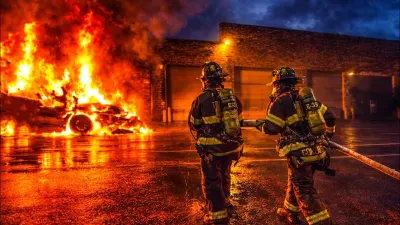
Foam is one of the most misused tools in the fire service. Not because firefighters do not care about getting it right — they do — but because foam equipment is rarely trained on seriously, the chemistry changes faster than department SOGs do, and the consequences of getting concentration wrong are invisible until the fire tells you. I have seen AFFF applied to a Class A fire because no one changed the around-the-pump proportioner setting from the last drill. I have seen Class A foam mixed into Class B containers because the cans looked similar. And I have been at petroleum fires where the eductor was three feet closer to the nozzle than the manufacturer specification allows, which means the whole operation was running at wrong concentration and nobody knew it. This piece covers what foam actually does, how to get concentration right, what is changing with AFFF, and where departments reliably get this wrong.
What we cover:
- Class A foam: what it actually does and when to use it
- Class B foam: types, rates, and petroleum fire application
- Proportioning systems: eductors, injection, CAFS
- AFFF phase-out and fluorine-free alternatives
- Foam application technique — what actually works
- The mistakes departments reliably make
- Foam training that sticks
- Pre-incident foam checklist
Class A Foam: What It Actually Does
Class A foam is a surfactant solution — it lowers the surface tension of water. That is the whole mechanism. Water without foam has a surface tension that makes it bead up and run off the surface of most solid fuels. A 0.1% Class A foam solution penetrates wood, insulation, and other cellulosic materials dramatically better than plain water because the surface tension drop lets the water absorb into the fuel rather than rolling off it. The result is faster knockdown, better penetration into deep-seated fires (attic, walls, mattresses), and better overhaul because you wet the fuel mass, not just the surface.
What Class A foam is not
Class A foam is not a vapor suppression agent. It does not form a vapor-excluding blanket the way Class B foam does. It does not work on flammable liquid fires unless that liquid is something like a fuel-soaked wood pile where the wood is the real fuel. Applying Class A foam to a petroleum product fire produces foam bubbles that the fuel immediately destroys — you get wet, useless froth and no suppression. I have seen this happen at incidents where the apparatus had Class A loaded and the crew did not know which fire required which agent. The foam label matters.
Concentration rates for Class A
Most Class A foam concentrates are designed to work at 0.1% to 1.0% solution. The right concentration depends on the application:
| Application | Concentration | Why This Rate |
|---|---|---|
| Structural attack (wet foam) | 0.1 – 0.2% | Maximum penetration, closest to water behavior, best knockdown |
| Exposure protection / pre-wetting | 0.3 – 0.5% | Thicker foam for longer retention on exposed surfaces |
| Dry foam / CAFS for overhaul | 0.5 – 1.0% | Stiff foam for injection into walls and voids, stays put longer |
| Wildland / brush suppression | 0.1 – 0.3% | Penetration into fuel bed, quick knockdown of running surface fire |
The critical point here is that more is not better. A 1% Class A solution on a structural attack line does not perform better than a 0.2% solution — it costs more concentrate, produces thicker foam that is harder to control, and reduces visibility without improving knockdown. Set your proportioner to match the application, not to maximize foam production.
Class B Foam: Types, Rates, and Petroleum Fire Application
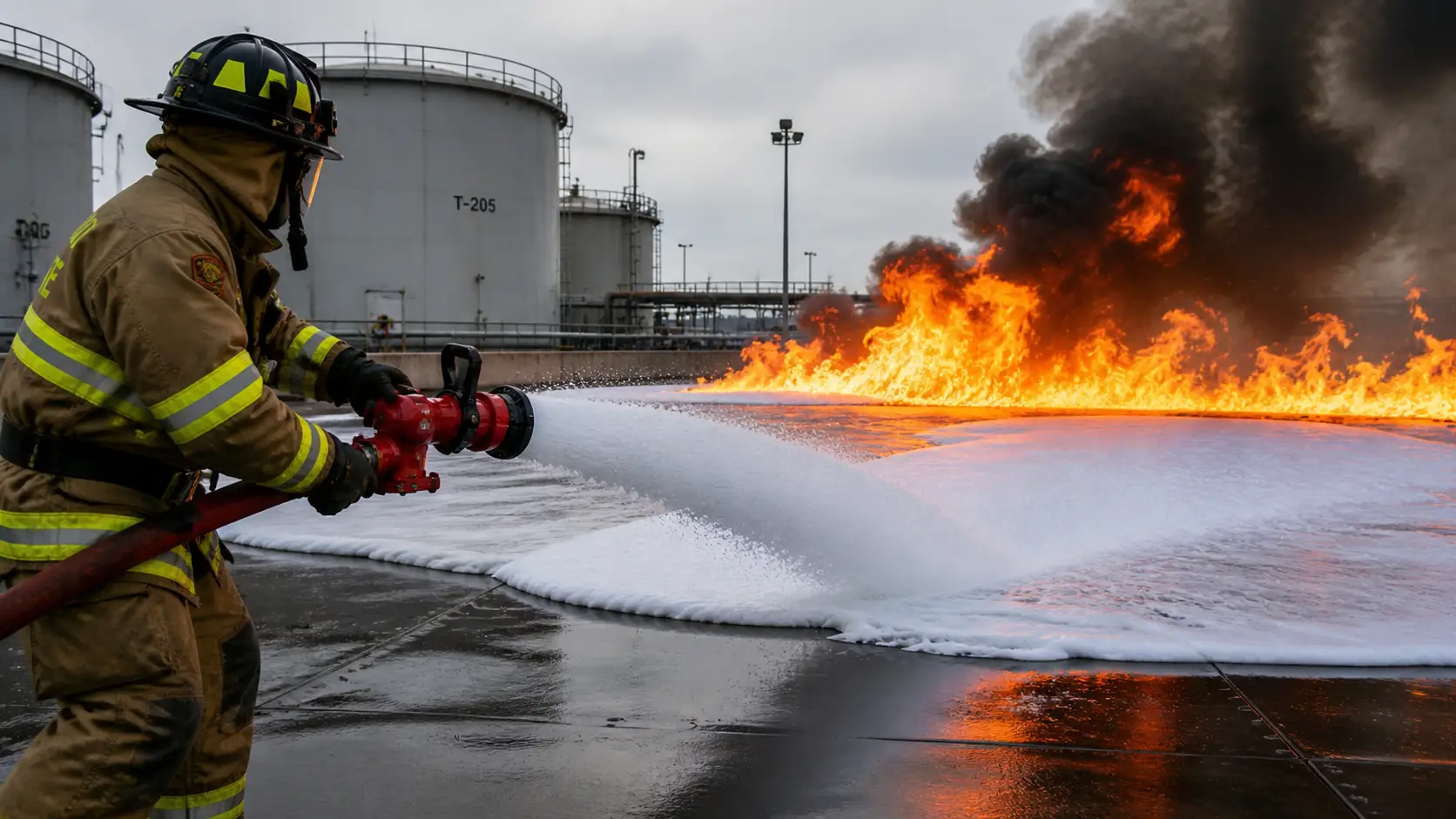
Class B foam is a completely different chemistry doing a completely different job. Where Class A lowers surface tension to improve water penetration, Class B works by forming a physical barrier between the fuel and the atmosphere. No fuel vapor contact with oxygen, no combustion. The foam blanket is what does the work — which means how you apply it is as important as what you apply.
AFFF (Aqueous Film-Forming Foam)
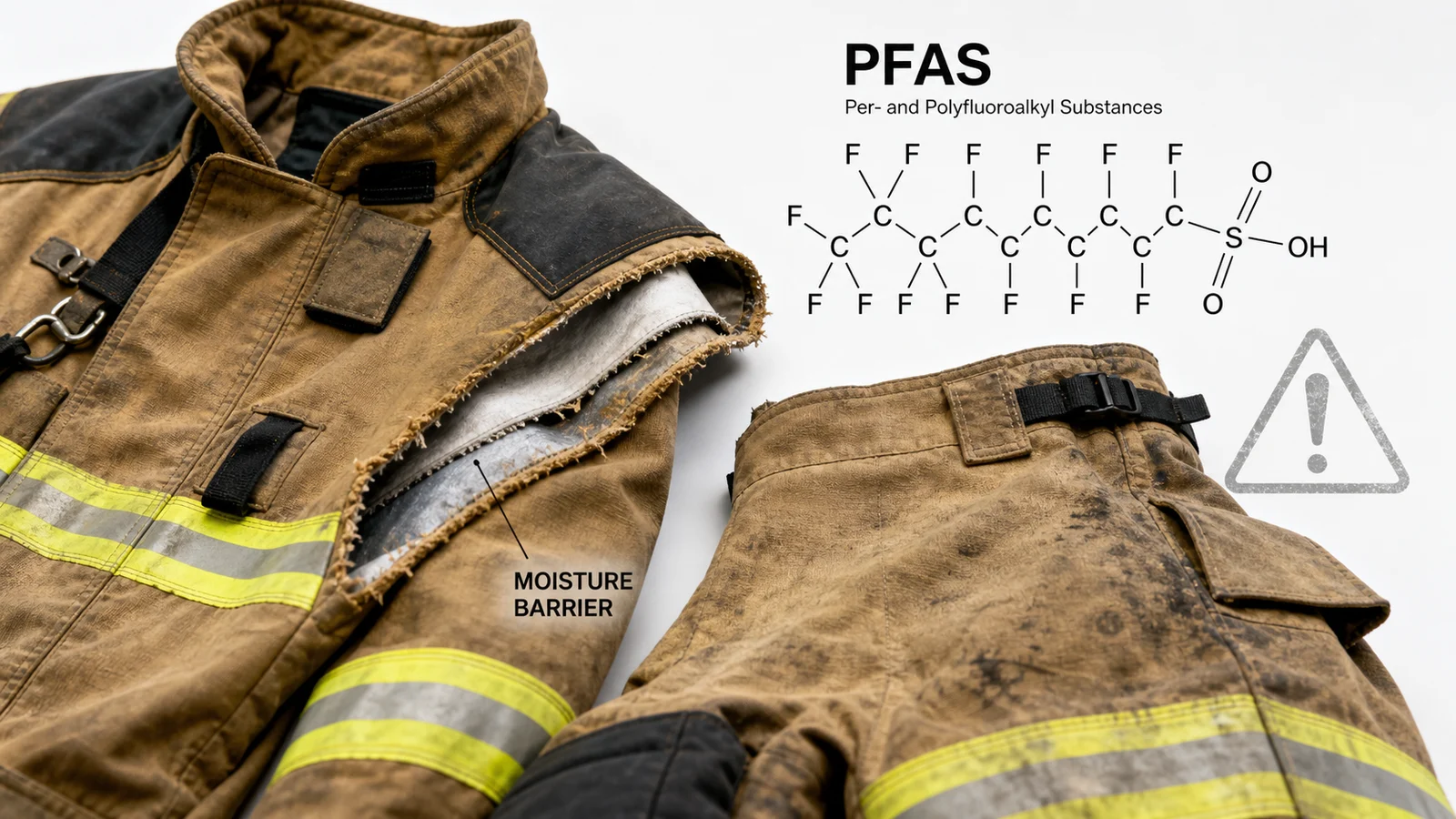
AFFF has been the standard Class B agent in the U.S. fire service for decades. It works by forming both an aqueous film that floats on the fuel surface and a foam blanket above it — double suppression mechanism. It is highly effective on hydrocarbon fuels (gasoline, diesel, jet fuel, heating oil). It is the fastest-knockdown Class B agent available. It is also a source of PFAS (per- and polyfluoroalkyl substances) — the chemicals now subject to regulatory restriction and phase-out. More on that shortly.
AFFF-AR (Alcohol Resistant)
Standard AFFF is destroyed by alcohol and polar solvents (ethanol, methanol, acetone, many industrial solvents). When AFFF contacts an alcohol fuel, the alcohol immediately breaks down the foam blanket. For alcohol and polar solvent fires you need AFFF-AR, which contains a polymer that forms a protective membrane between the foam and the fuel. AFFF-AR is typically used at 3% on hydrocarbons and 6% on polar solvents — check the specific product data sheet because rates vary. Using standard AFFF on an ethanol fuel fire is like using water on a grease fire — it actively makes the situation worse.
Protein and fluoroprotein foams
Protein-based foams (protein, fluoroprotein, film-forming fluoroprotein/FFFP) are less common in structural fire service but still used in industrial and airport firefighting. They are generally slower to knock down than AFFF but more resistant to fuel pickup (the foam blanket survives re-contamination better). Airport crash fire rescue (CFR) operations still use FFFP extensively. If your department has mutual aid agreements with airports, know what they are running.
Concentration rates for Class B
| Agent | Fuel Type | Rate | Notes |
|---|---|---|---|
| AFFF 3% | Hydrocarbons (gasoline, diesel, jet fuel) | 3% | Standard rate; some AFFF formulations are 6% — verify label |
| AFFF 6% | Hydrocarbons (older formulations) | 6% | Do not use at 3% — under-concentration fails suppression |
| AFFF-AR 3×3 | Hydrocarbons at 3%; polar solvents at 3% | 3% | Newer formulations work at same rate on both fuel types |
| AFFF-AR 3×6 | Hydrocarbons at 3%; polar solvents at 6% | 3% or 6% | Proportioner must be switchable between rates |
| F3 / FFF (fluorine-free) | Hydrocarbons; check sheet for polars | 3% or 6% | Rates vary significantly by brand — do not assume |
The rate printed on the foam concentrate container is not a suggestion. Running AFFF at 1.5% because your proportioner is set wrong or your eductor is out of spec produces foam that fails. The water film does not form properly. The blanket is thin and fragile. You get brief knockdown followed by re-ignition that looks like the fire is winning. Because it is.
Proportioning Systems: How Foam Gets Mixed
Getting the right amount of foam concentrate into the water stream is where most operational failures occur. There are three main proportioning systems in the fire service, and each has specific limitations that create specific failure modes.
The inline eductor
The inline (in-line) eductor is the most common portable proportioning method. It works on the Venturi principle: water flowing through a constriction creates a low-pressure zone that draws foam concentrate from a container through a pickup tube. Simple, no moving parts, no power required. Also the most failure-prone in field conditions.
The distance problem: Every eductor has a maximum rated distance between the eductor and the nozzle. For most common eductors (Elkhart, Task Force Tips, Akron), this is 200 feet of 1¾-inch hose. Beyond 200 feet, the back pressure at the eductor exceeds the concentrate-drawing capability and the system under-proportions — you get less foam than you think. This is the single most common eductor mistake in field operations. The nozzle ends up 250 feet from the eductor because the hose was already laid and nobody measured. The foam looks fine. The concentration is wrong.
The elevation problem: Eductors are also rated for a maximum elevation change between the eductor and the nozzle. Typically 10 feet. A nozzle operator working on a second floor 15 feet above the eductor position is operating outside spec. Again, the foam looks normal. The concentration is wrong.
The pickup tube depth problem: The foam concentrate pickup tube must be fully submerged in the concentrate container. If the container is nearly empty and the pickup tube is only partially submerged, you get air entrainment and variable concentration. Maintain concentrate level above the pickup tube bottom at all times during operations.
Around-the-pump proportioner
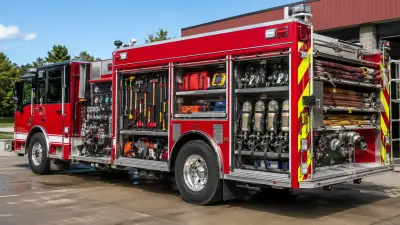
The around-the-pump (ATP) proportioner is a fixed metering system that bypasses a small amount of discharge water back through a venturi that draws concentrate from an on-board tank. It mixes concentrate into the pump suction, so all discharge outlets run foam at the same time. Consistent concentration, no field measurement required, works at any hose length.
The problem: the metering valve on most ATP systems is set manually, often during apparatus spec, and rarely rechecked. I have personally found apparatus where the ATP was set to 3% Class B from a previous use and the crew was running Class A structural operations — at 3% concentration instead of 0.2%. The foam production looks roughly similar. The cost in concentrate, the foam behavior on the fire, and the cleanup afterward are all wrong. Check your ATP setting every single time you transition between agents or between Class A and Class B operations. Make it part of your morning apparatus check. Write the current agent and setting on a piece of tape on the proportioner valve.
Compressed Air Foam Systems (CAFS)
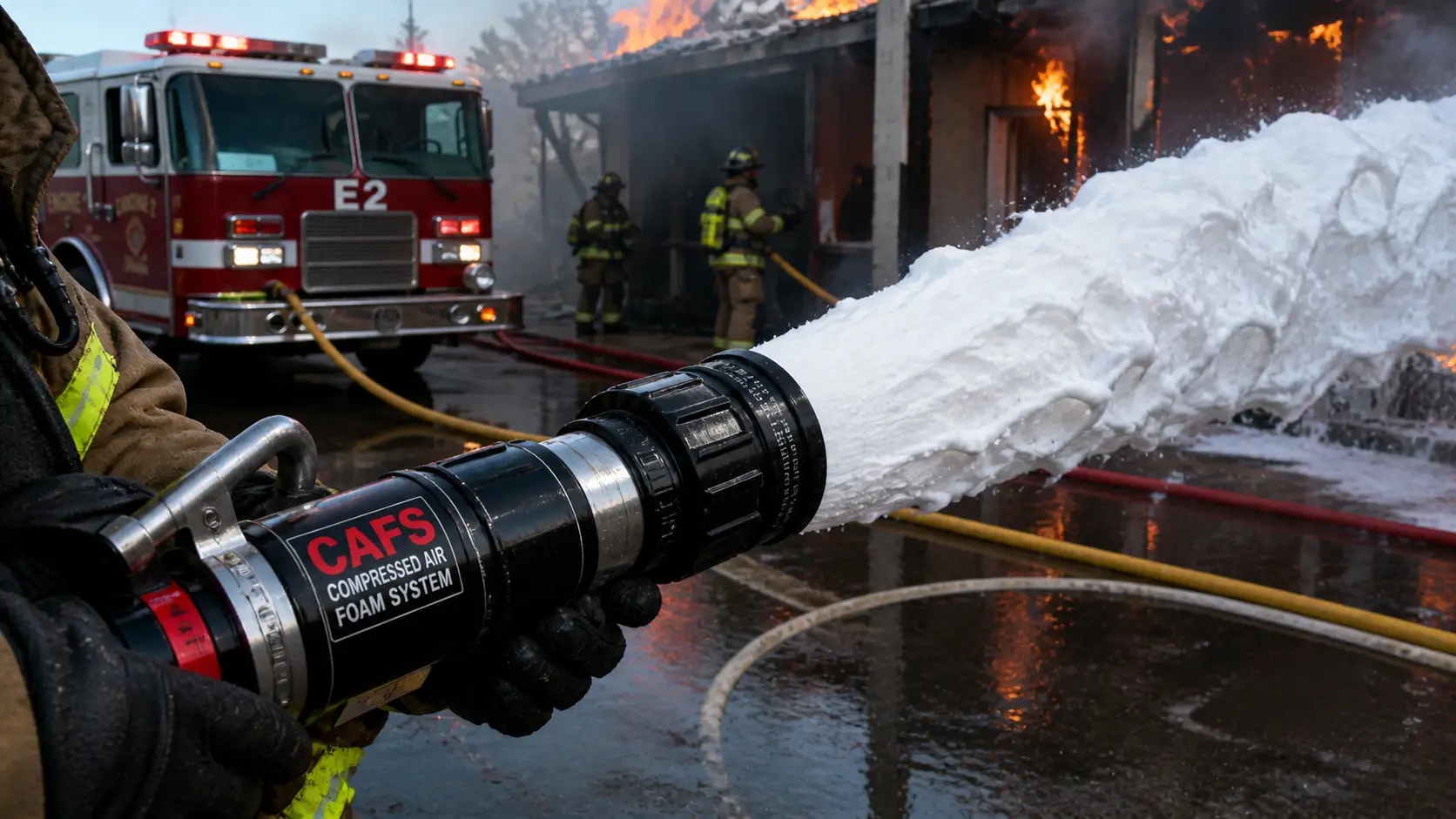
CAFS injects compressed air into the foam solution before it exits the nozzle, producing foam with a much higher air-to-water ratio than an eductor or ATP system. The result is a stiff, shaving-cream consistency foam that clings to surfaces, penetrates voids more effectively, and uses dramatically less water per square foot of coverage than conventional foam or plain water.
CAFS advantages in structural firefighting: faster knockdown on room contents fires, excellent deep-seated penetration for overhaul, reduced water use (important for rural tanker operations), and lighter hose loads for nozzle crews. A charged 1¾-inch CAFS hose weighs roughly 40% less per foot than a conventionally charged line because you are delivering mostly air.
CAFS limitations: the system requires more complex apparatus maintenance, the air compressor adds a mechanical system that can fail, the nozzle technique is different from conventional handlines (CAFS streams do not reach as far; application technique is more sweeping and close-range), and Class B CAFS use requires specific agent compatibility verification. Not all Class B concentrates work in CAFS systems — the air injection can break down the foam too quickly before application.
AFFF Phase-Out and Fluorine-Free Alternatives
AFFF is being phased out of the U.S. fire service under a combination of EPA regulation, Department of Defense directives, and state-level legislative action. The timeline is not hypothetical — it is happening now. Departments that have not started planning their transition are already behind.
Why AFFF is going away
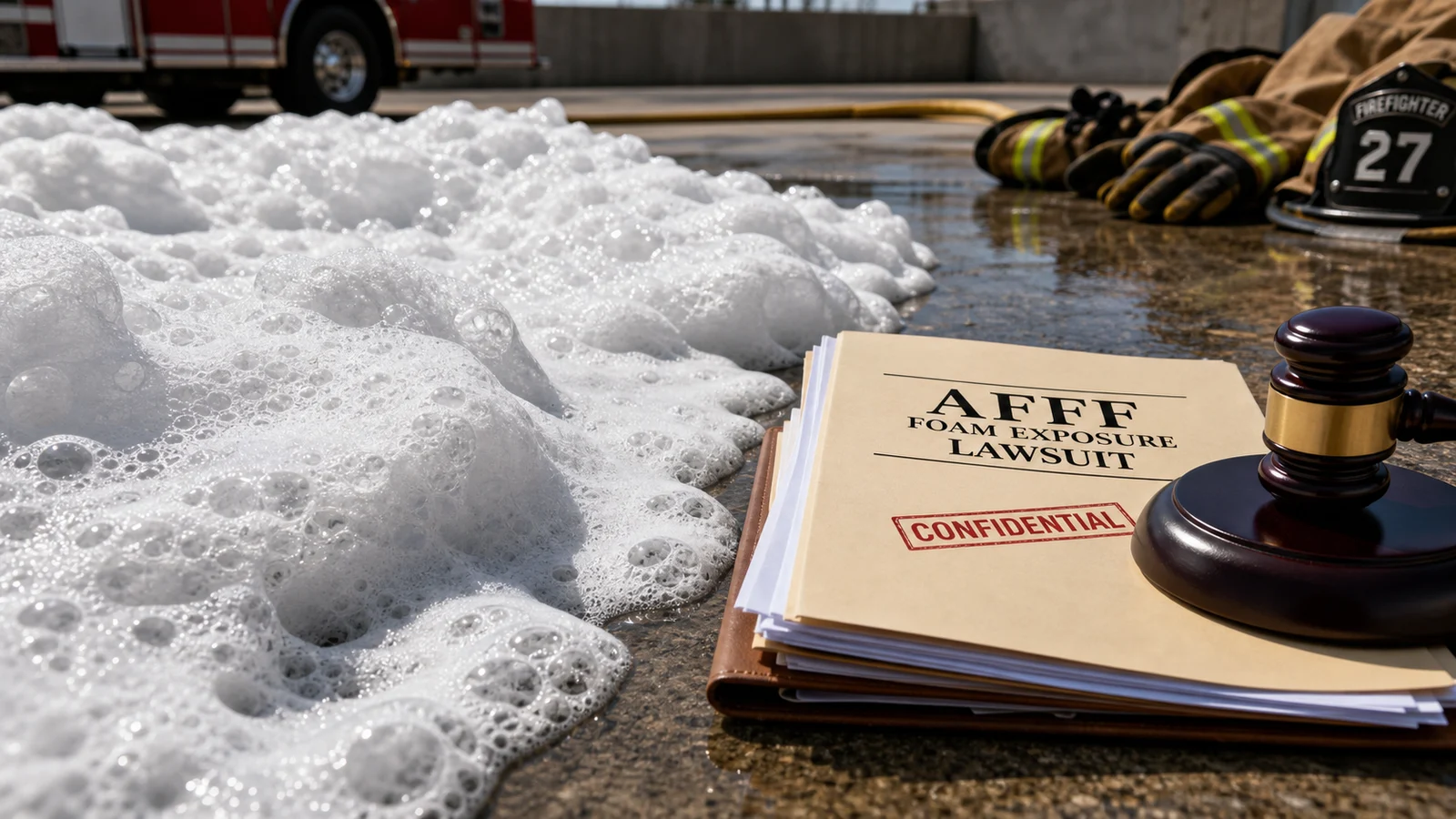
PFAS (per- and polyfluoroalkyl substances) are a class of synthetic chemicals used in AFFF concentrate to create the aqueous film on fuel surfaces. These chemicals are extremely persistent in the environment — they do not break down under normal conditions, which is why they are called “forever chemicals.” PFAS contamination from AFFF use at military airfields and fire training facilities has contaminated groundwater supplies serving millions of people. The EPA has set health advisories for PFAS in drinking water at concentrations so low (in parts per trillion) that the analytical chemistry to measure them is newer than the regulatory standard. The regulatory and legal pressure on AFFF use is not going to reverse.
Fluorine-free foam (F3) — what to know before you switch
Fluorine-free foam concentrates (F3, also called FFF or C6-free foam) use non-PFAS chemistry to achieve fuel suppression without forming an aqueous film. They work primarily through foam blanket vapor exclusion rather than dual-mechanism suppression. The performance gap between F3 and AFFF has closed significantly over the past five years — current-generation F3 concentrates from established manufacturers (Solberg, Bioex, Angus) perform comparably to AFFF on hydrocarbon fuels in standardized testing. But there are things you need to know before you just swap the container.
- Concentration rates are not the same. An F3 product may run at 3% where your AFFF ran at 3%, or it may require 6%. Do not assume rate compatibility. Get the product data sheet and set your proportioner specifically for the new agent.
- Compatibility with your existing system. F3 foam may behave differently in your CAFS system, your eductor, or your ATP proportioner. Contact your foam equipment manufacturer and the foam concentrate manufacturer before mixing systems. Some F3 concentrates require different proportioner inlet sizes.
- Transitioning from AFFF to a fluorine-free agent requires a documented cleaning and verification plan agreed with the apparatus/equipment and concentrate manufacturers and the responsible environmental authority. Capture and manage old agent and all rinsate through approved waste arrangements; do not discharge flushing water to soil, drains or surface waters. A clear-looking rinse or a generic below-detection claim does not establish an accepted decontamination endpoint.
- Training with new agent behavior. F3 foam does not look or behave identically to AFFF at the nozzle. Blanket stability, flow characteristics, and re-ignition timing are slightly different. Train with your new agent before you need it at a petroleum fire, not at the fire.
If your department still has AFFF stock: Do not just run it until it is empty and then switch. Develop a transition plan now: inventory what you have, identify replacement agent, schedule flushing during apparatus maintenance cycles, and train before the transition date. Departments that planned have smooth transitions. Departments that did not are the ones calling for help at 3% F3 on a fuel fire that needs 6%.
Foam Application Technique — What Actually Works
Even correct concentration with the right agent fails if the application technique is wrong. Class A and Class B foam require fundamentally different application approaches, and mixing them up is how you get a slow fire that eventually wins.
Class A application: get it into the fuel
With Class A foam on a structure fire, you want penetration. The foam solution needs to reach the fuel mass — the wood, the insulation, the mattress — not just coat the surface. The right application technique is a combination of direct attack (stream into the burning material) and banking the stream off walls and ceilings so it drips down into burning content below. A fog pattern does not work for penetration — it evaporates too quickly. A straight stream or narrow fog carries the solution into the material. Use the foam the way you would use a penetrating stream, because that is exactly what it is.
Class B application: protect the blanket
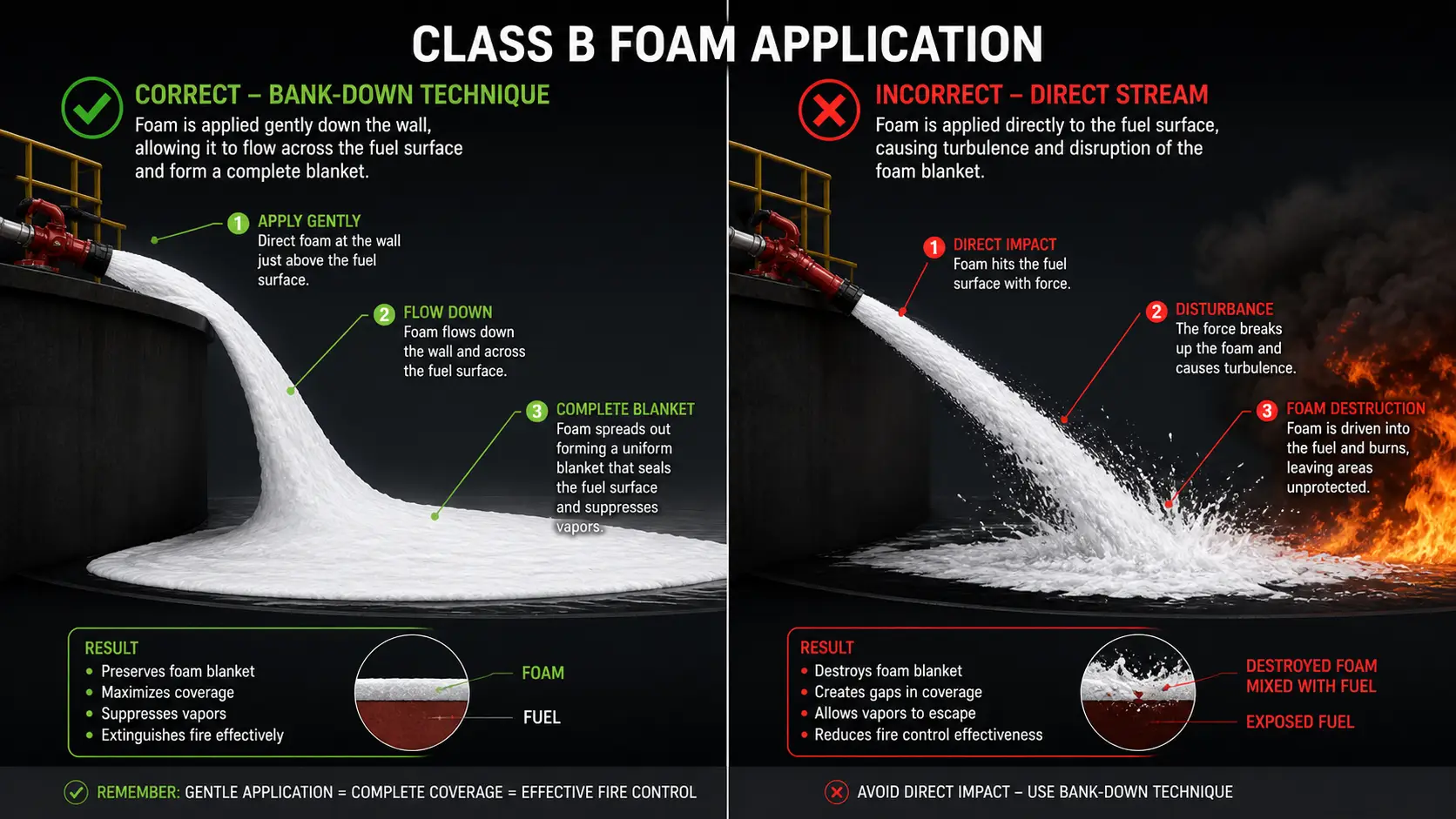
Class B foam works completely differently and requires opposite instincts from structural firefighting. You are not trying to penetrate the fuel — you are trying to put a continuous blanket over the top of it without disturbing the fuel surface. Disturbing burning liquid fuel disrupts the blanket and spreads burning material. The correct technique is banking the foam stream off a solid surface (tank wall, vehicle body, a board placed at the fuel edge) so the foam flows gently across the fuel surface rather than plunging into it.
Class B application techniques depend on the listed concentrate, fuel and delivery system. Gentle bank-down or roll-on methods can be required, particularly for certain polar-solvent applications, but a universal ban on every form of direct application is not accurate for every product. Use the product data sheet, listing and approved training method; avoid unnecessary fuel disturbance and runoff.
Maintaining the blanket
After control, monitor the fuel, blanket and re-ignition hazards under the incident plan. Required application rates, duration and replenishment depend on the agent listing, fuel and system. Do not assume an improvised reduced rate or unlimited continued discharge is appropriate; coordinate containment and environmental protection.
The Mistakes Departments Reliably Make
I am not pointing fingers — these are institutional problems that show up everywhere, including in my own department at various points. They are worth naming specifically because awareness is the first step to fixing them.
- Wrong agent in the proportioner. Class A concentrate loaded in the Class B tank because someone switched containers without updating the label. Class B in a CAFS system designed for Class A. This happens when departments do not have a clear identification and labeling system for foam storage and when annual apparatus checks do not verify agent identity.
- Eductor out of spec for distance or elevation. Covered above, but worth repeating: if you are running an eductor and your nozzle is more than 200 feet away or more than 10 feet above the eductor, your concentration is wrong. Measure before you commit to the hose lay.
- ATP set to the wrong rate. The metering valve is where it was left from the last drill, the last fire, or the apparatus spec five years ago. No one checks it because foam is used infrequently and the system is not user-facing during normal operations.
- Class B direct application on liquid fuel. The nozzle operator does what feels right — aims at the fire. Wrong technique, slow results, frustration, re-ignition.
- Not maintaining the blanket after knockdown. Flow stops when the fire goes out. The blanket degrades. Re-ignition occurs. Everyone wonders why.
- Not flushing after Class B operations. AFFF or F3 left in the foam tank, proportioner, and hose lines degrades over time and can cross-contaminate the next agent loaded. After every Class B foam operation, flush the entire system completely.
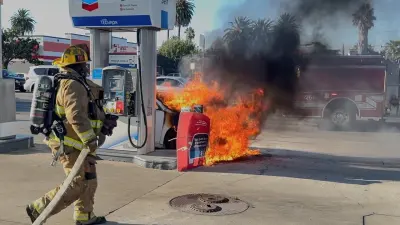
- Applying Class A foam to a flammable liquid fire because it was what was on the truck. Class A foam on a gasoline fire accomplishes nothing suppression-wise and delays the crew from calling for the correct agent.
Foam Training That Actually Sticks
Foam is one of those topics where classroom training produces zero retention and practical training produces everything. If your crew has not physically set up an eductor, measured the distance to a nozzle, checked the concentration in the discharge solution, and applied foam to an actual fuel pan fire, they do not know how to run foam. They know about foam. There is a significant difference when the fuel is on fire.
The most effective foam training format:
- Annual eductor setup drill. Set up the eductor, measure the distance to the nozzle, check the settings, run water through, verify concentration with a refractometer. If you do not have a refractometer, get one. They cost about $30 and tell you instantly if your foam solution is at the right concentration.
- Class B live fire if accessible. Even a small fuel pan fire (5-gallon pan) demonstrates bank-down technique versus direct application clearly and quickly. The difference in blanket formation is immediately visible. Crews remember it.
- ATP setting verification. Include ATP setting check in every quarterly apparatus inspection. Read the current setting, verify it matches the loaded agent and application rate, document it.
- Agent identification drill. Mix up the labels (within a controlled training context) and have crews identify the correct agent, concentration, and system settings before applying. If they cannot do it under low pressure in a training setting, they will not do it correctly on scene.
For shift scheduling around foam training rotations, the Shift Calendar Builder makes it straightforward to coordinate training across A/B/C shifts so every crew gets the same evolution within the same training period.
Pre-Incident Foam Checklist
- ✓Agent identity confirmed — what is loaded in each foam tank? Label verified, not assumed.
- ✓Concentration rate noted — what rate does this agent require for this fuel type? Written on the apparatus, not memorized.
- ✓Proportioner setting verified — ATP valve, eductor setting, or CAFS ratio confirmed to match agent and application.
- ✓Eductor distance measured — if using inline eductor, hose lay to nozzle verified at or under maximum rated distance.
- ✓Elevation checked — nozzle not more than rated elevation above eductor.
- ✓Concentrate level adequate — enough for sustained operation, pickup tube submerged.
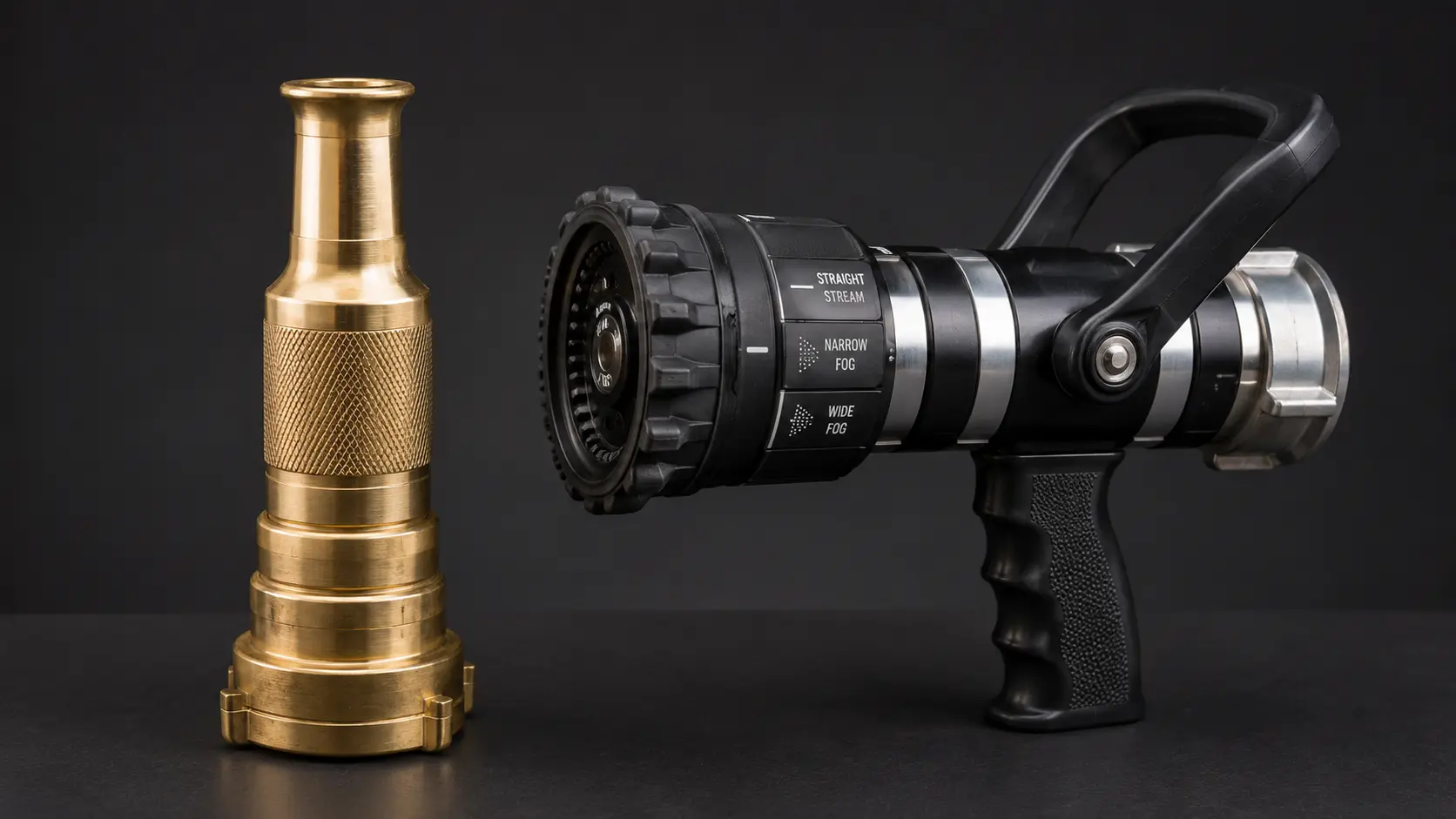
- ✓Correct nozzle — foam-capable nozzle with appropriate pattern settings. Not every nozzle produces good foam.
- ✓Application technique briefed — crew knows Class A penetration vs Class B bank-down before the nozzle is charged.
- ✓Blanket maintenance plan — who is responsible for maintaining Class B blanket after initial knockdown?
- ✓Flush plan after operations — system flush protocol known and staged before the operation ends.
- ✗Do not apply Class A to flammable liquid fires.
- ✗Do not apply standard AFFF or Class A to polar solvent (alcohol) fires.
- ✗Do not direct-stream Class B foam onto burning liquid surface.
Foam operations are not complicated once the fundamentals are internalized. The chemistry, the equipment limitations, and the application technique are all learnable. The departments that do this well are the ones where the training officer treats foam as a serious operational skill, not an occasional SOG bullet point. Get your crew in front of a fuel pan with the right equipment and the right agent, run the drill, and foam becomes one less thing to figure out on scene.

Comments 0
No comments yet. Be the first to share your thoughts!
Leave a Comment