Carbon Monoxide Guide: Symptoms, Where CO Comes From & What Firefighters Do on CO Calls
Carbon monoxide is the most common cause of poisoning death in the United States. It is invisible, odorless, and tasteless — and it produces symptoms that most people mistake for the flu, food poisoning, or exhaustion. Fire companies respond to CO alarm activations daily, and the difference between a detector malfunction and an actual life-threatening CO level is measured on a meter, not by smell or symptoms. This guide covers what CO is, where it comes from, how to recognize exposure, and what fire companies do on CO calls.
Jump to:What carbon monoxide is · Where CO comes from · Symptoms and exposure levels · CO detector basics · Fire company CO response · CO meters · Treatment basics for EMS · Prevention for homeowners · FAQ
What Carbon Monoxide Is
Carbon monoxide (CO) is a colorless, odorless, tasteless gas produced by the incomplete combustion of carbon-containing fuels. Any fuel-burning appliance or process that does not have adequate oxygen supply for complete combustion will produce CO. The chemical formula is CO — one carbon atom bonded to one oxygen atom, one atom short of the two-oxygen-atom carbon dioxide (CO⊂2;) that is the product of complete combustion.
Why CO is so dangerous
CO binds to hemoglobin in red blood cells to form carboxyhemoglobin (COHb). The bond between CO and hemoglobin is approximately 200–250 times stronger than the bond between hemoglobin and oxygen. When CO binds to a hemoglobin molecule, that molecule can no longer carry oxygen. The result is cellular hypoxia — the body's cells are starved of oxygen even though there is oxygen in the lungs and the heart is pumping normally. This is why symptoms of CO poisoning appear similar to altitude sickness or anemia.
The blood's affinity for CO means that even relatively low concentrations of CO in the air — measured in parts per million (PPM) — can produce significant COHb saturation with prolonged exposure. A concentration of 200 PPM will produce headache and dizziness in 2–3 hours. Higher concentrations accelerate this dramatically.
Where Carbon Monoxide Comes From
Any combustion process can produce CO when oxygen is insufficient. The most common residential and commercial sources:
| Source | Mechanism | Common failure mode |
|---|---|---|
| Gas furnace | Incomplete combustion of natural gas or propane | Cracked heat exchanger leaks combustion gases into supply air; blocked flue; improper air-fuel mixture |
| Gas water heater | Incomplete combustion | Blocked flue or vent; insufficient combustion air in enclosed utility room |
| Attached garage | Vehicle exhaust | Running vehicle in attached garage; inadequate air seal between garage and living space |
| Gas range/oven | Burner combustion | Improper burner adjustment; using oven for space heating; unvented combustion in enclosed kitchen |
| Fireplace/wood stove | Incomplete combustion of wood | Blocked or downdrafting chimney; wet wood; restricted combustion air |
| Portable generator | Engine exhaust | Running generator inside garage or near window; CO enters living space through air infiltration |
| Charcoal grill/hibachi | Charcoal combustion | Using charcoal indoors or in garage; significant CO production even from small quantities of charcoal |
| Gas-powered tools | Engine exhaust | Operating pressure washers, concrete saws, or similar equipment indoors or in enclosed spaces |
Generators kill. Portable generator-related CO deaths spike after every major storm when people run generators indoors or in garages during power outages. A generator running in a garage with the door open can produce fatal CO concentrations inside an attached home within minutes. Generators must operate outdoors, at minimum 20 feet from any window, door, or vent.
Symptoms and Exposure Levels
CO poisoning symptoms progress with increasing concentration and duration of exposure. The most dangerous aspect: many victims attribute early symptoms to other causes and do not leave the building or seek help.
| CO concentration (PPM) | Duration | Symptoms |
|---|---|---|
| 35 PPM | 8 hours | Headache and dizziness (OSHA PEL for workplace exposure) |
| 200 PPM | 2–3 hours | Headache, dizziness, disorientation |
| 400 PPM | 2–3 hours | Life-threatening headache, dizziness, nausea within 45 minutes |
| 800 PPM | 45 minutes | Dizziness, nausea, convulsions; death within 2–3 hours |
| 1,600 PPM | 20 minutes | Headache, dizziness, nausea within 20 minutes; death within 1 hour |
| 3,200 PPM | 5–10 minutes | Headache, dizziness, nausea within 5–10 minutes; death within 25–30 minutes |
| 6,400 PPM | 1–2 minutes | Convulsions; death within 10–15 minutes |
| 12,800 PPM | Immediate | Immediate physiologic effects; death within 1–3 minutes |
The "flu" misidentification
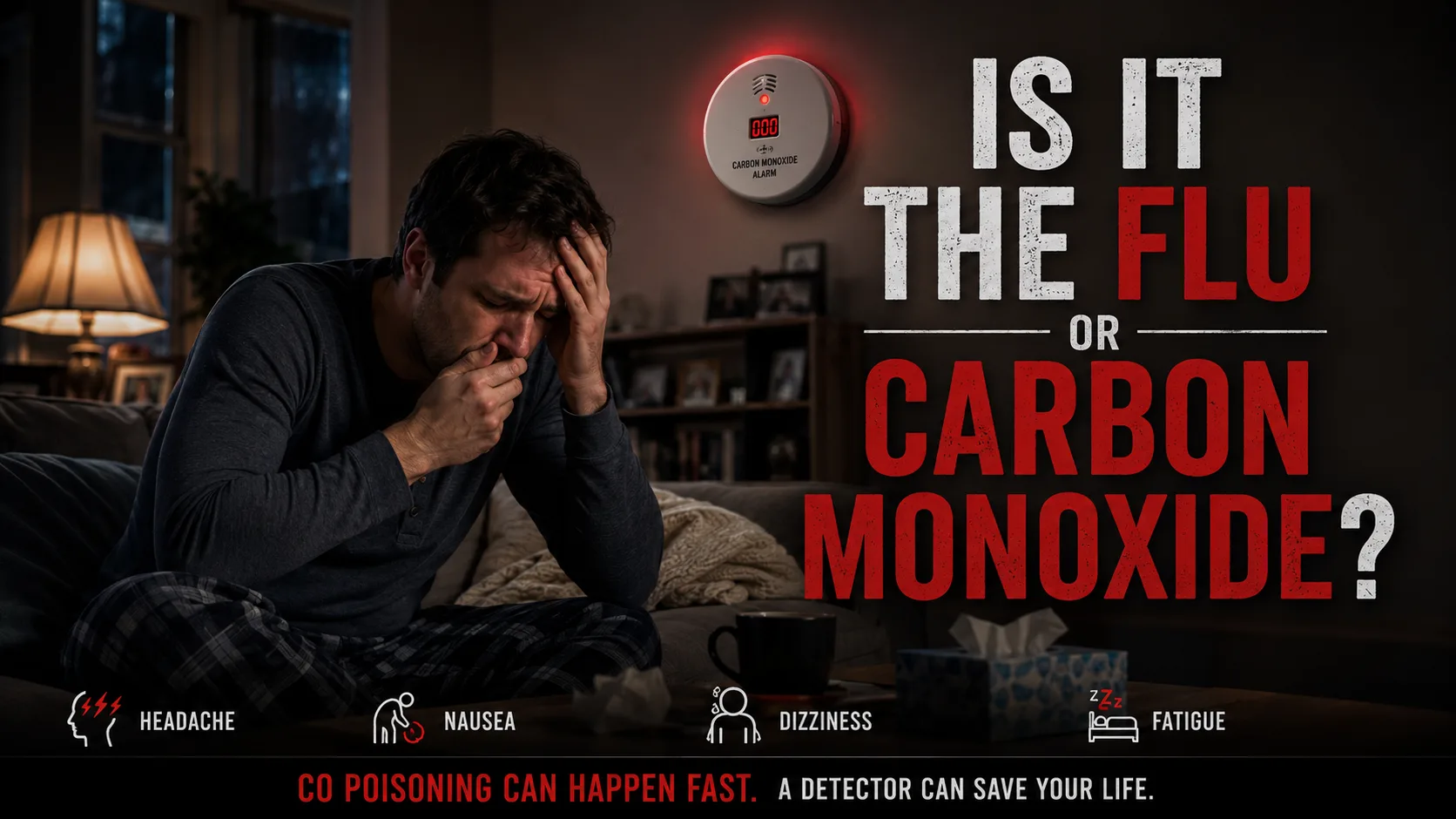
Early CO poisoning symptoms — headache, nausea, fatigue, dizziness — are nearly identical to influenza, food poisoning, and labyrinthitis (inner ear disturbance). Multiple household members developing the same symptoms simultaneously is a key clinical indicator of CO poisoning rather than illness. CO poisoning does not cause fever. If multiple people in a household have flu-like symptoms without fever, CO should be considered immediately.
CO Detector Basics
CO detectors are required by code in most U.S. states in any residence with gas appliances or an attached garage. What firefighters need to know about how they work:
Alarm threshold
Residential CO detectors per UL 2034 are designed to alarm at:
- 70 PPM for 60–240 minutes
- 150 PPM for 10–50 minutes
- 400 PPM for 4–15 minutes
These thresholds are intentionally set higher than OSHA occupational limits to avoid nuisance alarms. This means a CO detector that has just activated may have been accumulating CO at lower levels for a significant period before alarming. "The detector just went off" does not mean CO levels are low.
Detector placement
CO detectors should be installed on every floor of the residence and within 15 feet of sleeping areas. CO is slightly lighter than air but disperses fairly uniformly throughout a space; mid-wall height (5 feet) is effective but ceiling or floor mounting also work for most residential detectors.
Detector lifespan
Most residential CO detectors have a 5–7 year lifespan. The electrochemical sensing cell degrades over time. A detector at the end of its life may fail to alarm at dangerous CO levels, may nuisance alarm, or may display end-of-life warnings. Check the manufacture date on the back of the unit — firefighters conducting CO investigations should note the detector age as part of their assessment.
Fire Company CO Response: What Happens
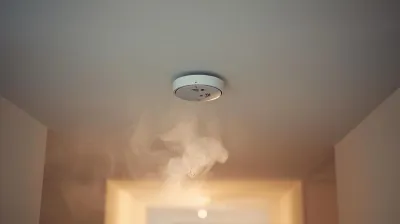
A CO alarm activation is a fire service call, not a nuisance alarm by default. Every CO activation is treated as a potential life safety event until the meter says otherwise. The response sequence:
- Don SCBA before entry. If CO levels are unknown, crews enter with SCBA. CO is immediately dangerous to life and health (IDLH) at 1,200 PPM. Readings that high are possible with significant appliance failure.
- Evacuate occupants immediately. Before meters are read, all occupants are moved to fresh air outside the structure.
- Assess for symptoms. Any occupant with headache, nausea, dizziness, or altered mental status is treated as a potential CO poisoning patient and EMS is notified or upgraded.
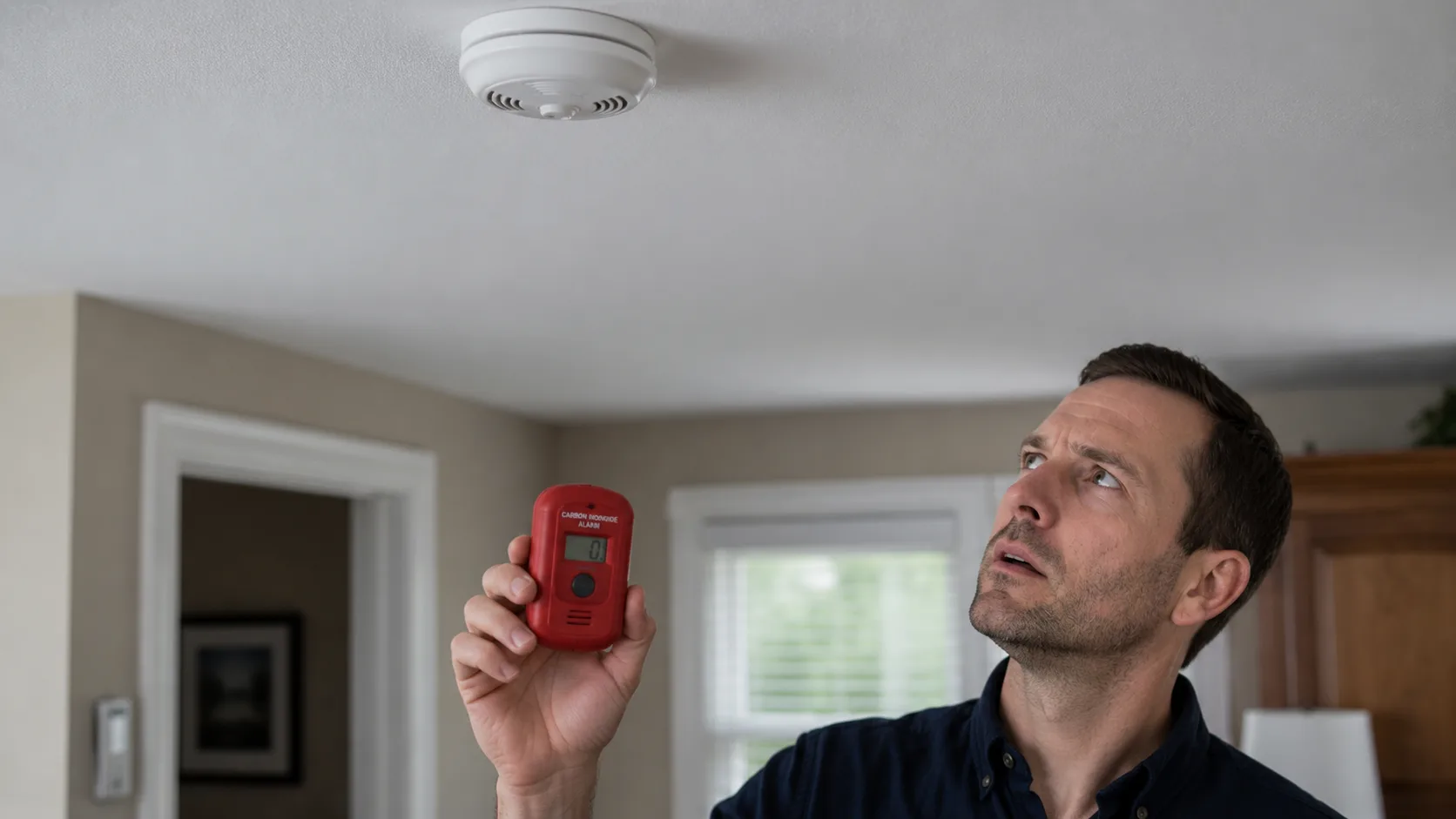
- Read the detector. Note the CO level displayed on the detector (many modern detectors display current and peak PPM). Does it match what the meter finds?
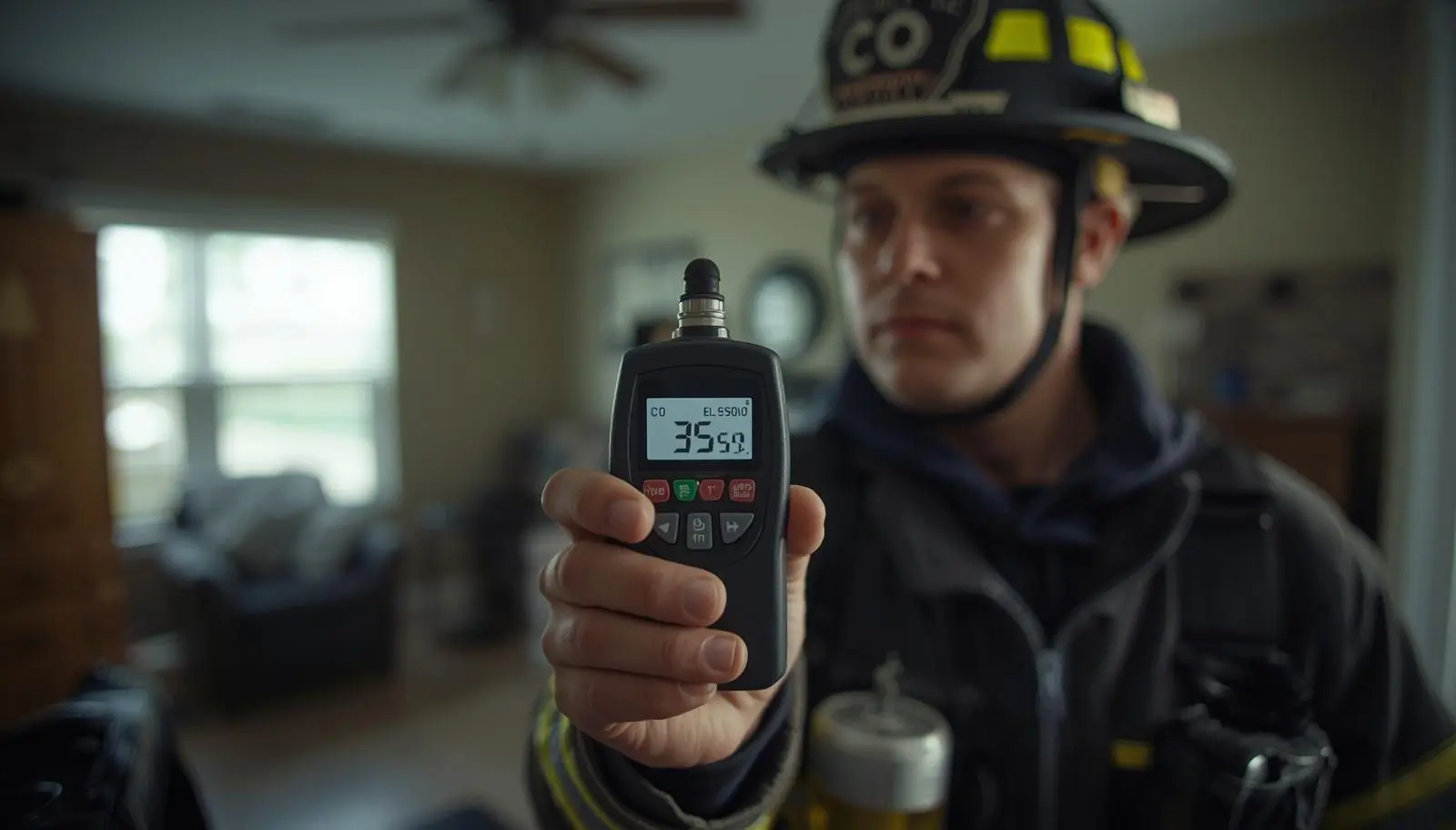
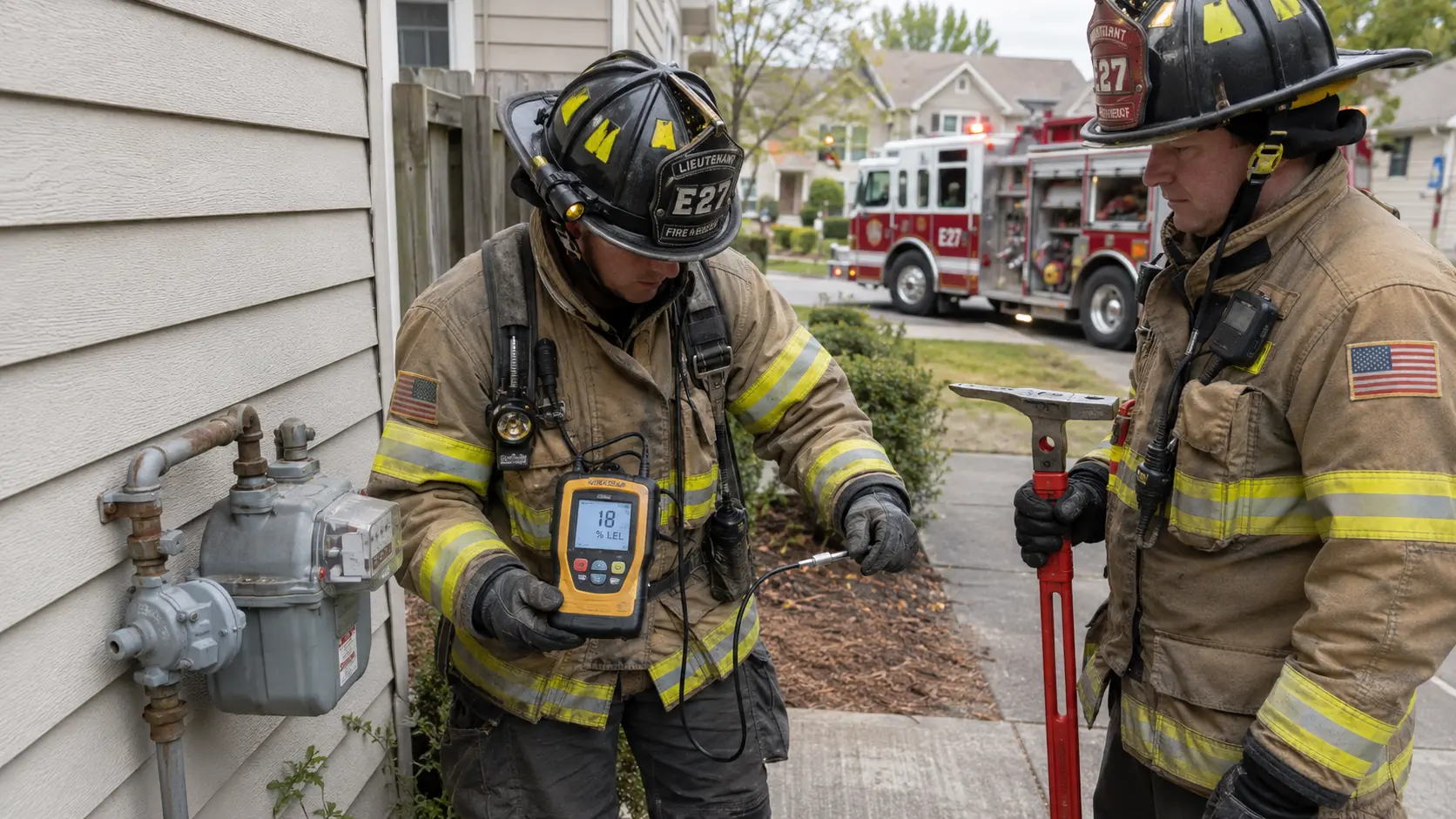
- Meter the structure. Use a calibrated CO meter to measure CO levels in all rooms, particularly near potential sources. Identify the highest reading and the likely source.
- Identify the source. Check all gas appliances, the garage, and any combustion equipment. A furnace with a cracked heat exchanger, a vehicle left running, or a malfunctioning water heater must be identified before the structure is cleared.
- Ventilate. Open windows and doors to ventilate the structure and allow CO levels to drop to safe levels before reoccupancy.
- No reoccupancy until source is identified and mitigated. A structure should not be cleared for reoccupancy until the CO source has been identified and repaired or shut down by a qualified technician. A cleared CO level with an unidentified source means the CO will return when the source runs again.
CO Meters: What Firefighters Use
Most engine companies and hazmat units carry handheld CO meters that provide real-time PPM readings. Key points for effective meter use:
- Calibrate regularly. CO meters require periodic calibration with certified CO reference gas. An uncalibrated meter may read significantly higher or lower than actual CO levels.
- Allow warmup time. Many CO meters require 30–60 seconds of warmup before readings are stable. Taking a reading immediately upon powering on may not be accurate.
- Check for cross-sensitivity. Some CO meters are sensitive to hydrogen gas (produced by batteries) and certain other gases. Know your meter's cross-sensitivity limitations.
- Note peak and current readings. Some meters log the highest reading since being turned on. This peak reading may be more relevant than the current reading if CO sources have been disrupted before meter use.
- Document readings by room. A structured survey with readings documented by location helps identify the source and provides a defensible record for reoccupancy decisions.
Treatment Basics for EMS: CO Poisoning
First-line treatment for CO poisoning:
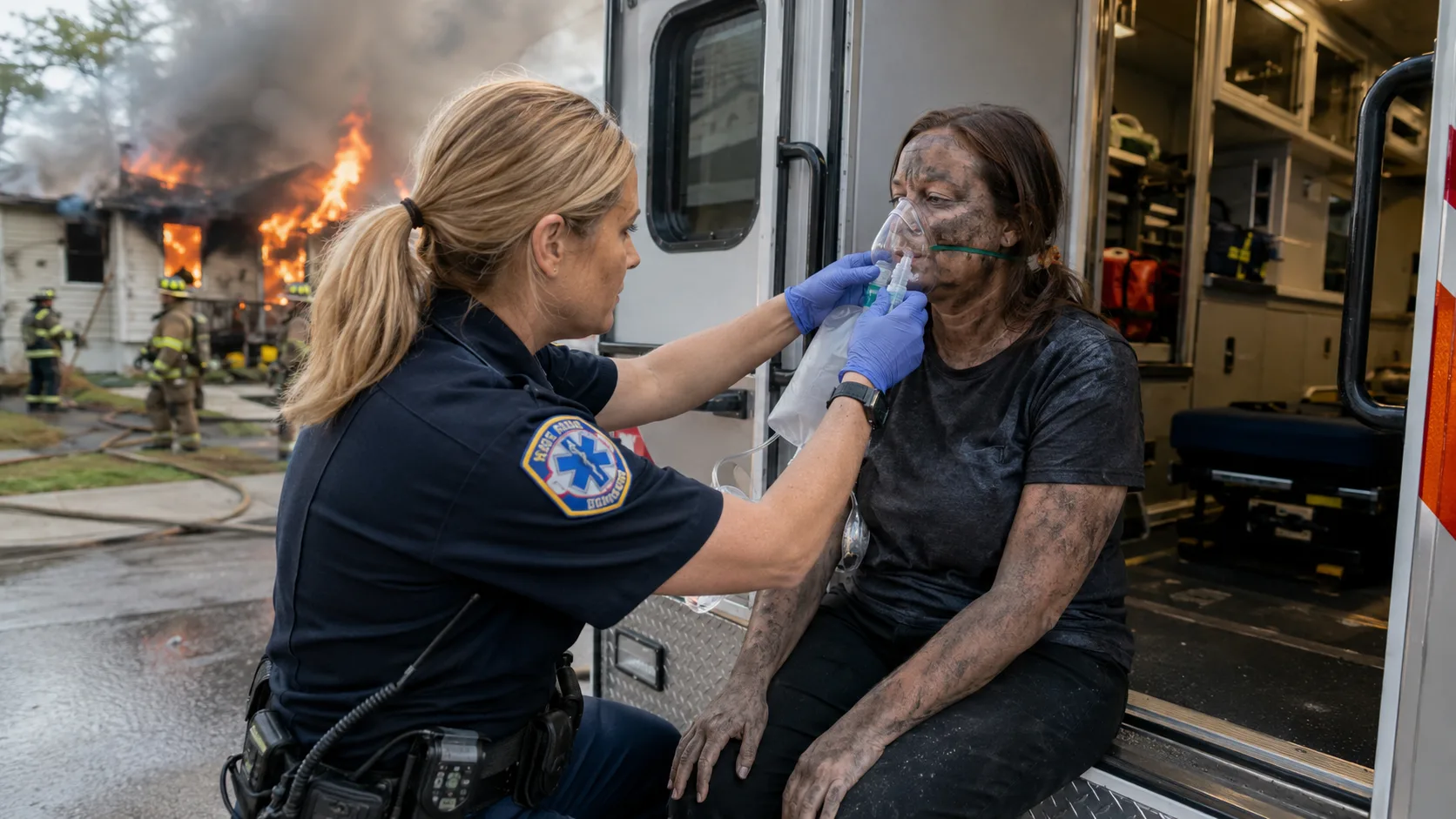
- Remove from exposure immediately. The half-life of carboxyhemoglobin (the CO-hemoglobin bond) in room air is approximately 4–5 hours. In high-flow oxygen, the half-life drops to approximately 60–90 minutes. Every minute in fresh air (or on oxygen) improves the prognosis.
- High-flow 100% oxygen via non-rebreather mask. For any symptomatic patient or any patient with significant potential exposure, administer 15 LPM via NRB. Do not use a nasal cannula — it does not deliver adequate FiO⊂2; to displace CO from hemoglobin at the rate required.
- Transport to the ED. Even asymptomatic patients with significant exposure should be evaluated in the emergency department. Serum COHb levels can be measured by blood test — this provides the definitive exposure assessment. Patients with neurologic symptoms, loss of consciousness, or COHb >25% may require hyperbaric oxygen treatment.
- Hyperbaric oxygen (HBO) therapy. HBO reduces the half-life of COHb further and is indicated for severe poisoning, pregnancy (fetal hemoglobin has higher CO affinity), and patients with cardiac complications. Not all facilities have hyperbaric chambers — know your nearest HBO-capable facility.
Prevention for Homeowners
- Install CO detectors on every floor and within 15 feet of every sleeping area
- Replace CO detectors every 5–7 years (check manufacture date on the back of the unit)
- Have gas appliances (furnace, water heater, range) professionally inspected annually
- Never run a generator, charcoal grill, or any combustion equipment indoors or in an attached garage
- Never idle a vehicle in an attached garage, even with the garage door open
- Ensure fireplaces and wood stoves have clean, clear chimneys before each heating season
- Never use a gas oven for space heating
- If the CO detector activates: get everyone out immediately, call 911, and do not re-enter until cleared by the fire department
Frequently Asked Questions
What are the symptoms of carbon monoxide poisoning?
Early symptoms: headache, dizziness, fatigue, shortness of breath, nausea, and confusion. These mirror flu symptoms, which is why many victims delay seeking help. Key difference from flu: multiple household members develop symptoms simultaneously, and there is no fever with CO poisoning. Severe poisoning causes loss of consciousness, seizures, and death without treatment.
What level of CO is dangerous?
35 PPM is the OSHA permissible exposure limit for 8 hours of workplace exposure. 200 PPM causes headache and dizziness in 2–3 hours. 400 PPM is life-threatening with sustained exposure. 1,200 PPM is the NIOSH IDLH (immediately dangerous to life and health). Residential CO detectors alarm at 70 PPM sustained exposure, meaning the detector has lagged behind actual CO accumulation by design.
What should I do if my CO detector goes off?
Get everyone (including pets) out of the building immediately. Call 911 from outside. Do not re-enter the building. Wait for the fire department to measure CO levels, identify the source, and clear the building for reoccupancy. Do not assume the alarm was a malfunction — treat every CO alarm as a real event until the fire department confirms otherwise.
Can you smell carbon monoxide?
No. Carbon monoxide is completely odorless and colorless. There are no sensory warning signs. The only reliable way to detect CO is with a working CO detector or an electronic meter. This is why CO detectors are required by code — there is no other way for occupants to know CO is present before symptoms develop.
How long does it take to recover from CO poisoning?
Minor exposure with brief symptoms typically resolves within hours of breathing fresh air or receiving supplemental oxygen. Significant poisoning with high COHb levels can cause neurological symptoms that persist for days to weeks (delayed neurological sequelae). The prognosis improves with rapid treatment and high-flow oxygen. Patients with loss of consciousness or very high COHb levels may require hyperbaric oxygen therapy.

Comments 0
No comments yet. Be the first to share your thoughts!
Leave a Comment