Warehouse Fire Tactics: Operations in Large Undivided Structures
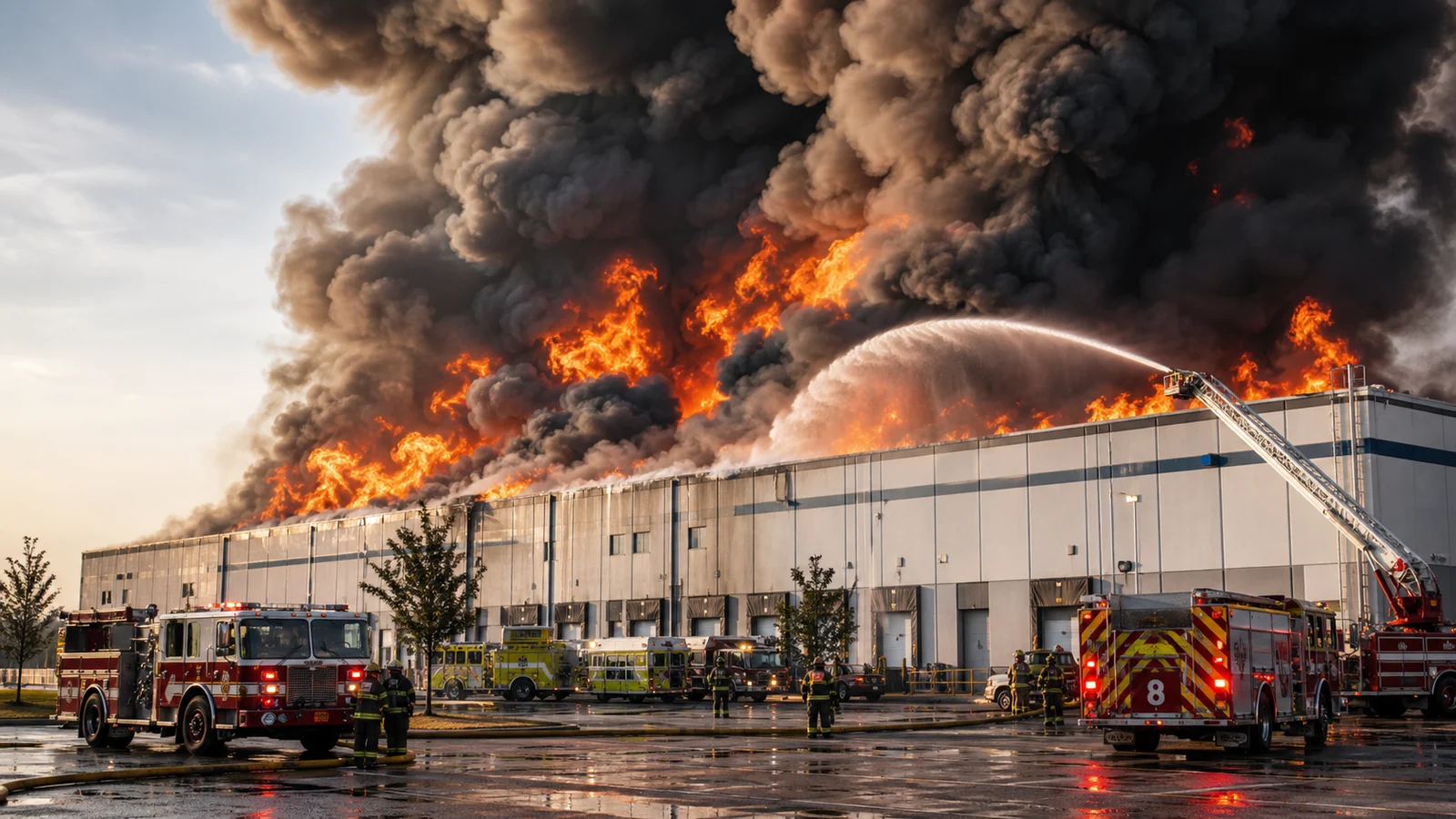
Warehouse and large commercial structure fires challenge every resource a fire department can bring. The combination of vast open floor plans, high rack storage, limited access points, and roof assemblies covering acres of structure creates fireground conditions where miscalculations are not correctable once made. The strategic framework for warehouse operations is fundamentally different from residential firefighting, and many firefighter fatalities in commercial structures trace directly to applying residential tactics to a commercial problem.
Jump to:Size-up priorities · Structural and storage hazards · Attack approach · Water supply demands · Going defensive · Pre-incident planning · FAQ
Size-Up Priorities
Warehouse size-up must answer more questions faster than residential size-up, with higher stakes for each answer:
- What is the occupancy and contents? An empty warehouse is a very different problem from one storing aerosols, pool chemicals, plastics, or tire rubber. Pre-incident plans are essential — on-scene size-up alone cannot reveal contents hazards.
- What is the construction type and roof assembly? Steel bar joist with metal deck, steel-framed with wood deck, or concrete tilt-up? Each has different collapse timelines and failure modes under fire conditions.
- What is the fire load and location? Is fire visible? How much of the structure is involved? Is this an early incipient fire with suppression potential or a well-established fire demanding defensive operations?
- Is the sprinkler system operating? A functioning sprinkler system fundamentally changes the tactical approach. A compromised or absent system means fire has grown unchecked.
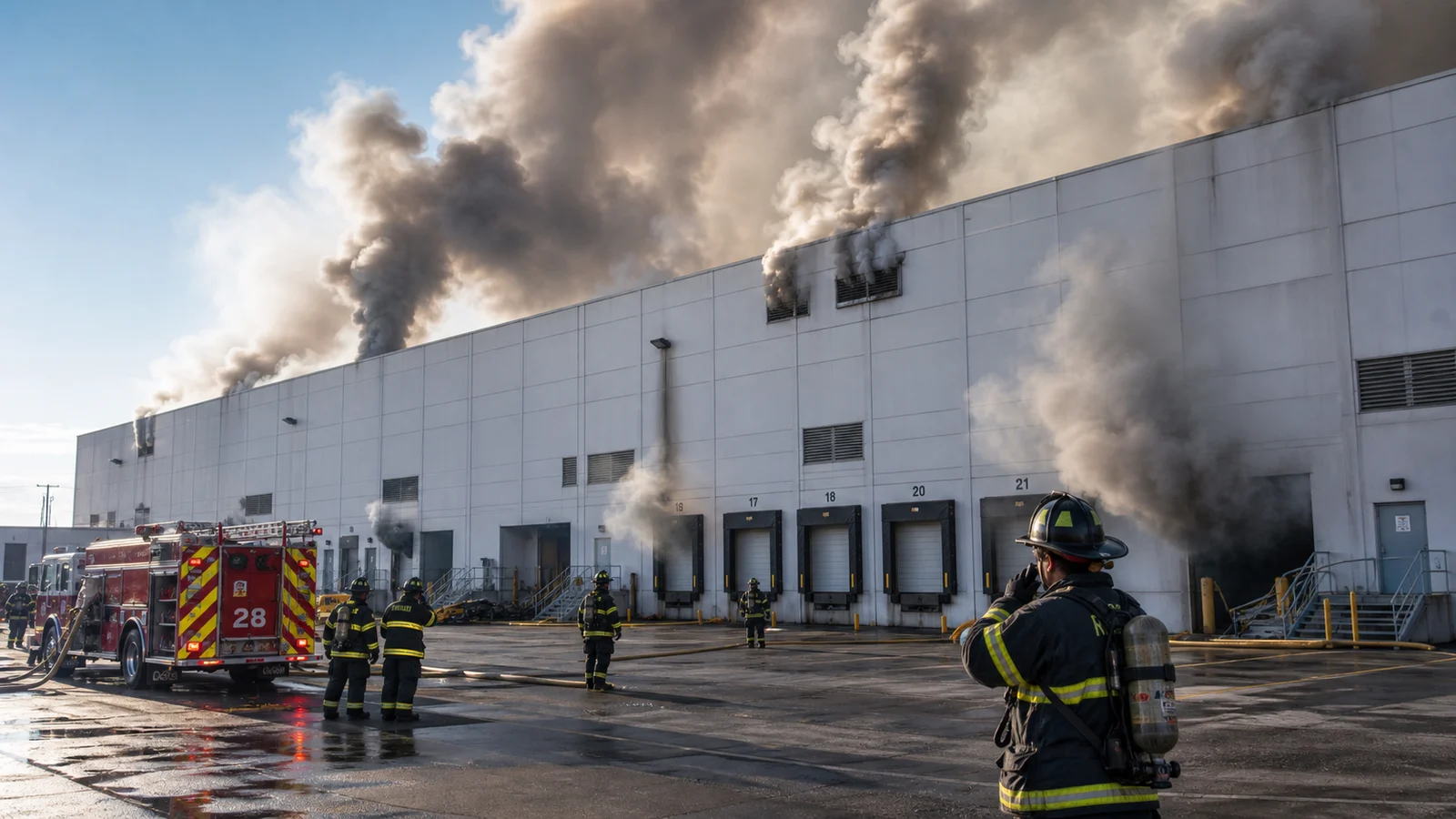
- What are the access points? Loading docks, man doors, overhead roll-up doors, skylights, and roof hatches all affect entry, ventilation, and egress options.
- Are there occupants? Warehouses often have workers present during operational hours. Account for occupancy before any crew enters.
Structural and Storage Hazards
Roof assembly collapse
The roof assembly is the defining hazard in warehouse firefighting. Steel bar joist construction — the standard in commercial warehouse construction for the past 50 years — fails predictably and dangerously under fire:
| Roof assembly type | Failure mode | Timeline |
|---|---|---|
| Steel bar joist with metal deck | Bar joists lose strength at 1,100°F; sudden collapse of large roof sections with no warning | 5–15 minutes of direct flame impingement |
| Lightweight steel truss | Progressive collapse; one truss failure triggers adjacent failures | 5–10 minutes |
| Concrete tilt-up | Wall panels separate from roof framing under fire conditions; wall collapse outward | Variable; walls can fall without warning |
| Pre-engineered metal building | Diagonal rod bracing fails; wall racking and collapse | 10–20 minutes of significant fire |
No crew should be under a steel bar joist or lightweight truss roof that has sustained significant fire involvement. The collapse is sudden, total, and survivable only outside the footprint. Establish collapse zones and enforce them.
Rack storage collapse
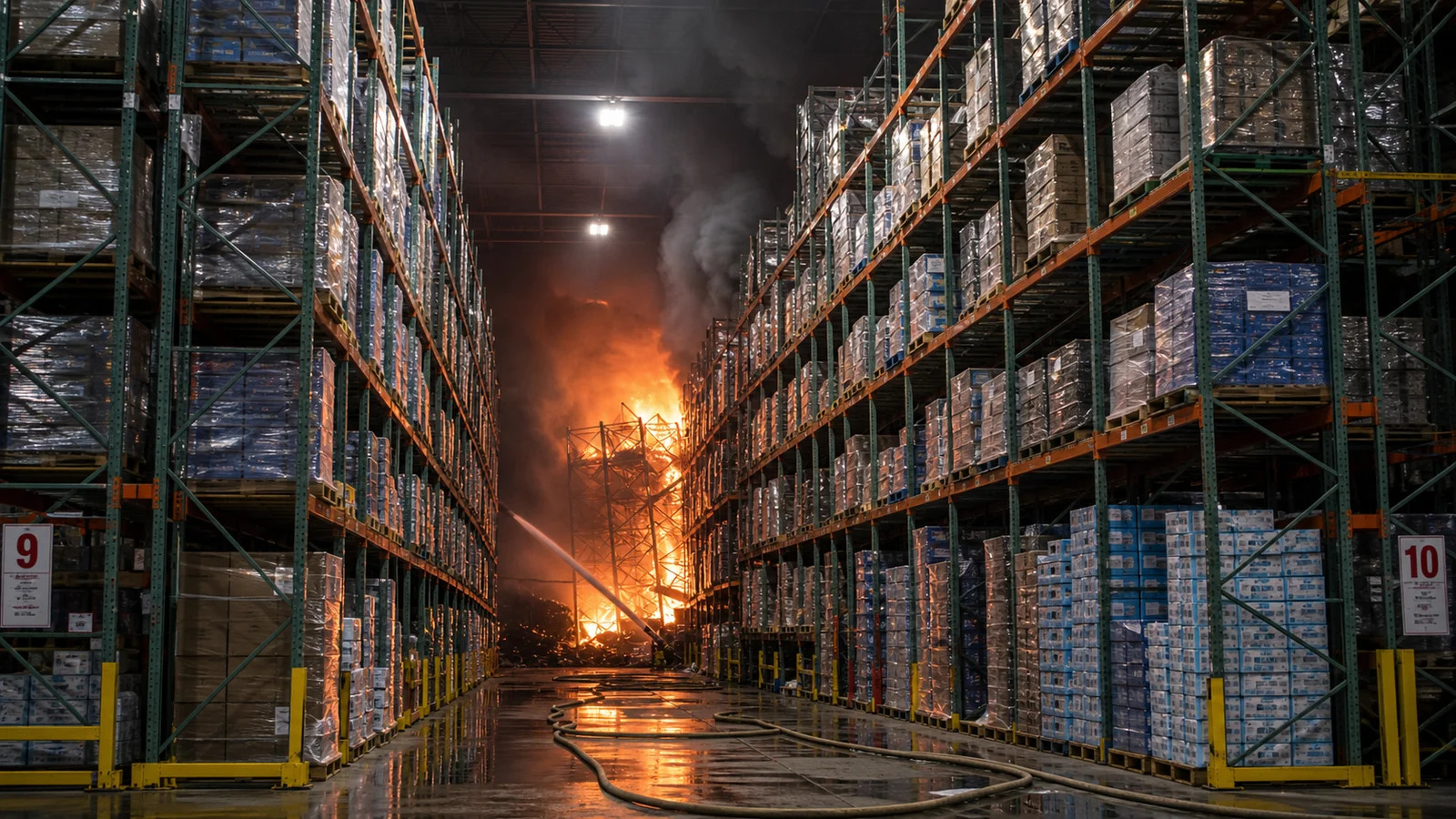
High-rack storage systems — some storing product 30–40 feet high — collapse under fire conditions with tremendous force and can trap or kill firefighters beneath falling product and rack steel. The collapse zone around rack storage must be considered when planning any interior advance.
Attack Approach
Warehouse fires are resource-intensive from the first minute. Key tactical principles:
- Request additional resources immediately. The first-arriving company at a working warehouse fire almost always needs more — more water, more personnel, more apparatus. Request early; you can release resources you do not need, but you cannot undo a delay in requesting them.
- Large-caliber lines from the start. 2½-inch lines with smooth bore nozzles (1⅛" or 1¼" tip, 250–325 GPM) are the minimum for offensive warehouse operations. Master streams should be set up as second lines, ready for immediate deployment if offensive operations are abandoned.
- Limit interior exposure. Interior operations in a warehouse should be limited to early-stage fires where the area of involvement is small, sprinklers are operating effectively, and collapse risk is low. Once fire establishes itself in roof structure, the calculus changes decisively.
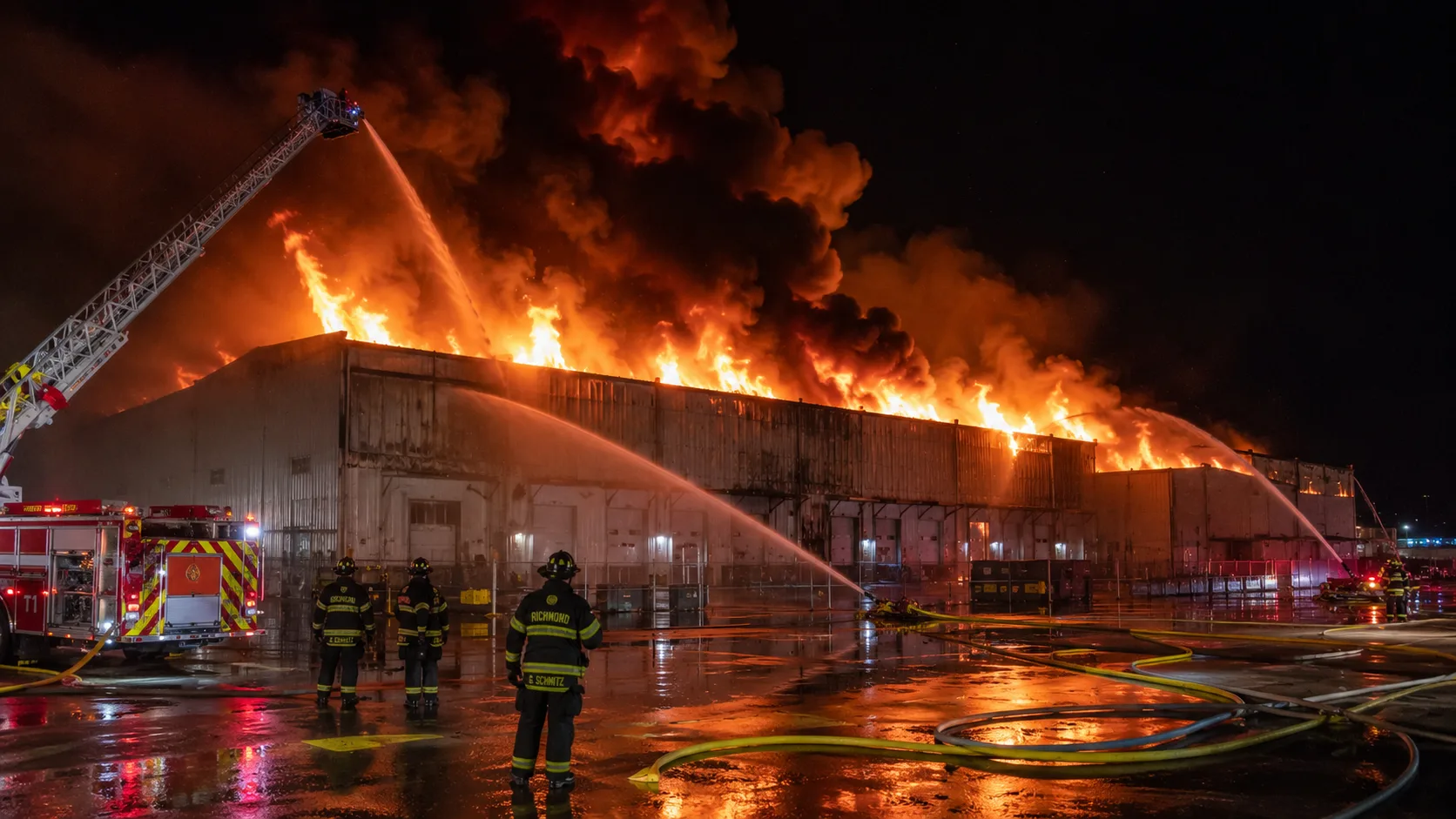
- Use loading dock and overhead door openings. These large openings allow big-bore lines to be directed at fire from protected exterior positions with reach into the structure — a pseudo-transitional approach that limits crew exposure.
Going Defensive: The Decision Framework
Transition to defensive exterior operations when any of the following are present:
- Fire has involvement in the roof assembly (visible flame or smoke from roof penetrations)
- Sprinkler system is not operating or has been overwhelmed
- Fire involves multiple rack storage bays
- Tilt-up construction with fire established against walls
- Any structural sounds (cracking, popping, groaning) from the roof
- Available water supply is insufficient to support offensive operations
- No confirmed victims inside
A defensive warehouse fire is not a failure. It is the correct tactical decision when offensive operations cannot succeed without unacceptable risk to crews. Master streams from the exterior can control fire spread and protect exposures without placing any firefighter under a failing roof.
Pre-Incident Planning
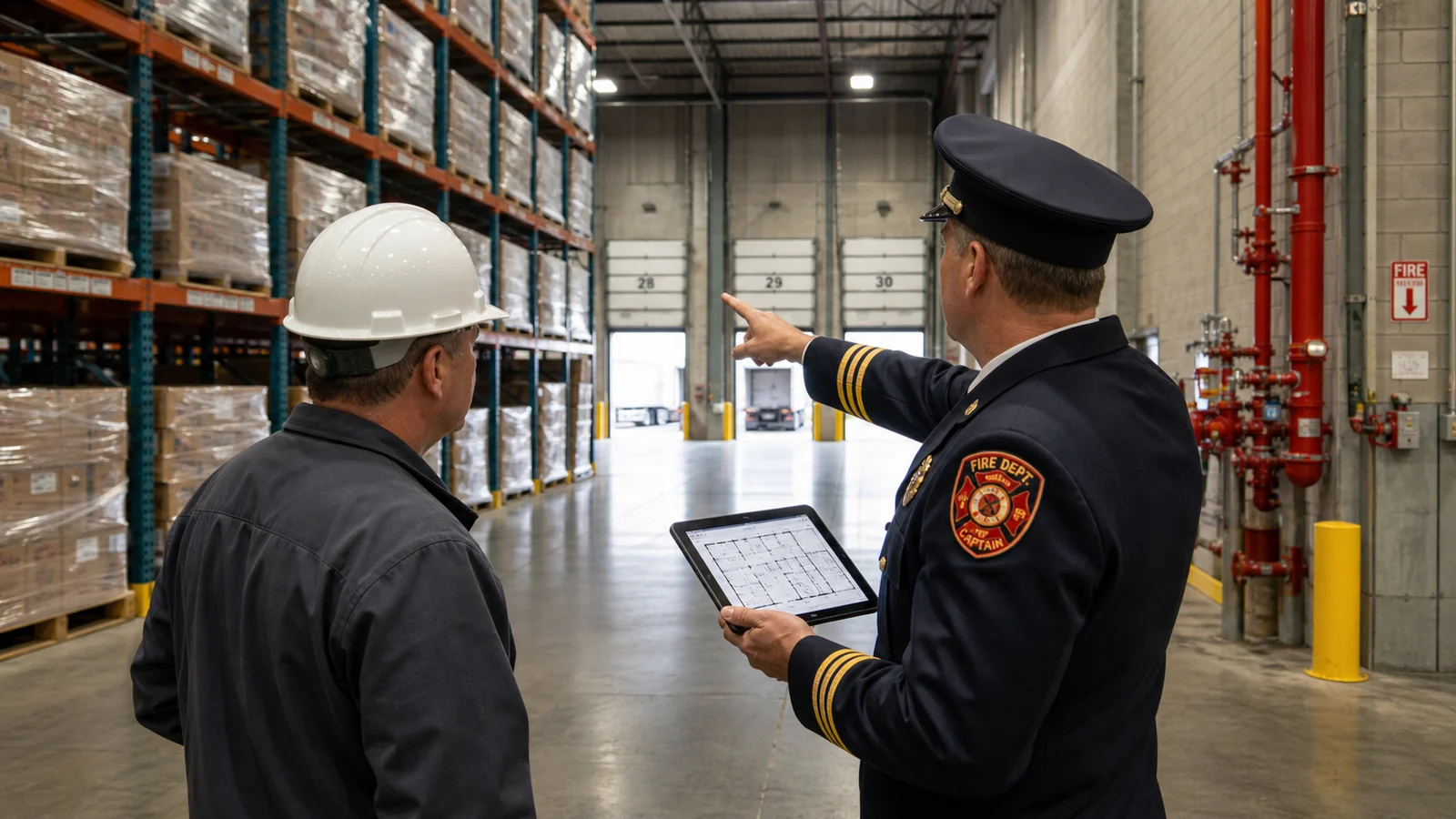
Pre-incident planning is more valuable for warehouse and commercial occupancies than for any other property type. A well-documented pre-plan provides: structural construction type, roof assembly details, occupancy and contents hazards, sprinkler system location and water supply, utility shutoffs, access points, and contact information for the occupant. Departments should conduct annual pre-planning visits to all significant commercial occupancies in their first-due area. See our pre-incident planning guide for the full process.
Frequently Asked Questions
Why are warehouse fires so dangerous for firefighters?
The combination of vast open floor plans, high fire loads, steel roof assemblies that collapse suddenly under fire, rack storage collapse hazards, and the resource intensity of large-scale water supply operations creates conditions where tactical errors are not recoverable. Steel bar joist roof assemblies can collapse without warning after only minutes of significant fire involvement.
When should firefighters go defensive at a warehouse fire?
When fire has involvement in the roof assembly, the sprinkler system is not controlling the fire, rack storage collapse risk is high, structural sounds indicate imminent failure, or water supply is insufficient for offensive operations. Defensive exterior master stream operations protect exposure buildings and control fire spread without placing crews under a failing roof.
What hoseline size is needed for a warehouse fire?
A minimum 2½-inch line with a smooth bore tip producing 250+ GPM for offensive operations. Master streams (500–1,500 GPM) should be established as backup and for defensive operations. The fire load and area of involvement in a warehouse exceeds the flow capacity of 1¾-inch attack lines.

Comments 0
No comments yet. Be the first to share your thoughts!
Leave a Comment