Firefighter Oral Board Questions and Answers (2026): 30 Questions with Answer Frameworks
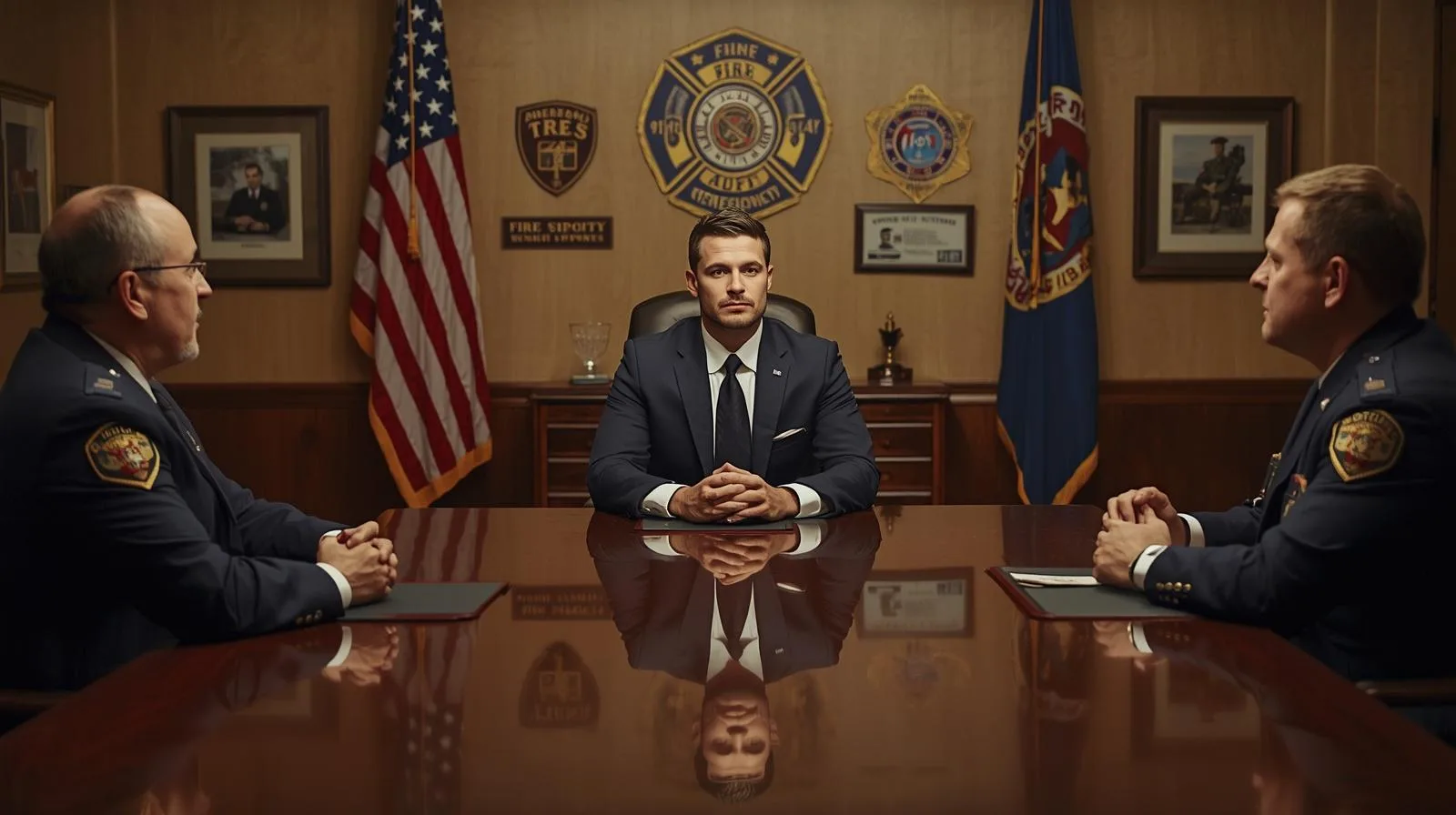
The oral board is the stage where the most prepared candidates win the job — and where the most qualified candidates lose it. You can have a perfect CPAT score and a 92% on the written exam, but if you walk into the board sounding like every other candidate, the panel will not remember you. This guide gives you 30 real oral board questions organized by category, the framework behind each answer, and examples of what separates high-scoring responses from clone answers.
Jump to:How boards score you · Personal questions · Situational questions · Ethical questions · Job knowledge · Department-specific · Opening and closing statements · Common mistakes · FAQ
How Oral Boards Score Candidates
Most departments use a structured scoring rubric with 4–6 dimensions. Understanding what they are scoring changes how you answer every question:
| Dimension | What they're measuring | How to demonstrate it |
|---|---|---|
| Oral communication | Clarity, conciseness, confidence, eye contact | Practice out loud until delivery is natural, not robotic |
| Judgment / problem solving | Logic, prioritization, decision-making under pressure | Think out loud, show your reasoning process |
| Interpersonal skills / teamwork | Conflict resolution, cooperation, crew dynamics | Use specific stories from your experience, not hypotheticals |
| Integrity / ethics | Honesty, accountability, doing right vs. easy | Never hedge on ethical questions — pick a clear position and defend it |
| Motivation / commitment | Why firefighting, why this department, career seriousness | Show preparation (station visits, ride-alongs, volunteer work) |
| Customer service | Public interaction, professionalism, empathy | Stories from any service role, not just fire |
The STAR method: For every behavioral question ("Tell me about a time..."), structure your answer as Situation → Task → Action → Result. Keep it under 90 seconds. Practice this until it is automatic.
Personal Questions (Questions 1–8)
This is your signature story — not a resume recitation. The board has your application. What they want in the first 30 seconds is a reason to be interested in you.
Structure: Who you are professionally → one defining experience that connects to firefighting → why you are here today. Keep it under 60 seconds.
The worst answers: "I want to help people," "I like the teamwork," "it's different every day." These are clone answers — every candidate says them. The panel hears them 40 times in a day and glazes over.
The best answers are specific and personal: a moment, a person, an experience that connected you to this career in a way no one else can replicate.
This question eliminates candidates who did no homework. The answer must include specific details about the department — their apparatus, their community, a program they run, their staffing model, a recent initiative.
This is a preparation inventory question. List concrete actions with dates: EMT certification, station visits, ride-alongs, CPAT prep timeline, fire science study, volunteer work, physical training regimen.
Strengths: name one or two that are relevant and back each with a story. Not "I'm a hard worker" — every candidate says this. Pick something specific and demonstrable.
Weaknesses: never say "I work too hard" or "I'm a perfectionist." Pick a real developmental area, explain what you have done to improve it, and show progress. This answer tests self-awareness and honesty.
Use STAR. The story does not need to be fire-related — sports, military, construction, restaurant work, emergency medicine all count. What matters is showing you understand your role within a team, deferred appropriately to leadership, and contributed to a collective outcome.
This tests conflict resolution and whether you escalate or de-escalate, circumvent authority or work within it. The board is watching for emotional maturity and chain-of-command awareness.
Show ambition without arrogance. New firefighters who immediately announce they want to be captain in five years signal a lack of understanding about how the job actually works. The correct answer shows you understand the learning curve and are committed to mastering the fundamentals first.
Situational Questions (Questions 9–16)
Situational questions describe a scenario and ask what you would do. The trap: new candidates invent elaborate responses that violate the chain of command or require tactical knowledge they don't have yet. The rule: always go to your supervisor first in any novel or ambiguous situation.
You follow the order (with one exception: IDLH/life-safety violation). The fire scene is not the place for debate. If you believe the order is wrong for non-safety reasons, you comply and raise your concern afterward through proper channels.
This tests whether you will freelance or stay in your lane. As a probationary civilian, you gather information and report — you do not take action that would require fire training or equipment you are not qualified to use.
Don't go immediately to the captain. The first step is a direct, private conversation with the person. Going over someone's head on the first offense signals you don't know how to handle peer-level conflict.
This tests knowledge of patient rights and informed refusal. Adults who are alert and oriented have the legal right to refuse treatment. Your job is to ensure the refusal is informed, get a signed refusal if protocol requires it, and document thoroughly.
Customer service under pressure. Don't get defensive. Listen fully, acknowledge the frustration, and get the right person involved.
This is a chain-of-command test with a twist: seniority does not override policy. You are not obligated to violate written policy because a senior member tells you to. The answer must be respectful but clear.
This tests attitude and station culture understanding. The answer is simple: you do the work, you do it well, and you don't complain. Every experienced firefighter was a probie who cleaned toilets and cooked the worst meals.
Use STAR. The situation does not need to be fire or EMS-related. A surgical technician in an emergency procedure, a construction worker in a confined space incident, a coach during a player injury — all demonstrate relevant composure under stress.
Ethical Questions (Questions 17–22)
Ethical questions are pass/fail in a way other questions are not. The board is not looking for a nuanced philosophical discussion — they are looking for a candidate who will choose integrity over convenience every time, and who can explain why clearly.
Report it. There is no acceptable hedge. The fire service depends on public trust, and theft destroys that trust. The "brotherhood" is not code for covering up criminal behavior.
Report it to the officer. This is a life-safety issue for the crew, the patient, and the public. Compassion for the person does not override the obligation to report.
Admit it, report it, learn from it. The candidates who try to hide mistakes are the ones who lose jobs. The ones who own mistakes and show they learned demonstrate exactly the accountability the fire service needs.
Answer honestly. If the scenario is from a previous job, describe it and explain clearly why you refused or how you navigated it. Do not claim you have never been in an ethically challenging situation — the panel won't believe it.
Job Knowledge Questions (Questions 23–27)
Research: population, major employers, industrial hazards, building stock age and type, WUI exposure, water supply challenges, call volume and type mix. This is homework that almost no candidate does thoroughly.
RECEO-VS is a tactical priority framework: Rescue, Exposure protection, Confinement, Extinguishment, Overhaul — Ventilation and Salvage as supporting operations throughout. Used as a systematic approach to size-up and tactical decision-making.
Originally developed for wildland fire but widely referenced in structural fire as well. Key themes: maintain situational awareness, know your escape routes and safety zones, communicate clearly, never get into a position you can't get out of. Candidates applying to wildland or combination departments should have these memorized.
National Incident Management System. It provides a standardized framework for all emergency response agencies to work together under a common command structure, terminology, and resource management system. Matters because multi-agency incidents (mutual aid, disasters) require everyone to speak the same operational language.
Department-Specific Questions (Questions 28–29)
Research: local news, department annual reports, city council meeting minutes, their Facebook/Instagram. Look for recent apparatus purchases, staffing changes, new programs, major incidents, community outreach initiatives. Candidates who reference specific, accurate information immediately stand apart.
Yes — always. This is your closing statement and your last impression. Prepare it in advance, keep it under 45 seconds. Summarize why you are the right fit, acknowledge something specific about the department, and thank the panel directly.
Opening and Closing Statements
Most departments give you 60–90 seconds to open and close. Prepare both in writing and practice them out loud until delivery is natural. A strong opening captures the panel in the first 30 seconds. A strong closing leaves the final impression.
Your opening should answer: who you are, what defines you as a candidate, and why you are here. Your closing should summarize your fit, show department-specific knowledge, and express genuine commitment.
The 7 Most Common Oral Board Mistakes
- Clone answers. "I want to help people," "I like teamwork," "it's different every day." These are invisible answers. Be specific and personal.
- Not doing department research. Candidates who cannot answer "Why this department?" specifically are immediately forgettable.
- Freelancing on tactical scenarios. You are a candidate, not a firefighter yet. Always go to your officer.
- Hedging on ethics. The board is looking for clear, confident answers on ethical questions. Hedging signals you might do the wrong thing when it is convenient.
- Not practicing out loud. Reading answers in your head does not prepare you for live delivery. Record yourself and listen back.
- Rambling. Most oral board answers should be 60–90 seconds. If you are still talking at 3 minutes, you have lost them.
- Skipping the closing. "That's all I have" is not a closing statement. It wastes the most valuable 45 seconds of your interview.
FAQ — Firefighter Oral Board
How long is a typical firefighter oral board interview?
Most entry-level oral boards run 20–40 minutes. Large departments with structured rubrics tend to be tighter (20–25 min). Some departments run shorter interviews (15 min) with a strict time limit per question. Know the format before you go in if possible.
How many people are on a firefighter oral board panel?
Typically 3–5 people. Panels often include a company officer, a training officer or chief officer, and sometimes a civilian HR representative or community member. Do not assume everyone on the panel is a firefighter.
Do I need to wear a suit to a firefighter oral board?
Yes. Business professional attire is the standard unless the department specifically communicates otherwise. A dark suit, clean dress shoes, conservative tie. This is not a casual interview and your attire sends a signal about how seriously you take the opportunity.
How do I prepare for firefighter oral board in one week?
Day 1: Research the department (apparatus, staffing, community, recent news). Day 2: Write your signature story and "why firefighting" answer. Day 3: Write answers to the top 10 most common questions. Day 4: Record yourself answering out loud and review. Day 5: Do a mock interview with someone who will give honest feedback. Days 6–7: Refine weak answers and practice opening/closing statements until delivery is natural.
What should I bring to a firefighter oral board?
Extra copies of your resume and any certifications (EMT card, CPR card, degree). A notepad if permitted. Nothing else on the table. Arrive 15 minutes early to settle, not 5 minutes early to rush.
Comments 0
No comments yet. Be the first to share your thoughts!
Leave a Comment