Fireground Size-Up: Complete Guide to Arriving Officers and Engine Company Decisions
Size-up is not something that happens when you arrive on scene — it starts when the call comes in and continues throughout the entire incident. The decisions made in the first 90 seconds of a structural fire determine whether the incident is managed or escalates. This guide covers the complete size-up framework for company officers and engine companies: what to gather, what to communicate, and how to translate observations into an Incident Action Plan.
Jump to:What size-up actually is · COAL WAS WEALTH acronym · En route size-up · On-arrival 360 · Reading the fire · Tactical priorities · Initial radio report · Ongoing size-up · FAQ
What Size-Up Actually Is
Size-up is the continuous mental process of gathering information, assessing conditions, making tactical decisions, and monitoring outcomes throughout an incident. It is not a checklist you complete once at arrival — it is a loop that runs constantly from dispatch to overhaul.
The purpose of size-up is to answer three questions:
- What do I have? — Fire conditions, building, occupancy, life safety, resources
- What do I need? — Personnel, water, apparatus, specialized resources
- What do I do? — Strategy (offensive vs. defensive), tactical priorities, assignments
Every element of your size-up feeds into these three answers. When information changes, your answers may change — and your Incident Action Plan (IAP) must change with them.
The COAL WAS WEALTH Acronym
COAL WAS WEALTH is one of the most comprehensive size-up frameworks in the fire service, developed to ensure arriving officers cover all critical variables systematically. Each letter represents an information category:
You will not have complete information on all 13 elements before you must act. Size-up is about gathering what you can as fast as you can and making the best decision with the information available. Waiting for complete information at a working fire is not an option.
En Route Size-Up: Before You Arrive
Size-up begins the moment the alarm is received. Information available en route:
- Dispatch information: What was reported? Smoke detector, structure fire, confirmed flames? Caller location vs. fire location? Any reports of people trapped?
- Address analysis: What do you know about this address? Pre-incident planning data, prior responses, known hazards.
- Building type from pre-plan or memory: What is the likely construction type? What occupancy? What life hazard at this time of day?
- Water supply routing: Which hydrant is your primary? What is the direction of lay? Is your apparatus positioned for a forward or reverse lay?
- Resource positioning: What companies are responding? Who is likely first due? What is your role based on your position in the response?
- Weather: Wind direction will influence your approach. High wind at fire location changes exposure priorities.
Radio situation awareness en route
Monitor the radio from the moment of dispatch. If first-due is on scene ahead of you, their initial radio report tells you conditions before you arrive. What is the smoke doing? Has an offensive strategy been established? Are there reports of people trapped?
On-Arrival: The 360-Degree Walk-Around
The 360-degree walk-around is one of the most valuable — and most skipped — practices in residential firefighting. Walking all four sides of a structure before committing to an attack plan takes 60–90 seconds and can reveal information that changes your entire IAP:
- Fire location on the C or D side that is not visible from the A side
- Basement involvement (smoke from foundation vents, ground-level smoke banking)
- Attic involvement (smoke from eaves, ridge venting)
- Exposures on the B and D sides not visible from the street
- Victims visible at windows who cannot be seen from the front
- Blocked egress on the rear of the structure
- Propane tanks, above-ground utilities, hazmat storage
The 360 is not optional when life safety permits. If you have confirmed victims in immediate danger, life safety overrides the 360. If you do not have confirmed immediate life hazard, the 60 seconds to walk the building pays back many times over in situational awareness.
Who does the 360?
On a single-engine first-due, the officer walks the 360 while the driver/engineer connects to the hydrant. The crew sizes up the entry point and prepares the attack line. The officer's 360 information shapes the entry point, line placement, and attack priorities.
Reading the Fire: What You Observe Drives Your IAP
| Observation | What it tells you | Tactical implication |
|---|---|---|
| Light smoke, first floor, residential | Early fire, probably growth stage, limited spread | Offensive, aggressive interior attack; good survivability window |
| Heavy black turbulent smoke, multiple floors | Established fire, post-growth or approaching flashover; fire has traveled | Offensive attack must be immediate and from correct position; consider RIT deployment early |
| Smoke from eaves and ridge in Type V | Attic involvement; possible lightweight truss roof | No roof operations; evaluate defensive posture; prioritize life hazard before property |
| Dark pulsing smoke, no visible flame, hot door surface | Backdraft indicators; oxygen-depleted fire | Do NOT open doors; establish vertical vent first; stand aside at any forced entry |
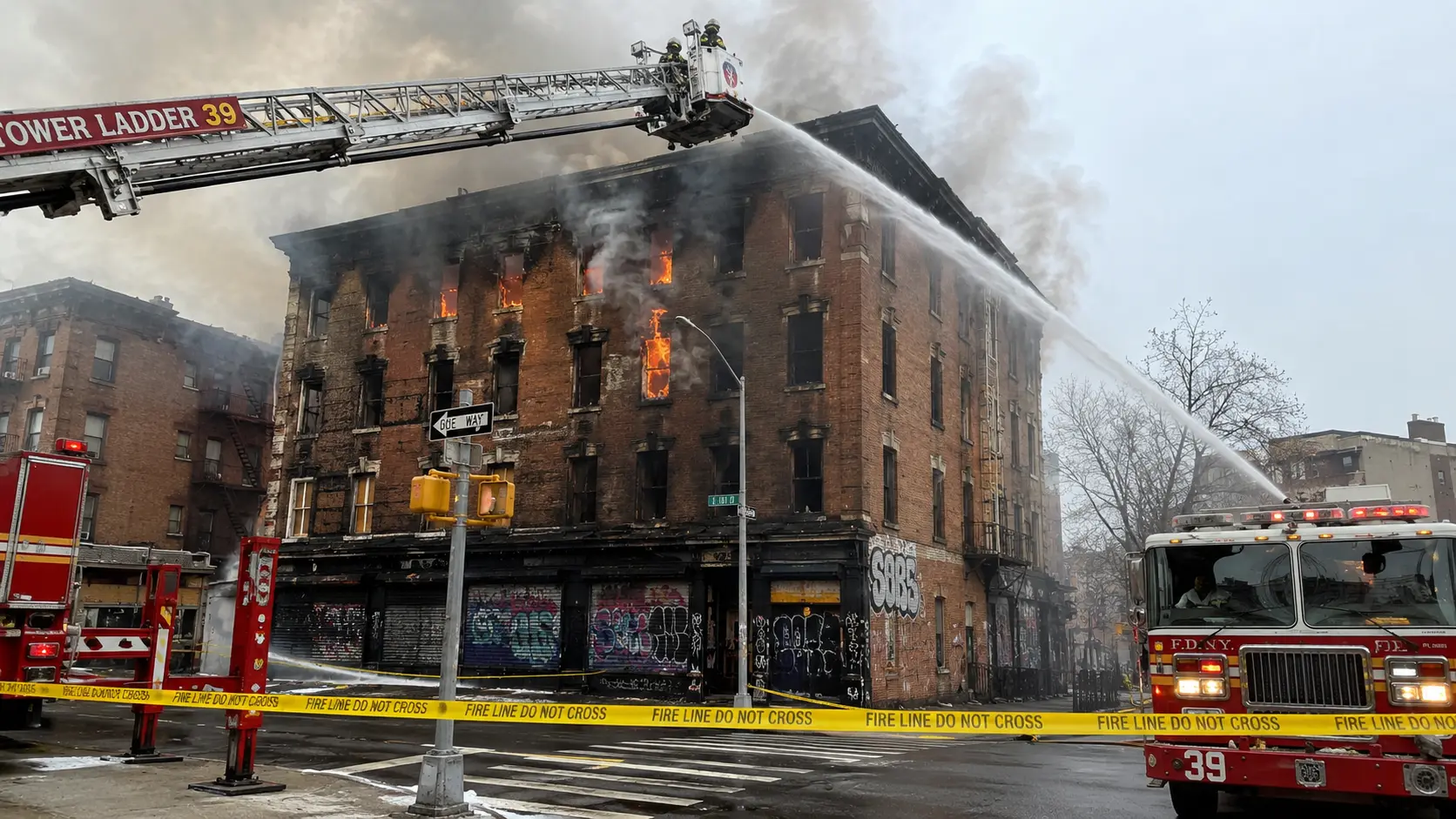
| Fire through the roof, all floors showing flame | Post-flashover, fully developed or beyond; structure likely compromised | Defensive operations; establish collapse zone; exposure protection priority |
| Operating sprinklers visible, fire knocked back | Suppression system working; reduced immediate life threat | Locate and support the system (do not shut it off); find the seat of fire; targeted attack |
Tactical Priority Order
All fireground actions are organized around three priorities in order:
- Life safety — occupant rescue, firefighter safety, and RIT readiness
- Incident stabilization — stopping the fire from spreading or worsening
- Property conservation — limiting fire damage and secondary damage from suppression
These priorities remain in order at all times. You do not skip life safety to get water on the fire faster. You do not risk firefighter lives for property conservation after the occupant rescue window has passed. Every tactical assignment you make should be traceable back to one of these three priorities.
Offensive vs. defensive strategy decision
The most consequential tactical decision at any structural fire is whether to operate offensively (interior attack) or defensively (exterior only). Key factors:
- Life safety: Confirmed victims inside is the strongest indicator for offensive entry, even in deteriorating conditions.
- Structural integrity: Signs of significant structural compromise (collapse, heavy fire involvement in structural members) are indicators against offensive operations.
- Fire stage: Pre-flashover with manageable conditions = offensive. Post-flashover with fire throughout = defensive unless confirmed rescue.
- Construction type: Type II with established fire = defend early. Type I with early fire = offensive with confidence.
- Resource availability: You cannot safely commit to offensive attack without adequate personnel for attack, search, backup, and RIT.
The Initial Radio Report: What to Transmit in 30 Seconds
The arriving officer's initial radio report tells dispatch, mutual aid, and responding companies what they are coming to. A complete initial report covers:
- Unit identification ("Engine 3 on scene")
- Building description ("2-story wood frame single family")
- Conditions ("heavy smoke showing from the first floor, one window with active flame on the Alpha side")
- Life hazard ("neighbor reports one occupant unaccounted for")
- Strategy announcement ("Engine 3 will be operating offensively, laying from hydrant at Oak and Main")
- Command establishment ("Engine 3 establishing Oak Street Command")
The initial report is not optional. Every unit on the response is making decisions based on what you report. A vague first report ("Engine 3 on scene, working fire") forces companies behind you to operate blind until they arrive. Give them the information they need while they are still en route.
Ongoing Size-Up: The Loop That Never Stops
Size-up does not end with the initial report. Conditions change throughout the incident and your IAP must update with them. Specific points to reassess:
- After first hoseline is operating: Is the fire responding to water? Is suppression working or is fire continuing to develop?
- After search: All clear on a floor? Victim located? Still unaccounted for?
- Every 10–15 minutes: Condition update to command. Has smoke character changed? Any structural indicators worsening?
- After any significant event: Collapse, flashover, firefighter injury, MAYDAY — reassess strategy immediately.
- Resource depletion: Is first-due crew running low on air? Is the water supply sustaining? Does command need to request additional resources?
Frequently Asked Questions
What is the purpose of size-up in firefighting?
Size-up is the systematic process of gathering information about an incident to make tactical decisions. It answers three questions: What do I have? What do I need? What do I do? Good size-up drives better decisions faster, which directly impacts firefighter safety and incident outcomes.
What does COAL WAS WEALTH stand for?
Construction, Occupancy, Apparatus and manpower, Life hazard, Water supply, Auxiliary appliances, Street conditions, Weather, Exposures, Area, Location and extent of fire, Time, Height. It is a comprehensive size-up acronym used to ensure arriving officers systematically assess all critical variables.
How long should a 360-degree size-up take?
A 360-degree walk-around of a typical single-family residence should take 60–90 seconds. Larger structures take longer. The 360 should be completed before committing to an attack plan unless confirmed immediate life hazard requires earlier action.
What is the first tactical priority at a structure fire?
Life safety — always. This includes both occupant rescue and firefighter safety. Incident stabilization (stopping the fire) is the second priority, and property conservation is third. These priorities do not change based on fire conditions, only on whether they can still be achieved safely.
When should you go defensive at a structure fire?
Transition to defensive operations when: fire involves the entire structure, significant structural compromise is indicated, fire has burned beyond the survivable window for any possible occupants, or conditions deteriorate faster than offensive suppression can manage them. This is a command-level decision that should be communicated clearly to all operating companies.
Comments 0
No comments yet. Be the first to share your thoughts!
Leave a Comment