
Wildfire Evacuation Guide: Go-Bag Essentials, Evacuation Zones & How to Leave Safely
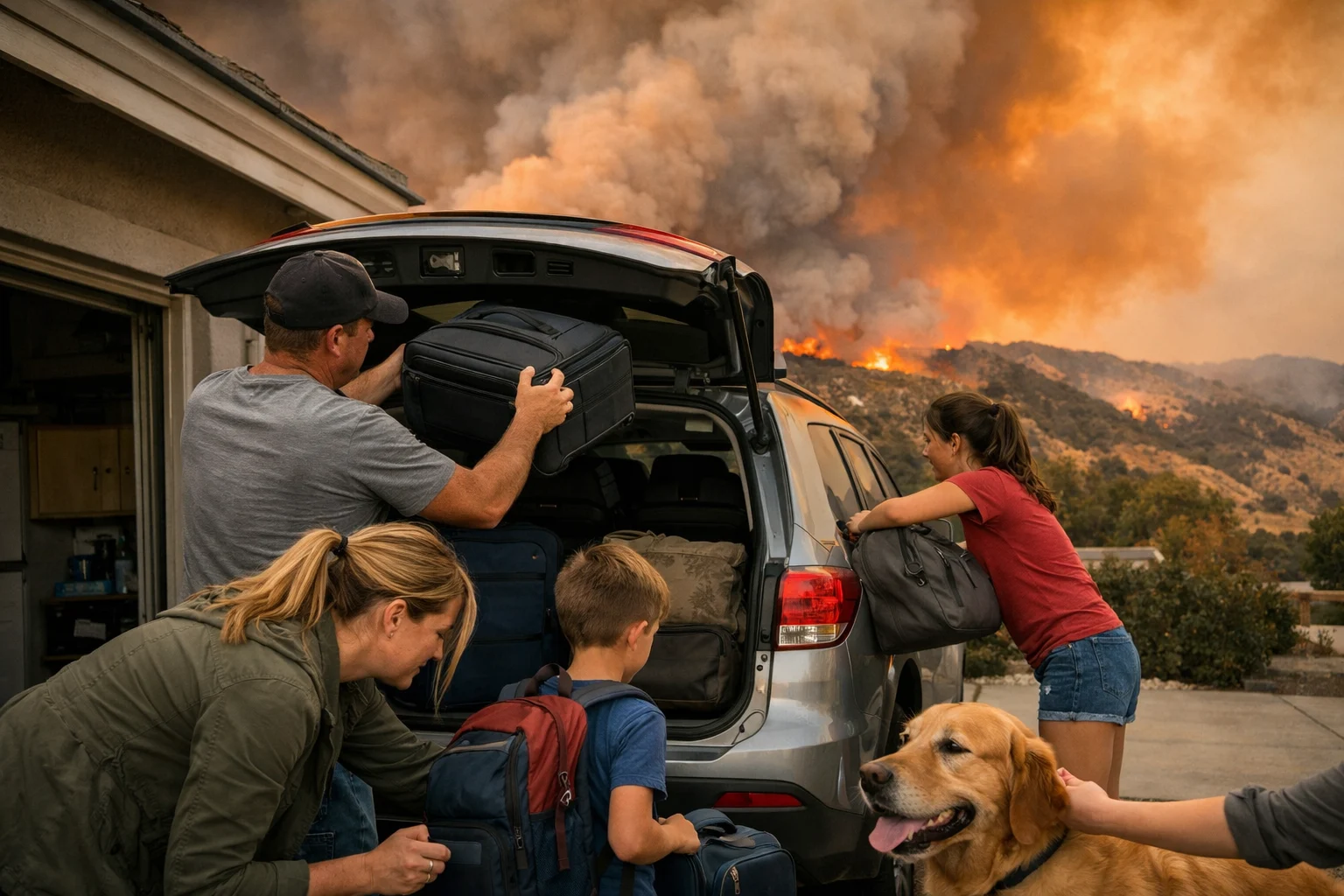
Wildfire evacuation failure kills people. The majority of wildfire deaths occur when residents delay leaving, get caught in traffic on a single exit road, or return to evacuated areas too early. This guide covers the complete civilian wildfire evacuation framework: how evacuation zone systems work, what to prepare before fire season, how to leave safely when the order comes, how to protect your home in the final minutes, and how to re-enter after the fire. Written from the fire service perspective of what we see go wrong.
Jump to:Evacuation zone systems · Before fire season: preparation · Go-bag essentials · When to leave · How to leave safely · Final home preparation · Pets and livestock · Re-entry after the fire · FAQ
Understanding Evacuation Zone Systems
Most wildfire-prone counties in the United States use a three-zone evacuation warning system, though names and numbering vary by county:
| Zone / Level | Common name | What it means | What you should do |
|---|---|---|---|
| Zone 1 / Level 1 | Ready / Advisory / Watch | Fire in the area; conditions could change rapidly; be aware and ready to leave quickly | Be ready to leave immediately. Have your go-bag at the door. Fill medications. Know your route. Load pets and valuables. |
| Zone 2 / Level 2 | Set / Warning | High probability of evacuation; conditions are threatening; vulnerable populations should leave now | Leave now if you have mobility limitations, pets requiring extra time, or livestock. Everyone else: be ready to go within minutes. |
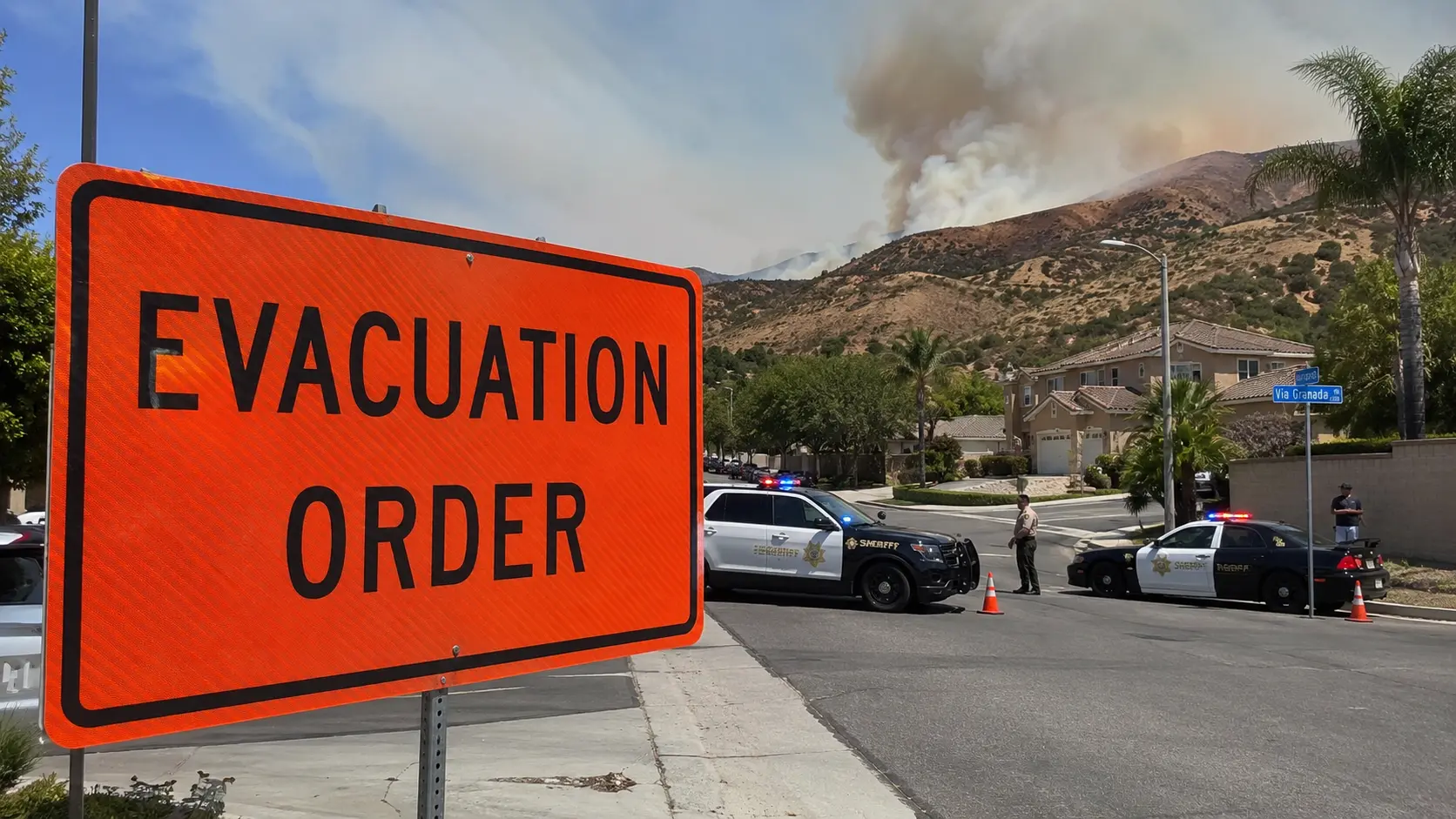
| Zone 3 / Level 3 | Go / Order / Mandatory | Immediate threat to life; leave immediately | Leave immediately via designated routes. Do not stop to gather belongings. Do not wait for family members who are not present. Go. |
When a Level 3 / Evacuation Order is issued: leave immediately. People who wait to see if the fire "really comes this way" get caught when wind shifts, fire behavior changes, and escape routes are cut off. Fire service personnel cannot protect property and simultaneously rescue residents who delayed leaving. Your life is not a structure we can defend after you have chosen to stay.
How to receive evacuation alerts
- Sign up for your county's emergency alert system (Wireless Emergency Alerts reach cell phones automatically; many systems also require opt-in for address-specific alerts)
- Know your county's evacuation zone number before fire season. Look up your address on your county's online zone map.
- Follow your local fire department, sheriff, and county OES on social media for real-time updates during an incident
- Do not rely on a single information source during a fast-moving fire
Before Fire Season: What to Prepare Now
The best time to prepare for wildfire evacuation is months before a fire threatens your area. When fire is close, you should be leaving — not packing.
Documents to digitize and back up
- Insurance policies (home, vehicle, health) and agent contact information
- Identification documents (passports, birth certificates, Social Security cards)
- Financial records (account numbers, mortgage documents)
- Irreplaceable photographs (digitize analog photos and store on cloud or external drive kept off-site)
- Medical records and medication lists
- Vehicle titles and property deeds
Keep physical copies in a waterproof, fireproof box or safe. Store digital copies in cloud storage (Google Drive, iCloud, Dropbox) that you can access from any device.
Know your evacuation routes before a fire
Identify at least two routes out of your neighborhood and your county, in different directions. Practice driving them. Know which roads are likely to become congested and which are less traveled. A fire can cut off your primary route in minutes — your secondary route must be known without thinking about it.
Coordinate with family members
Establish a meeting place outside your neighborhood and a communication plan for scenarios where family members are separated when an evacuation order is issued. Designate an out-of-area contact person that all family members will check in with.
Go-Bag Essentials
A go-bag (evacuation bag) is a pre-packed kit that can be grabbed and loaded in minutes when an evacuation order comes. Keep it near the door from the start of fire season. Essentials:
Documents (waterproof bag or folder)
- Passports, driver's licenses, birth certificates
- Insurance policies and agent phone numbers
- Medication list and recent medical records
- Cash (small bills; ATMs may not work in disasters)
- USB drive with digitized documents and photos
Medications and medical equipment
- Minimum 7-day supply of all prescription medications
- Over-the-counter medications you use regularly
- Any required medical equipment (CPAP, blood glucose meter, EpiPen)
- Eyeglasses or contact lenses and solution
Clothing and shelter
- 3–5 days of clothing for each family member
- Sturdy closed-toe shoes
- Sleeping bag or blankets
- N95 masks (wildfire smoke is a serious respiratory hazard)
Food and water
- 3-day supply of non-perishable food (bars, canned goods, dried food)
- 1 gallon of water per person per day for 3 days
- Manual can opener
Communications and electronics
- Fully charged portable battery pack for phones
- Car charger for all devices
- Battery-powered or hand-crank NOAA weather radio
- Extra batteries for all battery-operated items
When to Leave: Don't Wait for the Order
Evacuation orders are issued by agencies managing competing demands: they do not want to cause unnecessary economic disruption, traffic congestion, and public fear. By the time a mandatory evacuation order is issued, conditions are already serious. The fire service recommends leaving at the first warning (Level 1/Zone 1) if you:
- Have mobility limitations (elderly, disabled, dependent on oxygen or other equipment)
- Have animals or livestock that require loading time
- Live at the end of a long, one-way access road
- Have a large family with young children
- Have a vehicle that may be unreliable
If none of the above apply, Level 2 / Warning is the latest you should begin leaving. Do not wait for Level 3 unless you are certain you can be in your car and on the road within 5 minutes of receiving any alert.
Traffic is your greatest enemy. When thousands of residents all wait for the Level 3 order, they all leave simultaneously. The resulting gridlock can trap everyone on the road when the fire overtakes the evacuation route. Leaving at Level 1 or Level 2 means you are ahead of the traffic surge that follows the mandatory order.
How to Leave Safely
- Take designated evacuation routes. Improvising an alternate route during a fast-moving fire can lead you toward the fire or onto roads that are already closed. Follow the designated route unless explicitly directed otherwise by law enforcement.
- Keep headlights on. Smoke dramatically reduces visibility. Headlights on, even during daylight, helps other drivers see your vehicle.
- Close all windows and turn HVAC to recirculate. This limits smoke intrusion into the vehicle. Do not stop to check on the fire.
- Fuel up before fire season. During an evacuation, gas stations frequently run out of fuel or close. Start your car with a full or near-full tank.
- Do not stop on the road to take photos or video. This blocks the evacuation route for everyone behind you.
- If you are overtaken by fire while in your vehicle: Do not abandon the vehicle. Pull off the road, turn hazard lights on, turn engine off, close all vents, get below the windows and cover yourself with a blanket. A car provides significantly more thermal protection than open ground. Call 911 and give your location.
Final Home Preparation Before Leaving
If time allows (10–15 minutes) after your family is loaded and ready to leave:
- Close all windows and doors (leaves the structure more defensible if fire arrives; does not lock you in — firefighters can open them)
- Remove flammable doormats, patio furniture, and potted plants from the immediate exterior
- Shut off propane tanks and move portable tanks away from the structure
- Turn off all gas appliances and the main gas valve if you know its location
- Leave exterior lights on (makes the structure visible in smoke)
- Leave a note on the door or flag for firefighters: how many people were in the home, if animals were left behind, and when you left
- Do not delay your departure for any of the above. These steps are only if they can be done without slowing your evacuation. Your life is worth more than your home.
Pets and Livestock
- Do not leave pets behind. Pets left behind in wildfires rarely survive. They cannot self-evacuate. Plan for your animals the same way you plan for family members.
- Keep pet carriers, leashes, and food accessible. Chasing an animal around a house for 20 minutes during an evacuation has killed people. Train your animals to crate-load before fire season.
- Livestock require lead time. Loading horses, cattle, or other livestock requires significant time and equipment. Begin loading at Level 1 / Advisory. Never wait for a mandatory order to start loading large animals.
- Identify pet-friendly evacuation shelters in advance. Most public shelters do not accept pets. Know which shelters in your area accommodate animals. Contact your county OES for a list before fire season.
- Microchip and ID-tag all animals. If separated, microchipped animals are far more likely to be reunited with their owners.
Re-Entry After the Fire
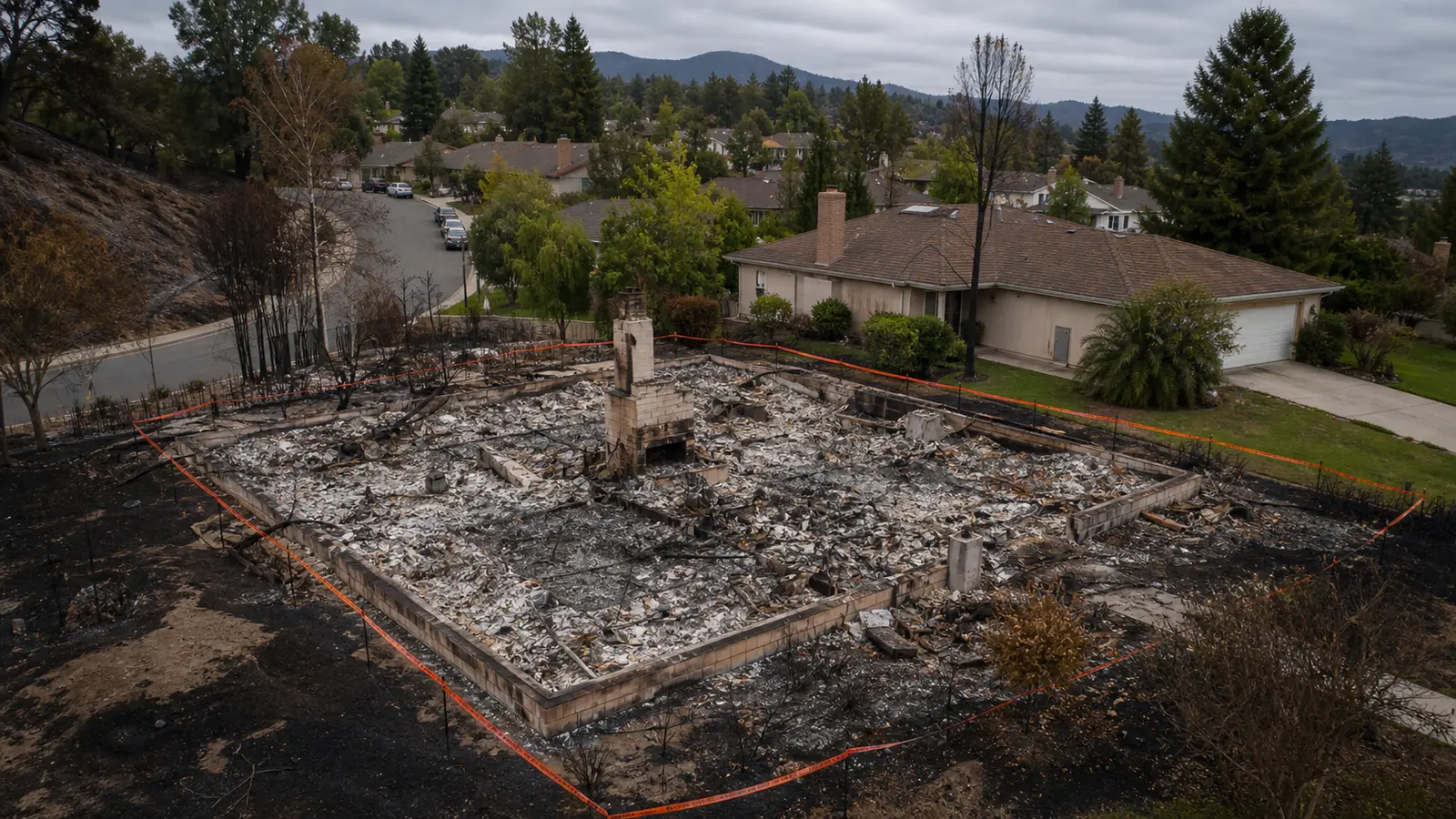
- Do not return until officially authorized. Post-fire areas have active hazards: unstable structures, downed power lines, hazardous materials, and ongoing hot spots. Re-entering too early has caused deaths.
- Wear N95 mask and protective clothing. Post-fire ash is toxic. It contains heavy metals, asbestos (from older structures), and carcinogens from burned synthetic materials. Do not breathe ash or let children play in it.
- Photograph all damage before touching anything. Insurance claims require documentation. Take comprehensive photos of all damaged property, contents, and structures before cleanup begins.
- Do not use tap water until cleared. Wildfire can contaminate municipal water systems. Do not drink, cook with, or bathe in tap water until your utility clears the supply.
- Assess structural safety before entering burned structures. Have a qualified inspector or building official assess the structure before entering. Post-fire structures can collapse without warning.
Frequently Asked Questions
What do the evacuation zone levels mean?
Most counties use three levels: Level 1 (Ready/Advisory) means be prepared to leave quickly; Level 2 (Set/Warning) means high probability of evacuation, vulnerable populations should leave now; Level 3 (Go/Order) means leave immediately. Terminology varies by county — know your local system before fire season.
What should be in a wildfire go-bag?
Documents (passports, insurance, medication list, cash), a 7-day medication supply, 3–5 days of clothing, N95 masks, 3-day food and water supply, a portable battery pack, and a battery-powered weather radio. Pre-pack it before fire season and keep it near the door throughout the season.
Should I stay to defend my home from wildfire?
Only trained and equipped firefighters or specially trained civilians with defensible space, appropriate protective equipment, and specific training should attempt structure defense during a wildfire. The vast majority of civilians are not equipped, trained, or positioned to defend a structure safely. If you are issued an evacuation order, leave. No structure is worth your life.
What if fire catches me while driving during an evacuation?
Do not abandon the vehicle. Pull off the road, turn on hazard lights, shut off the engine, close all vents, get below the window level, and cover yourself with a blanket or jacket. Call 911 with your location. A vehicle provides substantially more thermal protection than an exposed position outside. If you must exit the vehicle, move to an area with the least vegetation, lie face-down, and cover yourself.



Comments 0
No comments yet. Be the first to share your thoughts!
Leave a Comment