
BLADEN COUNTY, North Carolina | Published October 09, 2026 at 11:21 AM EDT
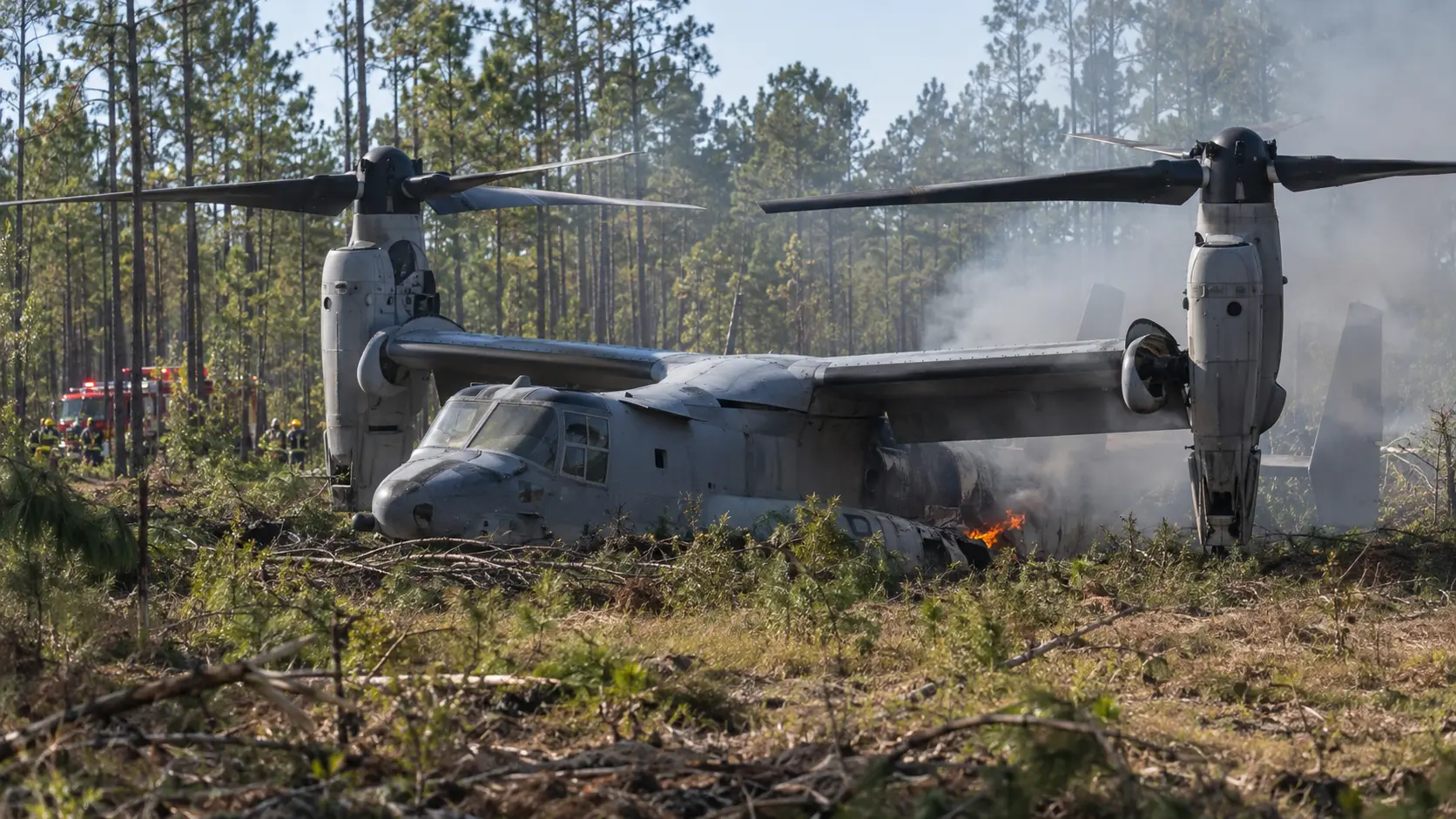
A U.S. Marine Corps MV-22B Osprey caught fire during a training operation near Bladen Lakes State Forest in southeastern North Carolina on Thursday, October 8, 2026. Four Marines were aboard. The aircraft made what local authorities described as a hard landing, drawing civilian and military emergency responders to a wooded area of Bladen County.
One Marine was transported to a burn center, according to White Lake Fire Chief Dale Brennan. The Marine Corps confirmed that all four personnel were receiving medical care but did not provide a complete injury breakdown in its initial statement. The cause of the incident remained under investigation as of this report.
- Date and reported time: Thursday, October 8, 2026, about 10:20 a.m. EDT
- Location: Bladen Lakes State Forest area, Bladen County, North Carolina
- Aircraft: U.S. Marine Corps MV-22B Osprey tiltrotor
- Unit: Marine Medium Tiltrotor Squadron 162 (VMM-162), Marine Corps Air Station New River
- Personnel aboard: Four; medical evaluations confirmed by the service
- Reported injury: One Marine transported to a burn center, according to the local fire chief
- Fire response: Civilian and military emergency services; multiple local fire crews
- Cause: Under investigation
What happened in Bladen Lakes State Forest?
The Marine Corps placed the mishap at approximately 10:20 a.m. Eastern time on October 8. Its statement identified the aircraft as an MV-22B assigned to VMM-162 and said that civilian and military emergency services responded. The statement did not describe a mechanical failure, identify a trigger for the fire, or specify the extent of damage to the aircraft.
Bladen County Sheriff Jim McVicker told local media that the Osprey had caught fire and made a hard landing in the Bladen Lakes State Forest area during training. Television footage and accounts from the scene described heavy smoke and a large aircraft fire. Those local observations add detail to the response, but they should not be confused with a formal accident finding.
The distinction matters. A fire noticed around the time of a hard landing does not by itself establish whether an onboard problem started the emergency, whether an impact caused additional burning, or whether several events occurred in sequence. Investigators will need evidence from the aircraft and operation to reconstruct what happened.
What is known about the four Marines aboard?
There were four personnel aboard the Osprey, the Marine Corps said. All four were receiving medical care after the incident. In interviews carried by WECT and WITN, White Lake Fire Chief Dale Brennan said one Marine had been taken to a burn center, while the three others were returned to base. That local account should not be read as a definitive public medical report about every crew member.
Officials had not released a detailed description of the burn injury, a full medical status report, or the crew members’ identities in the initial information reviewed for this article. Reports that all four were injured use a broader meaning than the service’s original wording; readers should distinguish medical evaluation from a confirmed injury diagnosis.
Fire crews faced a burning aircraft in a forest setting
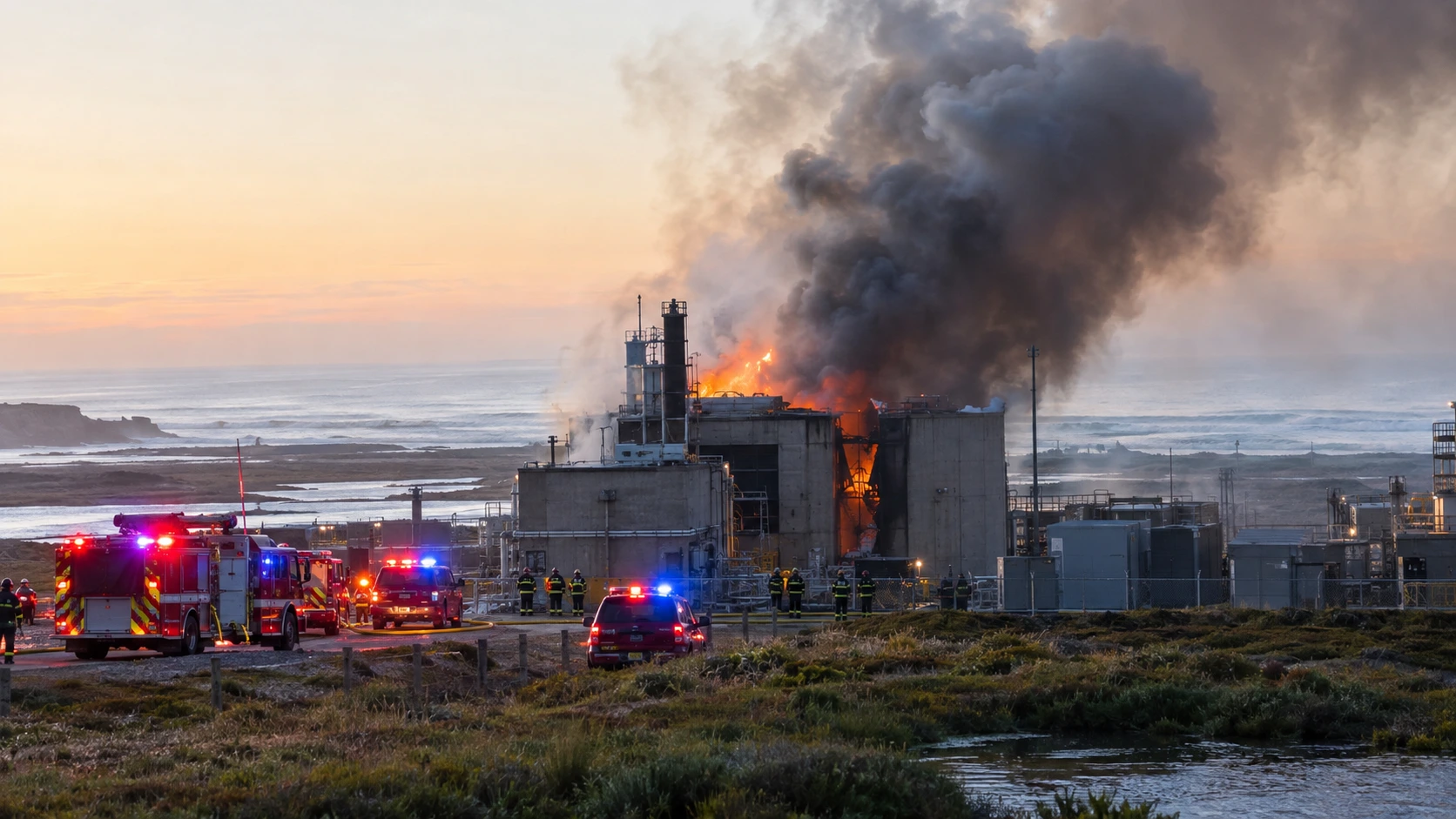
White Lake Fire Chief Brennan told WECT that multiple departments were involved and the aircraft was heavily involved in fire when local crews responded. He also estimated that the Osprey carried approximately 6,000 pounds of jet fuel. The fuel estimate came from local responders; it was not included in the Marine Corps’ short initial statement.
Aircraft fires differ from many building fires because responders may encounter liquid fuel, heated structural components, unfamiliar entry points and hazards from an aircraft’s systems. In a wooded setting, access, apparatus positioning and the possibility of fire reaching vegetation can add complications. These are operational considerations for such scenes, not claims that each hazard was observed at Bladen Lakes.
Why this type of response is difficult
- Rescue and accountability: Confirming where the crew is and whether anyone remains inside takes priority over equipment salvage.
- Fuel and runoff: Jet fuel can create a liquid-fuel fire problem, requiring appropriate extinguishing agents, cooling and runoff management under the incident commander’s plan.
- Aircraft components: Responders need aircraft-specific hazard information rather than assuming the airframe is safe once visible flames diminish.
- Scene control: A remote accident site may need controlled access for responders, medical transport and investigators.
- Woodland exposure: Burning fuel or debris near vegetation calls for an assessment of any extension beyond the aircraft itself.
Where was the aircraft based?
The aircraft belonged to Marine Medium Tiltrotor Squadron 162, also written VMM-162, and was based at Marine Corps Air Station New River in North Carolina. Early local reporting included references to Camp Lejeune, but the Marine Corps specifically identified New River as the Osprey’s base. The installation and nearby Marine Corps facilities operate within the same broader coastal North Carolina military community.
The MV-22B is a tiltrotor aircraft: its nacelles allow it to take off and land vertically and then fly forward in an airplane-like configuration. That design is useful for military transport missions, but the mere fact that an aircraft is a tiltrotor does not explain this particular mishap.
What caused the Bladen County military aircraft fire?
No official cause had been announced in the statements available when this article was prepared. The Marine Corps described the event as an aviation mishap and said it was under investigation. There was no confirmed public finding of an engine malfunction, electrical failure, fuel-system defect or pilot error.
A meaningful investigation will need to determine the sequence of events before, during and after the landing. Questions include when the fire began, how the aircraft reached the landing site, what damage occurred on contact with the ground and which systems remained operable. Those are questions for investigators, not conclusions that can be drawn from video of the aftermath.
Bladen County Osprey incident timeline
| When | What was reported |
|---|---|
| Oct. 8, about 10:20 a.m. EDT | Marine Corps later confirms an MV-22B aviation mishap near Bladen County. |
| Thursday morning | Local authorities describe a hard landing and an aircraft fire in the Bladen Lakes State Forest area. |
| During the response | Multiple fire crews attend; local fire chief reports one Marine transported to a burn center. |
| Later Oct. 8 | Marine Corps identifies VMM-162 and MCAS New River; confirms four personnel aboard and an ongoing investigation. |
What remains unconfirmed
The original cause and exact fire sequence, detailed medical outcomes, aircraft damage assessment and any final incident findings were not publicly established in the primary statements and local reports reviewed. This article will need revision when the Marine Corps releases substantive investigative findings or verified updates. An absence of publicly confirmed information should not be filled with speculation.
Frequently asked questions
What happened to the military aircraft in Bladen County on October 8, 2026?
A Marine Corps MV-22B Osprey was involved in an aviation mishap near Bladen Lakes State Forest during training at approximately 10:20 a.m. Eastern time. Local officials reported a hard landing and an aircraft fire.
Were any Marines injured in the Bladen County Osprey fire?
Four personnel were aboard and received medical attention, according to the Marine Corps. White Lake Fire Chief Dale Brennan told local journalists that one Marine was taken to a burn center. The service did not initially detail all four medical conditions.
Where did the MV-22B Osprey make its emergency landing?
The incident occurred in the Bladen Lakes State Forest area of Bladen County, North Carolina. The Marine Corps described the location as near Bladen County.
Which Marine Corps unit operated the Osprey?
The aircraft belonged to Marine Medium Tiltrotor Squadron 162 (VMM-162) and was based at Marine Corps Air Station New River, according to the Marine Corps statement.
What caused the Osprey to catch fire?
The exact sequence and cause have not been established publicly. The Marine Corps said its investigation was ongoing; early reports do not prove whether a fire preceded the hard landing or developed afterward.
How much fuel was aboard the aircraft?
White Lake Fire Chief Dale Brennan estimated that the aircraft carried about 6,000 pounds of jet fuel, according to WECT and WITN. That is a locally reported estimate, not a figure from the initial Marine Corps statement.
Sources and verification
The initial Marine Corps statement is reproduced by USNI News. WECT and WITN reported the sheriff’s and local fire chief’s accounts from the scene. Details attributed to local responders are distinguished above from what the Marine Corps independently confirmed.



Comments 0
No comments yet. Be the first to share your thoughts!
Leave a Comment