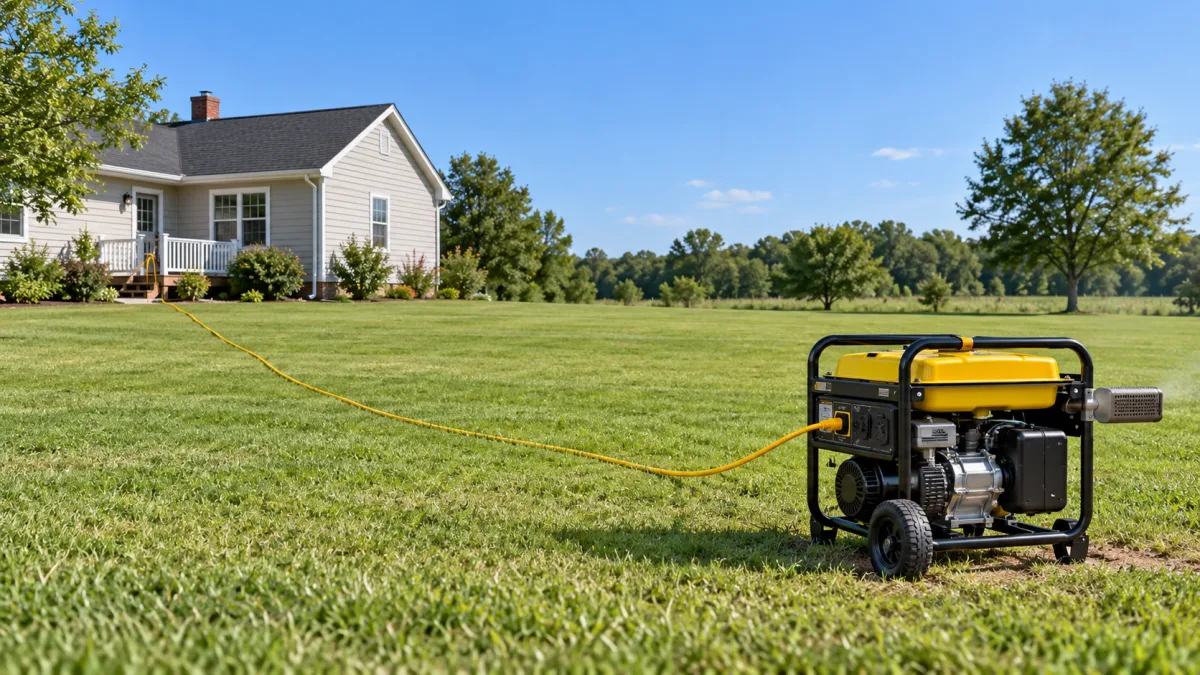

Choose a generator location before the power fails. After dark, in rain, with a refrigerator warming up and a phone battery running low, the nearest convenient spot can look like the right one. It may be beside the window through which exhaust enters the house.
A portable fuel-powered generator belongs outdoors, well away from occupied buildings and their openings. It also needs a safe way to supply the intended equipment. Buying more extension cord does not solve an unsafe connection, and buying a CO alarm does not make an unsafe location acceptable.
Use the 20-foot rule as a starting requirement
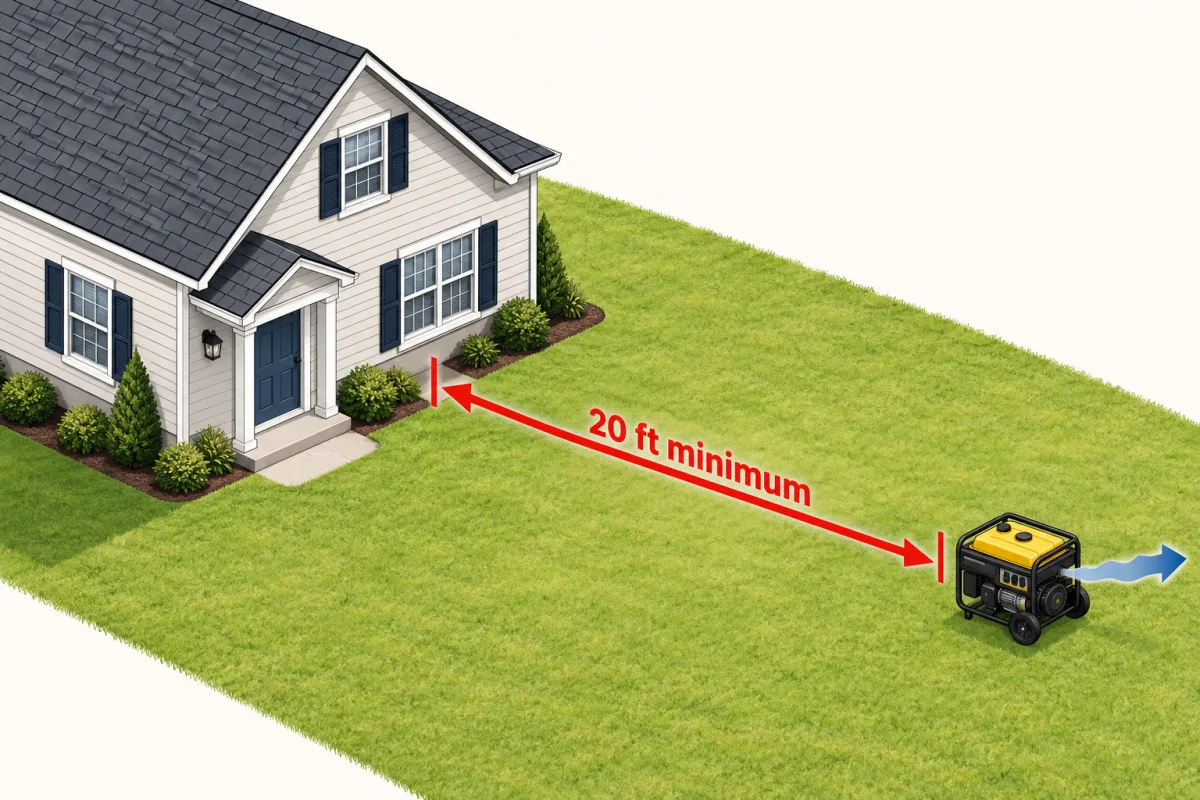
The Consumer Product Safety Commission recommends operating portable generators outside, at least 20 feet from homes, with exhaust directed away. CDC also specifies separation from doors, windows and vents. Never run one inside a garage, basement, shed or home, including with doors open.
Measure the proposed spot in daylight. Consider neighboring buildings as well as your own. A location on the far side of a narrow passage might still send exhaust toward someone else's opening. Distance alone does not make every arrangement safe; follow the generator instructions and keep the exhaust path away from people and buildings.
Plan the electrical connection separately
There are two different planning questions: which appliances need power, and how can they receive it safely? Write the appliances down before buying cables or changing connections. Include starting requirements where relevant, and compare the proposed load with the equipment ratings.
OSHA's portable-generator safety fact sheet addresses electrical shock, unsafe connections and backfeeding. Never connect a generator to house wiring through a wall outlet. A building connection needs suitable transfer equipment and qualified electrical work. This article does not provide a do-it-yourself wiring sequence.
For equipment supplied through approved extension cords, choose the cords according to the generator and appliance instructions, load, length and environment. Inspect them before use. Keep connectors out of standing water and protect cables from damage without creating an escape-route obstruction. An adapter that makes two plugs fit does not establish electrical compatibility.
| Planning question | What to resolve before the outage |
|---|---|
| Where will it operate? | A measured outdoor location with suitable separation and an exhaust path away from occupied spaces. |
| What must it supply? | A short appliance list with electrical requirements, rather than an assumption that the whole house will run. |
| How will power reach the load? | Equipment-compatible cords or a professionally designed building connection. |
| What happens in wet weather? | The manufacturer's approved operating arrangement; an unsafe enclosure is not a solution. |
| What would make you stop? | An alarm, damaged equipment, wet connections, fuel leakage or another unsafe condition. |
Rain does not make the garage an option
A storm creates a genuine conflict: the generator must remain outside, but electrical equipment must also be protected as its instructions require. Moving it into a garage or partly enclosed area to keep it dry trades one hazard for another.
Resolve wet-weather operation with the manufacturer before an emergency. Use only arrangements intended for that equipment while preserving exhaust clearance and ventilation. A tarp draped over a hot generator, a porch corner or a homemade box should not be treated as an approved operating shelter. If safe operation cannot be maintained, stop rather than improvising.
Refueling needs a cooling pause
The USFA generator handout warns against fueling a running unit. Shut it down and follow the manufacturer's cooling and refueling instructions. Fuel spilled on hot equipment introduces a separate fire hazard.
Make that pause part of the household plan. Decide which equipment can lose power temporarily and what backup arrangements are needed for essential medical or communication needs. People are more likely to improvise around a dangerous refueling step when no one has planned for the interruption.
Store fuel in approved containers and only in locations and quantities allowed by applicable rules. Keep it away from ignition and heat sources. Do not bring fuel containers into a living space because they are easier to watch there. Exact storage requirements vary; obtain local guidance rather than copying a quantity from another jurisdiction.
CO alarms and symptoms: act before investigating
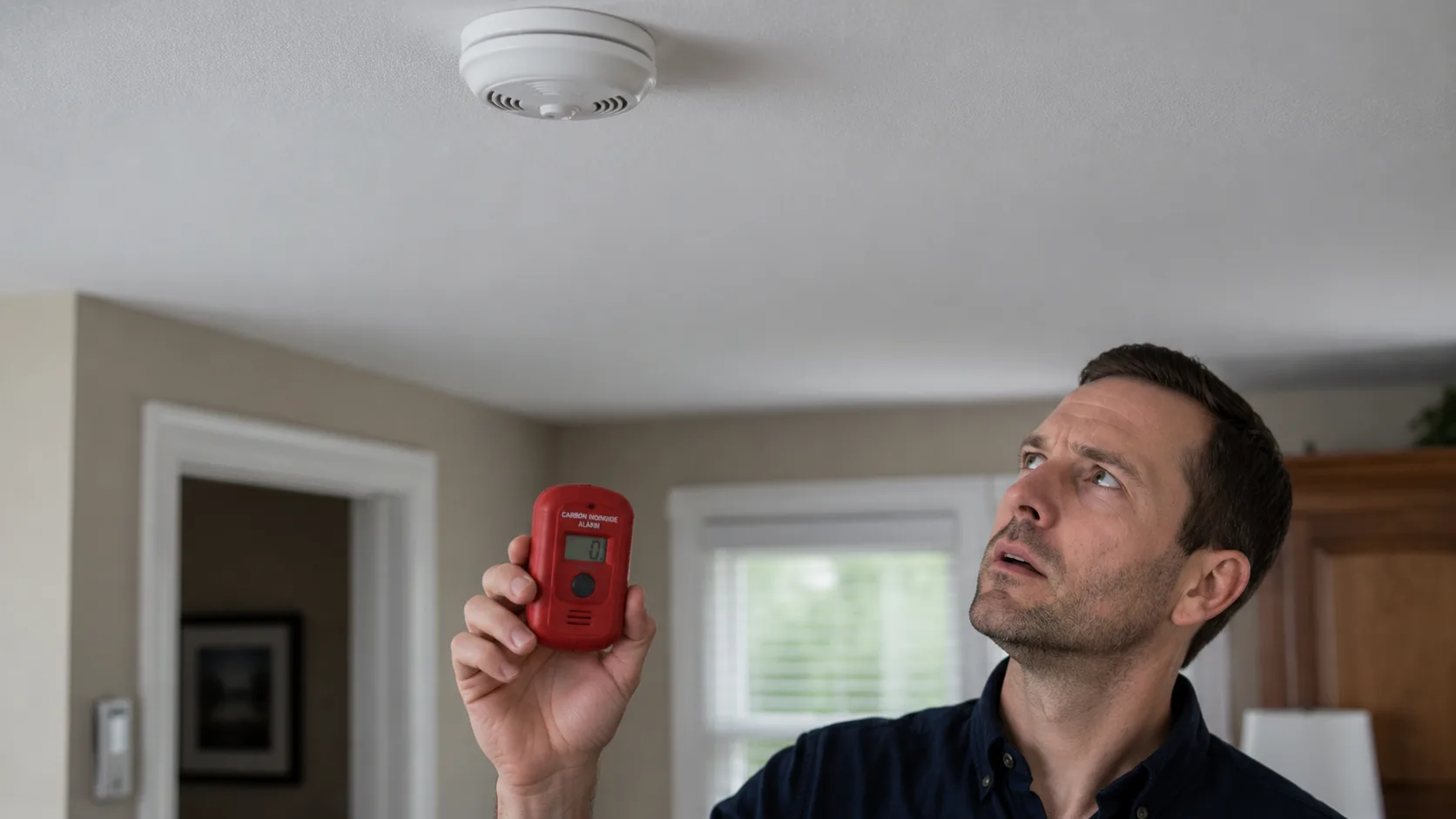
Use working CO alarms with backup power as recommended by their instructions and public-safety guidance. The CPSC generator checklist describes alarm placement outside sleeping areas and on each floor, and calls for getting outside immediately if CO poisoning is suspected.
If a CO alarm sounds, or people develop symptoms suggesting exposure, get everyone to fresh air and call 911 from outside. Do not stay inside to find the source or to decide whether the alarm is being overly sensitive. Our CO guide covers exposure recognition in more detail.
A generator with automatic CO shutoff can provide an additional protective feature. It still belongs in a safe outdoor location. A shutoff should be treated as a reason to investigate through the equipment's authorized process, not a nuisance to defeat.
Run a paper rehearsal while the lights are still on
Illustrative planning exercise: the household initially selects a paved spot beside a utility-room vent. Measuring the yard reveals a more distant location, but the existing cord cannot reach the intended appliance within its approved use. The plan is incomplete; do not solve it on outage night with an unsuitable cable or a closer operating spot.
Record the unresolved need and arrange a suitable connection before use. Then walk the route with the equipment switched off: check access, doors, trip hazards and the planned exhaust direction. Assign one person to monitor the operating arrangement and agree that anyone can call for a stop when conditions change. A paper rehearsal should expose problems without creating real exhaust or electrical hazards.




Comments 0
No comments yet. Be the first to share your thoughts!
Leave a Comment