📅 2025 hose advancement training guide. Hose advancement tactics must always follow department SOPs, incident command direction, staffing, water supply, building conditions, nozzle package, and instructor supervision. This guide is educational and does not replace hands-on fireground training.
Firefighter Hose Advancement Training 2025: Nozzle Control, Entry & Fire Attack
Hose advancement is one of the core skills of interior structural firefighting. A crew must stretch the correct attack line, manage kinks, control nozzle reaction, coordinate entry, communicate with the officer and pump operator, move through doors and hallways, and apply water effectively while conditions change. A poorly advanced hose line delays fire control, increases heat exposure, reduces victim survivability, and places firefighters at greater risk.
This 2025 guide covers practical hose advancement fundamentals: nozzle control, nozzle reaction, door control, coordinated entry, hallway pushes, flowing while moving, cornering, kink prevention, backup firefighter positioning, low-visibility hose movement, and drill design for academy and company-level training.
Jump to:Hose advancement basics · Line selection · Nozzle control · Flowing and moving · Door control · Hallway pushes · Corners and kinks · Crew positions · Low visibility · Training drills · FAQ
Why Hose Advancement Matters
Interior fire attack depends on getting water to the seat of the fire as quickly and safely as possible. That sounds simple until the crew encounters stairs, narrow hallways, furniture, doors, corners, zero visibility, high heat, hose friction, kinks, and nozzle reaction. Hose advancement is a team skill, not a solo performance by the nozzle firefighter.
A strong hose team moves with rhythm. The nozzle firefighter controls the stream and direction. The backup firefighter absorbs nozzle reaction and feeds hose. The door or control firefighter manages entry, kinks, and flow path. The officer maintains orientation, reads conditions, and communicates with command. When these roles are unclear, the line stalls.
| Hose advancement challenge | Why it matters | Training focus |
|---|---|---|
| Nozzle reaction | Can push the nozzle firefighter backward or upward | Body position, backup support, flow control |
| Kinks | Reduce flow and delay knockdown | Flaking, corner management, hose feeding |
| Door entry | Can change heat, smoke, and flow path | Door control, communication, readiness before opening |
| Hallway push | Long stretches increase fatigue and friction | Team spacing, hose movement, low-profile advance |
| Low visibility | Crews can lose orientation or miss obstructions | Wall contact, hose contact, voice communication |
Core principle: The attack line is a life-safety tool. If the crew cannot move it, flow it, and maintain water supply, interior operations become much more dangerous.
Attack Line Selection
Line selection depends on the occupancy, fire volume, stretch distance, staffing, water supply, and department policy. Many residential fires are attacked with a 1¾-inch line, while larger fires, commercial spaces, defensive transitions, or heavy fire loads may require a 2½-inch line. The right line is the one that can deliver the required flow and still be advanced by the available crew.
| Line | Common use | Advantages | Limitations |
|---|---|---|---|
| 1¾-inch attack line | Most room-and-contents residential fires | Mobile, faster stretch, manageable with smaller crews | May not provide enough flow for heavy fire or large spaces |
| 2-inch attack line | Departments seeking higher flow with moderate mobility | More flow than 1¾ while still more mobile than 2½ | Requires training and compatible nozzle package |
| 2½-inch attack line | Commercial fires, defensive positions, large fire volume | High flow and reach | Heavy, labor-intensive, difficult for small crews inside |
| Booster or small line | Small exterior fires where permitted by SOP | Quick deployment | Not appropriate for structural interior attack |
For hydraulic planning and flow awareness, crews can use the friction loss calculator and fire flow calculator as training references. Actual pump operations must follow department procedures and instructor direction.
Nozzle Reaction and Control
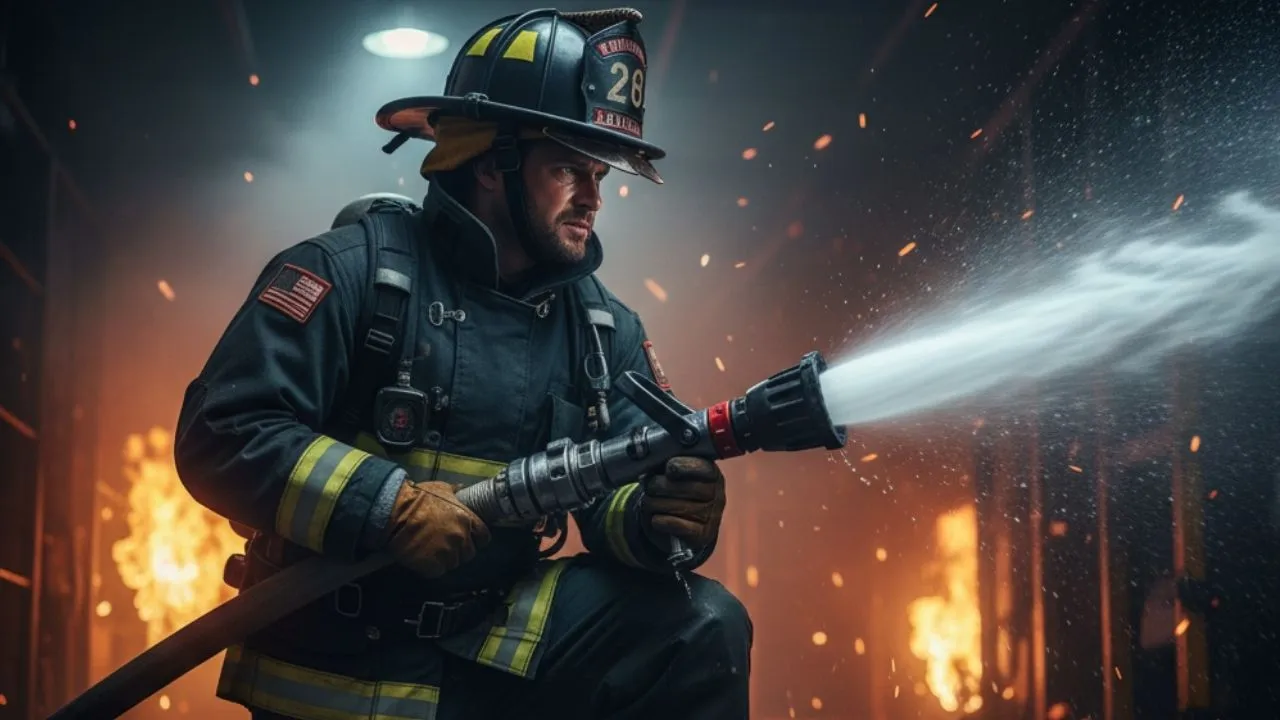
Nozzle reaction is the backward force created when water exits the nozzle. Higher flow, higher pressure, and certain nozzle packages can create significant reaction. If the nozzle firefighter is poorly positioned or unsupported, the line can whip, rise, push backward, or become difficult to direct. Good nozzle control begins before water flows.
Key nozzle control habits
- Low, stable stance: Keep weight balanced and avoid standing tall when opening the line.
- Strong hose clamp: Use body position, arm pressure, and knee placement where taught to stabilize the line.
- Backup firefighter support: The backup must be close enough to absorb reaction, not several feet behind.
- Smooth bale operation: Opening and closing abruptly can destabilize the line and crew.
- Communication before flow: The crew should know when water is coming and where the stream is going.
- Stream discipline: Avoid unnecessary sweeping or ceiling impact unless tactic and conditions call for it.
Training tip: Start nozzle drills dry, then add low-flow water, then full-flow water, then movement, then low visibility. Do not add every stressor at once.
Flowing and Moving
Many departments emphasize flowing water while advancing when conditions require cooling, fire control, or protection of the crew. Flowing while moving demands coordination: the nozzle firefighter must manage stream direction and body position while the backup firefighter feeds hose and supports reaction. The crew must move with purpose, not simply crawl forward while spraying randomly.
When flowing while moving may be useful
- Cooling hot gas conditions ahead of the crew.
- Protecting the crew during hallway advancement.
- Darkening visible fire while advancing toward the seat.
- Controlling fire extension during interior movement.
- Maintaining survivable space during rescue-support operations.
Common errors
- Moving faster than the hose can feed: This creates tension and stalls the line.
- Flowing without a target: Water should be applied with intent.
- Backup too far away: The nozzle firefighter becomes overworked and unstable.
- Poor communication: The crew moves, stops, opens, and closes without shared timing.
| Command | Meaning | Expected crew action |
|---|---|---|
| Charge the line | Water requested to the attack line | Crew braces and prepares for nozzle reaction |
| Flow water | Nozzle opens for cooling or fire attack | Nozzle and backup stabilize the line |
| Advance | Crew moves forward | Backup feeds hose, door/control firefighter clears kinks |
| Hold | Stop movement | Crew stabilizes position and reassesses |
| Back out | Withdraw from position | Crew maintains line, orientation, and communication |
Door Control and Coordinated Entry
Door control is more than opening a door. Doors influence air movement, heat release, visibility, and fire behavior. Before entry, the crew should be ready: line stretched, nozzle firefighter positioned, backup in place, door firefighter assigned, water supply confirmed, and communication established with the officer.
Entry checklist
- Line is stretched to the entry point with enough working length.
- Nozzle pattern and bale operation are confirmed.
- Water supply is confirmed or ordered according to SOP.
- Door conditions are assessed: heat, smoke movement, pressure, and visibility.
- Backup firefighter is close and ready.
- Door/control firefighter manages the door and hose pinch points.
- Officer confirms objective, entry point, and communication plan.
Flow path caution: Opening doors, windows, or other ventilation points can change fire conditions. Door control and hose readiness must be coordinated with incident tactics and department procedures.
Hallway Push Techniques
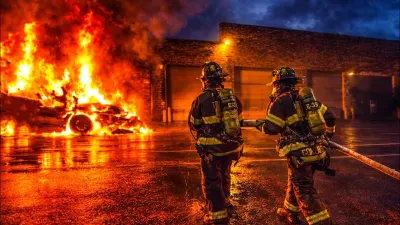
Hallway pushes are common in residential, apartment, hotel, dormitory, and commercial fires. Hallways create friction points, limited working space, long stretches, and visibility challenges. The hose team must move enough hose into the building, keep the line flowing when needed, and prevent the attack line from hanging up at corners, door frames, furniture, stair landings, or debris.
Hallway advancement priorities
- Bring enough hose before entry. Short-stretching at the door wastes time and energy.
- Keep the backup close. A distant backup cannot absorb reaction or feed hose effectively.
- Use corners intentionally. Corners can help anchor the line but can also create kinks.
- Communicate movement. Advance, hold, flow, and back out must be understood by the team.
- Control body position. Stay low when conditions require it, but do not crawl inefficiently if visibility and heat allow safer movement.
| Problem | Likely cause | Correction |
|---|---|---|
| Line will not move | Kink, pinch point, poor flaking, not enough hose | Control firefighter clears path and feeds hose forward |
| Nozzle firefighter fatigues early | Backup too far back or poor stance | Move backup closer and improve body mechanics |
| Stream direction unstable | Poor nozzle grip or reaction not supported | Reset position before advancing |
| Crew loses orientation | Low visibility and poor communication | Maintain hose contact, wall reference, and verbal updates |
Cornering, Obstructions and Kink Prevention
Kinks reduce water flow and can turn a strong attack line into a weak stream. Kinks often occur at doorways, stairs, corners, furniture, tight turns, and where hose is poorly flaked outside the structure. Kink prevention is the responsibility of the entire hose team, not only the pump operator or nozzle firefighter.
Kink prevention habits
- Flake hose before entry so it feeds cleanly.
- Assign a firefighter to manage doorways and corners.
- Pull extra hose past pinch points before pushing deeper.
- Keep hose bends wide when possible.
- Communicate immediately when the line stops moving.
- Check behind the crew during hallway and stair advances.
- Train with charged hose, because dry hose does not behave the same.
Company drill idea: Set a charged line through a doorway, around two corners, and down a hallway. Assign one firefighter only to kink control. Rotate positions so every member understands how much the control firefighter affects nozzle performance.
Hose Team Positions and Responsibilities
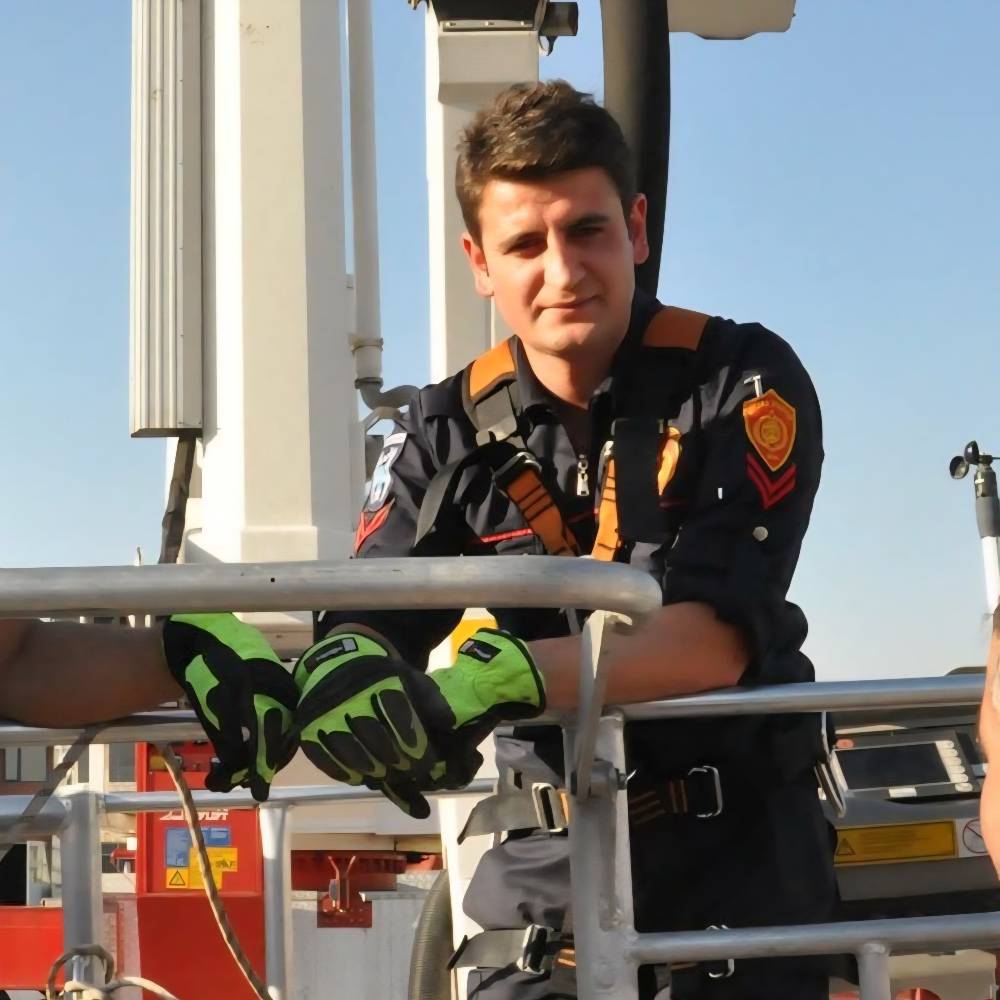
Clear roles make hose advancement safer and faster. Staffing varies, but the functions remain the same: nozzle control, backup support, hose movement, door control, officer supervision, and water supply coordination. A two-person line must combine functions; a three- or four-person line can divide them more effectively.
| Position | Main responsibility | Key training point |
|---|---|---|
| Nozzle firefighter | Controls stream, movement pace, and target area | Stable body position and smooth bale control |
| Backup firefighter | Absorbs nozzle reaction and feeds hose | Stay close enough to help, not just follow |
| Door/control firefighter | Manages door, flow path, kinks, and hose pinch points | Clear hose problems before the nozzle stalls |
| Officer | Directs objective, reads conditions, maintains communication | Balance fire attack progress with crew safety |
| Pump operator | Supplies the line according to hydraulic needs | Monitor pressure, flow, and water supply |
For pump and flow training, crews can pair this guide with the pump chart generator, friction loss calculator, and fire flow calculator.
Low-Visibility Hose Advancement
Interior hose advancement often happens in smoke, heat, noise, water, and reduced visibility. Low-visibility training teaches firefighters to maintain hose contact, communicate, read the floor, manage obstacles, and move without losing orientation. A hose line can serve as both a fire attack tool and a reference line for exit, but only if the crew maintains contact and awareness.
Low-visibility hose movement skills
- Maintain contact with the hose or crew member.
- Use voice communication before moving, stopping, or flowing.
- Read the hose direction to understand exit orientation.
- Probe ahead for holes, stairs, debris, or furniture.
- Keep the nozzle oriented safely when visibility is poor.
- Train on stairs, turns, narrow hallways, and furniture layouts.
Safety warning: Blackout, SCBA, entanglement, and live-fire hose drills should only be conducted under qualified supervision with safety officers, proper PPE, water supply, and department-approved procedures.
Hose Advancement Training Drills
Good hose advancement training is progressive. Start with body position and communication, then add charged line movement, then add doors and corners, then add low visibility, then add timed scenarios. A crew should not rush into complex live-fire evolutions before the fundamentals are repeatable.
| Drill | Setup | Goal |
|---|---|---|
| Nozzle reaction drill | Charged line in open area | Practice stance, backup position, and bale control |
| Door entry drill | Door prop, charged line, officer commands | Coordinate door control, readiness, and first movement |
| Hallway push drill | Hallway with cones, furniture, or obstacles | Move hose smoothly while preventing kinks |
| Corner management drill | Two or more 90-degree turns | Practice hose feeding, kink removal, and communication |
| Low-visibility line drill | Obscured mask or darkened room under supervision | Maintain hose contact, orientation, and crew integrity |
| Flow-and-move drill | Charged line with target areas | Apply water with purpose while advancing under control |
Company-level drill checklist
- Objective and safety rules explained before starting.
- Water supply confirmed for charged-line drills.
- Nozzle, backup, door/control, and officer roles assigned.
- Communication terms agreed on before movement.
- Line flaked and working length prepared.
- Kinks checked before and during flow.
- Instructor stops unsafe body position or uncontrolled nozzle movement.
- Debrief includes what delayed advancement and what improved flow.
Hose advancement connects directly with other fire academy skills. For related preparation, see the fire academy training guide, firefighter fitness guide, and search and rescue training guide.
Common Hose Advancement Mistakes
- Short-stretching the line: Not having enough hose at the entry point delays the attack.
- Backup too far behind: The nozzle firefighter receives little support against reaction.
- Ignoring kinks: Reduced flow can make an otherwise correct attack ineffective.
- Opening the door before the line is ready: Entry should be coordinated with water and crew position.
- Moving without communication: The crew must know when to advance, stop, flow, or back out.
- Training only dry hose: Charged hose behaves differently and must be practiced under supervision.
- Flowing without purpose: Water application should match conditions, objective, and training doctrine.
Frequently Asked Questions
What is hose advancement in firefighting?
Hose advancement is the process of stretching, positioning, moving, and operating an attack line to apply water during fire attack. It includes line selection, nozzle control, backup support, kink prevention, door control, and communication.
Why is nozzle reaction important?
Nozzle reaction is the backward force created when water exits the nozzle. If it is not controlled with body position and backup support, the nozzle can become unstable and difficult to direct.
What does flowing and moving mean?
Flowing and moving means applying water while advancing the hose line when conditions require cooling, fire control, or crew protection. It requires coordination between the nozzle firefighter, backup firefighter, and hose control positions.
How do firefighters prevent hose kinks?
Firefighters prevent kinks by flaking hose before entry, managing corners and doorways, keeping bends wide when possible, assigning a control firefighter, and communicating immediately when the line stops feeding.
Can hose advancement be practiced without live fire?
Yes. Many important skills can be practiced without live fire, including nozzle control, charged-line movement, door entry, cornering, kinks, hallway pushes, and communication. Live fire should only be conducted under approved academy or department training conditions.


Comments 0
No comments yet. Be the first to share your thoughts!
Leave a Comment