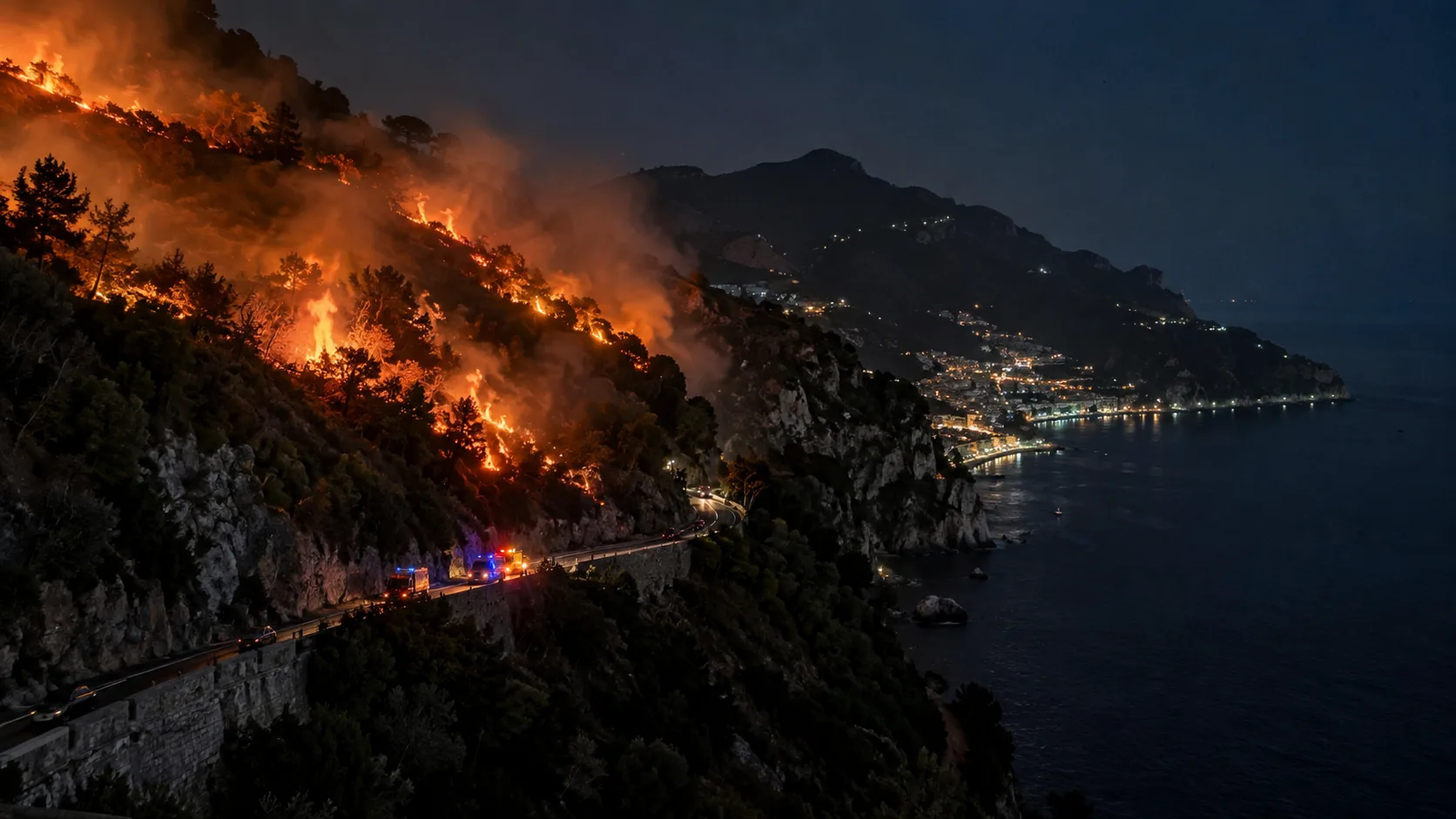

Positano Fire Update: What Happened on the Amalfi Coast and Why the Road Was Closed
Updated: September 15, 2026
Searches for the Positano fire rose quickly after a nighttime blaze on the Amalfi Coast turned into more than a vegetation-fire story. What made this incident stand out was not just the fire itself, but the combination of steep terrain, exposure to homes and tourism infrastructure, and the road impact that followed.
The fire broke out around 2 a.m. on Sunday, September 13, in the San Pietro area of Positano. Pushed by strong overnight wind, the flames spread quickly up the slope toward the hamlet of Nocelle, threatening several homes. The most significant transportation consequence came when a landslide, triggered by the fire, sent debris onto the SS 163 "Amalfitana" at around km 16.300, forcing Italian road agency ANAS to close a stretch of the road between roughly km 16.000 and km 16.800.
That road impact is one of the main reasons this fire traveled beyond local interest. On the Amalfi Coast, a roadway disruption can quickly become part of the emergency story itself — and in this case, it kept the coast's main artery split in two for the better part of a day.
What Happened in Positano?
The fire started overnight and involved a large section of hillside vegetation in Positano's San Pietro area, right along the edge of the SS 163. Strong, sustained wind pushed the flames rapidly up the slope, and firefighting crews worked through the night to keep the fire from reaching nearby homes and tourist structures.
That terrain issue matters. On a steep coastal slope, the hazard is not limited to direct flame spread. Heat damage, unstable material, falling debris, and slope movement can quickly create a secondary safety problem — which is exactly what turned the SS 163 closure into a major part of this story once burned material began sliding onto the roadway.
Why the SS 163 Amalfitana Was Closed — and When It Reopened
ANAS confirmed that, following the fire, a landslide affected the SS 163 Amalfitana at around km 16.300, depositing debris across the roadway. For safety reasons, the affected stretch (roughly km 16.000 to 16.800) was closed in both directions overnight while crews worked to secure the slope and clear the road.
The closure lasted more than 12 hours. Around midday on Sunday, the road was reopened to pedestrians and, shortly after, to alternating one-way traffic. Full two-way circulation was restored by around 5 p.m. the same day, once ANAS crews finished clearing debris and monitoring the slope.
That kind of closure is significant on the Amalfi Coast because the road is not just a travel route; it is the main access corridor linking coastal towns. Even a several-hour closure can cut off local traffic, strand tourists, and complicate emergency access between communities.
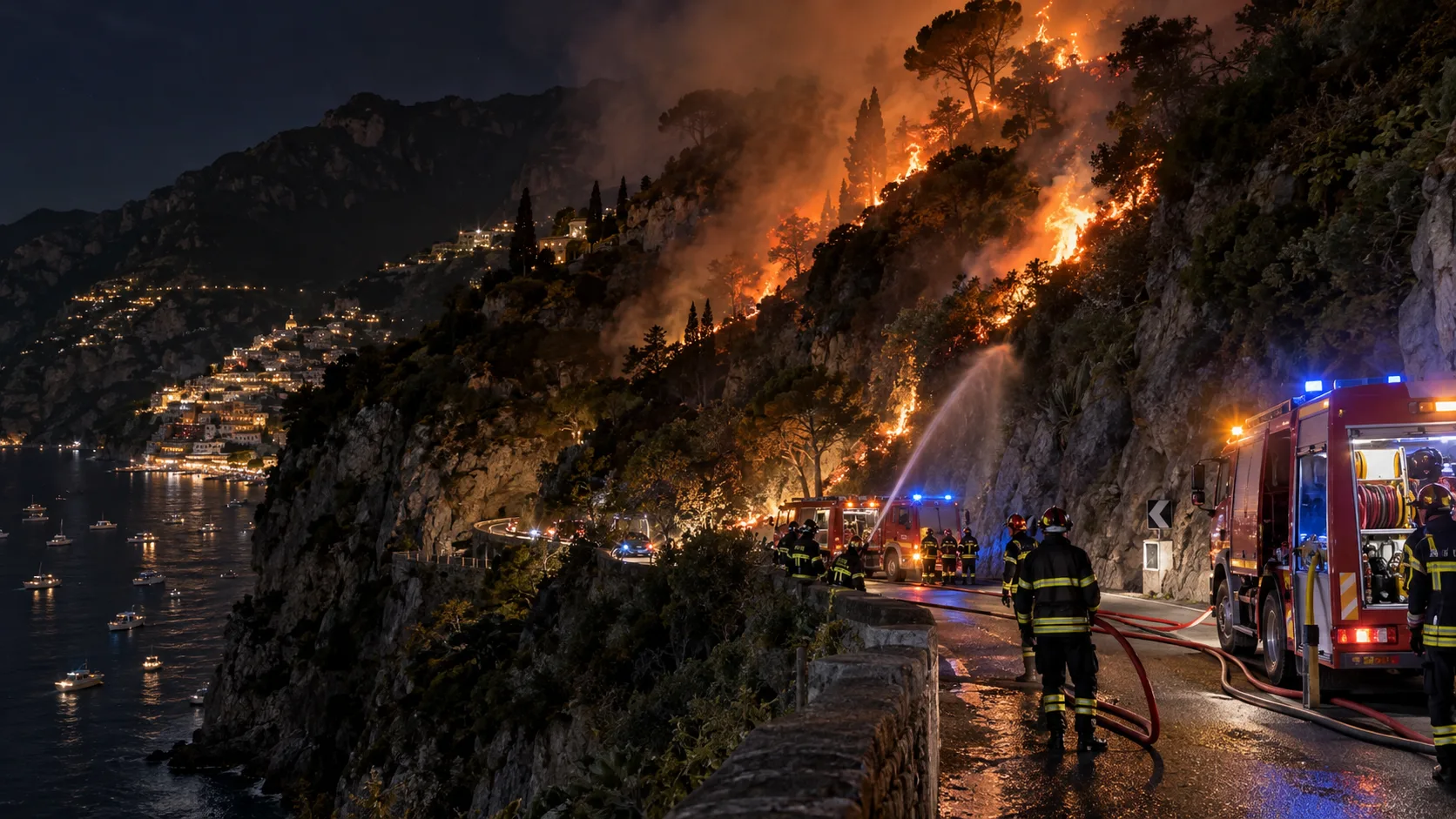
In steep coastal terrain, fire danger is not limited to flames. Slope instability and access problems can become major operational concerns.
A Second Fire Hit the Amalfi Coast the Same Weekend
The Positano blaze wasn't an isolated incident. Later the same evening, a separate fire broke out at Tordigliano, in the municipality of Vico Equense, forcing ANAS to close the SS 163 again in that area. Between the two incidents, the road was split at two different points within roughly 24 hours, putting extra strain on residents, tourists, workers, and responding crews across the coast.
Why This Fire Drew So Much Attention
There are plenty of vegetation fires every year that never become major search trends. Positano was different for three reasons.
- Location. Positano is internationally recognized, so almost any emergency there attracts wider interest than a similar fire in a less-known location.
- Terrain and exposure. A hillside fire near homes, roads, and tourist infrastructure creates a more dramatic and more operationally complex picture.
- Road disruption. Once the SS 163 Amalfitana was affected, the incident became a travel and access story as well as a fire story — one that repeated hours later a few miles away.
From a firefighting perspective, that combination is exactly what makes hillside coastal fires so challenging. You are not only trying to stop spread; you are managing access, slope risk, visibility, and the movement of people and vehicles in a confined environment.
Operational Challenges in a Fire Like This
A fire on steep ground above a roadway creates a different set of priorities than a flat-land brush fire. Crews from the Naples, Nocera, and Maiori fire departments worked the Positano fire through the night, backed by a helicopter once daylight allowed aerial support. Priorities in this kind of incident typically include:
- Safe access to the fire edge on steep, uneven terrain
- Protecting nearby homes and tourist structures from exposure
- Debris or rockfall onto the roadway below
- Coordinating aerial support once conditions allow
- Traffic control and emergency access while the road is affected
That is one reason these incidents can remain highly visible even after the main flame front is knocked down. Fire suppression may be only one part of the operational picture. The other part is clearing debris and restoring safe movement through the area, which in this case took most of the day.
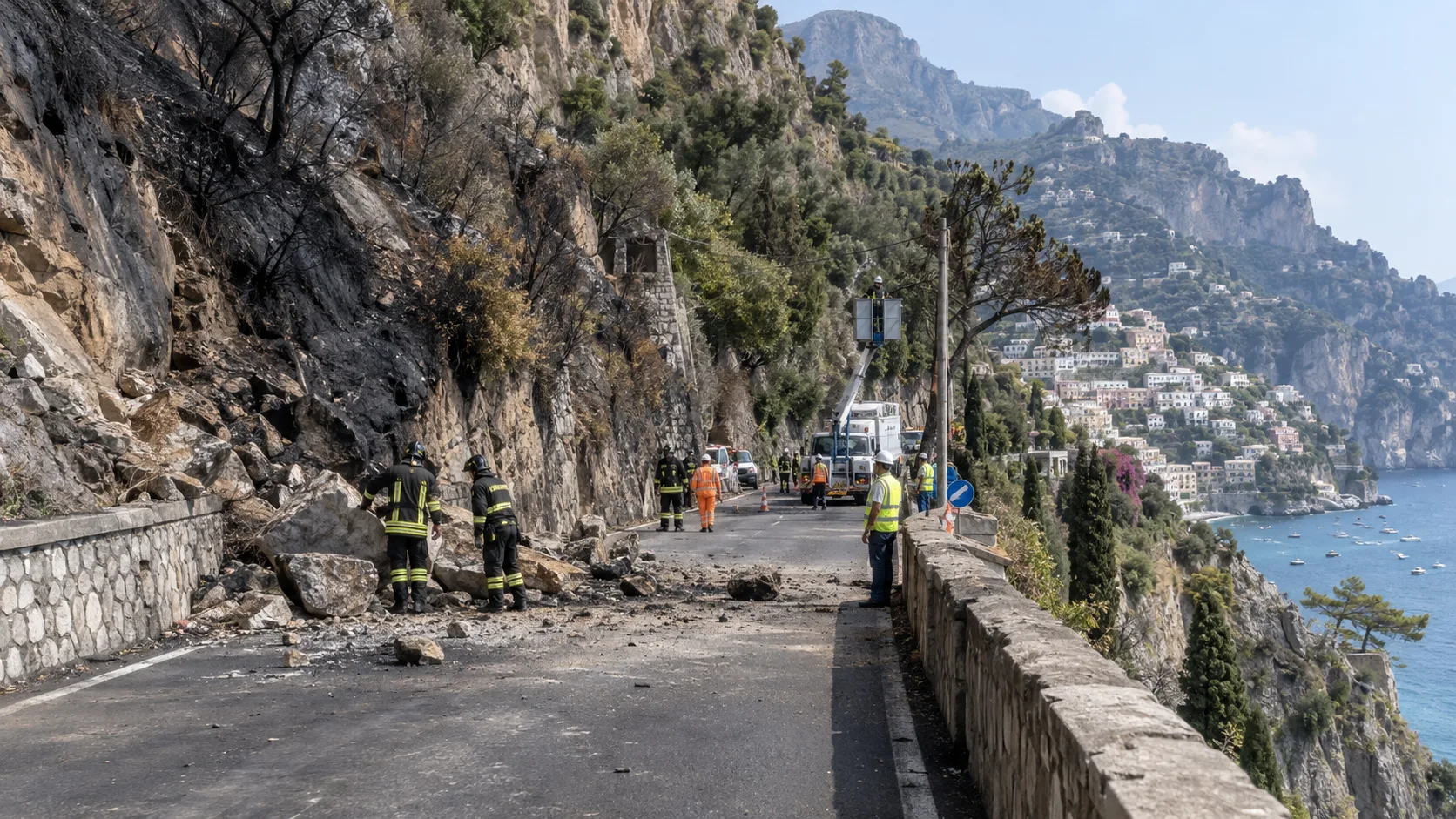
Road safety, slope stability, and access control can continue long after the most visible flames are knocked down.
What Travelers and Readers Usually Want to Know
Most readers landing on a story like this are looking for practical answers:
- Where did the fire happen?
- Was Positano directly threatened?
- Is the Amalfi Coast road closed?
- Has the road reopened?
The clearest answer is this: the fire broke out near Positano's San Pietro area overnight, it triggered a landslide that closed the SS 163 Amalfitana for more than half a day, and the road was fully reopened in both directions by early evening the same day the fire started.
Bottom Line
The Positano fire was more than a brush-fire headline. It became a high-interest incident because it combined steep coastal terrain, exposure concerns near a globally known destination, and a closure on the SS 163 Amalfitana after the fire triggered a landslide near the road — followed hours later by a second fire and road closure nearby at Vico Equense.
The good news for the immediate area: firefighters brought the Positano fire under control overnight, and ANAS restored full traffic on the SS 163 by around 5 p.m. that same Sunday. That combination is why people are still searching it — not just to know that a fire happened, but to understand how it affected access, safety, and the wider Amalfi Coast area.
For more emergency coverage, visit our fire news archive.
Frequently Asked Questions
Where did the Positano fire happen?
The fire was reported in the San Pietro area of Positano on Italy's Amalfi Coast, breaking out around 2 a.m. on September 13, 2026.
Why was the SS 163 Amalfitana closed?
ANAS said a landslide, triggered by the fire, sent debris onto the road near km 16.300, leading to a closure of the stretch between roughly km 16.000 and 16.800.
Has the SS 163 Amalfitana reopened?
Yes. The road reopened to alternating one-way traffic around midday and to full two-way traffic by around 5 p.m. the same day the fire broke out.
Why did this fire get so much attention?
Because it involved a well-known destination, steep and difficult terrain, and a major road impact that affected access and traffic — compounded by a second fire and road closure nearby at Vico Equense the same evening.
Comments 0
No comments yet. Be the first to share your thoughts!
Leave a Comment