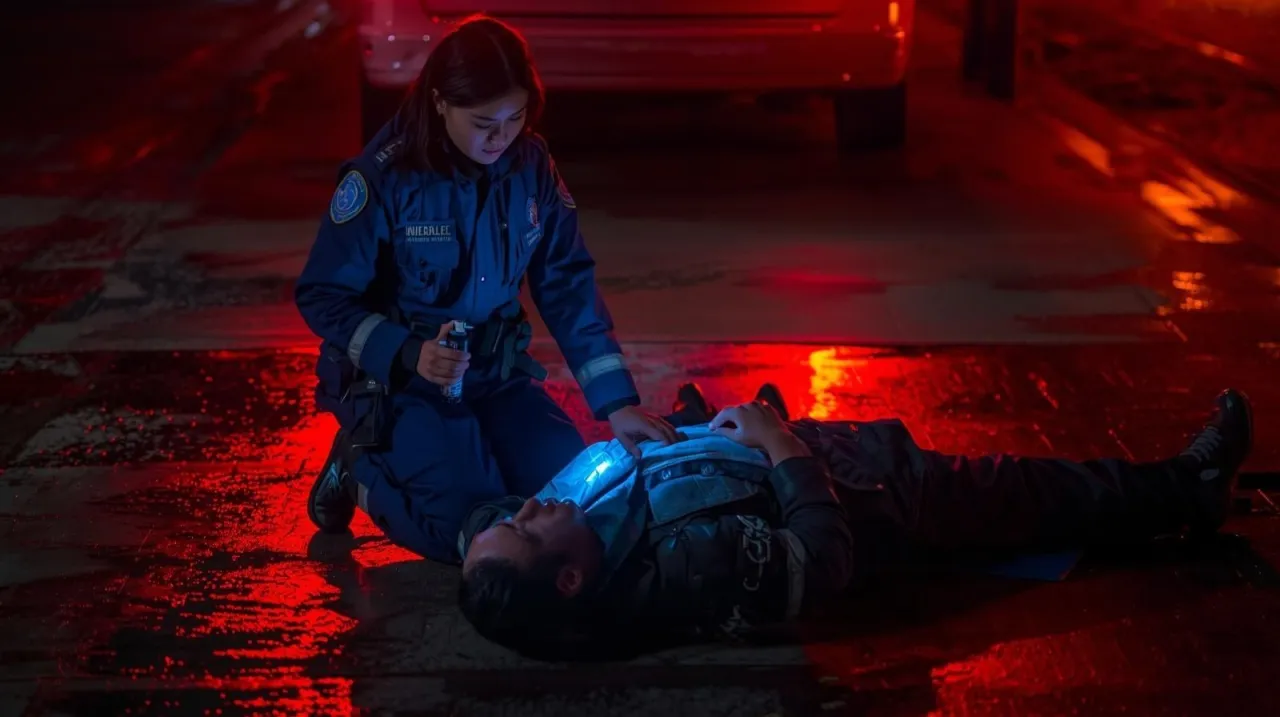
The Opioid Crisis on the Front Line of EMS
In many fire departments across the United States, opioid overdose calls now represent one of the most frequent EMS responses crews make. More than 80,000 Americans died of opioid overdose in a recent reporting year — a figure that exceeds U.S. traffic fatalities. Behind each statistic is a 911 call where a firefighter or paramedic had minutes to reverse a potentially fatal respiratory arrest with naloxone and skilled airway management.
The opioid crisis has fundamentally changed what fire service EMS looks like — from the medications carried on apparatus, to training priorities, to crew safety protocols, to the expanding role of community paramedicine in overdose follow-up. This guide explains exactly what happens from the moment a crew is dispatched to an overdose call through patient handoff — and the clinical and operational decisions that determine whether the patient survives.
Recognizing an Opioid Overdose: The Toxidrome
Opioid overdose produces a recognizable clinical pattern — the "opioid toxidrome" — that allows trained responders to identify it quickly and begin treatment before lab confirmation is possible. The classic triad is:
| Sign | What It Looks Like | Mechanism |
|---|---|---|
| Pinpoint (miotic) pupils | Pupils extremely small — as small as a pinhole — even in low light conditions | Opioids stimulate parasympathetic pathways causing maximum pupil constriction |
| Respiratory depression | Fewer than 10 breaths/minute; irregular breathing; absent breathing (apnea); gurgling or snoring sounds from tongue obstruction | Opioids bind to μ-receptors in the brainstem respiratory center, suppressing the drive to breathe |
| Decreased consciousness | Unresponsive to voice or sternal rub; deep sedation; complete unconsciousness | CNS depression from opioid receptor binding in brain |
Mixed-substance overdoses — combining opioids with alcohol, benzodiazepines, or stimulants — may present atypically. Stimulant-opioid combinations (speedballing) may show less pronounced respiratory depression initially. Benzodiazepine combination overdoses may not respond adequately to naloxone alone. Assessment should always include blood glucose check — hypoglycemia mimics altered consciousness and requires different treatment.
Scene Response: Step by Step
SAFE
Scene safety assessment before patient contact
Overdose scenes can present multiple safety hazards: other individuals who may be intoxicated or combative; drug paraphernalia (needles — use PPE); potential for visible powder (fentanyl — do not disturb, use N95); pets; weapons. Law enforcement co-response is common in many jurisdictions. Approach scene from upwind if any powdery substance is visible. Don nitrile gloves before contact.
Rapid assessment — airway, breathing, circulation, pupils
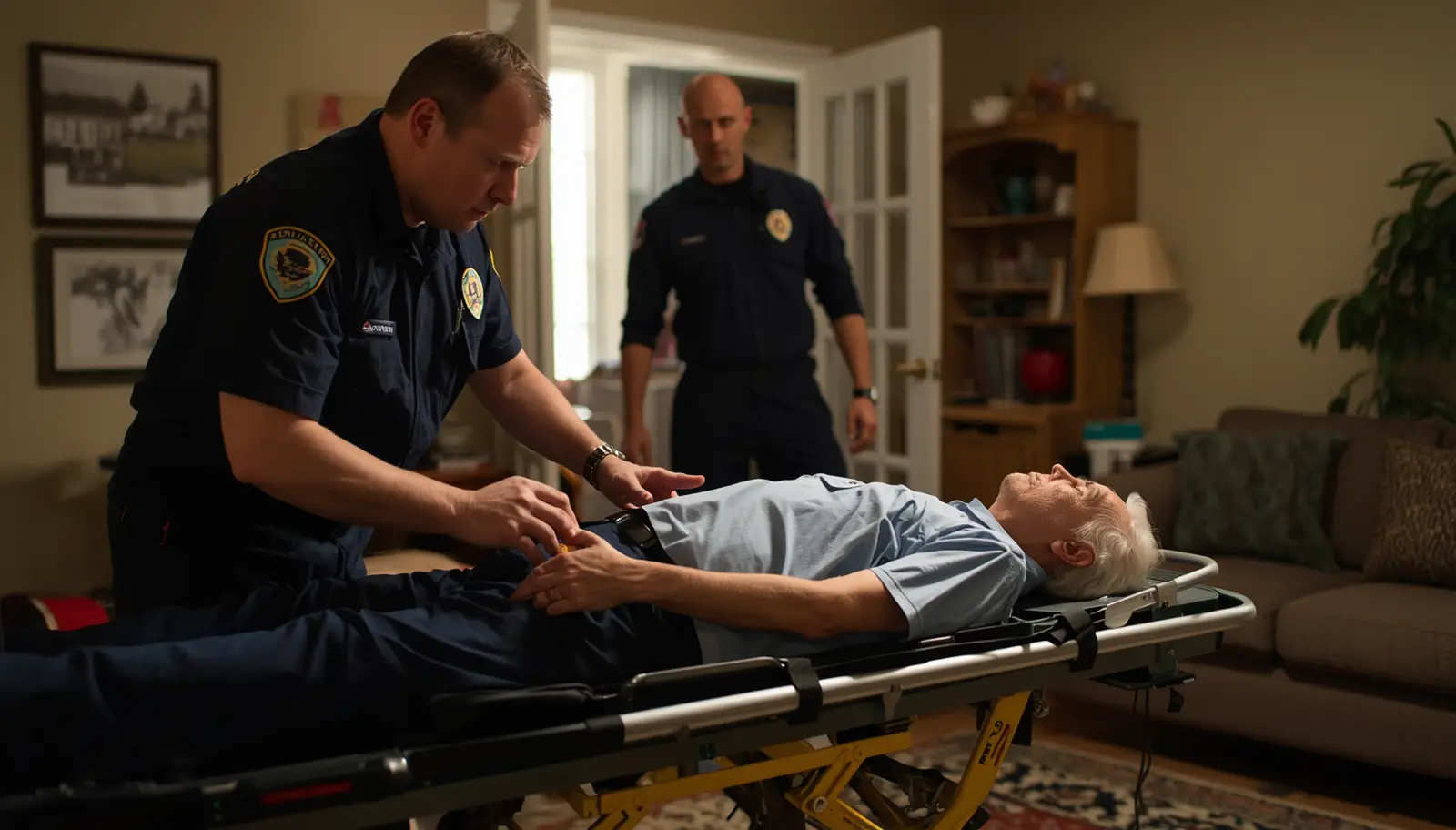
Check responsiveness (voice, sternal rub). Open airway — head-tilt chin-lift or jaw thrust. Assess breathing rate, depth, and adequacy. Check radial and carotid pulse. Pupils: miotic (pinpoint) is the hallmark sign. Skin color and temperature. SpO₂ if available. Time from assessment to naloxone administration should be under 60 seconds for apneic patient.
Airway management and ventilation if breathing is inadequate
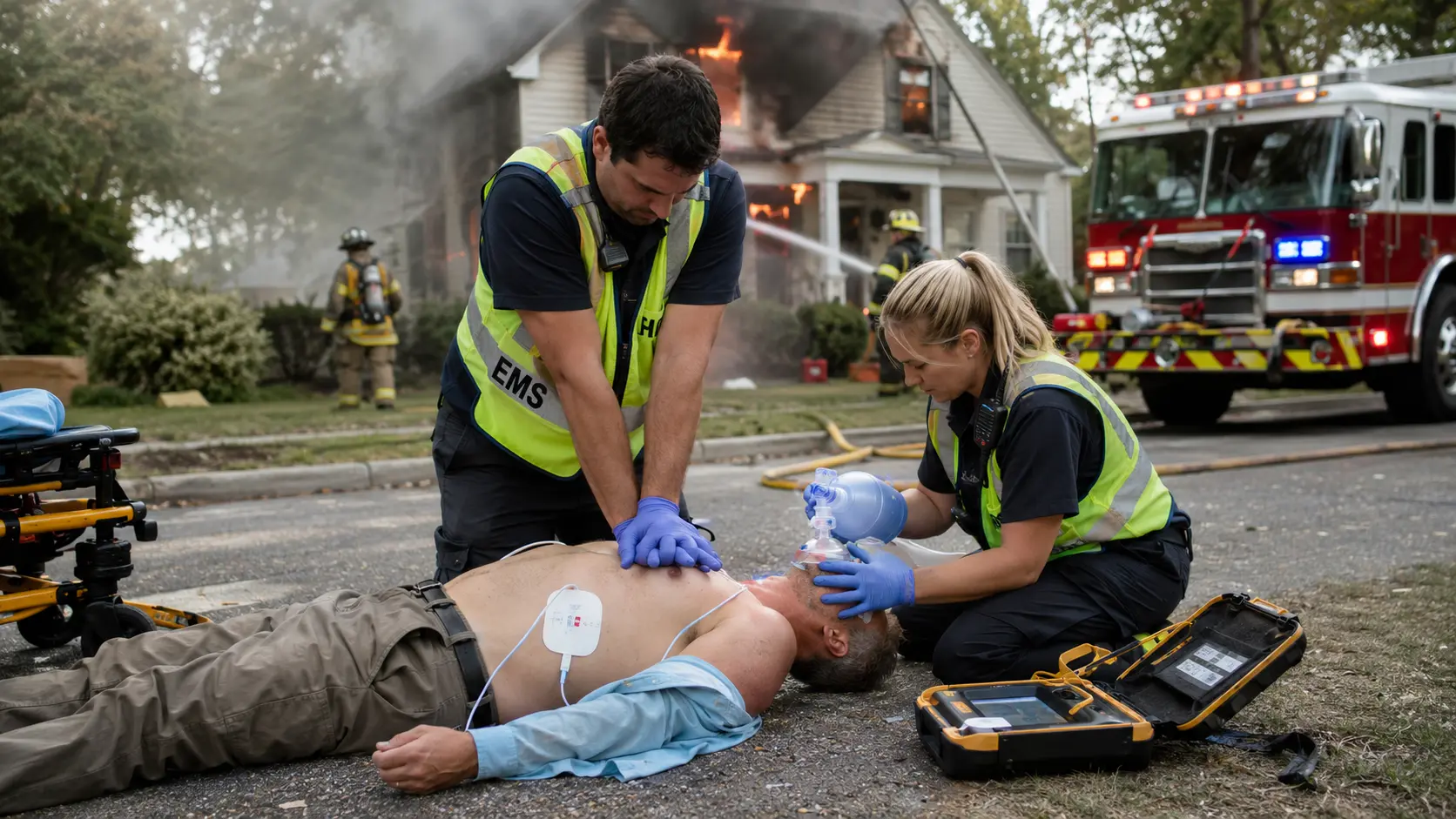
For apneic or severely bradypneic patients: position patient, insert nasopharyngeal airway (NPA) to maintain airway, and begin BVM ventilation with oxygen before or simultaneously with naloxone administration. Providing 30–60 seconds of ventilation before naloxone in an apneic patient improves brain oxygenation and may improve outcomes. Do not delay naloxone while waiting for airway equipment to be prepared.
Naloxone administration — route and dose based on protocol
Intranasal (IN) delivery via mucosal atomizer is the most common prehospital route — no needle, fast, and effective. Standard fentanyl-era initial dose: 2 mg IN divided between nostrils. IM injection (lateral thigh or deltoid) has faster absorption than IN. IV/IO provides fastest onset but requires access. Reassess at 2–3 minutes — if no response, repeat dose. Continue until adequate respiratory function is restored.
Post-reversal monitoring and reassessment
Continuous SpO₂ and respiratory rate monitoring after reversal. Cardiac monitoring — opioid overdose and subsequent naloxone-precipitated withdrawal can cause dysrhythmias. Glucose check to rule out co-occurring hypoglycemia. Temperature — prolonged unconsciousness can cause hypothermia. Document exact times of all interventions and patient responses. Prepare for transport.
Transport and hospital notification
All patients who received naloxone for opioid overdose should be transported — re-narcotization risk requires monitored observation beyond naloxone's duration. Pre-notify ED with patient status, substances suspected, naloxone doses given and response, current vitals. If patient refuses transport, document thoroughly and provide naloxone kit and harm reduction resources.
Naloxone Dosing: The Fentanyl Era Has Changed Everything
Traditional Dose (Heroin Era)
Often insufficient for synthetic opioids; may partially reverse but inadequate respiratory recovery
Current Initial Dose (Fentanyl Era)
Standard first dose for suspected fentanyl overdose in most current EMS protocols; repeat every 2–3 min if no response
Refractory High-Dose Protocols
Some protocols allow up to 10 mg for carfentanil or no-response presentations; confirm with local medical director guidance
| Route | Onset | Considerations |
|---|---|---|
| Intranasal (IN) | 3–5 min | No needle; easy to administer; divided dose between nostrils increases absorption area; affected by nasal congestion or cocaine insufflation damage |
| Intramuscular (IM) | 5–10 min | Reliable absorption; lateral thigh; used when IN access is compromised; needle required |
| Intravenous (IV) | <2 min | Fastest onset; titrateable; requires IV access first; risk of precipitating acute withdrawal and agitation if given as bolus too fast |
| Intraosseous (IO) | <2 min | Used when IV access fails; same speed as IV; bone marrow delivery; painful if patient regains consciousness |
Crew Safety: Fentanyl Exposure Reality vs. Myth
Concerns about fentanyl exposure during overdose response are widespread in the fire and EMS community, partly due to high-profile media reports. The evidence-based guidance from ACEP, NAEMSP, the American College of Medical Toxicology, and other professional organizations provides important clarity:
| Claim | Evidence-Based Reality |
|---|---|
| Skin contact with fentanyl on a patient will cause crew overdose | FALSE — transdermal absorption from incidental skin contact is not a clinically significant exposure route for first responders; intact skin is an effective barrier for the short contact duration of patient care |
| Inhaling air near a fentanyl overdose patient is dangerous | FALSE — ambient air near an overdose patient does not contain aerosolized fentanyl at dangerous concentrations; the patient did not inhale themselves into overdose from ambient air |
| Visible white powder at a scene presents airborne inhalation risk | TRUE — undisturbed powder should not be handled; N95 or P100 respiratory protection indicated if powder disturbance is possible; do not use fans or PPV ventilation near visible powder |
| Standard PPE (nitrile gloves + face protection) is adequate for routine overdose calls | TRUE — nitrile gloves, eye protection, and face protection provide adequate protection for standard patient contact; change gloves and wash hands after |
| Any crew member with symptoms after overdose scene should receive naloxone | TRUE — if any crew member develops sedation, slowed breathing, or pinpoint pupils at any point, administer naloxone and treat as a patient |
After the Call: Harm Reduction and Follow-Up
The moment after a naloxone reversal — when a patient is conscious but still at a scene — is a brief and often underutilized opportunity for harm reduction. EMS providers who connect patients with resources in this moment have been shown to increase treatment engagement in several study populations:
- Offer a naloxone kit before transport or after refusal — many departments carry extra kits for distribution; bystander naloxone saves lives
- Provide treatment referral information — brief motivational contact at the scene of an overdose has documented efficacy for treatment engagement
- Document findings thoroughly in PCR — pattern data at the agency level drives public health response and community paramedicine program design
- Request peer support or community health worker follow-up if your agency has CP capabilities — post-overdose 24–72 hour visits significantly improve treatment engagement
- Communicate observed drug supply changes to supervisors — new substances, color changes, or unusual overdose presentations are syndromic surveillance data
- Access your agency's peer support program after difficult calls — repeated overdose scenes, especially pediatric cases, are a significant contributor to EMS provider burnout and PTSD
For the full context of EMS operations in the fire service — including cardiac arrest response, trauma operations, team roles, and the future of community paramedicine — see our complete guide to firefighter–paramedics and fire department EMS. For operational reference tools relevant to EMS response, including drug reference and hazmat first-action guides for clandestine lab and chemical overdose scenes, see the AllFirefighter Hazmat Hub and the Tools section.
Comments 0
No comments yet. Be the first to share your thoughts!
Leave a Comment