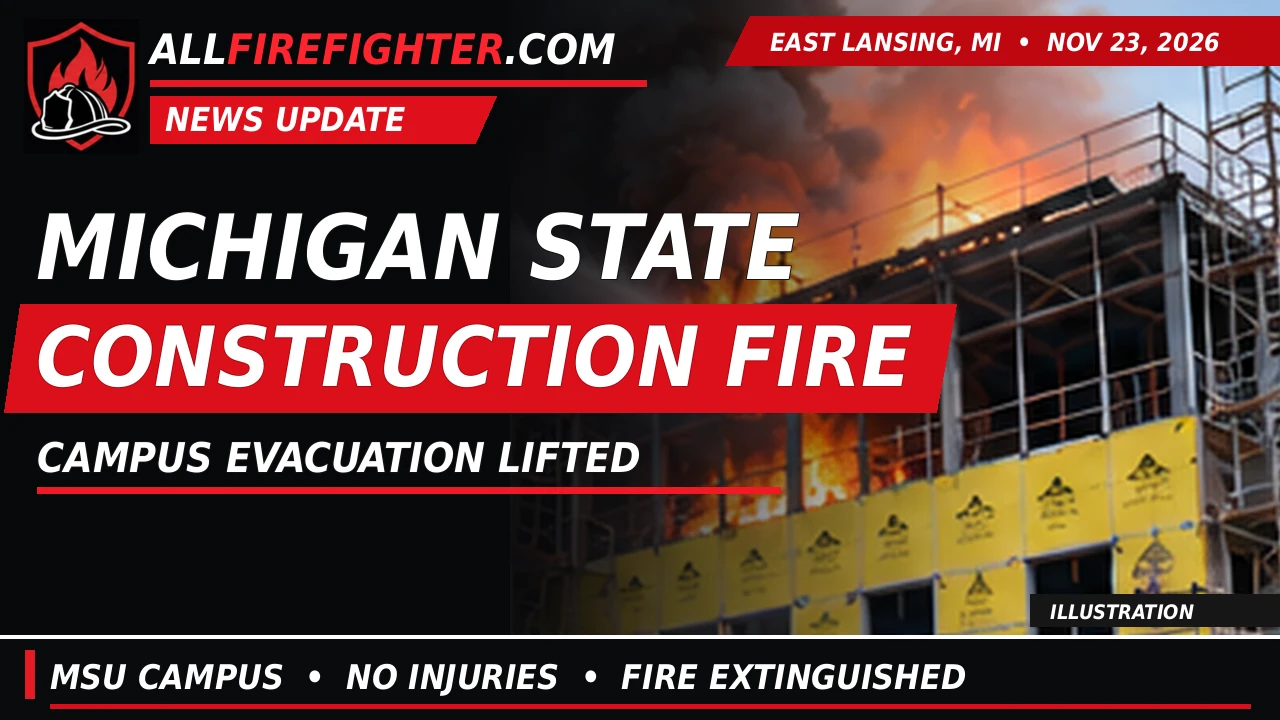
EAST LANSING, Michigan — A fire at Michigan State University’s Plant and Environmental Sciences Building construction project on Monday, November 23, 2026, prompted a precautionary evacuation of an adjacent academic building. The fire was extinguished, the evacuation was lifted and university police reported no injuries.
University officials identified a concealed area between brickwork and drywall as the location where the fire originated. They had not announced a final ignition cause in the reporting reviewed for this article. The incident illustrates why a construction-site fire can affect neighboring occupied buildings even when the fire itself is limited to the work site.
Michigan State University fire: Key facts
| Question | What the reporting establishes |
|---|---|
| Fire location | New Plant and Environmental Sciences Building, under construction |
| Campus area | Farm Lane and Wilson Road, East Lansing |
| Evacuated building | Biomedical Physical Sciences Building (BPS) |
| Fire status | Extinguished; investigation continuing |
| Injuries | None reported in university’s midday update |
| Cause | Not established in the cited reports |
What happened on the MSU campus?
Smoke at the construction project drew a response from the East Lansing Fire Department and Michigan State University Department of Police and Public Safety (DPPS) on Monday morning. WKAR Public Media reported the initial incident and temporary road restrictions using information from campus police.
According to The State News, black smoke was visible and East Lansing requested assistance from the Lansing Fire Department and Northern Ingham Emergency Services Authority. Officials evacuated the Biomedical Physical Sciences Building because it was close to the construction project, not because they had confirmed that the academic building was burning.
University police subsequently determined that the occupied building was not exposed to the fire and allowed people to return. A campus update at 12:21 p.m., reported by The State News, confirmed no injuries. Temporary transit changes were lifted as the response wound down. The cause investigation remained open.
Why the distinction between the two buildings matters
Early incident alerts often name both the emergency location and the areas affected by protective actions. A reader may incorrectly conclude that every evacuated building is on fire. In this case, the reports distinguish the construction project from the Biomedical Physical Sciences Building.
A precautionary evacuation is a risk management decision under uncertainty. An incident commander and campus safety officials must account for the possibility of smoke exposure, changes in fire conditions, emergency vehicle movement and the needs of nearby occupants. The decision to reopen a building is a separate assessment, not a contradiction of the initial evacuation.
Fire service analysis: Concealed spaces during construction
Construction projects have a changing configuration. A wall assembly may be partly complete, while penetrations, temporary openings and work areas may not yet resemble the finished structure. An ignition hidden behind a finished-looking surface can be difficult to evaluate from the exterior.
Smoke visible outside a building does not by itself establish how much material is burning behind the wall. The hazards and access options depend on the actual construction assembly, its continuity, ventilation and structural condition. Firefighters assess those factors on scene; the public reports here do not establish the specific suppression tactics used.
Possible construction hazards in general include temporary electrical equipment, combustible packaging, hot work and unfinished protective systems. None has been identified as the ignition source in the MSU incident. The location of a fire and the cause of a fire are two different findings.
What U.S. construction fire protection rules emphasize
OSHA’s 29 CFR 1926.24 requires employers to maintain an effective job-site fire protection and prevention program through construction and related work. 29 CFR 1926.150 addresses construction fire protection provisions, including firefighting equipment and access to it, and applicable water supply and standpipe requirements.
For project managers, the practical issue is not merely whether a fire protection plan exists. It must stay relevant as the job progresses. Temporary access changes, contractor coordination, emergency reporting procedures and the readiness of available protection equipment need to be addressed as the physical site changes. Compliance determinations depend on the applicable requirements and site facts.
This is a general U.S. construction safety discussion, not a finding of an OSHA violation at Michigan State University. The cited incident accounts do not establish that any specific fire protection requirement was breached.
What students and staff should do during a campus fire alert
Follow official evacuation and reopening instructions. Avoid restricted streets and do not approach a fire scene to take photographs. Keep fire apparatus access clear and use alternate routes as directed by campus authorities. Do not return to a temporarily evacuated building until the responsible officials give the all-clear.
Frequently asked questions
Which MSU building caught fire?
The Plant and Environmental Sciences Building construction project at Farm Lane and Wilson Road.
Did the Biomedical Physical Sciences Building catch fire?
It was evacuated as a precaution; reports do not identify it as the fire building.
Was anyone injured?
No injuries were reported in the university update cited by The State News.
Has the MSU construction fire been extinguished?
Yes, according to the November 23 updated report. The ignition cause remained under investigation.
Sources and reporting notes
- The State News — updated campus reporting, evacuation lifted and no injuries
- WKAR — initial response and location
- WILX — initial MSU police and public safety statement
- OSHA 1926.150 — construction fire protection
- OSHA 1926.24 — fire protection and prevention
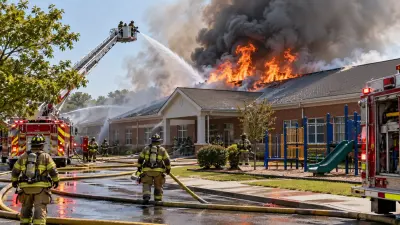
Reporting cutoff: November 23, 2026 (U.S. time). This article is based on published accounts, not an on-scene investigation. The cover is an AI-generated editorial illustration, not an actual incident photograph.

Comments 0
No comments yet. Be the first to share your thoughts!
Leave a Comment