
Last updated:
A pitot reading is easy to write down and easy to misuse. The number on the gauge is not the whole water supply story. It is one measurement from one flowing outlet under the conditions that existed at that moment. Used carefully, it helps an engine company understand hydrant strength. Used casually, it can make a weak supply look better than it is.
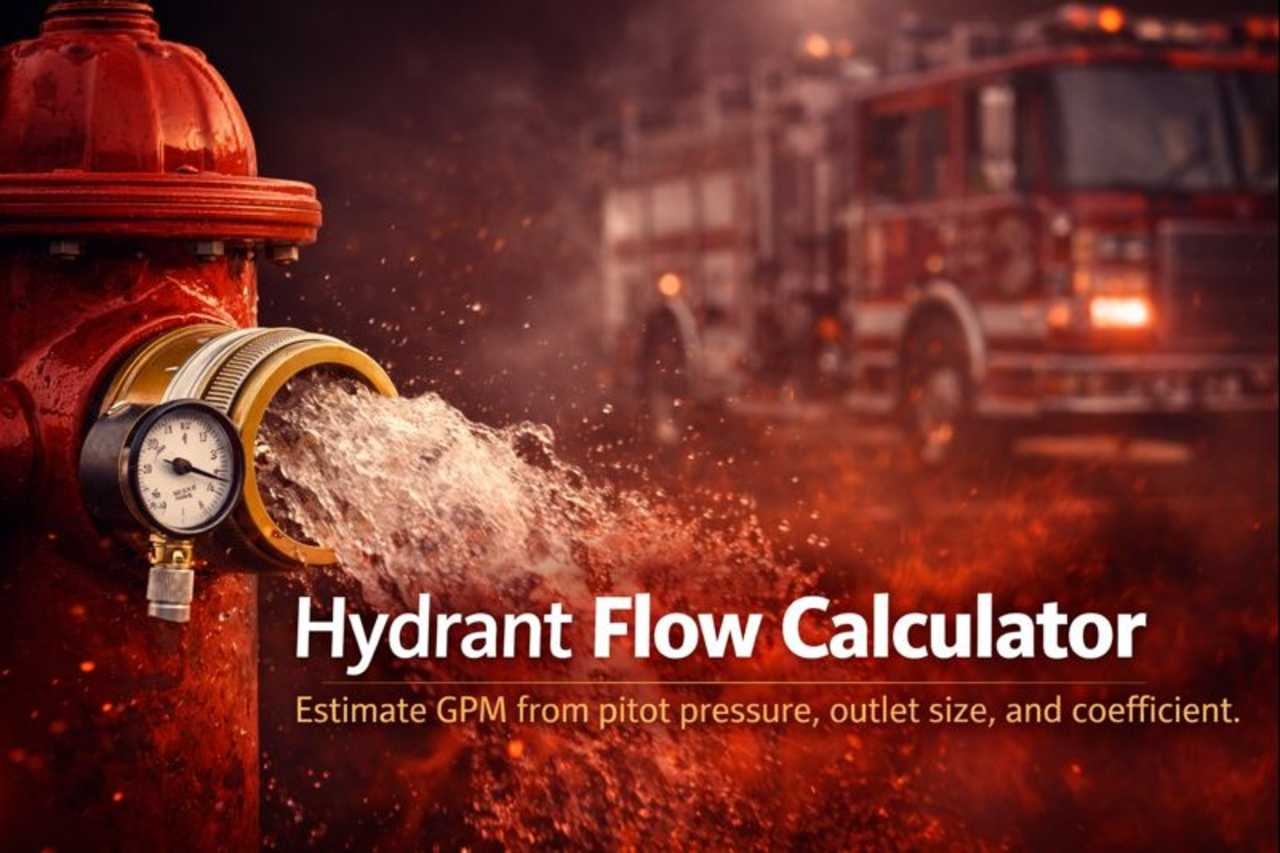
The Hydrant Flow Calculator turns pitot pressure, outlet size, and discharge coefficient into an estimated GPM. It also gives the NFPA 291 color class so crews can speak the same quick language: blue, green, orange, or red. For formal hydrant testing and marking, use the applicable procedures in NFPA 291 and your water authority's data.
Open Hydrant Flow CalculatorFire Flow CalculatorHydrant Finder
Operational note: single-outlet pitot estimates are useful for training and preplans. Full flow testing also considers residual pressure, system condition, local procedures, and water authority records.
What The Calculator Actually Calculates
The basic pitot-to-flow equation is:
Q = 29.83 x c x d^2 x sqrt(p)
In that formula, Q is flow in gallons per minute, c is the discharge coefficient, d is outlet diameter in inches, and p is pitot pressure in PSI. The math is straightforward. The field work is where mistakes creep in: wrong outlet size, poor stream position, unstable gauge reading, or a coefficient that does not match the outlet.
| Input | What it means | Common mistake |
|---|---|---|
| Pitot PSI | Velocity pressure measured in the stream from the flowing outlet. | Reading while the stream is turbulent or the gauge is bouncing. |
| Outlet diameter | The actual measured diameter of the outlet being flowed. | Assuming a nominal size without confirming the outlet. |
| Coefficient | An adjustment for outlet shape and condition. | Using the same coefficient for every hydrant, even when outlet shape differs. |
| Color class | A quick NFPA 291-style flow category for marking and preplan discussion. | Treating color as a complete water supply plan. |
A Clean Pitot Reading Workflow
- Confirm the hydrant and outlet. Make sure you are testing the intended outlet and have safe drainage and traffic control.
- Open slowly and fully as procedure allows. Avoid water hammer and let the flow stabilize before trusting the gauge.
- Place the pitot correctly. Keep it centered in the stream at the proper distance from the outlet, following local training.
- Wait for a stable reading. Do not chase a bouncing needle or splash-heavy stream.
- Record the assumptions. Write down PSI, outlet size, coefficient, hydrant ID, date, and conditions.
- Compare against demand. Use the Fire Flow Calculator to see whether the estimated supply matches the building problem.
That last step is the one crews often skip. Hydrant flow only becomes operationally useful when it is tied to a target structure, a hose lay, an engine position, and a fallback plan.
NFPA 291 Color Class Context
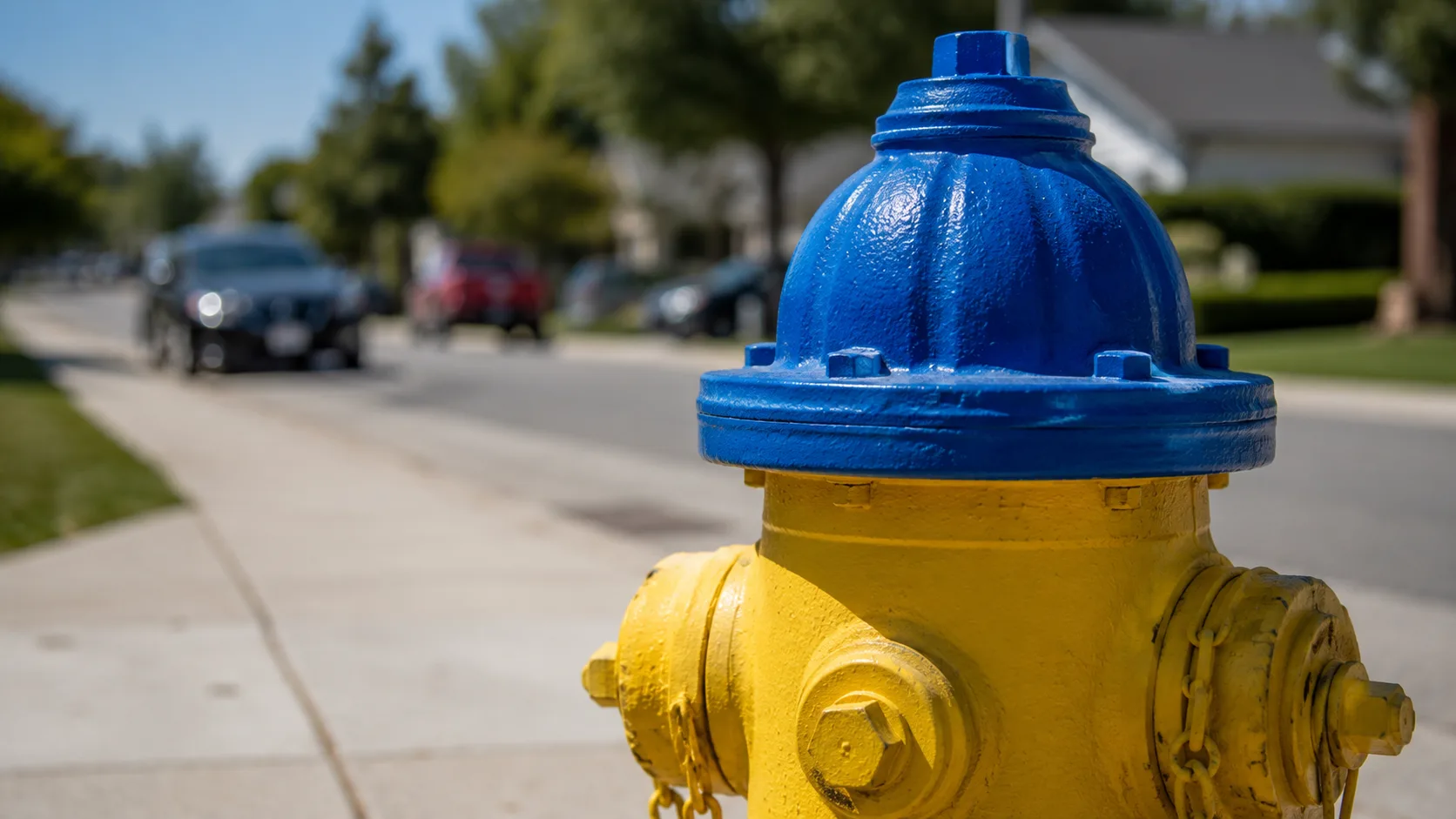
NFPA 291 color categories help crews quickly recognize approximate available flow. Many departments use them for hydrant marking programs, though local hydrant body colors and marking practices vary. Always follow your local system.
| Color class | Flow range | Planning meaning |
|---|---|---|
| Blue / Class AA | 1,500 GPM or more | Strong supply, but still check hose lay, residual pressure, and simultaneous demand. |
| Green / Class A | 1,000 to 1,499 GPM | Useful for many structural operations, depending on the target building. |
| Orange / Class B | 500 to 999 GPM | Marginal for larger fires; plan second supply or reduced tactical demand. |
| Red / Class C | Less than 500 GPM | Weak supply; alternative water, relay, or tanker planning may be needed. |
Field Mistakes That Produce Bad Flow Estimates
- Measuring in turbulence: splash, obstructions, and poor stream shape can create unreliable pitot readings.
- Forgetting residual pressure: a single flowing outlet estimate does not replace a full hydrant flow test.
- Wrong coefficient: rounded, square-edged, and rough outlets do not behave the same.
- No system context: water main condition, time of day, elevation, and simultaneous demand can change available water.
- No link to fire demand: a GPM estimate matters only after you compare it with the building's needed fire flow.
Turn Hydrant Flow Into A Preplan
A good hydrant note should help the next crew make a faster decision. Record the hydrant location, tested outlet, estimated GPM, date, unusual conditions, nearby target hazards, and the preferred engine position. If the first hydrant is marginal, name the second hydrant or the relay plan. If the district is rural or a fringe water area, connect the note to tanker shuttle planning.
Then turn the supply number into pump work. Use the Friction Loss Calculator for the hose package and the PDP Calculator for pump discharge pressure. If the package is repeated often, add it to the Pump Chart Generator so the operator has a quick reference.
Frequently Asked Questions
Is a pitot hydrant flow estimate exact?
No. It is an estimate based on the pitot reading, outlet diameter, and coefficient. System conditions, residual pressure, hydrant condition, and measurement technique all affect real flow.
What is the hydrant flow formula?
The common formula is Q = 29.83 x c x d^2 x sqrt(p), where Q is GPM, c is coefficient, d is outlet diameter in inches, and p is pitot PSI.
What do NFPA 291 hydrant colors mean?
They are flow categories used for hydrant marking: blue for 1,500+ GPM, green for 1,000-1,499, orange for 500-999, and red for less than 500 GPM.
Can I use this calculator for official ISO submissions?
No. It is a training and planning aid. Official submissions or rating work require formal testing, documentation, residual pressure data, and the appropriate authority.
How should firefighters use hydrant flow results?
Use them to compare available supply against needed fire flow, choose primary and secondary hydrants, plan hose lays, and identify when relay or tanker shuttle support is needed.








Comments 0
No comments yet. Be the first to share your thoughts!
Leave a Comment