Firefighter Polygraph Test: What to Expect and How to Prepare
The polygraph examination is one of the most anxiety-inducing steps in the fire department hiring process — and for most candidates, the anxiety itself is the biggest risk. Understanding exactly how the test works, what the examiner is actually measuring, and what to do (and not do) on test day gives honest candidates the best chance of a clean result.
Who uses polygraph exams: Not all fire departments require a polygraph. Many medium and large departments do, particularly those that also employ sworn law enforcement or operate under civil service regulations. Check whether your target department lists it as a requirement.
Jump to:How the polygraph works · What is measured · Test format and phases · Topics covered · How to prepare · Day of the test · Deceptive results · FAQ
How the Polygraph Works
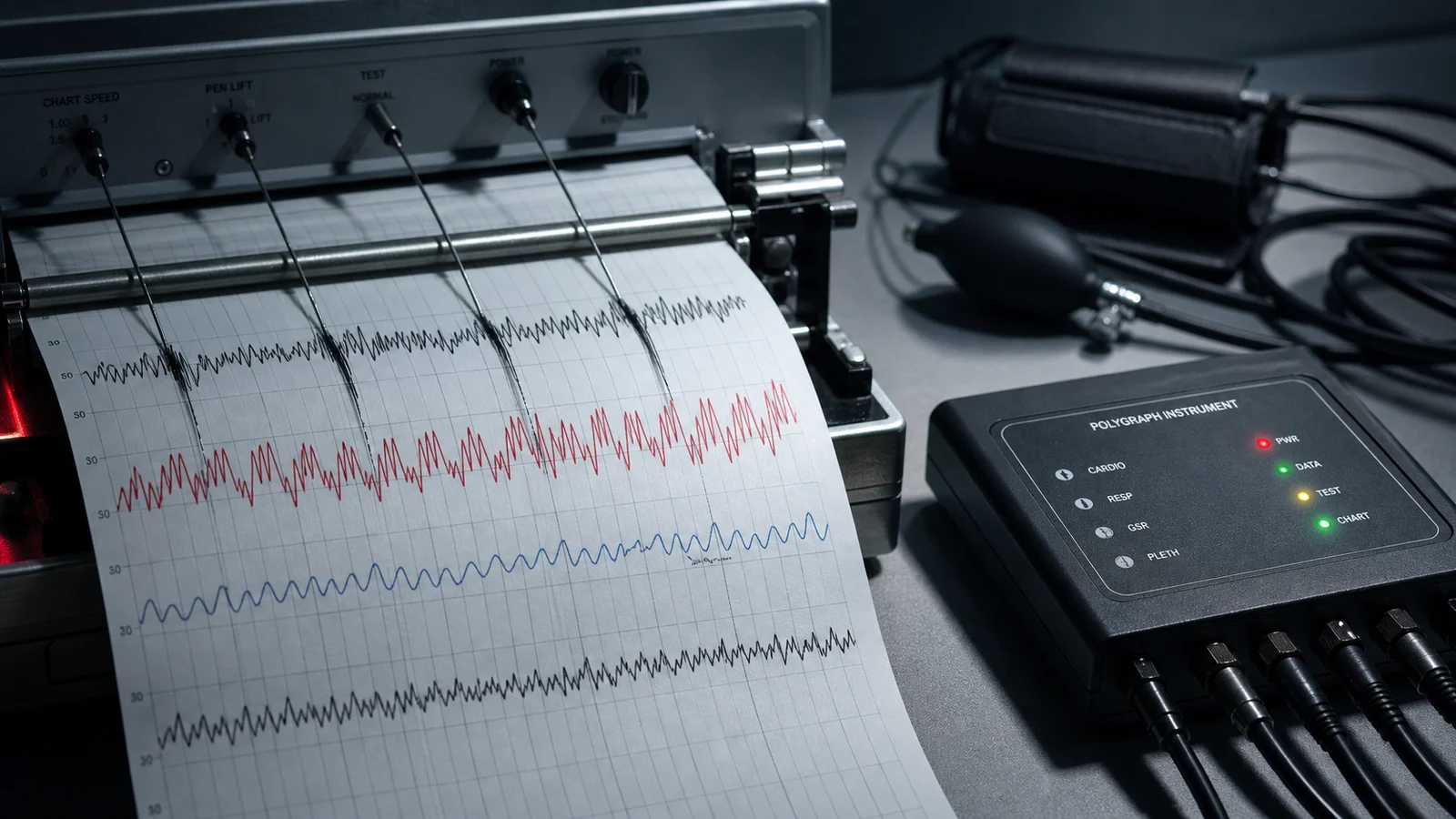
A polygraph instrument measures and records several physiological responses simultaneously while the subject answers a series of questions. The instrument does not detect lies — it detects physiological arousal, which experienced examiners interpret in the context of the question being asked.
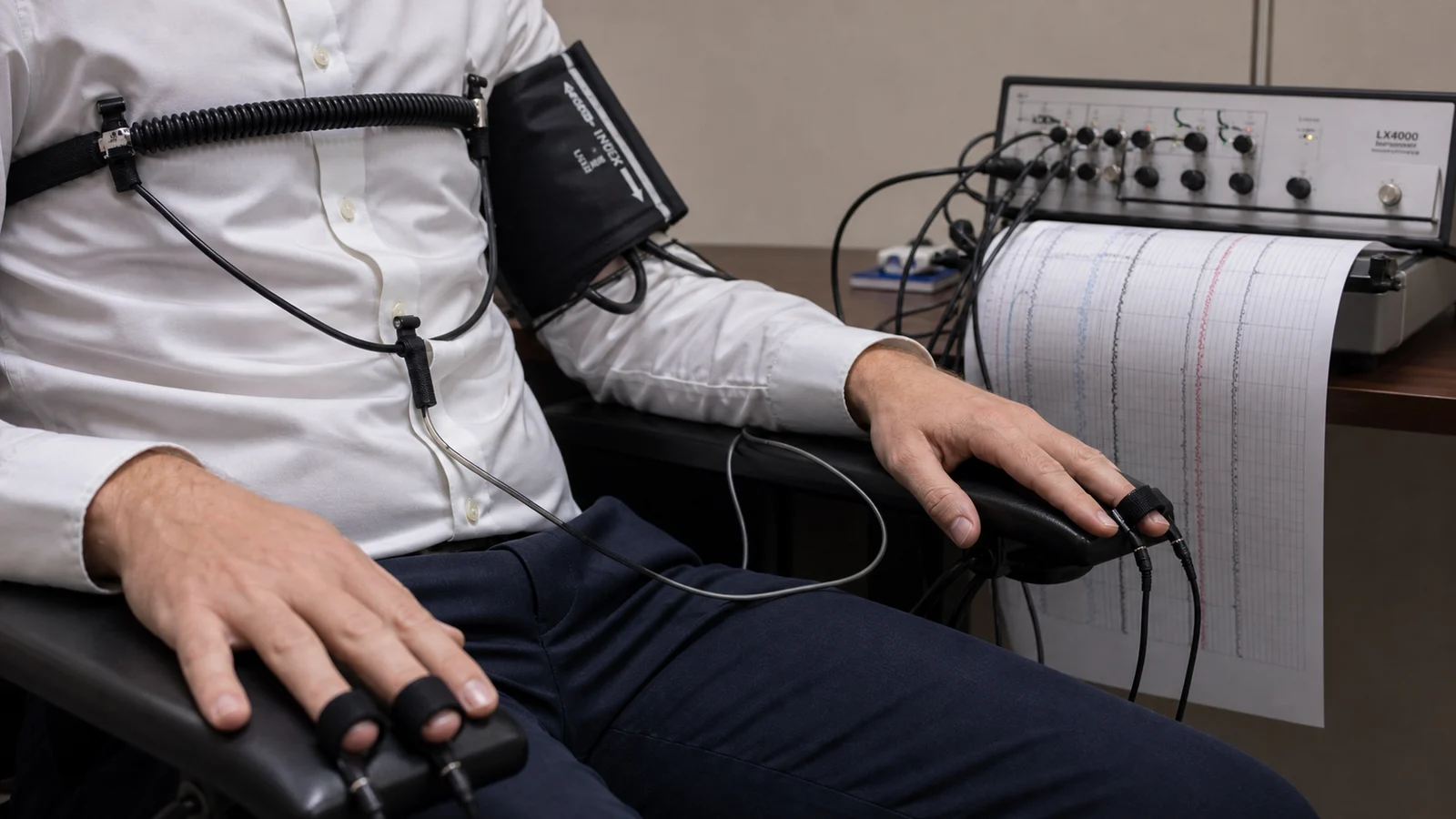
The sensors attached during a standard polygraph examination include:
- Pneumograph tubes: Elastic tubes around the chest and abdomen measuring breathing rate and depth
- Electrodermal sensor: Attached to fingers, measures sweat gland activity (skin conductance)
- Cardiovascular cuff: Measures heart rate, blood pressure, and pulse amplitude
- Movement sensor: Detects gross body movements that could indicate countermeasures
The polygraph does not tell the examiner you lied. It tells them your body responded differently to one question than to others. The examiner then interprets those differences using training and scoring methodology. This is why preparation matters.
Test Format and Phases
A full pre-employment polygraph examination typically takes 2–4 hours and follows a standard sequence:
Phase 1: Pre-test interview (45–90 minutes)
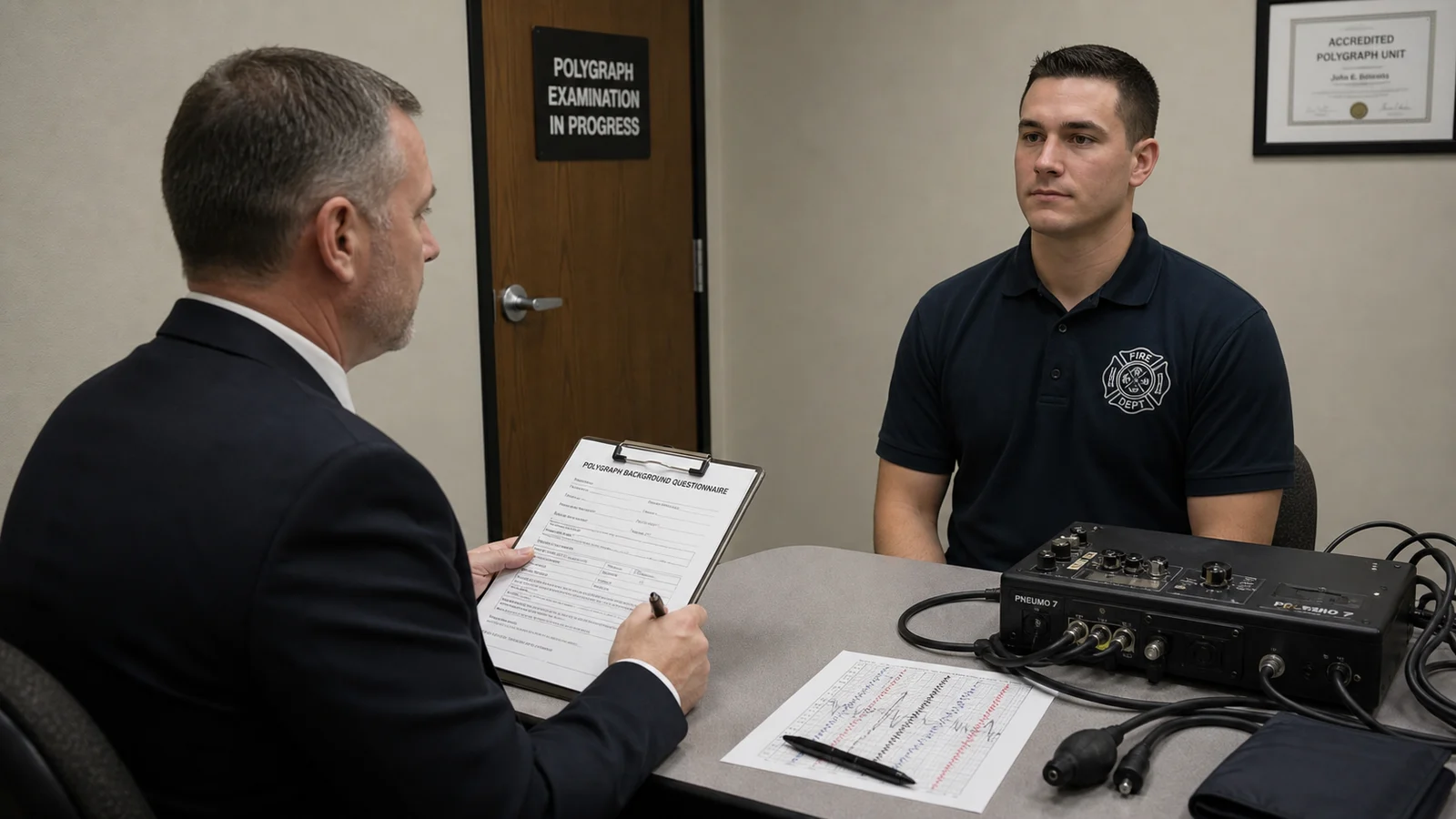
This is the longest phase and arguably the most important. The examiner reviews your background questionnaire with you in detail. All test questions are reviewed with you before you are connected to the instrument — there are no surprises during the actual polygraph.
Use the pre-test interview strategically. If there is anything in your history you are concerned about, bring it up and fully explain it now. Disclosing issues during the pre-test — before the questions are asked — significantly reduces your physiological reaction to those questions during the actual test.
Phase 2: Chart collection (30–45 minutes)
You are connected to the instrument and the examiner conducts 2–4 series of the same question set. Each series is called a "chart." The same questions are asked in slightly different order during each chart. Examiners score responses across all charts to reach a conclusion.
Phase 3: Post-test interview
If the examiner identifies significant reactions to specific questions, they conduct a post-test interview to explore those reactions. Remain calm, honest, and consistent with everything you disclosed during the pre-test.
Topics Covered in a Fire Department Polygraph
| Topic area | What is typically asked |
|---|---|
| Criminal history | Undisclosed crimes, theft, assault, fraud, illegal weapons possession |
| Drug use | Types of drugs used, frequency, recency, sale or distribution |
| Theft | From employers, stores, coworkers — both disclosed and undisclosed |
| Application truthfulness | Whether all information on the application is accurate |
| Integrity | Whether you have withheld any information investigators should know |
| Work history | Accuracy of employment disclosures, reasons for terminations |
| Financial issues | Undisclosed financial problems that could create security concerns |
How to Prepare
The only legitimate preparation is thorough, honest disclosure before and during the test. Countermeasures (techniques designed to defeat the instrument) are detectable by experienced examiners and result in immediate disqualification when discovered.
- Review your background packet thoroughly — ensure everything is accurate and complete
- Write down any issues you are uncertain about — be prepared to discuss them during the pre-test
- Get normal sleep — fatigue significantly affects physiological responses
- Avoid caffeine and stimulants on test day — these elevate baseline heart rate and skin conductance
- Do not take anti-anxiety medications without disclosing them to the examiner
During the test
- Breathe normally — deliberate breathing irregularities are detected and flagged
- Answer only "yes" or "no" — if you need to clarify, do it during the pre-test, not while connected
- Do not think about anything between questions — simply wait calmly
- Raise your hand if you need to clarify something between charts
If You Receive a Deceptive Result
A "deceptive" finding does not necessarily mean you lied — it means the examiner observed a physiological pattern they interpreted as deceptive. Extreme general anxiety, a reaction to an adjacent undisclosed issue, or medical conditions can all produce this result for honest candidates. Many departments allow a re-examination after a waiting period. If the result is associated with something you were not fully honest about, immediately and fully disclose the issue.
Frequently Asked Questions
Do all fire departments require a polygraph?
No. Polygraph use varies by department. Many large metropolitan departments require them as a standard component of the full background investigation. Smaller departments often do not. Check the specific hiring requirements for your target department.
Can I refuse to take a polygraph?
Government employers including fire departments are exempt from the Employee Polygraph Protection Act (EPPA). Refusing a required polygraph typically results in removal from the hiring process.
What if I used drugs in the past?
Past drug use beyond the department's look-back window that was fully disclosed on the background packet is generally not a disqualifying polygraph issue. The polygraph specifically checks whether you are hiding undisclosed use. If you disclosed past use honestly, the relevant questions about that topic should produce minimal reaction.
Is the polygraph scientifically reliable?
The scientific community has ongoing debates about polygraph reliability, and pre-employment screening polygraphs have a higher rate of false positives than specific-incident testing. Despite this, polygraphs remain a widely used tool in public safety hiring as part of a comprehensive character assessment.
Can anxiety cause a failed polygraph?
General test anxiety affects baseline levels equally rather than specifically relevant questions. However, thorough pre-test disclosure and normal preparation (sleep, no stimulants) help minimize anxiety effects on results.

Comments 0
No comments yet. Be the first to share your thoughts!
Leave a Comment