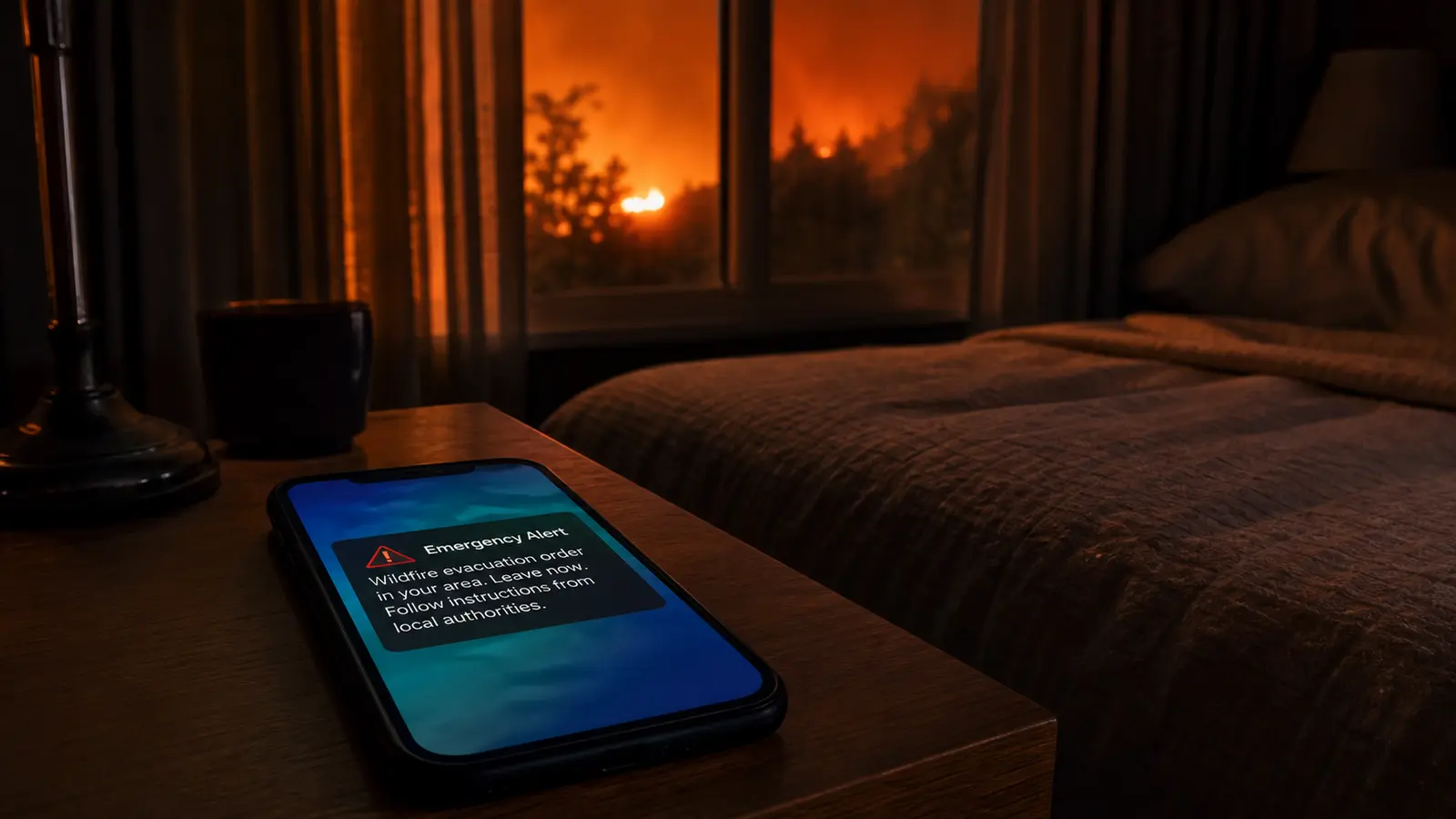

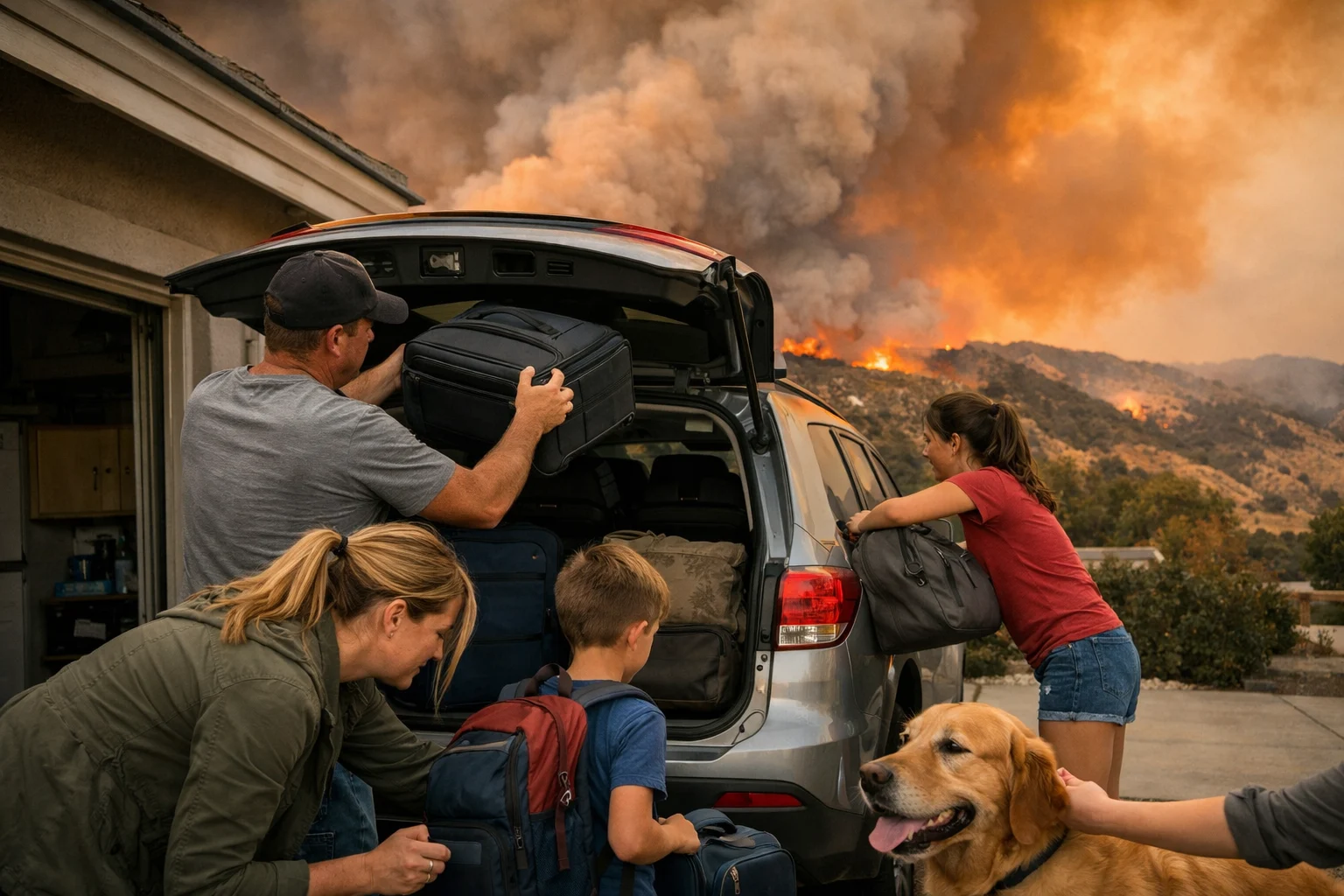
In the January 2026 Palisades Fire, investigators found that a significant portion of residents in evacuated zones never received an official emergency alert. Some had smartphones set to Do Not Disturb. Some had moved since registering for their county's opt-in notification system and the address on file was their previous home. Some lived in areas where the Wireless Emergency Alert that went to every phone in the cell tower's range was broadcast in English, while Spanish-speaking residents who didn't understand the message stayed home. And some received the alert, but by the time it arrived, the roads out of their neighborhood were already compromised.
Emergency alert systems are better than they were a decade ago. Wireless Emergency Alerts — the loud, vibrating alerts that go to all phones in a geographic area regardless of carrier — have dramatically expanded the reach of emergency notifications. But the gap between "an alert was sent" and "everyone who needed to know, knew in time to act" remains substantial, and understanding where that gap exists is what closes it.
If you live in or near wildfire-prone terrain, your evacuation plan cannot depend entirely on receiving an official alert. Here is why alerts fail, how the system actually works, and what you can do to ensure you get information — from multiple sources — in time to make a safe decision.
DisturbThe single most common reason residents don't receive WEAs during nighttime fire events
In this article:
- The three alert systems and how each one can fail
- Wireless Emergency Alerts — what they are and why Do Not Disturb blocks them
- Opt-in county systems — registration gaps and address errors
- The authorization delay: why alerts lag behind fast-moving fires
- Public Safety Power Shutoffs and cellular outages during alerts
- Language access gaps in emergency alerts
- What to do now so you don't depend on a single alert
The Three Alert Systems and How Each One Can Fail
During a wildfire event, three separate alerting systems operate simultaneously. Most residents are aware of one of them. Understanding all three — and the failure mode of each — is the foundation of a reliable personal alert strategy.
Wireless Emergency Alerts (WEA) are federally mandated alerts that are broadcast to all cell phones within range of specific cell towers, regardless of carrier or whether the phone number is registered anywhere. They are the alerts that cause every phone in a room to vibrate loudly simultaneously. WEAs require no prior registration and reach every phone in the coverage area — which makes them the most broadly reaching alert system. Their failure modes are specific and addressable.
County opt-in notification systems — operated under names like Nixle, AlertSF, SCC Alert, CodeRED, and dozens of county-specific brand names — send alerts to registered addresses via phone call, SMS, or email. They are more precise geographically than WEAs, can target a specific street or neighborhood rather than an entire cell tower's coverage area, and can be updated and resent as the situation evolves. Their failure modes involve registration gaps: residents who moved, residents who never registered, and contact information that hasn't been updated.
Social media and community channels — Nextdoor, neighborhood Facebook groups, community text chains, and fire department social media accounts — are informal but often faster than official systems at distributing ground-level information from neighbors who can see the fire or have already received official notice. They are also the least reliable for accuracy: misinformation spreads through these channels during fire events, and panic-driven incorrect information about evacuation routes or fire location can cause harm. These channels work best as a supplement to, not a replacement for, official alert systems.
Wireless Emergency Alerts — What They Are and Why Do Not Disturb Blocks Them
WEAs are broadcast at the cell tower level — the alert is transmitted from the tower to all devices within range, similar to how a radio broadcast works, rather than being sent individually to each phone number. This means they work even if your number isn't registered anywhere, and they work for visitors and people who just moved to the area.
The critical failure mode: Do Not Disturb. Most smartphones, when set to Do Not Disturb or Focus modes, suppress incoming alerts — including WEAs — during the hours those modes are active. On iPhones running iOS 15 and later, Do Not Disturb does not suppress Emergency Alerts by default. On many Android devices and earlier iOS versions, the behavior depends on how the user has configured the mode. A resident sleeping with their phone on Do Not Disturb may not receive the 2 AM WEA that would have woken them in time to leave safely.
The fix is specific. On iPhone: Settings → Focus → Do Not Disturb → verify that "Emergency Alerts" under Notifications is allowed. On Android: the path varies by manufacturer, but generally Settings → Notifications → Emergency Alerts should show as enabled regardless of Do Not Disturb status. Check this on your device today, not when an alert is incoming.
A second WEA limitation: geographic precision. WEA alerts are broadcast to cell tower coverage areas, which can be two to five miles in radius or larger in rural areas. An evacuation order for a specific neighborhood may generate a WEA that reaches residents two miles away who are not in the evacuation zone — while residents in an adjacent cell tower's coverage area who are in the zone may receive nothing if the broadcasting decision is made at the tower level. WEA geographic targeting has improved significantly since the 2018 upgrade to WEA 3.0, which allows alerts to be targeted to a specific geographic polygon rather than a full tower area — but implementation is inconsistent across counties and carriers.
Opt-In County Systems — Registration Gaps and Address Errors
County notification systems are more geographically precise than WEAs, but they only reach people who have registered — and only at the contact information on file. The three most common failure modes:
Never registered. Opt-in systems require residents to proactively sign up. Studies of post-fire alert effectiveness consistently find registration rates of 30 to 60 percent in wildfire-prone areas — meaning a significant fraction of the population the alert is intended to reach is not in the system. Renters are less likely to be registered than homeowners. New residents are less likely to be registered. Non-English-speaking residents frequently face registration systems that assume English literacy.
Old address on file. A resident who registered at their previous address before moving has their alert sent to the wrong location. If the fire threatens their current address, they may receive no targeted alert even though they are in the evacuation zone. Re-registering with a new address after a move requires the same level of intentional action as registering for the first time — which many residents don't do until after an event demonstrates the gap.
Phone number changes. A county system that has a resident's old cell number — one that's been reassigned, is a deactivated prepaid number, or belongs to someone else now — sends the alert to the wrong person. Registration systems that rely on a single contact method have a single point of failure. Registering with both a cell number and an email address provides redundancy.
The Authorization Delay: Why Alerts Lag Behind Fast-Moving Fires
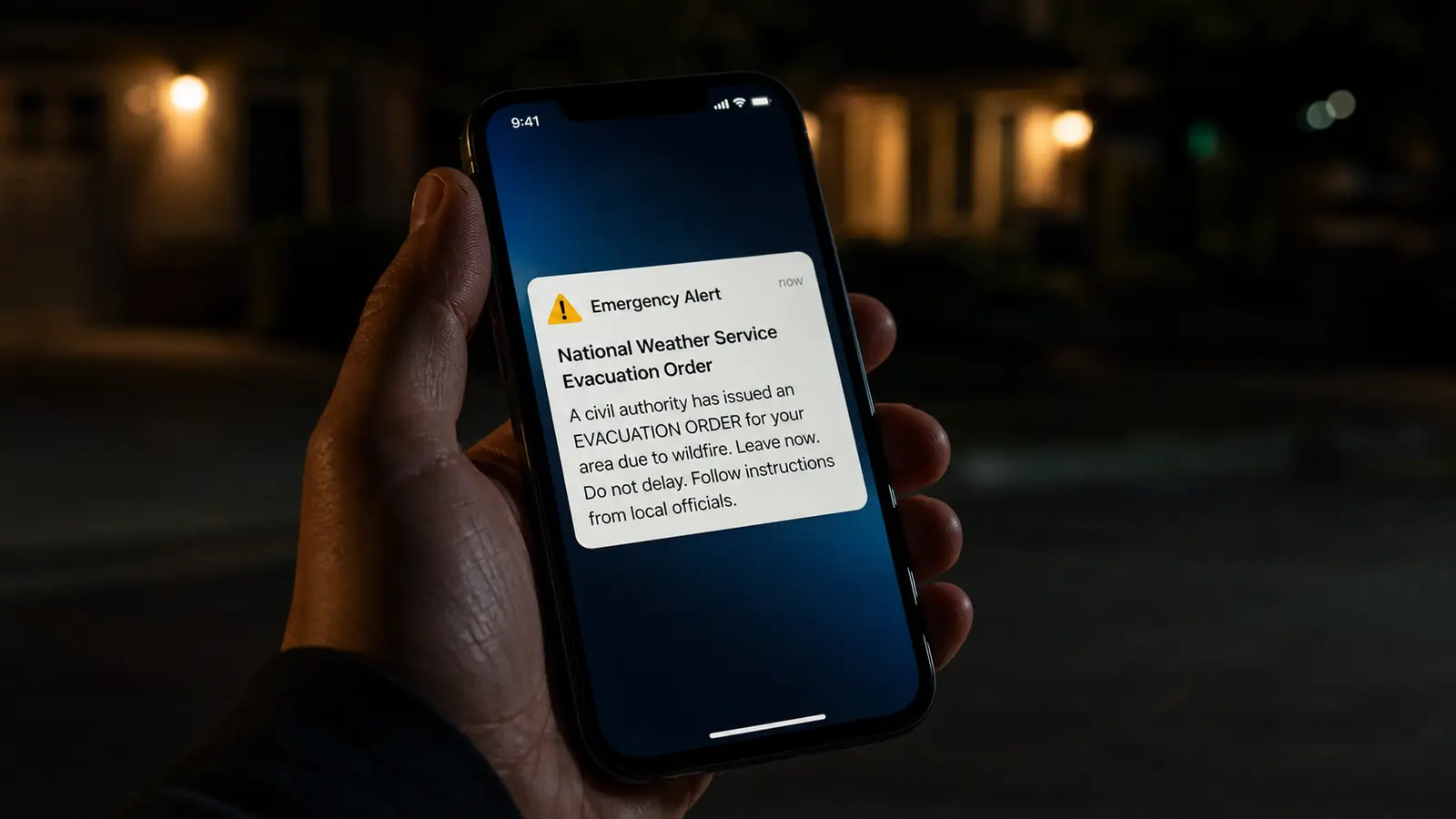
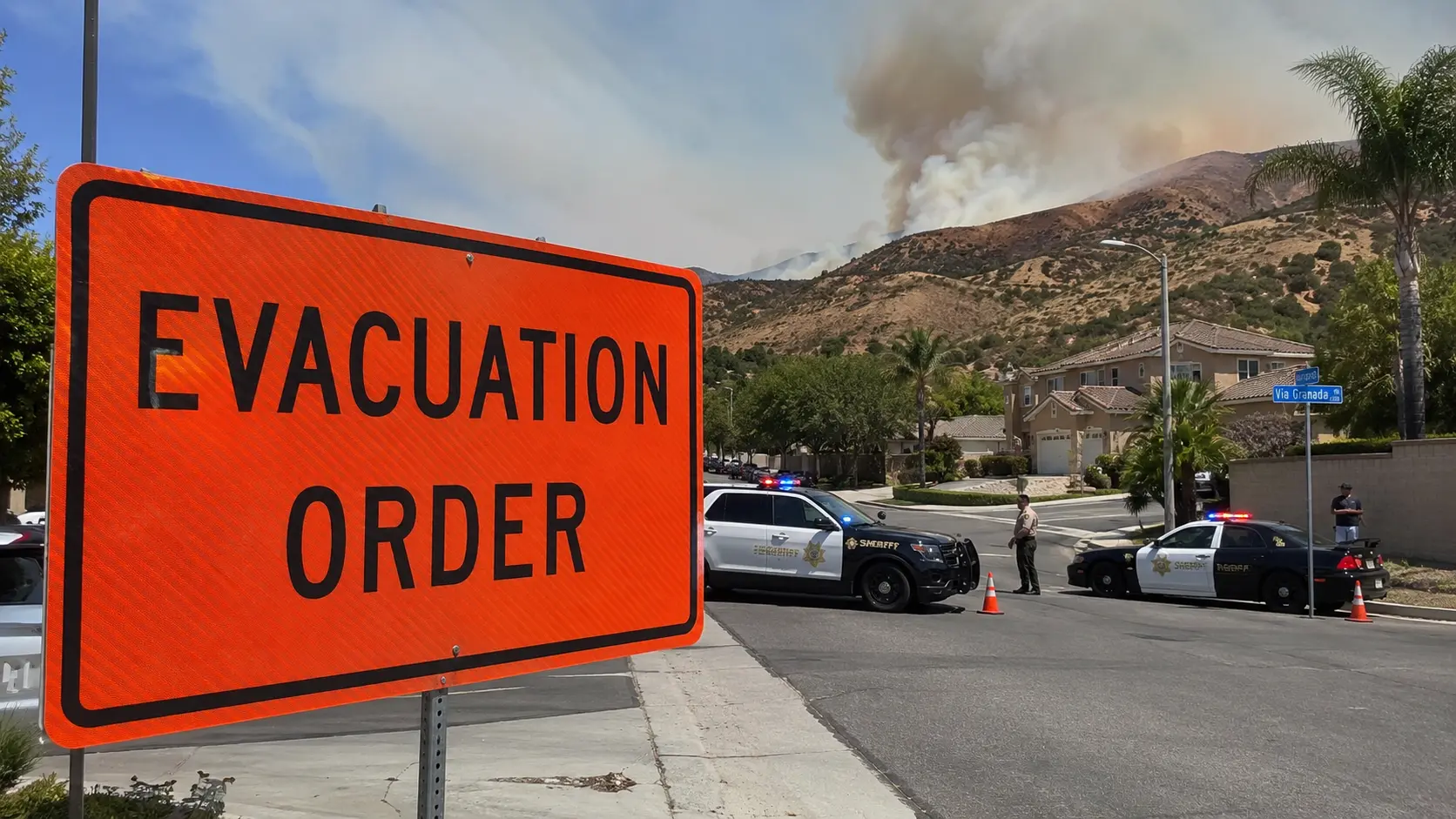
Issuing an evacuation order is not a technical act — it is a governmental one. The authority to order an evacuation rests with the county sheriff, a designated emergency manager, or a specific official in the incident command structure, depending on the jurisdiction. Before an order is issued, the following typically needs to happen: the incident commander or fire agency communicates the threat to the county OES; the OES evaluates the threat level against the current fire behavior projections; the authorization chain approves the order; the order is formatted and loaded into the WEA and county notification systems; and the alert is transmitted.
In optimized jurisdictions with pre-established incident command integration, this can happen in 15 to 30 minutes from the point a crew on the ground identifies a structure threat. In jurisdictions without that integration, or in situations where the fire's pace outstrips the communication chain, the lag can extend to 60 to 90 minutes — during which a fire moving at 300 acres per hour has advanced miles and may have compromised the primary evacuation route the alert will tell residents to use.
Post-incident analysis of the 2018 Camp Fire found that the first evacuation orders for Paradise were issued after the fire had already cut off the main evacuation routes for portions of the town. The official alert system performed its function — the orders were issued, the alerts were sent — but the fire's speed made the alert-to-departure sequence untenable for residents who waited for the official order before beginning to move.
The practical implication is direct: the official evacuation order is not the trigger for departure for residents in high-risk areas during active fire weather. The warning stage — the level before a mandatory order — should be the departure trigger for anyone with mobility limitations, livestock, or a single access road. For everyone else, the warning stage is the trigger for final preparations and positioning to leave the moment the order is issued or the smoke is visible.
Public Safety Power Shutoffs and Cellular Outages During Alerts
Public Safety Power Shutoffs are initiated by utilities during high-risk fire weather to prevent power line ignitions. They also reduce cellular network capacity, because cell towers on backup generator power have limited runtime and often experience power failure themselves during extended PSPS events. A cell tower that has been without utility power for 12 hours may have exhausted its backup battery and generator fuel — and a tower that is down cannot transmit WEAs to the phones in its coverage area, regardless of whether those phones have power.
The scenario where the alert system fails most completely: a PSPS event reduces cellular coverage in an area, a fire starts in that same area, and the towers needed to broadcast the evacuation WEA are down. Residents in that area receive no alert through the WEA system, the county's opt-in system may be routing through a cell carrier that is also degraded, and the power outage has also eliminated internet connectivity for email alerts and app notifications.
The backup systems that work during PSPS events: NOAA Weather Radio broadcasts on dedicated frequencies that don't depend on cellular infrastructure. Battery-powered or hand-crank weather radios receive these broadcasts regardless of power or cell outages. In areas with PSPS history, a weather radio configured to alert for emergency broadcasts is the alert system that works when the others fail.
Language Access Gaps in Emergency Alerts
WEAs are transmitted in the language configured on the recipient's phone — but the alert content itself is written by the county or emergency management agency, and the availability of Spanish, Mandarin, Vietnamese, or other language versions depends on whether the county has that capability built into their alert system. In many California counties with large non-English-speaking populations, WEAs are English-only or become available in Spanish with a delay after the English version is sent.
Post-fire community assessments from the 2017 Wine Country fires and the 2018 Camp Fire both identified language access as a factor in delayed evacuation among Spanish-speaking and other non-English-speaking residents. A resident who receives an alert they can partially understand but cannot fully decode — who sees "EVACUATE IMMEDIATELY" and understands the urgency but doesn't know which routes to use, where to go, or what zone they're in — is in a more dangerous position than a resident who received no alert, because they know something is wrong but can't determine how to respond.
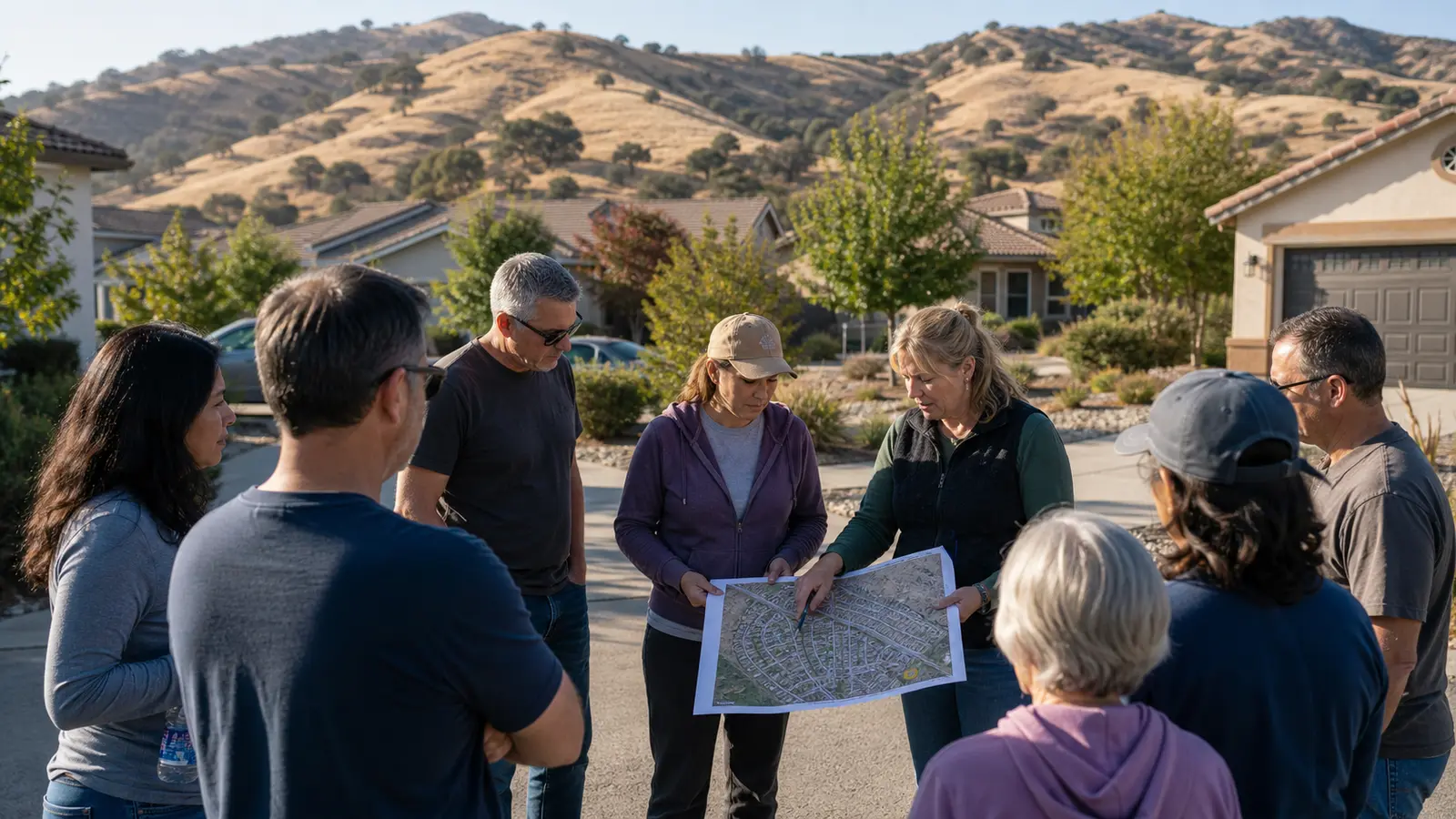
Community organizations and neighborhood watch groups that have identified non-English-speaking residents in their area can address this gap directly: designating a bilingual neighbor as the emergency communication relay, establishing in advance that the neighbor will call or knock when an alert is received, and pre-establishing in the resident's language what "warning" and "order" mean and where the nearest shelter is. This is exactly the kind of gap that individual household preparation cannot address but neighborhood organization can.
What to Do Now So You Don't Depend on a Single Alert
- ✓Check your phone's Emergency Alert settings today. On iPhone: Settings → Notifications → scroll to bottom → Emergency Alerts must be ON. Verify that Do Not Disturb and any Focus modes do not suppress Emergency Alerts. On Android: Settings → Notifications → Emergency Alerts → enable all categories. Test it: your county OES may have test alert dates listed on their website.
- ✓Register with your county's opt-in notification system at your current address. Search "[your county name] emergency alerts sign up" — every California and Oregon county has a system. Register with your current address, current cell number, and an email address as backup. Re-register if you move.
- ✓Follow your local fire agency and county OES on social media. CAL FIRE, USFS units, county sheriffs, and OES offices post real-time incident information on X and Facebook that often precedes official alert issuance. Notifications from these accounts during fire weather are a faster early warning than waiting for a WEA.
- ✓Have a battery-powered NOAA weather radio. A $30 weather radio with SAME (Specific Area Message Encoding) capability can be programmed to your county's FIPS code and will alarm only for alerts that affect your specific county — cutting through the general noise while alerting you to events that matter to your location. It works without cell service, internet, or grid power.
- ✓Know your evacuation zone designation before fire season. Most counties in fire-prone areas have published evacuation zone maps that designate areas by number or letter (Zone A, Zone 1, etc.). Knowing your zone designation means you can immediately determine whether a warning or order applies to you when one is issued — rather than searching a map while smoke is visible.
- ✗Do not wait for an alert before beginning to prepare to leave during active fire weather. An alert tells you that official action is underway. It does not tell you how much time you have. If you live in a high-risk area, wildfire is threatening a county near you, and a Red Flag Warning is in effect, your departure preparation should begin before any alert is issued — not in response to one.
Emergency alerts are better in 2026 than they were in 2018. WEA geographic targeting is more precise. More counties have invested in multilingual notification. Registration rates in high-risk areas have improved as communities affected by previous fires rebuilt with better awareness. The system is getting better.
It is not good enough to be your only information source. The fire doesn't wait for the authorization chain. The alert that arrives 45 minutes after the fire crossed into your neighborhood is still an alert — it is information — but it may arrive after the best window for a smooth, safe departure has closed. The residents who leave early leave well. The residents who leave in response to the official order leave into conditions that the fire has already shaped.

Comments 0
No comments yet. Be the first to share your thoughts!
Leave a Comment