Firefighter Probationary Year Survival Guide: What to Expect and How to Pass
Graduating the fire academy is the beginning, not the finish line. The probationary year — typically 12 to 18 months — is where most firefighters either cement their career or lose it. You can be released for performance, conduct, or attitude at any time during probation with little recourse at most departments. This guide tells you exactly what to expect and what separates the probationary firefighters who thrive from the ones who wash out.
Jump to:What probation actually is · What is expected of you · Apparatus and district knowledge · Firehouse culture · Evaluations · Common mistakes that end careers · Habits that build your reputation · Your first real calls · FAQ
What Probation Actually Means Legally
Probationary status is not just a training designation — it is a specific legal employment status. In most jurisdictions, probationary firefighters are at-will employees who can be terminated without the due process protections that apply to permanent civil service employees. This means:
- You can be released without a formal progressive discipline process
- You typically cannot file a grievance through the union for a probationary termination
- Minor incidents that would result in a written warning for a permanent employee can end a probie's career
- Your department is still deciding whether you are worth keeping — your performance evaluations carry real consequences
This is not meant to intimidate you. The vast majority of probationary firefighters pass. But understanding the stakes changes how seriously you take the small things: showing up on time, completing assignments, maintaining your gear, and conducting yourself with professionalism every single day.
What Is Expected of You (The Actual List)
Every department has different evaluation criteria, but the core expectations are nearly universal:
Knowledge requirements
- Apparatus: every piece of equipment on your assigned rig, its location, and its proper use — from memory, in the dark
- District: hydrant locations, target hazards, access challenges, mutual aid boundaries, hospital routing
- SOGs/SOPs: your department's standard operating procedures for the call types you will run
- Radio procedures: proper radio discipline, your department's channels, how to declare a MAYDAY
- EMS protocols: medication thresholds, assessment sequences, destination criteria (if your department runs ALS)
Performance requirements
- Skills demonstrations: most departments require you to demonstrate specific skills to your officer or training division on a schedule during probation
- Response readiness: you are expected to be in turnout gear and on the rig within the department's established turnout time standard every time
- Physical fitness: maintain the physical standards you entered with. Some departments conduct fitness testing during probation.
- Documentation: incident reports, patient care reports, and any required daily logs must be completed accurately and on time
Conduct requirements
- Attendance: no late arrivals, no unauthorized absences. Some departments will release a probie for a single unexcused absence.
- Professional appearance: clean uniform, proper grooming, gear maintained and inspection-ready
- Social media: anything you post is visible to your department. Probationary firefighters have been released for social media conduct.
- Off-duty behavior: you represent your department when you are not at work. Arrests, incidents, and public conduct matter.
Mastering Apparatus and District Knowledge
This is the most concrete and controllable part of your probationary year. Every piece of equipment on your rig has a place. Every hydrant in your first-due has a location. You are expected to know both from memory.
How to actually learn your apparatus
- Walk the rig every day when you come on shift, even before you are tested on it. Touch every compartment door, every tool. Repetition builds memory.
- Create a map: draw every compartment on paper with the contents labeled. Quiz yourself without looking at the map. Redo it until you don't need the paper.
- Time yourself. Your company officer will test you under time pressure. Practice finding equipment in the dark by feel.
- Learn the why behind equipment placement, not just the location. Equipment placement follows operational logic — understanding the logic makes it easier to remember and easier to explain when you are tested.
How to learn your first-due district
- Drive the district on your off days during the first few months. Walk or drive every street in your response area. Use the Hydrant Finder and your department's hydrant records to map primary and secondary supply points.
- Learn the target hazards first: schools, nursing homes, hospitals, industrial facilities, high-rise buildings, and any structure that has had previous significant responses.
- Memorize the hospitals: which is your primary destination for cardiac, trauma, stroke, pediatric? Know the routes and alternatives in case of traffic.
- Identify access challenges: dead-end roads, bridges with weight limits, one-way streets, gates, narrow alleys. These problems don't become problems during training — they become problems at 2 a.m. in poor weather.
Firehouse Culture: The Unwritten Rules
The fire academy taught you the technical job. Nobody teaches you the culture. Getting this wrong accounts for more probationary failures than people acknowledge — not official terminations, but careers that stall permanently because of a bad first impression that never recovered.
The hierarchy is real
As a probationary firefighter, you are at the bottom of the operational hierarchy regardless of your age, your military rank, your college degree, or your previous career. Experienced firefighters who have been doing this job for 10 years have knowledge and judgment you do not yet have. Behave accordingly. You earn position by demonstrating competence and good character over time, not by stating your credentials.
Work ethic is your primary currency
You cannot outshoot a 15-year veteran on tactics in your first year. You can outwork everyone in the station on everything that does not require experience: cleaning, maintenance, cooking, training prep, administrative tasks. The crews that trust new firefighters the most are the ones who watched those firefighters work hard on the small things first.
Ask smart questions, not constant questions
It is expected that you will not know everything. It is not expected that you will ask for help on something you could figure out by reading your SOG or your apparatus manual. Know the difference between a question that requires someone's expertise ("Captain, when we pre-connect the 2½ here, is the preferred deployment left or right side?") and a question you should answer yourself before asking ("Where is the spare SCBA cylinder?").
The kitchen matters more than you think
Firehouse meals are not optional. Contributing to the meal routine — cooking when it's your turn, cleaning without being asked, learning how the station likes things done — is a significant part of how crews assess new members. It is not about the food. It is about whether you contribute to the team or create extra work.
Probationary Evaluations: What They Actually Measure
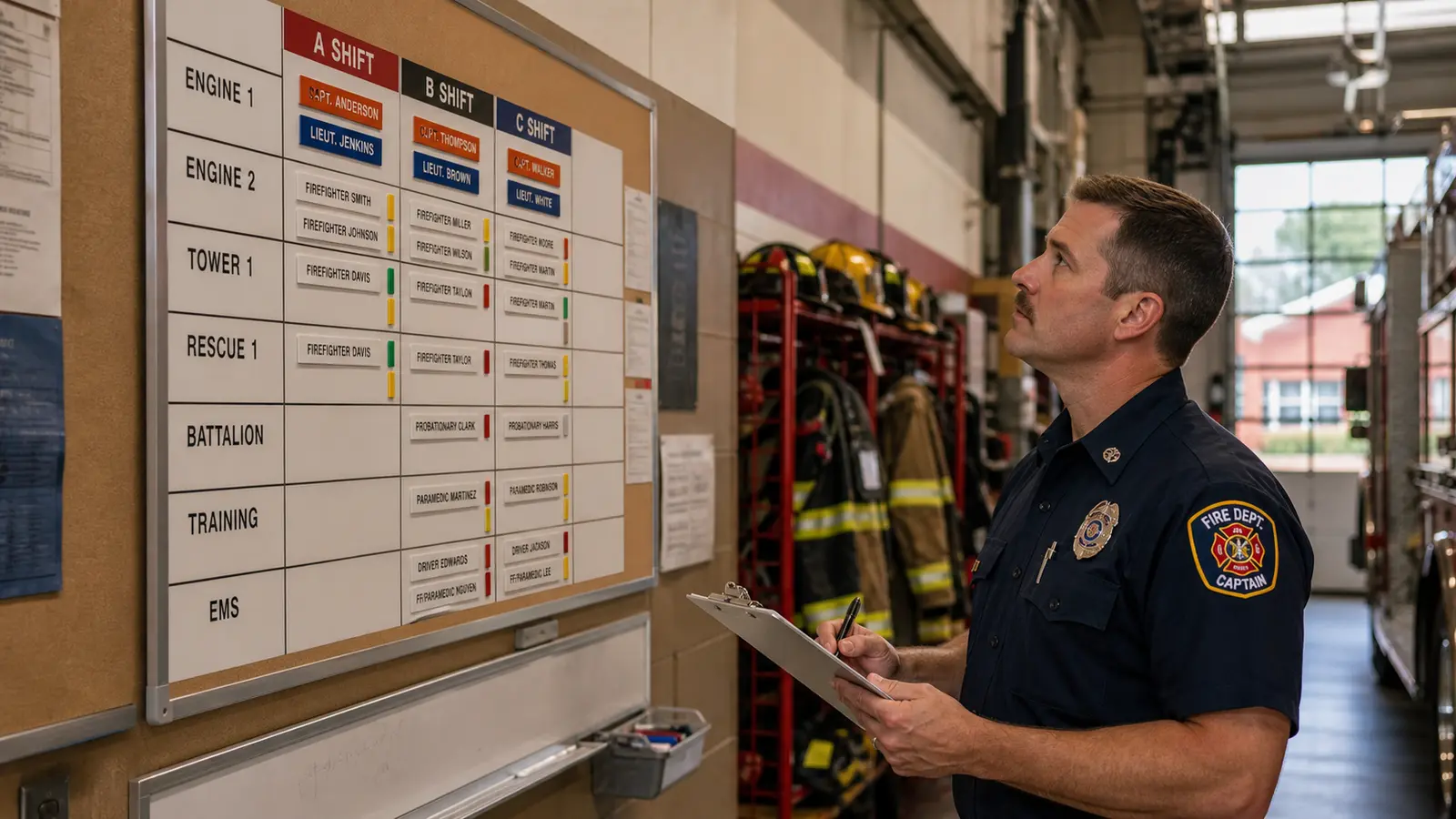
Most departments conduct formal evaluations at 3, 6, 9, and 12 months during probation. The dimensions vary by department but typically include:
| Category | What evaluators are actually looking at |
|---|---|
| Job knowledge | Apparatus proficiency, district knowledge, protocol recall, EMS skills |
| Job performance | Skill execution on calls and drills, physical readiness, documentation quality |
| Initiative | Do you look for work without being told? Do you recognize what needs to be done and do it? |
| Reliability | Attendance, punctuality, follow-through on assigned tasks |
| Teamwork | How you function within the crew, adaptability, communication |
| Judgment | Decision-making on calls, when to act vs. wait for direction |
| Professional conduct | Appearance, public interaction, conduct in the station and community |
Evaluations are not the only evaluation. Every officer you work with is informally assessing you on every shift. The formal evaluation is a summary of what they have been observing all along. Your reputation is built day by day, not at the 6-month review.
Common Mistakes That End Probationary Careers
These are the patterns that appear repeatedly in probationary terminations:
- Attendance problems. Calling out, arriving late, or leaving early during probation sends a clear message about your commitment. Some departments have zero tolerance for any attendance issue during the first 12 months.
- Dishonesty. Lying about a mistake, falsifying documentation, or misrepresenting something to an officer is a near-automatic termination at most departments. Own your mistakes immediately.
- Freelancing on calls. Going off-script tactically, making decisions that belong to your officer, operating outside your assigned role. New firefighters who act independently before they have earned that trust create serious liability.
- Social media. Public posts that embarrass the department, photos from scenes, complaints about coworkers or calls. Probationary firefighters have been terminated for a single post.
- Not studying. Showing up to an apparatus quiz unprepared, not knowing your district, unable to recall your SOGs. If you have time to watch TV in the station, you have time to study your equipment and protocols.
- Attitude problems. Argumentativeness with senior members, resistance to feedback, visible resentment of the expectations placed on new firefighters. The culture filters for character as much as competence.
Habits That Build Your Reputation in Year One
- Arrive before your shift start time. Every day. Not 5 minutes early — 20–30 minutes. This signals commitment and gives you time to settle, check the apparatus, and be genuinely ready when shift starts.
- Complete the rig check yourself before anyone asks. Know what to look for. Document it. If something is wrong, report it immediately.
- Never walk past something that needs doing. Trash on the floor, equipment out of place, a dirty bay — address it without being asked. This habit is what senior firefighters notice most in new personnel.
- Write things down. Carry a small notebook and pen. When an officer tells you something you don't know, write it down and look it up after the shift.
- Be coachable. When you are corrected, your response determines how quickly you recover from the mistake. Accept feedback directly, fix the problem, and don't let the same error happen twice.
- Study the calls you ran. After significant calls, review your SOG, look up anything you didn't recognize, and think about what you would do differently. The firefighters who progress fastest are the ones who learn actively from every call.
Your First Real Calls: What Nobody Tells You
The first time you respond to a significant call — a working structure fire, a traumatic cardiac arrest, a major vehicle accident — it will be different from every training scenario you ran. This is normal and expected. What matters is how you manage it.
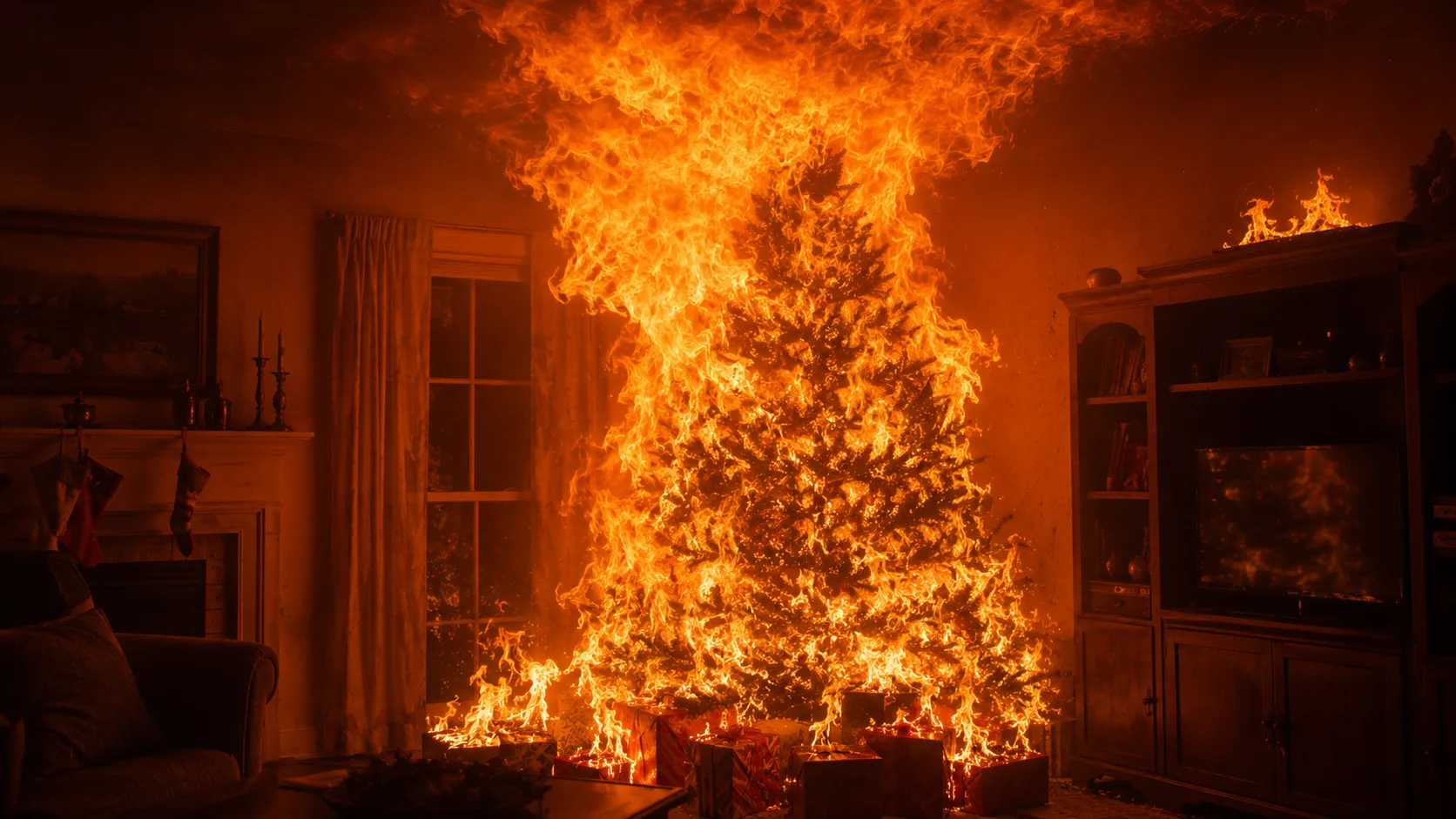
On a working fire: Do exactly what you are assigned to do. Do not freelance, do not improve the plan, do not make decisions that belong to your officer. Your job is to execute your assigned task safely and communicate clearly. If something changes that your officer needs to know, report it immediately and directly: not an editorial, just information.
On a traumatic call: Do the job. Process it after. Critical incident stress is real, and it is not a sign of weakness. Most departments have a CISD (Critical Incident Stress Debriefing) process. Use it. Talk to your crew. The firefighters who pretend difficult calls don't affect them are not stronger — they are less self-aware.
After any significant call: Complete your documentation accurately and promptly. Review the response with your officer if they offer it. Don't replay errors obsessively — identify what you would do differently and file it.
Frequently Asked Questions
How long is firefighter probation?
Most career departments set probation at 12–18 months from hire date or from graduation from the fire academy. Some departments run shorter probation periods (6 months) for candidates who enter with prior fire service experience or specific certifications. Confirm the exact timeframe with your department's HR or union contract.
Can you be fired during firefighter probation?
Yes, and with far less due process than a permanent employee. Probationary firefighters are typically at-will employees who can be released for performance, conduct, or attendance issues without the formal progressive discipline and grievance processes that protect permanent employees. The union generally cannot file a grievance on your behalf for a probationary termination.
What percentage of probationary firefighters get let go?
Statistics vary widely by department and are not publicly reported in a consistent way. The majority of probationary firefighters pass. The failures that do occur cluster around the categories described above: attendance, dishonesty, conduct, and failure to demonstrate required knowledge. None of those are outside your control.
Can you transfer stations during probation?
Most departments restrict transfers during probation. You are typically assigned to a specific station and company for evaluation purposes. Requesting a transfer early in probation signals instability and may be viewed negatively. Confirm your department's specific policy.
Should I join the union as a probationary firefighter?
In most jurisdictions, firefighters are automatically covered by the union contract once they achieve permanent status, and dues may be collected during probation depending on the contract and state law. In right-to-work states, union membership may be voluntary. Understand your specific situation. The union's full protections generally don't apply to probationary employees regardless of membership.


Comments 0
No comments yet. Be the first to share your thoughts!
Leave a Comment