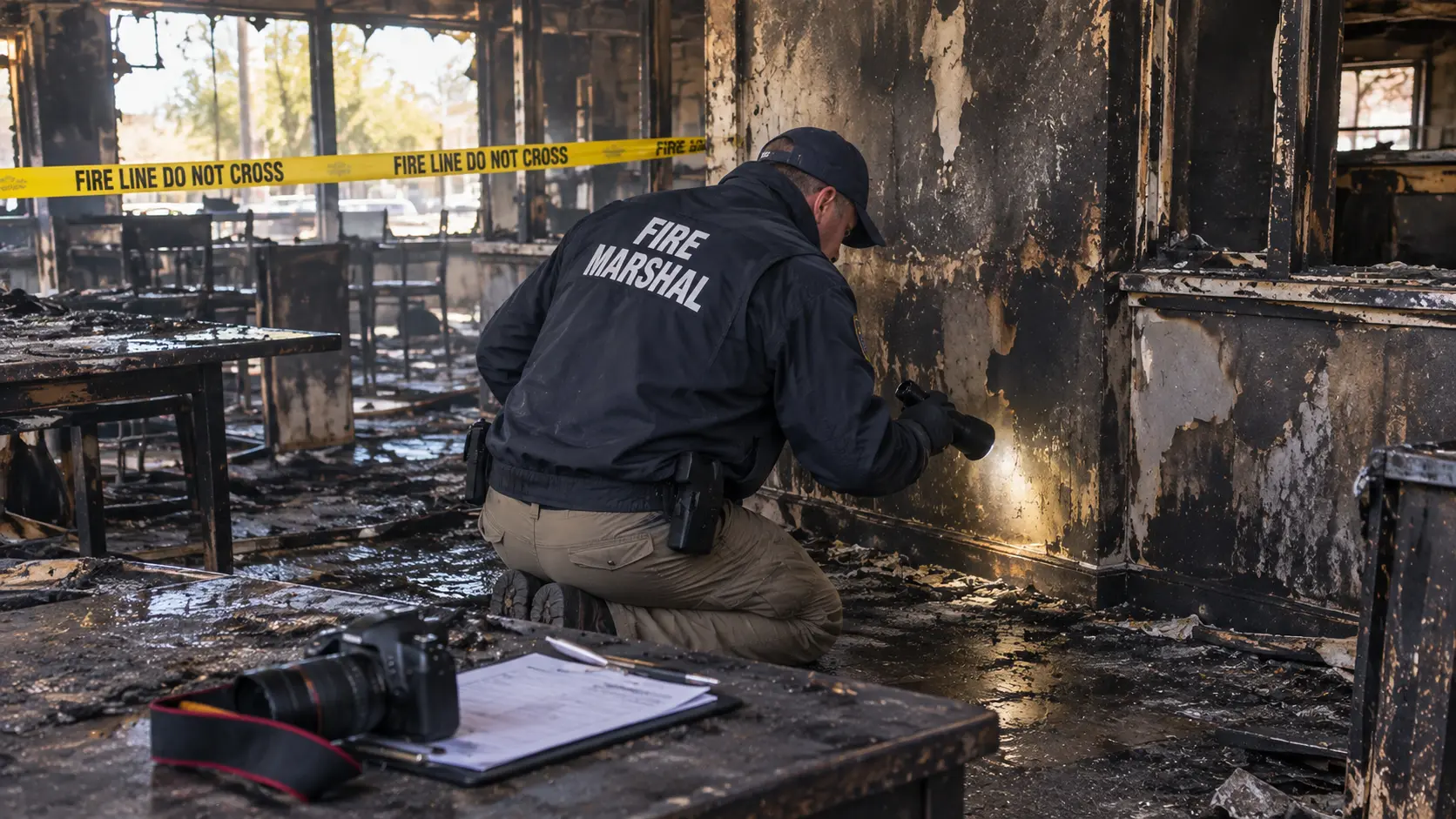

The short answer: A fire marshal investigates where a fire started, how it started, and whether it was accidental or intentional. A fire chief runs the department that puts the fire out. When a fire is ruled arson, the fire marshal — not the chief — typically becomes the lead investigator, and in many states that office can offer cash rewards for information.
The distinction matters right now because of the fire at the Senatobia Police Department headquarters in Mississippi. The department confirmed the fire is being investigated as an arson, the ATF has taken the lead, and the Mississippi State Fire Marshal's Office is offering up to $5,000 for information leading to an arrest and arson conviction. That reward is not improvised — it is a standard tool written into state law and used repeatedly across Mississippi.
Fire marshal vs. fire chief: who does what
The confusion is understandable. Both roles sit inside the fire service, and in small departments the same person sometimes wears both hats. But the jobs are different in purpose and authority.
A fire chief is the operational head of a fire department. The chief is responsible for suppression, staffing, apparatus, emergency response, and day-to-day department management. When a building is burning, the chief or an incident commander runs the scene.
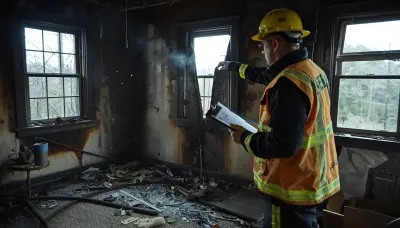
A fire marshal is a prevention and investigation role. In many jurisdictions the fire marshal is a chief-officer-equivalent position reporting to the fire chief, while at the state level the fire marshal leads a standalone office inside a larger agency — often the insurance department or public safety department. The marshal's focus is fire codes, inspections, plan reviews, public education, and origin-and-cause investigations. The marshal does not typically command fireground operations; the marshal figures out what happened afterward.
In Mississippi, the Commissioner of Insurance is the State Fire Marshal by virtue of office, and a State Chief Deputy Fire Marshal is appointed to run the investigative work. State law gives that office the duty to investigate the origin of every fire in the state when a local fire chief or law enforcement agency requests it.
What a fire marshal actually investigates
The core statutory duty is origin and cause. Origin means where the fire started — the room, the compartment, the specific area. Cause means what brought the heat source and the fuel together: an electrical fault, a cooking appliance, a heater, smoking materials, or an intentional act.
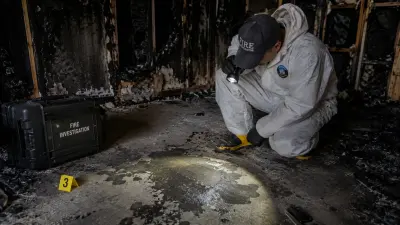
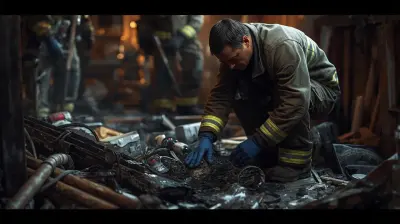
That investigation is not a guess. It follows a recognized methodology: systematic examination of the fire scene, analysis of burn patterns, interviews with occupants and witnesses, review of alarm and utility records, and in some cases laboratory testing of debris samples. The marshal must determine not only whether the fire was accidental or incendiary, but also whether the circumstances point to carelessness or design.
This is why a fire marshal's preliminary language is careful. Investigators may say a fire is “being investigated as arson” or that they have “not ruled out” an intentional cause, because a final determination requires evidence, not assumption. In the Senatobia case, the department moved from describing damage to explicitly calling the fire an arson — a meaningful shift that signals the investigation has focused on an intentional act rather than an accident.
Why fire marshals can offer $5,000 rewards
Rewards are one of the most visible powers of a state fire marshal's office, and they are not discretionary goodwill. Mississippi law authorizes the Insurance Commissioner to offer up to $5,000 for information that leads to the arrest, indictment, and conviction of a person who intentionally damages property by fire or explosion (Mississippi Code Section 83-1-35).
The State Fire Marshal's Office has used that authority repeatedly: a $5,000 reward in a Meridian arson case, a $5,000 reward after fires destroyed the Stauffer-Wood Administration Building at Mississippi Delta Community College, and a $5,000 reward in a Utica gas station arson. The Senatobia police headquarters reward follows the same pattern. It is a standing incentive structure, not a special exception.
The practical purpose is simple: arson is hard to solve without witnesses. A cash reward gives someone with peripheral knowledge — a neighbor who saw a vehicle, an acquaintance who heard a conversation — a reason to call. The tip line numbers are published for exactly that reason: 601-359-1061 and 1-888-648-0877.
How a fire marshal works with ATF, local police, and the fire department
A major arson case is rarely a solo investigation. In Senatobia, the ATF's New Orleans Field Division is leading, with the Senatobia Police Department, the Tate County Sheriff's Office, the Mississippi Bureau of Investigation, the Mississippi Fire Marshal's Office, and Homeland Security all involved.
The division of labor generally works like this: the fire department handles suppression and scene safety; the fire marshal's office provides origin-and-cause expertise and, in Mississippi, the statutory reward authority; local police provide criminal investigation resources and local knowledge; and federal agencies like ATF bring laboratory capability, national databases, and federal prosecutorial options when the case warrants it.
That layered response is why a fire at a police station draws a different level of attention than a dumpster fire. The target matters. When the building attacked is itself a symbol of public safety, the investigative response escalates accordingly.
What the Senatobia case shows about the fire marshal's role
The Senatobia fire is a clean illustration of the fire marshal's function in a high-profile case. The fire department extinguished the fire and ventilated the building. The police department's interim chief publicly confirmed the arson classification. The ATF took the investigative lead. The State Fire Marshal's Office put up the reward money. Each agency did the part of the job its authority covers.
For the public, the practical takeaway is this: if you have information about a fire that has been ruled arson, the fire marshal's office is often the most direct route to submit it — especially in states with a standing reward program. You do not need to know the legal definition of arson or the name of the investigator. You need to call the number and describe what you saw.
Frequently asked questions
Is a fire marshal a police officer?
Not usually in the ordinary sense, but fire marshals carry statutory investigative authority and in many states can serve summonses, take sworn testimony, and make arrests in arson cases. Their authority is fire-code and fire-investigation specific.
Who decides if a fire is arson?
The fire marshal or the investigating agency makes the origin-and-cause determination. In a criminal case, prosecutors ultimately decide whether charges are filed, and a court decides guilt.
Can a fire marshal enter my property?
Fire marshals have authority to inspect buildings for fire-code compliance and to investigate fires. The exact scope of entry and inspection powers varies by state and by whether the inspection is routine, complaint-driven, or part of a fire investigation.
Why is the reward exactly $5,000 in Mississippi?
Because state law caps the reward at up to $5,000 for information leading to arrest and conviction in an intentional fire or explosion case. It is a statutory maximum, not a case-by-case negotiation.
What should I do if I have information about an arson?
Call the State Fire Marshal's Office or the local investigating agency directly. In Mississippi, the Fire Marshal's tip lines are 601-359-1061 and 1-888-648-0877. Do not post the information publicly or confront anyone yourself.
Sources
- Mississippi Code § 45-11-1 — Commissioner of Insurance as State Fire Marshal; investigative duties
- Mississippi Code § 83-1-35 — Arson reward authority
- WLBT — $5,000 reward in Senatobia police department fire
- WTOK — Meridian arson reward and Fire Marshal statement
- Enterprise-Tocsin — MDCC arson reward
- IAFC — Fire marshal role and reporting structure
Editorial note: Legal authority described here is specific to Mississippi where cited. Fire marshal powers vary by state and locality; consult local statutes for jurisdiction-specific rules.


Comments 0
No comments yet. Be the first to share your thoughts!
Leave a Comment