Cancer is now the leading cause of line-of-duty death among American firefighters — surpassing traumatic injuries for the first time in recorded fire service history. The International Agency for Research on Cancer classifies occupational exposure as a firefighter in the same carcinogenicity category as asbestos and tobacco. And yet, whether a firefighter diagnosed with cancer can access workers' compensation, medical coverage, and disability benefits without having to prove causation depends almost entirely on which state they work in.
Presumptive cancer laws solve a specific problem: cancer is notoriously difficult to trace to a single occupational cause. A firefighter who develops bladder cancer after 20 years on the job cannot produce a chain of custody linking their specific tumor to a specific fire. Presumptive laws shift the burden of proof — instead of requiring the firefighter to prove the cancer was caused by the job, they presume it was, and require the employer or insurer to prove it wasn't. That shift is the difference between accessing benefits in months and fighting for them in court for years.
All 50 states now have some form of cancer presumption legislation. That headline masks a gap between states with strong, comprehensive coverage and states where the presumption is narrow, easily rebutted, and leaves firefighters with cancer exposed to the same proof burden the laws were designed to eliminate. Here is what the 2026 landscape actually looks like — what changed this year, which states lead, and what every firefighter needs to know about the law in their state before they need it.
In this article:
- What a cancer presumption law actually does
- What changed in 2026
- States with the strongest presumption coverage
- The coverage gaps that still exist
- Volunteer firefighters: the presumption gap
- How presumptions get rebutted — and what that means for you
- PFAS exposure and presumption laws: the 2026 connection
- What every firefighter should do now, regardless of state
What a Cancer Presumption Law Actually Does
In workers' compensation law, the default rule is that the claimant — the injured or ill worker — bears the burden of proving that their condition arose from their employment. For most occupational injuries, this is straightforward. A firefighter breaks a leg falling through a burning floor; the injury is documented, the cause is clear, the claim proceeds.
Cancer is different. It develops over years or decades. Multiple potential causes exist simultaneously — occupational chemical exposure, lifestyle factors, genetic predisposition, background environmental exposure. Without a presumption, a firefighter with bladder cancer must demonstrate, through medical evidence, that their specific cancer was caused by their specific occupational exposure — a standard that is scientifically impossible to meet in most individual cases, even when the epidemiological evidence strongly links the cancer type to firefighting as an occupation.
A presumption law inverts this. It says: if you are a firefighter who meets the qualifying conditions — typically a minimum years of service, having had a pre-employment physical, and not being a tobacco user — and you are diagnosed with a covered cancer type, the law presumes your cancer is work-related. Your employer or their insurer must then produce evidence that your cancer was not caused by your occupation. The firefighter's burden shifts from proving causation to simply meeting the eligibility criteria.
The practical result is access to workers' compensation benefits — medical treatment coverage, disability income replacement, and death benefits for surviving families — without the cost and delay of litigation over causation. In states with strong presumption coverage, a firefighter diagnosed with a covered cancer can access benefits within months of diagnosis. In states with weak coverage or no presumption for their cancer type, the same firefighter may spend years in legal proceedings before receiving the first dollar of benefit.
What Changed in 2026
The most significant 2026 development came from California. Senate Bill 230, signed in October 2025 and effective January 1, 2026, extended the same cancer and PTSD presumptions that municipal and county firefighters already had to airport firefighters — a class of first responder who faces elevated exposure to aviation fuel, PFAS-containing firefighting foam, and aircraft materials combustion products. Before SB 230, airport firefighters had to fight for causation proof that their municipal counterparts were protected from. SB 230 levels that playing field.
Illinois enacted new PFAS-specific legislation effective January 1, 2026, requiring manufacturers to report known uses of PFAS in firefighting gear and personal protective equipment. While this is a disclosure law rather than a presumption expansion, it creates the documentation record that strengthens presumption claims — evidence that specific PFAS compounds were present in the equipment firefighters wore, documented by the manufacturers who made it.
New Jersey's PFAS firefighting foam prohibition, effective January 8, 2026, joined a growing list of state foam bans. Florida's HB 1019, moving through the 2026 legislative session, would phase out PFAS-containing foam between 2026 and 2029. These foam bans reduce future exposure, but they do not address the decades of exposure that current firefighters have already accumulated — the exposure driving the cancer claims that presumption laws are designed to cover.
Nationally, the IAFF's 2026 legislative agenda includes federal presumption legislation covering all federal firefighters and pushing for minimum national standards for state presumption laws. That federal push has not yet resulted in enacted legislation, but the political momentum is building — driven directly by the cancer statistics that now make it impossible to argue that the occupational connection is uncertain.
States With the Strongest Presumption Coverage
Strong presumption states share several characteristics: they cover a broad range of cancer types without limiting the list to a short enumeration, they extend coverage to retired firefighters for a substantial post-service period, they include volunteer firefighters on equivalent terms with career firefighters, and they make the presumption difficult to rebut with speculative non-occupational causes.
California offers one of the most comprehensive frameworks, covering any cancer identified by the IARC as associated with firefighting exposure, with a post-service coverage period of three months for every year of service up to 120 months. The 2026 SB 230 expansion to airport firefighters added the final major gap in California's coverage. Rebuttal requires specific evidence that the cancer's primary site is documented and that the relevant carcinogen is not linked to that site — a high bar that reflects legislative intent to make the presumption genuinely protective.
Florida covers 21 specific cancer types, including leukemia, non-Hodgkin lymphoma, bladder cancer, colon cancer, prostate cancer (diagnosed before age 50), brain cancer, testicular cancer, kidney cancer, and mesothelioma, among others. The Florida presumption was enacted in 2019 and has already resulted in thousands of firefighters accessing benefits without the causation battles that pre-2019 claimants faced. A 2025 Florida Bar analysis noted that post-enactment claims have moved through the system significantly faster than the pre-presumption average.
Massachusetts covers cancers affecting the skin, central nervous system, lymphatic, digestive, hematological, urinary, skeletal, oral, prostate, and respiratory systems — a broad organ-system framework rather than a cancer-type list, which captures more diagnoses than enumerated approaches. The Massachusetts presumption dates to 1990, making it one of the oldest in the country and one with the most developed case law clarifying its application.
New York and New Jersey both offer strong coverage with broad cancer type inclusion and post-service periods. New Jersey's 2026 PFAS foam prohibition, combined with its presumption law, creates the combination that advocates have argued for nationally: reduce future exposure while protecting those already exposed through comprehensive presumption coverage.
The Coverage Gaps That Still Exist
Having a presumption law does not mean having comprehensive protection. The variation between states' approaches creates gaps that leave firefighters with cancer unprotected even in states that technically have a presumption on the books.
Short cancer lists. Some states enumerate five to eight cancer types and provide no presumption for cancers outside that list. A firefighter in one of these states diagnosed with, say, thyroid cancer or breast cancer — both linked to firefighting exposure in the research literature — may have no presumption protection even though the epidemiological connection is documented. States with broader coverage tied to the IARC classification system avoid this problem by updating automatically as research progresses.
Short post-service windows. Cancer often manifests after retirement. A firefighter who served 25 years and retires at 50 may develop an occupationally linked cancer at 58. States with post-service coverage periods of one or two years after retirement leave that firefighter without presumption protection at the point when the cancer most commonly appears. Strong states cover post-service periods scaled to years served — up to ten years in California.
Minimum service requirements. Most states require five years of service before the presumption applies. Some require ten. A firefighter diagnosed with cancer at year three of their career has no presumption protection in these states, regardless of what they were exposed to in those years. The NCI research that underlies presumption law does not show a five-year threshold below which exposure is occupationally irrelevant — the threshold is a legislative compromise, not a scientific boundary.
Rebuttal standards. In some states, an employer can rebut a presumption by demonstrating through a preponderance of evidence that the cancer had a non-occupational cause — a relatively low evidentiary bar. In stronger states, rebuttal requires specific scientific evidence linking the cancer's primary site to a documented non-occupational carcinogen, which is much harder to produce. Firefighters in weak-rebuttal states may win the presumption battle on paper and still lose it in practice.
Volunteer Firefighters: The Presumption Gap
Roughly 65 percent of U.S. firefighters are volunteers. The occupational cancer exposure they face is identical to career firefighters — the smoke is the same chemistry, the PFAS in the turnout gear is the same compound, the carcinogens in structure fire smoke do not discriminate between paid and unpaid responders. But the presumption protection available to volunteer firefighters is substantially weaker than what career firefighters receive in most states.
Some states exclude volunteers entirely. Others include them in the law's language but make the eligibility requirements — minimum hours served per year, enrollment in the state's volunteer firefighter accident and disability fund — practically difficult for part-time volunteers to meet. States where volunteer firefighters receive equivalent protection to career firefighters represent the minority.
The NVFC — National Volunteer Fire Council — tracks this gap as one of its core legislative priorities and has produced documentation showing that volunteer firefighters who develop occupationally linked cancers face benefit denial rates substantially higher than career firefighters in the same states. If you are a volunteer firefighter, the specific application of your state's presumption law to your situation requires verification — the headline "all 50 states have presumption laws" does not mean you have coverage.
How Presumptions Get Rebutted — and What That Means for You
Understanding how a rebuttal attempt works in practice matters because it directly affects how firefighters document their careers. The most common rebuttal strategies employers and insurers use:
Tobacco use history. Most presumption laws require that the firefighter has not used tobacco products, or make tobacco history a rebuttable factor. A firefighter who smoked for any period of their career may find that the employer's rebuttal rests primarily on that history. The practical implication: tobacco cessation history should be documented in medical records as specifically as possible, and the year of cessation matters for rebuttal arguments.
Body mass index and lifestyle factors. Some rebuttal attempts introduce BMI, diet, and physical activity data as evidence of non-occupational cancer risk. The legal effectiveness of these arguments varies significantly by state — in strong presumption states, lifestyle factors alone are insufficient for rebuttal without specific evidence linking them to the cancer's primary site.
Pre-employment physical baseline. States that require a pre-employment physical as a condition of presumption coverage are creating a baseline documentation record. A firefighter who was healthy at hire and developed cancer after years of service has a stronger presumption claim than one without a documented healthy baseline. This is why the pre-employment physical is a legal prerequisite in most states, not just a medical one.
PFAS Exposure and Presumption Laws: The 2026 Connection
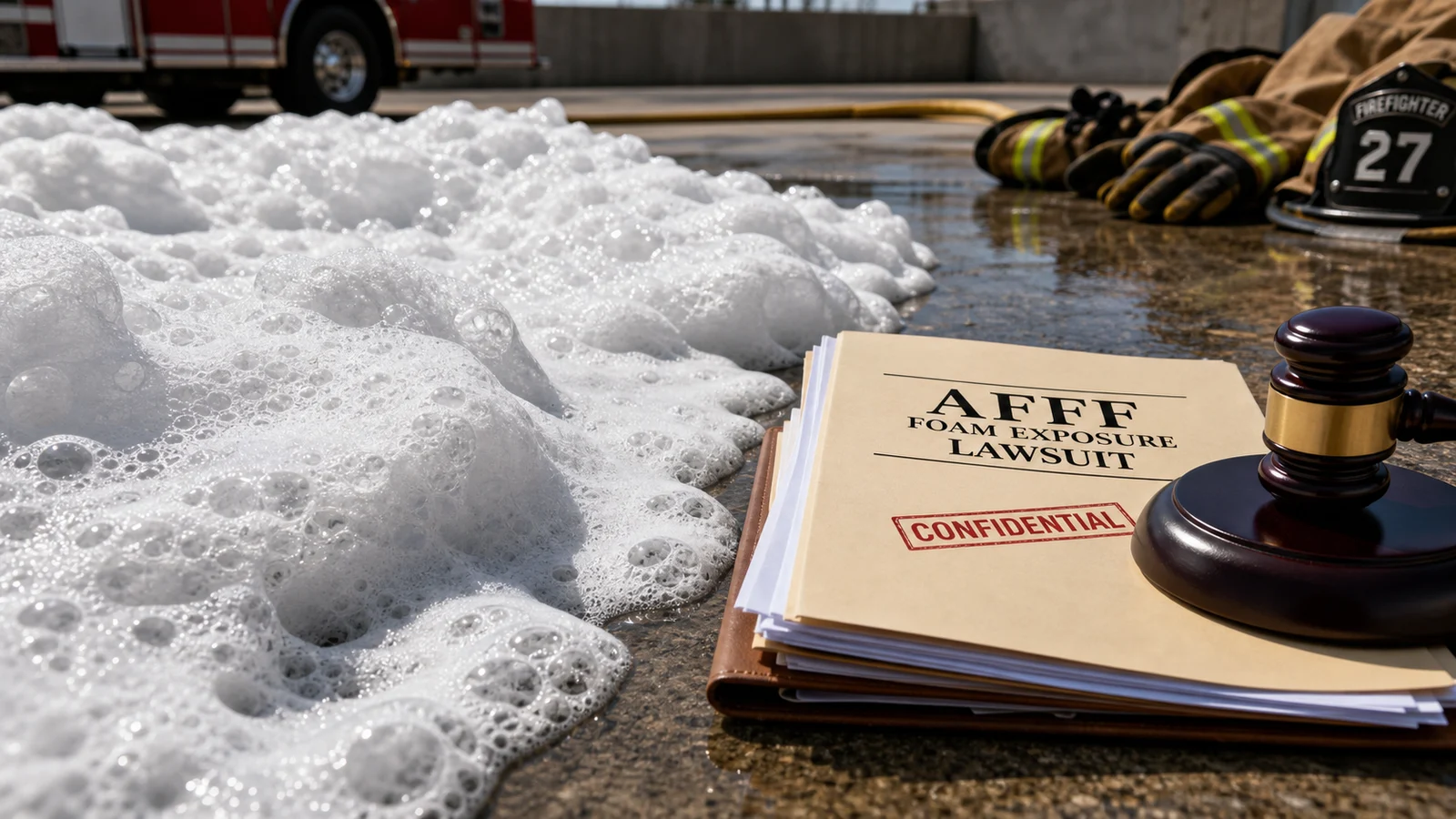
The AFFF multidistrict litigation — consolidated personal injury claims by firefighters against PFAS manufacturers — is at a critical stage in 2026. Bellwether trials that will test how juries view the link between AFFF exposure and cancer are expected to proceed this year. The outcomes will influence both the settlement calculations for the remaining claims and, potentially, future state legislative action on PFAS-specific presumption language.
The intersection between presumption laws and the AFFF litigation matters because they are separate legal tracks. A firefighter pursuing a workers' compensation claim under a presumption law is asserting a right against their employer or the workers' compensation system. A firefighter joining the AFFF litigation is asserting a claim against PFAS manufacturers. These claims are not mutually exclusive — both can proceed simultaneously — but they require different documentation and have different timelines.
The Illinois PFAS disclosure law effective in 2026 — requiring manufacturers to report PFAS use in firefighting gear — creates exactly the kind of product-specific documentation that strengthens both tracks. If a manufacturer is required to disclose that a specific turnout gear product contains a specific PFAS compound, that disclosure becomes evidence in both the workers' comp claim and the product liability litigation.
What Every Firefighter Should Do Now, Regardless of State
Presumption laws protect you most effectively when your occupational exposure history is documented before you need the law. Actions that cost nothing now and matter significantly if a claim is ever filed:
- ✓Know your state's specific covered cancer types and post-service window. "All 50 states have presumption laws" is not useful information when filing a claim. What matters is whether your specific cancer type is covered and whether your post-service period qualifies. NVFC and the IAFF both maintain state-by-state resources updated for 2026.
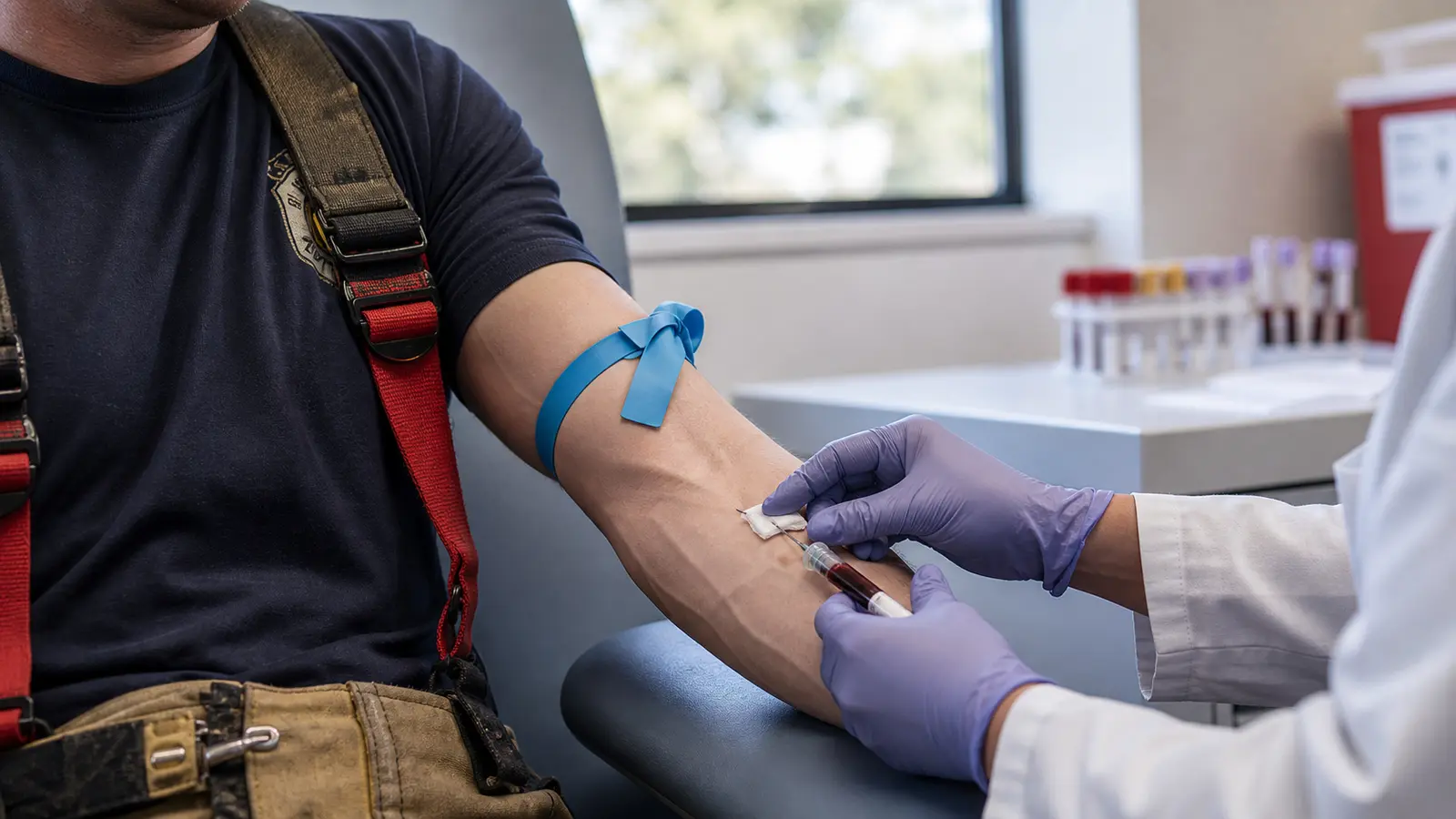
- ✓Complete and document annual physicals. Many state presumptions require a documented physical upon entry into the fire service. Annual physicals through the service period create the baseline-versus-diagnosis comparison that strengthens claims and weakens rebuttal arguments.
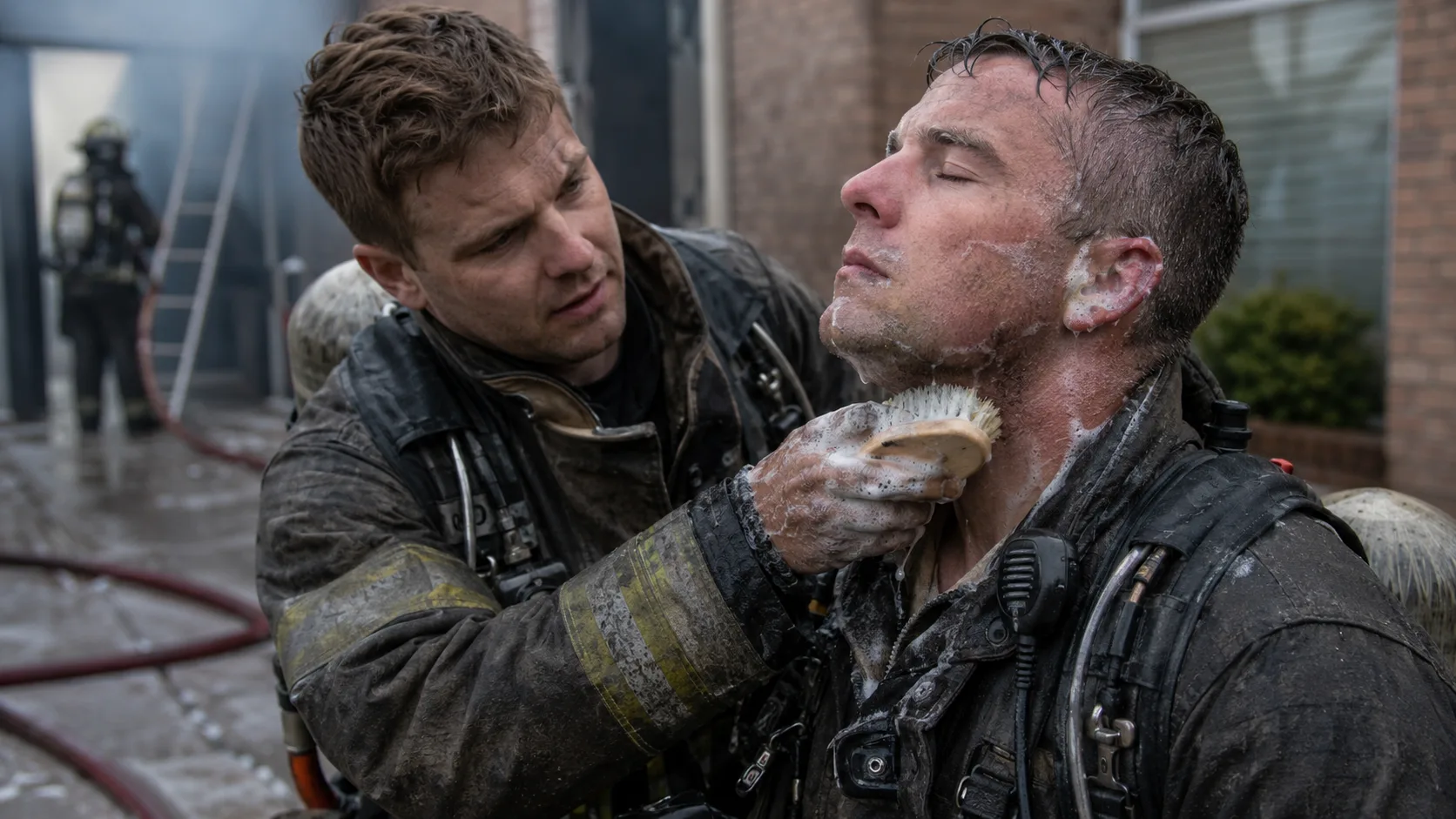
- ✓Keep a personal fire exposure log. Document significant structure fires, hazmat responses, wildland assignments with smoke exposure, and any post-incident decontamination conducted. This record is personal — not subject to department records retention — and available for any future claim documentation.
- ✓Enroll in the National Firefighter Registry for Cancer. The NIOSH-run registry tracks firefighter cancer incidence and builds the epidemiological database that future presumption law expansions rely on. Enrollment is free, voluntary, and directly supports the research evidence base that protects every firefighter.
- ✗Do not assume your state's presumption covers everything. Check the specific covered cancers, the minimum service requirement, the rebuttal standard, and whether volunteers are covered on equivalent terms. The assumption that "I'm covered" without verifying the specifics of your state's law is the gap that leaves firefighters without benefits when they most need them.
The 2026 landscape is better than it was five years ago. California expanded airport firefighter coverage. Illinois created PFAS documentation requirements. New Jersey banned PFAS foam. The trend of state legislative action is clearly toward broader, stronger protection.
But the gap between the strongest and weakest state presumption laws remains significant, and "all 50 states have some form of coverage" continues to be a misleading headline for firefighters who need to know whether their specific cancer in their specific state is covered. That answer requires looking at the specific law, not the headline count.
Comments 0
No comments yet. Be the first to share your thoughts!
Leave a Comment