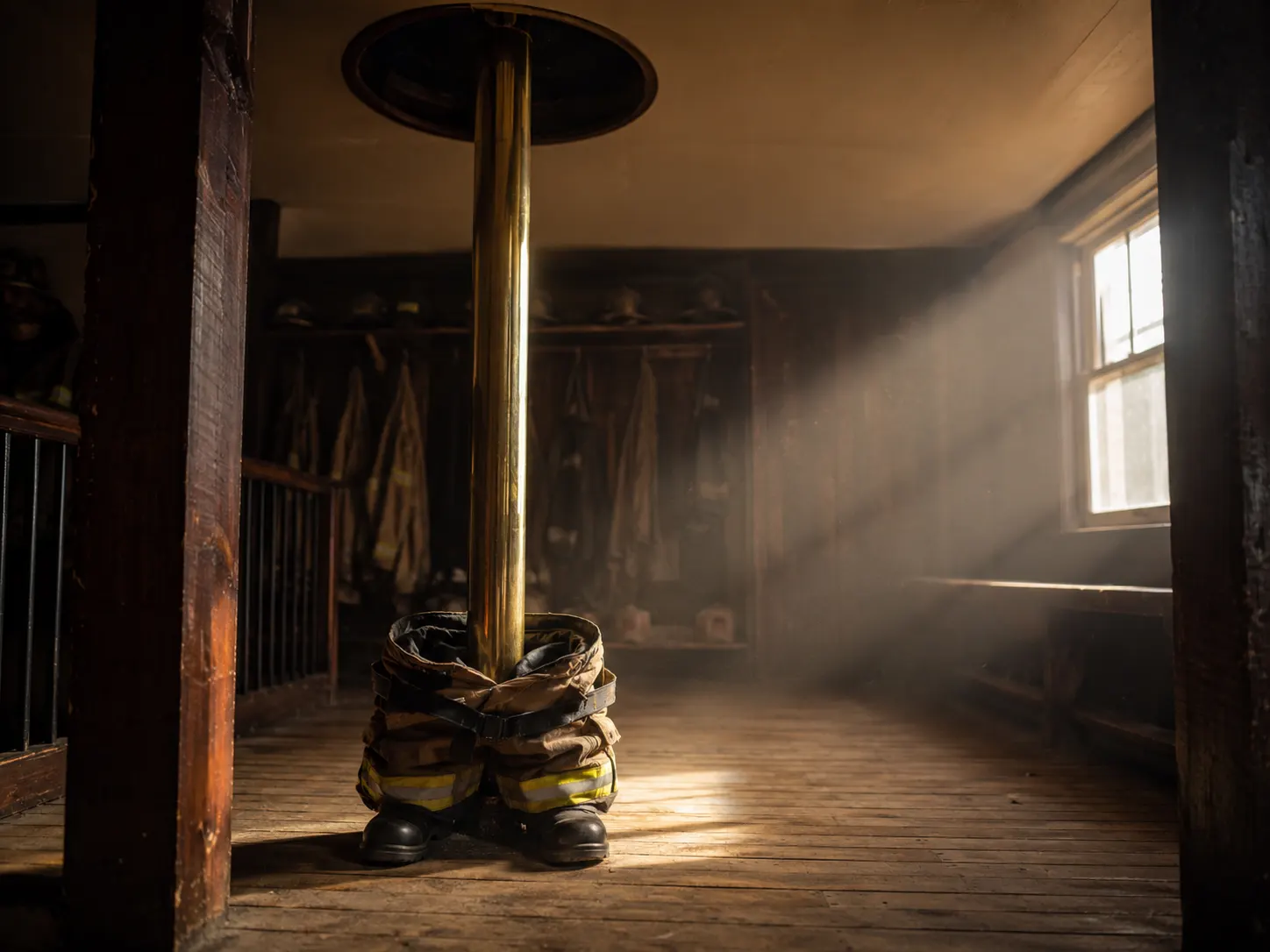

Every station I've worked out of over the years had one thing in common with almost every station built in the last fifteen years: no pole. Younger guys coming through the academy sometimes ask about it like it's a museum piece, and honestly, at this point, for most of us it basically is. The image everyone still associates with a firehouse — brass pole, sudden slide, boots hitting the rig floor — is mostly gone from actual working stations, and it disappeared for reasons that have nothing to do with nostalgia.
The pole solved one specific problem extremely well for about a century, then modern station design, safety data, and building codes moved in a direction that made it a liability instead of an advantage. Here's the actual sequence of how that happened.
In this article:
Where the Pole Actually Came From
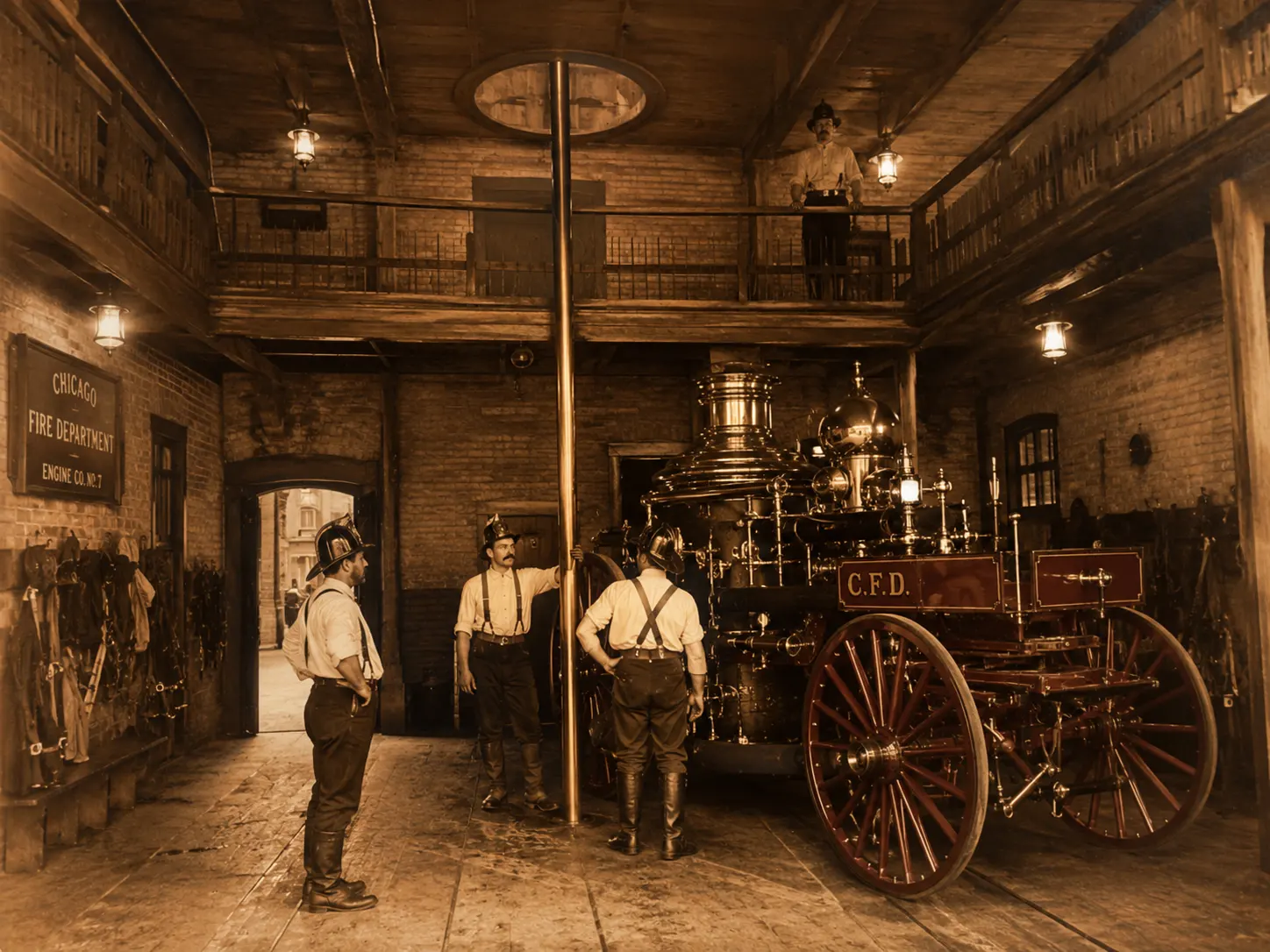
Nineteenth-century fire stations were built with the crew's sleeping quarters on the second floor and the horses and apparatus on the ground floor — largely because that's how stables were already laid out, and fire companies simply adopted the design. The problem was obvious: when an alarm came in at night, the crew had to get down a stairwell, get dressed, and get moving, and every second on the stairs was a second added to response time.
The story usually credited is Captain David Kenyon of Chicago Engine Company 21, who in 1878 had a crew member slide down a wooden hay-loading pole that ran between floors during an alarm, beating the rest of the company to the apparatus by a wide margin. The department noticed, cut a hole through the floor, installed a shaved and varnished pole, and the idea spread to other Chicago companies within a few years. Brass poles — smoother, more durable, easier to grip and slide — became the standard not long after, and by the early 1900s the pole had become close to universal in stations with a second-floor dormitory.
Why It Worked So Well for a Century
The pole's advantage over stairs was never subtle — a trained firefighter can cover two or three floors in a couple of seconds on a pole, versus considerably longer navigating a stairwell, especially half-dressed and still waking up. In an era when apparatus response time was measured against a fire's ability to double in size roughly every minute or two, that gap mattered.
It also solved a layout problem cheaply. Rather than redesigning stations to put crew quarters on the ground floor next to the apparatus — which takes more land and a different building footprint — departments could keep the practical two-story design and just cut a hole in the floor. For most of the 20th century, that tradeoff made sense: land was often at a premium in the urban cores where stations were built, and a two-story station with a pole used less real estate than a sprawling single-story one.
The Injury Problem Nobody Wanted to Talk About
The pole's real downside was never a secret inside the fire service, even if it wasn't discussed much publicly: sliding down a smooth vertical surface and landing at speed is a repeatable way to injure ankles, knees, wrists, and backs, especially for a crew doing it at 3 a.m. half-awake, in socks or bare feet, sometimes hundreds of times a year over a career. A missed grip, a slick pole, or a bad landing angle turns a routine dispatch into an injury report — and unlike fireground injuries, these happened inside the station, on a surface the department itself installed and maintained.
That distinction matters for liability. An injury sustained sliding a pole at the station is harder to frame as an unavoidable hazard of firefighting and easier to frame as a preventable workplace hazard, which is a different legal and insurance conversation entirely. As workers' compensation costs and injury tracking became more formalized across public safety agencies from the 1980s onward, departments and their insurers had real financial incentive to look hard at anything generating repeat claims — and the pole generated them.
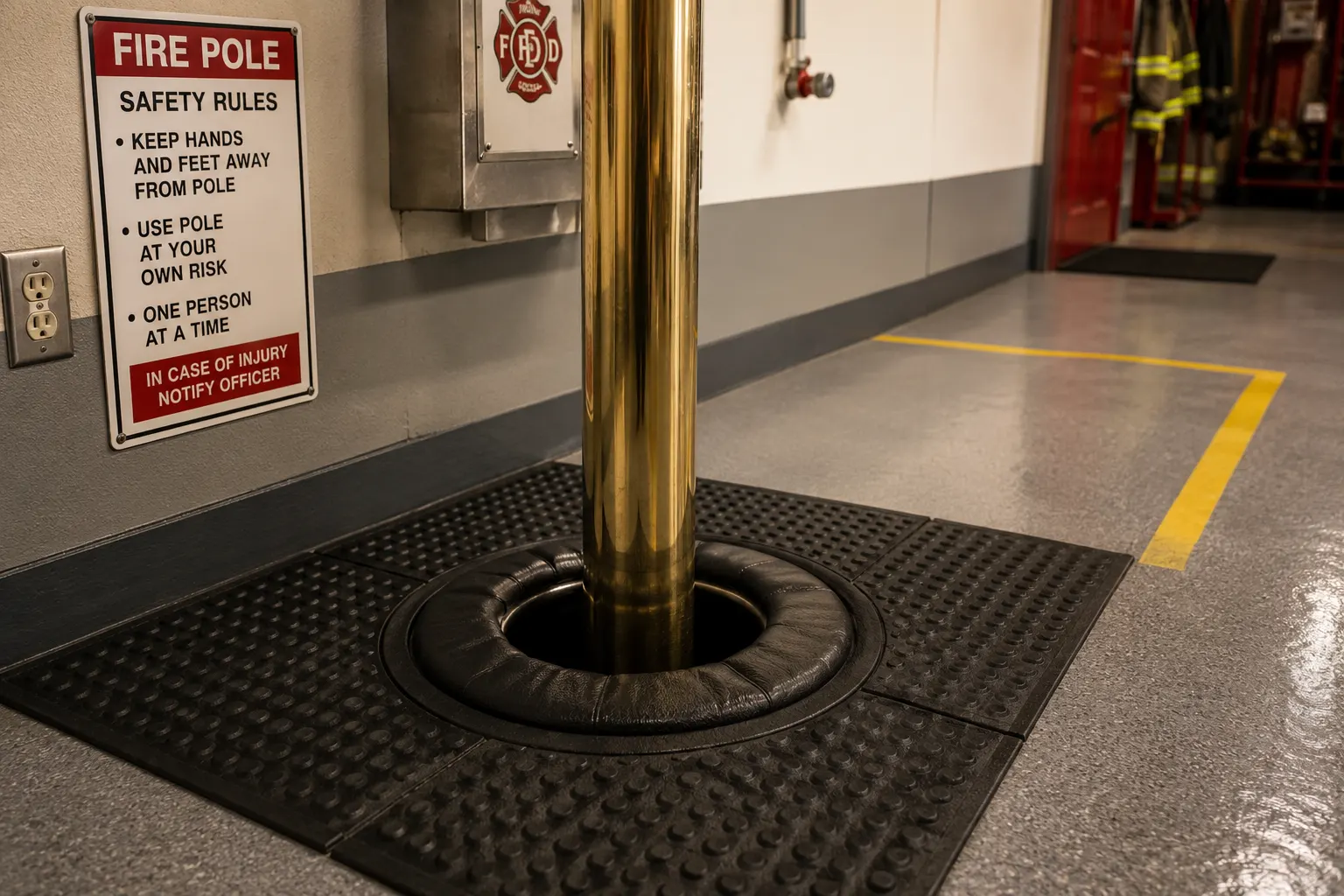
Departments that kept their poles didn't ignore this — many added padded floor collars, rubberized landing surfaces, and mandatory grip-and-descent training for new recruits specifically to bring the injury rate down rather than eliminate the pole outright. Where the pole survives today, it's almost always alongside these retrofits, not in its original bare-brass-and-concrete form.
Building Codes and Single-Story Design
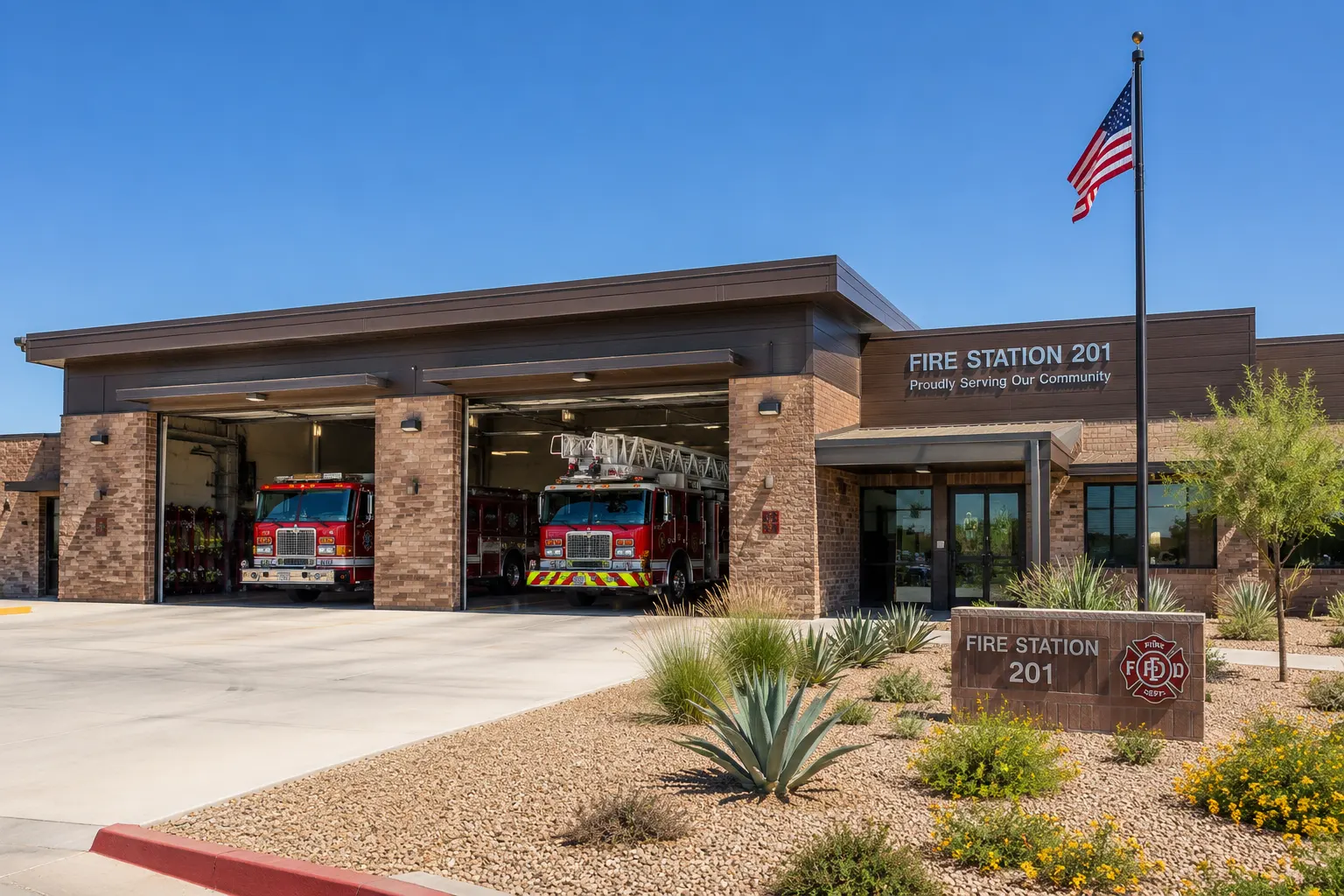
The second major factor is simpler than the injury data: most new stations don't have a second floor to descend from in the first place. Modern station design increasingly favors single-story layouts with dormitories on the same level as the apparatus bay, connected by a short direct hallway rather than a stairwell or a pole shaft. That design removes the pole's entire reason for existing — there's no floor-to-floor gap left to close.
Accessibility requirements played a role too. Fire stations built or renovated with public funding generally have to meet ADA and related accessibility standards, and a pole shaft cut through a floor is inherently a single-purpose, non-accessible feature — it can't double as a route for anyone using a wheelchair or anyone who simply can't safely use it, which conflicts with a modern push toward stations that accommodate a broader range of personnel. Combined with land availability in newer, less dense station locations where a bigger single-story footprint is affordable, the practical case for a second floor and a pole mostly evaporated.
Departments That Still Run One Today
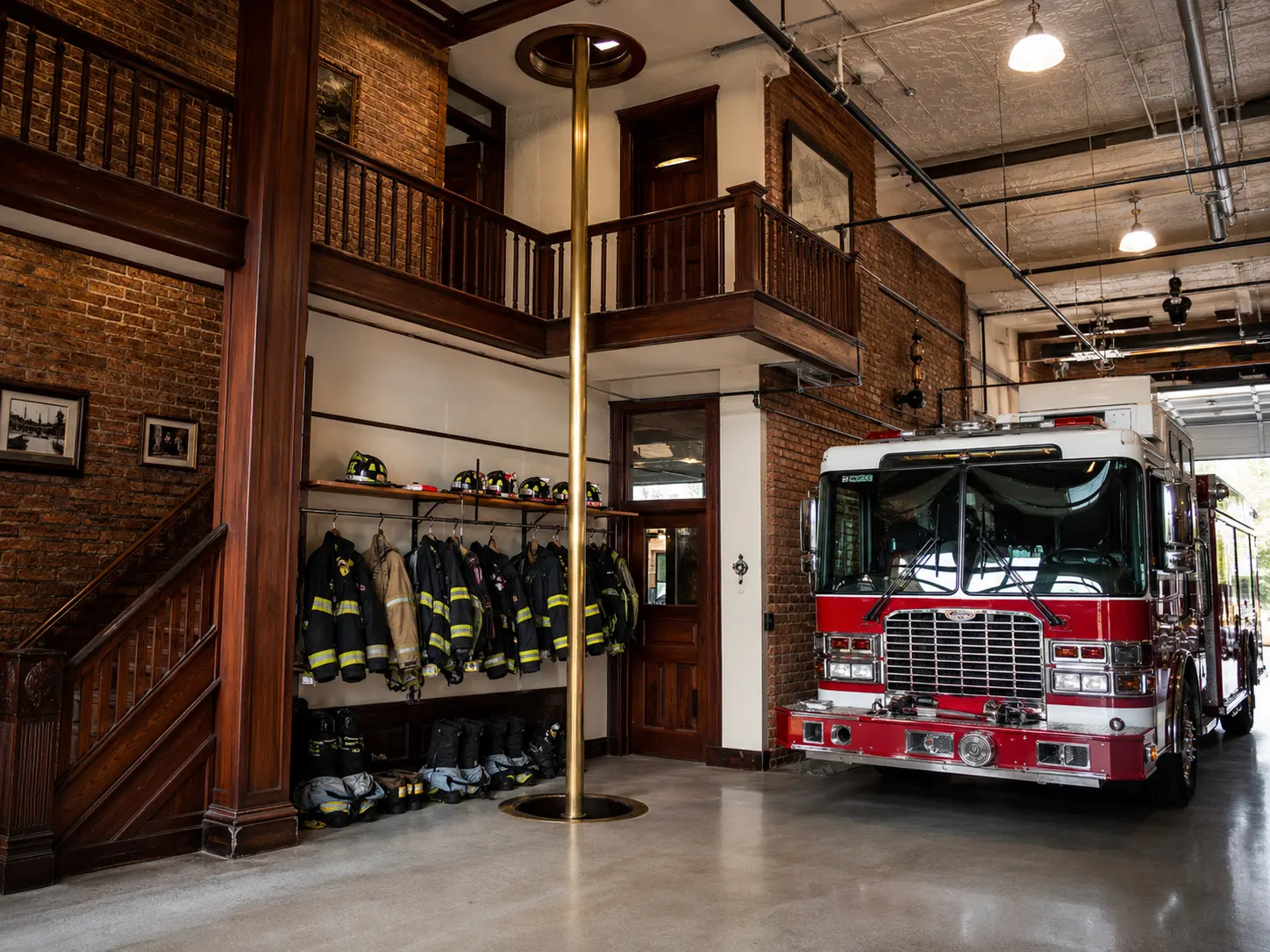
The pole hasn't vanished entirely. Departments operating out of older, historic two-story stations — where the pole and floor opening are original structural features — often keep the pole simply because removing it means filling a structural hole and reworking a floor, which is an expensive renovation most budgets don't prioritize when the pole isn't actively causing problems. Some busy urban companies also still value the speed advantage enough to keep training on it and maintaining safety retrofits around it.
What's essentially disappeared is the pole as a design choice for new construction. Architects and fire chiefs planning a brand-new station today are very unlikely to specify one, because the layout that made it necessary — dormitory upstairs, apparatus downstairs — has largely fallen out of favor for the accessibility, safety, and land-use reasons above.
Myths Worth Retiring
Myth: Poles were banned by a federal law or code. Not accurate — there's no single nationwide ban. What changed is that building codes, accessibility standards, and station design practices gradually made new poles impractical, and individual departments made their own calls on existing ones based on cost, injury history, and layout.
Myth: Every department removed theirs on purpose. Many older stations simply never had the money to renovate around removing a structurally embedded pole — the ones that disappeared mostly did so through new construction never including one, not through active removal.
Myth: Poles are purely decorative now, even where they exist. Where a pole remains functional in an active station, crews genuinely use it and train on it — it's slower to disappear from daily use than from new construction plans.
The short version: the pole didn't lose to a single rule or a single lawsuit. It lost to a slow shift in how stations are built, how injuries are tracked, and how land gets used — and what's left standing is mostly a matter of which stations were built before that shift happened, and which ones were built after.





Comments 0
No comments yet. Be the first to share your thoughts!
Leave a Comment