Fire Salvage Operations: Protecting Property During and After a Fire
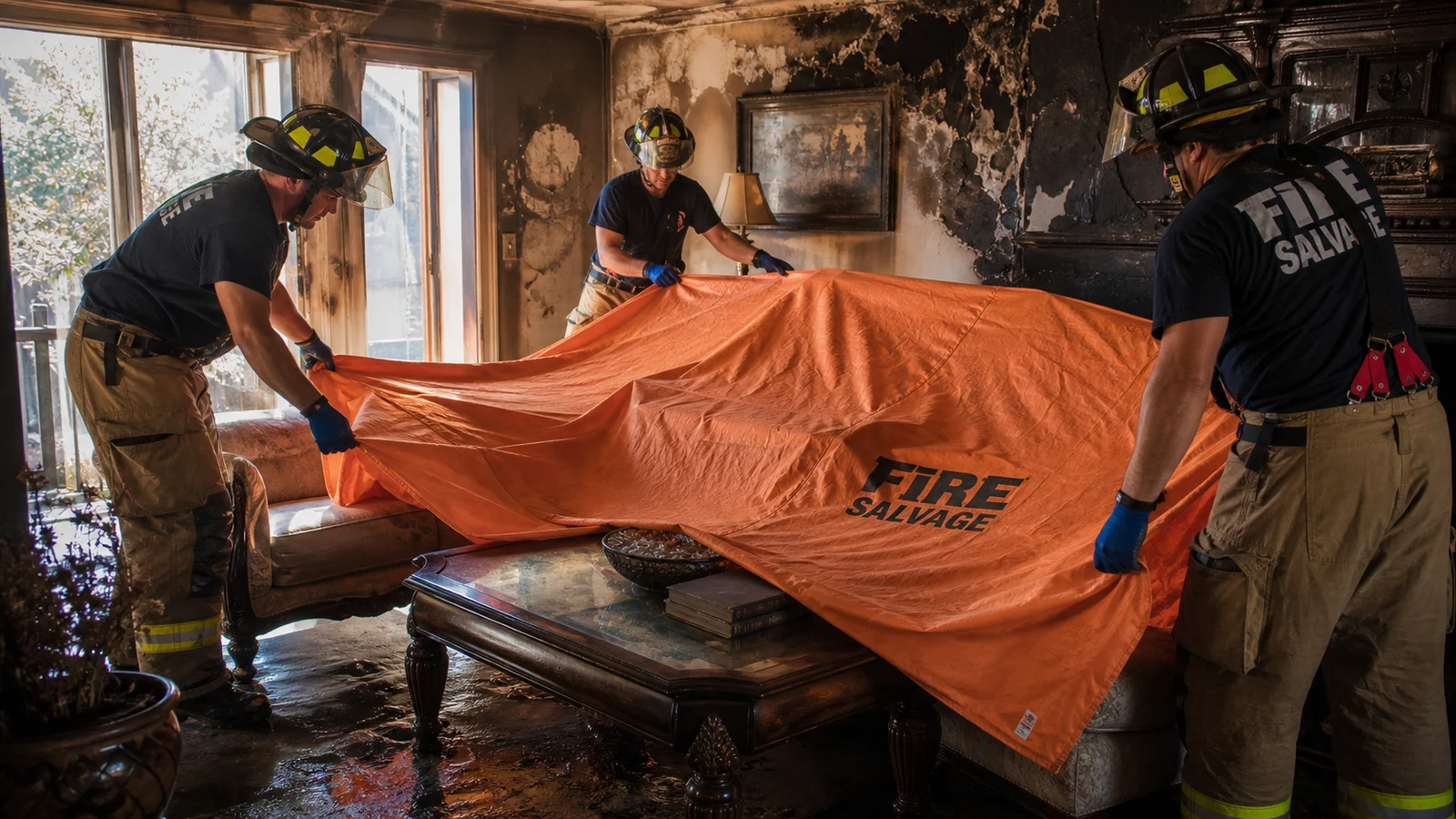
Every firefighter is trained to put water on fire. Fewer are trained — or reminded — that the mission also includes minimizing property loss beyond the immediate fire area. Salvage operations protect furniture, valuables, and structural components from water, smoke, and debris damage during suppression. A well-executed salvage operation is one of the most visible demonstrations of firefighter professionalism and community service.
Jump to:When to start salvage · Salvage cover deployment · Water removal · Protecting valuables · Smoke and odor control · Scene documentation · FAQ
When to Start Salvage
Salvage is not a post-fire activity — it begins simultaneously with fire suppression. The standard approach pairs every attack crew with a salvage crew: while one team advances the hoseline, another moves ahead of the water and smoke to protect adjacent areas. This requires pre-incident planning and adequate staffing, which is why departments with higher staffing levels consistently demonstrate lower property loss per incident.
Priority sequence for salvage crews:
- Identify and protect rooms not yet affected by fire, water, or smoke
- Deploy salvage covers over furniture and valuables in the fire room before suppression water arrives
- Spread floor runners to protect flooring from hose drag and boot traffic
- Create water diversion pathways to direct runoff away from lower floors and finished spaces
- Remove small high-value items (documents, electronics, heirlooms) from the fire area when safe
Salvage begins before the fire is out. The water from suppression causes significant secondary damage. A salvage cover deployed before the line advances can save thousands of dollars in furniture and flooring damage from a single room-and-contents fire.
Salvage Cover Deployment
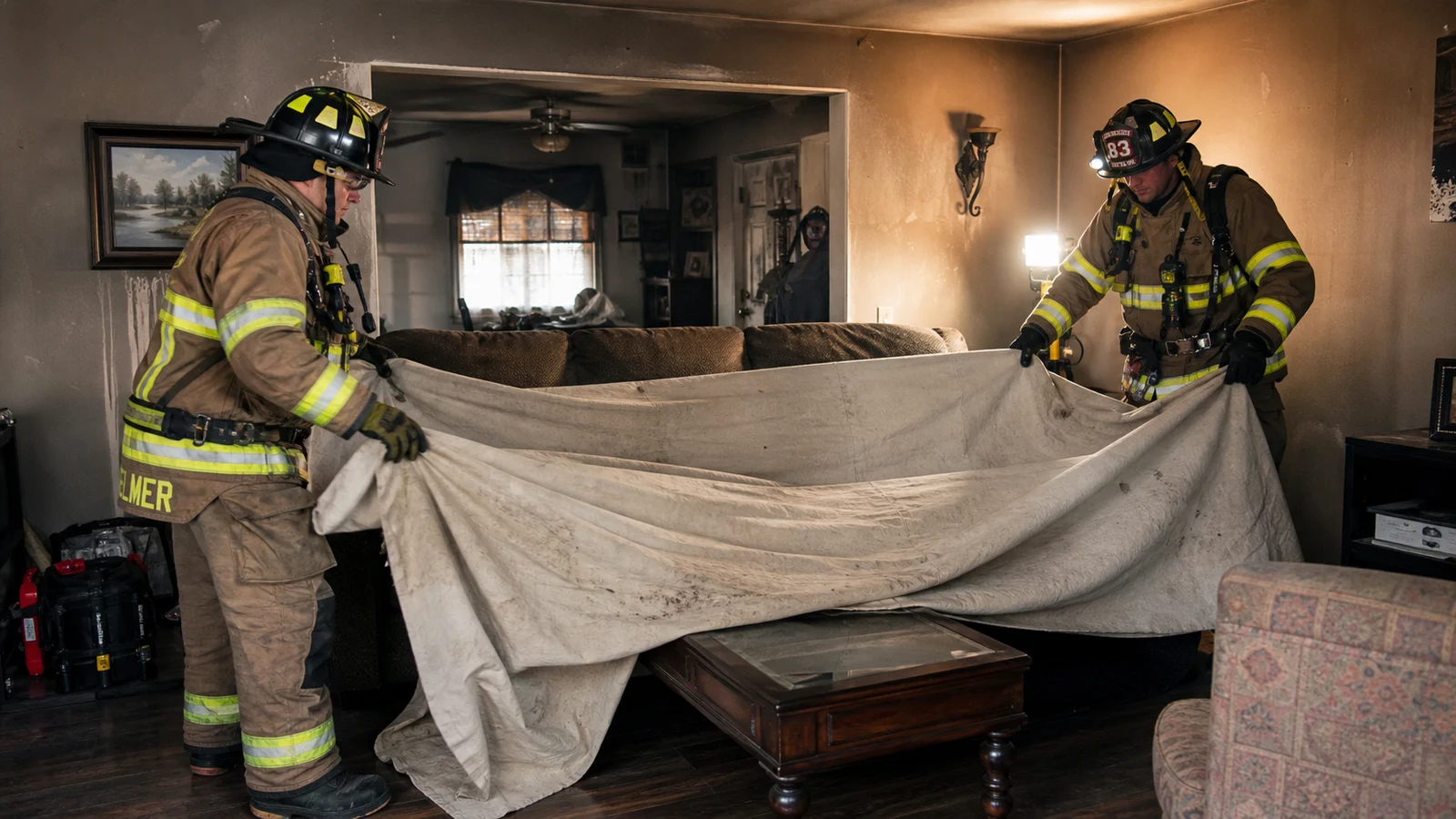
The salvage cover (traditionally canvas, now often synthetic) is the primary salvage tool. Key deployment techniques:
- One-firefighter roll throw: A tightly rolled cover can be unrolled across furniture quickly by a single firefighter — critical when staffing is limited
- Two-firefighter balloon throw: Two firefighters shake the cover open above the furniture and allow it to balloon down, covering a large area quickly and cleanly
- Catch basin: A salvage cover folded into a trough shape and supported by furniture pieces can collect significant suppression water and prevent it from penetrating to lower floors
Maintain salvage covers clean, dry, and properly folded in the apparatus. A cover that is wet, mildewed, or improperly folded will not deploy correctly under time pressure.
Water Removal
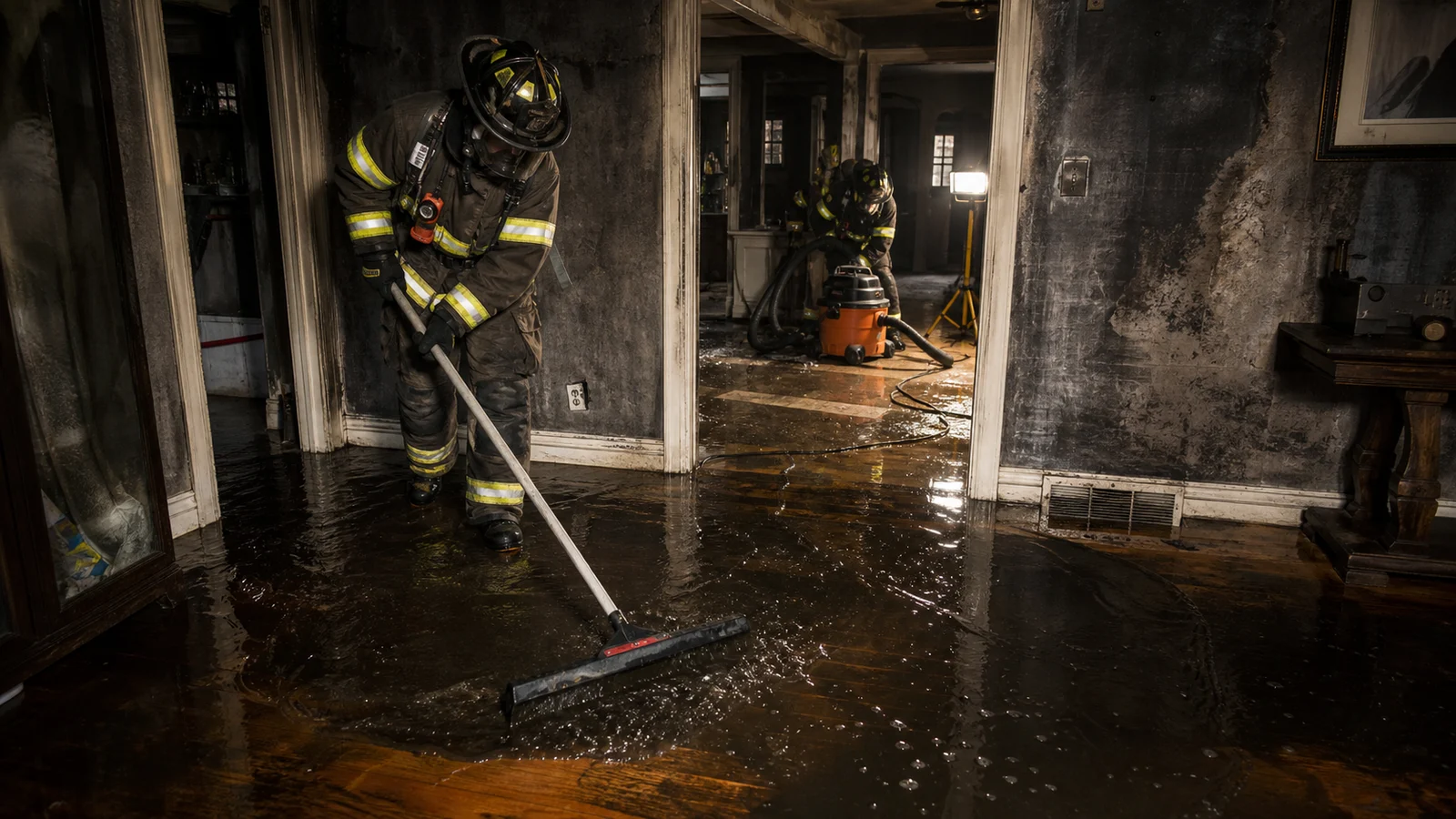
Suppression water on floors causes immediate and cumulative damage — to flooring, subfloor, floor joists, and finished spaces below. Water removal tools and methods:
| Tool | Best use |
|---|---|
| Water vacuum (wet/dry vac) | Small to medium water accumulation on hard floors |
| Squeegee and water broom | Moving water toward drains or collection points |
| Floor drain chute | Directing water to existing floor drains |
| Catch-all basin (salvage cover) | Collecting water below active suppression before it spreads |
| Dewatering pump (trash pump) | Large volumes of standing water in basements or commercial buildings |
Protecting Valuables
When scene safety permits, moving high-value small items from the fire area prevents losses that salvage covers cannot address. Items to prioritize:
- Financial documents, passports, insurance policies — often irreplaceable
- Medications, medical equipment
- Electronic devices with irreplaceable data
- Family photographs and irreplaceable personal items
- Small high-value items (jewelry, cash) — document any movement of these items for liability purposes
Document everything you move. Any time firefighters handle a resident's belongings — particularly valuables — the incident should be documented: what was moved, by whom, and where it was placed. This protects both the resident and the firefighters from later disputes.
Smoke and Odor Control
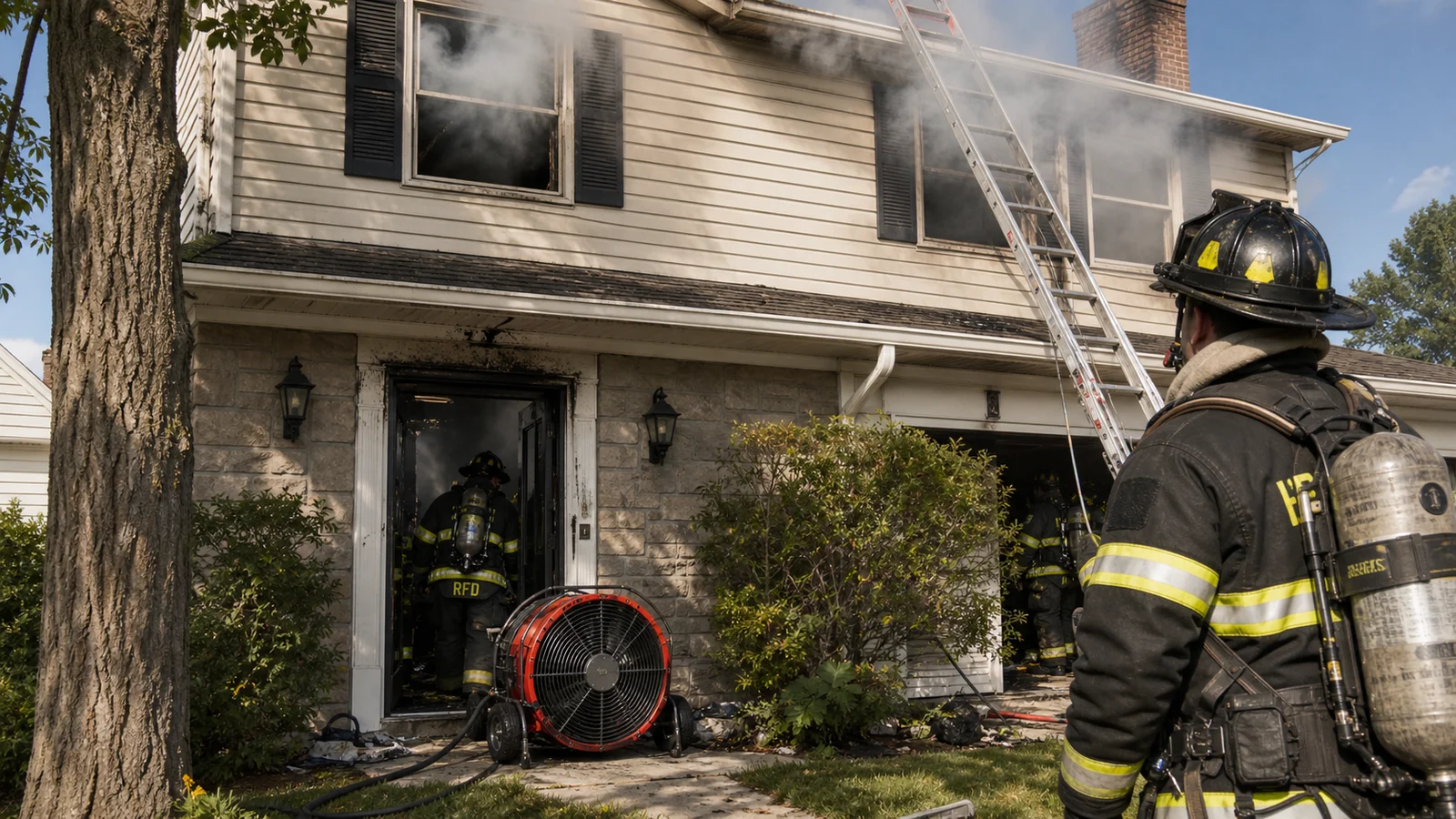
Post-suppression smoke removal prevents ongoing damage to contents, finishes, and structural materials from acidic smoke products. PPV fans positioned at entry points with exhaust openings on the opposite side create positive pressure that flushes smoke efficiently. Open all interior doors and targeted windows to create flow paths. Begin smoke removal as soon as the fire is fully knocked down and the area is confirmed safe.
Scene Documentation for Salvage
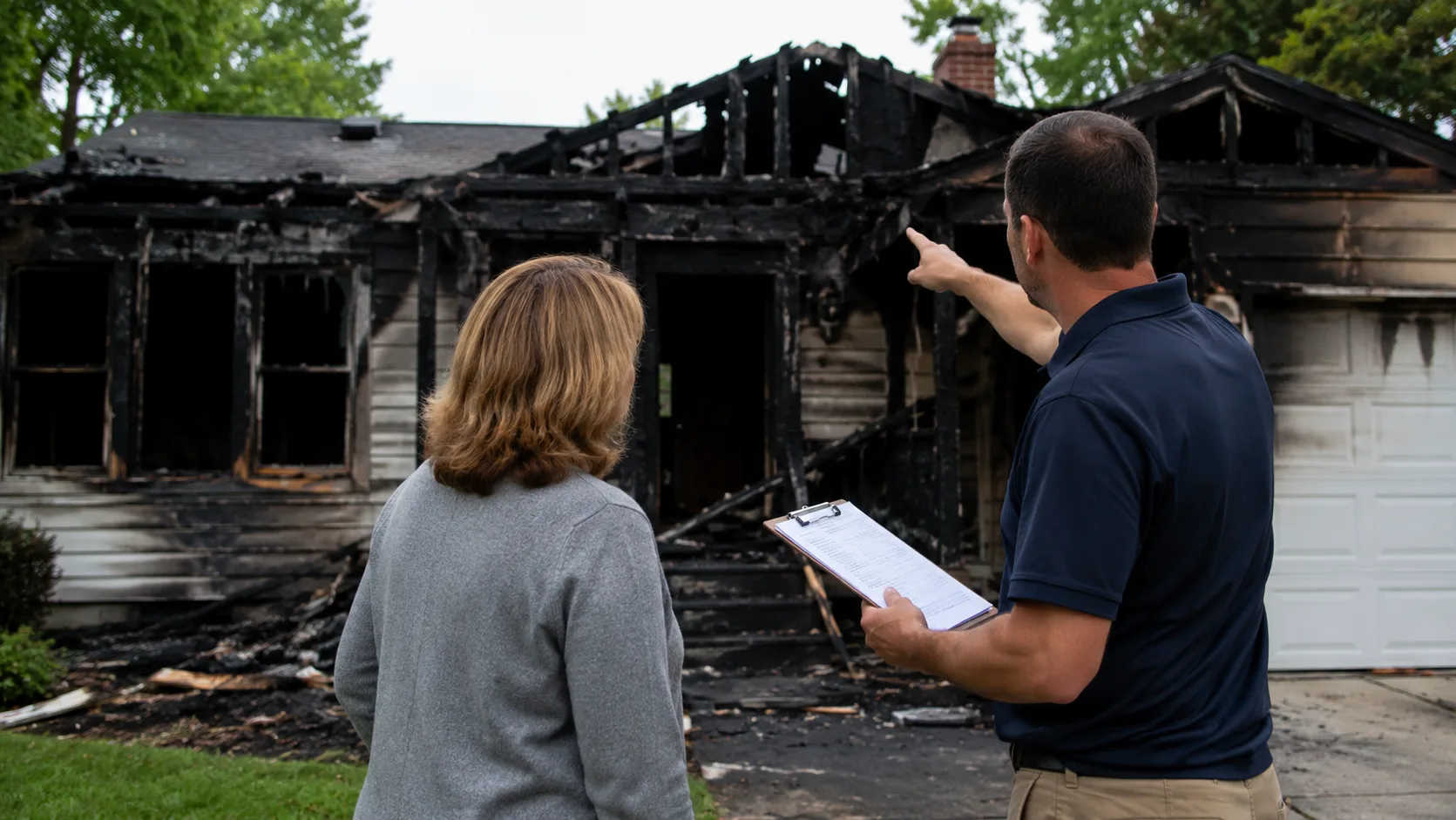
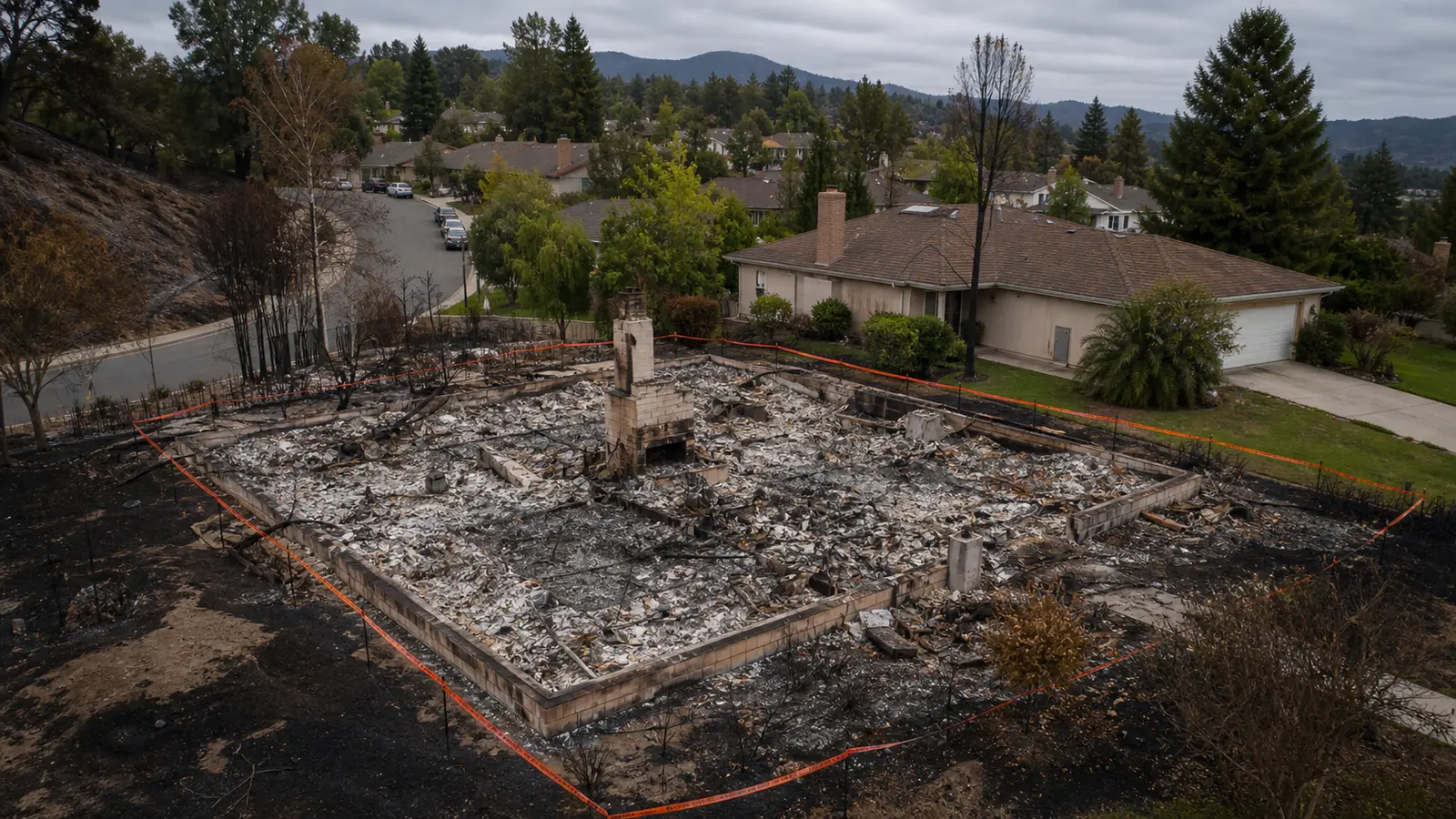
A brief photographic record of the fire area before salvage operations begin, and after they are complete, provides documentation of the extent of damage and the effectiveness of salvage efforts. This supports insurance claims, post-incident analysis, and department accountability. Most departments now include this as standard practice; incident commanders should assign this responsibility explicitly at working fires.
Frequently Asked Questions
What is the purpose of salvage operations in firefighting?
Salvage operations protect property from secondary damage caused by suppression water, smoke, and debris. While fire suppression stops the fire, salvage minimizes total losses — to furniture, valuables, flooring, and structural elements in unaffected areas. It is a core component of the fire service mission alongside suppression and rescue.
When should salvage operations begin?
Simultaneously with fire attack, not after. Paired attack and salvage crews allow protection of adjacent areas before suppression water and smoke reach them. Early salvage dramatically reduces total property loss compared to beginning salvage only after the fire is extinguished.
What is a salvage cover used for?
A salvage cover is a large waterproof sheet (traditionally canvas, now often synthetic) used to cover and protect furniture, valuables, and flooring from suppression water and falling debris. It can also be folded into a catch basin to collect runoff before it spreads to lower floors.

Comments 0
No comments yet. Be the first to share your thoughts!
Leave a Comment