Correction — October 15, 2026: Removed the universal 25% alarm and the assumption that a fixed thirds rule always precedes the alarm.
Every firefighter who goes inside a burning building is accounted for. Someone outside knows their name, their unit, which entry point they used, and roughly where they are in the structure. That accountability is not a formality — it is the system that determines how fast a Rapid Intervention Team can reach a firefighter who has gone down, and whether the incident commander can confirm everyone is out before a building is written off as lost.
The system has multiple layers: a physical tagging system that tracks who is inside, radio check protocols that confirm crew status at regular intervals, a dedicated rescue team staged and ready before the first crew goes through the door, and a personal alert device on every firefighter that triggers if they stop moving. When one layer fails, the others catch it. When all layers are working, no firefighter goes unaccounted for longer than a few minutes.
In this article:
PASS: What the Device Actually Does
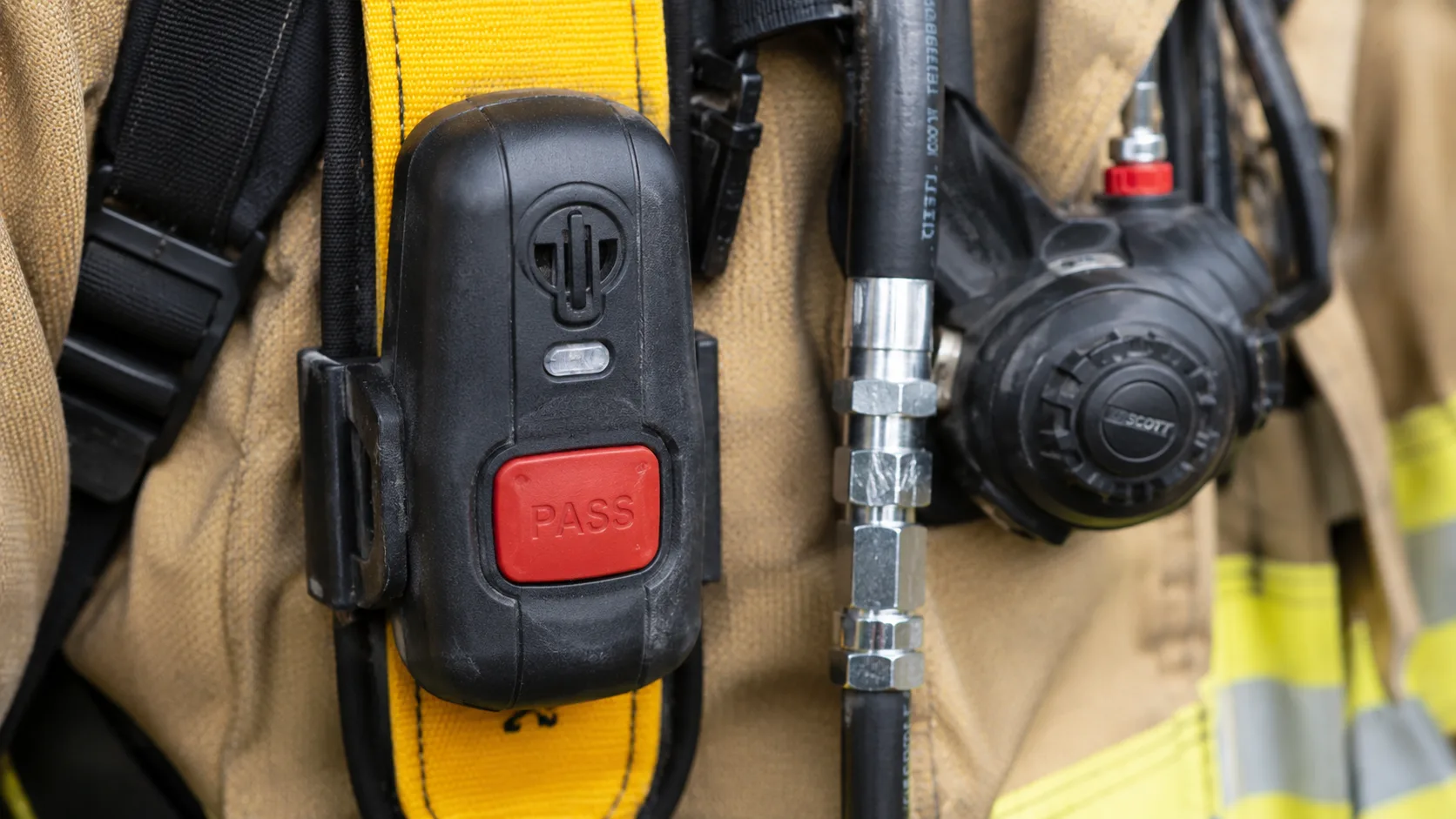
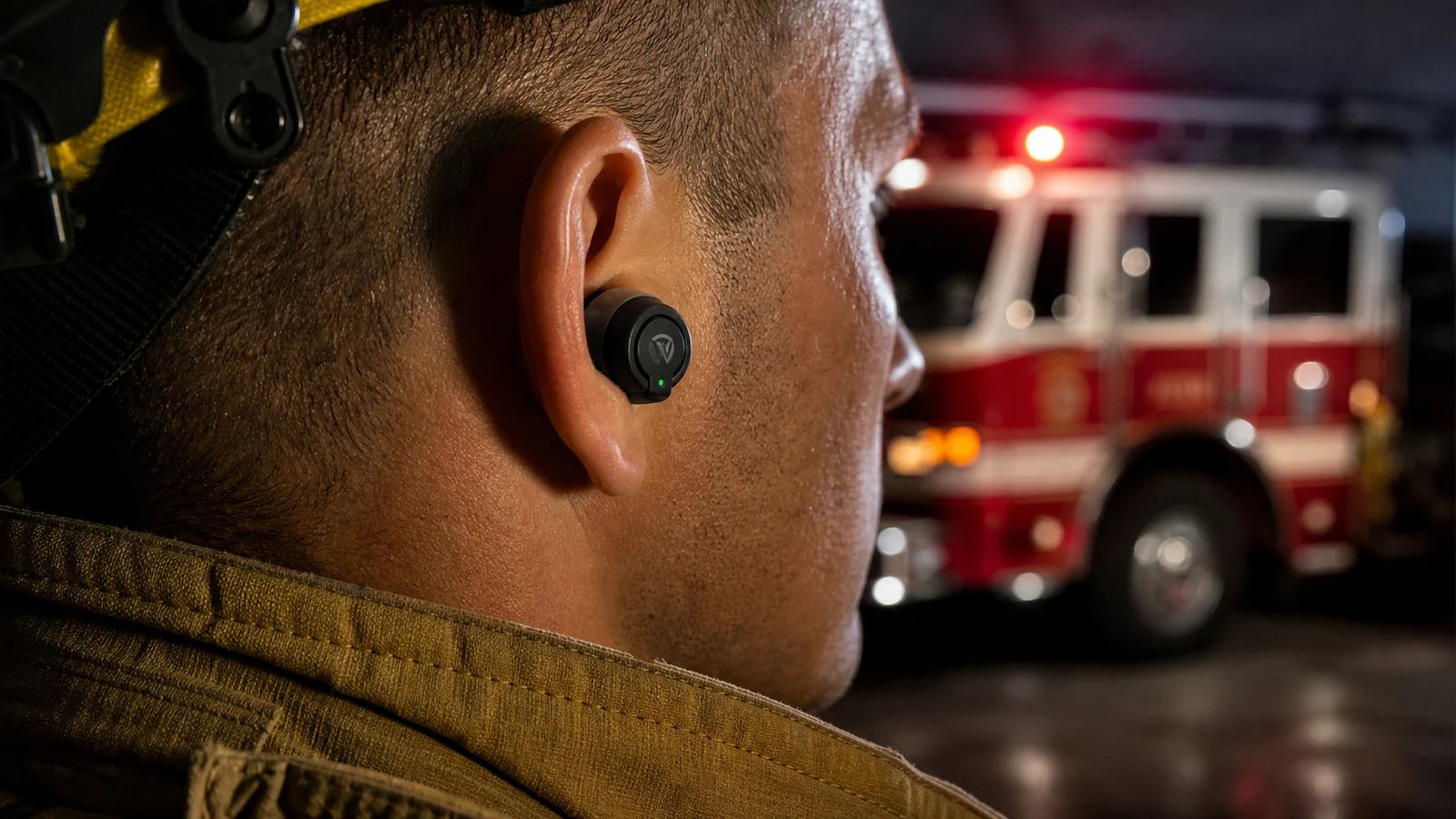
PASS stands for Personal Alert Safety System. The name sounds like it describes a broader accountability program, but the device itself does one specific thing: it detects when the firefighter wearing it has stopped moving for approximately 30 seconds and emits a loud alarm — around 95 decibels — that tells rescuers where to search.
Early PASS devices were standalone units clipped to gear. They had a critical failure point: they had to be manually activated, and in the urgency of donning gear and going to work, they were sometimes forgotten. Firefighters died with unactivated PASS devices on their person. Modern SCBA-integrated PASS devices activate automatically when the air pack is turned on and cannot be separated from the unit, eliminating that failure mode.
The device has two modes. In motion-detection mode, any movement of the firefighter resets the 30-second timer. A firefighter who is working — advancing a line, searching, pulling ceiling — will never trigger the alarm because they are always moving. A firefighter who falls, is pinned by debris, loses consciousness, or is disoriented and holding still will trigger the alarm within 30 seconds of going motionless. The manual activation button allows a firefighter in distress who is still conscious to trigger the alarm immediately without waiting for the motion timer.
The alarm sound is distinctive — a rising and falling tone pattern that fire departments train to recognize. When a PASS alarm activates during interior operations, every crew in the building knows immediately that someone is down.
The Tag and Passport System
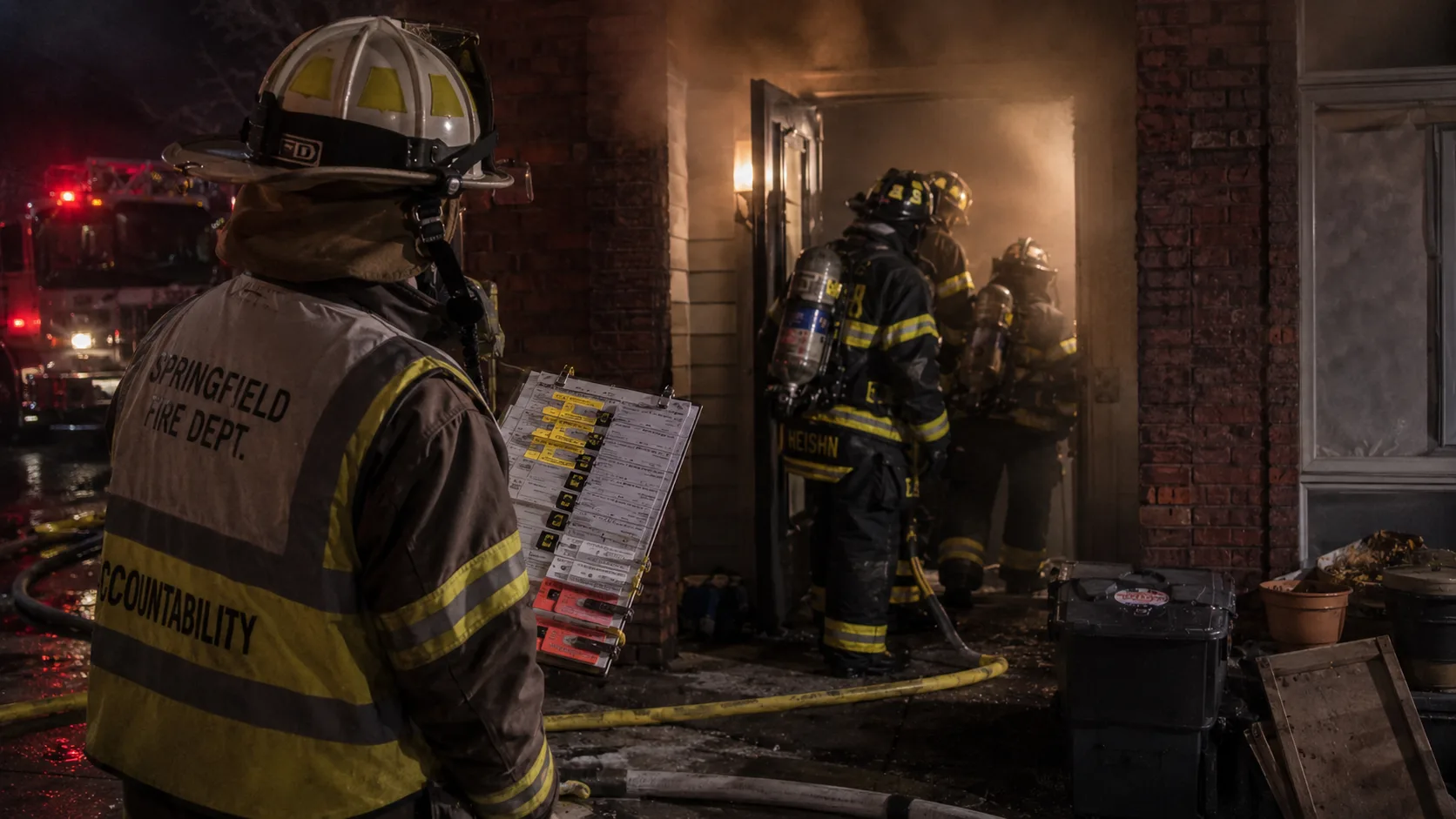
Before any firefighter enters a burning structure, they hand a tag to the accountability officer stationed at the entry point. The tag — sometimes called a passport — has the firefighter's name, unit, and assignment. The accountability officer holds every tag from every person currently inside. At any moment, the collection of tags at the entry point is a physical record of who is in the building.
When a firefighter exits, they reclaim their tag. The tag collection shrinks. When the incident commander calls for a PAR — a full personnel accountability report — the accountability officer can immediately report how many people are inside and who they are. If a tag is held and the firefighter does not respond to radio contact and does not exit, that is the trigger for a formal missing-person response.
The system works across multiple entry points by assigning an accountability officer to each entry and routing all tags to a central collection point — typically the incident command post. Large incidents with dozens of interior crew members use electronic accountability systems that scan RFID tags on each firefighter's gear and log entry and exit times automatically, but the physical tag system remains the baseline that works when electronics fail.
PAR: The Radio Accountability Check
A Personnel Accountability Report is a radio-initiated roll call of all interior crews. The incident commander or accountability officer initiates PAR at regular intervals throughout the incident and at specific trigger points: any change in tactical assignment, any significant fire event (flashover, collapse, explosion), any time a crew fails to respond to routine radio contact, and always before a building is abandoned and transitioned to defensive operations.
PAR is simple in structure. The incident commander calls each crew by radio. Each crew officer responds with a unit identifier and crew status — typically something like "Engine 7, all accounted for, advancing on the second floor." No response after two calls initiates the missing crew protocol. A partial response — some members of a crew reporting but others not — triggers the same response.
The intervals for PAR vary by department and incident complexity, but a common standard is every 10 to 15 minutes on an active interior operation, shortening to every 5 minutes in high-risk conditions — confirmed hoarding structure, wind-driven fire, imminent collapse indicators. The rationale for shorter intervals is that the window between "firefighter becomes incapacitated" and "firefighter is in irreversible trouble" is narrow, and a 15-minute PAR interval can encompass that entire window.
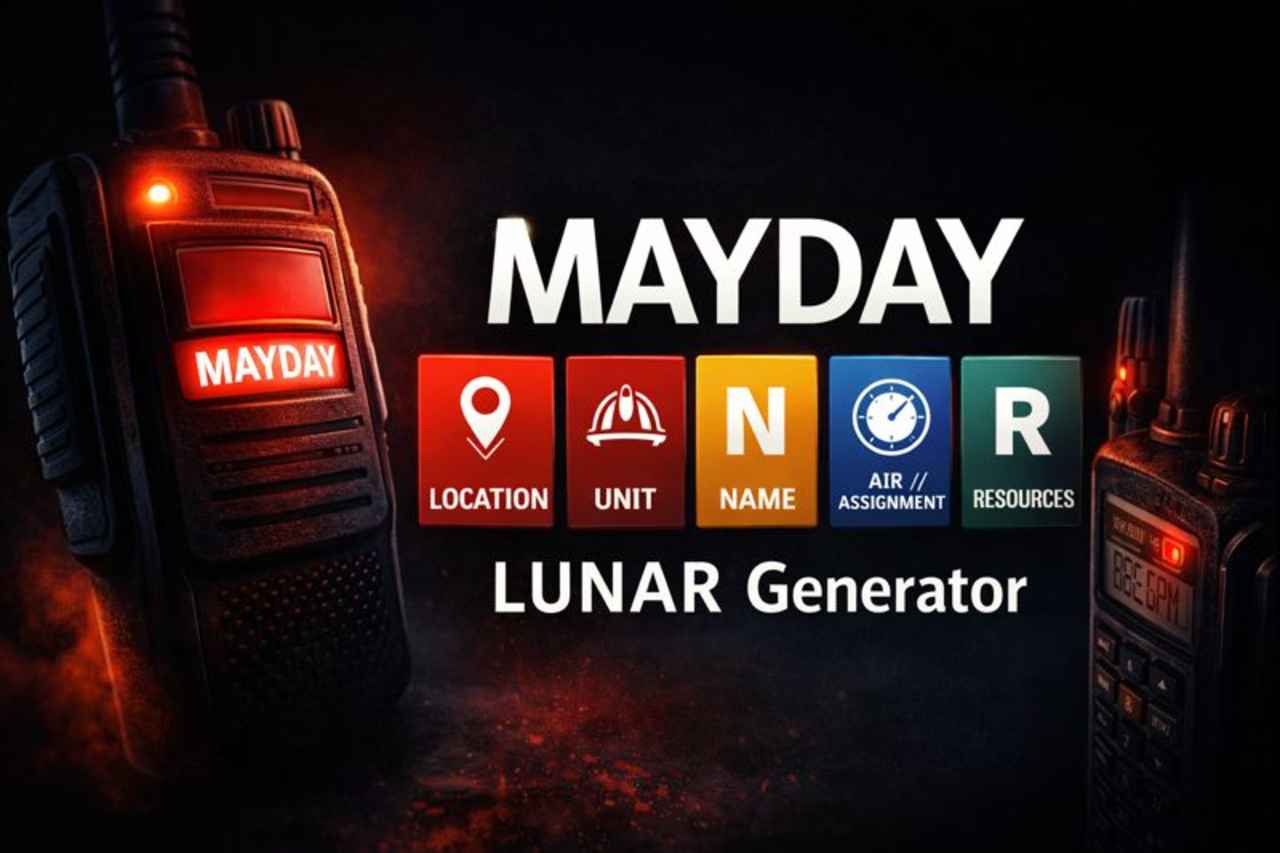
The LUNAR Report
LUNAR is the acronym interior crews use when transmitting their status to command. Each letter corresponds to a piece of information the incident commander needs to track crew position and safety:
| Letter | Stands for | What it tells command |
|---|---|---|
| L | Location | Where the crew is in the structure — floor, room, quadrant |
| U | Unit | Which company or crew is reporting |
| N | Name | Officer or crew member transmitting — especially important during MAYDAY |
| A | Air supply | Remaining SCBA air — in PSI or percentage, depending on department SOP |
| R | Resources needed | What the crew needs — water, additional personnel, medical, rescue |
LUNAR is drilled into firefighters because the information it contains is exactly what command needs to make tactical decisions and, in a MAYDAY situation, to direct RIT to the right location. A panicking firefighter calling a MAYDAY and transmitting nothing useful beyond "I'm trapped" gives command far less to work with than one who transmits their floor, unit, name, air level, and what they need. The drill exists so that under stress, the report comes out in order without requiring conscious construction.
Air Management and the One-Third Rule
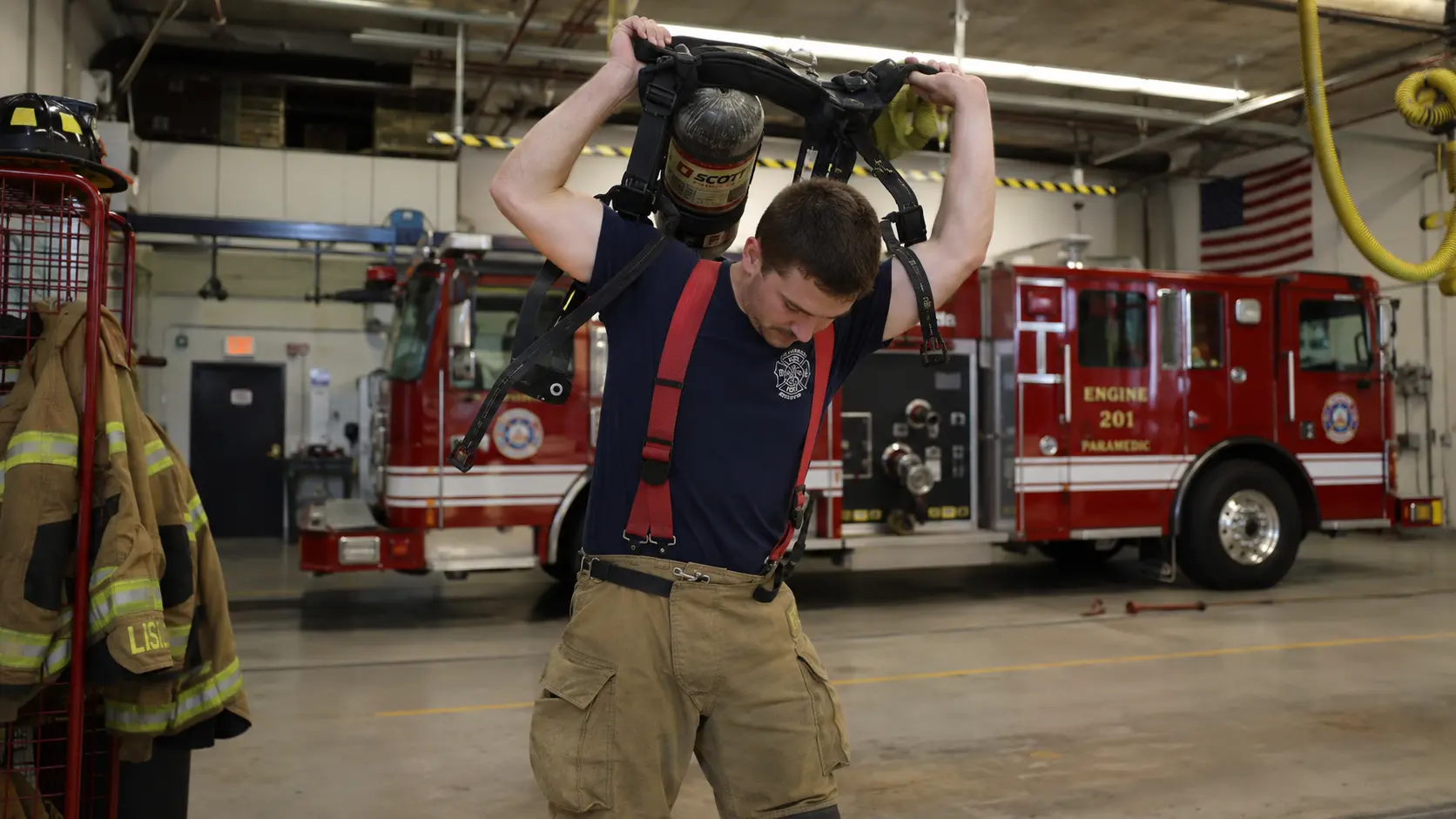
Every SCBA bottle has a finite air supply — typically 30 to 45 minutes of working air depending on the cylinder size and the firefighter's exertion level. Air management is the practice of tracking how much air remains and making exit decisions based on that tracking rather than on how the fire is going or how much work is left to do.
The one-third rule is the standard: use one-third of your air going in, one-third coming out, and keep one-third in reserve. The reserve third exists because exit conditions are rarely the same as entry conditions. A crew that used 20 minutes of air advancing to their search location may need more than 20 minutes to exit if fire has spread to cut off their primary egress, if a crew member is incapacitated and must be assisted out, or if they take a wrong turn in zero-visibility and have to backtrack.
Air management failures — crews staying on air past the point where they have enough to exit safely — are documented in firefighter fatality reports with consistent frequency. The fire is still going, there is still work to do, the crew does not want to leave. These are understandable impulses that the one-third rule exists to override. When the gauge hits one-third remaining, the crew moves toward exit. Not when the fire is knocked down. Not when the search is complete. When the gauge hits one-third.
Low-air warning settings depend on the exact approved SCBA and edition. The MSA G1 2025 manual describes a 35% warning and the cited Scott X3 Pro approval label identifies EOSTI-33 configurations; neither supports a universal 25% threshold. Use the actual manual and functional tests. Plan crew withdrawal before emergency reserve is needed, allowing for the route, workload and delays; do not treat any fixed fraction or alarm as a universal safe work limit.
RIT: Who They Are and What Triggers Their Activation
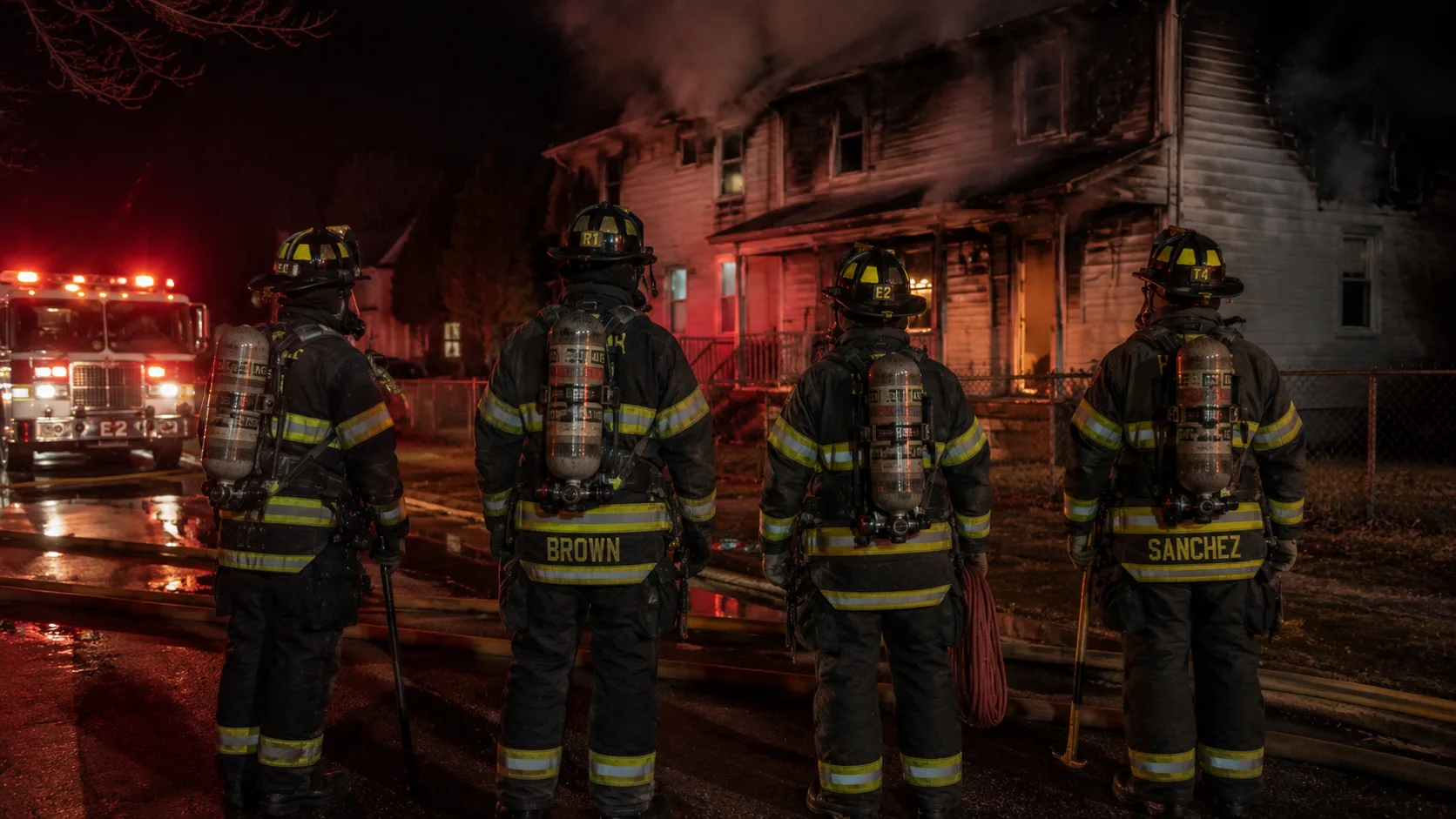
The Rapid Intervention Team is a dedicated crew — minimum two firefighters, typically four — staged at the exterior of a burning structure for one purpose: to enter and rescue interior crews who have declared a MAYDAY. They do not assist with suppression. They do not help with hose advancement. They stand by, monitor radio traffic, track interior crew positions, and are ready to move the moment an activation signal is given.
NFPA 1500 requires RIT to be established before interior offensive operations begin. This requirement exists because assembling a RIT after a MAYDAY is declared is too late. A firefighter who goes down needs rescuers who are already suited up, already briefed on the building layout, already holding a search rope, and already at the threshold. The response time difference between a pre-staged RIT and one assembled in response to a MAYDAY is measured in minutes — and in firefighter rescue, minutes are frequently the margin between recovery and fatality.
RIT carries specific equipment: a search rope for guideline deployment, forcible entry tools (a downed firefighter may be pinned by a door or debris), extra SCBA and an emergency breathing support device to extend a downed firefighter's air supply, and a stokes basket or drag device for extraction. The equipment load is designed around the specific scenarios — pinned firefighter, lost firefighter, incapacitated firefighter — that RIT is most likely to face.
When a MAYDAY Is Called: The Sequence
A MAYDAY is declared by a firefighter who is in life-threatening distress — lost, trapped, running out of air, injured, or otherwise unable to self-rescue. The word MAYDAY is used specifically because it is unambiguous. "I need help" or "we have a problem" can be misinterpreted under radio noise and stress. MAYDAY cannot.
The sequence when a MAYDAY is transmitted:
- All radio traffic stops. The incident commander clears the channel immediately. Nothing goes over the radio except MAYDAY-related communication until the distressed firefighter has transmitted their full LUNAR report.
- The IC confirms the MAYDAY and requests the LUNAR report from the distressed firefighter. If the firefighter is conscious and can transmit, they give location, unit, name, air level, and what they need. If they cannot transmit, the PASS alarm is the location indicator.
- RIT is activated. Not told to prepare — activated. They move immediately with their equipment toward the last known location of the downed firefighter.
- A second alarm is struck in most departments — additional resources requested immediately, because RIT deployment leaves a gap in the exterior rescue capability that must be filled before any other crew can be sent inside.
- Interior crews hold position or begin withdrawal depending on command decision. The incident commander may pull all interior crews except RIT to prevent additional MAYDAY situations while the first one is being resolved.
- Medical resources are staged at the exterior in preparation for the extraction.
How Accountability Failures Have Killed Firefighters
The pattern in firefighter fatality reports where accountability failed is depressingly consistent. A crew enters without completing the tag-in process. An incident grows in complexity faster than the accountability system scales. Interior crews are reassigned verbally without the accountability officer being updated. PAR is skipped during a critical tactical transition because command is managing multiple priorities. A firefighter becomes separated from their crew and no one knows their individual location.
The Charleston Sofa Super Store fire in 2007 — nine firefighters killed, the deadliest U.S. firefighter fatality event in decades at that point — included accountability failures among the contributing factors documented by the NIOSH investigation. Crews were inside without clear command tracking of their locations. When the roof collapsed, command did not have precise knowledge of where every crew member was. The investigation's recommendations on accountability were detailed and have directly influenced department policies across the country.
None of the individual components of the accountability system — PASS, tags, PAR, LUNAR, RIT — is complicated. Each one is simple. What fails is not the system but the discipline to use it consistently when the incident is moving fast and the impulse is to get crews inside as quickly as possible. The accountability system slows entry by minutes. Firefighter fatality investigations document that those minutes are recoverable. Sending crews in without accountability is not.


Comments 0
No comments yet. Be the first to share your thoughts!
Leave a Comment