
After years of responding to house fires and studying what happened to the people who did not survive them, a pattern becomes very clear: most fire fatalities do not happen because the fire was too large to escape. They happen because someone made one decision that seemed correct in the moment and was not. The fire was survivable. The mistake was not.
The decisions that kill people in fires are not obvious mistakes — they are the instinctive, reasonable-seeming responses of people who were never told what the fire environment actually does to the human body and how it changes every piece of common-sense behavior. This piece goes through those mistakes specifically, why they happen, and what the correct response is instead.
The mistakes we cover:
- Going back inside for anything
- Walking upright through a smoke-filled room
- Opening a door without checking it first
- Opening windows to let smoke out
- Hiding instead of escaping
- Investigating the alarm before acting on it
- Staying inside to call 911
- Trying to fight a fire that is already past you
- Taking the elevator in a building fire
- Running through flames
The phone. The dog. The laptop. The medications. The irreplaceable item. People go back for all of these, and some of them die doing it. This is the single most documented fatal mistake in residential fire incidents — a person who was already out of the burning structure re-entered and did not come back out.
The problem is the speed of change inside a burning structure. What was survivable 30 seconds ago is often not survivable 90 seconds later. Smoke, heat, and structural change happen continuously during a fire. When you were inside the first time, you moved through conditions that were at the beginning of their trajectory. When you go back in, you are entering conditions that have been developing for longer. The hallway you navigated to get out is not the same hallway when you go back.
What to do instead: Tell the firefighters what is inside and where it is. We will get the dog. We will not guarantee we can get your laptop. But we are wearing breathing protection and thermal imaging equipment, and we are trained to operate in conditions that will kill an unprotected person in under two minutes. You are not. Once you are out, you stay out.
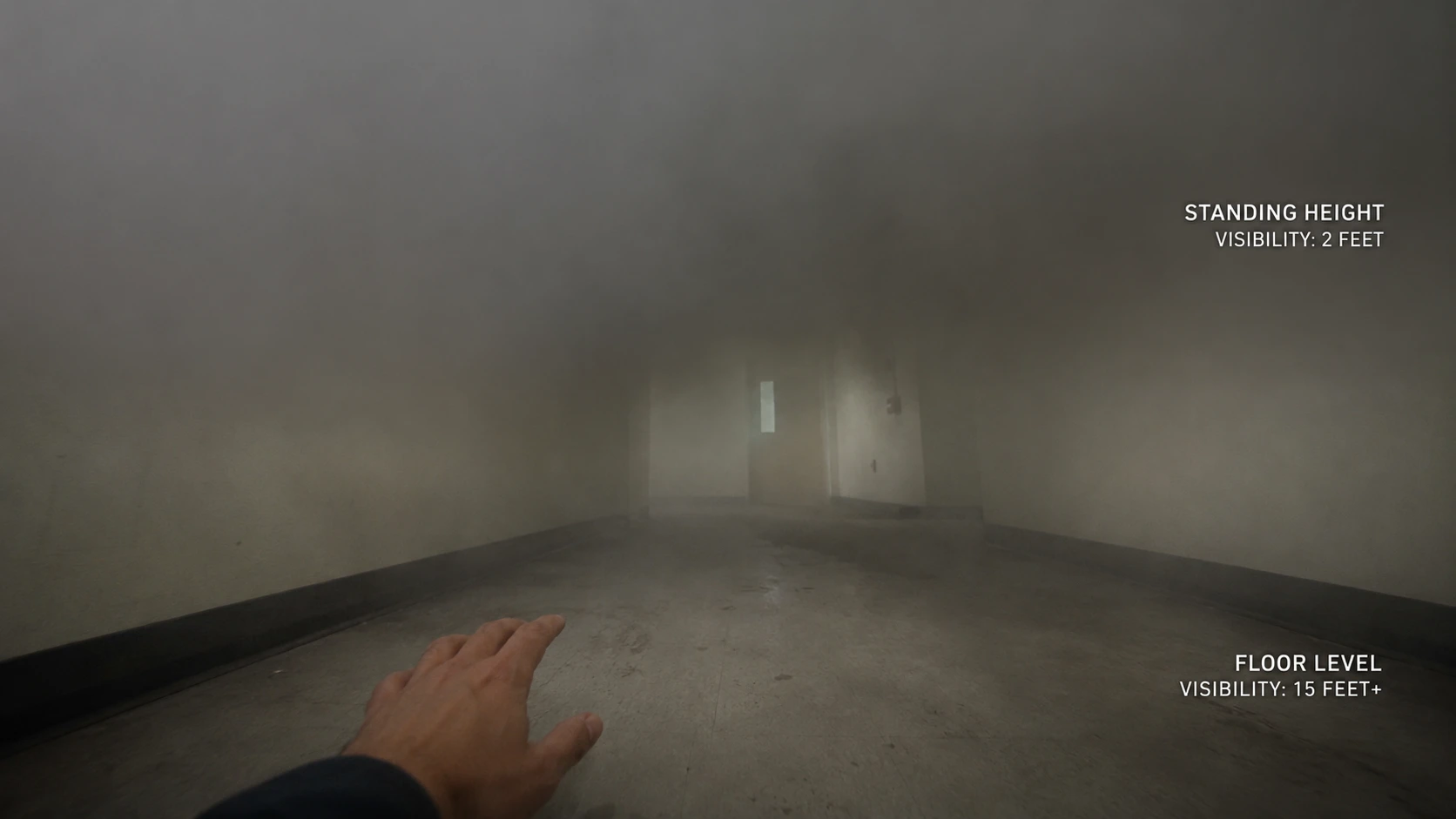
Smoke in a house fire is not evenly distributed. It rises and stratifies — the hottest, most toxic gases accumulate at ceiling level first, and the relatively cleaner, cooler air stays near the floor. In a room with significant smoke, the difference between the air at floor level and the air at head height can be 200–400°F and multiple times the concentration of carbon monoxide.
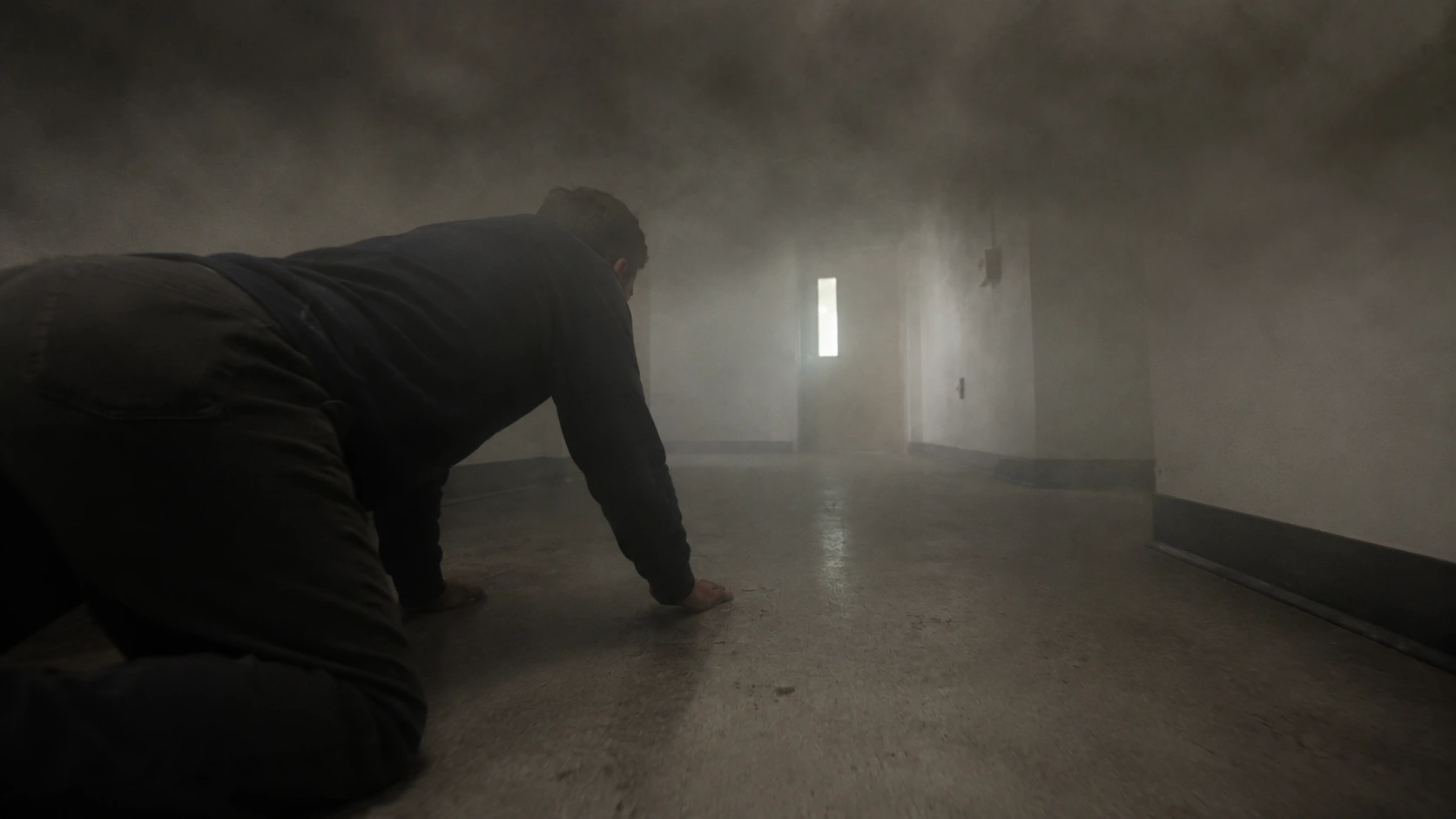
A person standing upright in a smoke-filled room is breathing the worst air in the room. A person crawling is breathing the best air in the room. The difference is enough to determine whether you make it to the exit conscious or not. Carbon monoxide causes loss of consciousness without warning — you do not feel yourself going down. You are simply not there anymore.
What to do instead: Get low and stay low from the moment you encounter smoke. Crawl on your hands and knees, keeping your head 12–18 inches from the floor. Move along the wall so you do not lose your orientation. You will move more slowly. You will arrive at the exit able to move under your own power.
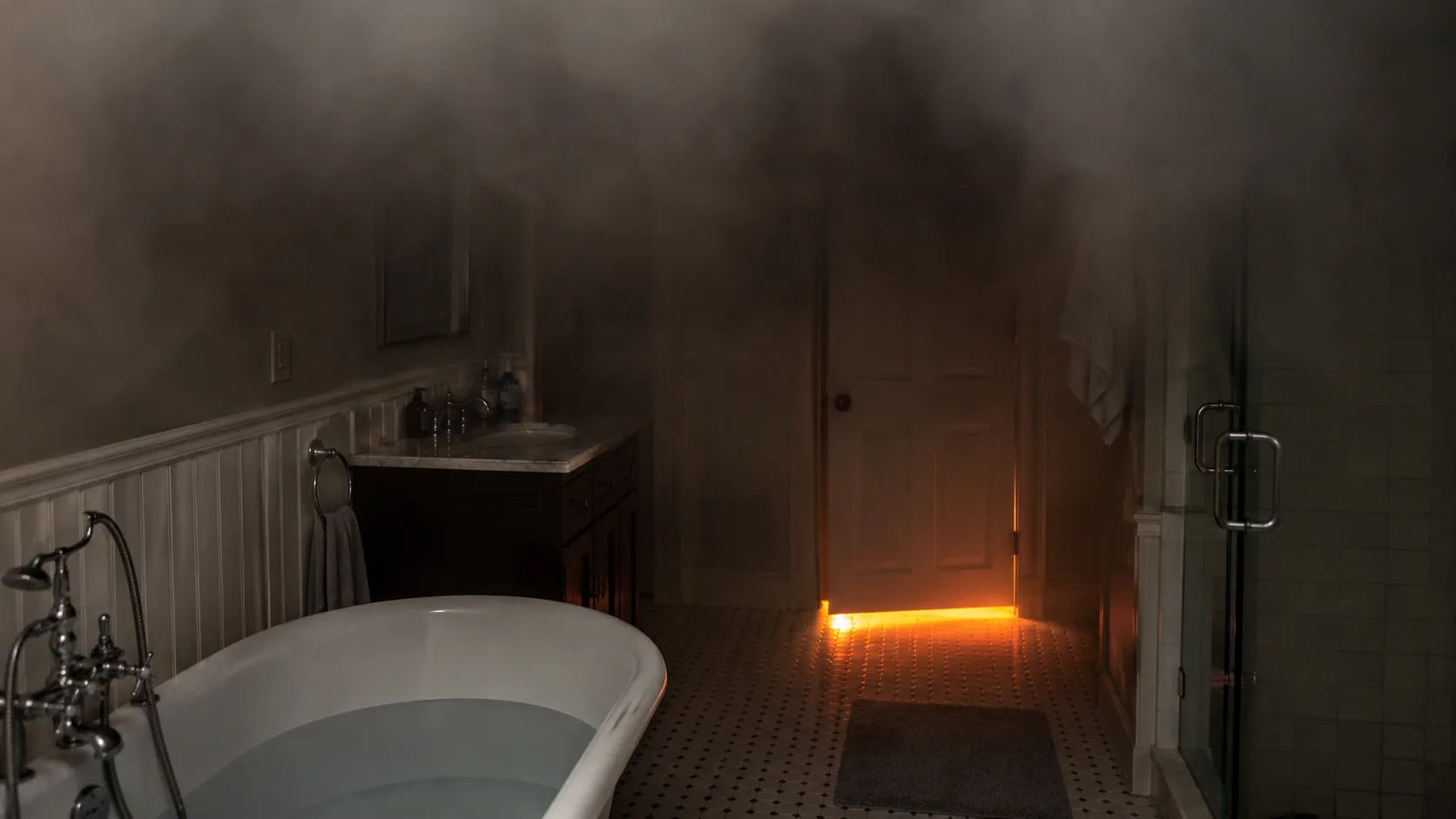
If there is fire on the other side of a closed door and you open it, you introduce oxygen to the fire and potentially create a flashover condition in the room you are in. You also expose yourself instantly to fire and superheated gases that have been contained behind that door. Opening the wrong door can kill you in the fraction of a second it takes to swing open.
A closed door is not a barrier — it is a source of information. The temperature and condition of the door tells you what is on the other side before you make the decision that cannot be undone.
What to do instead: Before opening any interior door during a fire, place the back of your hand on the door surface — starting at the bottom and moving up. Check the gap at the bottom for smoke or visible heat shimmer. If the door is hot or there is smoke coming under it, do not open it. Use your secondary exit — the window — or shelter in place with the door sealed and signal from the window. The check takes two seconds and can save your life.
Opening a window in a smoke-filled room does two things: it removes some smoke, and it introduces fresh air and a new airflow path that feeds the fire. The net effect depends entirely on the location of the fire relative to the window — but in most residential scenarios, opening windows during an active interior fire accelerates the fire's growth and changes the airflow in ways that are unpredictable and often dangerous.
Professional firefighters use ventilation as a coordinated tactic — windows and doors are opened deliberately in coordination with attack lines positioned to control the fire that the ventilation will energize. Without that coordination, random ventilation is gambling with the fire's behavior.
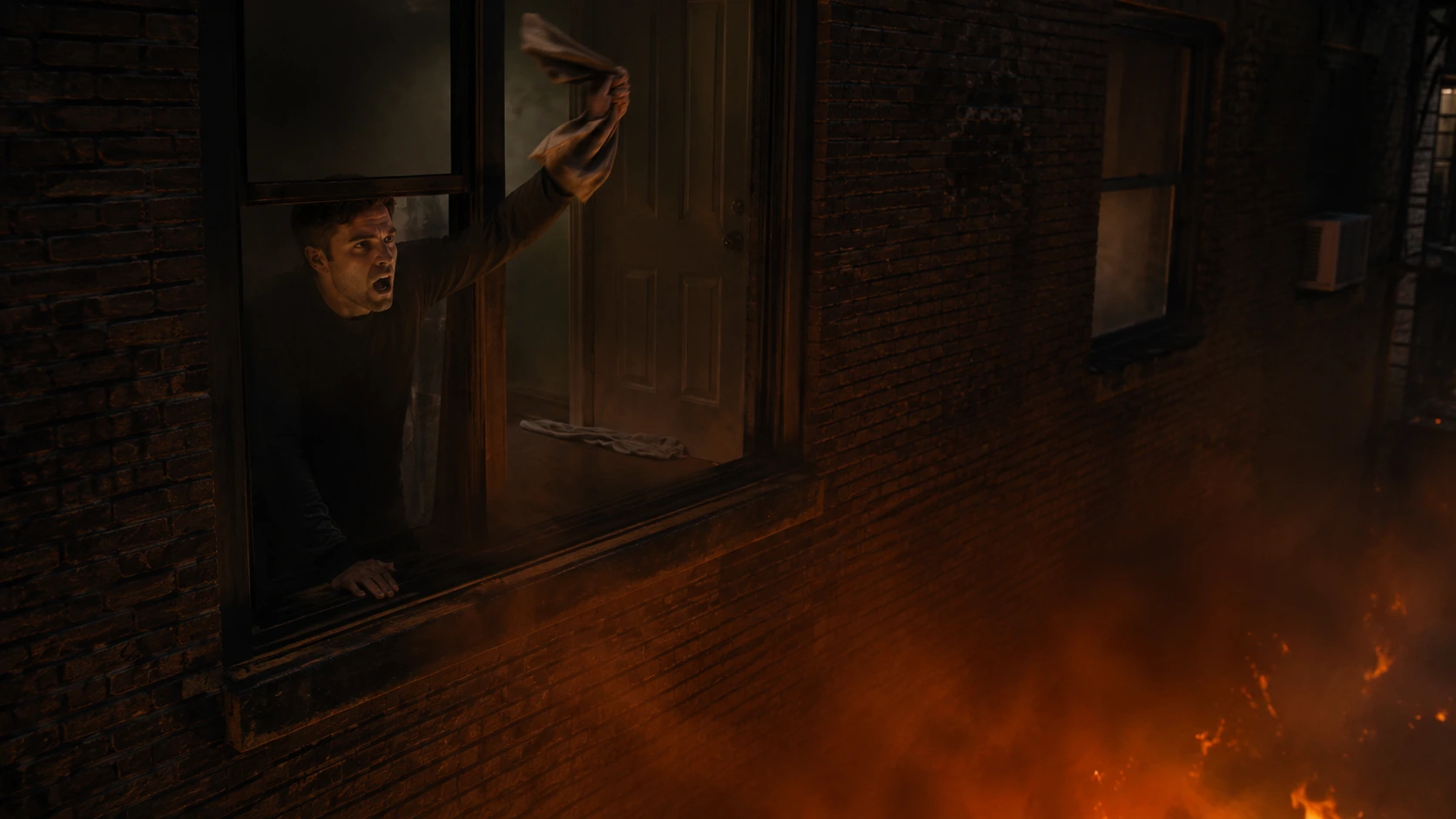
What to do instead: If you are in a room of refuge (sheltering in place because your exit is blocked), open the window only to signal for help and for fresh air for yourself — and be aware that doing so may increase smoke from other openings in the room. If you are escaping, do not stop to open windows. Get out.
This is primarily a problem with children, but it also happens with disoriented adults. The hiding instinct — under the bed, in the closet, in a corner — is ancient and powerful. It works very well for predators. It does not work at all for fire. Fire and smoke fill enclosed spaces faster than open ones. A child under a bed in a smoke-filled room is in the worst possible position for survival. A child in a closet with the door closed has a slightly longer window, but it is not a route to rescue — it is a place where we find people after the fact.
What to do instead: Practice with your children specifically that hiding during a fire is not safe. Not once — repeatedly, until it is automatic. The antidote to the hiding instinct is a practiced motor routine: when the alarm sounds, I get up, I go to my door, I check the door, I exit. That sequence, practiced enough times, competes with and can override the hiding instinct. But it has to be practiced. It will not be chosen for the first time in a real fire.
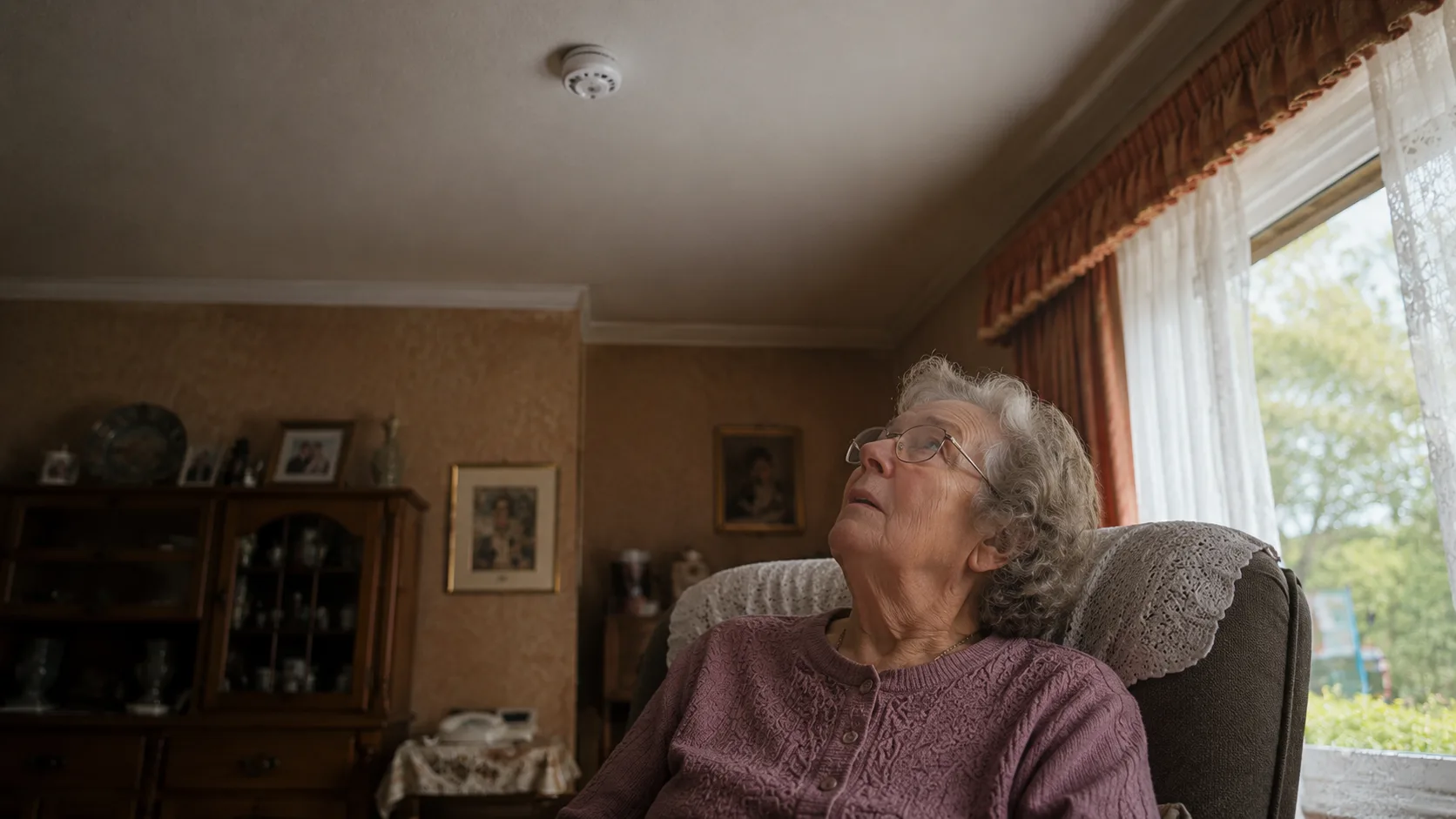
False alarms train people to not respond to alarms. After the third time the smoke alarm went off because someone made toast, the alarm becomes ambient noise that gets investigated after finishing what you were doing. This is understandable. It is also the pattern that results in people dying in house fires they had warning of.
The problem is that the delay between “hear alarm, finish what I'm doing, go investigate” and “hear alarm, get everyone moving toward the exit” can be the difference between survivable and unsurvivable. Modern home fires can go from alarm to untenable conditions in two to three minutes. A 90-second investigation delay eats most of that window.
What to do instead: Treat every alarm as real until you can confirm it is not. This means getting everyone moving — not investigating while others stay put. You can assess from near an exit. You cannot assess from the kitchen while your family is still in their bedrooms. And if the investigation takes you into a smoke-filled room before you have decided to act, the decision has been made for you in the worst possible way. The correct response to every alarm is motion toward the exit, simultaneously with assessment.
Call 911 from outside. From a neighbor's house. From the street. From your meeting place. The information we need from you — your address — takes 10 seconds to transmit. Those 10 seconds are much safer to spend outside than inside. And everything we do after receiving that call — the information we need, the updates on who is inside, the description of conditions — can happen from outside the structure.
People have been found deceased with their phone in hand from calls to 911 they made while still inside the structure. The call was the right impulse. The location was not. Get out first.
What to do instead: Exit the structure. Call from outside. If you cannot exit and are sheltering in place, call from inside — but that is the only situation where calling from inside is correct. The dispatcher will stay on the line with you and will relay your location to the responding crews.
A fire extinguisher is a valid tool for a very small, contained, early-stage fire — a trash can, a small pan fire, a smoldering outlet cover. It is not a tool for a fire that has spread to a wall, a ceiling, or a room. Once a fire reaches that size, a residential extinguisher will not stop it. What it will do is keep you in the building, breathing the smoke, while the fire continues to grow around and behind you.
The rule of thumb is simple: if you need to move toward the fire to reach it, or if the fire is above your head, or if the room is filling with smoke — you should not be fighting it. You should be leaving.
What to do instead: One attempt with an extinguisher if you have it, if the fire is small, if everyone else is already out, and if you have a clear exit route behind you. If one attempt does not work, leave. The extinguisher buys you one chance. Do not bet your life on a second chance that the fire has grown too large to give you.
Elevators in a fire are death traps for two specific reasons. First, elevator shafts act as chimneys — they pull smoke from lower floors to upper floors rapidly. Second, a fire can interrupt the electrical systems that control elevator doors, causing the elevator to stop between floors or to open on the fire floor. People have been found deceased in elevators that opened on the floor of origin and would not close again.
Modern buildings have recall systems that send elevators to the ground floor when the fire alarm activates. Do not use an elevator in any building where the fire alarm is sounding. Take the stairs. In high-rise buildings, firefighters and emergency personnel use elevators in elevator banks that have been specifically designated for emergency use — not the regular elevator bank. You do not have access to that designation.
What to do instead: Stairs, always, in any fire alarm situation. If the stairwell is smoke-filled, do not proceed through it — go back to your floor, close the stairwell door, and shelter in place. Signal from a window. Call 911 and give your floor and room number.
You cannot run through flames in regular clothing and survive without serious burns. Even a brief exposure to direct flame causes burns that are immediately incapacitating. Running through a flame-filled doorway or hallway does not get you through faster — it gets you burned on the way and often does not get you through at all.
If your exit path is blocked by flames, that exit is not available. The instinct to run through it anyway comes from terror and the feeling that any action is better than waiting. It is not. A door that is blocked by flames requires a different route — the secondary exit from your room, or shelter in place and rescue from the exterior.
What to do instead: If your primary exit is blocked, use your secondary exit. If no exit is available, close the door to the room you are in, seal the gap at the bottom, signal from the window, call 911. Stay low. Stay calm. We are coming, and a closed door buys time we need to reach you.
Why These Mistakes Keep Happening
Every mistake on this list feels correct in the moment because it corresponds to a rational, non-fire-environment response to danger. Going back for your belongings is rational — those things have value. Standing up to navigate is rational — you walk upright when you move. Opening doors is rational — doors open. Opening windows for fresh air is rational — that is what windows do. Hiding is rational — concealment protects you from threats.
The fire environment is not a normal environment. The rules are different. The speeds are different. The visibility is different. The cognitive effects of carbon monoxide and heat on your decision-making are different. And because these conditions are unfamiliar, the human brain defaults to familiar responses — which are the wrong responses.
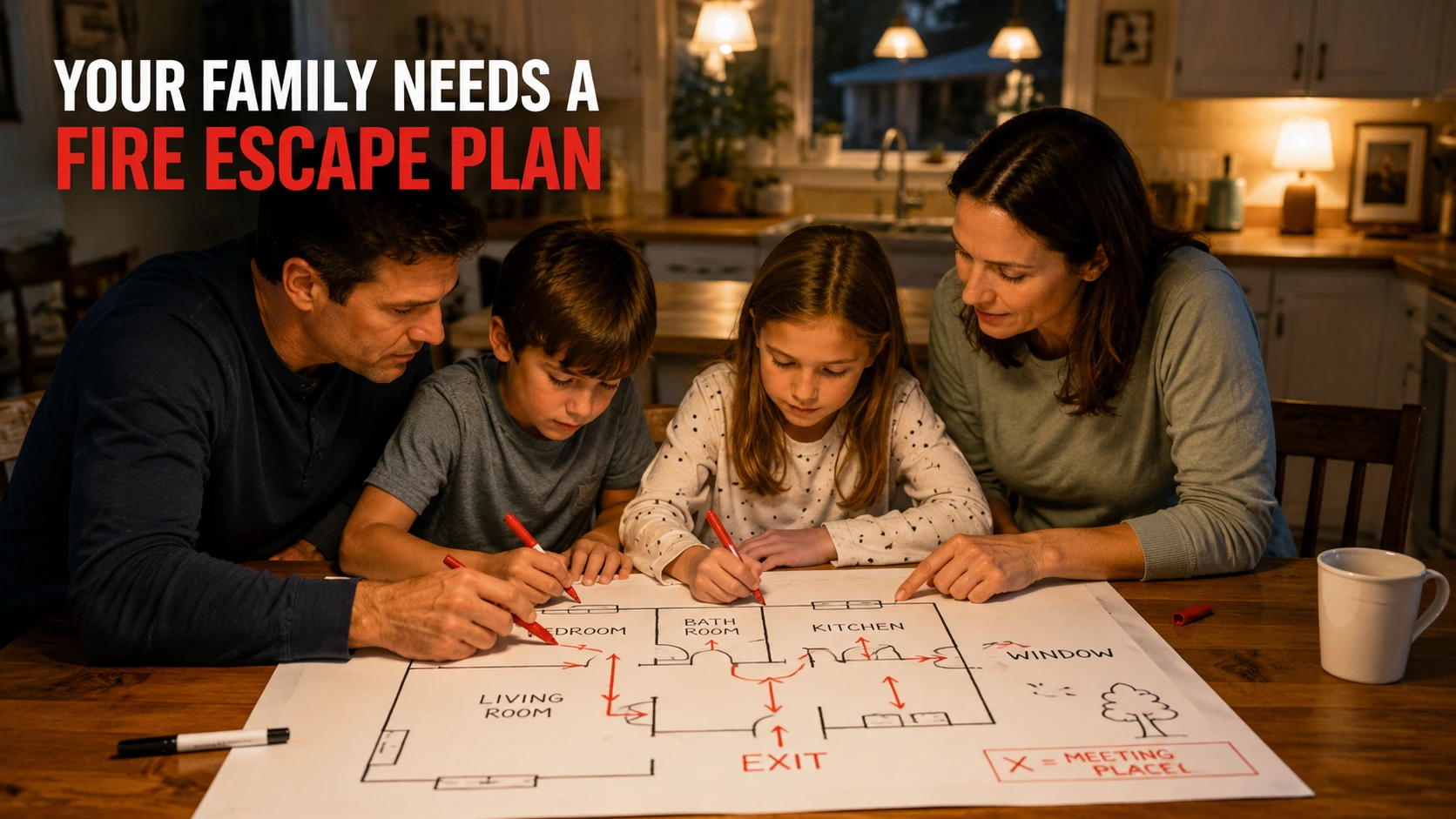
The only way to override instinct in an unfamiliar environment is practice. Walking the escape route in the dark before there is ever a fire. Doing a drill that starts with the alarm and ends at the meeting place. Saying out loud — not just reading — “I stay low, I check the door, I do not go back, I call from outside.” Saying it to your children. Saying it to yourself. The people who survive fires are almost always the people who had, at some point before the fire, thought specifically about what to do.
For building that plan: the Home Fire Escape Plan article walks through building a real escape plan with your household. The Smoke Alarm article covers making sure your alarms are working correctly — because none of what is in this piece matters if the alarm does not wake you up first.
Comments 0
No comments yet. Be the first to share your thoughts!
Leave a Comment