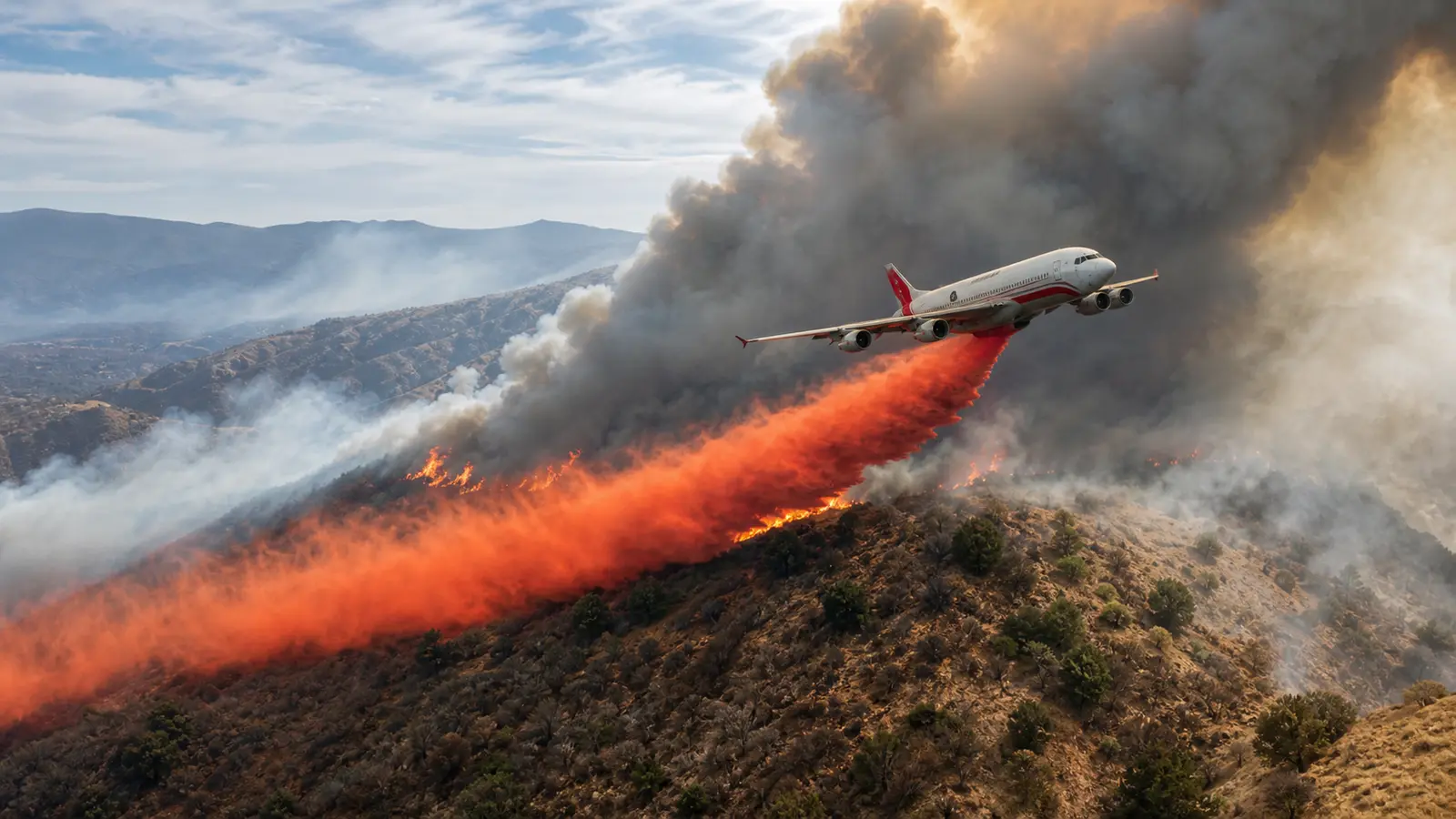
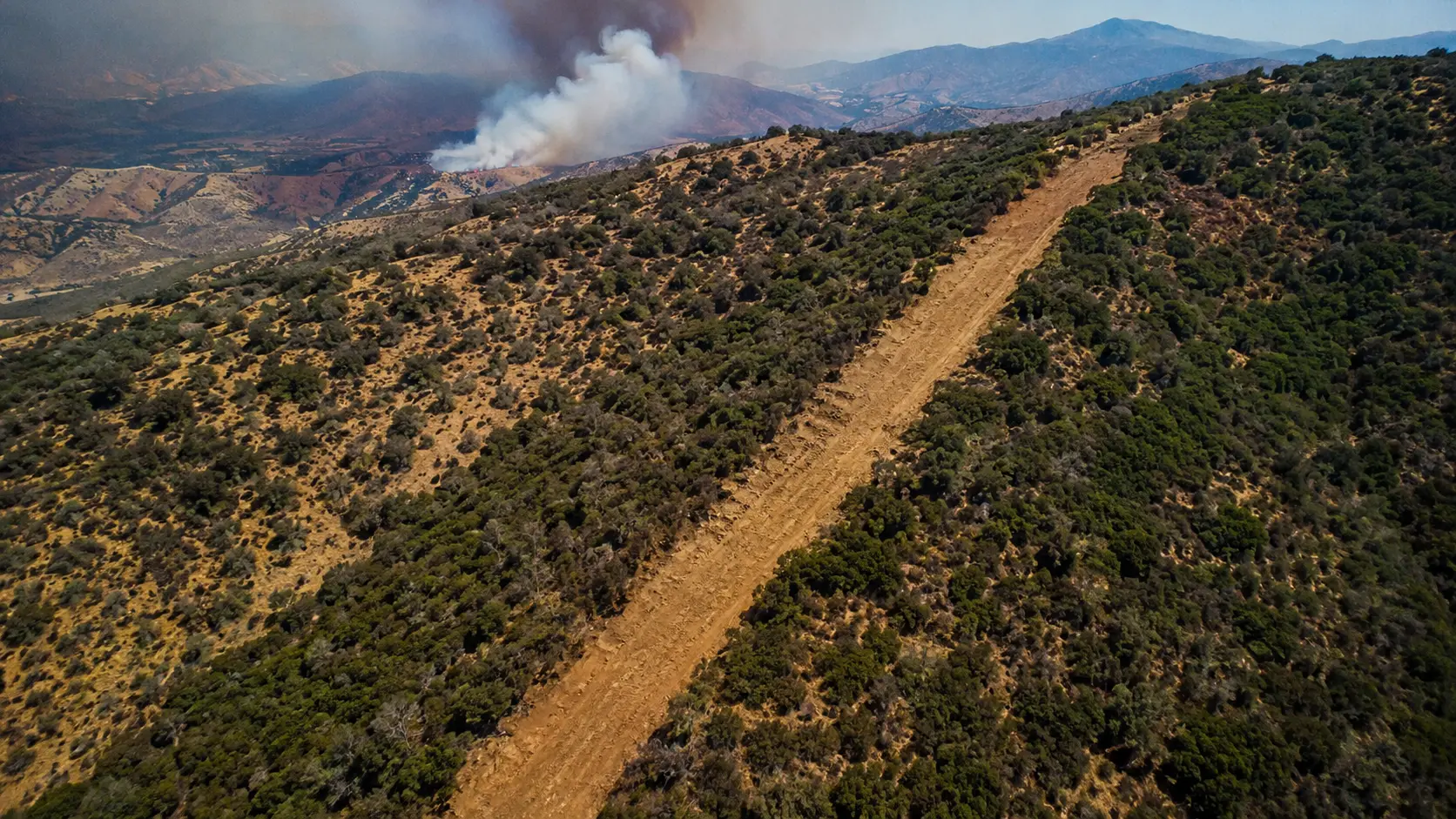
Every major wildfire in California generates the same television footage: a heavy air tanker banking low over a burning ridge, releasing a long curtain of orange-red retardant across a hillside while news helicopters orbit at a safe distance. The visual is dramatic. It looks like suppression. And it is — under the right conditions. What it is not, and what no air asset in the current U.S. fleet can be, is a tool for stopping a fire that is already running at extreme spread rates in critically dry fuel under high wind.
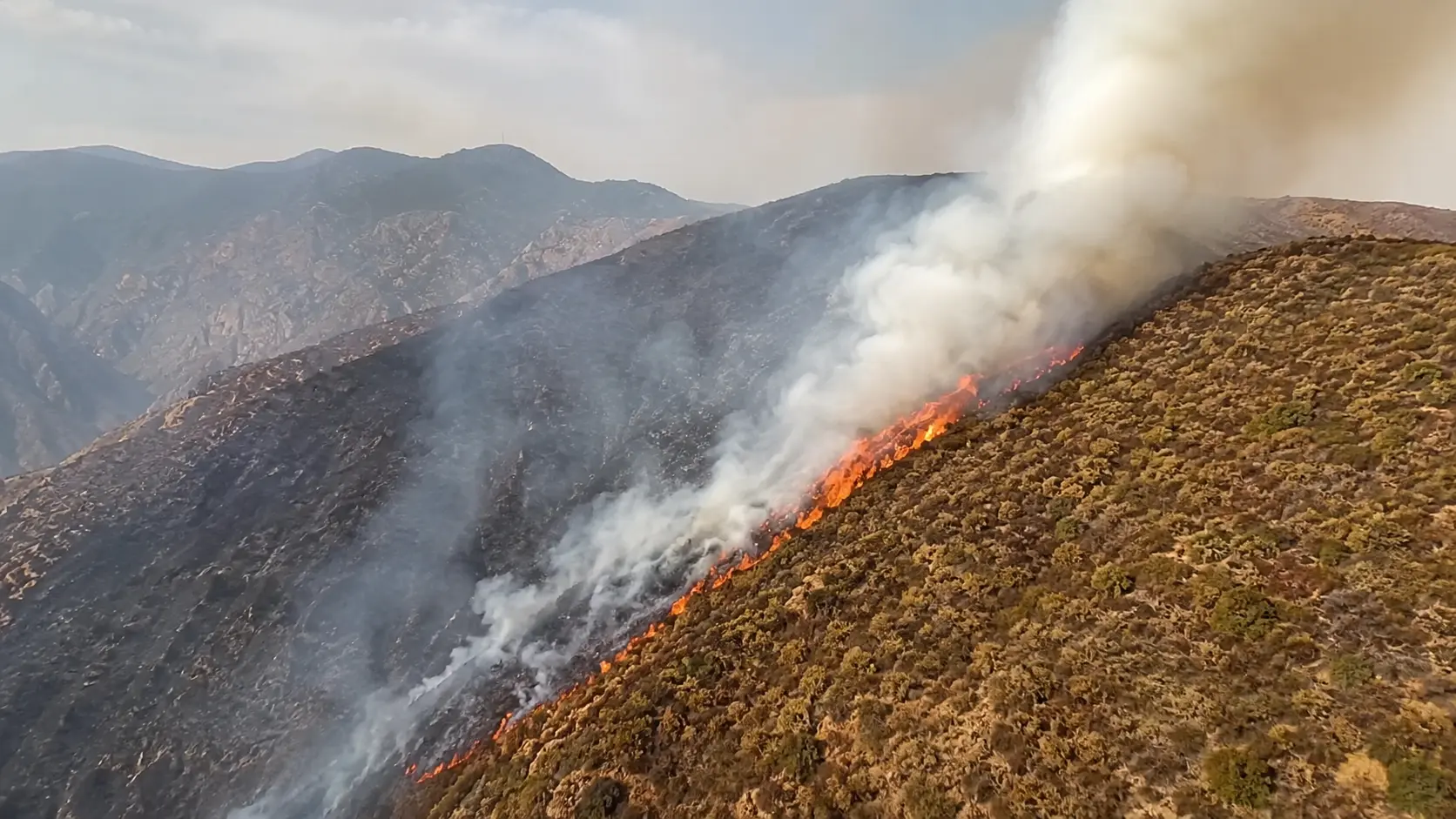
This is not a failure of aviation technology or fire agency capacity. It is a consequence of the physics of large fire behavior. A fire running at 300 acres per hour — the rate documented in the Lost Fire in Kern County in June 2026 — is advancing its perimeter faster than any aerial resource can reposition, load, and make another drop. The fire is generating its own weather. The smoke column is producing turbulence and unpredictable downdrafts that make precise low-altitude drops dangerous. The ember cast is starting spot fires ahead of the main front that are beyond the retardant line before the tanker completes its pass.
Understanding what air resources actually do — and what they cannot do — matters for every community in wildfire country. Because the assumption that aircraft will stop a fire from reaching your neighborhood is the assumption that leaves people waiting too long to leave.
In this article:
- What retardant actually does — and what it doesn't
- The turnaround problem: why aircraft can't keep pace with fast fire
- Why heavy smoke grounds aircraft during peak fire behavior
- Spotting: how fire defeats a retardant line before it dries
- What air resources actually accomplish in extreme fire conditions
- The U.S. air tanker fleet in 2026: capacity and constraints
- What this means for communities waiting for aircraft to save them
What Retardant Actually Does — and What It Doesn't
Fire retardant — the orange slurry dropped by air tankers — is a mixture of water, fertilizer salts (ammonium phosphate or ammonium sulfate), and thickening agents. When applied to unburned vegetation ahead of a fire front, it coats the fuel and reduces its flammability by raising the ignition temperature and slowing the release of combustible gases. When fire reaches retardant-treated vegetation, it encounters fuel that is harder to ignite and burns with lower intensity than the surrounding untreated fuel.
What retardant does not do: it does not extinguish fire, and it does not create a fireproof barrier. A retardant line is a zone of reduced flammability, not a wall. Fire approaching a retardant-treated line at high intensity may slow and drop in flame length, giving ground crews an opportunity to work the line with hand tools or hose. Fire approaching the same line in extreme conditions — high wind, critically dry fuel, high rate of spread — may burn through the treated area at reduced intensity without fully stopping.
The critical variable is whether ground crews can get to the retardant line and work it before the fire does. A retardant drop that puts slurry on a ridge 20 minutes before fire arrives, with ground resources already positioned to use that treated zone as an anchor point, is a successful deployment. A retardant drop in the same location when the fire is 5 minutes away and ground resources are not in position accomplishes almost nothing — the fire burns through before anyone can work the line, and the retardant dries and loses effectiveness within hours anyway.
The Turnaround Problem: Why Aircraft Can't Keep Pace With Fast Fire
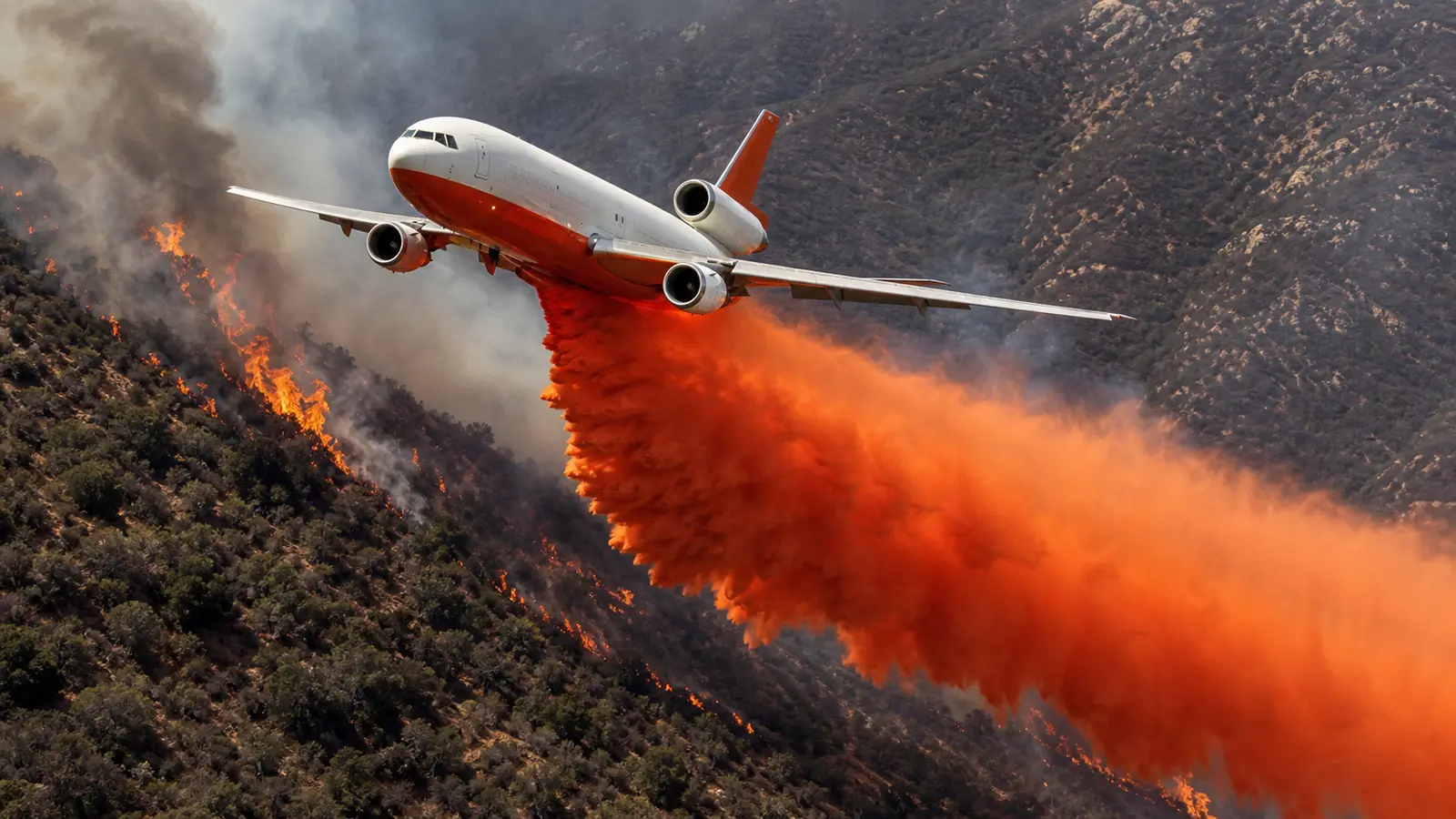
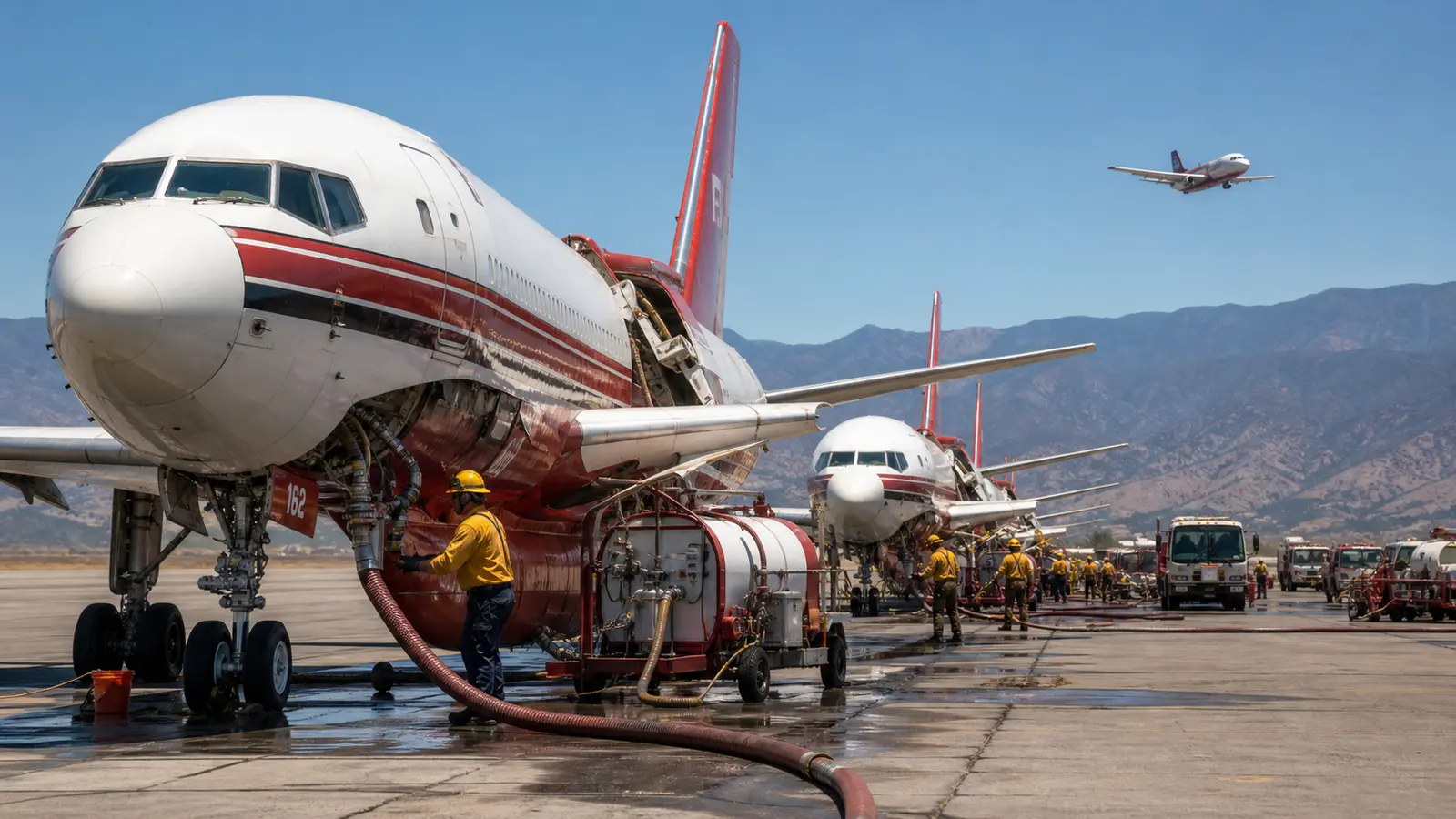
A heavy air tanker — the largest fixed-wing platforms in the USFS contract fleet, carrying 3,000 to 19,000 gallons of retardant — makes one pass over a fire, releases its load over approximately a quarter to half mile of terrain, and must then return to an air tanker base to reload. The reload and turnaround time is typically 20 to 30 minutes under normal operations. During a multiple-fire season with high demand on the air tanker fleet, wait times at retardant reload bases can extend significantly.
A fire running at 300 acres per hour advances approximately 100 acres — roughly a mile of fire perimeter — during the time a tanker is returning for a reload. The single drop that just covered a quarter mile of line is already behind the fire's active front by the time the tanker is back in the air. Multiple tankers working the same fire in rotation can maintain more continuous coverage, but the geometry of fast-moving fire in complex terrain consistently outpaces the sortie rate of available aircraft.
Single-engine air tankers — smaller platforms carrying 800 to 1,800 gallons — have faster turnaround times and can operate from smaller, closer bases. They are effective in the initial attack phase, when a fire is small enough that a few drops can materially reduce its size or create a containment opportunity for ground crews. When a fire has reached the scale and behavior of an extreme run, SEATs become support assets rather than primary suppression tools — working spot fires and protecting specific high-value structures rather than fighting the main fire front.
Why Heavy Smoke Grounds Aircraft During Peak Fire Behavior
Fixed-wing air tankers operate under visual flight rules for low-altitude drops — they must be able to see the terrain at drop altitude to position correctly, avoid obstacles, and exit the drop zone safely. The same extreme fire behavior that produces the highest urgency for aerial support also produces the conditions that most reliably ground it: dense smoke columns, unpredictable turbulence from the fire's convective activity, and reduced visibility at drop altitudes that make precise work over complex terrain unsafe.
A large fire in extreme behavior generates a pyroconvective column — essentially a fire-driven thunderstorm — that produces severe turbulence, unpredictable wind shifts at altitude, and in its most extreme form, a pyrocumulonimbus cloud that creates its own lightning and weather patterns. Flying a heavy tanker into the immediate vicinity of a pyrocumulonimbus event is not a matter of pilot risk tolerance. It is a fatality risk that no suppression objective justifies. Aircraft are grounded when the fire is generating those conditions, which is precisely when the fire is growing fastest.
Helicopter operations are similarly constrained. Water-dropping helicopters work effectively in moderate fire conditions where precise placement on specific targets — a spot fire, a threatened structure — is possible. In heavy smoke, turbulence, and extreme wind, helicopter operations near active fire are suspended for the same reasons fixed-wing operations are: the hazard to the crew exceeds any achievable suppression benefit.
Spotting: How Fire Defeats a Retardant Line Before It Dries
A retardant line works by creating a zone of treated fuel between the fire front and unburned terrain. Spotting — the process of wind-carried embers starting ignitions ahead of the main fire — defeats this mechanism by starting new fires on the unburned side of the retardant line. When a fire is casting embers a quarter mile to a mile ahead of its front, a retardant line that would stop the main fire from crossing doesn't prevent the spot fires that are already igniting beyond it.
In the Palisades Fire in January 2026, spotting extended multiple miles ahead of the main fire front during the peak Santa Ana wind event. Structures that were burning were well beyond the perimeter of the main fire. No retardant line could have been positioned fast enough, in sufficient length, to intercept both the main front and the full extent of spotting activity simultaneously. The fire was fighting on too many fronts at once for any linear containment strategy to work.
This is the specific fire behavior scenario that most clearly illustrates the limits of aerial suppression. Retardant is most effective against a fire advancing in a single direction along a relatively predictable path. Spotting in high wind turns that single advancing front into dozens of simultaneous ignitions in random locations, any one of which can establish itself as a new fire head before aircraft can be repositioned to address it.
What Air Resources Actually Accomplish in Extreme Fire Conditions
Air resources are not ineffective during extreme fire events — they are doing different work than most people imagine when they watch the footage.
Structure protection in advance of the main front. When aircraft can operate safely and have enough lead time, drops on and around threatened structures ahead of fire arrival can give a defensible structure enough additional protection that a ground crew can hold it. This is targeted, point-source application rather than line-building — a different mission than frontal suppression but one where aerial resources can make a measurable difference.
Slowing the fire's flanks. While the fire's head may be moving too fast to intercept directly, its flanks — the sides of the fire burning more slowly perpendicular to the main direction of spread — can be worked by aircraft to slow lateral expansion. This limits the fire's total acreage even when stopping the front is not achievable.
Reducing ember cast and spotting. Drops targeted at the most active combustion zones — the areas producing the highest flame lengths and the most vigorous spotting — can reduce the volume of airborne embers and temporarily suppress spotting activity. This is not stopping the fire, but it can reduce the number of spot fires that ground crews have to intercept ahead of the main front.
Supporting evacuation by buying time. Even partial suppression of fire spread rate — not stopping the fire but slowing it by 20 or 30 percent — can translate to additional evacuation time for communities in the fire's path. This is the mission that aviation resources are often actually performing during extreme events, even when the news coverage frames it as fire suppression.
The U.S. Air Tanker Fleet in 2026: Capacity and Constraints
The federal aerial firefighting fleet — contracted by the USFS, BLM, and other agencies — consists of large air tankers, very large air tankers, single-engine air tankers, and helicopters. In 2026, the fleet includes the DC-10 and 747 Supertanker platforms (VLAT) capable of carrying 12,000 to 19,000 gallons, along with a range of medium and large platforms.
The constraint is not the individual aircraft capacity — it is the number of aircraft available simultaneously across a multi-fire season. When multiple large fires are burning simultaneously across the western states, which has become the norm rather than the exception in recent fire seasons, the fleet is committed across multiple incidents. An incident commander requesting additional air tankers may receive them after a delay measured in hours — during which time the fire is continuing to grow. Priority allocation decisions are made at the national coordination level, not at the incident level, and are based on life safety, structure threat, and resource availability across all active incidents simultaneously.
The 2026 fire season's early pace — double the historical average by late May — means the fleet is being drawn down earlier in the season than planning scenarios anticipated. Resources that would typically be available as reserve capacity in June are already committed to active incidents, which reduces the response capacity available for fires that start later in the season.
What This Means for Communities Waiting for Aircraft to Save Them
The gap between what air resources can do and what communities believe they will do is a documented contributor to delayed evacuations. The footage of tankers dropping on nearby ridges creates an impression of active intervention — of the fire being fought and slowed. That impression is not always wrong, but in extreme fire conditions it can be deeply misleading.
A community watching air tankers work a fire on a ridge two miles away should not interpret that footage as evidence that the fire will be stopped before reaching them. What they should be assessing is: what is the current wind direction and speed, what is the rate of spread based on how quickly the smoke column is expanding, and what is the status of any evacuation warning or order for their zone. Those questions have answers that are independent of what the aircraft are doing.
The honest version of what air resources communicate about fire threat: when air tankers are actively working a fire near a community, it means the fire is large enough and threatening enough to have received aerial resources. It does not mean the fire is being contained. A fire that has called in tankers is a fire that has already exceeded ground suppression capacity alone. The aircraft are working the problem, but they are not the solution. The solution, for people in the fire's path, is to leave while the road is clear.
Air tankers are essential tools in the wildfire suppression toolkit. They work. Under the right conditions — early in a fire's development, in moderate behavior, with ground resources positioned to exploit the retardant lines — they make a measurable difference in fire outcomes. Some fires that would have become major incidents were stopped at initial attack because aerial resources arrived fast and conditions allowed effective deployment.
What they cannot do is stop a fire running at 300 acres per hour in critically dry fuel under high wind. Not because the aircraft or the crews aren't capable. Because the physics of extreme fire behavior in 2026 fuel conditions produce a fire that is operating beyond the envelope of any aerial suppression system that exists. Knowing this distinction is the difference between making a sound evacuation decision and waiting for aircraft to resolve a situation that aircraft cannot resolve in time.

Comments 0
No comments yet. Be the first to share your thoughts!
Leave a Comment